
The SpaceX Report: Three Falcon 9 Launches Cap Week Highlighted by CRS-34 Return
Starbase Advances Infrastructure for Next Phase
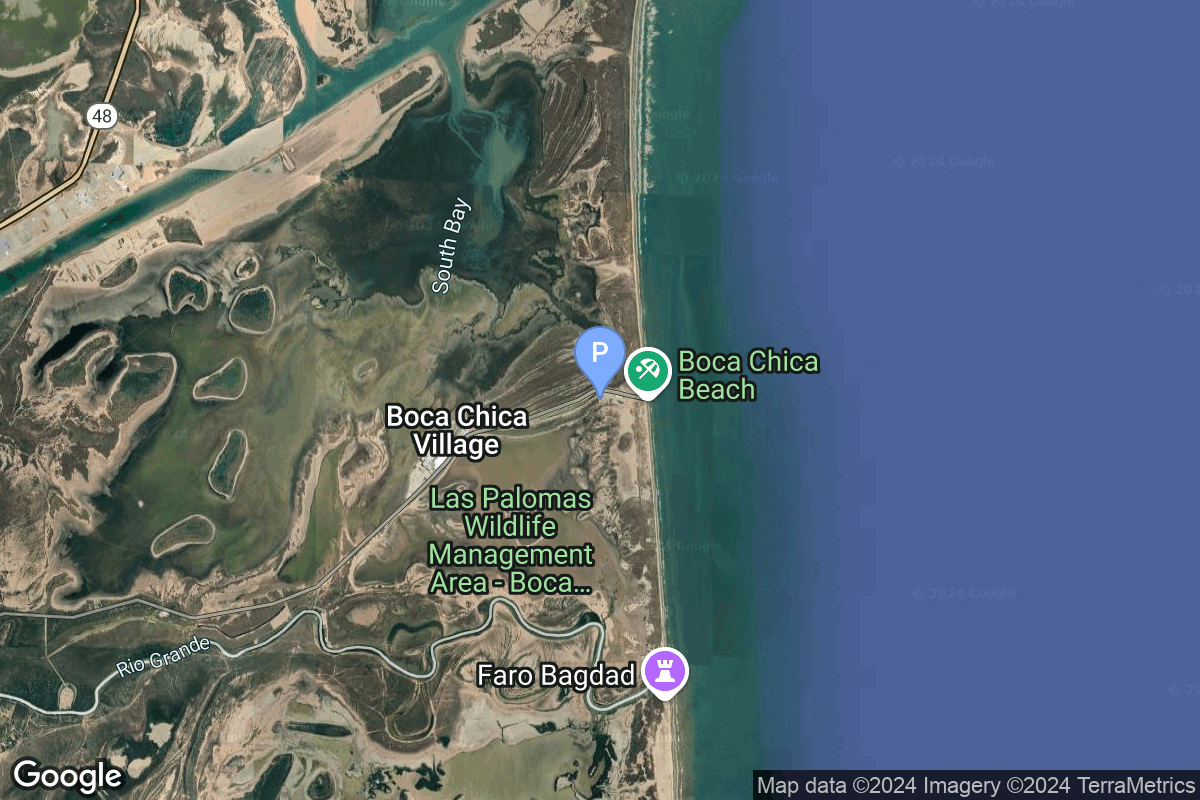
While SpaceX’s launch cadence dominated the week, activity at Starbase continued to build toward operational maturity. Pad 2 underwent numerous water deluge system tests ahead of Starship Flight 13, stress-testing the facility’s fire suppression and environmental control systems. Simultaneously, Pad 1’s reconfiguration picked up pace as teams prepared the launch facility to return to operational status following recent modifications.
In the manufacturing complex, progress continued on the next generation of flight hardware. Booster 21’s first-stage segment (F2 section) was moved into Megabay 1 for assembly, positioning the vehicle closer to stacking operations. Additionally, crews broke ground on future infrastructure at SLC-6, the former Vandenberg facility that SpaceX is modernizing to support next-generation spacelift operations.

Falcon 9’s Rapid-Fire Orbital Week
SpaceX launched three Falcon 9 missions in four days, demonstrating the vehicle’s operational tempo and reliability across diverse payload types. The sequence began with AST SpaceMobile’s BlueBird constellation, recovered from a recent setback.
BlueBird 8-10 (June 17): After the loss of BlueBird 7 to a Blue Origin New Glenn upper-stage anomaly in May—a failure that cost AST SpaceMobile between $155 and $160 million—the company bounced back quickly aboard SpaceX’s Falcon 9 from Cape Canaveral. Liftoff occurred at 2:39 a.m. EDT, carrying three Block 2 BlueBird satellites, each weighing six tons and equipped with massive communications arrays measuring approximately 2,400 square feet. The satellites deploy into low Earth orbit to generate space-based broadband services to unmodified smartphones. Booster B1077, flying its 29th mission after launching NASA’s Crew-5, GPS III Space Vehicle 06, and CRS-28, landed on the drone ship A Shortfall of Gravitas, marking the 625th booster recovery for SpaceX to date.
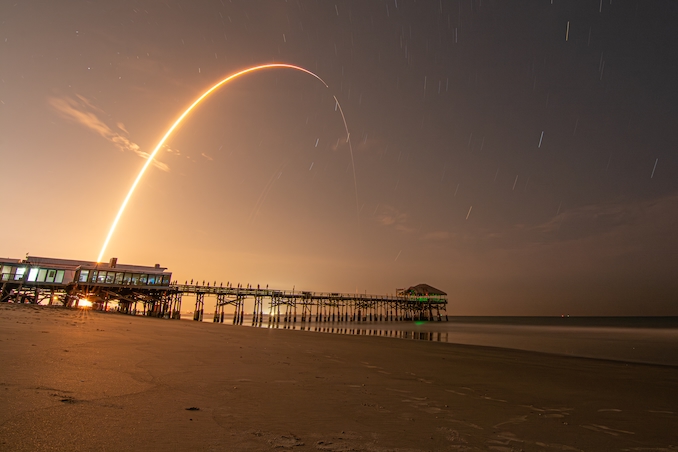
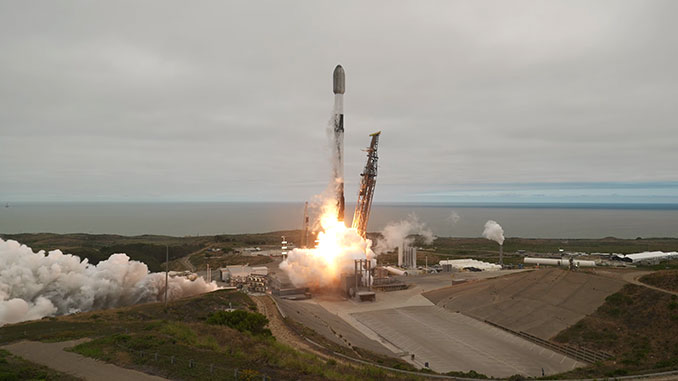
NROL-179 (June 19): Two days later, SpaceX launched an undisclosed payload for the National Reconnaissance Office from Vandenberg Space Force Base in California. The NROL-179 mission, believed to carry Starshield satellites (a government variant of Starlink), supports the NRO’s proliferated architecture constellation designed to deliver hundreds of small satellites on orbit for improved revisit rates and resilience. Liftoff was at 1:50:45 a.m. PDT (4:50:45 a.m. EDT / 0850:45 UTC). Booster B1103, executing its third flight after launching Starlink missions 17-35 and 17-42, landed at Landing Zone 4, bringing the global booster recovery count to 626. This was SpaceX’s 14th launch supporting the NRO’s constellation and the third for the agency so far in 2026.
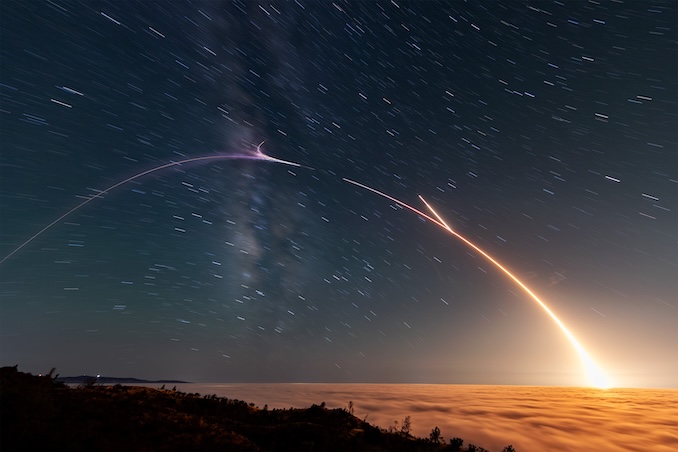
Starlink 17-28 (June 21): Closing out the Falcon 9 blitz, SpaceX launched 24 Starlink broadband satellites from Vandenberg at 9:39:06 a.m. PDT (12:39:06 p.m. EDT / 1639:06 UTC). This mission marked the 72nd Falcon 9 launch of 2026. Booster B1063, one of the company’s most-used first stages, flew its 33rd mission after launching NASA’s planetary-defence DART spacecraft, SpaceX’s Transporter-7 rideshare mission, and Iridium communications satellites. The booster landed aboard the drone ship Of Course I Still Love You, achieving the 627th SpaceX booster recovery.
CRS-34 Returns a Year’s Worth of Microgravity Research
As Falcon 9 pressed forward with national-security and commercial payloads, SpaceX’s Cargo Dragon spacecraft completed its 34th commercial resupply mission to the International Space Station, arriving back on Earth with one of the most research-packed cargo manifests to date. The vehicle undocked from the station on June 16 at 12:25 p.m. EDT and splashed down off the coast of Oceanside, California, on June 17 at 5:11 a.m. PDT (8:11 a.m. EDT).
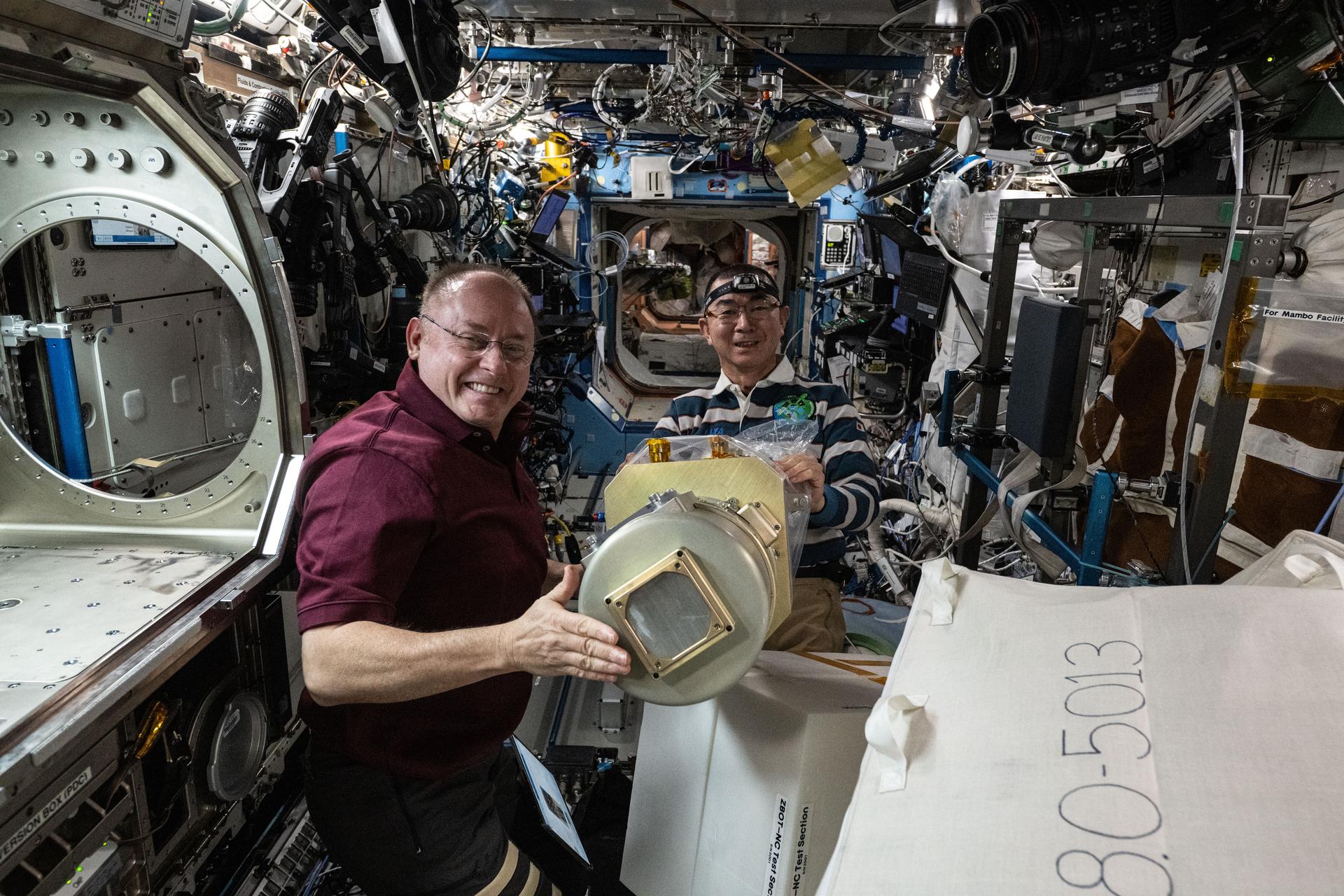
The returning samples and hardware represent years of microgravity research aimed at advancing human health, long-duration spaceflight readiness, and next-generation technologies. Medical and biological research dominated the manifest. Researchers are studying how weightlessness affects blood clotting and immune function through the Megakaryocyte Flying-One (MeF1) investigation, including samples taken directly from astronauts. Stem cell samples from NASA’s Hematopoietic Stem Cell Expansion in Space (InSPA-StemCellEX-H2) investigation will undergo analysis to determine whether space-grown blood stem cells produce larger quantities of enhanced cells suitable for treating blood diseases and cancers. Heart tissue infected with pneumonia-causing bacteria, part of the MVP Cell-09 experiment, is returning to Earth to help researchers understand why pneumonia increases cardiovascular risk.
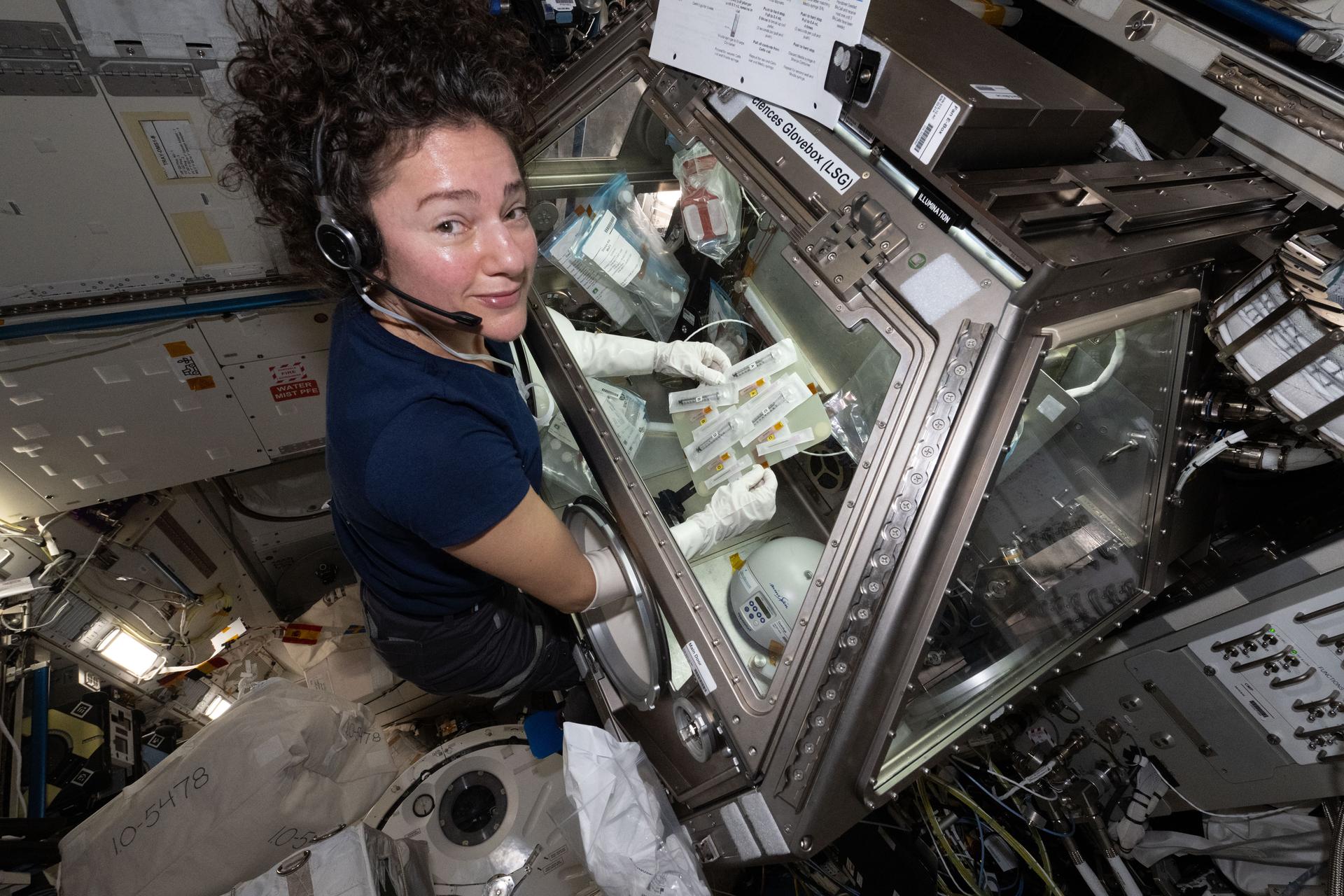
Materials and tissue engineering research also featured prominently. Bioprinted cartilage tissue samples from NASA’s Auxilium Bioprinter-Cell Printing investigation may help develop higher-quality cartilage treatments for the more than 900,000 knee injuries that occur annually in the United States. 3D bone marrow tissue models exposed to simulated exercise aboard the station should reveal strategies to combat astronaut bone and muscle loss during long-duration exploration missions. European Space Agency samples from the Green Bone investigation tested wood-derived scaffolding designed to mimic natural bone and potentially treat osteoporosis in millions of patients worldwide.
Mission-critical systems research included hardware for NASA’s Zero Boil-Off Tank Noncondensables (ZBOT-NC) investigation, which studies how gases behave in cryogenic propellant tanks under microgravity. The returning data could validate models for designing more efficient fuel storage systems for future deep-space missions. Semiconductor research samples from the SUBSA-InSPA-SSCug investigation produced composite crystals with potential applications in next-generation sensors, lasers, and electronics.
Starlink Expands Global Footprint
Beyond orbital operations, Starlink announced major service expansions across Africa, South America, and Eastern Europe. In Peru, the satellite internet service is connecting over 30,000 students across 160 underserved schools to educational resources through partnerships with local providers Ensena Peru and BCP Comunica. Starlink Mobile is providing critical connectivity to more than 25 police stations, traffic systems, and disaster response teams in Lesotho, enhancing emergency coordination in the African nation. In Malawi, 100,000 students and 1,500 teachers at 30 rural schools now have reliable internet access for the first time, a milestone Starlink highlighted as transforming educational opportunity in the region.
Starlink Mobile also rolled out data services in Ukraine in partnership with Kyivstar and Veon Group, enabling millions to stay connected via voice, video, navigation, and app-based communications. On the maritime front, Starlink is supporting 30-plus vessels operated by Goldenport, allowing operators to run data-intensive applications while improving crew connectivity at sea. The company also reached an agreement to provide in-flight broadband to El Al airlines, bringing the total airline partnerships to over 40 carriers worldwide.
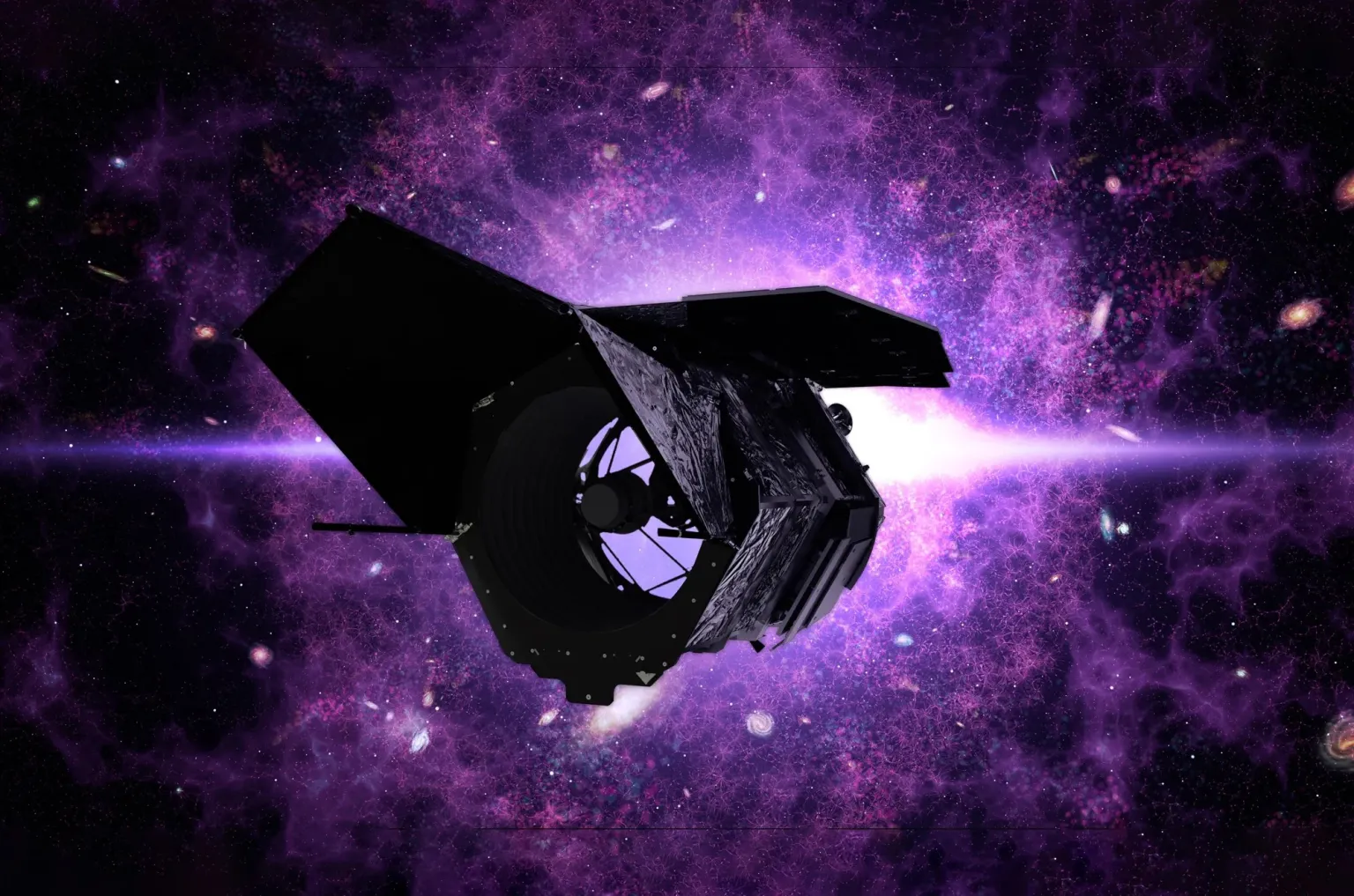
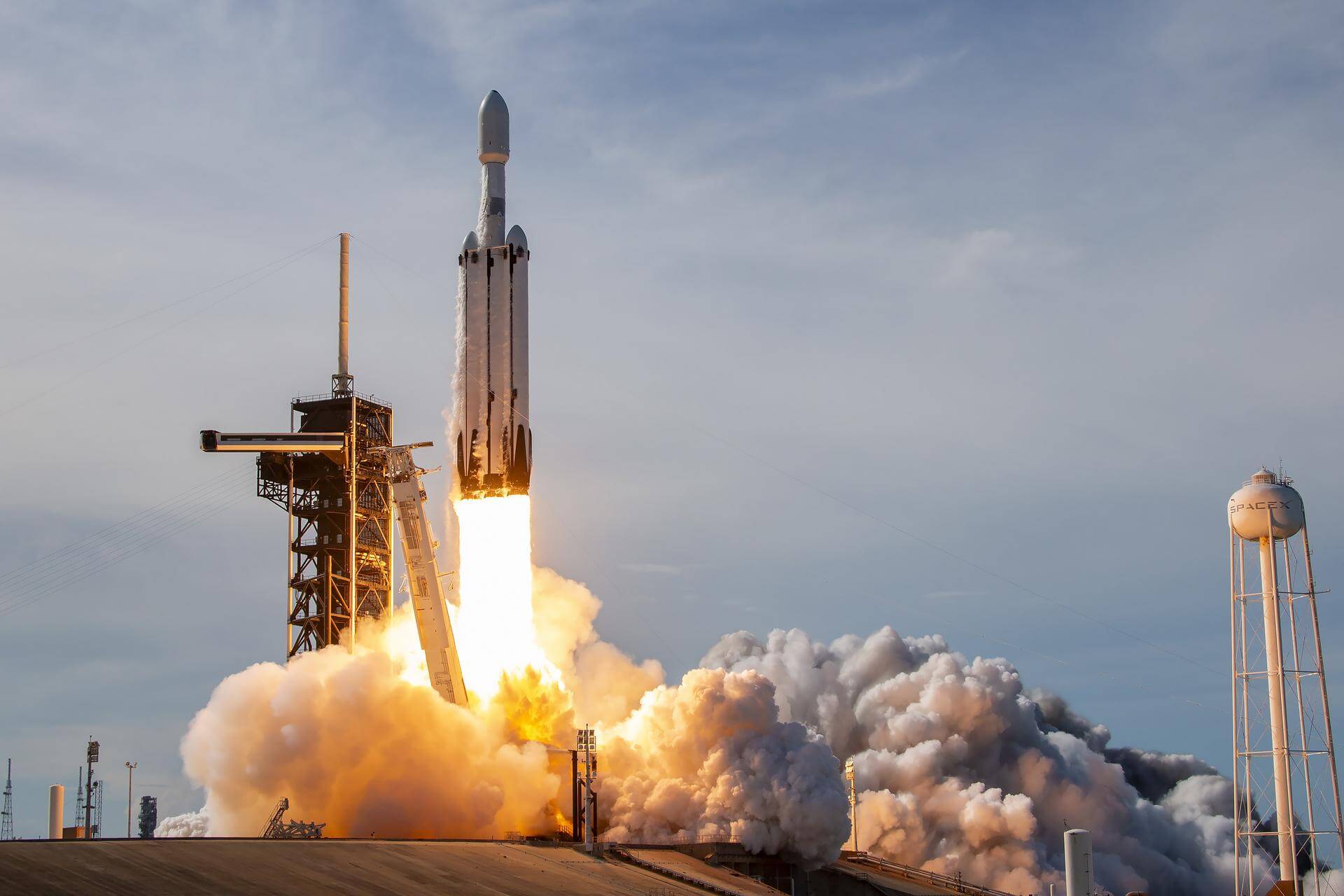
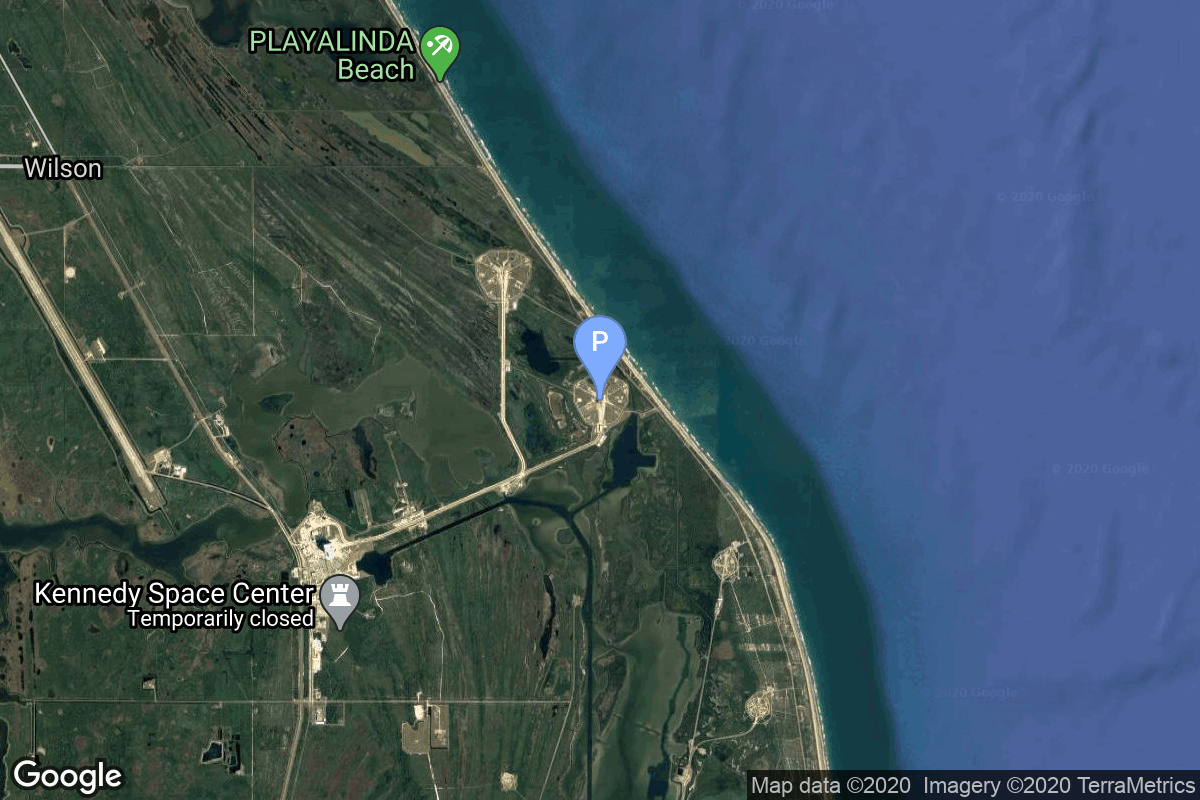
On the horizon, NASA’s Roman Space Telescope—one of the most significant astrophysics missions of the next decade—is off the barge and headed to Kennedy Space Center’s Payload Hazardous Servicing Facility for final processing. The telescope is scheduled to launch no earlier than August 30, 2026, aboard a SpaceX Falcon Heavy, marking another milestone in the company’s role supporting deep-space science missions.
Citations
- “NASA’s SpaceX CRS-34 Dragon Returns Packed with Space Station Science” — https://www.nasa.gov/missions/station/iss-research/nasas-spacex-crs-34-dragon-returns-packed-with-space-station-science/
- “SpaceX Dragon Splashes Down in Pacific, Completes Cargo Mission” — https://www.nasa.gov/blogs/spacestation/2026/06/17/spacex-dragon-splashes-down-in-pacific-completes-cargo-mission/
- “Live coverage: SpaceX to launch 3 Block 2 BlueBird satellites for AST SpaceMobile” — https://spaceflightnow.com/2026/06/16/live-coverage-spacex-to-launch-3-block-2-bluebird-satellites-for-ast-spacemobile/
- “Live coverage: SpaceX to launch intelligence-gathering satellites for the National Reconnaissance Office” — https://spaceflightnow.com/2026/06/18/live-coverage-spacex-to-launch-intelligence-gathering-satellites-for-the-national-reconnaissance-office-2/
- “Live coverage: SpaceX to launch 24 Starlink satellites on Falcon 9 rocket from Vandenberg” — https://spaceflightnow.com/2026/06/20/live-coverage-spacex-to-launch-24-starlink-satellites-on-falcon-9-rocket-from-vandenberg-5/
- SpaceX X (Twitter) — Official SpaceX account coverage, past week — https://x.com/SpaceX
- Starlink X (Twitter) — Official Starlink account coverage, past week — https://x.com/Starlink
- NASA Spaceflight (Twitter) — Starbase infrastructure updates, past week — https://x.com/NASASpaceflight
- Starship Gazer (Twitter) — Starbase photography, past week — https://x.com/StarshipGazer
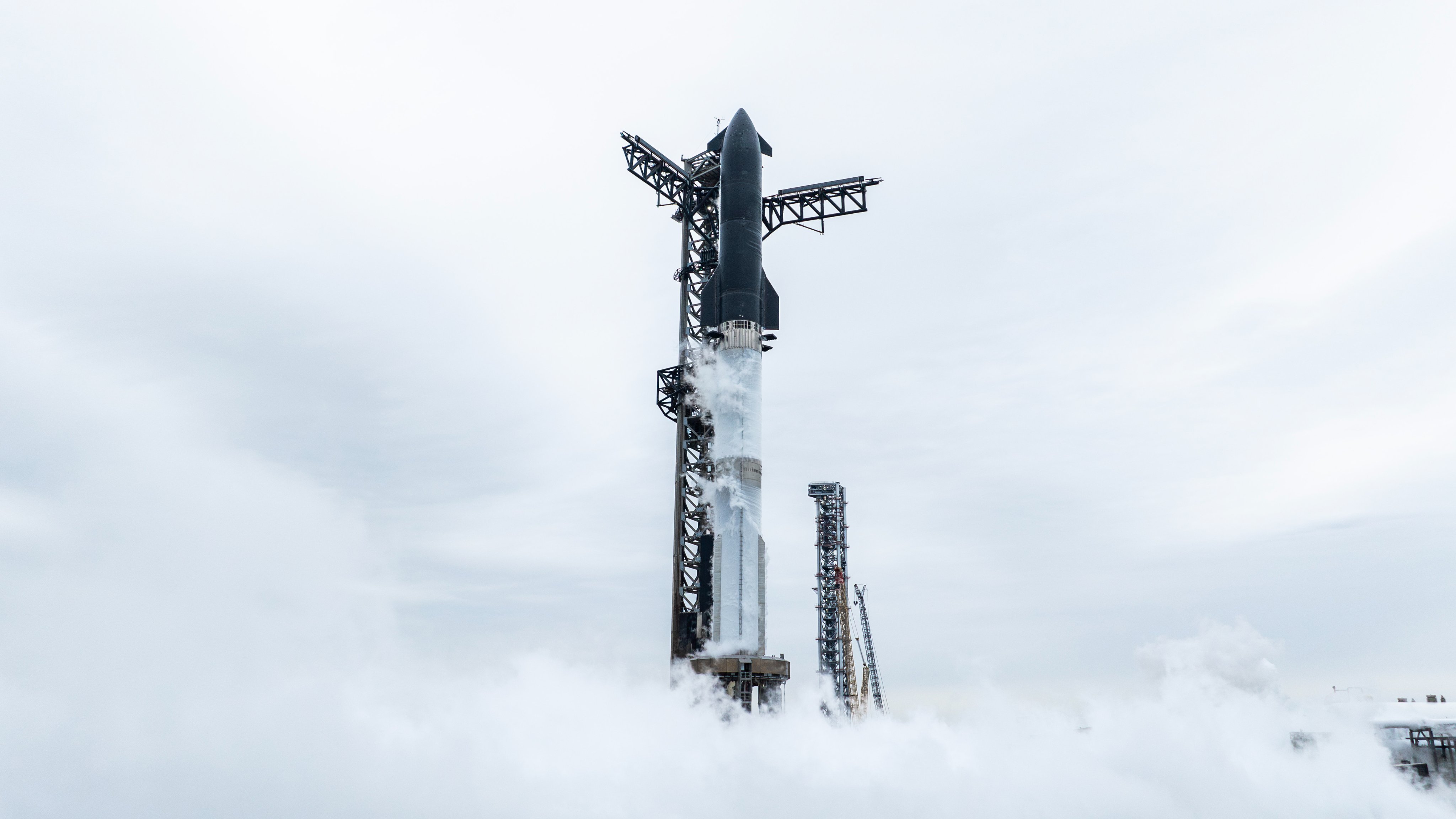
Flight 13
Provider: SpaceX
Date: July 31, 2026
Time: 12:00 AM UTC
Vehicle: Starship
13th test flight of the two-stage Starship launch vehicle. Second flight of Starship V3
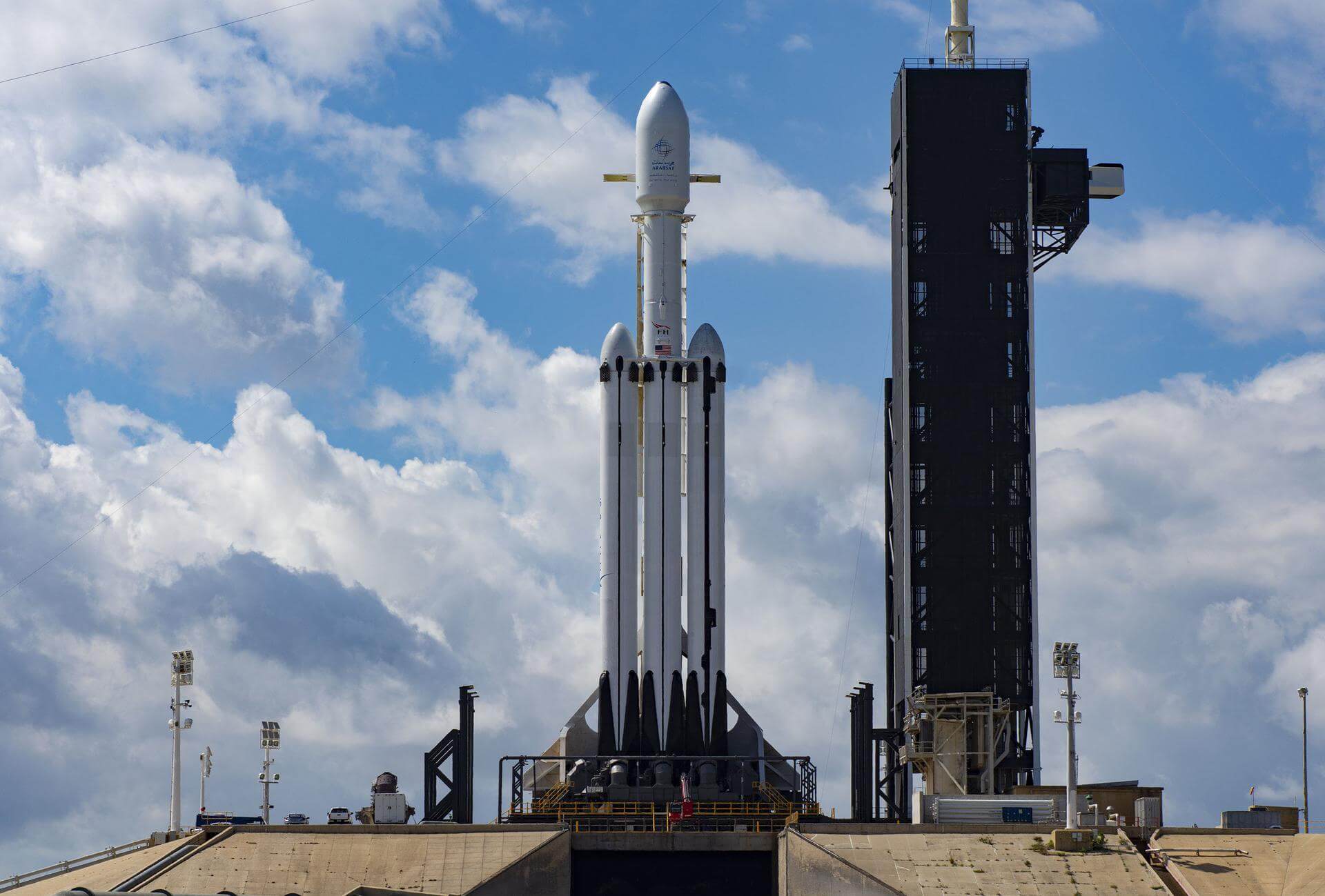
Nancy Grace Roman Space Telescope
Provider: SpaceX
Date: August 30, 2026
Time: 12:00 AM UTC
Vehicle: Falcon Heavy
The Nancy Grace Roman Space Telescope is a NASA infrared space telescope with a 2.4 m (7.9 ft) wide field of view primary mirror and two scientific instruments. The Wide-Field Instrument (WFI) is a 300.8-megapixel multi-band visible and near-infrared camera, providing a sharpness of images comparable to that achieved by the Hubble Space Telescope over a 0.28 square degree field of view, 100 times larger than imaging cameras on the Hubble. The Coronagraphic Instrument (CGI) is a high-contrast, small field of view camera and spectrometer covering visible and near-infrared wavelengths using novel starlight-suppression technology. Roman objectives include a search for extra-solar planets using gravitational microlensing, and probing the expansion history of the Universe and the growth of cosmic structure, with the goal of measuring the effects of dark energy, the consistency of general relativity, and the curvature of spacetime.
Griffin Mission One
Provider: SpaceX
Date: November 30, 2026
Time: 12:00 AM UTC
Vehicle: Falcon Heavy
Demonstration flight of the Astrobotic Griffin lander and its engines, initially contracted for the cancelled NASA VIPER (Volatiles Investigating Polar Exploration Rover) mission. The vacated payload spot will now host the FLIP (FLEX Lunar Innovation Platform) lunar rover from Astrolab.
USSF-75
Provider: SpaceX
Date: December 31, 2026
Time: 12:00 AM UTC
Vehicle: Falcon Heavy
Classified payload for the United States Space Force
Superbird-9
Provider: SpaceX
Date: June 30, 2027
Time: 12:00 AM UTC
Vehicle: Starship
Superbird-9 is a high throughput communication satellite. It is designed to deliver broadcast and broadband missions in Ku band primarily over Japan and Eastern Asia, in response to mobility and broadband demands.



Enjoying the content? Stay up to date on everything happening behind the scenes by following our Patreon!

