The Canadian Space Agency has confirmed the future of the Canadarm3 program, ending a period of uncertainty that followed changes to NASA’s Artemis architecture. Originally designed for the Lunar Gateway, the next-generation robotic arm will now be repurposed to support surface operations on the Moon and to pursue commercialization opportunities in low-Earth orbit.
The program’s direction shifted after the United States revamped its Artemis plans, casting doubt on the Gateway station that had been Canadarm3’s intended home. The CSA had previously signalled it would seek ways to preserve the investment. This week’s confirmation commits the technology to Artemis ground missions and potential LEO space station projects.
MDA Space, contracted to build the arm, welcomed the clarity. “After the landmark success of the Artemis II mission around the Moon, all eyes have turned to the lunar surface,” said Mike Greenley, chief executive officer of MDA Space. He noted the shift offers an opportunity to maintain Canada’s four-decade competitive advantage in space robotics.
Minister of Industry Mélanie Joly framed the decision in economic terms: “Space exploration is essential to Canada’s economic future. It drives innovation, creates high-value jobs, attracts investment, and strengthens the industries and technologies that keep us competitive.”
The program builds on a long heritage. The original Canadarm flew on 90 Space Shuttle missions, and Canadarm2 has operated on the International Space Station for a quarter of a century.
Perseverance Prepares to Set All-Time Mars Distance Record
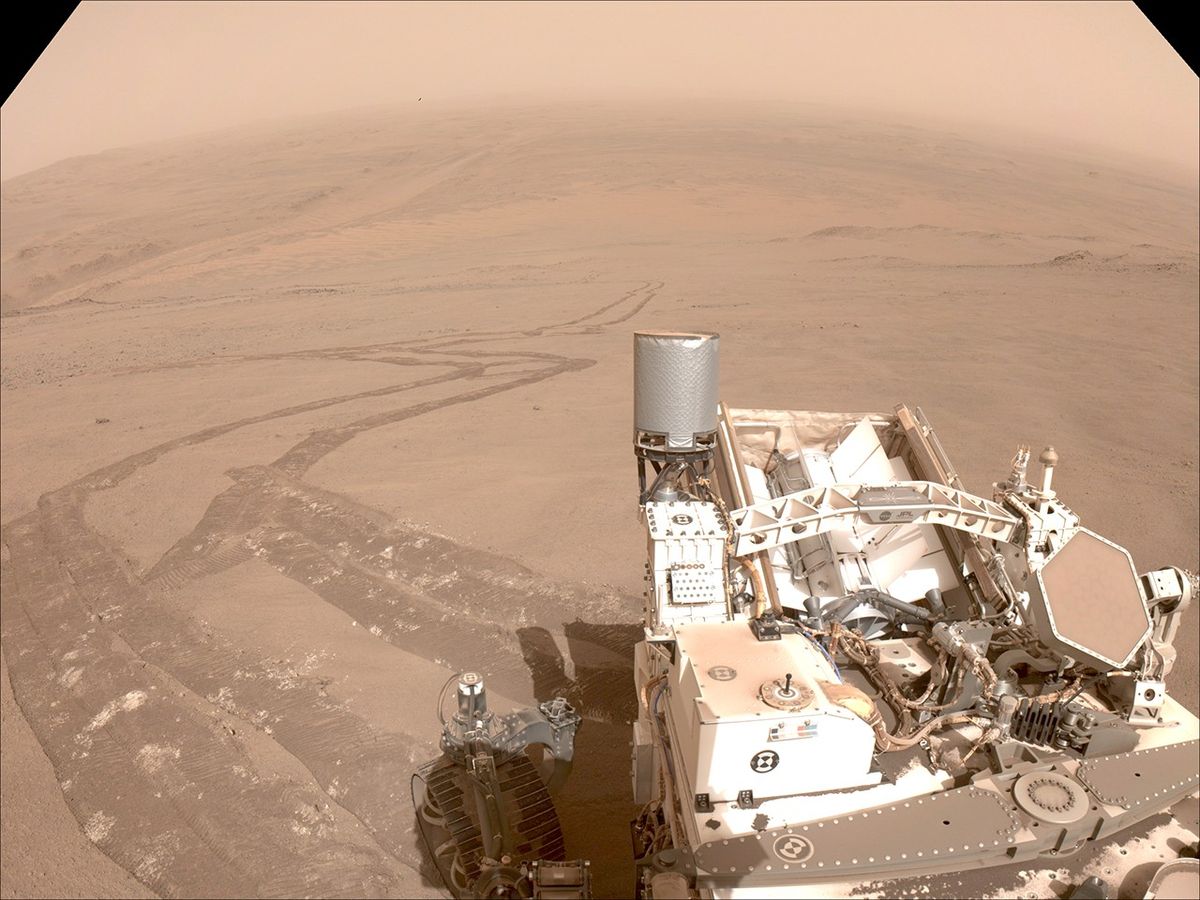
NASA’s Perseverance rover will surpass 45.16 km (28.06 miles) of driving sometime next week, breaking the distance record previously held by the Opportunity rover, which ceased communications in 2018. Perseverance will reach the milestone in roughly five years on Mars — about a third of the time Opportunity needed.
The enabling factor is autonomous navigation. About 90 percent of the distance Perseverance has driven has been under its own Vision Compute Element, which processes camera imagery and calculates safe routes while the wheels turn. By comparison, the Curiosity rover’s older computer — with some chipsets dating to the 1990s — limits it to roughly 10 percent autonomous driving. Curiosity has covered 38.6 km in more than 15 years on Mars.
“The real enabling technology has been its auto navigation system,” said Steven Lee, project manager for Perseverance at NASA’s Jet Propulsion Laboratory. The rover’s maximum wheel speed is about 150 meters per hour, but because it spends far less time stationary waiting for Earth-based navigation commands, scientific return has stayed high.
Relativity Space Integrates Aeon R Engines on Terran-R
Relativity Space announced on Friday that engine integration has begun on the Terran-R first-stage thrust structure, with the first Aeon R engines now installed. The thrust structure accommodates 13 Aeon R engines, each delivering 269,000 lbf of sea-level thrust for a combined liftoff thrust of 3,497,000 lbf. The company confirmed that every engine had completed acceptance testing prior to installation.
Custom ground support equipment is positioning each engine before the integrated thrust structure is rotated for mating with the rest of Stage 1. The milestone follows the successful structural qualification of a dedicated Stage 1 test article, which endured 420 pressure cycles and 62 proof, stability, and ultimate loading cases. The campaign culminated in 4.3 million lbf of axial compression applied while the tank remained pressurized, pushing the hardware beyond expected operational limits.
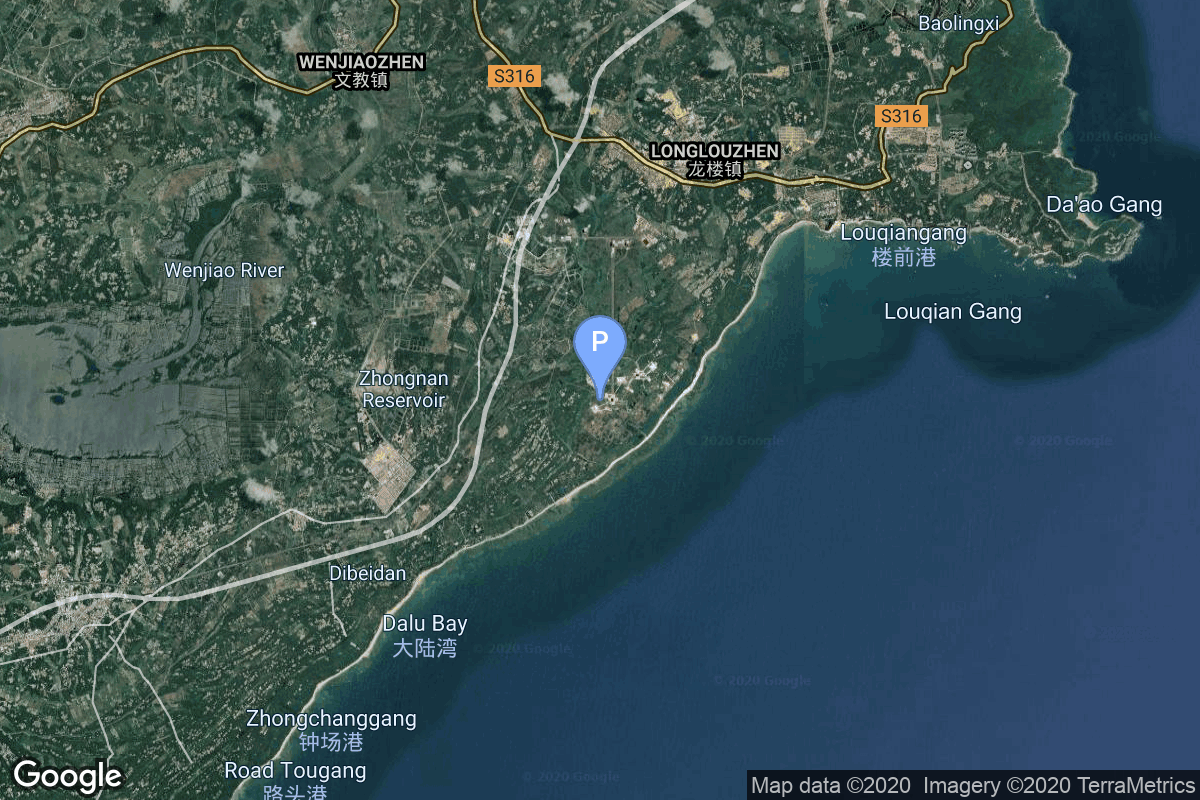
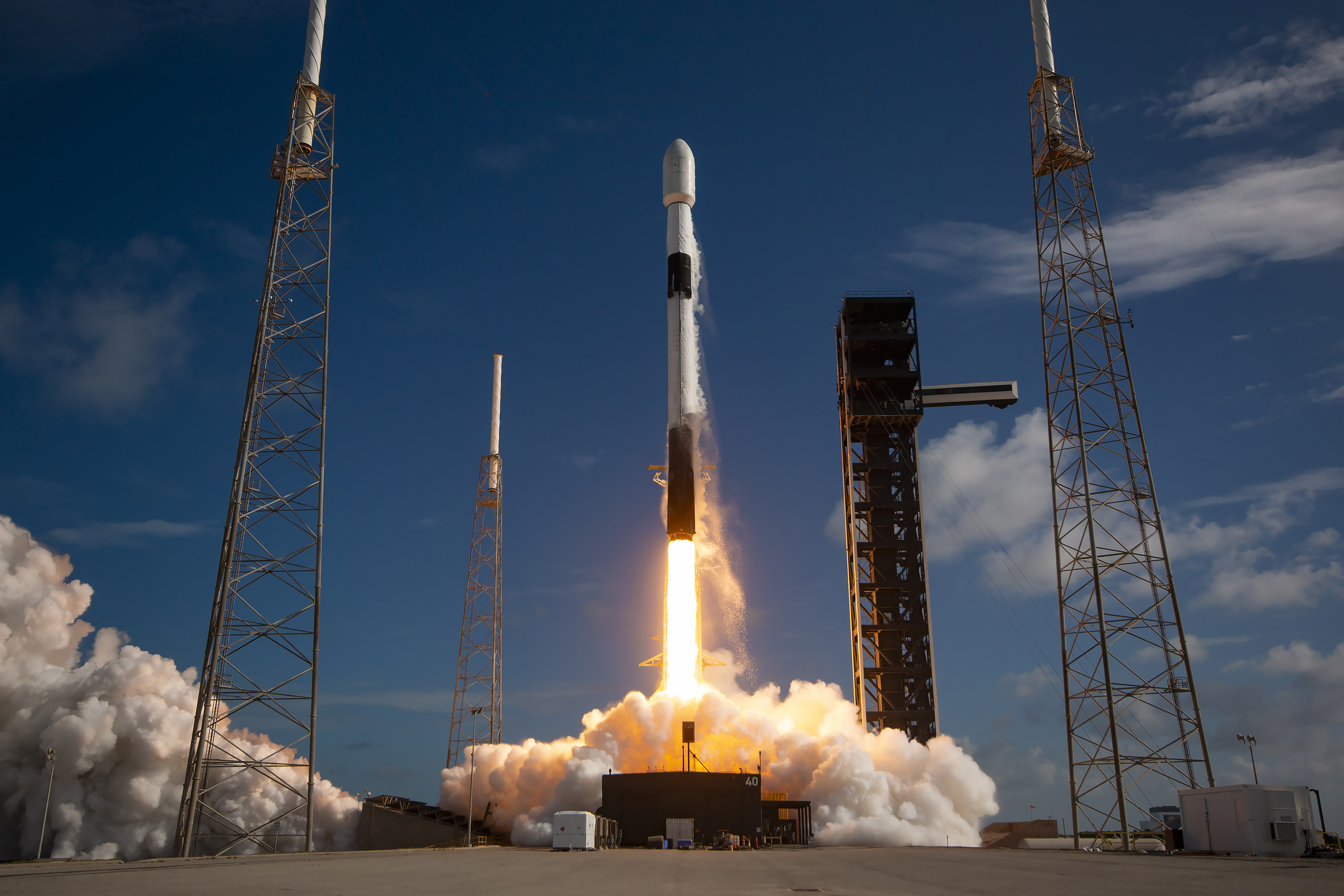
Provider: SpaceX Date: August 8, 2026 Time: 4:23 PM UTC Vehicle: Falcon 9
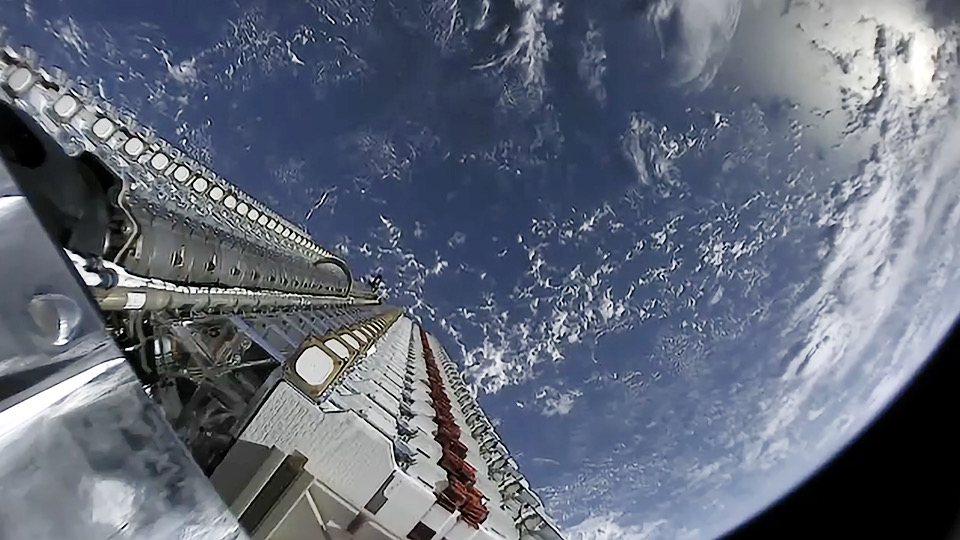
A batch of 24 satellites for the Starlink mega-constellation – SpaceX’s project for space-based Internet communication system.
Unknown Payload
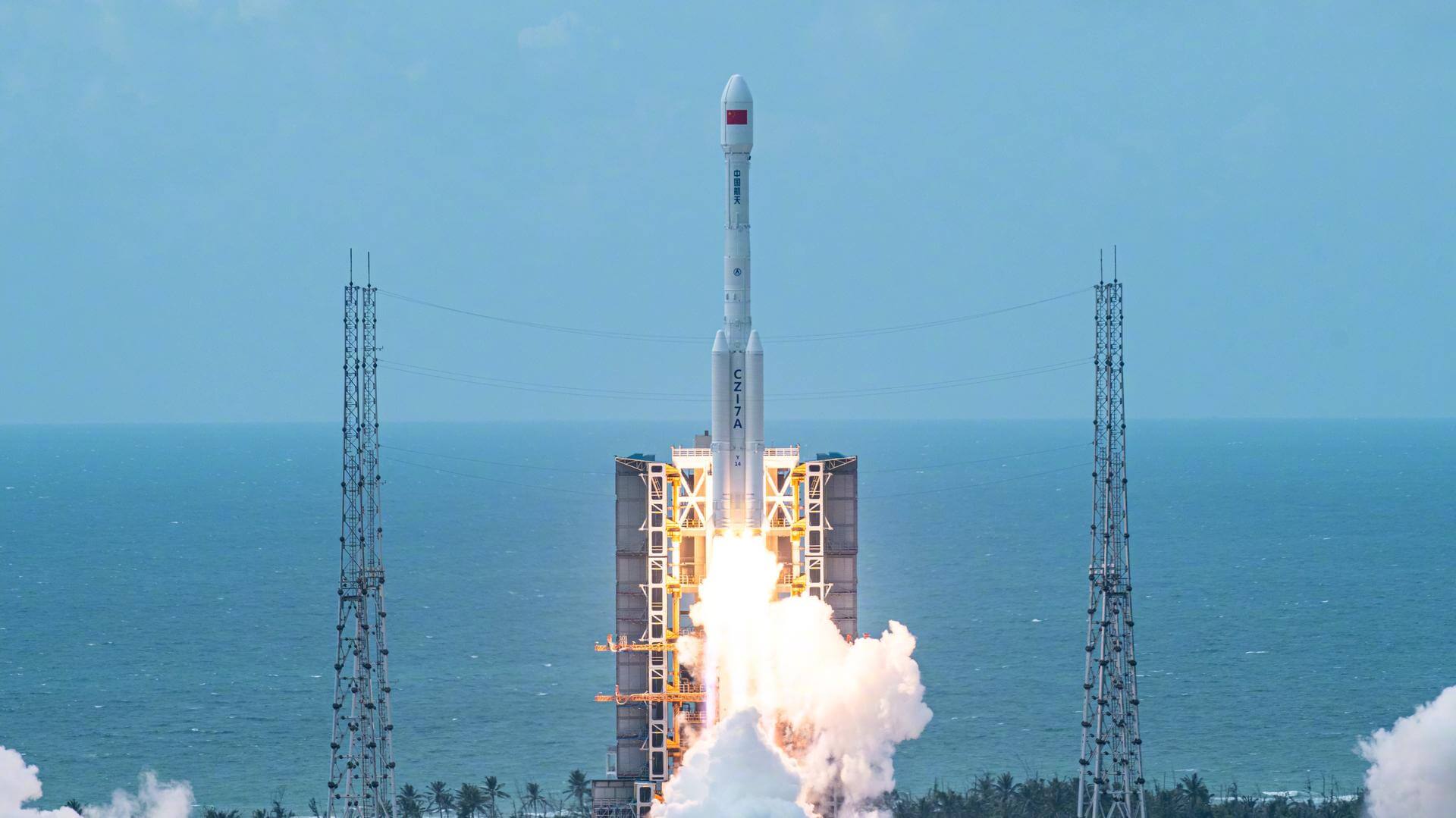
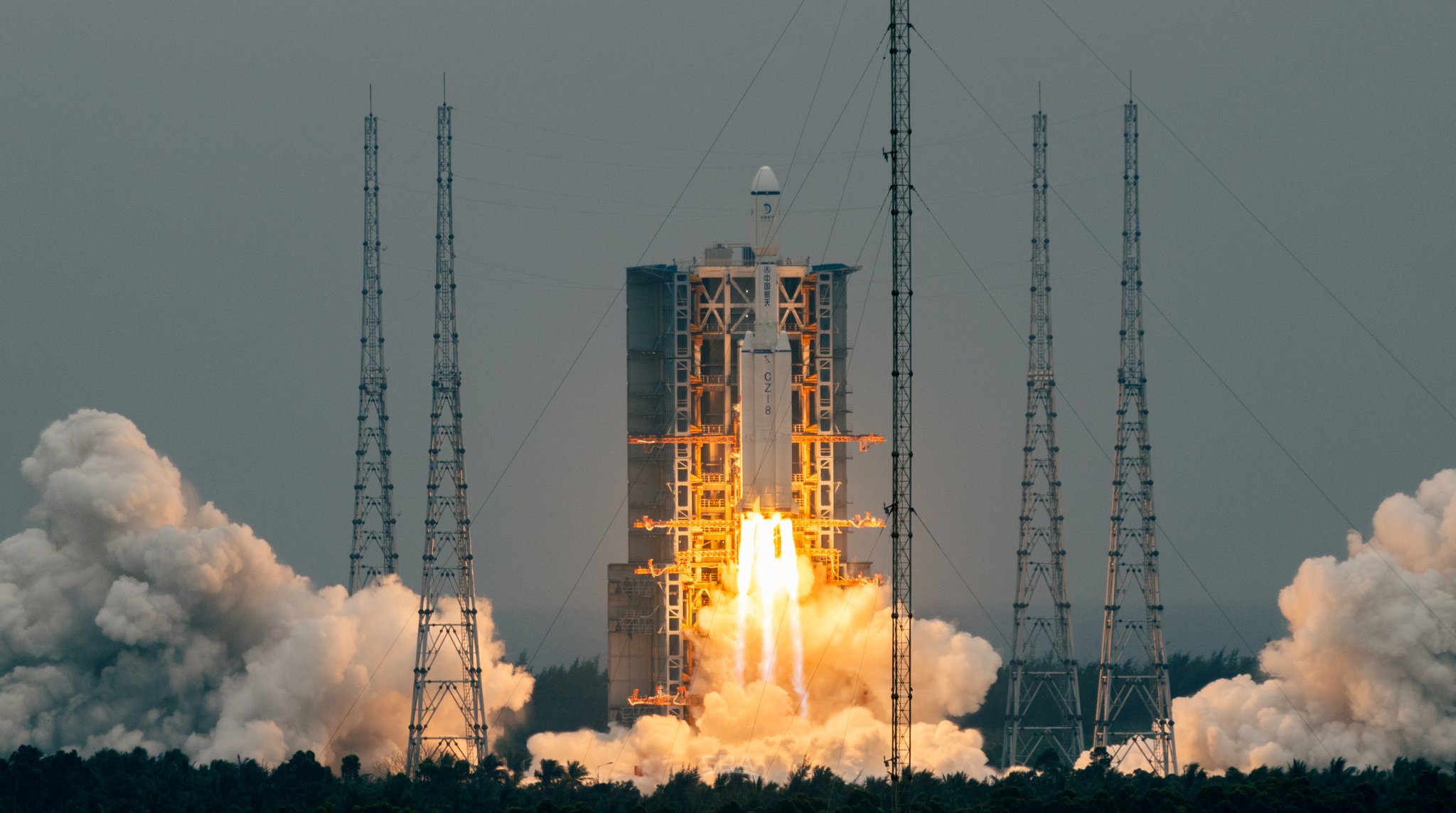
Provider: China Aerospace Science and Technology Corporation Date: August 10, 2026 Time: 12:00 PM UTC Vehicle: Long March 7A
Details TBD.
Starlink Group 10-19
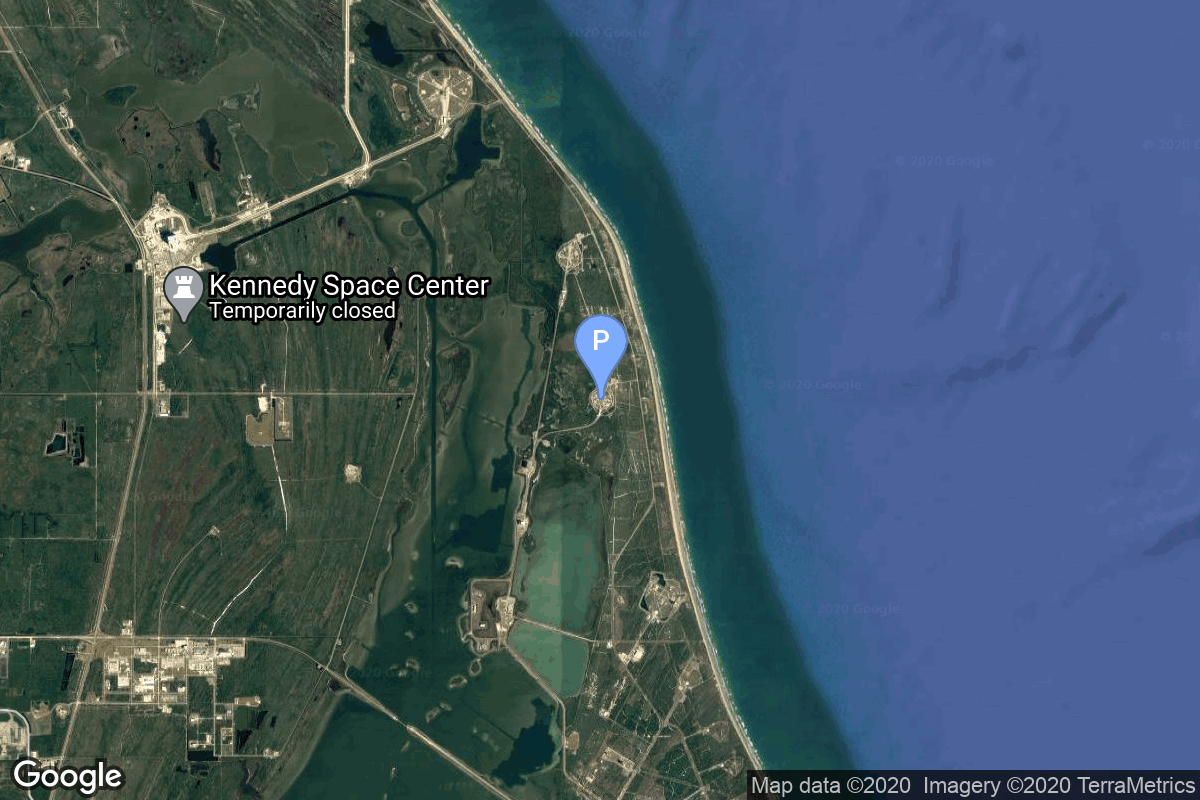
Provider: SpaceX Date: August 10, 2026 Time: 2:49 PM UTC Vehicle: Falcon 9
A batch of 29 satellites for the Starlink mega-constellation – SpaceX’s project for space-based Internet communication system.
Michibiki 7 (QZS-7)
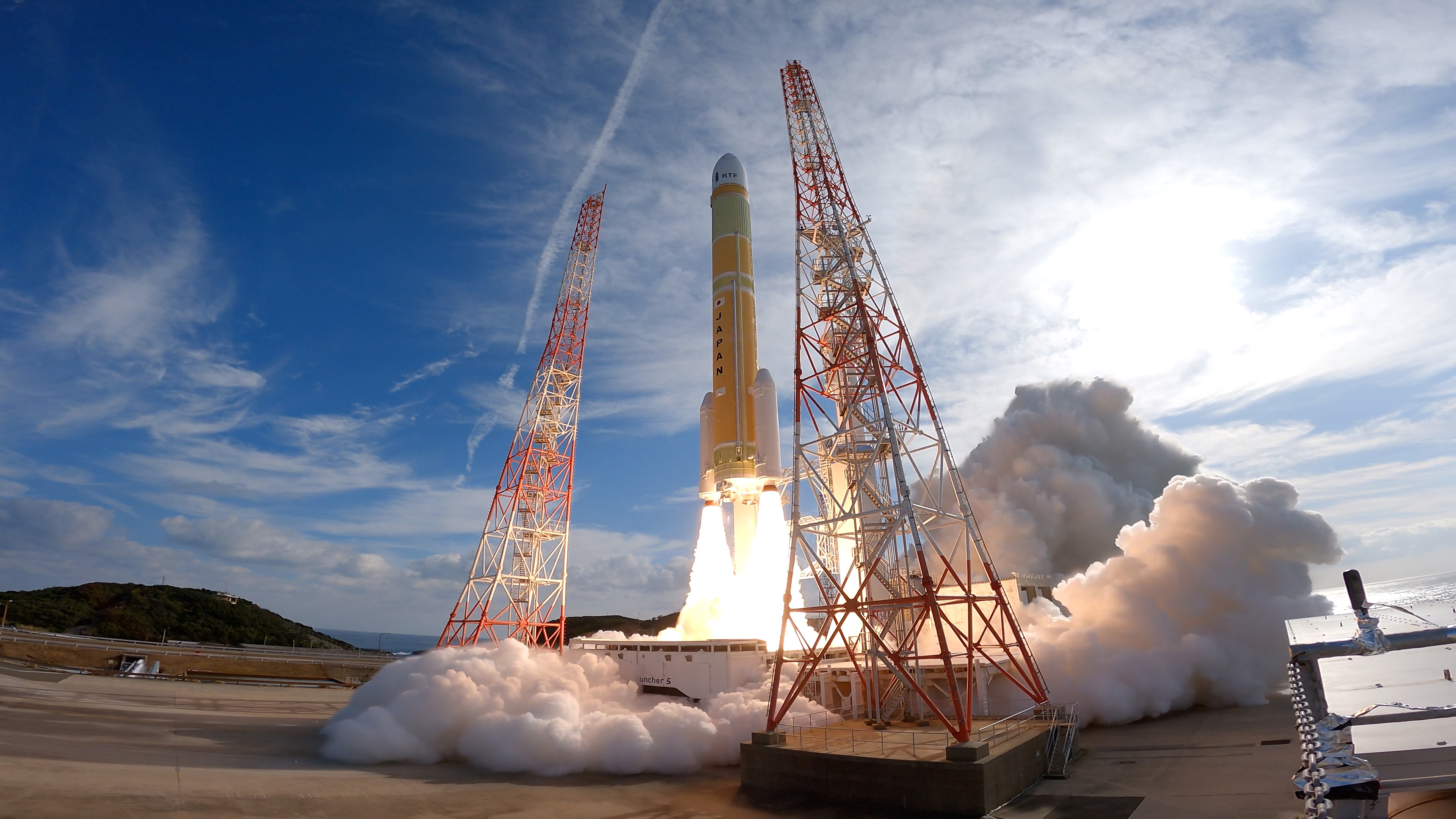
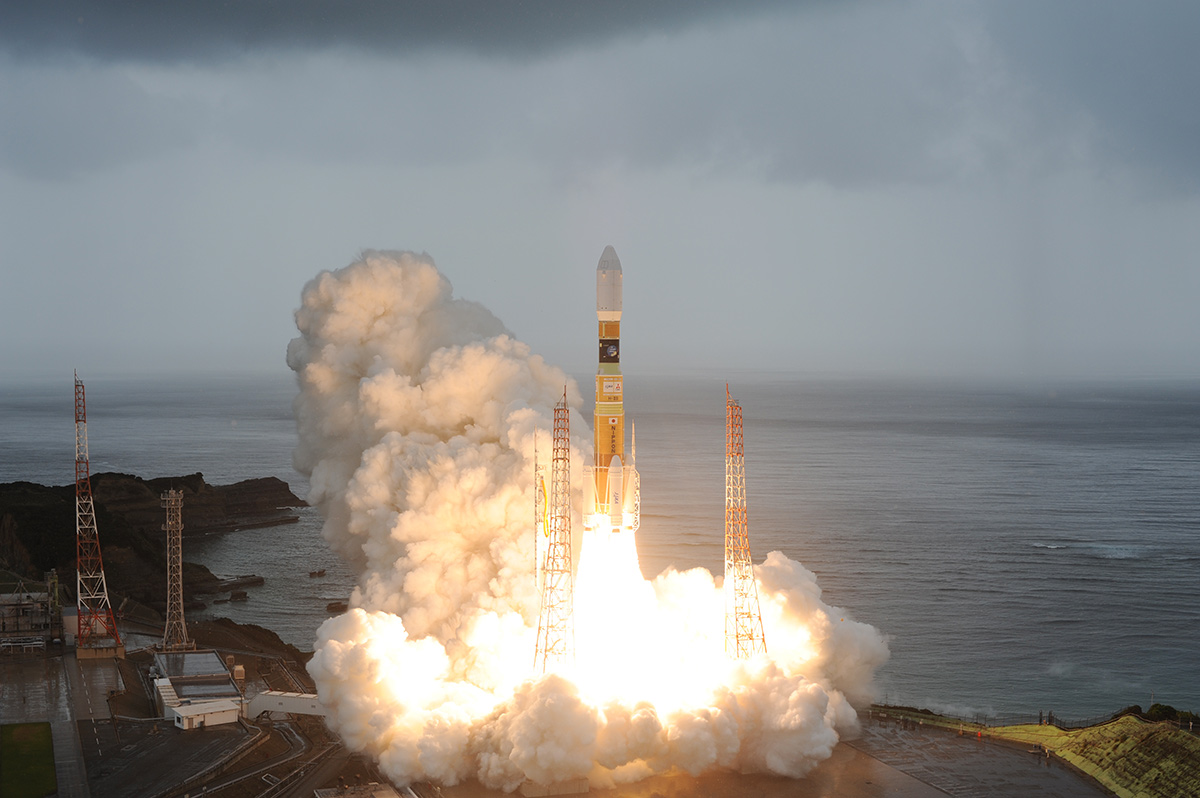
Provider: Mitsubishi Heavy Industries Date: August 10, 2026 Time: 7:00 PM UTC Vehicle: H3-22
QZSS (Quasi Zenith Satellite System) is a Japanese satellite navigation system operating from inclined, elliptical geosynchronous orbits to achieve optimal high-elevation visibility in urban canyons and mountainous areas. The navigation system objective is to broadcast GPS-interoperable and augmentation signals as well as original Japanese (QZSS) signals from a three-spacecraft constellation.
The navigation system objective is to broadcast GPS-interoperable and augmentation signals as well as original Japanese (QZSS) signals from a three-spacecraft constellation in inclined, elliptical geosynchronous orbits.
Flight 2
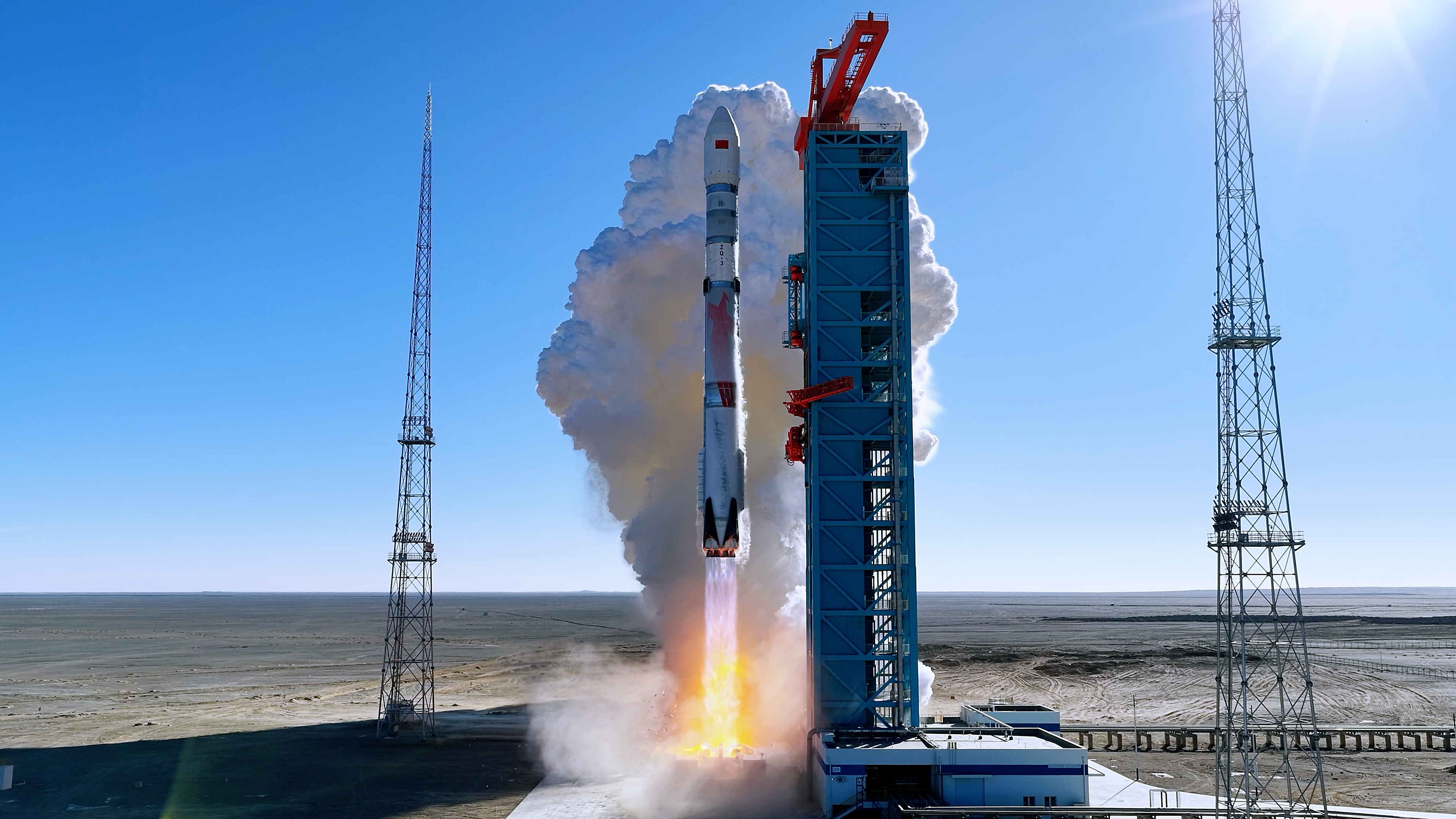
Provider: LandSpace Date: August 10, 2026 Time: 11:45 PM UTC Vehicle: Zhuque-3
Second test launch of LandSpace’s ZQ-3 rocket. Payload identities are TBD.
Starlink Group 17-38 ×
Mission Details
TypeCommunications
OrbitLow Earth Orbit
TargetEarth
A batch of 24 satellites for the Starlink mega-constellation – SpaceX’s project for space-based Internet communication system.
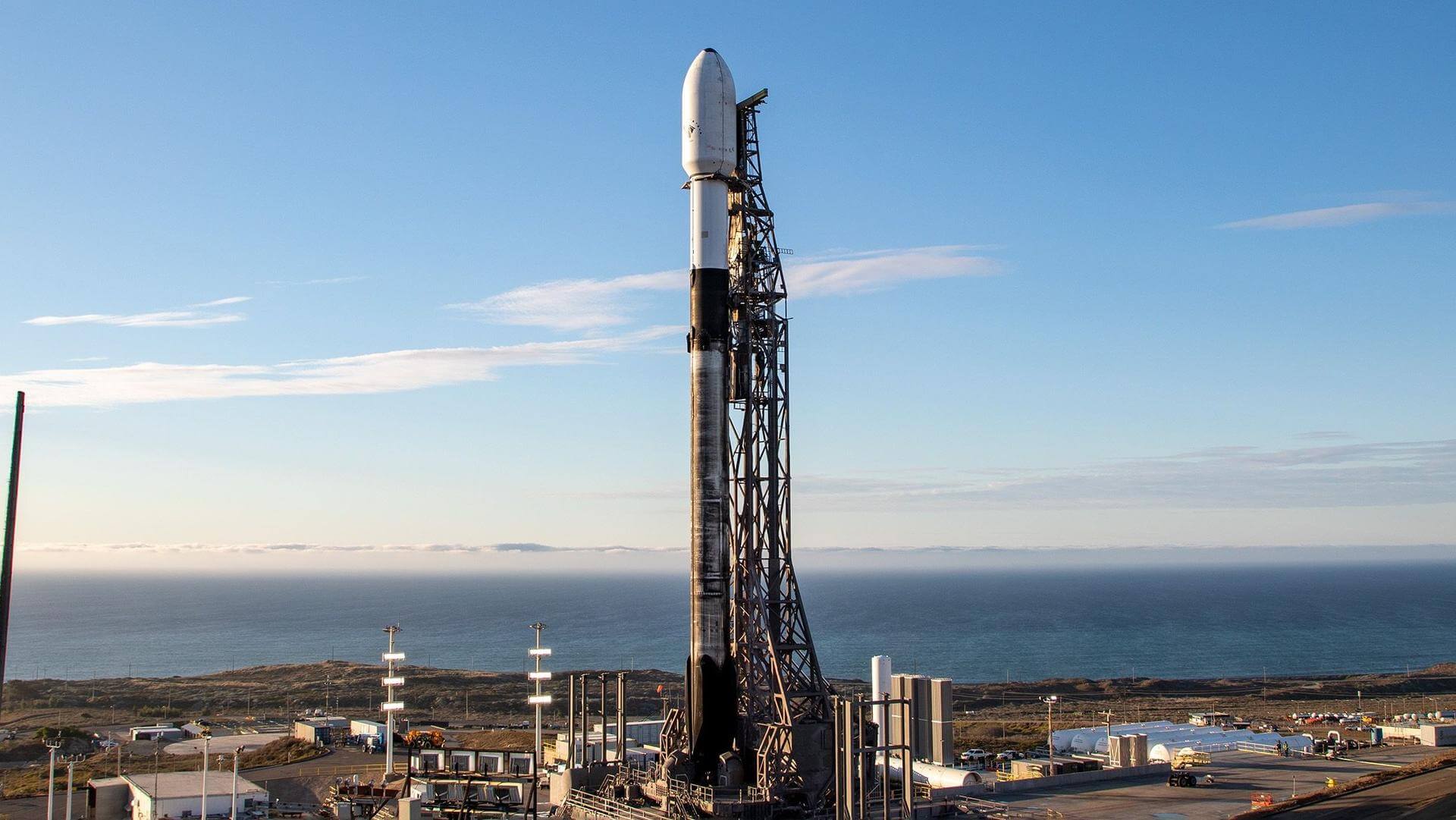
Falcon 9 is a two-stage rocket designed and manufactured by SpaceX for the reliable and safe transport of satellites and the Dragon spacecraft into orbit. The Block 5 variant is the fifth major interval aimed at improving upon the ability for rapid reusability.
Falcon 9 is a two-stage rocket designed and manufactured by SpaceX for the reliable and safe transport of satellites and the Dragon spacecraft into orbit. The Block 5 variant is the fifth major interval aimed at improving upon the ability for rapid reusability.
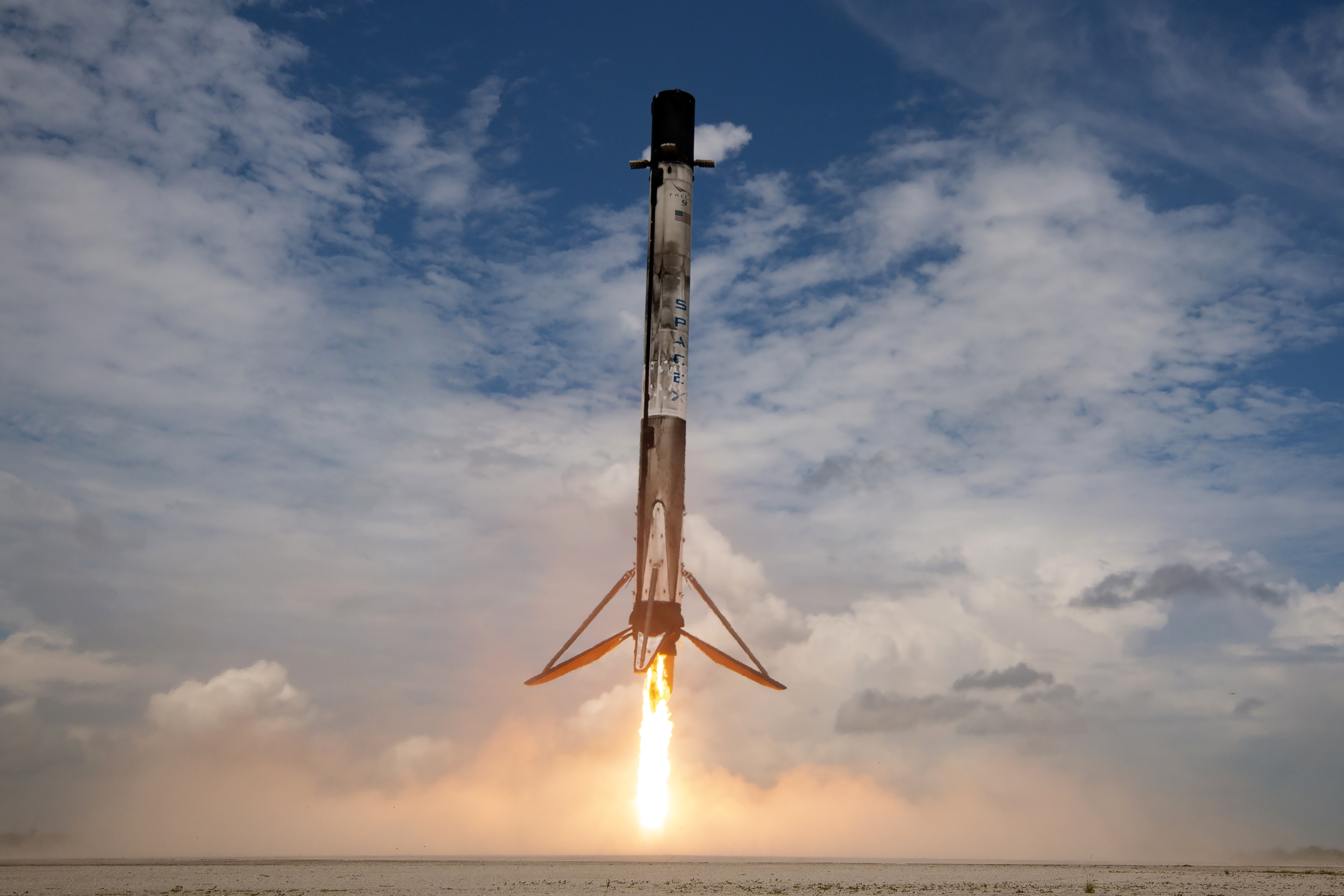
The Falcon 9 first stage B1085 will land on ASDS ASOG after its 18th flight.
Michibiki 7 (QZS-7) ×
Mission Details
TypeNavigation
OrbitGeostationary Transfer Orbit
TargetEarth
QZSS (Quasi Zenith Satellite System) is a Japanese satellite navigation system operating from inclined, elliptical geosynchronous orbits to achieve optimal high-elevation visibility in urban canyons and mountainous areas. The navigation system objective is to broadcast GPS-interoperable and augmentation signals as well as original Japanese (QZSS) signals from a three-spacecraft constellation.
The navigation system objective is to broadcast GPS-interoperable and augmentation signals as well as original Japanese (QZSS) signals from a three-spacecraft constellation in inclined, elliptical geosynchronous orbits.
The H3 Launch Vehicle is a Japanese expendable launch system.
Each H3 booster configuration has a two-digit and a letter designation that indicates the features of that configuration. The first digit represents the number of LE-9 engines on the main stage, either “2” or “3”. The second digit…
Zhuque-3 (ZQ-3) is a reusable orbital launch vehicle developed by Chinese private company LandSpace. The rocket is built using stainless steel and shares the same series of gas generator cycle methane/liquid oxygen powered rocket engines as in the currently active ZQ-2E rocket.
Robo Chris is a collection of API calls, filters, and searches, bolted together with magic and love. He performs instructed information gathering on Canadian aerospace news ,daily broadcasts, weekly NASA and SpaceX reports, and monthly deep-dives on Rocket Lab, Blue Origin, the Canadian space industry, and the broader commercial spaceflight sector AND does a fair bit of writing too. Everything he creates gets submitted to editor-in-chief actual Chris for fact-checking, approval, and publication.