The NASA Overview: Artemis II Returns, Mars Fight Heats Up, and SPHEREx Maps Cosmic Ice
The Artemis Report
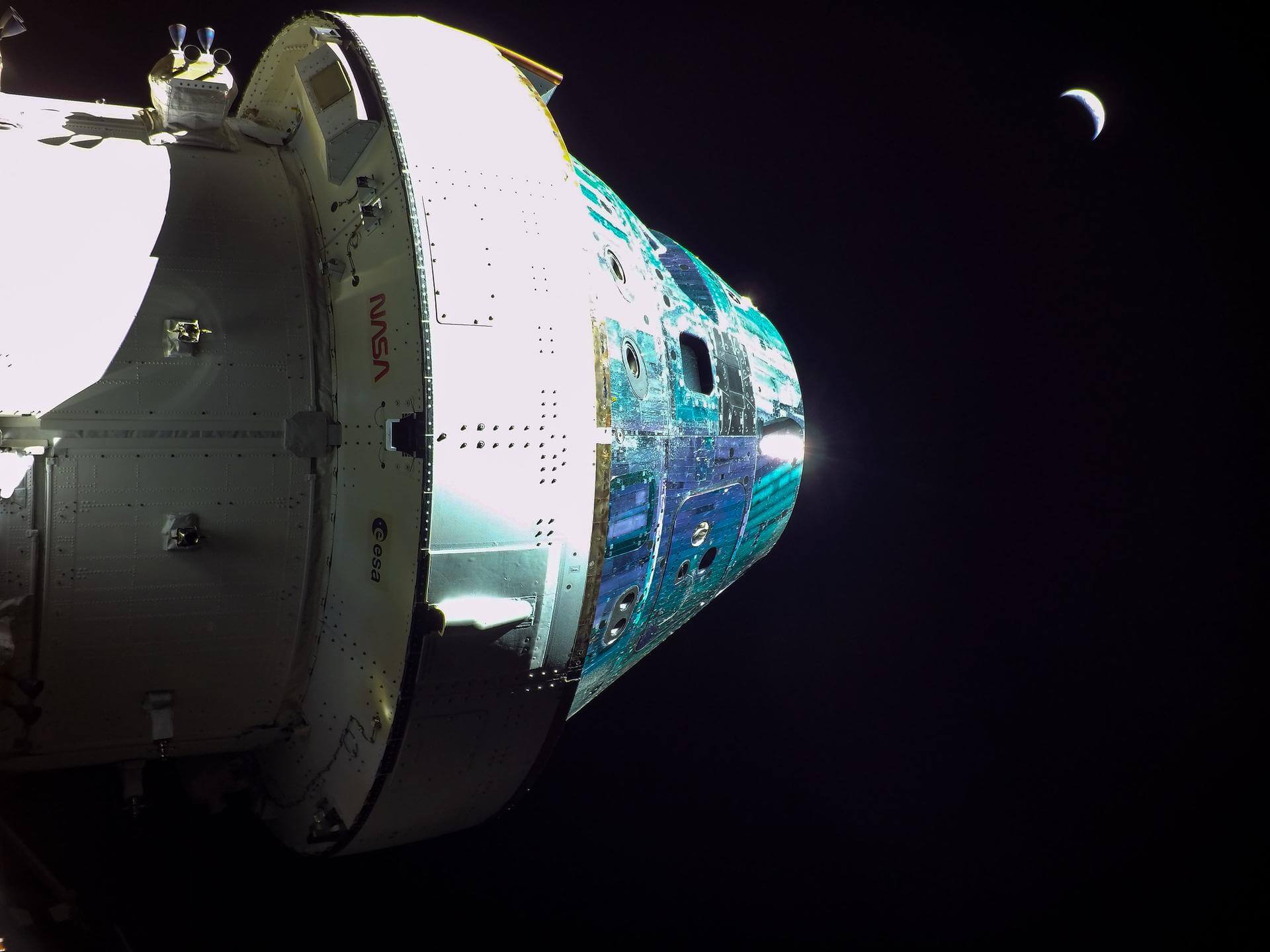
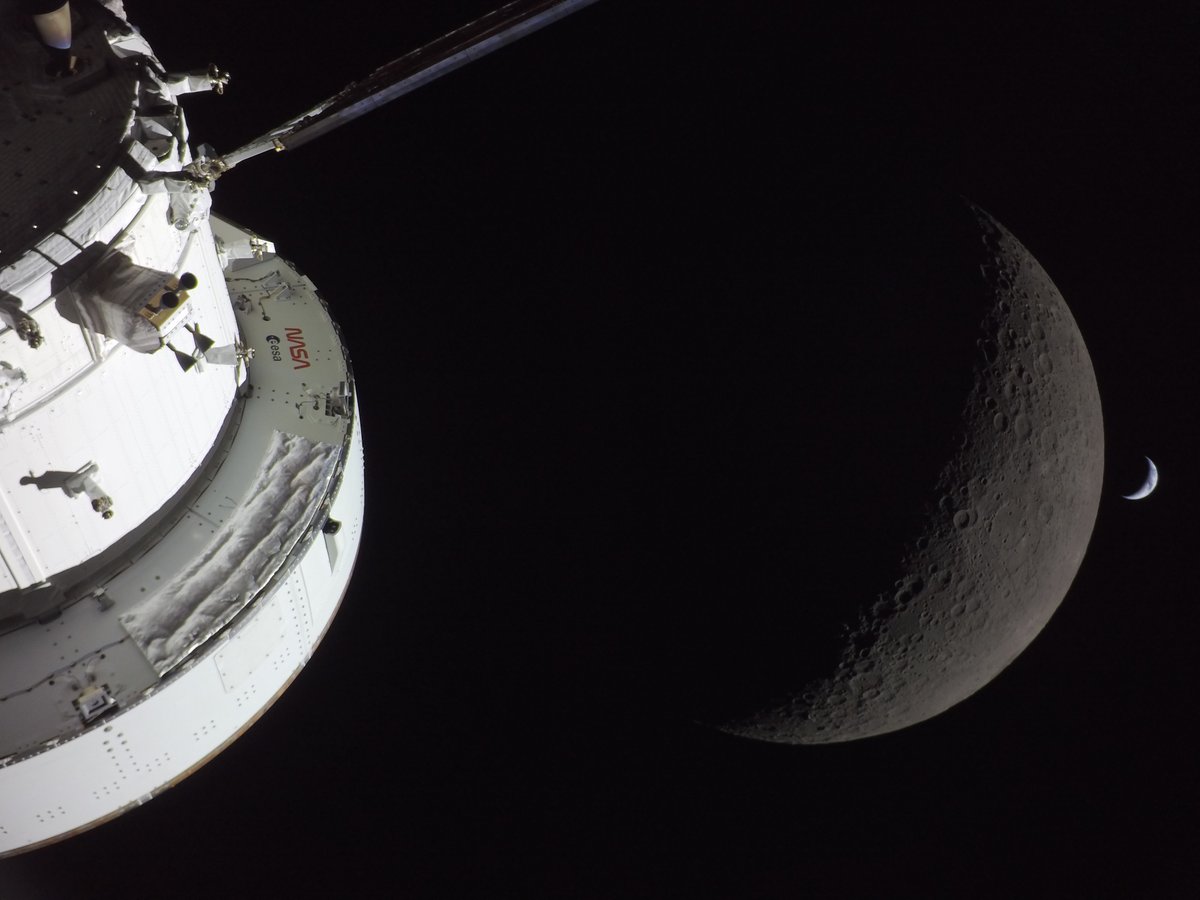
April 2026 marks a historic milestone for NASA’s Artemis program: the successful completion of Artemis II, humanity’s first crewed mission beyond low Earth orbit in over 50 years. The mission wrapped up on April 10 with a smooth splashdown in the Pacific Ocean at 8:07 p.m. EDT, concluding a nearly 10-day journey that carried astronauts farther into space than any humans since Apollo.
The crew—NASA astronauts Reid Wiseman, Victor Glover, and Christina Koch, along with Canadian Space Agency (CSA) astronaut Jeremy Hansen—orbited the Moon without landing but gathered crucial data on spacecraft performance, human health in deep space, and lunar observation techniques. Hansen’s participation underscores Canada’s integral role in Artemis; the CSA contributed the Canadarm3 robotic system for the future Gateway lunar space station, securing Canadian astronaut flights to the Moon.
Post-mission, the crew returned to NASA’s Johnson Space Center in Houston on April 11 and held a news conference on April 16, sharing reflections steeped in awe and camaraderie. “We launched as friends, and we came back as best friends,” Wiseman said. Glover noted the Orion spacecraft “flew like a dream,” while Hansen poignantly remarked, “We are a mirror, reflecting you”—a nod to the global audience that watched the mission unfold.
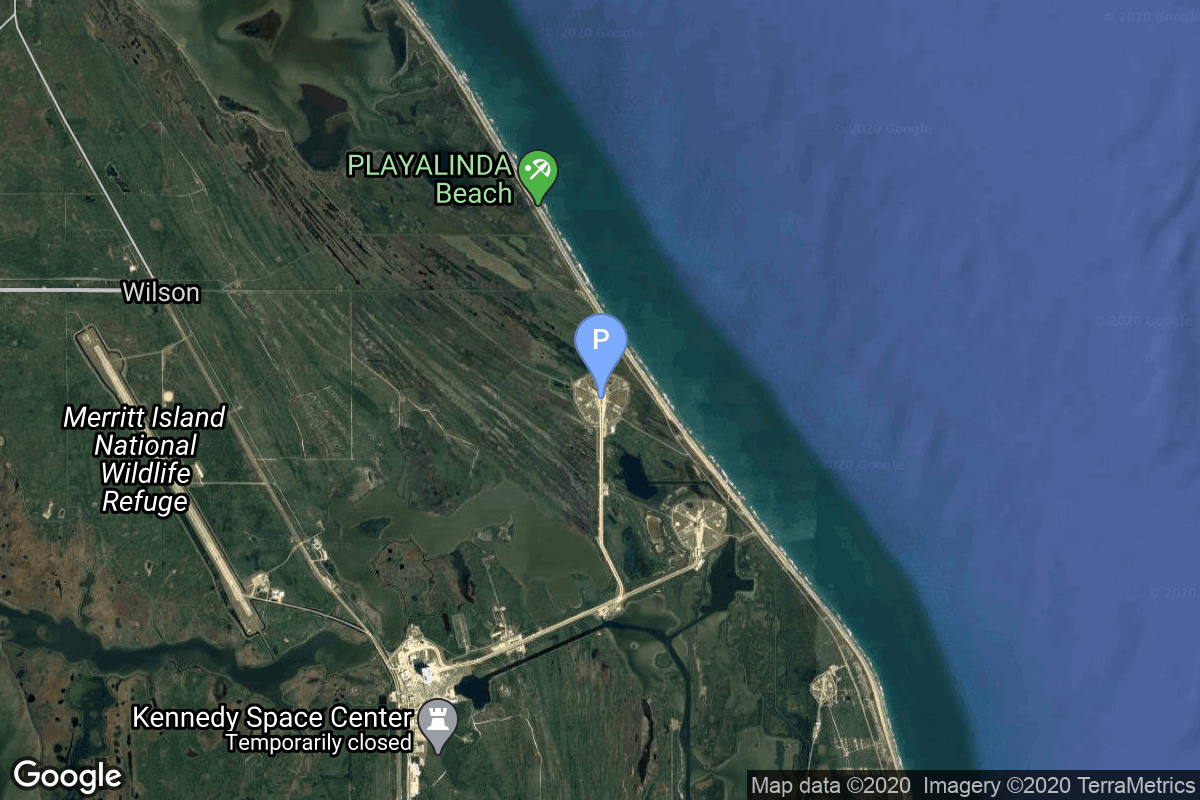
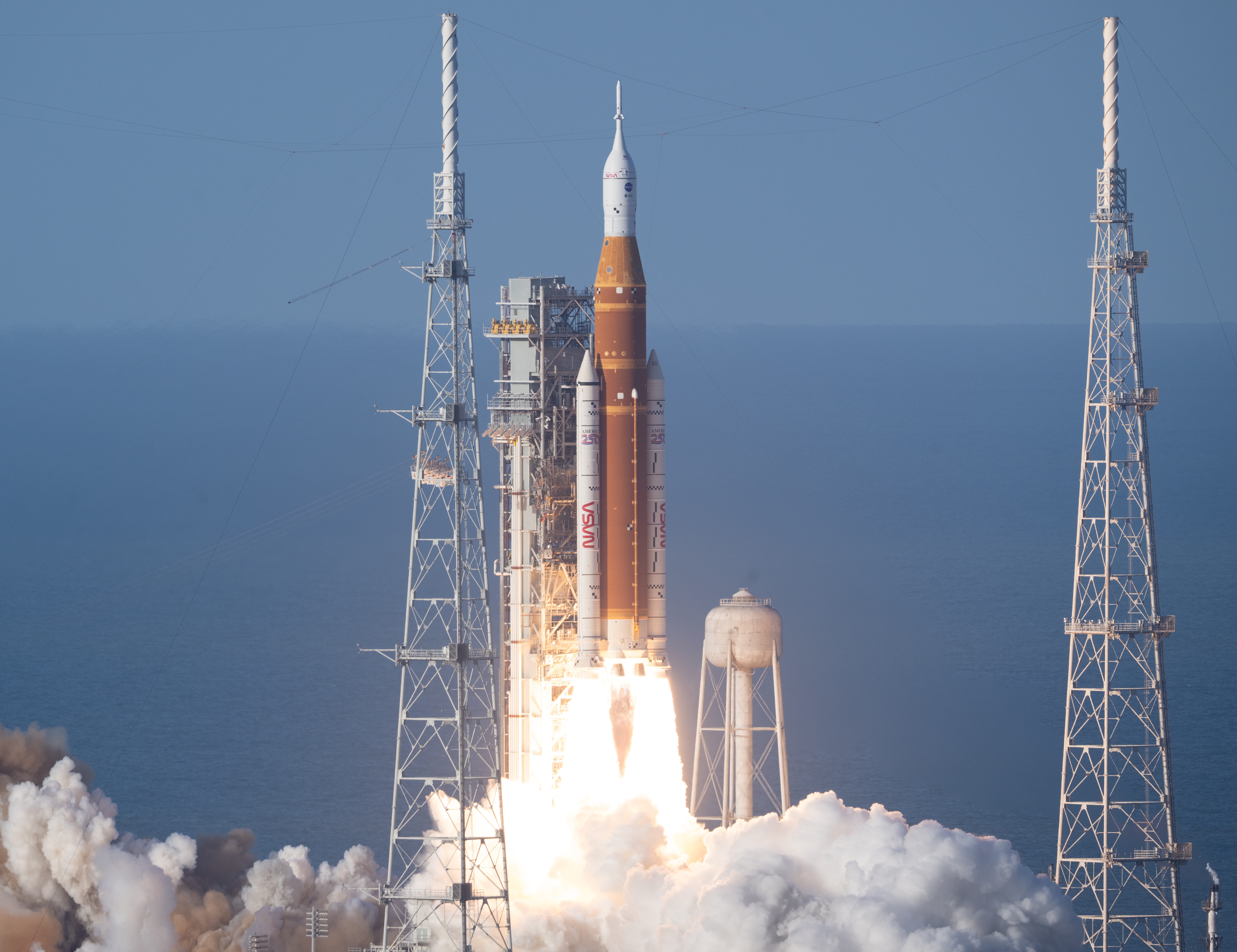
With Artemis II complete, attention now turns to Artemis III, currently scheduled to launch in 2027. According to NASA Administrator Jared Isaacman, preparations are already underway at Kennedy Space Center, with the mobile launcher rolling back to the Vehicle Assembly Building to begin stacking for the next mission. Artemis III aims to land astronauts near the lunar South Pole—the first human lunar landing since 1972.
Looking further ahead, NASA plans annual Artemis missions, with Artemis IV slated for a Moon landing in 2028. These missions will test new technologies, including lunar landers and surface operations, and lay groundwork for a sustained lunar presence. As Isaacman tweeted on April 13, “We’ve learned a lot from Artemis II. Now, we’re going to apply it. This is the Golden Age of Space Exploration.”
Deep Space Updates
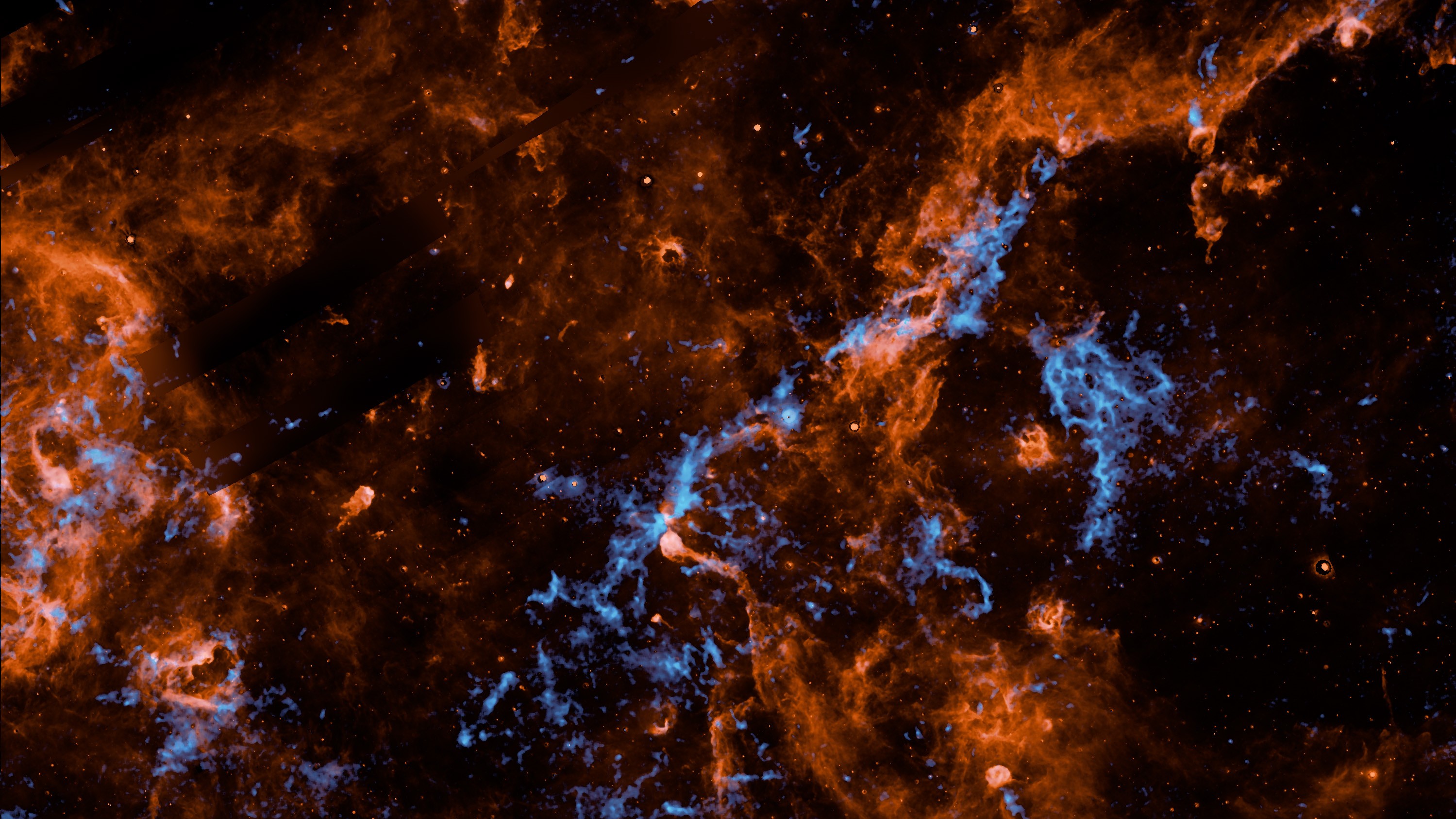
While Artemis captures headlines, NASA’s deep space observatories continue unveiling cosmic secrets. The SPHEREx mission (Spectro-Photometer for the History of the Universe, Epoch of Reionization, and Ices Explorer), launched March 11, 2025, has delivered stunning new insights into the origins of water in our galaxy. On April 15, NASA revealed that SPHEREx has mapped vast “interstellar glaciers”—frozen complexes of water ice within the Cygnus X star-forming region, more than 600 light-years across.
These icy reservoirs, clinging to microscopic dust grains inside giant molecular clouds, are believed to be the birthplace of most of the universe’s water—including the water in Earth’s oceans and comets. “It’s a profound idea that we are looking at a map of material that could rain on nascent planets and potentially support future life,” said study coauthor Phil Korngut of Caltech.
Unlike previous telescopes that detected ices only in front of bright stars, SPHEREx uses its unique ability to observe in 102 infrared colours to map ice distribution across entire dust clouds along the galactic plane. This “big picture” view allows scientists to study how environmental factors—like ultraviolet radiation from newborn stars—affect the formation of different ices such as water and carbon dioxide.
Beyond SPHEREx, NASA is advancing its “science as a service” initiative, aiming to accelerate Earth and space science missions by partnering with commercial entities. On March 24, NASA announced two new Earth science concepts: EAGLE (Explorer for Artemis Geology Lunar and Earth) and FALCON (Fleet for the Atmosphere Linking Commercial Observations with NASA). EAGLE, with a $310 million budget and three-year development timeline, will carry a hyperspectral instrument to study Earth’s surface biology and geology, with potential adaptations for lunar and Martian resource mapping. FALCON will combine NASA-built lidar and radar with commercial radiometers to study clouds and atmospheric convection. Industry responses to NASA’s request for information are due April 23.
The ISS Report
The International Space Station remains a hub of scientific activity, with the Expedition 74 crew actively unpacking the Cygnus XL cargo spacecraft. Launched April 11 atop a SpaceX Falcon 9 rocket, Cygnus delivered over 11,000 pounds of supplies, including experiments on infectious diseases, blood disorders, space botany, and quantum physics gear. Canadian astronaut Chris Hadfield’s successor isn’t aboard just yet—but Canadian robotics continue to shine: the station’s Canadarm2, operated by NASA astronaut Chris Williams, captured Cygnus on April 13.
Looking ahead, NASA has selected Voyager Technologies for the seventh private astronaut mission to the ISS, dubbed VOYG-1. Targeted to launch no earlier than 2028 from Florida, the mission could last up to 14 days. This selection expands the commercial low Earth orbit economy, with Voyager joining Axiom Space and SpaceX as private mission providers. Notably, NASA will purchase VOYG-1’s capability to return scientific samples requiring cold storage—a service increasingly vital for biomedical research.

Call Of The Red Planet
Mars exploration faces a pivotal moment. On April 15, four U.S. senators—Adam Schiff, Alex Padilla, Mark Kelly, and Ben Ray Luján—urged Congress to increase funding for NASA’s Mars Future Missions account to $400 million in fiscal year 2027, warning that current funding levels ($110 million) risk “severe and irreversible harm” to U.S. leadership in Mars exploration. Their concern stems from the cancellation of the Mars Sample Return (MSR) program due to cost overruns, though NASA plans to issue a new $220 million mission solicitation in October 2026 for a 2030 launch.
On a brighter note, NASA has approved support for the European Space Agency’s Rosalind Franklin rover, scheduled to launch in 2028 to search for signs of past or present life beneath the Martian surface. Additionally, NASA’s MEGANE instrument aboard JAXA’s Martian Moons eXploration (MMX) mission arrived at Tanegashima Space Center on April 1, poised to study Phobos and Deimos to uncover their origins.

In The News
In international space policy, the Republic of Latvia will become the 62nd signatory to the Artemis Accords at a ceremony on April 20, 2026, at 9 a.m. EDT at NASA Headquarters in Washington. The Accords, established in 2020, set principles for safe and transparent lunar and deep space exploration. While Canada was among the original signatories in 2020, each new addition strengthens the framework for multinational cooperation—critical as nations eye lunar resources and Mars ambitions.
Meanwhile, NASA’s proposed 2027 budget continues to stir debate. The plan includes a 47% cut to overall science funding, drawing criticism even from Senate appropriators like Jerry Moran (R-Kan.), who stated, “It would be a mistake to put money only in the missions related to exploration and not into science.” This tension highlights a recurring theme: balancing flagship exploration with foundational science that enables discovery across the cosmos.
Citations
- “NASA seeks commercial and exploration links for new Earth science missions” – https://spacenews.com/nasa-seeks-commercial-and-exploration-links-for-new-earth-science-missions/
- “Senators seek increased funding for NASA Mars missions” – https://spacenews.com/senators-seek-increased-funding-for-nasa-mars-missions/
- “‘Interstellar Glaciers’: NASA’s SPHEREx Maps Vast Galactic Ice Regions” – https://www.nasa.gov/missions/spherex/interstellar-glaciers-nasas-spherex-maps-vast-galactic-ice-regions/
- “NASA Invites Media to Latvia Artemis Accords Signing Ceremony” – https://www.nasa.gov/news-release/nasa-invites-media-to-latvia-artemis-accords-signing-ceremony/
- “NASA Selects Voyager for Seventh Private Mission to Space Station” – https://www.nasa.gov/news-release/nasa-selects-voyager-for-seventh-private-mission-to-space-station/
Artemis III
Provider: National Aeronautics and Space Administration
Date: June 30, 2027
Time: 12:00 AM UTC
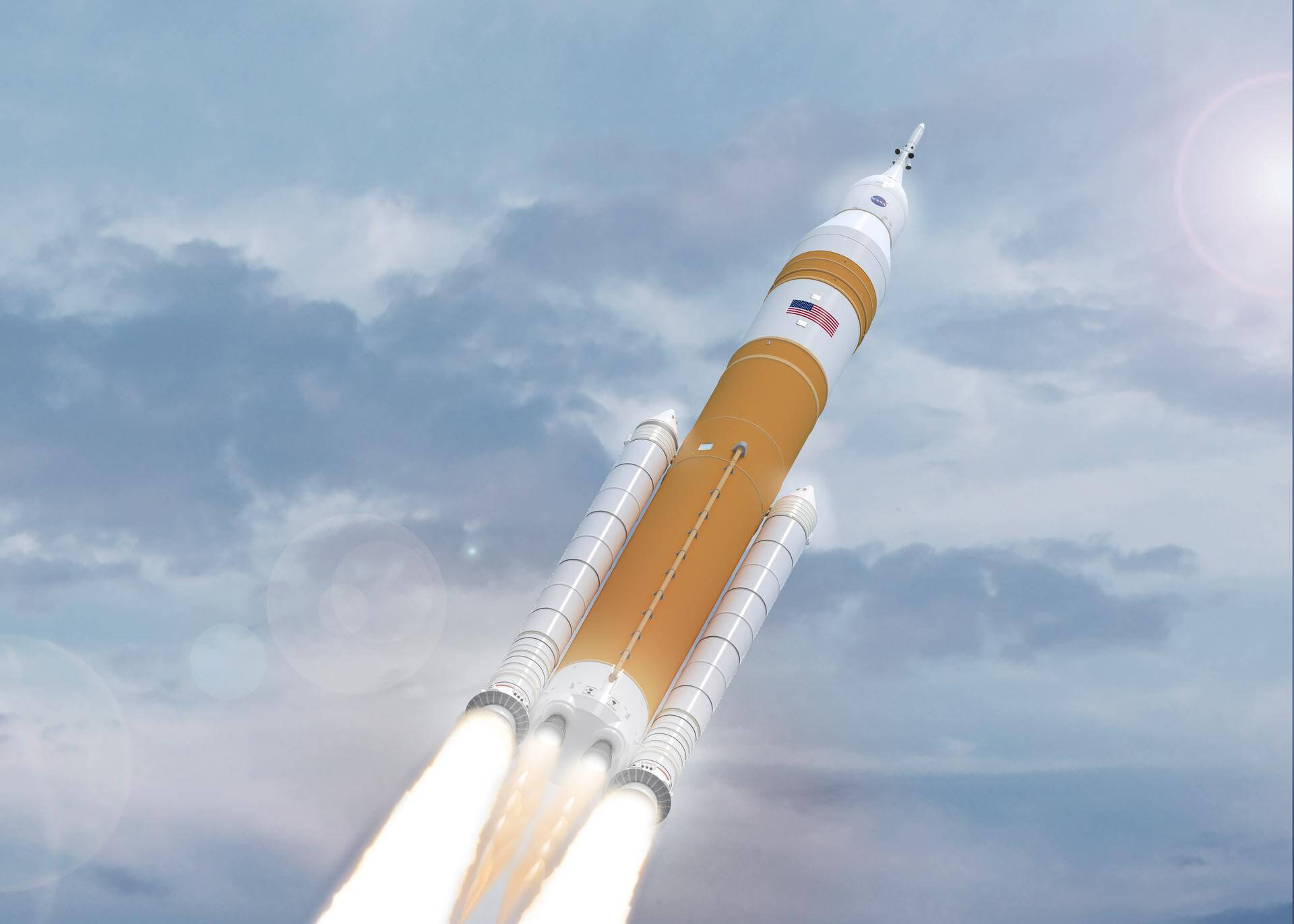
Vehicle: Space Launch System (SLS)
Artemis III is the second crew mission as part of the Artemis program. Artemis III will send a crew of 4 on a Low Earth Orbit mission, with the Orion rendezvous and dock with one or both commercial lunar landers in development by SpaceX and Blue Origin, performing in-space tests of the docked vehicles, integrated checkout of life support, communications, and propulsion systems, as well as tests of the new Extravehicular Activity (xEVA) suits.
Artemis IV
Provider: National Aeronautics and Space Administration
Date: June 30, 2028
Time: 12:00 AM UTC
Vehicle: Space Launch System (SLS)
Artemis IV is planned to be the first human lunar landing mission since the Apollo Program.
Artemis V
Provider: National Aeronautics and Space Administration
Date: December 31, 2028
Time: 12:00 AM UTC
Vehicle: Space Launch System (SLS)
Artemis V is planned to be the second human lunar landing mission since the Apollo Program.
SLS Block 1B | Artemis VI
Provider: National Aeronautics and Space Administration
Date: September 30, 2030
Time: 12:00 AM UTC
Vehicle: Space Launch System (SLS)
No description available
SLS Block 1B | Artemis VII
Provider: National Aeronautics and Space Administration
Date: September 30, 2031
Time: 12:00 AM UTC
Vehicle: Space Launch System (SLS)
No description available