
The Daily Broadcast: SpaceX IPO Targets June 12 Debut; Blue Origin Charts Year-End Return

SpaceX Files for Historic $75 Billion IPO Debut
SpaceX officially filed its preliminary prospectus on May 20, 2026, with the U.S. Securities and Exchange Commission, targeting a June 12 debut as a dual-listed company on Nasdaq and Nasdaq Texas under the ticker symbol SPCX. The company is seeking to raise up to $75 billion (USD) at a valuation between $1.75 trillion and $2.0 trillion — the largest stock market debut in history, roughly two and a half times larger than Saudi Aramco’s 2019 IPO.

What distinguishes SpaceX’s approach is a significant allocation to everyday investors. The company is reserving up to 30 per cent of available shares for retail participation — roughly three times the standard 5 to 10 per cent offered during large IPOs. Goldman Sachs leads an underwriting syndicate that includes Morgan Stanley, Bank of America, Citigroup, and JPMorgan Chase.
The IPO proceeds will fund expansion of artificial intelligence computing infrastructure, enhancement of launch vehicles and infrastructure, and increased capacity of satellite constellations. In 2025, SpaceX generated $18.67 billion in revenue but posted a $4.94 billion net loss, largely due to its acquisition of xAI, Elon Musk’s artificial intelligence company, which brought substantial cash burn onto the balance sheet. Starlink, the satellite internet service, remains highly profitable, generating over $4.4 billion in operating profit in 2025.
The governance structure gives Musk unprecedented control. Everyday investors will hold Class A shares (one vote per share), while Musk and insiders hold Class B shares (10 votes per share). Musk owns 12.3 per cent of Class A shares and 93.6 per cent of Class B shares, translating to 85.1 per cent of total voting power — enough to single-handedly dictate any shareholder vote. As CEO, chief technology officer, and board chairman, Musk can only be removed by a vote of Class B shareholders, effectively requiring his own consent. SpaceX also reincorporated from Delaware to Texas in 2024, embedding mandatory binding arbitration and a 3 per cent ownership threshold to file shareholder lawsuits.
The institutional roadshow begins on June 4. Morningstar research estimates SpaceX’s fair value closer to $780 billion, cautioning that massive investments in proposed orbital data centres pose a “material threat of value destruction” and require “unproven engineering.”
Blue Origin Targets Year-End Return to Flight After New Glenn Explosion
Blue Origin suffered a dramatic setback on May 30 when its New Glenn rocket exploded on the launch pad during a hot-fire engine test at Launch Complex 36, Cape Canaveral Space Force Station, Florida. The rocket and its transporter-erector were destroyed; support structures, including the main gantry and a lightning tower, were damaged. Yet the company delivered optimistic news this week: propellant tanks, the processing hangar, and the large support gantry survived largely intact.
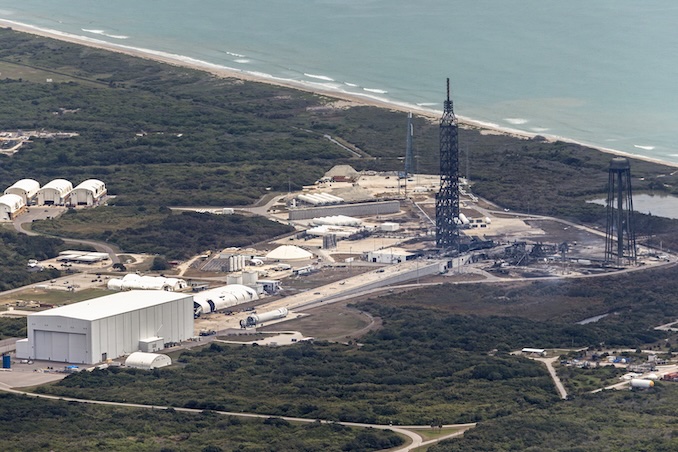
Blue Origin CEO Dave Limp announced on social media that the company intends to resume New Glenn launches before the end of 2026. The oxygen, liquid hydrogen, and liquid methane tanks “are all in good shape — good luck because these are very long lead items,” Limp said. The main support tower, while damaged, can be repaired in place rather than torn down and replaced. A second New Glenn first stage booster and three upper stages housed in a nearby integration facility remain undamaged.
Crucially, Limp noted that Blue Origin had already been working to eliminate its transporter-erector in favour of an alternative vertical assembly capability, so the company will not need to replace that equipment. “We will fly again before the end of this year. Gradatim Ferociter,” Limp said, invoking Blue Origin’s Latin motto: step by step, ferociously.
New Glenn plays a critical role in NASA’s Artemis programme. The agency is relying on both Blue Origin and SpaceX to launch moon landers into Earth orbit next year for rendezvous and docking tests with Artemis astronauts. NASA aims for crewed moon landings in 2028 and has expressed confidence in the programme. “Blue Origin leadership has responded incredibly quickly, and NASA will do all we can to help with root cause analysis and accelerate pad recovery,” said NASA Administrator Jared Isaacman.
Muon Space Unveils Condor-Ultra Orbital Data Centre Platform
Muon Space announced a new satellite platform on June 3 designed specifically for orbital data centre operations, with an initial launch slated for 2028. The Condor-Ultra platform would offer 20 kilowatts of baseline power, scaling to 100 kilowatts, with more than 18 square metres of nadir payload area and Starlink Mini Lasers from SpaceX to relay data via the SpaceX constellation.

The platform represents a significant step up from Muon’s previous XL spacecraft. Condor-Ultra weighs three times more and delivers five times the power, demonstrating the company’s ambition to capture share in the emerging orbital data centre market. Importantly, the platform is designed with “native Starship stackability,” allowing deployments of hundreds to thousands of satellites once the SpaceX rocket enters regular service.
Greg Smirin, Muon Space president, emphasised vertical integration: the company controls 95 per cent of spacecraft production in-house and acquired propulsion specialist Starlight Engines last year to reduce external dependencies. Muon is also opening a new production facility in San Jose, California, later this month, expanding capacity tenfold to 500 satellites per year. “The economics of Condor-Ultra are specifically designed to make that ramp viable,” Smirin said.
The Condor-Ultra will integrate next-generation computing hardware including NVIDIA’s Space-1 Vera Rubin Module for AI inferencing. Muon’s first XL satellite is scheduled for launch in 2027 for Bluetooth connectivity startup Hubble Network. The company declined to name customers for Condor-Ultra but confirmed “the 2028 pathfinder is not a speculative platform. It is being built to meet real mission requirements from customers who are already engaged.”
Citations
- “A look at the upcoming historic SpaceX IPO” — https://spaceq.ca/a-look-at-upcoming-historic-spacex-ipo/
- “Blue Origin vows to resume New Glenn flights by year’s end” — https://spaceflightnow.com/2026/06/03/blue-origin-vows-to-resume-new-glenn-flights-by-years-end/
- “Muon Space unveils Starship-class satellite platform for orbital data centers” — https://spacenews.com/muon-space-unveils-starship-class-satellite-platform-for-orbital-data-centers/

Starlink Group 17-47
Provider: SpaceX
Date: June 3, 2026
Time: 2:36 PM UTC
Vehicle: Falcon 9
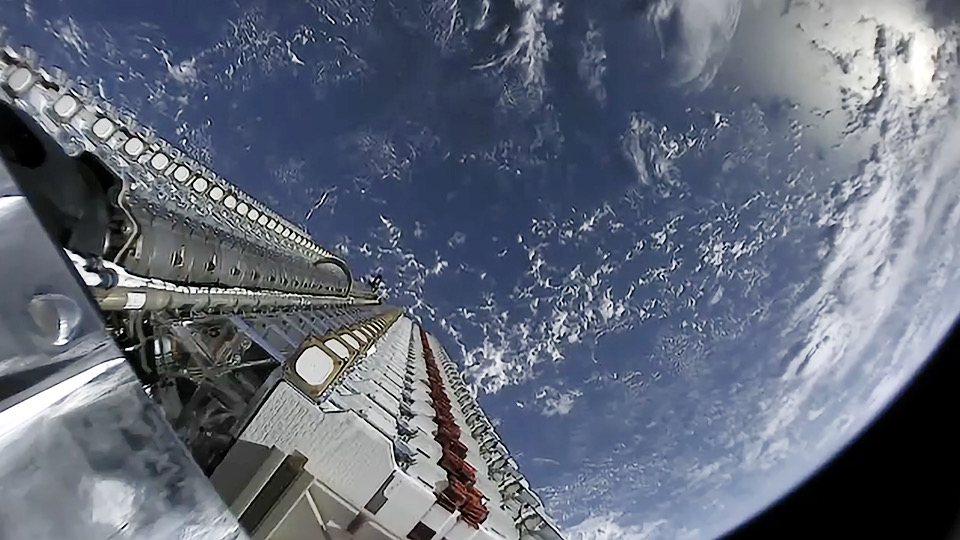
A batch of 24 satellites for the Starlink mega-constellation – SpaceX’s project for space-based Internet communication system.
Starlink Group 10-43
Provider: SpaceX
Date: June 4, 2026
Time: 8:02 AM UTC
Vehicle: Falcon 9
A batch of 29 satellites for the Starlink mega-constellation – SpaceX’s project for space-based Internet communication system.
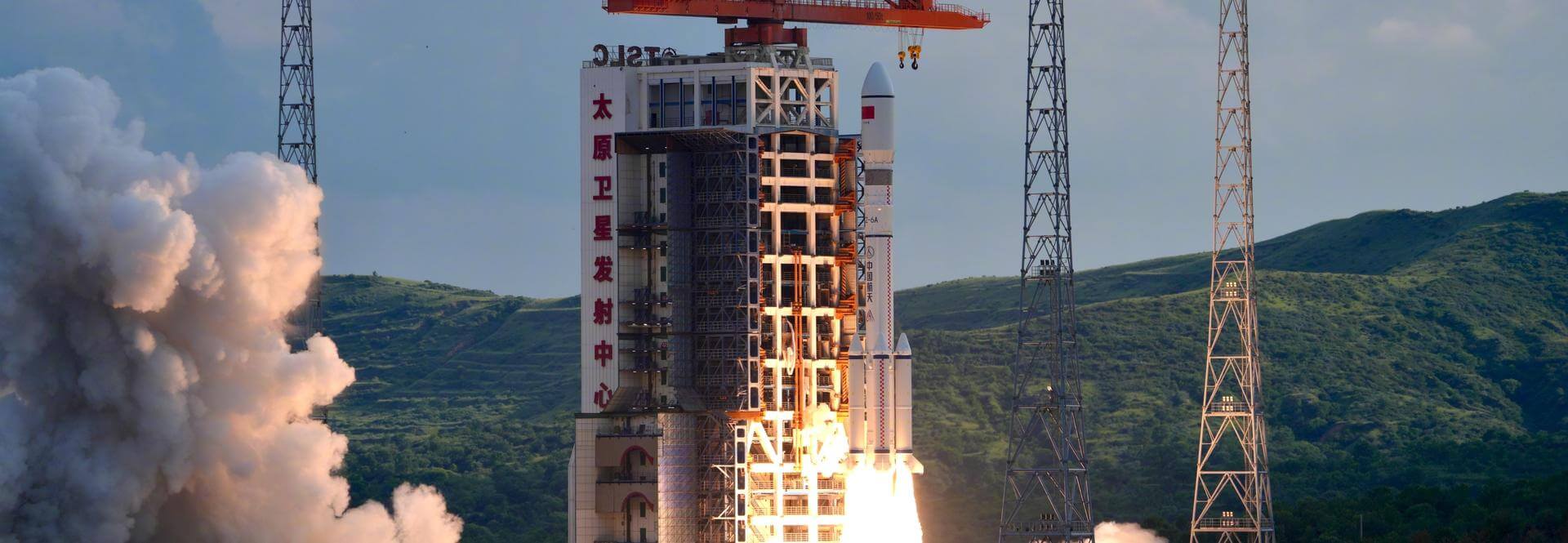
Unknown Payload
Provider: China Aerospace Science and Technology Corporation
Date: June 4, 2026
Time: 11:41 AM UTC
Vehicle: Long March 6A
Details TBD, probably SpaceSail Polar Orbit LEO communication satellites.
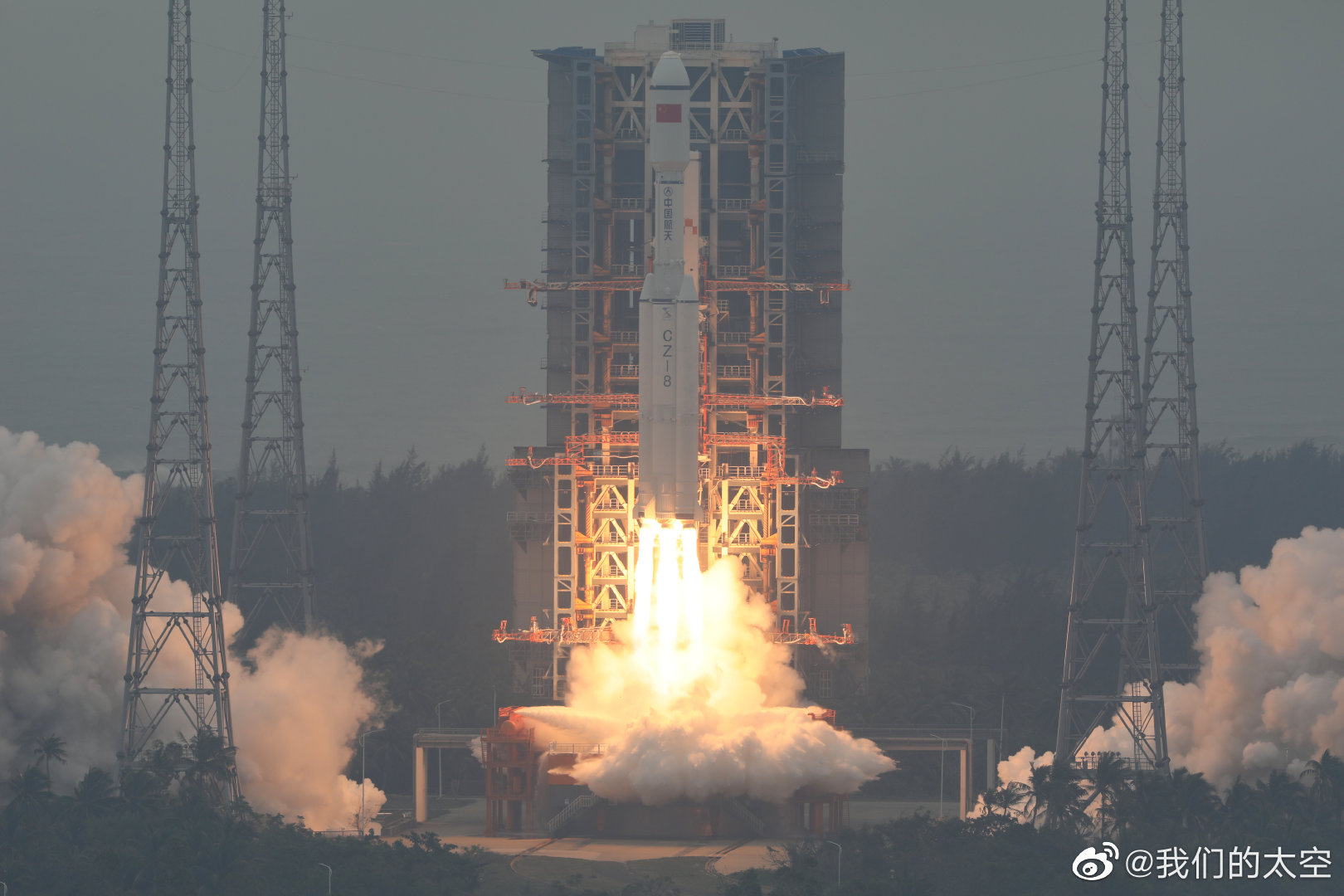
Unknown Payload
Provider: China Aerospace Science and Technology Corporation
Date: June 5, 2026
Time: 6:30 AM UTC
Vehicle: Long March 8
Details TBD, probably SpaceSail Polar Orbit LEO communication satellites.
Starlink Group 10-35
Provider: SpaceX
Date: June 7, 2026
Time: 10:30 AM UTC
Vehicle: Falcon 9
A batch of 29 satellites for the Starlink mega-constellation – SpaceX’s project for space-based Internet communication system.






Enjoying the content? Stay up to date on everything happening behind the scenes by following our Patreon!

