
Rocket Lab Roundup: Rocket Lab Wins $90M GEO Contract, Acquires Mars Robotics, Joins Nasdaq-100
Rocket Lab Breaks into GEO with $90M Space Force Satellite Contract
Rocket Lab has been awarded a $90 million contract by the U.S. Space Force’s Space Systems Command to design, manufacture, integrate, and operate two geostationary orbit (GEO) satellites hosting the Heimdall space domain awareness payload. The award marks Rocket Lab’s first satellite production programme for GEO and represents a significant expansion of the company’s mission into new orbital regimes.
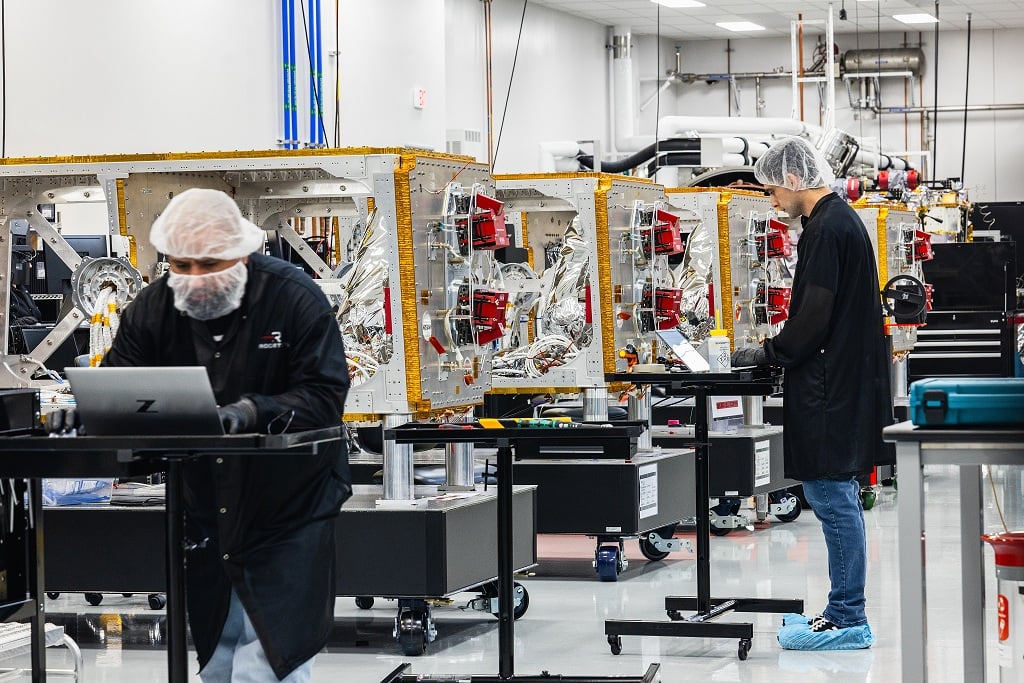
The two satellites will be built on Rocket Lab’s Lightning spacecraft bus, adapted for the thermal, radiation, propulsion, and station-keeping demands of GEO. The contract includes spacecraft design and manufacture, integration of the Heimdall optical sensor payload (produced in-house by Rocket Lab Optical Systems), launch integration, and up to five years of on-orbit operations. The payload represents the next phase of a Space Force programme that began with prototype development by Geost—a company Rocket Lab acquired in 2025 and integrated as Rocket Lab Optical Systems. The contract transitions the programme from prototype development to operational space vehicle delivery, positioning Rocket Lab as a prime contractor and end-to-end mission provider.
Military Satcom Expansion: K2 Space and Rocket Lab Win Supplier Roles
Beyond the GEO space domain awareness mission, Rocket Lab has secured a key supplier role in the U.S. Space Force’s Protected Tactical Satcom-Global (PTS-G) programme. Under this contract, Rocket Lab will supply the spacecraft bus for a Viasat satellite, while K2 Space will provide the platform for SES’s entry in the same programme. The satellites are expected to enter service in 2029 and will support protected military communications in contested environments through a network of geostationary satellites operating in X-band and military Ka-band frequencies.

PTS-G represents a broader Space Force initiative to leverage commercial innovation for military space infrastructure. The programme was selected from a pool of five companies and carries an indefinite-delivery, indefinite-quantity contract ceiling of $4 billion, with additional orders planned beginning in 2028. For Rocket Lab, the role extends its growing presence in the military satcom sector and reinforces the company’s vertical integration strategy—providing spacecraft platforms for the most demanding national security missions.
Mars-Proven Robotics: Rocket Lab Acquires Motiv Space Systems
Rocket Lab has completed the acquisition of Motiv Space Systems, rebranding it as Rocket Lab Robotics. The deal, valued at $40 million in cash with up to $20 million in stock earnouts, brings Mars heritage and advanced robotics capabilities into Rocket Lab’s portfolio. Motiv’s 50-person team and Pasadena, California facilities specialise in multi-degree-of-freedom robotic arms, actuators, drive electronics, and precision mechanisms—technology proven on NASA’s Mars Perseverance rover and other ambitious planetary exploration missions.
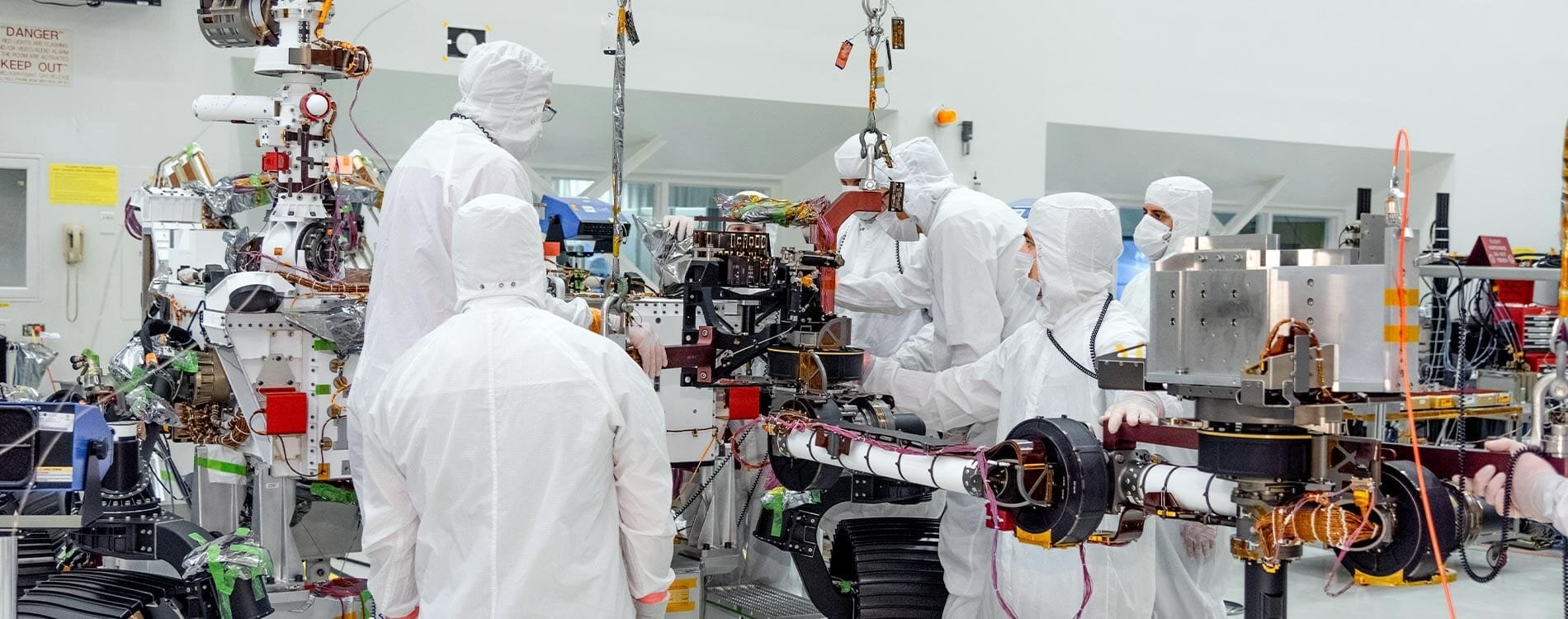
The acquisition deepens Rocket Lab’s vertical integration strategy and positions the company as one of the few capable of delivering end-to-end Mars mission solutions—including launch, spacecraft, software, and proven robotics for both surface and on-orbit operations. The robotics expertise also addresses emerging market opportunities in space-based infrastructure, particularly orbital data centres and mega-constellations that require high-power solar array drive assemblies (SADAs) capable of operating in extreme thermal and radiation environments. Rocket Lab Robotics’ precision-engineered mechanisms complement Rocket Lab’s existing advanced solar cell and array technology, creating a significant competitive advantage for power-intensive space platforms.
Synspective Constellation Continues: Ninth Electron Launch Succeeds
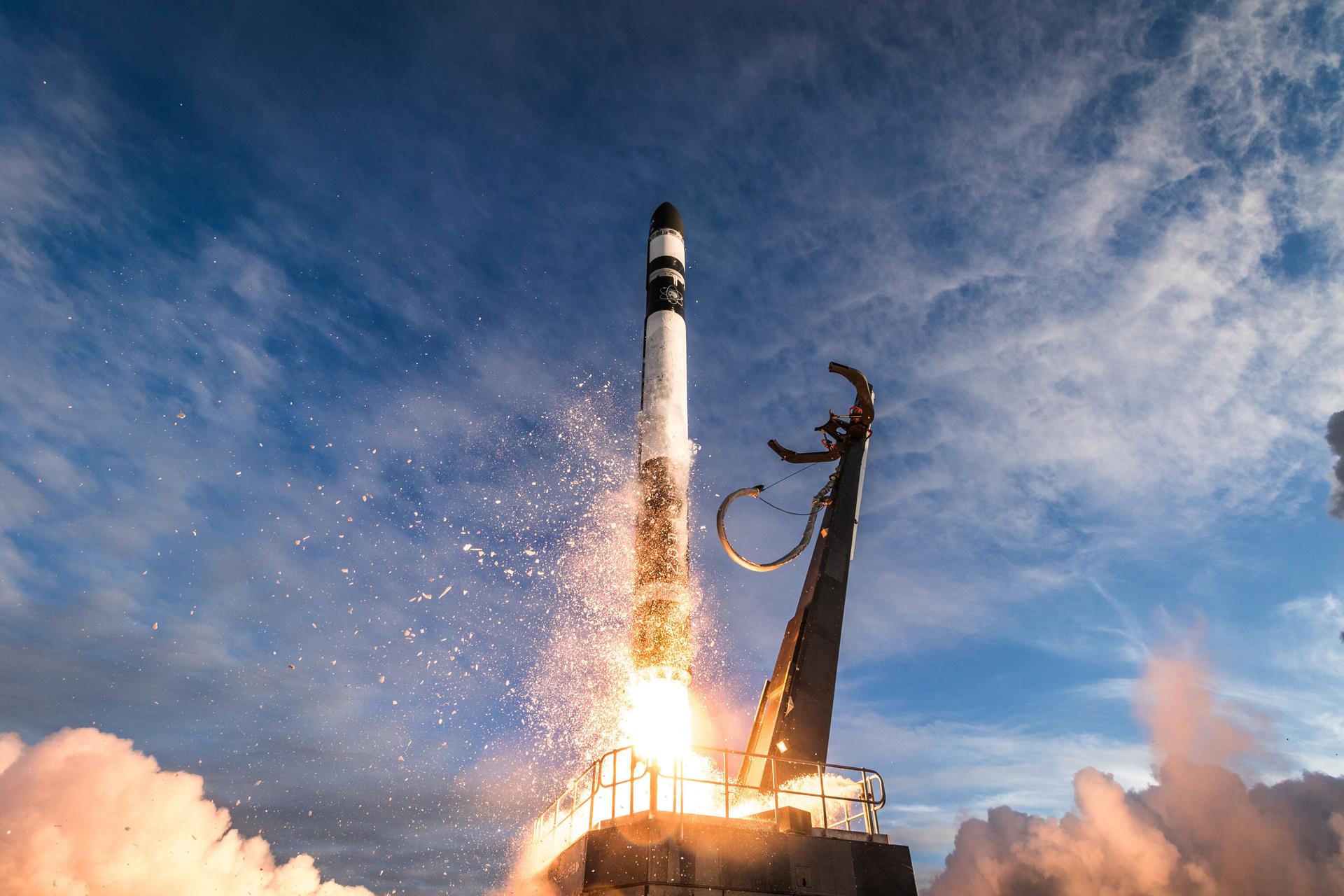
Rocket Lab successfully launched the ninth Synspective satellite aboard an Electron rocket on 22 May. The “Viva La StriX” mission lifted off from Launch Complex 1 in New Zealand at 9:33 p.m. NZST, deploying the StriX satellite into a 572-kilometre orbit. The mission marks Rocket Lab’s 88th Electron launch to date and maintains the company’s 100 per cent mission success rate for Synspective deployments.

Synspective is building a synthetic aperture radar (SAR) constellation to deliver high-resolution Earth observation data capable of penetrating cloud cover and capturing imagery during day and night conditions. The company has 18 additional Electron launches booked with Rocket Lab, with plans to field at least 30 satellites in orbit by 2028. This sustained partnership underscores Electron’s role as the premier small launch vehicle for constellation deployment and demonstrates the commercial cadence Rocket Lab has achieved in the dedicated small-lift market.
Corporate Momentum: Nasdaq-100 Inclusion and Path to 100th Electron
Rocket Lab has been added to the Nasdaq-100 Index, marking a significant milestone for the publicly listed company. The inclusion reflects growing investor confidence in Rocket Lab’s diversified business model and expanded addressable market across launch services, spacecraft manufacturing, and space systems.

Meanwhile, Rocket Lab is tracking towards another historic milestone: the 100th Electron launch, expected to occur later in 2026. If achieved, Electron would become the fastest privately developed orbital rocket to reach 100 flights, a testament to Rocket Lab’s manufacturing cadence and launch operations at its New Zealand spaceport. The company is also advancing Neutron, its medium-lift launcher scheduled to debut in the fourth quarter of 2026, which will unlock new capabilities for constellation deployment and national security missions.
Citations
- “Rocket Lab Awarded $90M Contract to Build GEO Satellites Hosting Space Domain Awareness Payload for U.S. Space Force” — https://rocketlabcorp.com/updates/rocket-lab-awarded-90m-contract-to-build-geo-satellites-hosting-space-domain-awareness-payload-for-u-s-space-force/
- “Rocket Lab Adds Mars-Proven Robotics Capabilities with Completion of Motiv Space Systems Acquisition” — https://rocketlabcorp.com/updates/rocket-lab-adds-mars-proven-robotics-capabilities/
- “Mission Success: Rocket Lab Completes 9th Electron Launch for Synspective” — https://rocketlabcorp.com/updates/synspective-launch-nine/
- “K2 Space, Rocket Lab win key supplier roles in Space Force satcom program” — https://spacenews.com/k2-space-rocket-lab-win-key-supplier-roles-in-space-force-satcom-program/
- “Rocket Lab launches ninth Synspective satellite” — https://spacenews.com/rocket-lab-launches-ninth-synspective-satellite/
- “Rocket Lab wins first GEO satellite production contract from U.S. Space Force” — https://spacenews.com/rocket-lab-wins-first-geo-satellite-production-contract-from-u-s-space-force/
- “X — Rocket Lab Official Account” — https://x.com/RocketLab
Ten Owl Of Ten (StriX Launch 10)
Provider: Rocket Lab
Date: June 30, 2026
Time: 12:00 AM UTC
Vehicle: Electron
Synthetic aperture radar satellite for Japanese Earth imaging company Synspective.
The Grain Goddess Provides (iQPS Launch 7)
Provider: Rocket Lab
Date: June 30, 2026
Time: 12:00 AM UTC
Vehicle: Electron
Synthetic aperture radar Earth observation satellite for Japanese Earth imaging company iQPS.
LOXSAT 1
Provider: Rocket Lab
Date: July 17, 2026
Time: 12:00 AM UTC
Vehicle: Electron
LOXSAT 1 is a demonstration satellite of a complete cryogenic oxygen fluid management system in orbit, developed by Eta Space and sponsored by NASA’s Tipping Point program.
The system will be integrated on a Rocket Lab Photon-LEO satellite bus and collect critical cryogenic fluid management data in orbit for 9 months, demonstrating capabilities of in-space cryogenic storage and transferal. Eta Space plans to use technology developed for this mission to develop a truly commercial depot intended to serve multiple customers in the future.
Aspera
Provider: Rocket Lab
Date: August 15, 2026
Time: 12:00 AM UTC
Vehicle: Electron
Aspera houses an ultraviolet telescope and will examine hot gas in the intergalactic medium, thought to be contributing to the birth of stars and planets. Aspera will be the first NASA astrophysics mission to gather and map these ultraviolet light signatures, potentially unlocking a deeper understanding of the origins of stars, planets, and life in the universe.
StriX Launch 11
Provider: Rocket Lab
Date: August 31, 2026
Time: 12:00 AM UTC
Vehicle: Electron
Synthetic aperture radar satellite for Japanese Earth imaging company Synspective.

Enjoying the content? Stay up to date on everything happening behind the scenes by following our Patreon!

