
The NASA Overview: Perseverance Crosses Mars Marathon; DAPHNE, Griffin-1, ERNEST Advance NASA’s Moon-Mars Plan
Artemis Continues Behind the Scenes as Hardware Reaches Kennedy
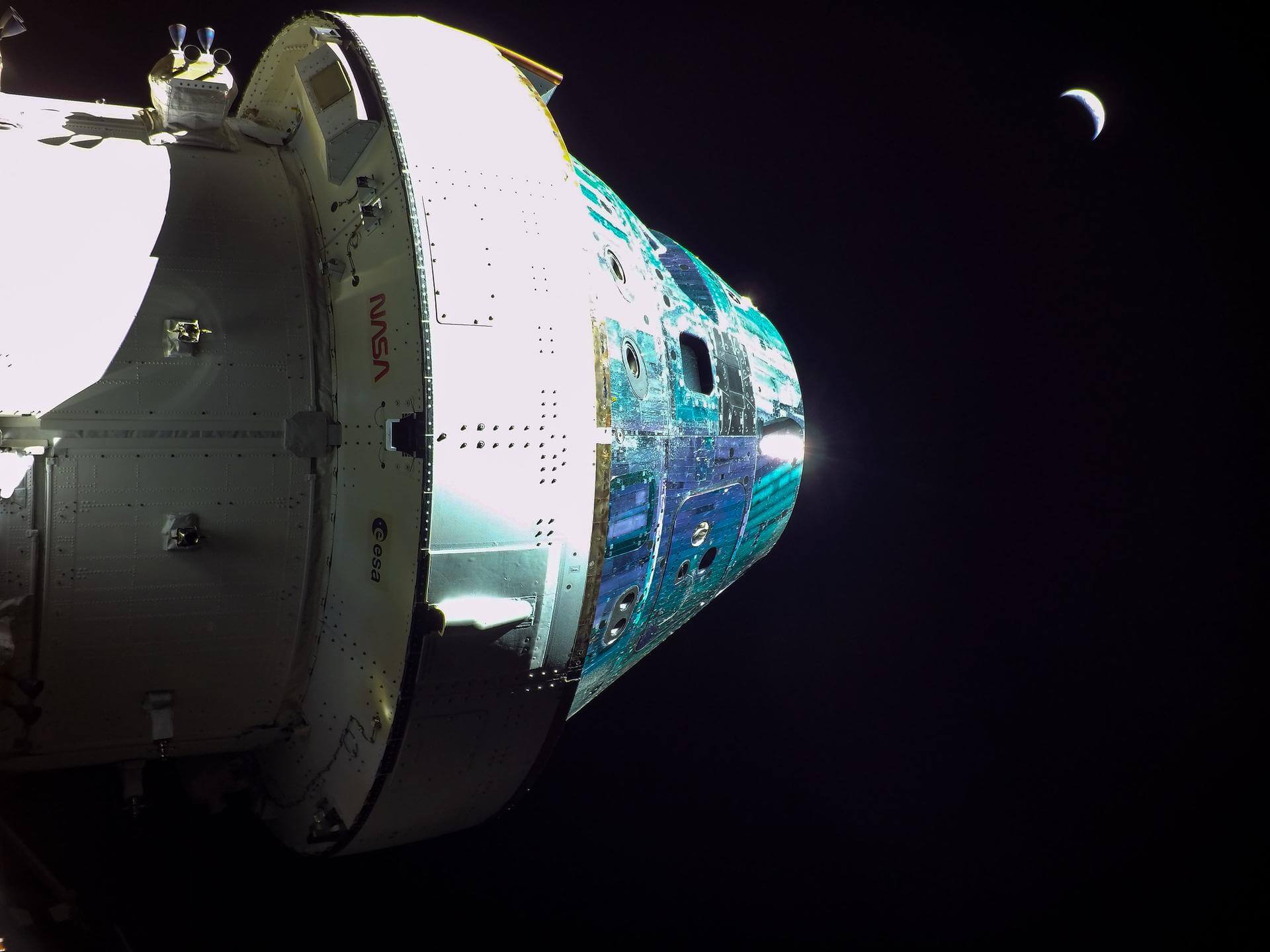
A quiet week for major milestone announcements, but NASA’s commitment to lunar return remains evident in steady progress on the vehicles and systems that will carry astronauts to the Moon. Administrator Jared Isaacman visited Kennedy Space Center this week and reported that Artemis III hardware is actively being assembled: Core Stage III is now in the Vehicle Assembly Building, RS-25 engines have arrived, and multiple Orion capsules are in active assembly and testing. Crews are currently preparing to mate the upgraded heat shield destined for Artemis III, underscoring the near-term focus of the mission.

Artemis IV hardware is also under way, confirming that the mission pipeline remains robust. No new stacking schedules or launch date updates emerged this week, but the steady integration of components reflects confidence in the cadence.
In a lighter moment, the Artemis II crew shared a remarkable memory from their recent lunar flyby: during the mission, they experienced a solar eclipse from aboard the Orion spacecraft—a rare vantage point that allowed them to observe the Sun’s corona directly.
Astrobotic’s Griffin-1 Lander Ready for Moon Base Testing
Commercial lunar progress accelerated this week as Astrobotic’s Griffin-1 lander moved closer to its Moon Base mission. The spacecraft, designed to deliver payloads supporting Moon Base Phase One, has completed assembly and is now ready for environmental testing at NASA’s Jet Propulsion Laboratory before its late-2026 launch to the lunar South Pole. Griffin-1 represents the vanguard of a series of CLPS (Commercial Lunar Payload Services) missions that will establish the infrastructure for sustained human presence in the Moon’s polar regions—the most scientifically and strategically valuable real estate on the lunar surface.

Perseverance Completes Martian Marathon as NASA Forges Mars Science Partnership
NASA’s Perseverance rover marked a historic milestone this week: the spacecraft has now travelled 26.2 miles (42.195 kilometres) across the Martian surface—the distance of a marathon. Perseverance is only the second rover to accomplish this feat on another planet; the first was Opportunity, which crossed the marathon threshold in 2015. The rover continues exploring intriguing ancient terrain to the west of Jezero Crater, collecting samples that will eventually return to Earth and searching for evidence of past microbial life.

Complementing Perseverance’s ground-based work, NASA and Relativity Space announced a new public-private partnership this week to advance Mars atmospheric science. NASA will supply the Aeolus instrument suite—four complementary sensors designed to map Martian winds, temperatures, dust, and clouds—while Relativity Space provides the spacecraft, rocket, and cruise operations. Aeolus is scheduled to launch in 2028 and will deliver the first integrated, daily, global view of the Martian atmosphere, generating the environmental data essential to reduce risk for future crewed and uncrewed landings and to support safer, more predictable mission planning for astronauts.
DAPHNE Selected for Development; Lucy, Swift, and ERNEST Advance Exploration Technologies
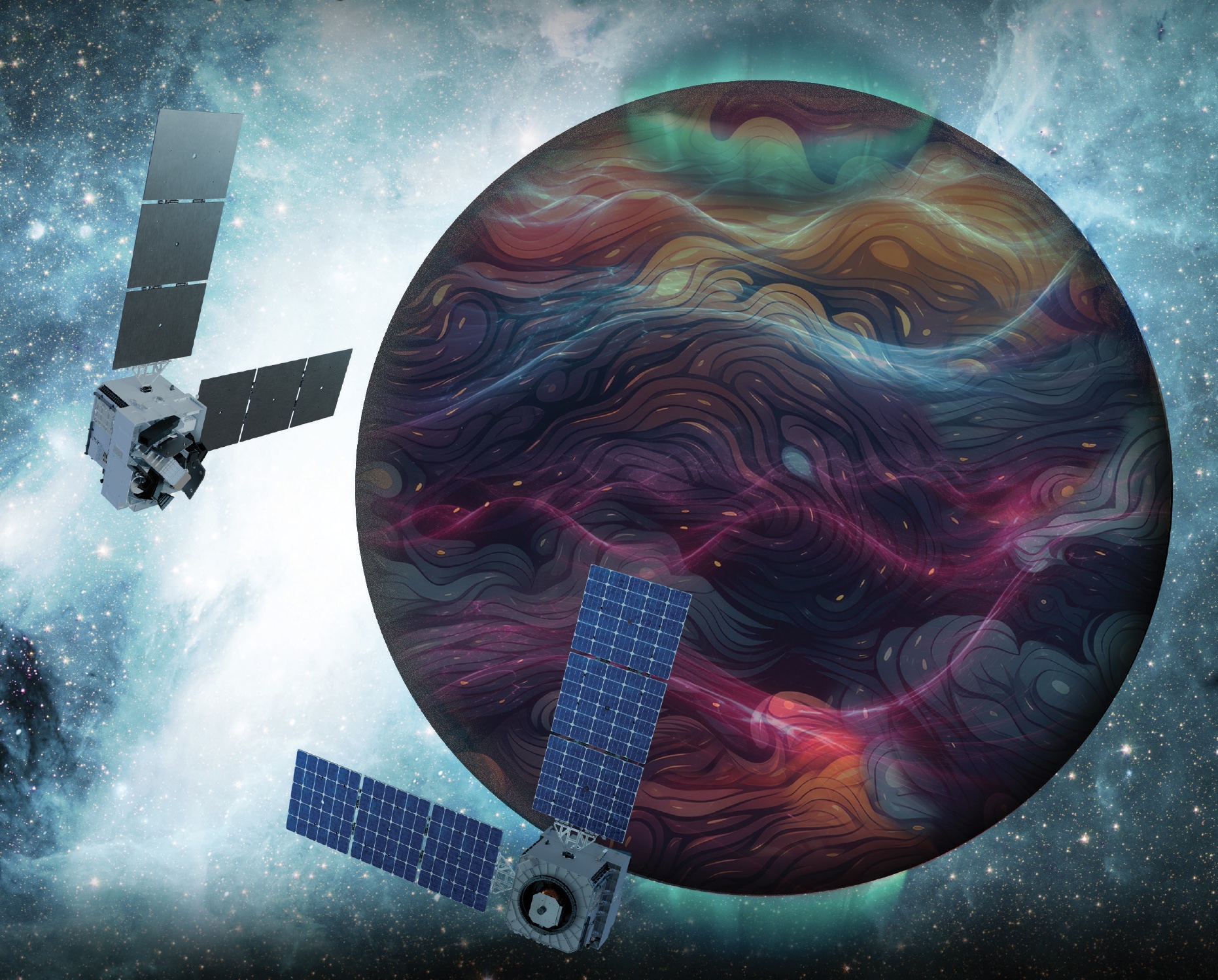
NASA’s deep space and heliophysics portfolio moved forward this week with several significant selections and milestones. On June 18, NASA announced that the DAPHNE (Dynamic Atmosphere-Ionosphere Explorer) mission has been selected to enter Phase B development. The mission will deploy two identical satellites equipped with three instruments—MIGHTI, FUVI, and PLATO—to measure composition, temperature, and winds in the thermosphere. DAPHNE will fill a critical gap in scientific understanding: while decades of research have documented space weather’s effects on Earth, much less is known about how Earth’s lower atmosphere influences the upper atmosphere and space weather itself. A mission confirmation review is scheduled for 2027, with a launch target of no earlier than 2029. The mission carries a cost cap of $250 million, excluding launch costs.
In solar system exploration, NASA’s Lucy spacecraft published new imagery this week from its June flyby of asteroid Donaldjohanson—a peculiar, five-mile-long object shaped like a peanut that wobbles like a top. The data reveals that the asteroid once encountered water but subsequently lost it, adding to our understanding of small-body geology and composition.
NASA also advanced spacecraft servicing technology this week. The Agency announced plans to use Katalyst Space’s LINK robotic servicing spacecraft to rendezvous with the Neil Gehrels Swift Observatory and boost its orbit. After 21 years in low Earth orbit, increased solar activity has caused Swift’s altitude to decay rapidly. Rather than allow the observatory to re-enter the atmosphere, NASA awarded Katalyst a contract to demonstrate a critical capability for future space exploration: on-orbit servicing. The LINK spacecraft will launch on a Northrop Grumman Pegasus XL rocket later this month from Kwajalein Atoll in the Marshall Islands.
On the Moon and Mars front, JPL’s ERNEST (Exploration Rover for Navigating Extreme Sloped Terrain) prototype continues to prove that advanced autonomy and active suspension can enable dramatically faster and longer-range rover missions. In a March desert test in Southern California, ERNEST travelled 16 miles over 37 hours of drive time—more than ten times the speed of NASA’s current Mars rovers—whilst navigating varied terrain, shadows, and lighting conditions that simulate polar regions on the Moon. The prototype’s ability to lift individual wheels, adjust weight distribution, and choose between active and passive suspension modes demonstrates how next-generation rovers could conduct extensive “science road trips” across both Mars and the lunar surface.
Expedition 74 Advances Crew Health Research; Cargo Dragon Returns
Aboard the International Space Station, Expedition 74 conducted a week of productive science and operations. On June 18, the crew employed ultrasound scans, augmented reality, and artificial intelligence to study cartilage growth, blood vessel function, and digestive system behaviour—research aimed at protecting crew health during long-duration missions and improving medical care for patients on Earth.

On June 16, a SpaceX Dragon cargo spacecraft undocked from the station at 12:25 p.m. EDT, laden with science experiments and hardware for retrieval and analysis. The vessel splashed down in the Pacific Ocean off the coast of Southern California on June 17 at 8:11 a.m. EDT, concluding SpaceX’s 34th resupply mission to the station.
Crews are preparing for a spacewalk scheduled for late this month. In upcoming crew news, NASA astronaut Anil Menon will be available for limited media interviews beginning June 22 to discuss his eight-month research mission to the station, targeted for launch on July 14 as part of Expeditions 74/75.
Administrator Visits Centres; Space Weather, Communications Initiatives Advance
NASA Administrator Isaacman spent time this week reconnecting with the Agency’s workforce and celebrating technological achievements. On June 17, he held two town halls at Kennedy Space Center, meeting directly with engineers, technicians, and support teams who are building the vehicles and systems for Artemis and beyond. On June 19, he visited NASA Ames Research Center for the annual centre picnic, touring the world’s largest vertical motion flight simulator—where every Space Shuttle astronaut trained and where future lunar lander pilots will prepare—as well as the recently restored Hangar One, a landmark representing both NASA’s storied past and its ambitious future.

In other agency business, NASA’s Space Communications and Navigation Program issued a call for industry proposals to demonstrate Ka-band relay capabilities for active missions and to help establish a resilient commercial relay ecosystem. Proposals are due July 7.
The Roman Space Telescope, scheduled to launch this summer, is seeking storytellers and creators to document the historic moment. Submissions are due June 28, and selected creators will have their content streamed live during the spacecraft’s ascent to space.
On the space weather front, the week of June 5–11 saw moderate solar activity: one M-class flare, five C-class flares, 36 coronal mass ejections, and one geomagnetic storm. The strongest eruption was an M1.8 on June 6 from the Sun’s southeastern region; it produced a coronal mass ejection, but the bulk of the blast was oriented away from Earth, resulting in minimal impact to our planet.
On the night of June 14, observers across the southeastern United States reported a bright fireball that was also captured by three NASA meteor cameras. The object was first spotted above Tupelo, Mississippi, at 10:26 p.m. CDT, travelling northwest at 56,000 mph. It covered 300 miles before disintegrating above the Mark Twain National Forest in Missouri. The meteor moved too fast and was too small to produce meteorites.
Citations
- “NASA’s $1.1 billion Gateway habitation module is unlikely to be used for something else” — https://arstechnica.com/space/2026/06/nasas-1-1-billion-gateway-habitation-module-is-unlikely-to-be-used-for-something-else/
- “Desert Field Test With NASA Advanced Rover Prototype” — https://science.nasa.gov/photojournal/desert-field-test-with-nasa-advanced-rover-prototype/
- “NASA Testing Advanced Capabilities for Moon, Mars Rovers” — https://www.nasa.gov/solar-system/moon/nasa-testing-advanced-capabilities-for-moon-mars-rovers/
- “NASA Announces Public-Private Partnership to Advance Mars Science” — https://www.nasa.gov/news-release/nasa-announces-public-private-partnership-to-advance-mars-science/
- “NASA selects mission to study space weather interaction with Earth’s atmosphere” — https://spacenews.com/nasa-selects-mission-to-study-space-weather-interaction-with-earths-atmosphere/
- “NASA Mission to Study Space Weather Impacts of Earth’s Atmosphere” — https://www.nasa.gov/news-release/nasa-mission-to-study-space-weather-impacts-of-earths-atmosphere/
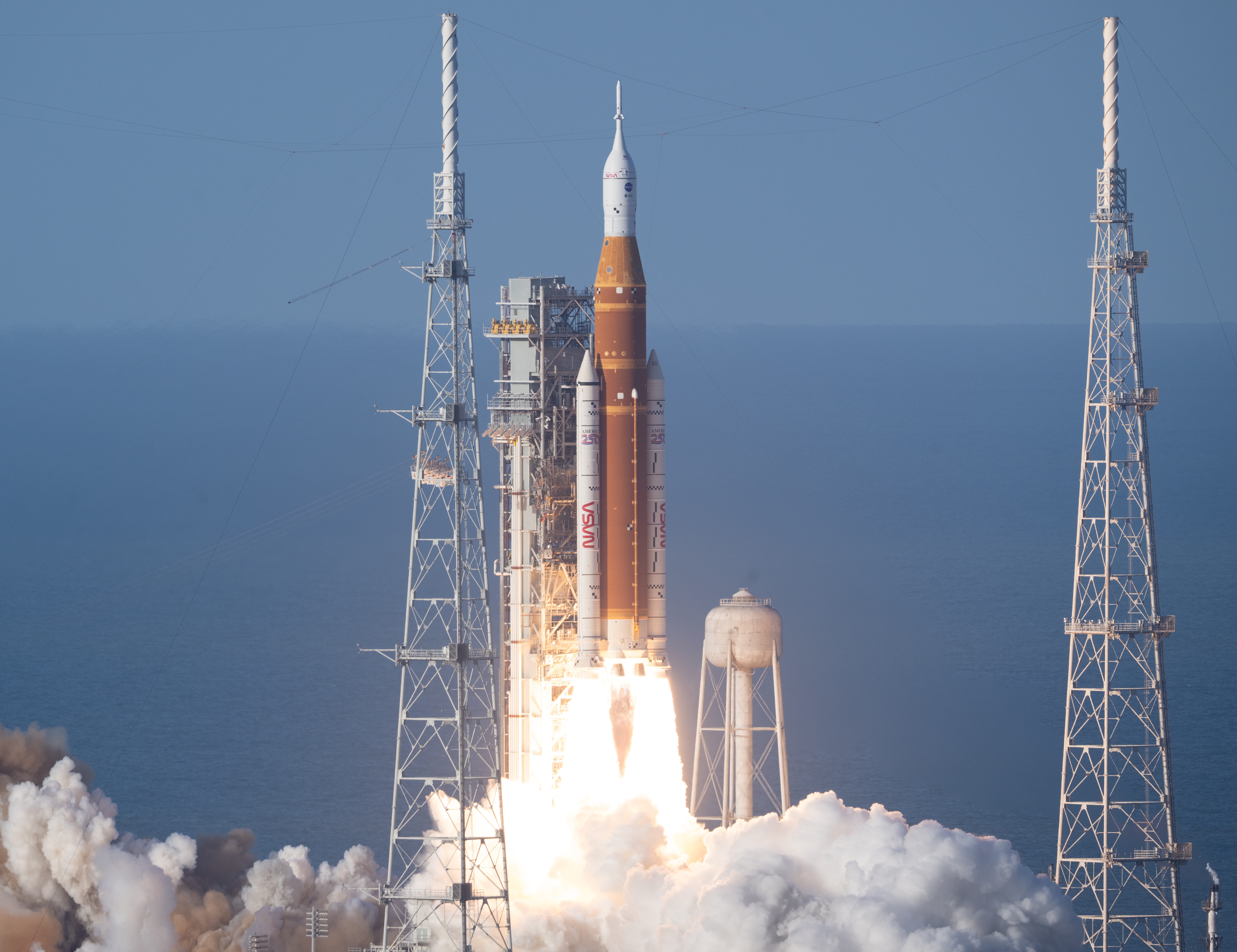
Artemis III
Provider: National Aeronautics and Space Administration
Date: June 30, 2027
Time: 12:00 AM UTC
Vehicle: Space Launch System (SLS)
Artemis III is the second crew mission as part of the Artemis program. Artemis III will send a crew of 4 on a Low Earth Orbit mission, with the Orion rendezvous and dock with one or both commercial lunar landers in development by SpaceX and Blue Origin, performing in-space tests of the docked vehicles, integrated checkout of life support, communications, and propulsion systems, as well as tests of the new Extravehicular Activity (xEVA) suits.
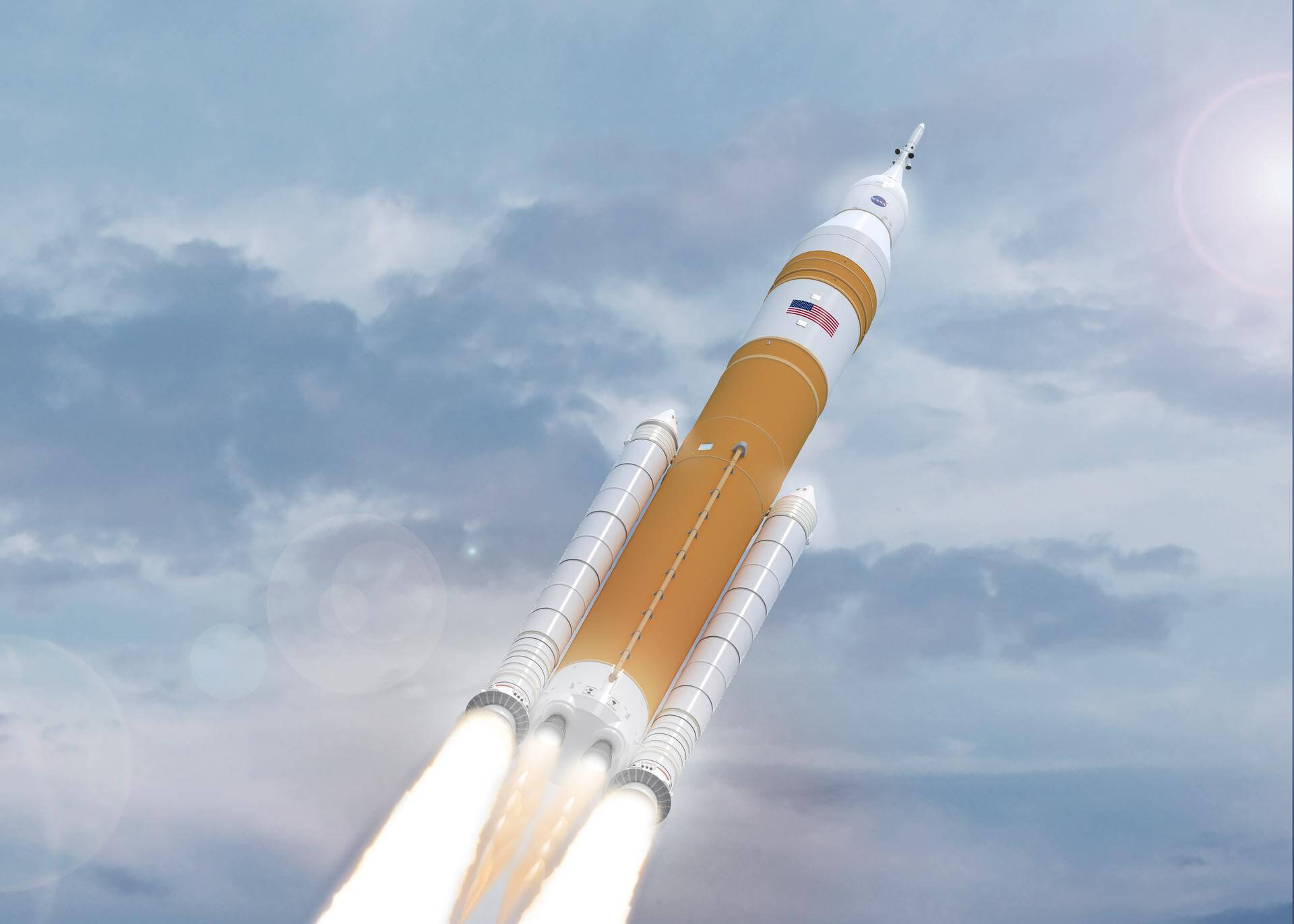
Artemis IV
Provider: National Aeronautics and Space Administration
Date: June 30, 2028
Time: 12:00 AM UTC
Vehicle: Space Launch System (SLS)
Artemis IV is planned to be the first human lunar landing mission since the Apollo Program.
Artemis V
Provider: National Aeronautics and Space Administration
Date: December 31, 2028
Time: 12:00 AM UTC
Vehicle: Space Launch System (SLS)
Artemis V is planned to be the second human lunar landing mission since the Apollo Program.
SLS Block 1B | Artemis VI
Provider: National Aeronautics and Space Administration
Date: September 30, 2030
Time: 12:00 AM UTC
Vehicle: Space Launch System (SLS)
No description available
SLS Block 1B | Artemis VII
Provider: National Aeronautics and Space Administration
Date: September 30, 2031
Time: 12:00 AM UTC
Vehicle: Space Launch System (SLS)
No description available
Enjoying the content? Stay up to date on everything happening behind the scenes by following our Patreon!

