
The Bright Blue Origin: New Glenn Explosion Reshapes NASA’s Moon Base Timeline
The Explosion and the Damage
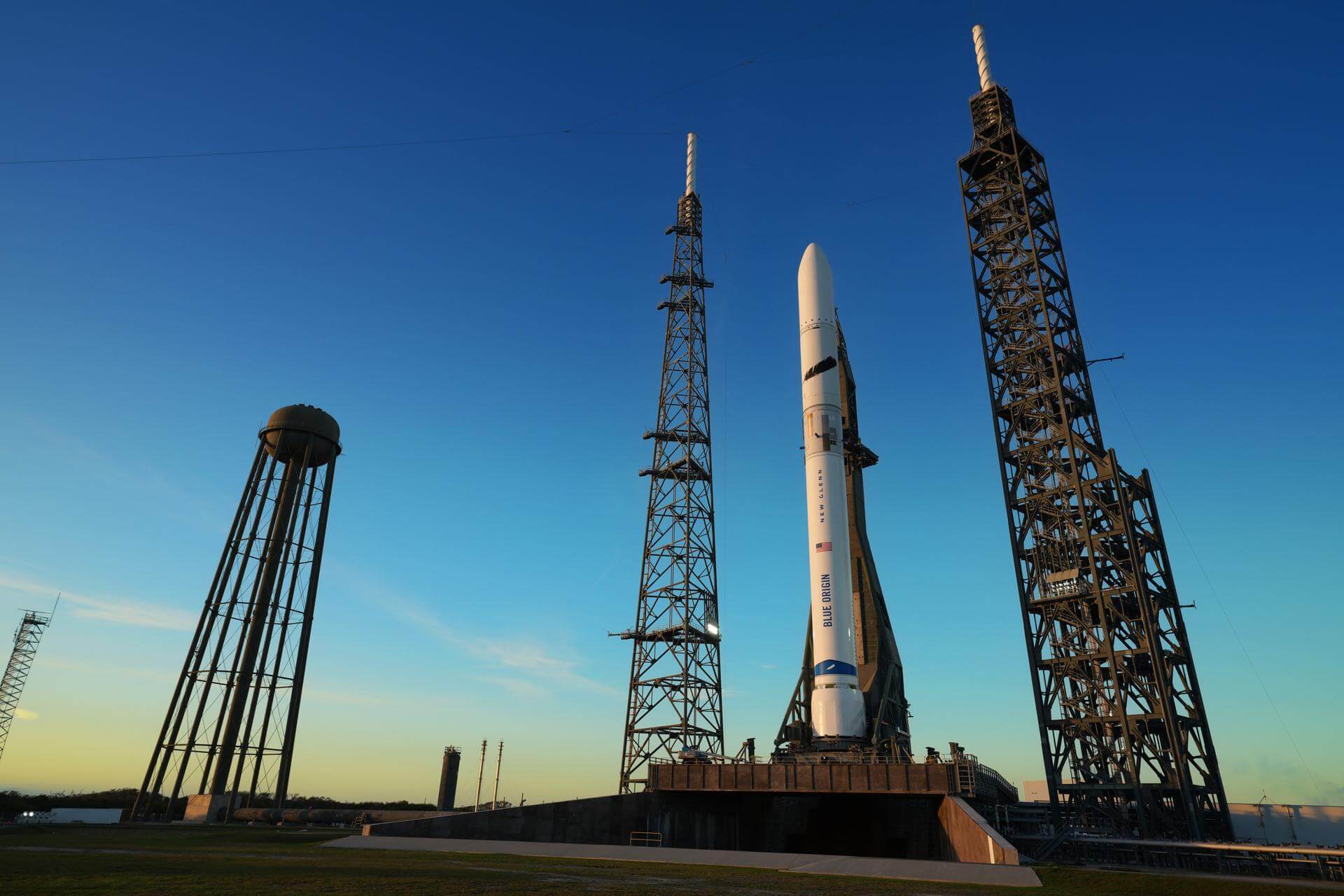
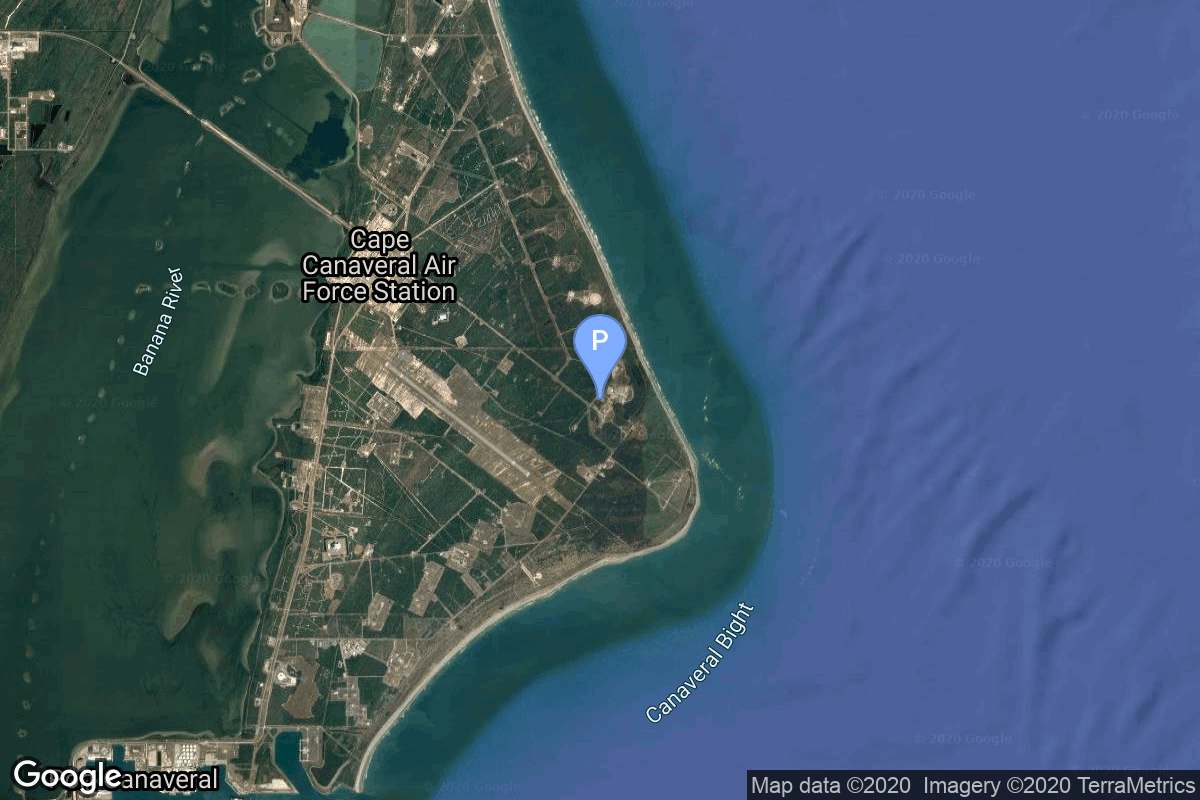
On the evening of May 28, Blue Origin experienced a catastrophic setback. During a static-fire test of the New Glenn first stage at Launch Complex 36 in Cape Canaveral, the rocket’s seven BE-4 engines ignited moments before disaster struck. The vehicle exploded, creating a massive fireball visible hundreds of kilometres away. No personnel were injured, but the pad suffered severe damage: a lightning tower was destroyed, the transporter-erector that positions the rocket was reduced to twisted metal, and the main support gantry was warped by the force of the blast.

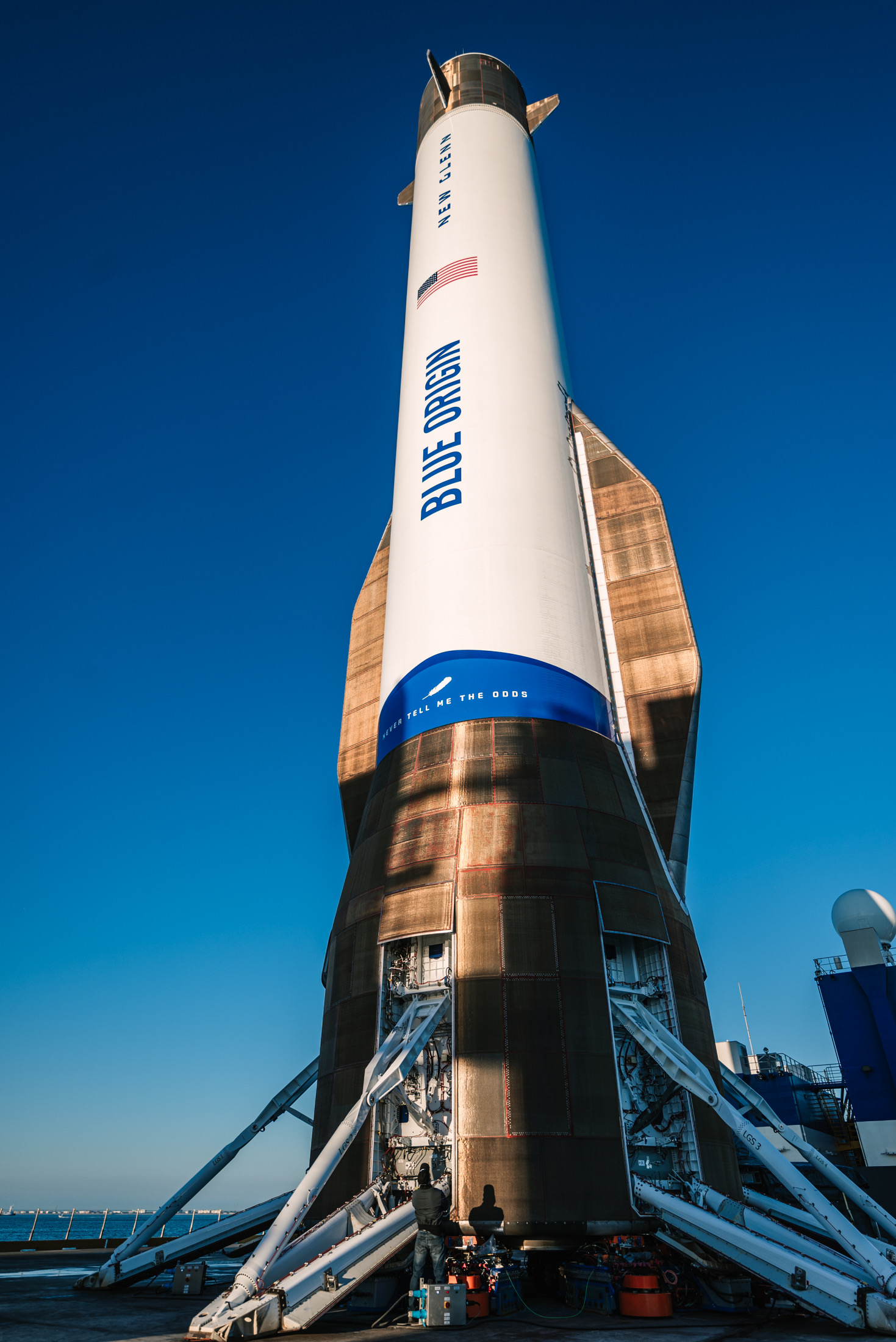
Yet Blue Origin’s initial assessment offered a glimmer of hope. CEO Dave Limp disclosed that the propellant storage tanks—liquid oxygen, hydrogen, and methane—emerged “in good shape.” Those are long lead items; rebuilding them from scratch would add years to recovery. The water tower and main gantry could be repaired in place rather than replaced. The booster “Never Tell Me The Odds” and three upper stages stored in a nearby integration facility were also intact. Limp announced a shift to an alternative vertical concept of operations for pad operations, one the company had already been developing. In a public commitment, he stated: “We will fly again before the end of this year.”
That recovery window—roughly seven months—would be faster than similar incidents. SpaceX required 15 months to rebuild Space Launch Complex 40 after a Falcon 9 explosion in September 2016.
NASA’s Lunar Plans Upended
The timing of the explosion was particularly cruel. Just two days earlier, on May 26, NASA had announced a sweeping set of awards to jumpstart its moon base programme. Blue Origin’s Blue Moon Mark 1 lander won a significant win: NASA selected Astrolab and Lunar Outpost to build lunar rovers, which the space agency will deliver to the lunar south pole aboard four separate Blue Moon Mark 1 missions. The first, “Moon Base 1,” was to launch this autumn. The second would carry the VIPER rover in 2027. Two more would deliver the terrain vehicles in 2028. All were designed to launch atop New Glenn.
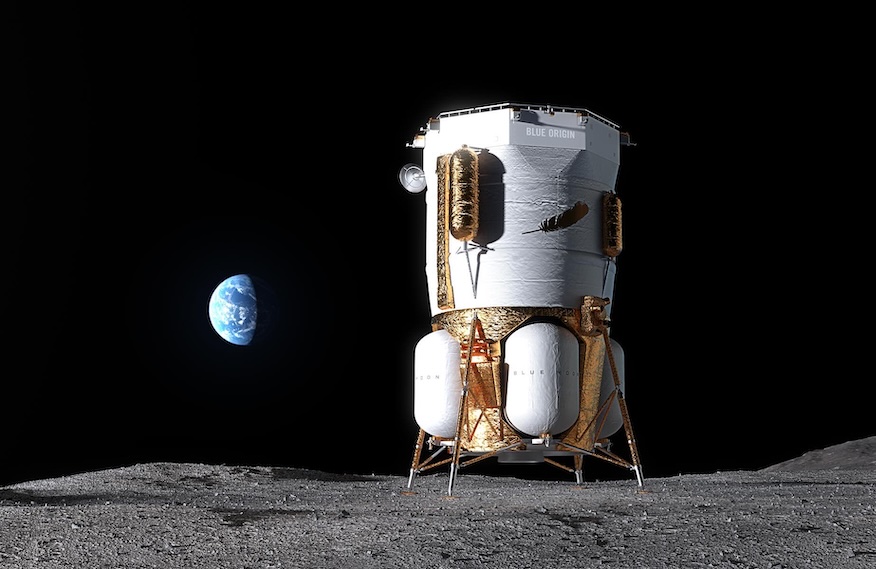
With New Glenn out of service for an indefinite period, those timelines now slip significantly. Industry observers speculate the pad may require a year or more to repair, potentially delaying Moon Base 1 into 2027 and cascading all subsequent missions. NASA explored backup plans: moving Blue Moon to SpaceX’s Falcon Heavy or ULA’s Vulcan. But both options are fraught. The Blue Moon landers were engineered and optimised for New Glenn’s seven-metre fairing and specific launch envelope. SpaceX’s Falcon Heavy fairing is 5.2 metres—too narrow. ULA’s Vulcan could work, but SpaceX’s pads are not equipped to fuel Blue Moon with liquid hydrogen, a critical propellant. Rebuilding pad infrastructure takes months.
Artemis 3, NASA’s crewed low-Earth orbit test mission scheduled for mid-2027, also hangs in the balance. That mission will see a crewed Orion dock with both a Blue Moon Mark 2 lander and SpaceX’s Starship to prove out lunar descent and ascent in a realistic scenario before Artemis 4 attempts a crewed landing in 2028. NASA Administrator Jared Isaacman clarified that Artemis 3 remains a priority—but its success now depends on how quickly New Glenn returns to flight.
A Company in Recovery Mode
Blue Origin moved fast in the days after the explosion. By early June, the company had begun clearing the pad and moving hardware back to processing facilities. Booster “Never Tell Me The Odds” returned to Rocket Park for refurbishment; upper stages were relocated from the damaged integration hangar. CEO Limp shared progress updates on the company’s challenges and recovery steps, signalling that despite the setback, manufacturing of New Glenn boosters continues at planned rates. The company is storing completed stages for future flights once the pad is ready.

NASA, meanwhile, threw its weight behind the effort. Isaacman visited the launch site on May 29 and committed federal resources to supporting Blue Origin’s recovery. “NASA is not a procurement organisation,” he said at the May 26 event. “We will not sit on our hands and wait for industry to deliver.” That resolve was tested immediately; the explosion forced a dramatic rewrite of plans the agency had just unveiled.
Cascading Effects: Project Kuiper and the Broader Launch Market
The New Glenn setback has reverberated beyond lunar ambitions. Amazon, racing to deploy its Project Kuiper broadband constellation, has faced launch delays for months. As of early June, the company had deployed only 331 of its planned 3,232 satellites—barely 10 percent. An ambitious Federal Communications Commission deadline required half the constellation deployed by July 30, 2026. Amazon was relying on multiple launch providers, including Blue Origin’s New Glenn, to hit that target.
On June 5, the FCC granted Amazon a waiver to miss the July 30 deadline. The reprieve comes with a cost: temporary loss of spectrum priority for any Amazon Leo satellites launched after the deadline until March 30, 2028—a 20-month window in which competing constellations, including SpaceX’s expanded Starlink, can claim preferred operating conditions. In other words, Amazon faces regulatory penalty for being unable to launch, even though the shortage of rockets (compounded now by New Glenn’s grounding) is partly beyond its control. Amazon said it still plans to meet a full-constellation deployment deadline by July 30, 2029, but the company’s manifest is tight. The company plans to launch 36 satellites on an Ariane 6 on June 17, but the lion’s share of its remaining capacity depends on ULA’s Vulcan and SpaceX’s Falcon 9.
Looking Ahead
Blue Origin faces intense pressure to deliver on Limp’s year-end return-to-flight commitment. The company is continuing to investigate the root cause of the May 28 anomaly in parallel with the repair effort. Meanwhile, NASA has charted a “whole of government” response, exploring alternative paths to keep its lunar and Artemis missions on track. If New Glenn can genuinely return to flight by December 2026, the damage to the broader programme will be contained. Any further delays will force difficult choices about Artemis 3’s timeline and the pace of lunar base construction. For now, the space community—and Canada’s role in Artemis—waits.
Amazon Leo (LN-01)
Provider: Blue Origin
Date: December 31, 2026
Time: 12:00 AM UTC
Vehicle: New Glenn
Amazon Leo, formerly known as Project Kuiper, is a mega constellation of satellites in Low Earth Orbit that will offer broadband internet access, this constellation will be managed by Kuiper Systems LLC, a subsidiary of Amazon. This constellation is planned to be composed of 3,276 satellites. The satellites are projected to be placed in 98 orbital planes in three orbital layers, one at 590 km, 610 km and 630 km altitude.
48 satellites will be carried on this New Glenn launch.
BlueBird Block 2
Provider: Blue Origin
Date: December 31, 2026
Time: 12:00 AM UTC
Vehicle: New Glenn
AST SpaceMobile’s Block 2 BlueBird satellites are designed to deliver up to 10 times the bandwidth capacity of the BlueBird Block 1 satellites, required to achieve 24/7 continuous cellular broadband service coverage in the United States, with beams designed to support a capacity of up to 40 MHz, enabling peak data transmission speeds up to 120 Mbps, supporting voice, full data and video applications. The Block 2 BlueBirds, featuring as large as 2400 square foot communications arrays, will be the largest satellites ever commercially deployed in Low Earth orbit once launched.
This launch will feature 8 satellites.
Blue Moon Pathfinder
Provider: Blue Origin
Date: December 31, 2026
Time: 12:00 AM UTC
Vehicle: New Glenn
First flight of Blue Origin’s Blue Moon MK1 lunar lander, MK1-SN001 “Endurance”.
Blue Moon Pathfinder Mission 2 & VIPER
Provider: Blue Origin
Date: December 31, 2027
Time: 12:00 AM UTC
Vehicle: New Glenn
2nd of the National Team’s Blue Moon MK1 lunar lander test missions to validate the necessary technologies for its HLS lunar module. Some of the life support hardware will travel on this mission in preparation for the first crew Blue Moon flight.
This mission will also carry NASA’s VIPER (Volatiles Investigating Polar Exploration Rover) lunar rover. VIPER is designed to explore the relatively nearby but extreme environment of the Moon in search of ice and other potential resources. This mobile robot will land at the South Pole of the Moon on a 100-day mission, in order to teach us about the origin and distribution of water on the Moon and help determine how we can harvest the Moon’s resources for future human space exploration.
VIPER is designed to roam the Moon using its three instruments and a 1 meter long drill to detect and analyze various lunar soil environments at a range of depths and temperatures. The rover can venture into permanently shadowed craters, some of the coldest spots in the solar system, where ice reserves have endured for billions of years.
The rover was originally slated to launch on Astrobotic’s Griffin Mission One lunar lander (with the Falcon Heavy rocket), but the VIPER mission was cancelled in July 2024 due to budget cuts. After consulting with the industry to find alternative ways to deliver the rover to the lunar surface, NASA ultimately chose to launch it with Blue Origin’s 2nd Blue Moon MK1 lander mission.


Enjoying the content? Stay up to date on everything happening behind the scenes by following our Patreon!

