
The NASA Overview: NASA Confronts Lander Setback, Bids MAVEN Farewell, and Targets Roman Launch
June has brought a mix of challenging developments and forward momentum for NASA. The agency is actively responding to a significant setback involving a key Artemis partner, while simultaneously marking the end of a long-running Mars mission and advancing crucial deep-space observatories. From lunar landers to Mars orbiters and next-generation telescopes, NASA continues to adapt and push the boundaries of space exploration.
Artemis Progress Amidst Blue Origin Setbacks
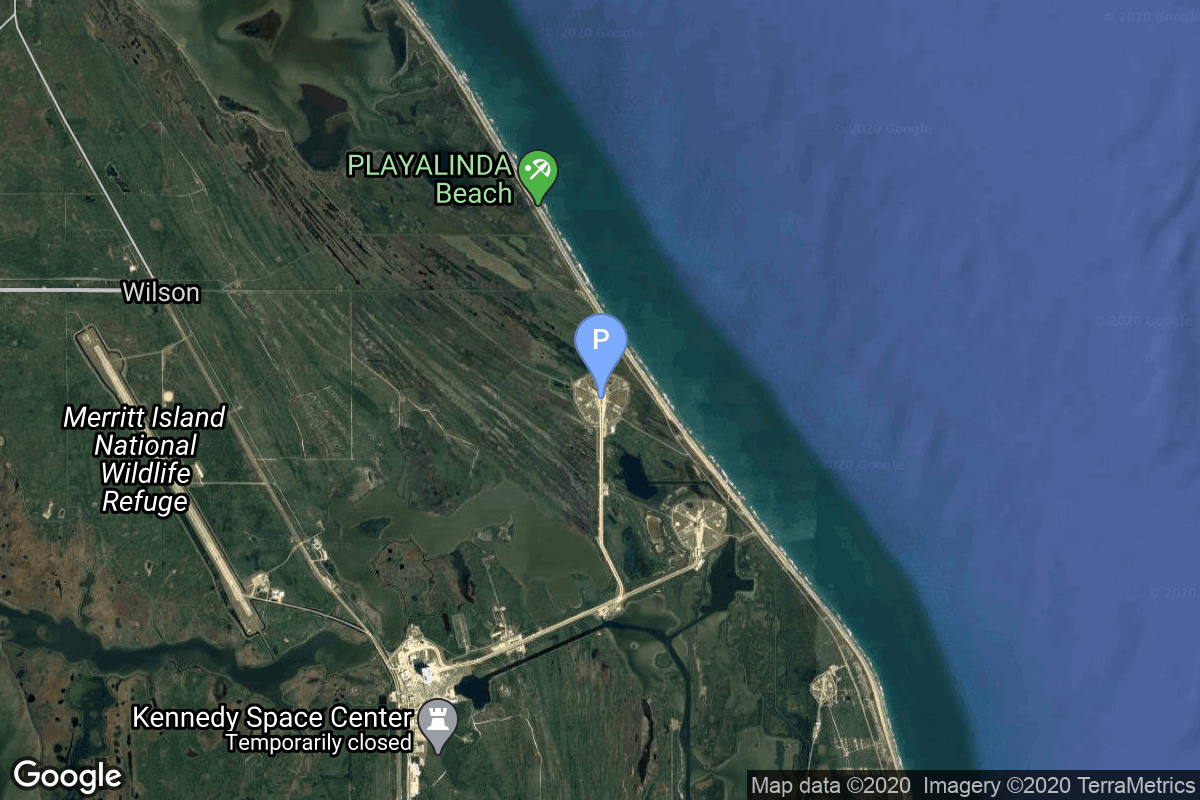
NASA is navigating a complex situation following the May 28 explosion of Blue Origin’s New Glenn rocket, which has impacted the timeline for the company’s Blue Moon lunar landers. This incident, described by NASA Administrator Jared Isaacman as a serious setback, badly damaged Launch Complex 36 at Cape Canaveral Space Force Station.
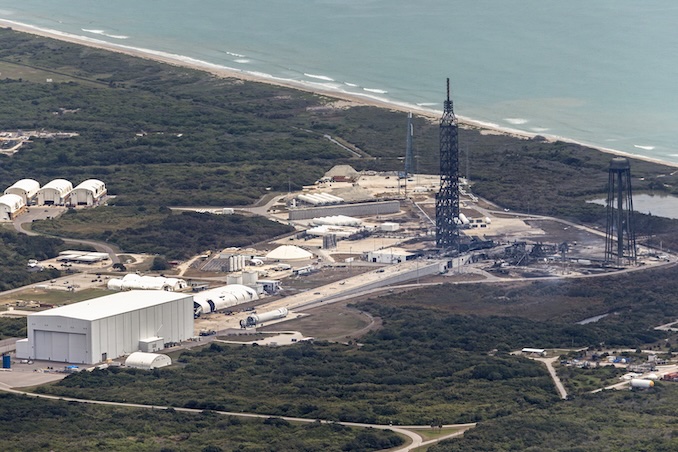
In response, NASA is urging Blue Origin to explore alternative launch vehicles for its Blue Moon Mark 1 cargo lander and the larger Mark 2 crewed lander. While Blue Origin’s CEO Dave Limp anticipates New Glenn will fly again before the end of 2026, the current timeline is proving insufficient for NASA’s aggressive Artemis schedule. Both Blue Moon lander versions were designed and optimised to fly on New Glenn, creating a challenge for finding suitable alternatives. NASA’s focus remains on ensuring these landers are ready for the Artemis III test mission in 2027 and crewed landings by 2028.
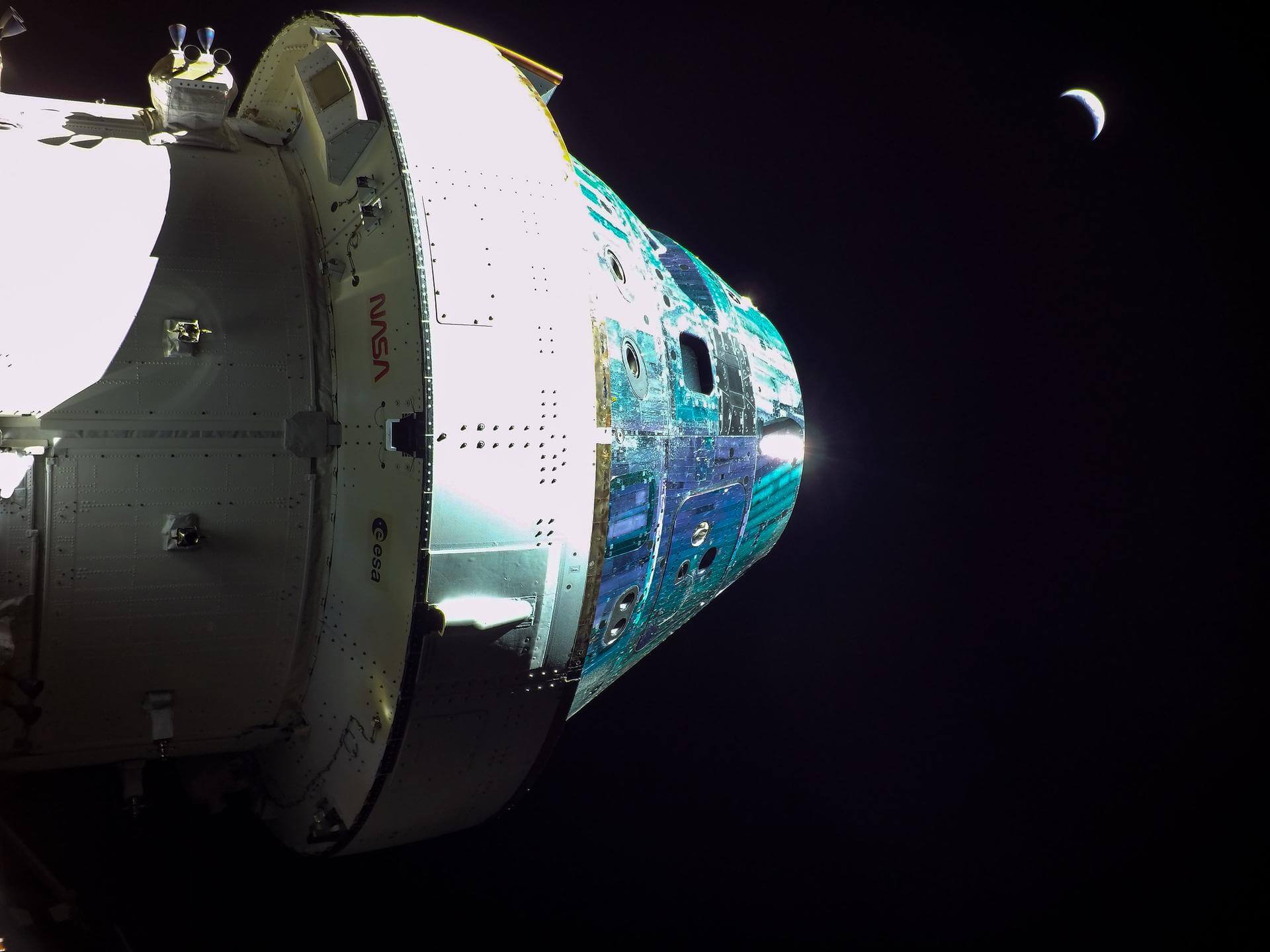
Despite these challenges, the Artemis programme continues its preparations. NASA is set to announce the Artemis III crew on June 9, providing an update on mission progress. The solid rocket booster segments for Artemis III are also making their way to the launch site, hauled by a Union Pacific locomotive adorned in patriotic colours, demonstrating the broad industrial effort behind the lunar return.
Lunar Development Targets Sustainability
Beyond the immediate Artemis missions, NASA is pressing forward with broader lunar development initiatives, focusing on building a sustainable presence on the Moon. Administrator Isaacman highlighted the agency’s commitment to a “fly, learn, improve” approach for establishing a Moon Base, drawing parallels to the Surveyor programme of the 1960s.

This strategy involves numerous small missions, landers, and rovers, with the understanding that some failures are to be expected in such a challenging environment. NASA views these early learning moments as crucial for refining long-term habitation and logistics designs. JPL is also contributing with its MoonFall propulsive drones, which will survey lunar landing sites in unprecedented detail, providing vital information for future Artemis expeditions.
Call Of The Red Planet: Farewell MAVEN
After more than 11 years of studying the Martian atmosphere, NASA has officially ended the Mars Atmosphere and Volatile Evolution (MAVEN) mission. Contact with the orbiter was lost on December 6, 2025, after it passed behind Mars. Efforts to restore communication proved unsuccessful, leading a review board in February to conclude that the spacecraft was unrecoverable.
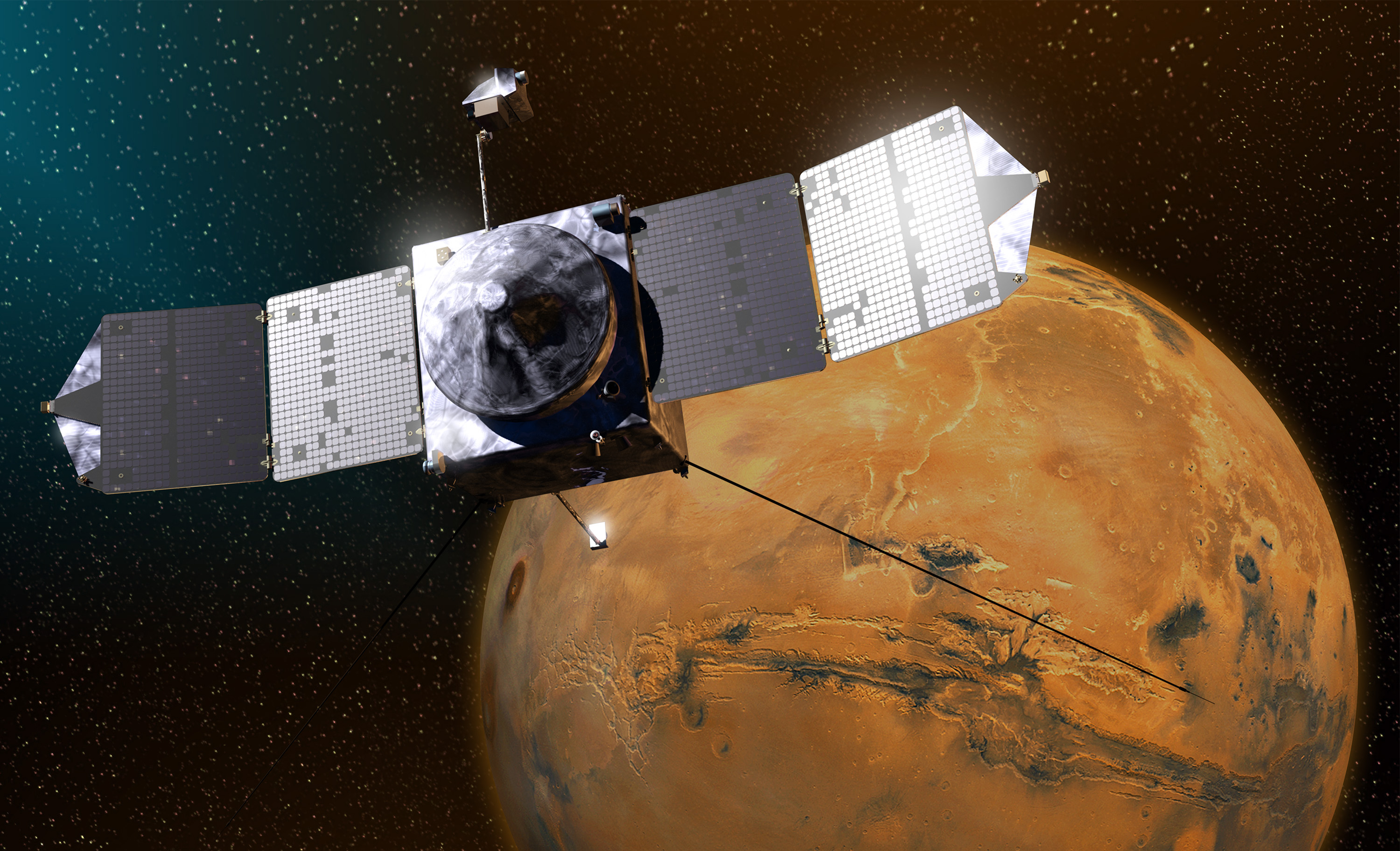
Telemetry from MAVEN indicated an unexpected rotation rate after it emerged from behind Mars, leading to drained batteries and an unrecoverable state. While the precise root cause is still under investigation, MAVEN’s legacy is immense. It provided unprecedented insights into how Mars lost its atmosphere, the impact of solar wind, and the phenomenon of auroras on the Red Planet. MAVEN also played a crucial role in the Mars Relay Network, transmitting data from surface missions to Earth.
The termination of MAVEN underscores the urgency for the Mars Telecommunications Network (MTN) mission, which aims to provide dedicated communications infrastructure for current and future Mars missions. Proposals for the MTN mission are due by June 15, with NASA expecting to sign a contract by October 1, 2026.
Deep Space Updates: Roman Telescope Readies For Launch
NASA is gearing up for the August 30 launch of the Nancy Grace Roman Space Telescope, a mission poised to revolutionise our understanding of the universe. The Roman Space Telescope is currently being shipped via barge to Kennedy Space Center, marking a significant step toward its deployment. Notably, the project is both ahead of schedule and under budget, a testament to effective programme management.
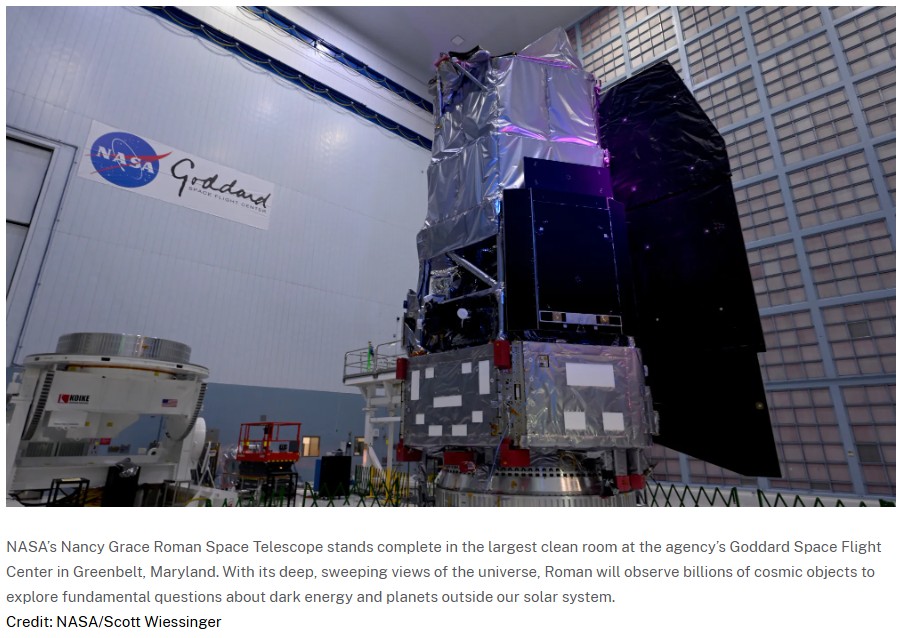
Roman, originally known as the Wide-Field Infrared Space Telescope (WFIRST), will complement the James Webb Space Telescope. While JWST offers detailed narrow views, Roman’s wide-field panoramic perspective will identify countless new areas of interest, assisting in the search for exoplanets, and probing the mysteries of dark energy and dark matter. It will operate from the Sun-Earth L2 Lagrange point, 1.5 million kilometres from Earth.
Also advancing is the Space Reactor 1 (SR-1) Freedom mission, a nuclear electric propulsion demonstration aiming for an end-of-2028 launch to Mars. NASA is streamlining its management approach for this ambitious project, leveraging existing hardware like the Power and Propulsion Element (PPE) from the lunar Gateway and incorporating designs from Department of Energy research reactors. The SR-1 Freedom mission will transport the SkyFall spacecraft to Mars, which will deploy three Ingenuity-like helicopters into the Martian atmosphere.

Further afield, the Juno mission at Jupiter has provided groundbreaking data on particles accelerated by the gas giant’s powerful magnetic field, offering new insights into cosmic rays. Meanwhile, the Dragonfly rotorcraft mission to Titan is undergoing critical thermal-structural testing for its heat shield materials, preparing for its planned 2028 launch.
The ISS Report: Breakthrough Research Continues
The International Space Station (ISS), celebrating 25 years of continuous human presence, remains a vibrant hub for scientific research. Expedition 74 astronauts have been busy with a variety of experiments. Recent activities include the bioprinting of human cartilage tissues, furthering regenerative medicine, and nourishing blood stem cells for space-designed therapies.

Human research examining how microgravity affects bacteria and cartilage growth is also a key focus. In late May, two cosmonauts conducted a spacewalk to install a solar radiation experiment and retrieve research gear that had been exposed to the harsh space environment. Looking ahead, the SpaceX CRS-34 Dragon spacecraft is scheduled to undock on June 16, returning vital cargo and research samples to Earth.
In The News: Policies, Partnerships, and People Shaping NASA’s Future
Beyond major missions, NASA is actively engaging in policy and workforce development. The agency recently welcomed a new class of interns, comprising future engineers, scientists, and explorers who will contribute to lunar exploration, scientific discovery, and the journey to Mars. This commitment to nurturing talent is crucial for addressing the complex challenges of future space endeavours.
The Space Communication and Navigation (SCaN) program’s technology demonstration is also being extended to pursue additional testing, advancing NASA’s vision for a sustainable and interoperable communications ecosystem in space. Additionally, Brig. Gen. Andrew R. Morgan concluded his 12-year career at NASA to continue his military service, leaving a legacy of 272 days spent aboard the ISS.
June observers can look forward to celestial events including Jupiter and Venus appearing close together in the night sky, with Mercury joining them later in the month. The Moon will also pass in front of Venus on June 17, offering a unique viewing opportunity.
Citations
- “NASA head urges new launcher for Blue Origin’s moon landers to meet Artemis mission deadlines” — https://spaceflightnow.com/2026/06/04/nasa-head-urges-new-launcher-for-blue-origins-moon-landers-to-meet-artemis-mission-deadlines/
- “NASA declares end to MAVEN Mars mission” — https://spacenews.com/nasa-declares-end-to-maven-mars-mission/
- “NASA Says Farewell to MAVEN Mars Mission, Hosts Media Call Today” — https://www.nasa.gov/news-release/nasa-says-farewell-to-maven-mars-mission-hosts-media-call-today/
- “NASA Sets Launch Date for Roman Space Telescope” — https://spacepolicyonline.com/news/nasa-sets-launch-date-for-roman-space-telescope/
- “NASA working to streamline development of nuclear electric propulsion demo mission” — https://spacenews.com/nasa-working-to-streamline-development-of-nuclear-electric-propulsion-demo-mission/
- “Space Events This Week” — https://ll.thespacedevs.com/
- “X — NASA (Official NASA account)” — https://x.com/NASA
- “X — NASA JPL (NASA Jet Propulsion Laboratory)” — https://x.com/NASAJPL
- “X — NASA Artemis (NASA Artemis program account)” — https://x.com/NASAArtemis
- “X — NASA Mars (NASA Mars exploration account)” — https://x.com/NASAMars
- “X — NASA Administrator (NASA Administrator (personal account))” — https://x.com/NASAAdmin
- “X — International Space Station (Official ISS account)” — https://x.com/Space_Station
- “X — NASA Solar System (NASA Solar System Exploration)” — https://x.com/NASASolarSystem
- “X — NASA Space Operations (NASA Space Operations Mission Directorate)” — https://x.com/NASASpaceOps
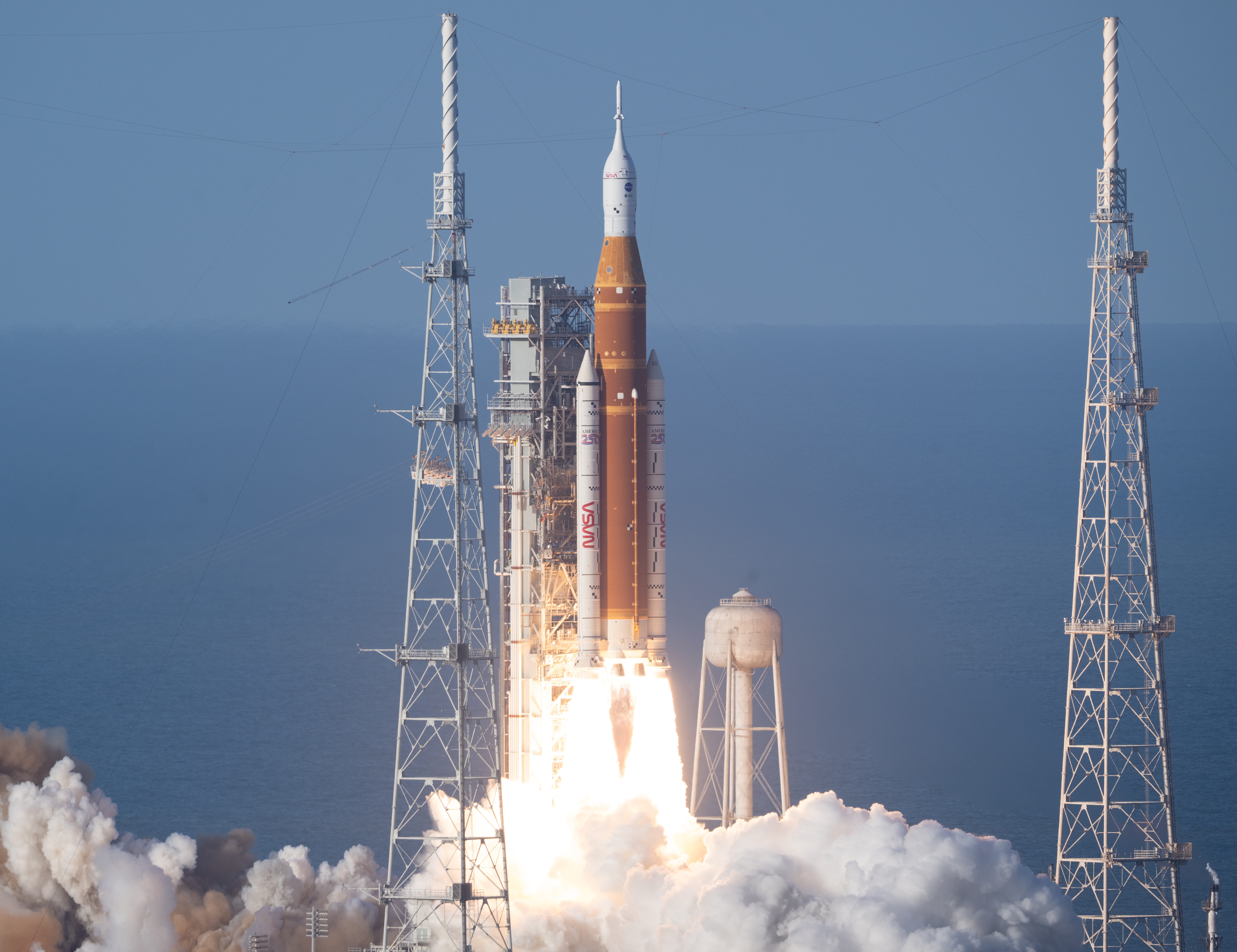
Artemis III
Provider: National Aeronautics and Space Administration
Date: June 30, 2027
Time: 12:00 AM UTC
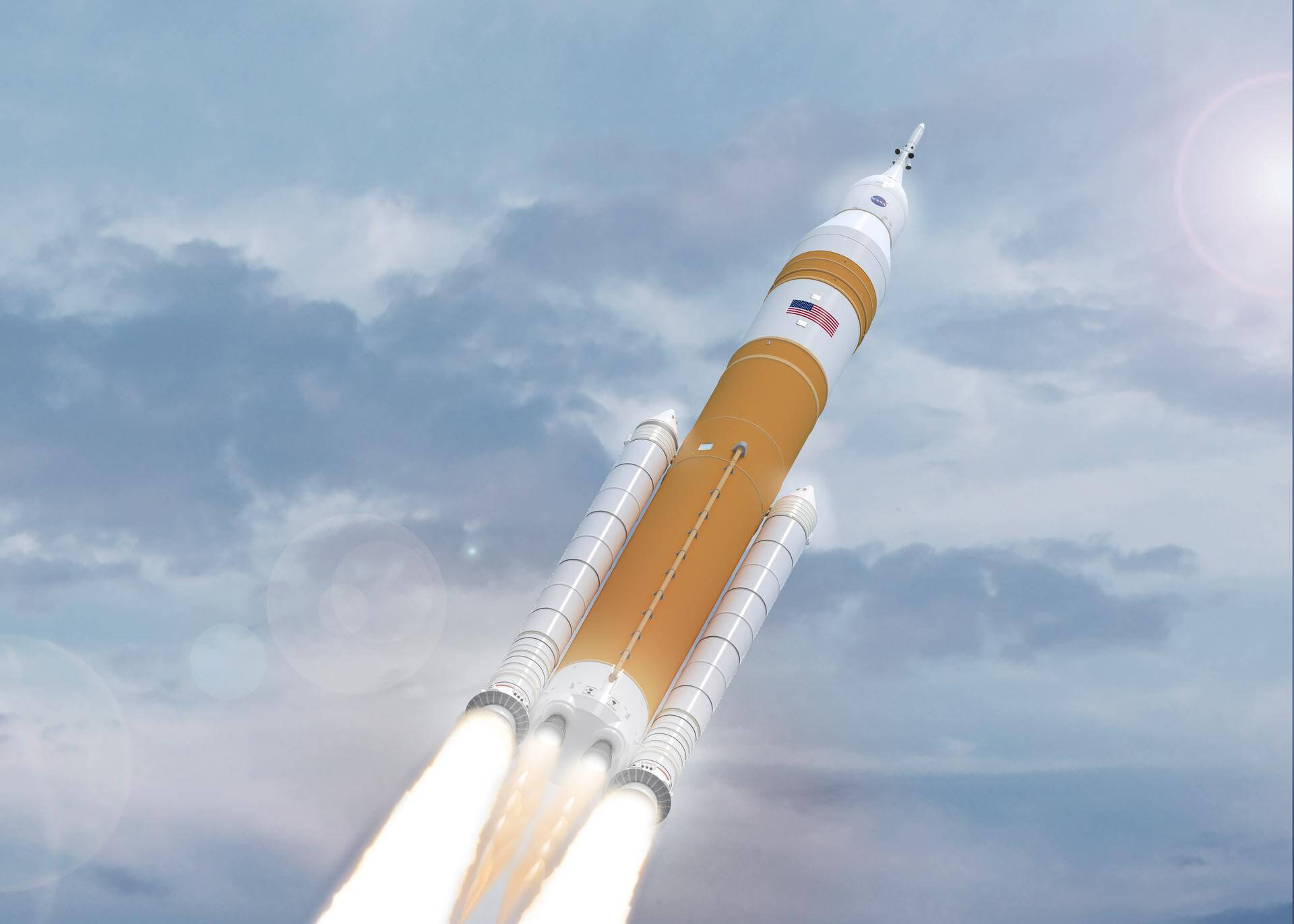
Vehicle: Space Launch System (SLS)
Artemis III is the second crew mission as part of the Artemis program. Artemis III will send a crew of 4 on a Low Earth Orbit mission, with the Orion rendezvous and dock with one or both commercial lunar landers in development by SpaceX and Blue Origin, performing in-space tests of the docked vehicles, integrated checkout of life support, communications, and propulsion systems, as well as tests of the new Extravehicular Activity (xEVA) suits.
Artemis IV
Provider: National Aeronautics and Space Administration
Date: June 30, 2028
Time: 12:00 AM UTC
Vehicle: Space Launch System (SLS)
Artemis IV is planned to be the first human lunar landing mission since the Apollo Program.
Artemis V
Provider: National Aeronautics and Space Administration
Date: December 31, 2028
Time: 12:00 AM UTC
Vehicle: Space Launch System (SLS)
Artemis V is planned to be the second human lunar landing mission since the Apollo Program.
SLS Block 1B | Artemis VI
Provider: National Aeronautics and Space Administration
Date: September 30, 2030
Time: 12:00 AM UTC
Vehicle: Space Launch System (SLS)
No description available
SLS Block 1B | Artemis VII
Provider: National Aeronautics and Space Administration
Date: September 30, 2031
Time: 12:00 AM UTC
Vehicle: Space Launch System (SLS)
No description available
Enjoying the content? Stay up to date on everything happening behind the scenes by following our Patreon!

