
The Daily Broadcast: Canadian space sovereignty hinges on geodetic data; Starship V3 and Shenzhou-23 advance

Canada’s unspoken space vulnerability: the geodesy problem
At the Space Canada Horizons conference in Longueuil on Wednesday, May 20, Catherine Robin, Director of the Canadian Geodetic Survey at Natural Resources Canada, laid bare a blind spot in Canadian space sovereignty that most of the room had not considered: geodesy—the science of measuring the Earth’s size, shape, orientation, and gravity field on a dynamic, changing planet.
Every rocket launch, every satellite operation, every orbital maneuver depends on accurate, up-to-the-day measurements of Earth orientation parameters: latitude, longitude, elevation, and gravity. These parameters shift constantly. Right now, Canada’s entire space industry relies on external, non-Canadian data to load these daily corrections into flight computers. There is zero Canadian contribution to these calculations, meaning Canada has no influence over data it cannot operate without.
The vulnerability is stark: what Robin calls “a single point of failure.” The data inputs are global, non-substitutable, and largely invisible to decision-makers. If another nation decides to shut off access, Canada’s space operations grind to a halt.
The problem deepens in the north. Northern Canada lacks adequate Global Navigation Satellite System (GNSS) receiving stations; those that exist are dormant much of the year and transmit only once daily rather than 24/7. Worse, Canada actively dismantled capability: a Very Long Baseline Interferometry (VLBI) program—crucial for geodesy—was shut down in 2006. The result is a massive network gap over Canadian territory that degrades the entire global system.
Robin’s solution is straightforward: Canada should install a handful of collocated geodetic stations to participate in calculating the daily orientation parameters. Remarkably, the only G7 nation without such a station is Canada. Many non-G7 countries have several.
Two major studies—one from the Canadian Council of Academies and another funded by the Department of National Defence—are now underway to examine the links between sovereign space activity and geodetic infrastructure. Results are due in autumn 2026. Robin urged the space industry and policymakers to recognize the dependency and advocate for closing the gap.
Starship V3 flight 12 proves reentry architecture despite booster setback

SpaceX launched Starship’s third-generation architecture to orbit on Friday, May 22, demonstrating the new design’s upper-stage reentry capabilities even as the Super Heavy booster failed to complete its recovery burn. The flight, designated Flight 12, lifted off at 6:33 p.m. Eastern from the newly constructed Launch Pad 2 at Starbase, Texas, after a 24-hour delay caused by ground support equipment issues on the previous day.
The inaugural Flight 12 proved that V3’s reentry and thermal protection systems work as intended. Despite intentional stress tests—including an artificially removed heat shield tile and a maximum-pressure “flaps flap” maneuver at Mach 7—the vehicle’s heat shield remained structurally intact through peak heating and dynamic pressure. The upper stage completed a controlled atmospheric reentry and soft splashdown in the Indian Ocean, 1 hour and 6 minutes after launch.

The booster told a different story. All 33 Raptor 3 engines on the Super Heavy ignited at liftoff. Approximately 1 minute and 42 seconds into the flight, one booster engine shut down, but the vehicle’s redundancy allowed normal ascent to continue. After hot-stage separation, the booster was programmed to execute a boostback burn to target a soft splashdown in the Gulf of Mexico. However, telemetry showed erratic engine startup, and the booster failed to relight the required number of engines. The burn was terminated early, and the booster crashed into the gulf. The Federal Aviation Administration confirmed all debris fell within the pre-cleared hazard zone and reported no public injury or property damage.
Flight 12 marked substantial hardware upgrades across both stages. The Super Heavy moved to an integrated hot-stage ring, reduced grid fins from four to three (increased 50% in size), and achieved simultaneous ignition of all 33 engines via a redesigned fuel transfer tube. The Starship upper stage added four in-orbit docking ports for future refuelling operations. Launch Pad 2 itself featured a bi-directional flame diverter and 100% electromechanical actuators on the launch tower, replacing previous hydraulic systems.
The mission deployed 22 satellites as part of a payload test—20 Starlink mass simulators and two modified V2 Mini satellites called “Dodger Dogs,” equipped with external cameras and lighting. The deployed satellites successfully transmitted imagery of Starship’s heat shield back to Earth via the Starlink network, providing real-time reentry telemetry. SpaceX skipped a planned in-space engine relight demonstration due to the earlier RVAC engine anomaly but gathered extensive thermal data that will inform the next flight iteration and SpaceX’s planned IPO roadshow next month.
Shenzhou-23 reaches Tiangong; China targets first year-long crewed mission

Three Chinese astronauts docked with Tiangong space station on Saturday, May 24, after a 3.5-hour ascent from the Jiuquan Satellite Launch Center. The Long March 2F rocket carrying Shenzhou-23 lifted off at 11:08 a.m. Eastern time that morning, placing commander Zhu Yangzhu, pilot Zhang Zhiyuan, and payload specialist Lai Ka-ying on a collision course with China’s modular outpost.
One of the three will remain in orbit for an entire year—a first for Chinese human spaceflight. The China Manned Space Engineering Office (CMSEO) confirmed the plan during a press conference but did not specify which crew member would undertake the extended mission. This extended-duration flight is a technical milestone as China prepares infrastructure for crewed lunar missions.
Notably, Lai Ka-ying becomes the first astronaut from Hong Kong to reach orbit. Zhu is a veteran of the 2023 Shenzhou-16 mission, while Zhang served as a Chinese military pilot. They will be welcomed aboard by the Shenzhou-21 crew—Zhang Lu, Zhang Hongzhang, and Wu Fei—who will hand over station control and return to Earth on May 29 aboard Shenzhou-22, an uncrewed lifeboat launched last year after suspected space debris damaged the Shenzhou-20 viewport. That incident prompted CMSEO to upgrade the Shenzhou-23 viewport window from one layer of anti-ablation glass to three—a reinforcement that underscores the hazards of orbital operations.
During its stay, the Shenzhou-23 crew will conduct experiments in life sciences, medicine, human physiology, and microgravity physics, including tests on lipid metabolism in liver cells, rice plant lifecycles, and two types of perovskite solar cell materials. They will also perform multiple spacewalks to install, commission, and maintain equipment inside and outside Tiangong.
Beyond this mission, China has mapped an ambitious pathway to crewed lunar landings before 2030. During the same CMSEO press conference, official Zhang Jingbo revealed that Tiangong serves three critical functions for lunar exploration: providing extensive spaceflight experience, deploying and verifying key technologies for crewed landings (including a microgravity test of liquid sloshing dynamics in lunar landing spacecraft), and conducting multiple test flights of the Long March 10 rocket and Mengzhou crew spacecraft over the next two years. The Chang’e-7 lunar south-pole mission, already delivered to Wenchang spaceport, is undergoing pre-launch testing for a launch in the second half of 2026. NASA Administrator Jared Isaacman has separately indicated he expects a Chinese crewed lunar flyby mission as early as 2027.
Citations
- “The invisible point of failure in Canadian space sovereignty” — https://spaceq.ca/the-invisible-point-of-failure-in-canadian-space-sovereignty/
- “Starship flight 12 validates V3 reentry systems despite early booster termination” — https://spaceq.ca/starship-flight-12-validates-v3-reentry-systems-despite-early-booster-termination/
- “Shenzhou-23 crew arrives at Tiangong as China maps path to 2030 lunar landing” — https://spacenews.com/shenzhou-23-crew-arrives-at-tiangong-as-china-maps-path-to-2030-lunar-landing/

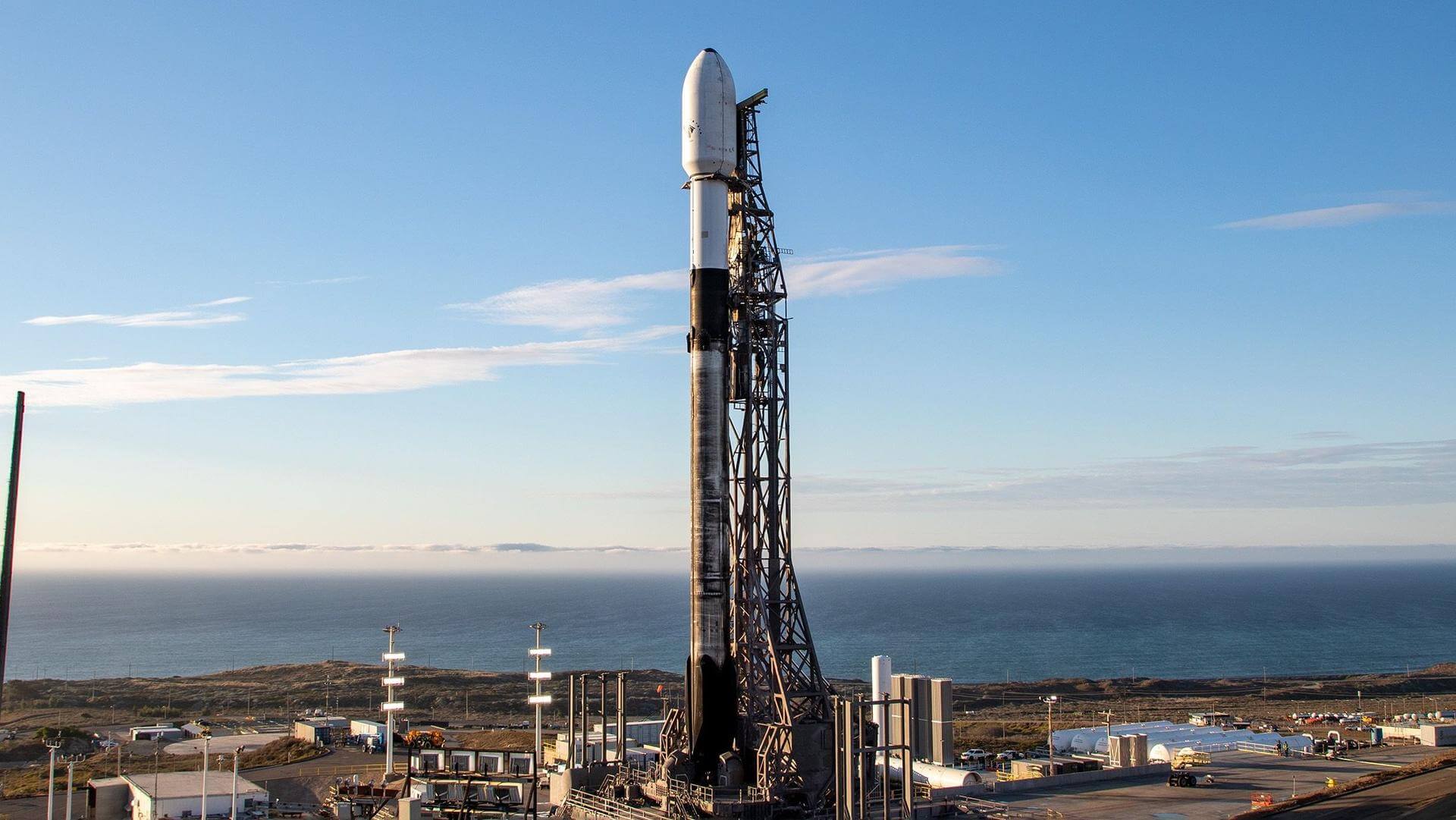
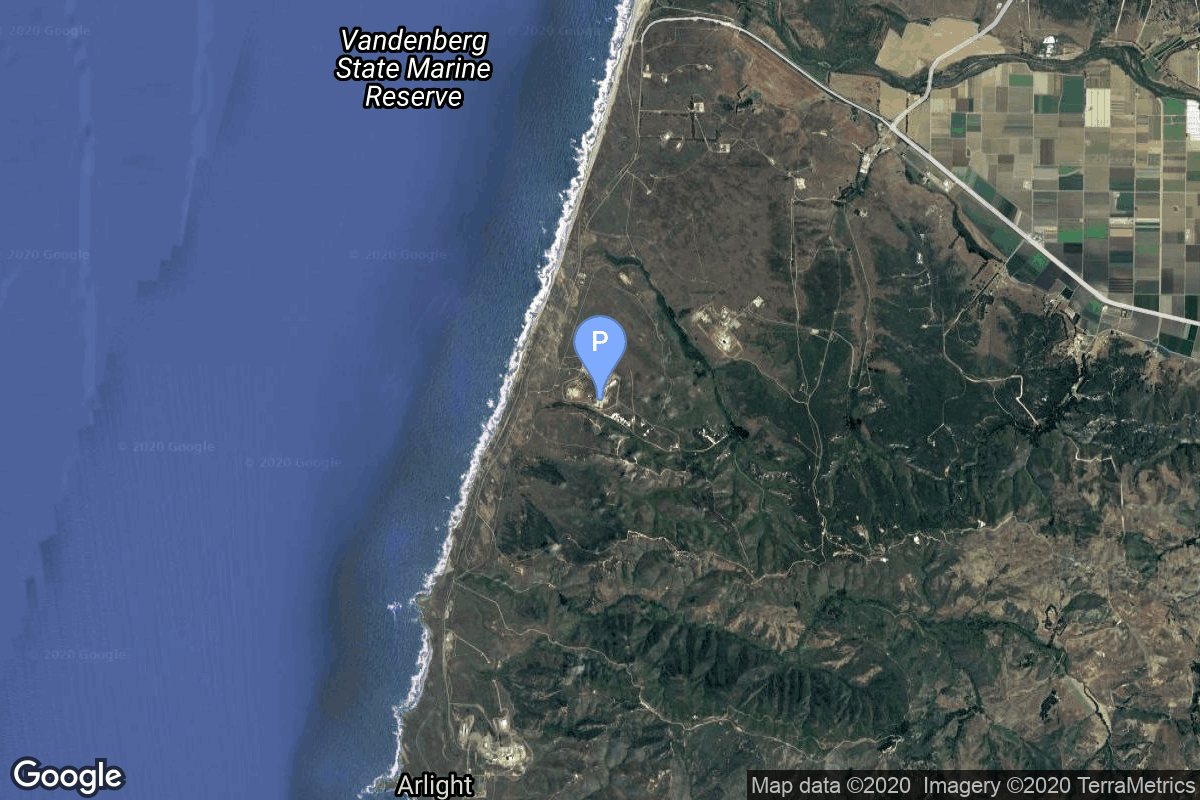
Starlink Group 17-37
Provider: SpaceX
Date: May 26, 2026
Time: 2:00 PM UTC
Vehicle: Falcon 9
A batch of 24 satellites for the Starlink mega-constellation – SpaceX’s project for space-based Internet communication system.
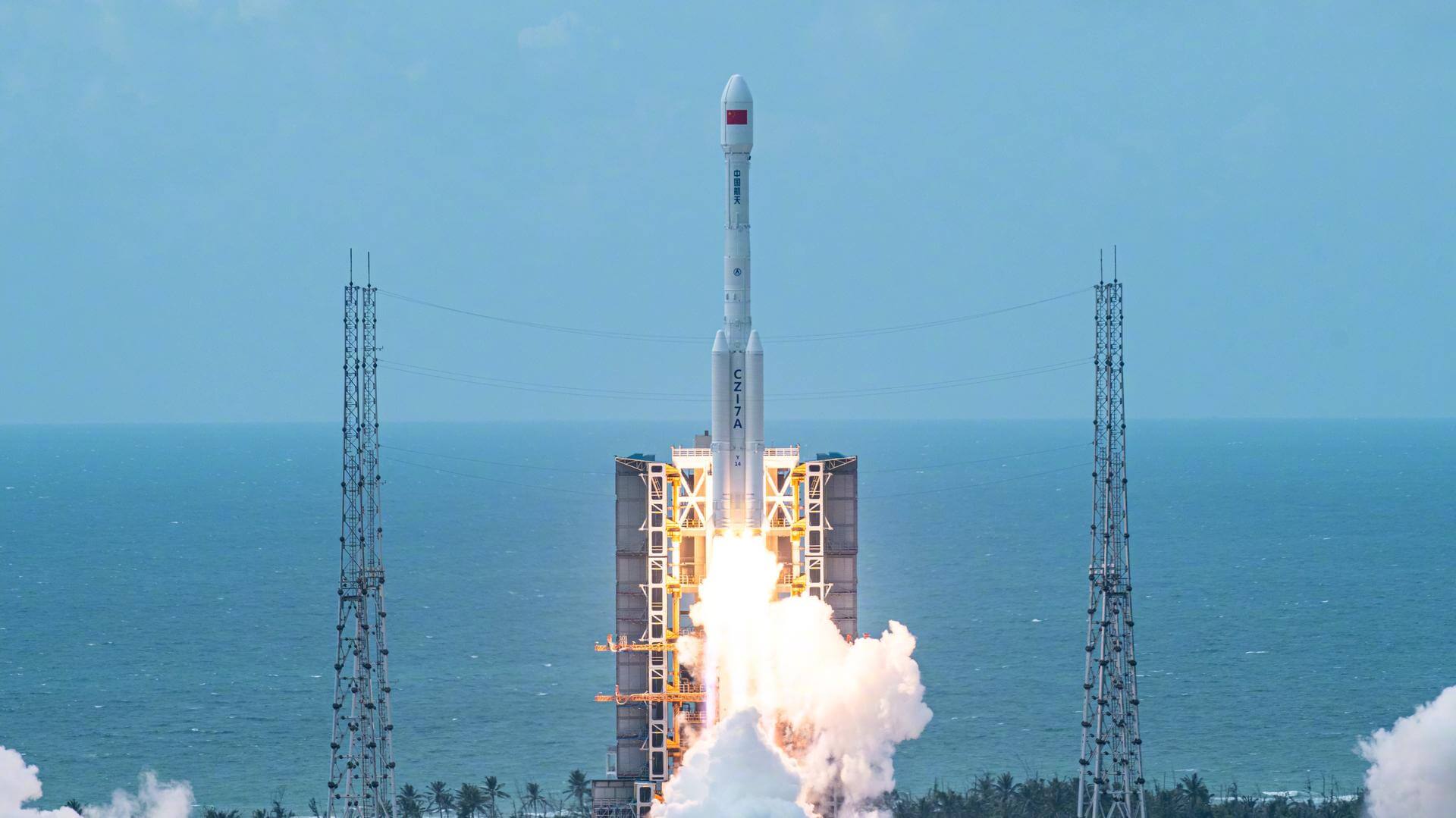
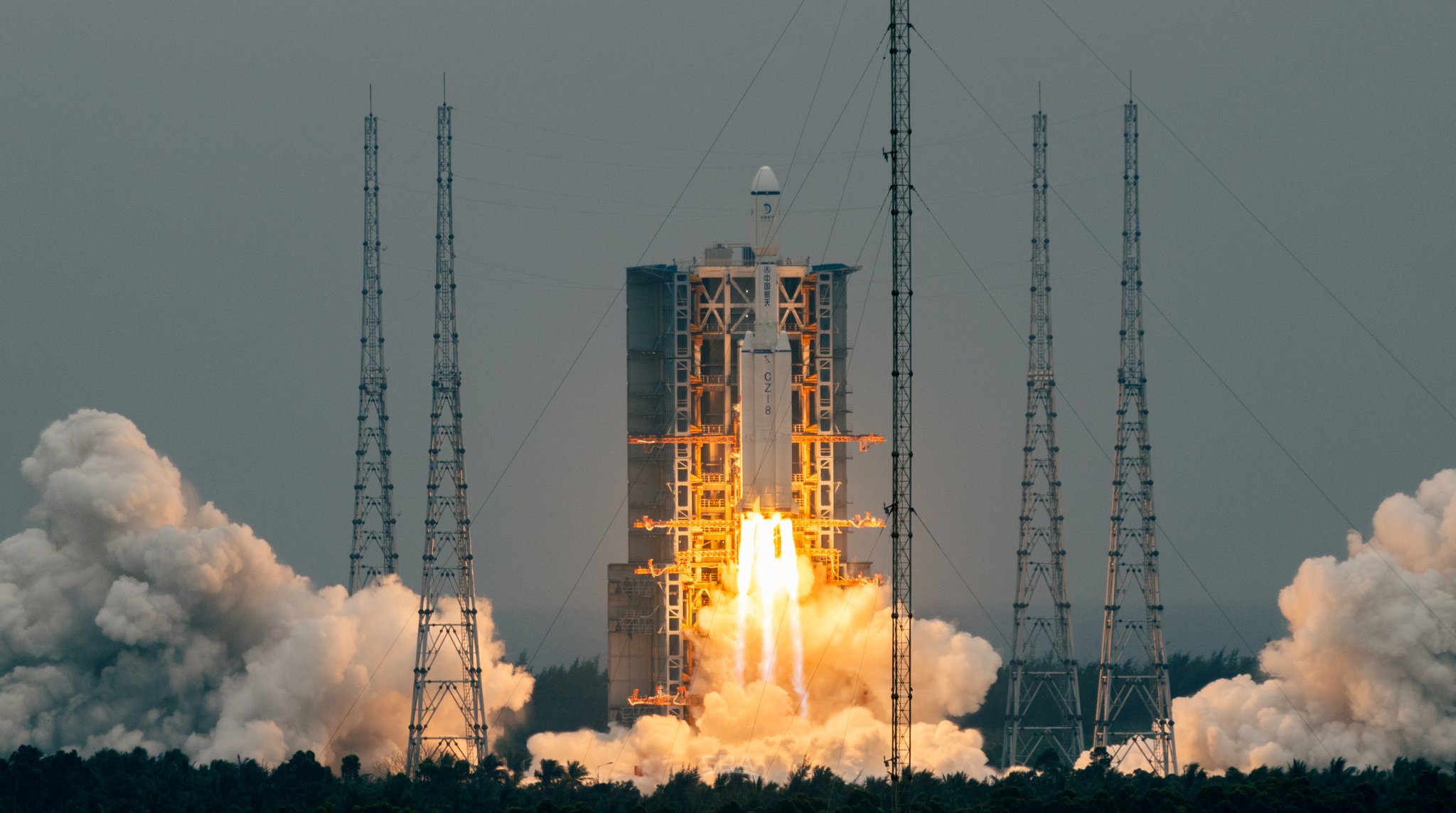
Unknown Payload
Provider: China Aerospace Science and Technology Corporation
Date: May 26, 2026
Time: 4:15 PM UTC
Vehicle: Long March 7A
Details TBD.
Starlink Group 10-53
Provider: SpaceX
Date: May 29, 2026
Time: 11:52 AM UTC
Vehicle: Falcon 9
A batch of 29 satellites for the Starlink mega-constellation – SpaceX’s project for space-based Internet communication system.
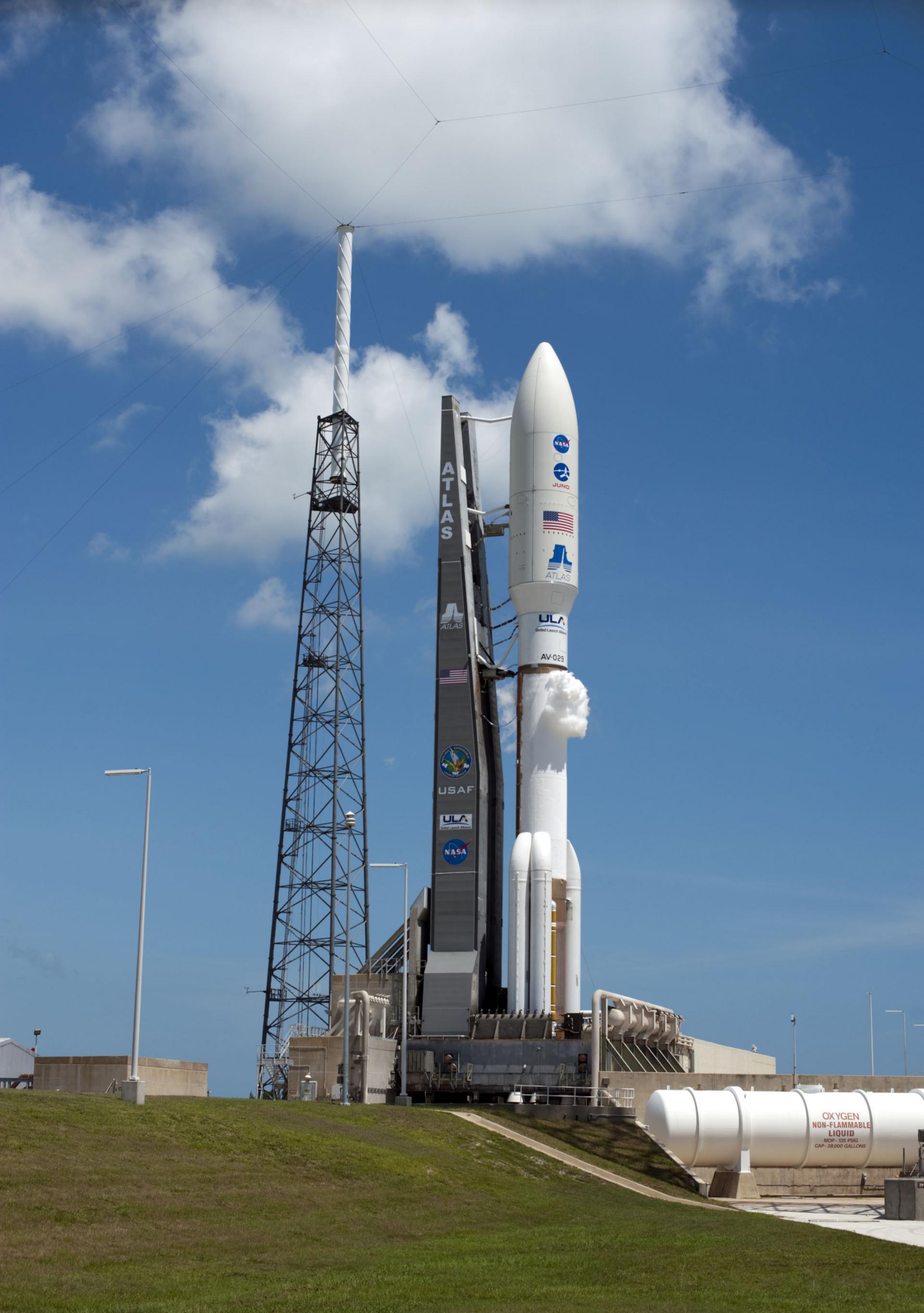
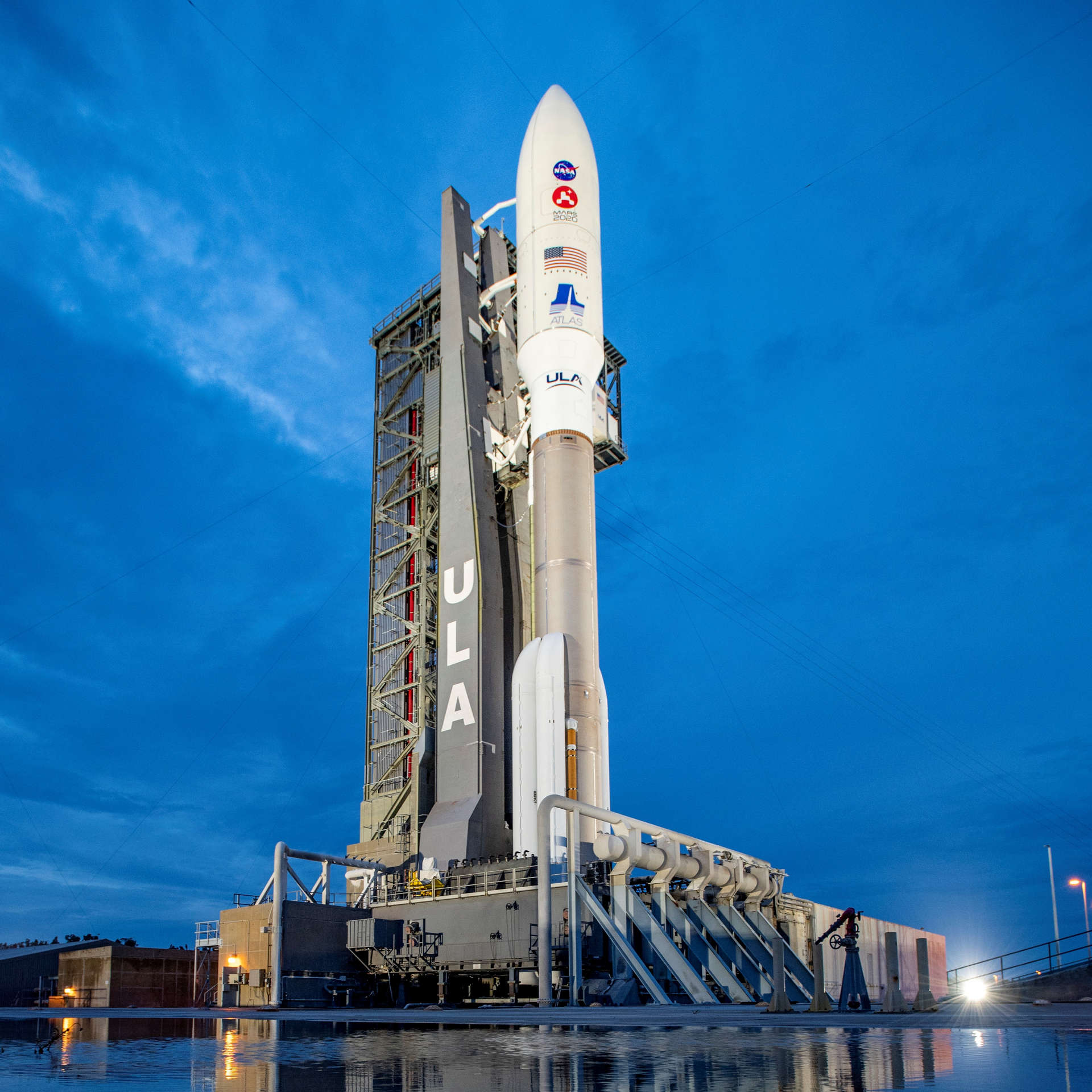
Amazon Leo (LA-07)
Provider: United Launch Alliance
Date: May 29, 2026
Time: 11:33 PM UTC
Vehicle: Atlas V 551
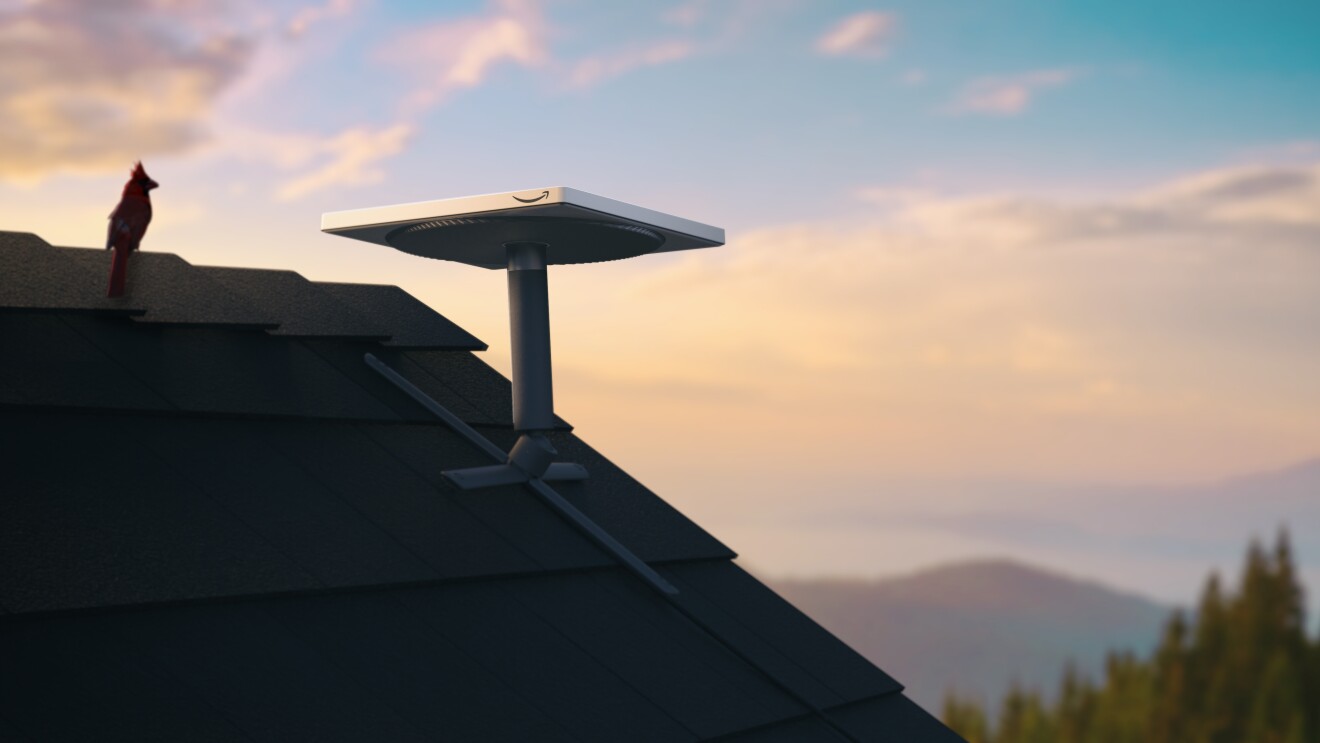
Amazon Leo, formerly known as Project Kuiper, is a mega constellation of satellites in Low Earth Orbit that will offer broadband internet access, this constellation will be managed by Kuiper Systems LLC, a subsidiary of Amazon. This constellation is planned to be composed of 3,276 satellites. The satellites are projected to be placed in 98 orbital planes in three orbital layers, one at 590 km, 610 km and 630 km altitude.
29 satellites are carried on this launch.
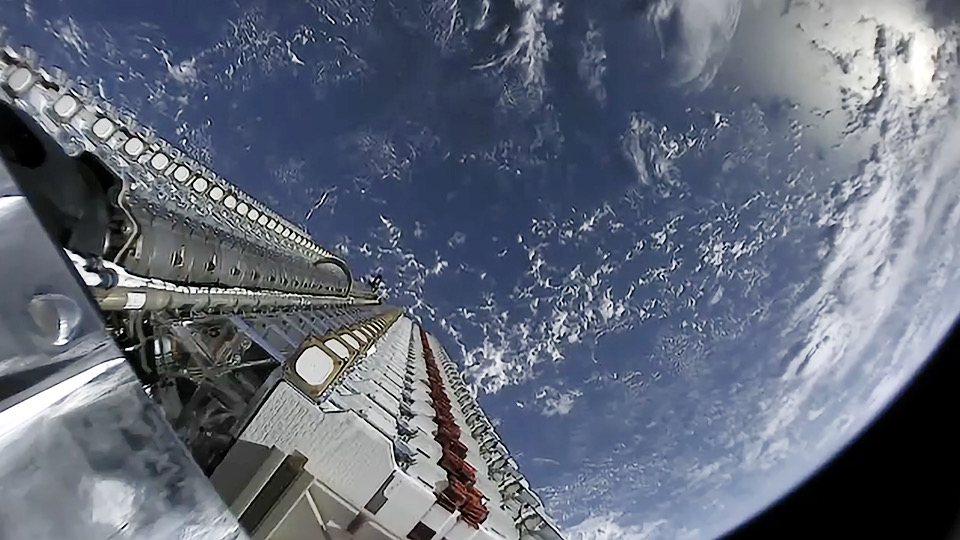
Starlink Group 17-41
Provider: SpaceX
Date: May 30, 2026
Time: 2:00 PM UTC
Vehicle: Falcon 9
A batch of 24 satellites for the Starlink mega-constellation – SpaceX’s project for space-based Internet communication system.




Enjoying the content? Stay up to date on everything happening behind the scenes by following our Patreon!

