
Canada From Orbit: Canada’s Space Sector Shifts Gears: Sovereign Launch, AI Manufacturing, and Artemis Momentum
CSA in the Spotlight: Astronauts, Earth Observation, and Industry Alignment
The Canadian Space Agency (CSA) kept a steady hand on the tiller in May, balancing public engagement with strategic industry alignment. Astronaut Joshua Kutryk, currently training for his upcoming SpaceX Crew-13 mission to the International Space Station, made a high-profile visit to the University of Calgary on May 25. There, he detailed Canada’s expanding role in both low Earth orbit operations and the Artemis lunar program—not to mention sparking a friendly Albertan hockey debate that had students cheering almost as loud as they did for space medicine breakthroughs.
Meanwhile, the Artemis II crew wrapped up their Canadian media tour with stops in Ottawa, Montréal, and at the Canadian Museum of Nature, meeting with Prime Minister Mark Carney and engaging thousands of students and space enthusiasts. Their visit underscored Canada’s integral contributions to lunar exploration, particularly through the Canadarm3 robotic system slated for the Gateway space station. However, a sobering message emerged from former NASA Chief Economist Alex MacDonald during the Space Canada Horizons 2026 conference: with NASA’s near-term focus shifting decisively toward lunar surface operations, Canadian industry must pivot quickly from gateway-centric projects to surface robotics to stay relevant.
On the Earth observation front, the CSA released its State of the Canadian Space Sector Report 2025, revealing that while total sector revenues dipped slightly to $5.0 billion in 2024, the core space economy contributed a record $3.8 billion to Canada’s GDP. R&D spending surged by 48% year-over-year to $962 million, and direct space sector employment grew to 14,622. The agency also announced fall internship opportunities and opened applications for research funding in space astronomy and planetary exploration, with a deadline of August 21, 2026.
Notably, the CSA flagged a critical gap in Canada’s “invisible infrastructure”: the nation currently relies entirely on foreign sources for Earth orientation parameters, essential data for every satellite launch and operation. Addressing this dependency is now seen as a prerequisite for true space sovereignty. In a lighter moment, the agency playfully asked followers whether a satellite image of Cape Breton resembled a cat—prompting spirited debate and reminding us that even orbital imagery can spark national inside jokes.

Nord Space Powers Up Domestic Rocket Engine Production
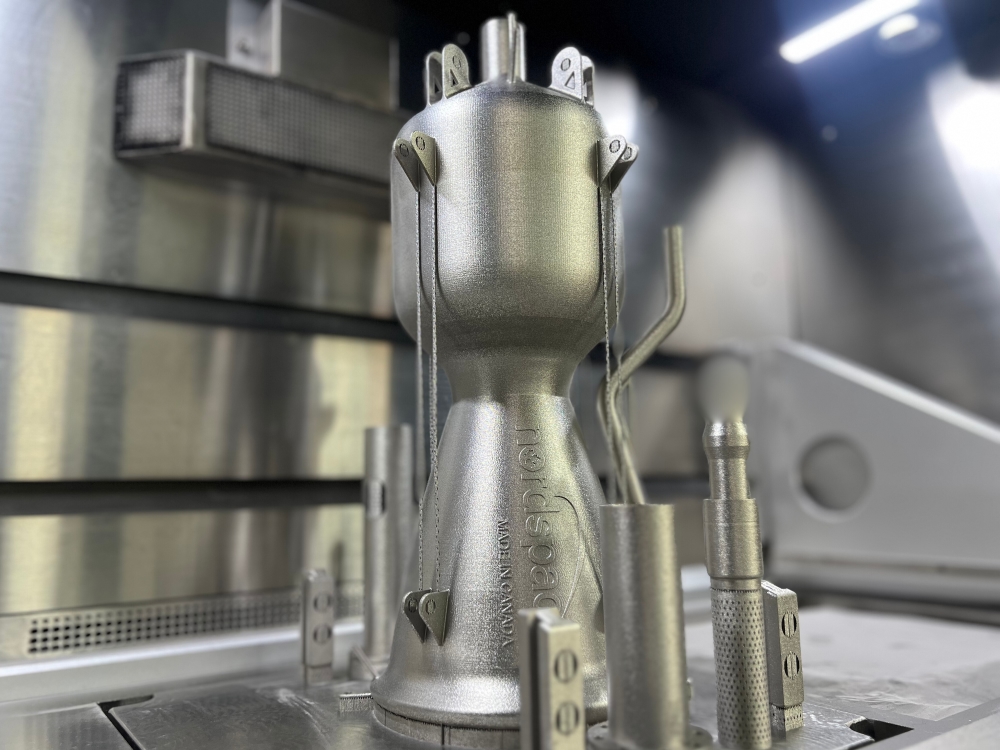
Markham-based NordSpace Corp. is making significant strides toward establishing Canada’s first fully domestic supply chain for advanced rocket propulsion. On May 28, the company announced it is leading a Canadian consortium awarded $3.2 million from Next Generation Manufacturing Canada (NGen) to develop an $8 million AI-powered hybrid additive-subtractive manufacturing line. This initiative will focus on producing high-performance turbopumps—complex components that have historically bottlenecked launch vehicle production and exposed Canadian firms to foreign export controls and supply chain disruptions.
The consortium includes Miltera Machining Research Corp., Pegmatis Inc., Prime Powders Inc., and Indigenous-owned Bear Paw Manufacturing. Together, they aim to localize every step of the process: from producing aerospace-grade superalloy metal powders to large-format 3D printing monitored by AI-driven quality control, followed by precision CNC machining. This effort directly supports the federal government’s Defence Industrial Strategy and complements NordSpace’s earlier selection for funding under the $105 million “Launch the North” IDEaS challenge.
By building this hardware backbone domestically, NordSpace is laying the groundwork for reliable launch cadences from its planned operations at the Atlantic Spaceport Complex in Newfoundland and Labrador. Though no specific launch date has been announced yet, this manufacturing milestone marks a crucial transition from lab-scale research to industrial-scale production—bringing Canada one step closer to sovereign launch capability by the 2028 target.
Maritime Launch Services Forges International Partnership for Nova Scotia Spaceport
Maritime Launch Services (MLS) is accelerating plans for Spaceport Nova Scotia, announcing on May 26 a strategic Letter of Intent with German launch company Isar Aerospace. The partnership aims to establish sovereign orbital launch readiness from Canso, leveraging MLS’s licensed launch site and Isar’s Spectrum rocket, which can carry payloads up to 1,000 kilograms to mid- and high-inclination orbits. While Isar has yet to achieve a successful orbital launch—its first flight ended in failure in March 2025, and two subsequent attempts in March and April 2026 were scrubbed—the company sees Canada as a key ally in building assured access to space for NATO members.
The collaboration responds to growing defense and economic pressures for Canada and Germany to reduce reliance on third-party launch providers. MLS CEO Stephen Matier emphasized that partnerships like this are “foundational to building launch capability,” and the agreement includes commitments to “significant investment” in Canadian launch infrastructure. Notably, this initiative appears complementary to Canada’s existing “Launch the North” programme, rather than competitive.
Before orbital launches can commence, MLS will conduct a suborbital demonstration mission between June 8 and 14, 2026, in partnership with T-Minus Engineering. The Barracuda vehicle will test procedures and accelerate operational readiness at the Canso site. While the public won’t be allowed on-site during launch operations, MLS promises real-time updates so Canadians everywhere can follow along as the country inches closer to becoming a spacefaring launch nation.

Canadian News From Orbit: Industry Growth, Defense Ties, and Student Ingenuity
Canada’s space ecosystem is increasingly intertwined with national security priorities. At the CANSEC 2026 defence exhibition, the federal government launched the Defence Advisory Forum and detailed its new Defence Industrial Strategy, which explicitly includes space hardware and supply chains as key verticals. Ontario unveiled its own 10-year Defence Industrial Strategy, highlighting space hardware integration, cybersecurity for satellite links, and dual-use AI and quantum platforms.
Meanwhile, the competition for Canada’s $60-billion Patrol Submarine Project is taking an unexpected turn: both German firm TKMS and South Korea’s Hanwha Ocean are now offering space infrastructure as part of their bids. TKMS has partnered with Isar Aerospace, while Hanwha signed a Memorandum of Understanding with Canadian launch startup Reaction Dynamics—demonstrating how space access has become a bargaining chip in major defence procurements.
On the international front, Canadian firms continue to punch above their weight. MDA Space reported a 32.2% year-over-year revenue increase in Q1 2026 and secured 41 early commitments for its CHORUS Earth observation constellation, slated for late 2026 launch. Vancouver’s EarthDaily Analytics won a $1.2 million optical imaging contract from the U.S. National Reconnaissance Office—a rare win for a Canadian commercial EO provider.
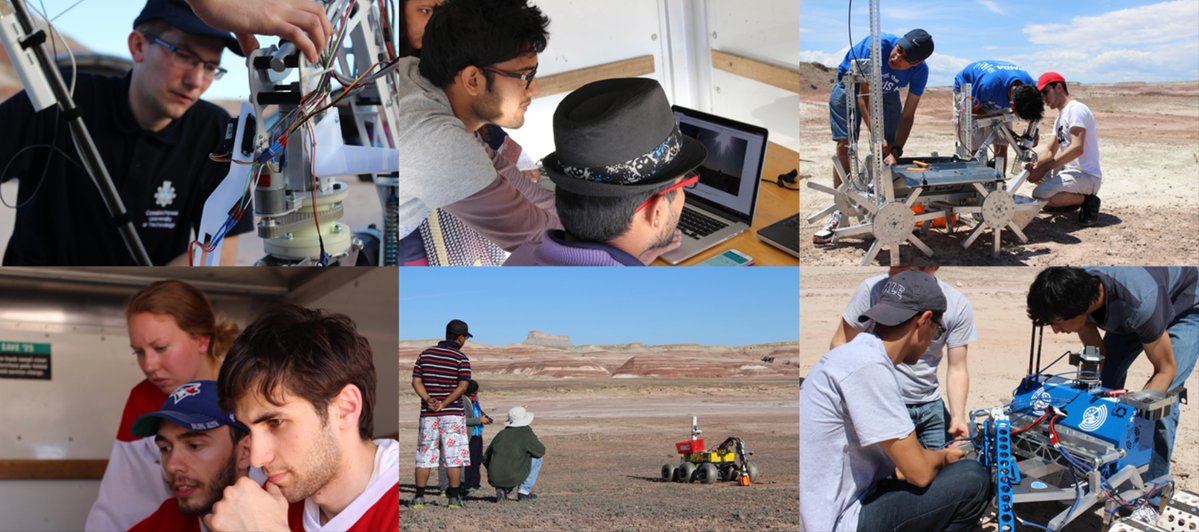
Student talent remains a bright spot. Four Canadian university teams—Space Concordia, University of Toronto, Queen’s University, and Carleton University—are among the 38 finalists competing in the University Rover Challenge in Utah this month. Their rovers, including Concordia’s Eileen and Carleton’s DEIMOS, will tackle autonomous navigation, sample delivery, and simulated science missions in Mars-like terrain. And in a major boost for academia, former private astronaut Mark Pathy donated $15 million to Concordia University to establish the Mark Pathy Space Institute, ensuring Canada’s pipeline of space talent stays robust for years to come.
Citations
- “Rocket Report: Starship launch delayed, German launch company may aid Canada” – https://arstechnica.com/space/2026/05/rocket-report-starship-launch-delayed-german-launch-company-may-aid-canada/
- “Isar Aerospace Signs Agreement to Launch from Future Canadian Spaceport” – https://europeanspaceflight.com/isar-aerospace-signs-agreement-to-launch-from-future-canadian-spaceport/
- “A look at the upcoming historic SpaceX IPO” – https://spaceq.ca/a-look-at-upcoming-historic-spacex-ipo/
- “Satellite operators release updated orbital safety guidelines to stay ahead of regulations” – https://spaceq.ca/satellite-operators-release-updated-orbital-safety-guidelines-to-stay-ahead-of-regulations/
- “Canadian consortium led by NordSpace awarded $3.2M from NGen for AI-powered space propulsion manufacturing” – https://spaceq.ca/canadian-consortium-led-by-nordspace-awarded-3-2m-from-ngen-for-ai-powered-space-propulsion-manufacturing/
- “Isar Aerospace partners with Maritime Launch Services for Orbital Launch Readiness from Nova Scotia” – https://www.maritimelaunch.com/news/isar-aerospace-partners-maritime-launch-services-orbital-launch-readiness-nova-scotia
No upcoming launches scheduled at this time.
