
The SpaceX Report: B1067 Reaches 35 Flights as SpaceX Sets IPO Price at $135
Booster 20 Preps for Starship Flight 13 with Cryogenic Tests
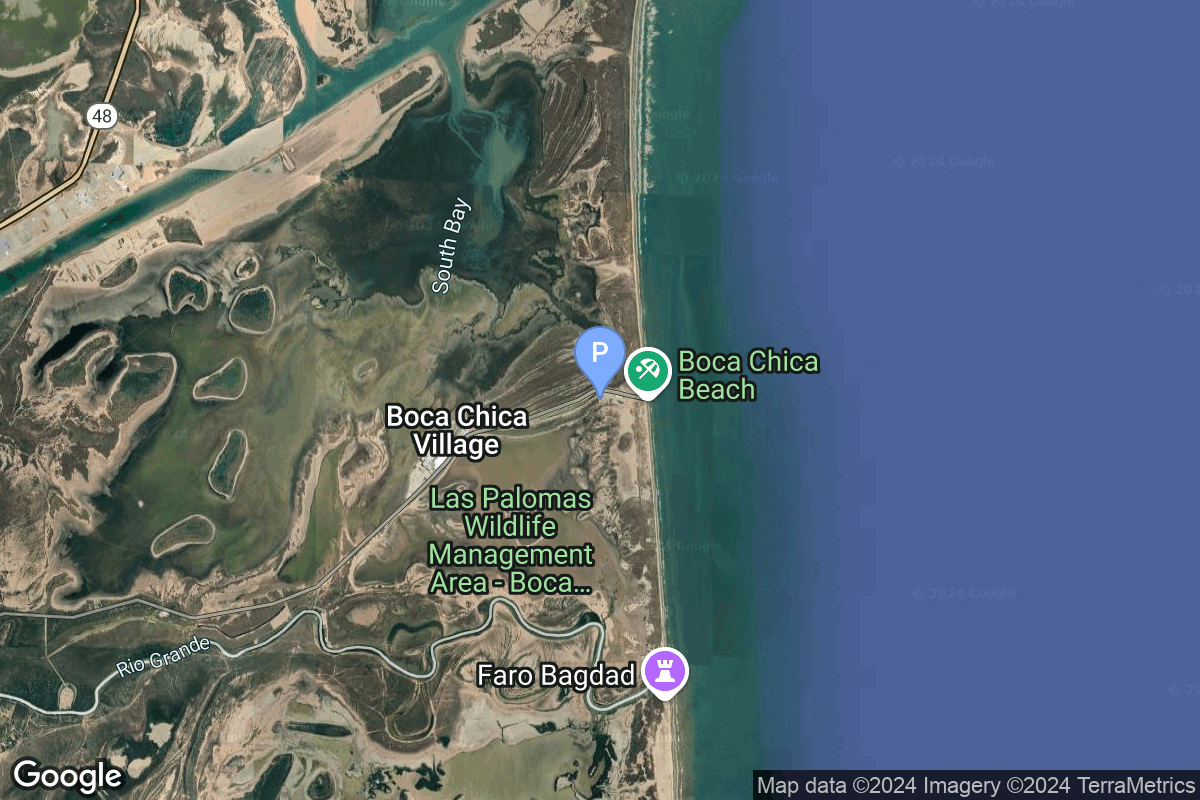
SpaceX accelerated hardware preparation for its next Starship integrated test flight this week as Super Heavy booster 20 underwent its first back-to-back cryogenic proof testing at Starbase Massey’s test facility. The booster rolled out of megabay 1 on June 4, began initial cryo testing on June 5, and completed a second full-load test on June 6. These tests validate the structural integrity and propellant handling systems before the booster is paired with Starship for Flight 13, signalling active progress toward the next major integrated test.
No firm launch date has been announced for Flight 13, but the cadence of these ground tests suggests late Q2 or Q3 2026 remains plausible. Starship Flight 12, the most recent integrated test, took place in May 2026.
Hardware Movement and Tank Farm Activity at Starbase
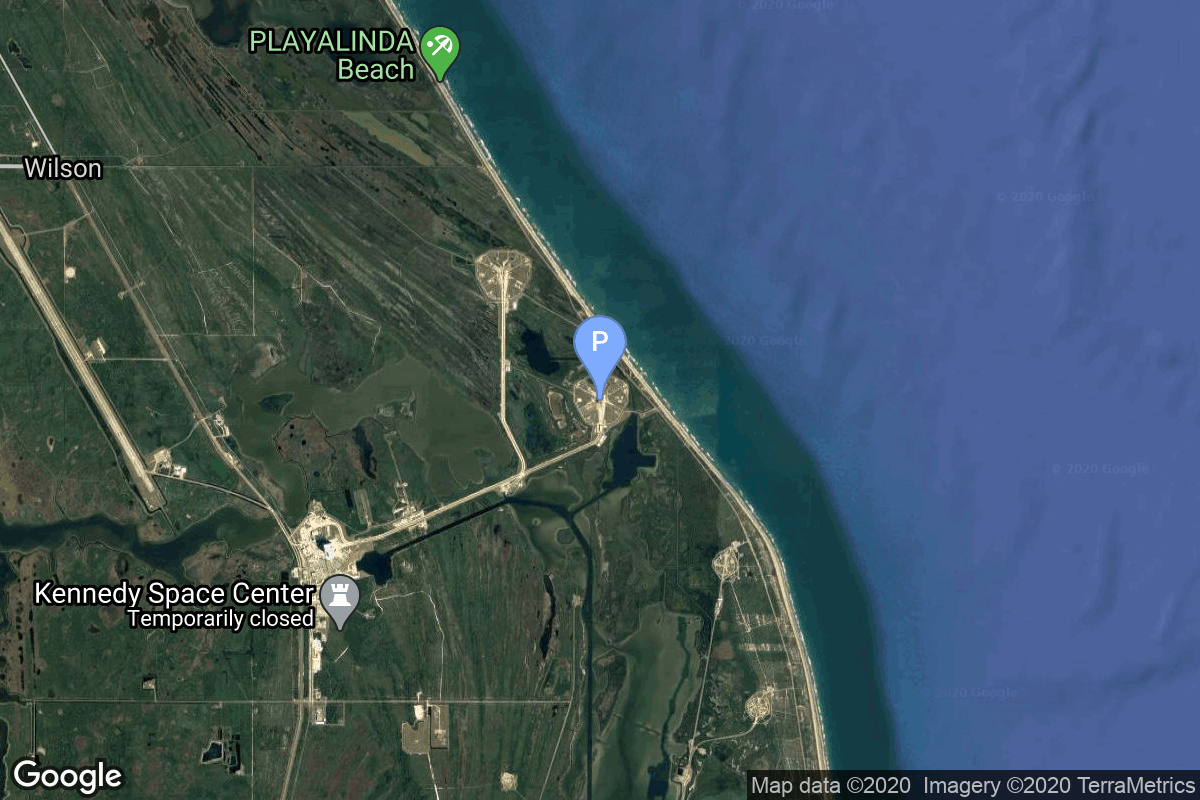
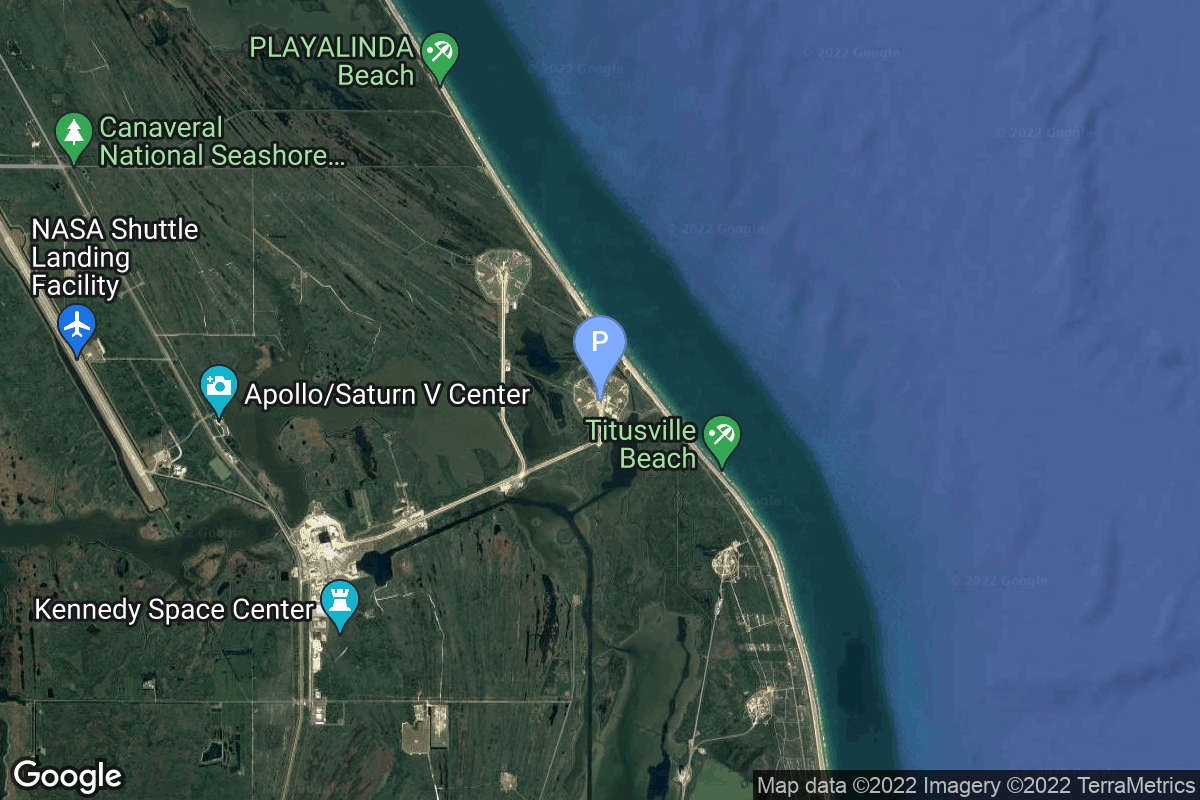
Beyond booster testing, SpaceX maintained sustained activity across Starbase infrastructure this week. A Starship transport stand was relocated to SpaceX’s barge “You’ll Thank Me Later” at the Port of Brownsville on June 2 for transport to Florida, continuing the company’s regular movement of hardware between Texas and the Cape in preparation for Starship stacking and launch operations.

The back-to-back cryogenic test cycle at Massey’s tank farm—and the transport logistics visible this week—underscore SpaceX’s scaling of test cadence and multi-site operational maturity as it races toward routine Starship flights. Pad infrastructure in Florida continues development to support eventual Starship launches from the Cape.
Booster B1067 Lands 35th Flight; Starshield Constellation Grows
SpaceX set a commercial spaceflight record on June 8 when booster B1067 completed its 35th flight. The veteran first stage lifted off from Space Launch Complex 40 at Cape Canaveral at 6:13 a.m. EDT, deploying 29 Starlink satellites to low Earth orbit on the Starlink 10-35 mission before landing on the A Shortfall of Gravitas drone ship. B1067 now leads a cadre of seven Falcon 9 boosters that have flown more than 25 times, with peers B1069, B1071, B1063, B1077, B1078, and B1080 ranging from 26 to 33 flights each.

Two days earlier, booster B1097 flew its tenth mission from Vandenberg Space Force Base on June 6, launching a mixed payload of 21 Starlink and 2 Starshield satellites—the government-only variant of Starlink architecture whose operational customers remain undisclosed. B1097 landed on the drone ship “Of Course I Still Love You,” marking the 201st landing on that vessel and the 620th booster recovery overall. The Starlink constellation now exceeds 10,500 satellites in orbit. An internal SpaceX metric highlighted in its IPO prospectus underscores mature operational tempo: in 2025, only 8 of 165 Falcon 9 launches used a first-flight booster.
IPO Prospectus Filed; Crew Dragon Shelters During ISS Repair
SpaceX submitted its final IPO prospectus to the U.S. Securities and Exchange Commission on June 3, setting the offering price at $135 per share. The company plans to sell 555.6 million Class A shares, raising $75 billion before expenses, with underwriters holding an option to purchase an additional 83.3 million shares for up to $11.25 billion. At the $135 price, SpaceX’s post-IPO valuation would reach approximately $1.77 trillion—by far the largest initial public offering in history, eclipsing Saudi Aramco’s $29.4 billion in 2019. The IPO is scheduled for June 12 under the ticker SPCX. SpaceX has stated it will use net proceeds to fund AI compute infrastructure expansion, launch vehicle enhancements, Starlink constellation growth, and general corporate purposes. Elon Musk will retain 82.4% of voting power through Class B shares after the IPO.

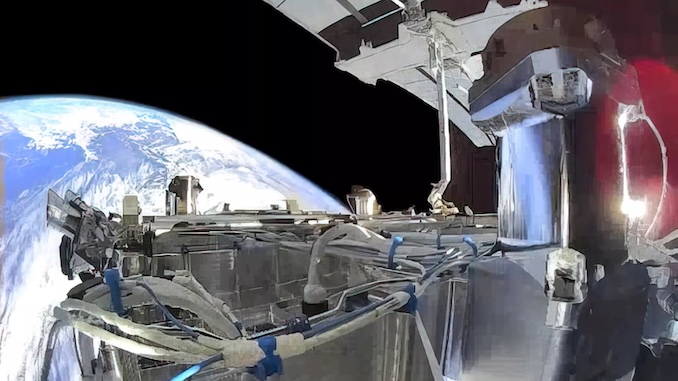
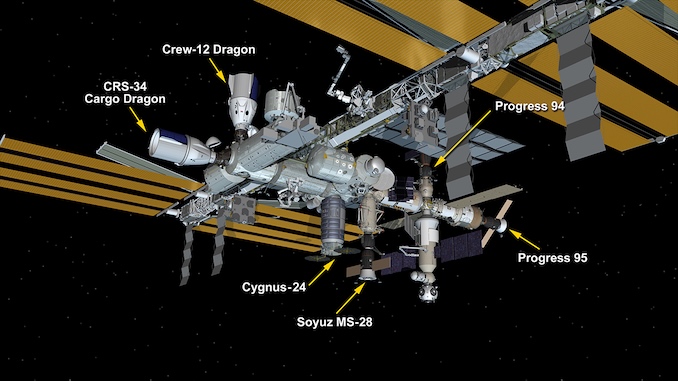
On June 5, SpaceX’s Crew Dragon came into focus when NASA instructed the four astronauts of Crew-12 mission to shelter inside Dragon Freedom alongside NASA astronaut Chris Williams as Russian cosmonauts attempted repairs to a persistent air leak in the Zvezda service module’s PrK vestibule. The shelter lasted approximately 90 minutes before Roscosmos opted to defer extensive repairs and perform measurements instead, allowing the crew to exit. The leak, which has been monitored for years, highlighted ongoing disagreements between NASA and Roscosmos over its root cause and severity.
In commercial partnerships, Muon Space announced a Starship-class satellite platform called Condor-Ultra on June 3, designed for the emerging orbital data centre market. The platform offers 20 kilowatts of baseline power and more than 18 square metres of nadir payload area, with plans to scale to 100 kilowatts. Condor-Ultra will integrate SpaceX’s Starlink Mini Lasers for inter-satellite data relay and “native Starship stackability” for mass deployments. Muon is opening a new production facility in San Jose, California, later this month to expand capacity to 500 satellites per year, with an initial Condor-Ultra pathfinder mission slated for 2028.
Citations
- “SpaceX to raise at least $75 billion in IPO” — https://spacenews.com/spacex-to-raise-at-least-75-billion-in-ipo/
- “Live coverage: SpaceX to launch Falcon 9 rocket booster on record-breaking 35th flight” — https://spaceflightnow.com/2026/06/07/live-coverage-spacex-to-launch-falcon-9-rocket-booster-on-record-breaking-35th-flight/
- “SpaceX launches 2 Starshield satellites during Saturday night Starlink mission” — https://spaceflightnow.com/2026/06/06/spacex-to-launch-2-starshield-satellites-during-saturday-night-starlink-mission/
- “Astronauts briefly shelter in Dragon during ISS leak repair” — https://spacenews.com/astronauts-briefly-shelter-in-dragon-during-iss-leak-repair/
- “NASA crew briefly shelters inside Dragon capsule as Russia addresses new space station leaks” — https://spaceflightnow.com/2026/06/05/nasa-crew-briefly-shelter-inside-dragon-capsule-as-russia-addresses-new-space-station-leaks/
- “Muon Space unveils Starship-class satellite platform for orbital data centers” — https://spacenews.com/muon-space-unveils-starship-class-satellite-platform-for-orbital-data-centers/
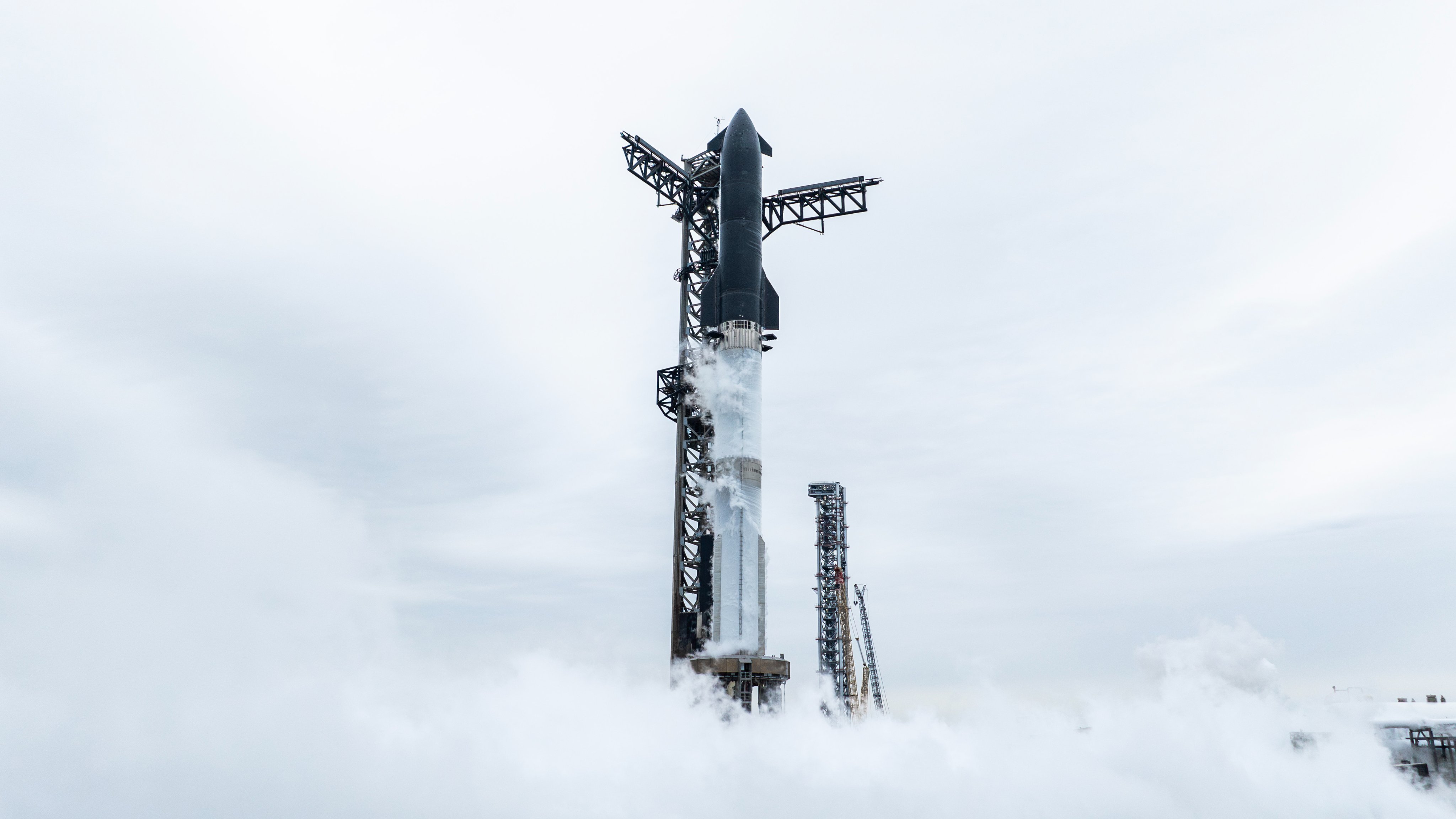
Flight 13
Provider: SpaceX
Date: June 30, 2026
Time: 12:00 AM UTC
Vehicle: Starship
13th test flight of the two-stage Starship launch vehicle. Second flight of Starship V3
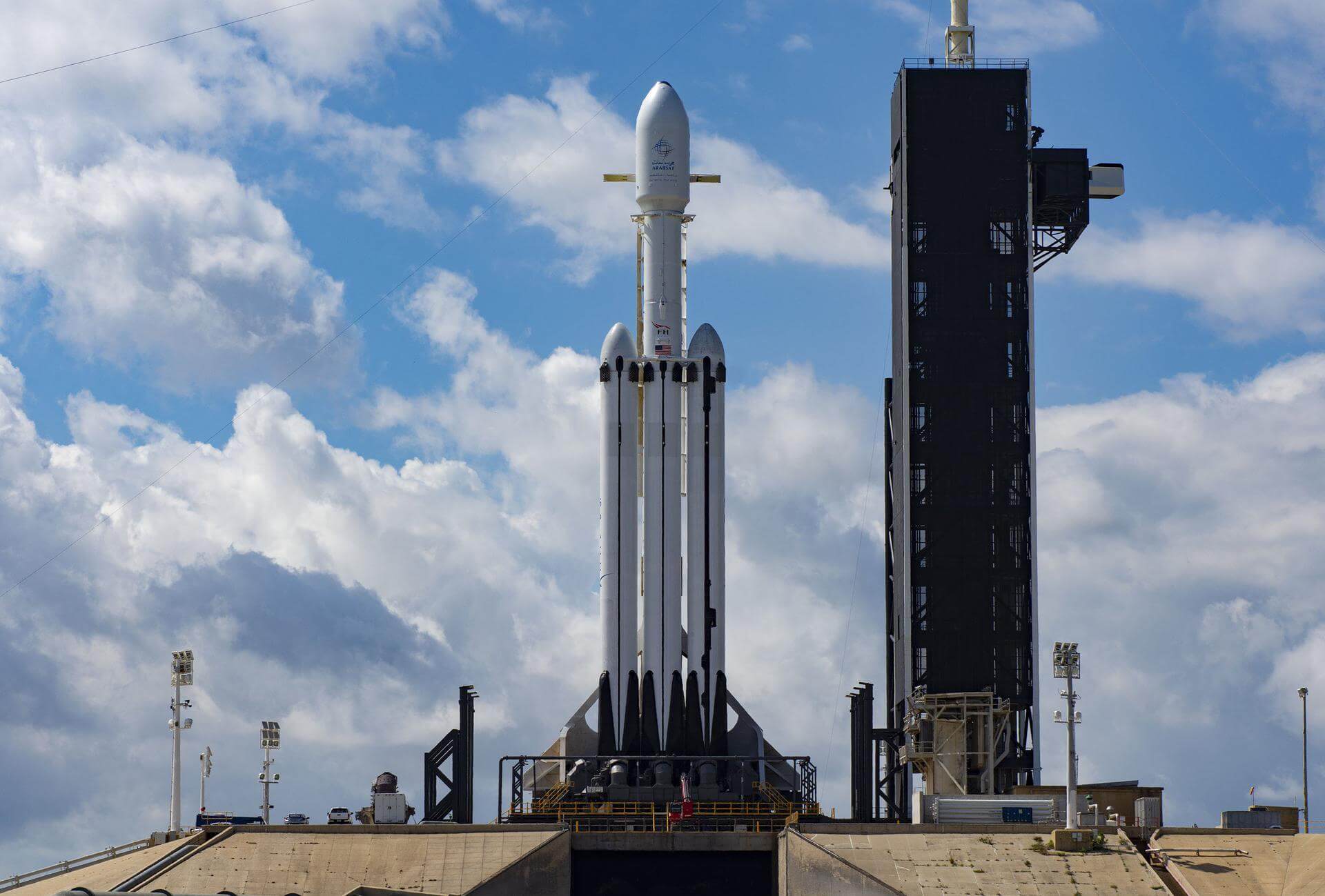
Nancy Grace Roman Space Telescope
Provider: SpaceX
Date: August 30, 2026
Time: 12:00 AM UTC
Vehicle: Falcon Heavy
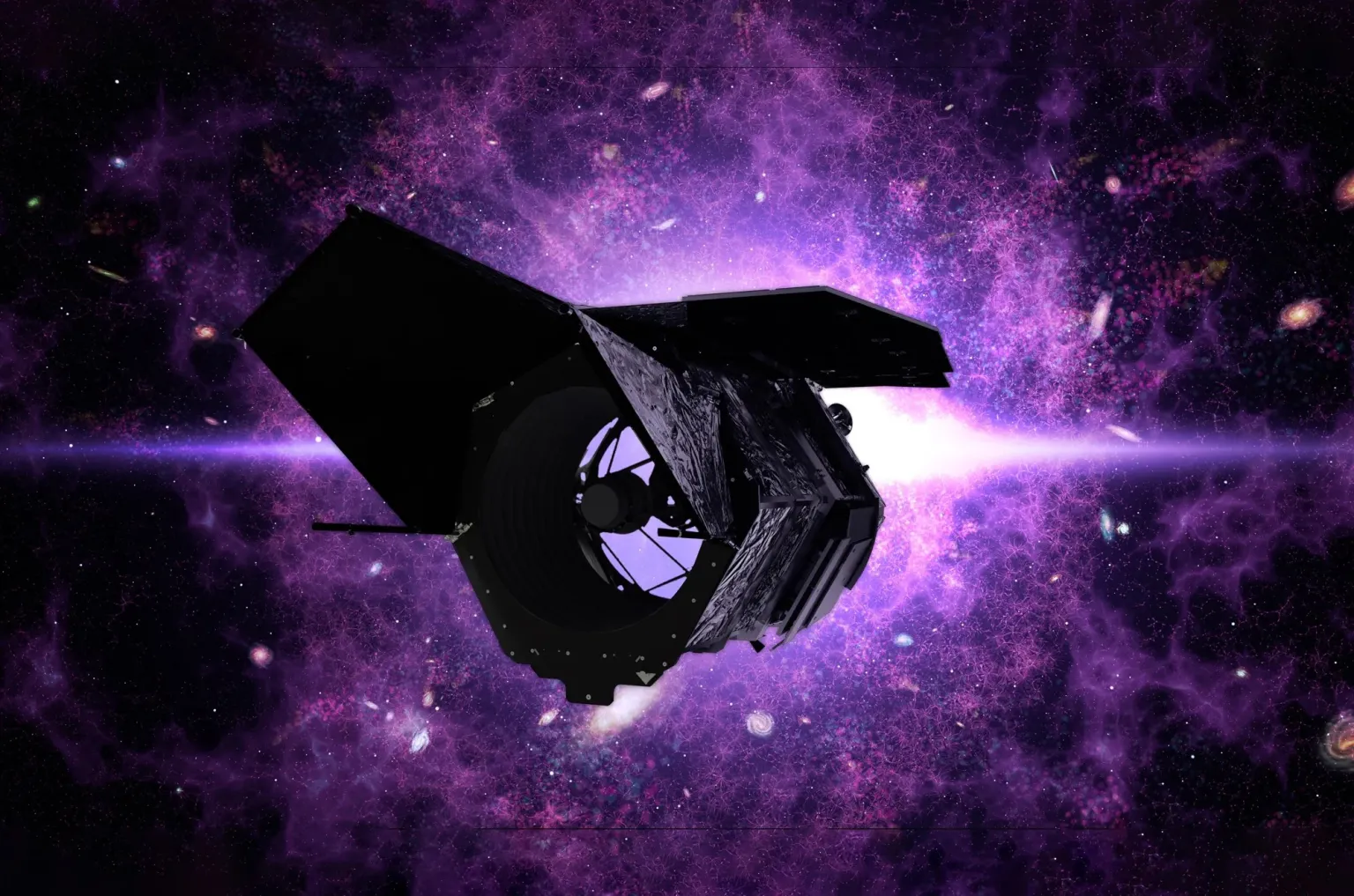
The Nancy Grace Roman Space Telescope is a NASA infrared space telescope with a 2.4 m (7.9 ft) wide field of view primary mirror and two scientific instruments. The Wide-Field Instrument (WFI) is a 300.8-megapixel multi-band visible and near-infrared camera, providing a sharpness of images comparable to that achieved by the Hubble Space Telescope over a 0.28 square degree field of view, 100 times larger than imaging cameras on the Hubble. The Coronagraphic Instrument (CGI) is a high-contrast, small field of view camera and spectrometer covering visible and near-infrared wavelengths using novel starlight-suppression technology. Roman objectives include a search for extra-solar planets using gravitational microlensing, and probing the expansion history of the Universe and the growth of cosmic structure, with the goal of measuring the effects of dark energy, the consistency of general relativity, and the curvature of spacetime.
Griffin Mission One
Provider: SpaceX
Date: November 30, 2026
Time: 12:00 AM UTC
Vehicle: Falcon Heavy
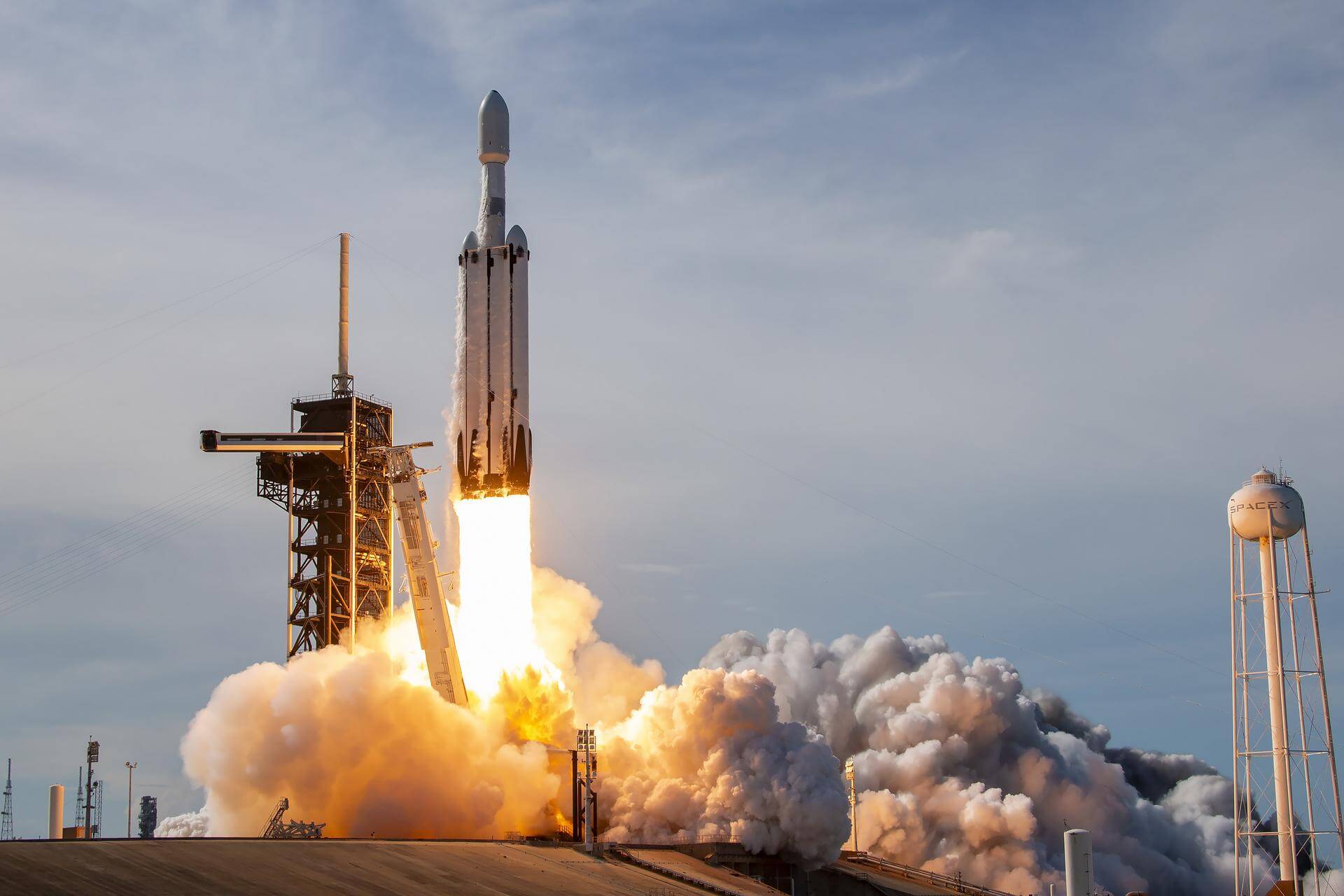
Demonstration flight of the Astrobotic Griffin lander and its engines, initially contracted for the cancelled NASA VIPER (Volatiles Investigating Polar Exploration Rover) mission. The vacated payload spot will now host the FLIP (FLEX Lunar Innovation Platform) lunar rover from Astrolab.
USSF-75
Provider: SpaceX
Date: December 31, 2026
Time: 12:00 AM UTC
Vehicle: Falcon Heavy
Classified payload for the United States Space Force
Superbird-9
Provider: SpaceX
Date: June 30, 2027
Time: 12:00 AM UTC
Vehicle: Starship
Superbird-9 is a high throughput communication satellite. It is designed to deliver broadcast and broadband missions in Ku band primarily over Japan and Eastern Asia, in response to mobility and broadband demands.



Enjoying the content? Stay up to date on everything happening behind the scenes by following our Patreon!

