
The NASA Overview: Artemis III Crew Announced; Swift Receives Robotic Rescue
Artemis III Crew Announced; SLS Boosters Arrive in Florida
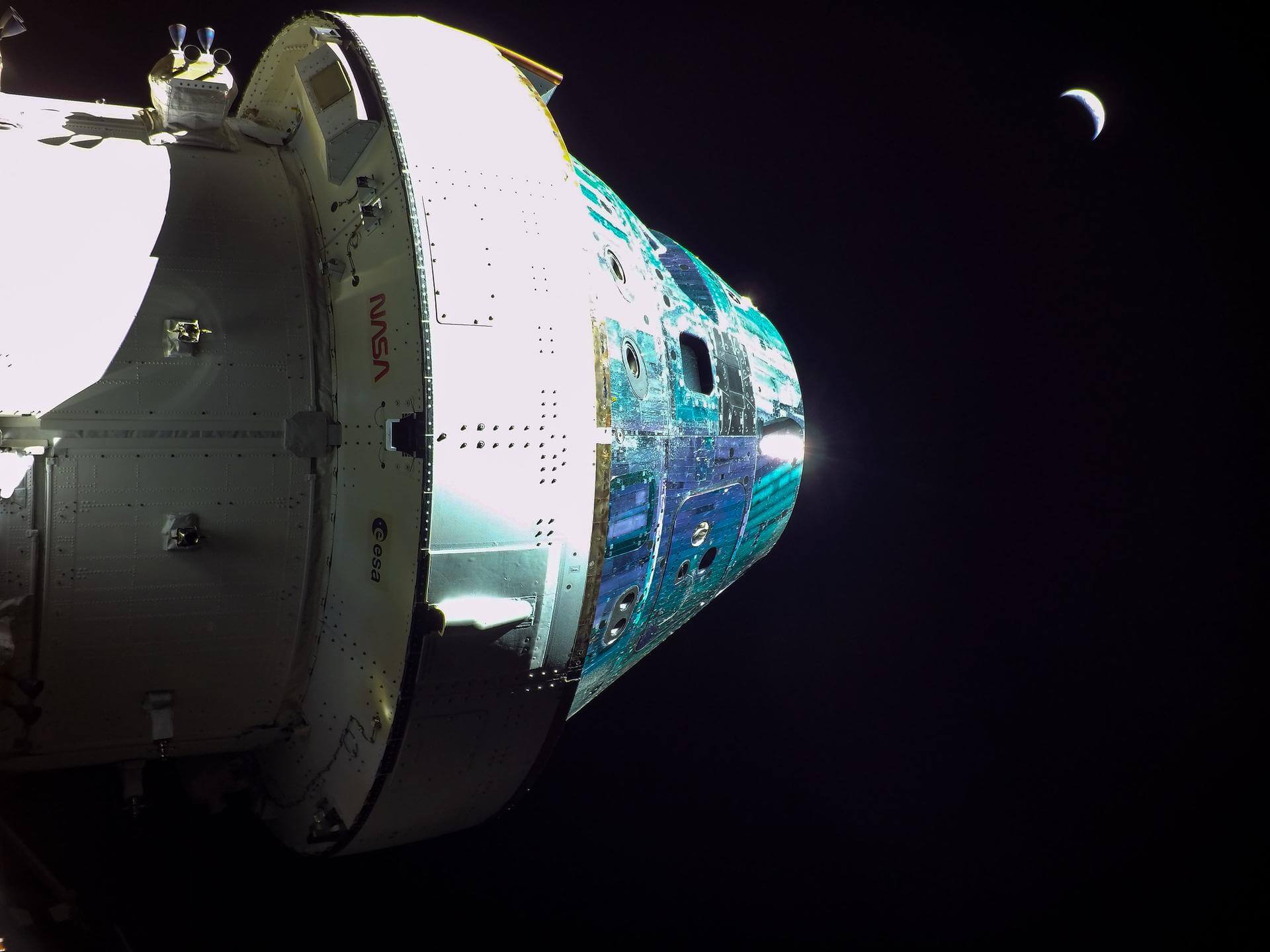
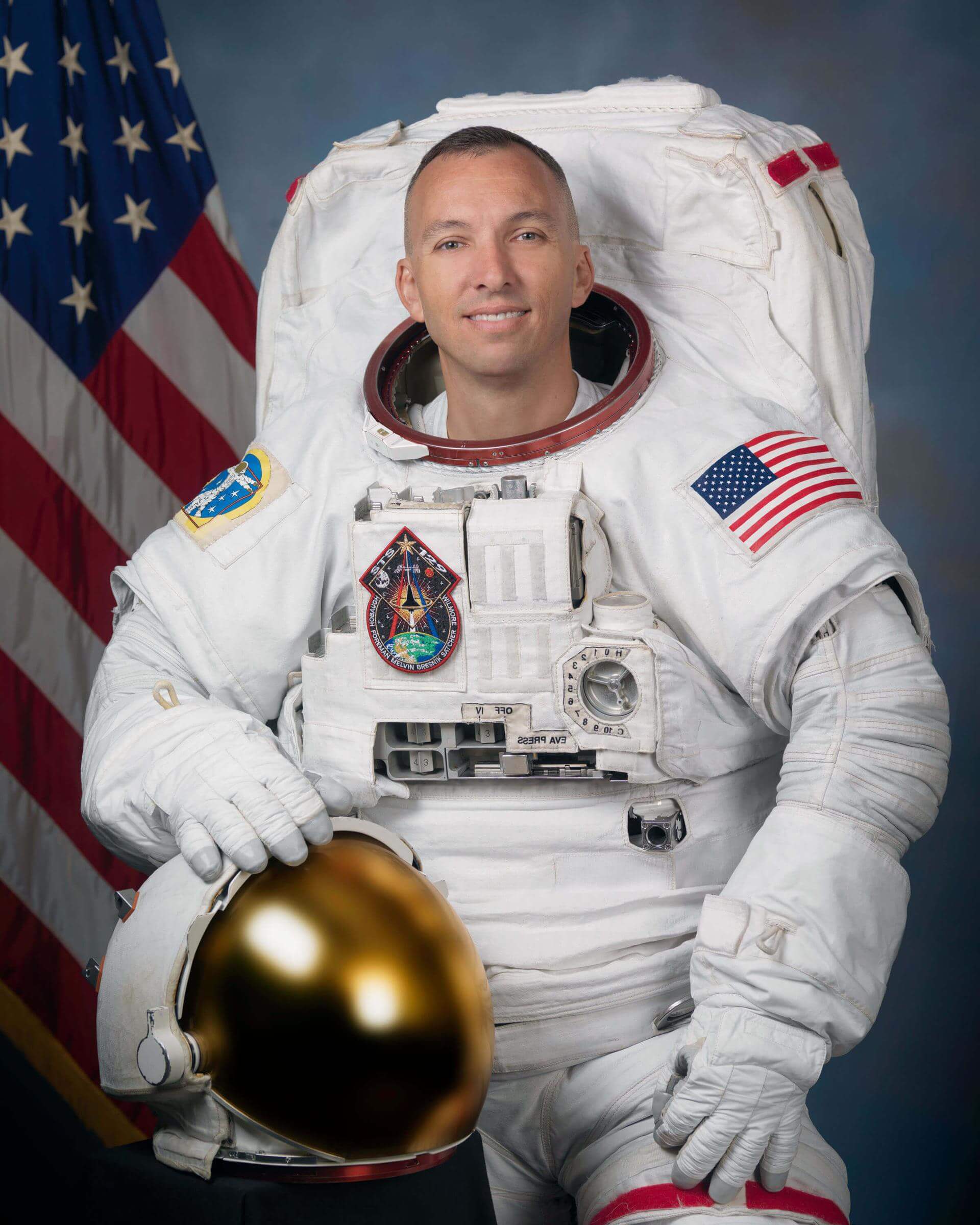
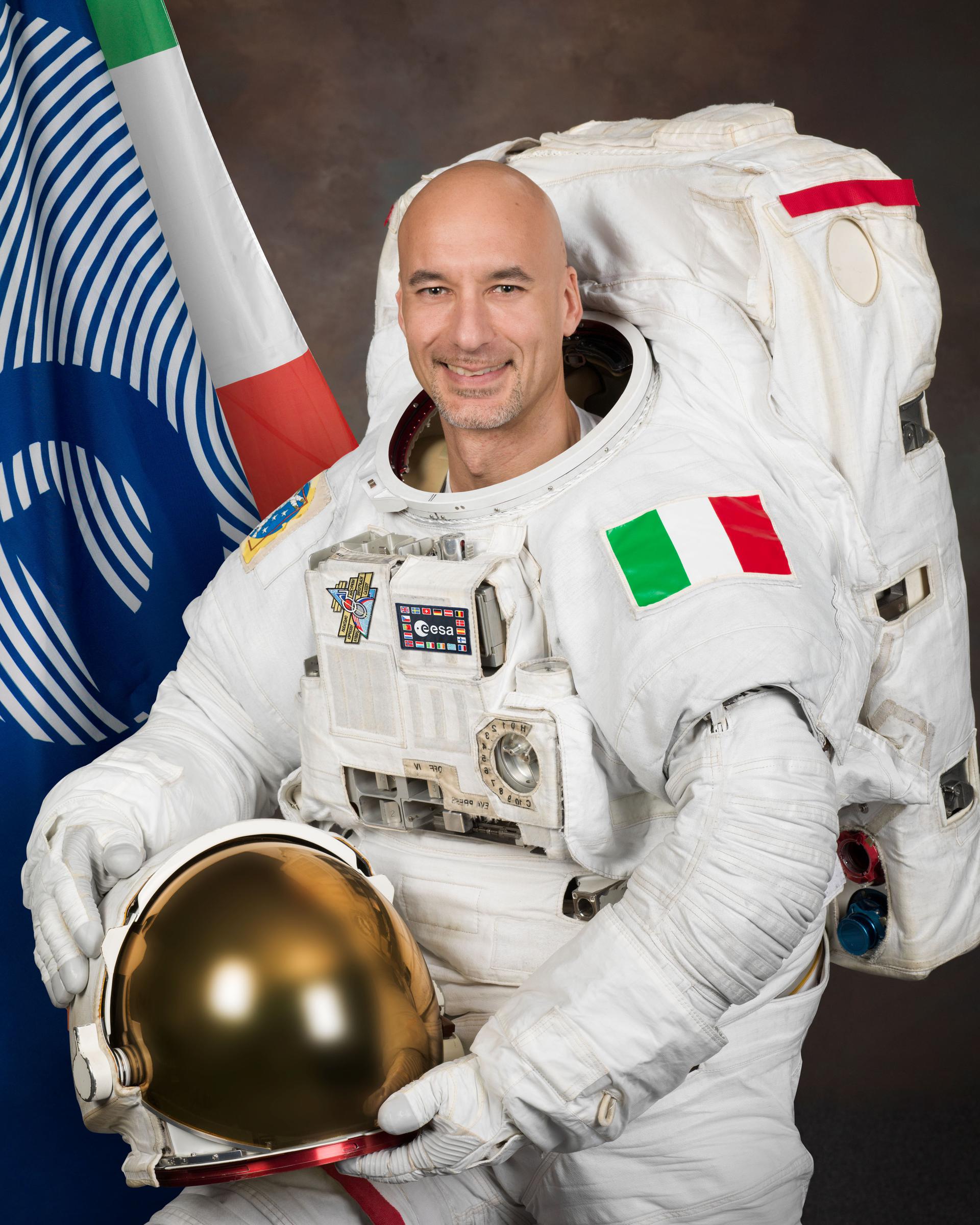
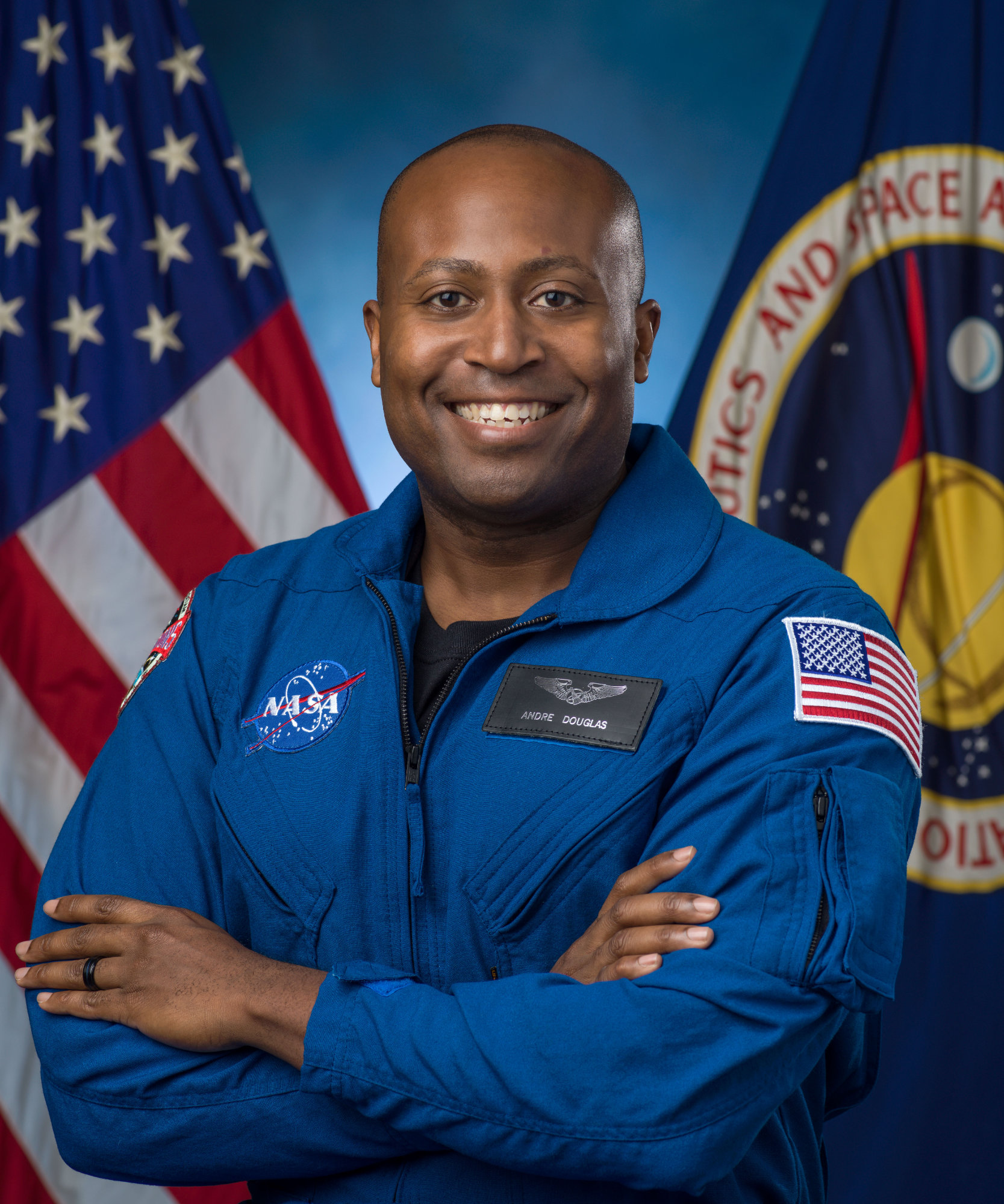
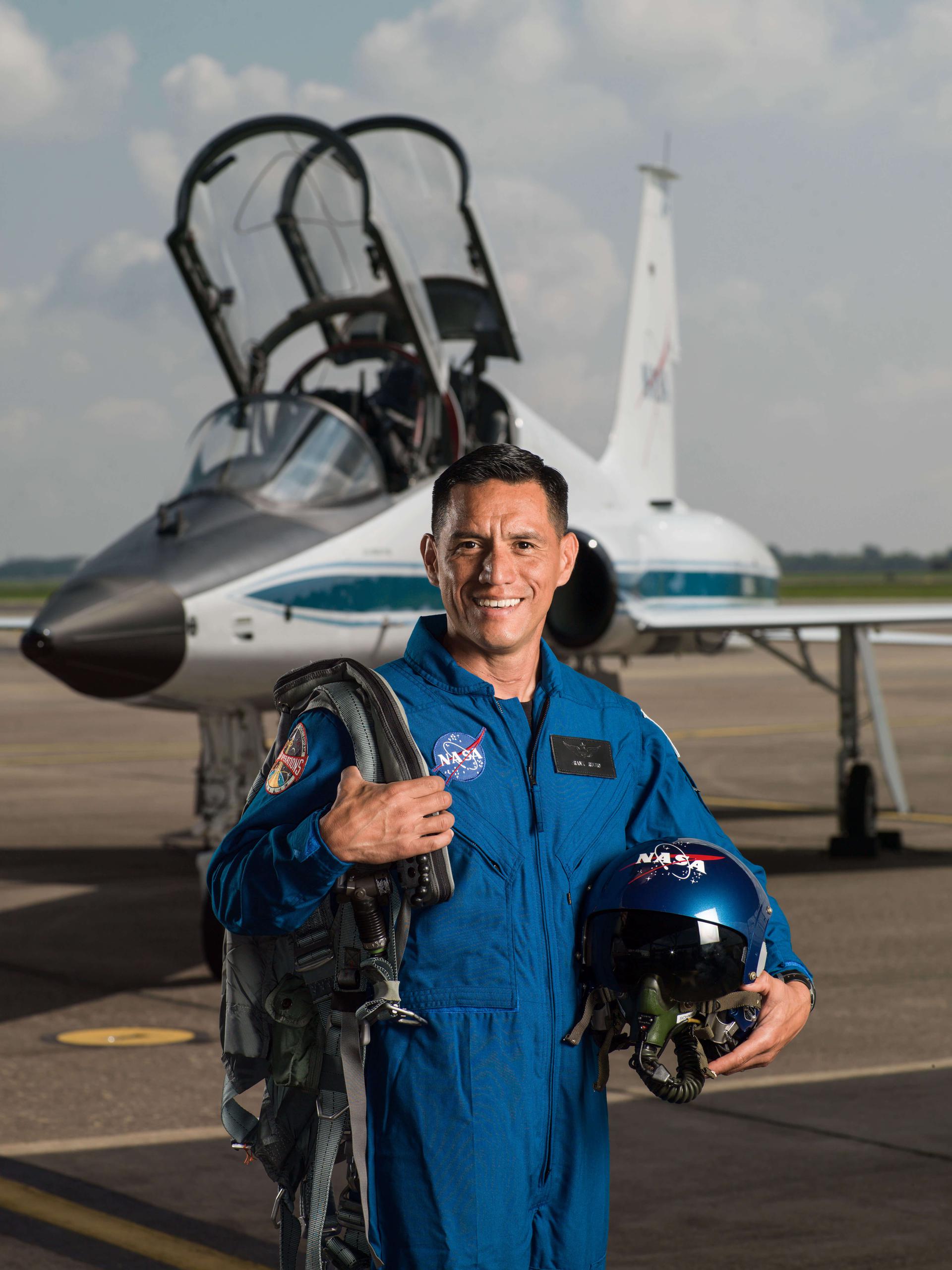
NASA announced its four-astronaut crew for the Artemis III mission on Tuesday, June 9, marking a critical milestone for the lunar return programme. Commander Randy Bresnik, a veteran of 149 days in space, will lead the mission alongside European Space Agency pilot Luca Parmitano, a two-time International Space Station resident. Mission specialists Frank Rubio—who logged a U.S.-record 371 days aboard the ISS in 2022–23—and Andre Douglas, a space rookie with broad engineering expertise, round out the crew.
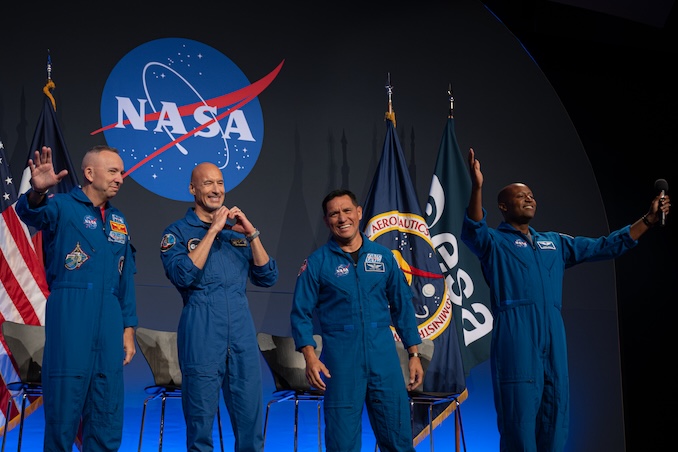
The crew selection sparked public discussion about gender representation, with some expressing disappointment that the crew was all-male. NASA Administrator Jared Isaacman responded directly, emphasising that crew selection is based solely on experience, skill sets, and mission requirements. “The astronaut office assigns the crew that gives the mission the best chance of meeting its objectives,” Isaacman wrote on X. He noted that the 2025 astronaut candidate class was majority female, and pointed to an extensive pipeline of female astronauts preparing for future station flights and lunar-specific training. Bresnik acknowledged the attention, noting that the astronaut office’s diversity is evident across backgrounds, nationality, and heritage, and that women will be assigned to subsequent Artemis missions.
Artemis III itself marks a dramatic shift in lunar exploration strategy. Unlike a direct ascent to the Moon, this 2027 mission will practise a critical capability in low Earth orbit: rendezvous and docking between the Orion spacecraft and two commercial human landing systems—one from SpaceX (Starship) and one from Blue Origin. The multi-launch campaign will involve three SLS (Space Launch System) rocket flights and demonstrate NASA’s commitment to reusable, modular systems before astronauts land on the lunar surface during Artemis IV.
Supporting this effort, solid rocket booster segments for SLS arrived in Florida on June 11 after a six-day rail journey from Utah. These segments create 75 per cent of the thrust needed at launch, and teams will begin stacking the boosters later this year. The timely arrival underscores the operational momentum behind Artemis III and reinforces NASA’s goal to maintain frequent SLS operations, which the agency views as essential for safety and operational readiness.
Curiosity Heads Toward Yardang Unit on Mars
On Mars, NASA’s Curiosity rover continues its long-running survey of Gale Crater. The rover is now freewheeling toward a yardang unit—wind-carved hills sculpted by billions of years of Martian geology. This new target offers an opportunity to study erosion patterns and surface composition in a distinctive geological feature.

Mars itself has returned to Earth’s early-morning sky after months of solar conjunction, becoming visible low on the eastern horizon just before sunrise. As the planet rises higher in the coming weeks, casual observers will find it easier to spot. Meanwhile, Perseverance rover continues its own science operations and imaging, and the broader Mars Sample Return campaign proceeds toward eventual sample delivery to Earth.
Katalyst’s Robotic Spacecraft to Rescue Swift; Chandra Peers at Supernova Near Galaxy Centre
Two major deep-space stories dominated this week. First, Katalyst Space announced significant progress on its LINK robotic servicing spacecraft, which will attempt an unprecedented orbital rescue of NASA’s 21-year-old Swift Observatory. After two decades studying gamma-ray bursts and high-energy phenomena, Swift’s low Earth orbit has begun to rapidly decay due to increased solar activity. Rather than allowing the spacecraft to re-enter Earth’s atmosphere, NASA awarded Katalyst a contract in September 2025 to mount a servicing mission in less than a year—a remarkable timeline that underscores the urgency and feasibility of orbital robotics.
LINK will launch aboard Northrop Grumman’s Pegasus XL rocket later in June from Kwajalein Atoll in the Marshall Islands. The spacecraft will rendezvous with Swift and raise its altitude, extending the mission’s lifespan and, more importantly, demonstrating a key capability for the future of space exploration. As NASA and industry push toward lunar bases and Mars missions, the ability to service and refuel spacecraft in orbit becomes essential. A media teleconference to preview the mission is scheduled for June 17 at 11 a.m. EDT.
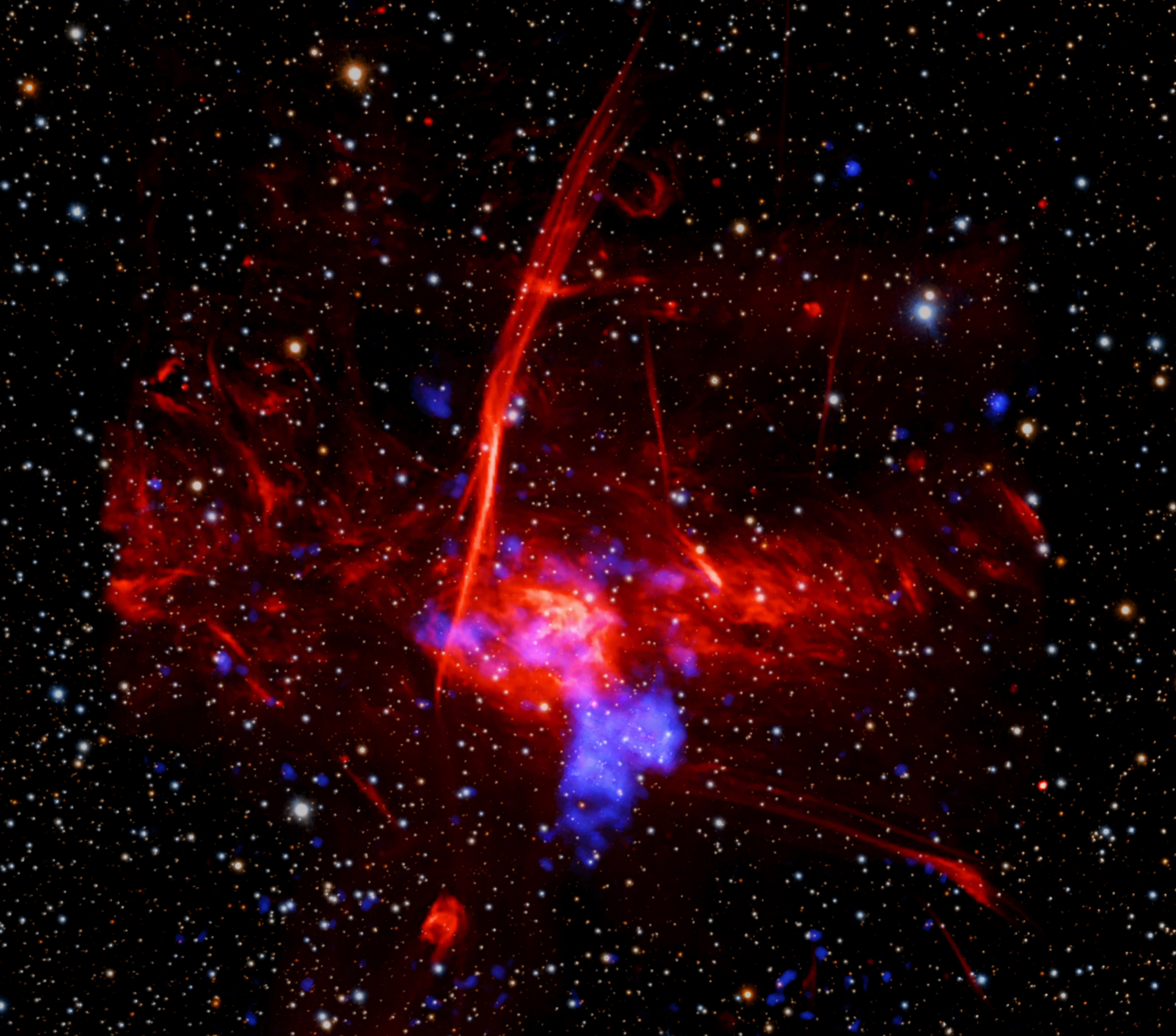
Meanwhile, NASA’s Chandra X-ray Observatory has uncovered a possible supernova remnant in one of the most extreme environments in our galaxy—near the supermassive black hole at the Galactic Centre. The candidate, buried within the star-forming region Sagittarius C, some 26,000 light-years away, would be one of the closest supernova remnants ever discovered to the black hole itself. If confirmed, the remnant is expanding at approximately two million miles per hour and is at least 1,700 years old. Astronomers used X-ray data from Chandra and ESA’s XMM-Newton, combined with radio observations from the MeerKAT telescope in South Africa and infrared data from the James Webb Space Telescope, to characterise the discovery. The study appears in The Astrophysical Journal.

Also capturing attention this month: a striking planetary conjunction of Jupiter and Venus in the western sky just after sunset, with Mercury joining the scene through mid-June. This celestial meet-cute reminded skywatchers that the glowing points of light overhead are, in fact, vast, complex worlds.
Space Station Leak Resolved; Microgravity Glovebox Hits Historic Milestone
The International Space Station encountered a significant atmospheric leak early June when the Zvezda service module’s transfer tunnel (PrK) experienced a spike in leak rate to approximately two pounds per day. Roscosmos, which manages the Russian segment, identified new suspected leak areas and initially planned an extensive structural repair involving cutting a bracket to access suspected leak sources. However, Roscosmos paused that work in favour of additional inspection and measurement. In response to the elevated risk, NASA directed the SpaceX Crew-12 astronauts and NASA’s Chris Williams—who flew to station aboard Soyuz MS-28—to shelter inside the SpaceX Dragon spacecraft during the procedure. Following Roscosmos’s decision to halt and reassess, the crew ended the safe-haven posture and returned to normal operations. NASA and Roscosmos continue collaborative efforts to identify the root cause and implement a permanent resolution. This measured approach reflects the international partnership’s commitment to station safety.
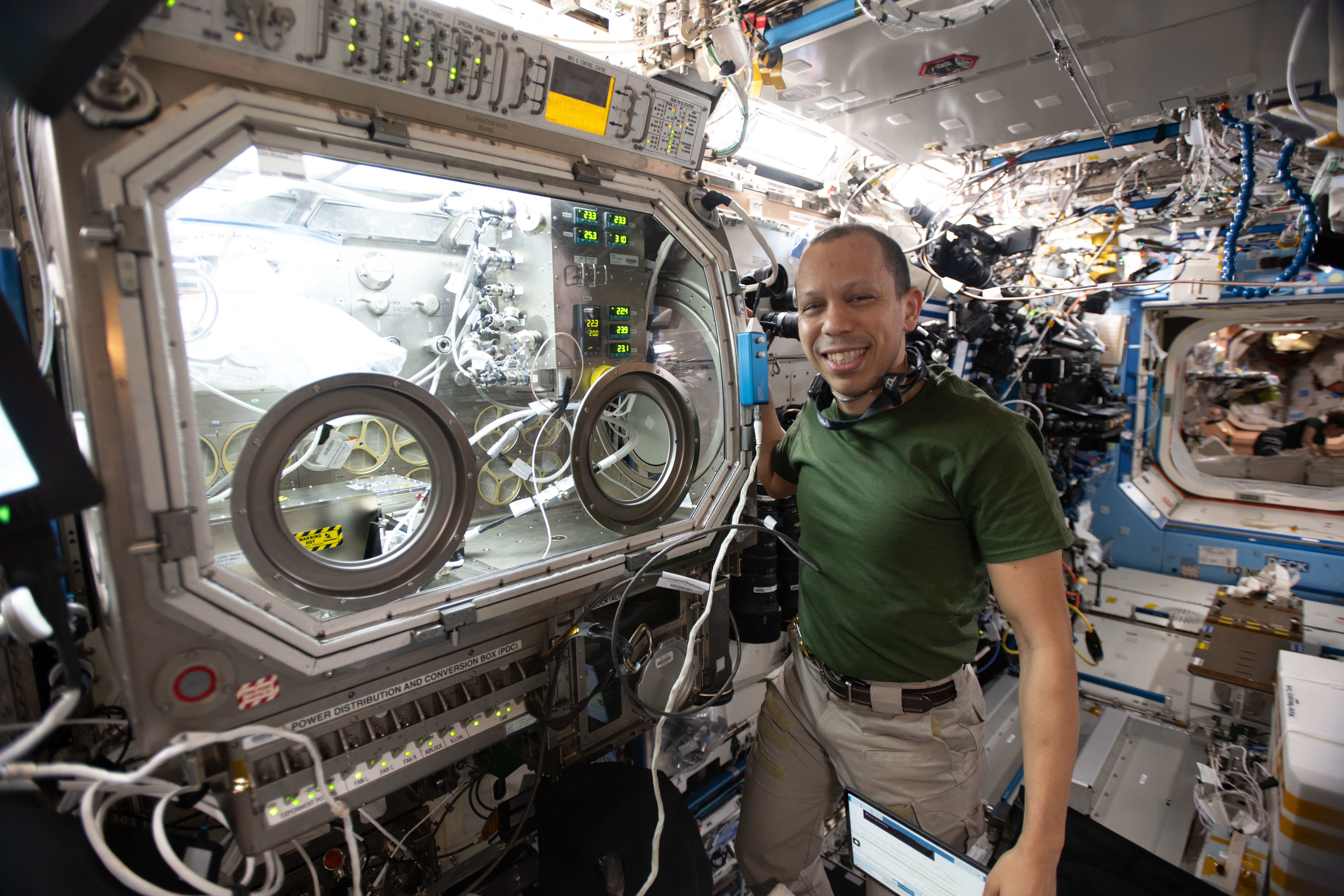
On a celebratory note, the Microgravity Science Glovebox (MSG) achieved a historic milestone on June 9: 100,000 hours of crew science and autonomous operations since its installation in 2002. The facility has hosted thousands of experiments while maintaining contamination-free conditions critical to research in microgravity. Expedition 74 crew members called the payload operations team at NASA’s Marshall Space Flight Center to mark the occasion. Concurrently, the crew has continued bioprinting human cartilage tissue, harvesting alfalfa for food-production research, and preparing for an upcoming Canadarm2 repair spacewalk (EVA-95, scheduled for late June) to replace a high-definition camera and install navigational aids for visiting spacecraft.
X-59 Takes Flight; NASA Discusses the Future of Space Commerce and Nuclear Power
In aeronautics news, NASA’s X-59 experimental aircraft successfully completed its first supersonic flight on June 5, advancing the agency’s efforts to revive the X-plane programme. The milestone marks a return to radical airframe and engine flight testing, a capability NASA Administrator Isaacman has prioritised to rebuild the agency’s experimental aviation portfolio.
On the broader strategic front, Isaacman has outlined an ambitious vision for the future. In a series of X posts this week, he emphasised that tomorrow’s space economy will be built on thriving spaceports, reusable rockets, orbital assembly, and technologies that seemed impossible a decade ago. He also stressed the critical role of nuclear power and propulsion for deep-space exploration, particularly for missions to the outer solar system and for outposts in permanently shaded lunar regions. “Our job at NASA is to pioneer breakthrough new exploration capabilities that others are not capable of undertaking,” Isaacman wrote. In recognition of the Artemis generation, he noted that the Artemis II crew recently visited a school, inspiring young minds who may one day become the engineers, scientists, and astronauts shaping the next era of exploration.
Citations
- “NASA chief defends selection of all-male Artemis 3 crew” — https://spaceflightnow.com/2026/06/10/nasa-chief-defends-selection-of-artemis-iii-crew/
- “NASA to Preview Katalyst Mission to Boost Swift Spacecraft’s Orbit” — https://www.nasa.gov/news-release/nasa-to-preview-katalyst-mission-to-boost-swift-spacecrafts-orbit/
- “NASA Provides Update on Space Station Leak” — https://www.nasa.gov/blogs/spacestation/2026/06/05/nasa-provides-update-on-space-station-leak/
- “NASA’s Chandra Discovers Possible Supernova Remnant in Galactic Center” — https://science.nasa.gov/missions/chandra/nasas-chandra-discovers-possible-supernova-remnant-in-galactic-center/
- “NASA Equips Astronauts, Industry with Robotic Intelligence” — https://www.nasa.gov/technology/tech-transfer-spinoffs/nasa-equips-astronauts-industry-with-robotic-intelligence/
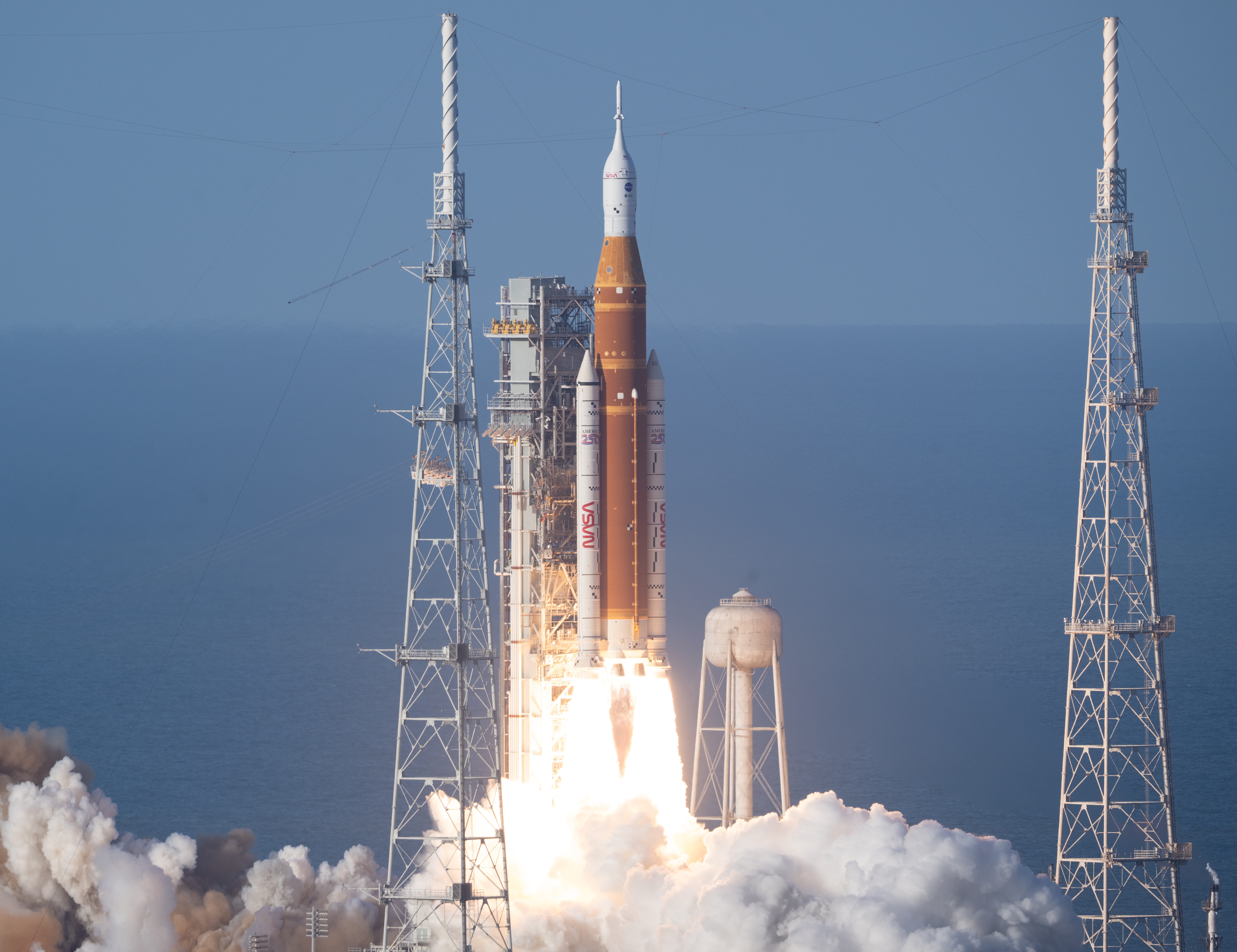
Artemis III
Provider: National Aeronautics and Space Administration
Date: June 30, 2027
Time: 12:00 AM UTC
Vehicle: Space Launch System (SLS)
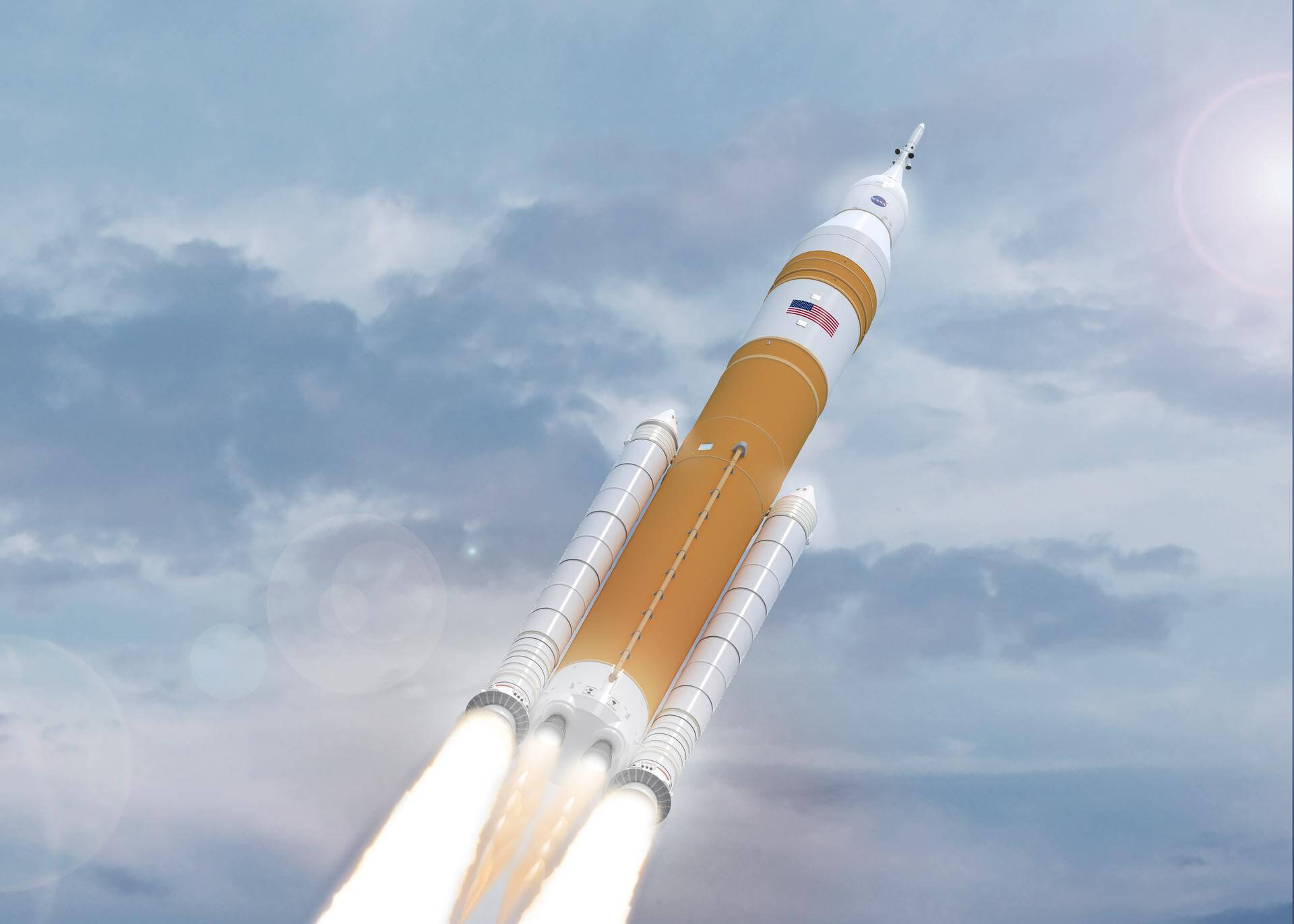
Artemis III is the second crew mission as part of the Artemis program. Artemis III will send a crew of 4 on a Low Earth Orbit mission, with the Orion rendezvous and dock with one or both commercial lunar landers in development by SpaceX and Blue Origin, performing in-space tests of the docked vehicles, integrated checkout of life support, communications, and propulsion systems, as well as tests of the new Extravehicular Activity (xEVA) suits.
Artemis IV
Provider: National Aeronautics and Space Administration
Date: June 30, 2028
Time: 12:00 AM UTC
Vehicle: Space Launch System (SLS)
Artemis IV is planned to be the first human lunar landing mission since the Apollo Program.
Artemis V
Provider: National Aeronautics and Space Administration
Date: December 31, 2028
Time: 12:00 AM UTC
Vehicle: Space Launch System (SLS)
Artemis V is planned to be the second human lunar landing mission since the Apollo Program.
SLS Block 1B | Artemis VI
Provider: National Aeronautics and Space Administration
Date: September 30, 2030
Time: 12:00 AM UTC
Vehicle: Space Launch System (SLS)
No description available
SLS Block 1B | Artemis VII
Provider: National Aeronautics and Space Administration
Date: September 30, 2031
Time: 12:00 AM UTC
Vehicle: Space Launch System (SLS)
No description available
Enjoying the content? Stay up to date on everything happening behind the scenes by following our Patreon!

