Zhuque-3 Booster Touches Down in Gobi Recovery Zone
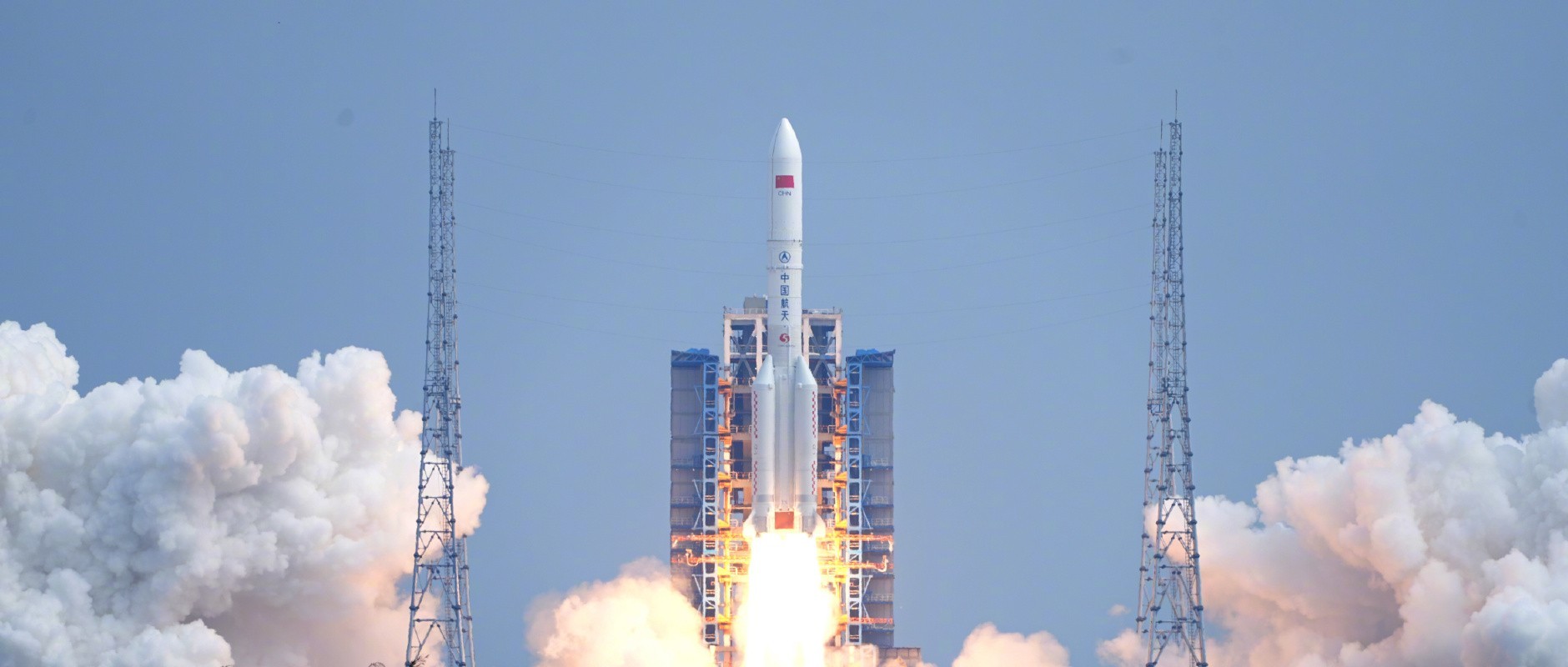
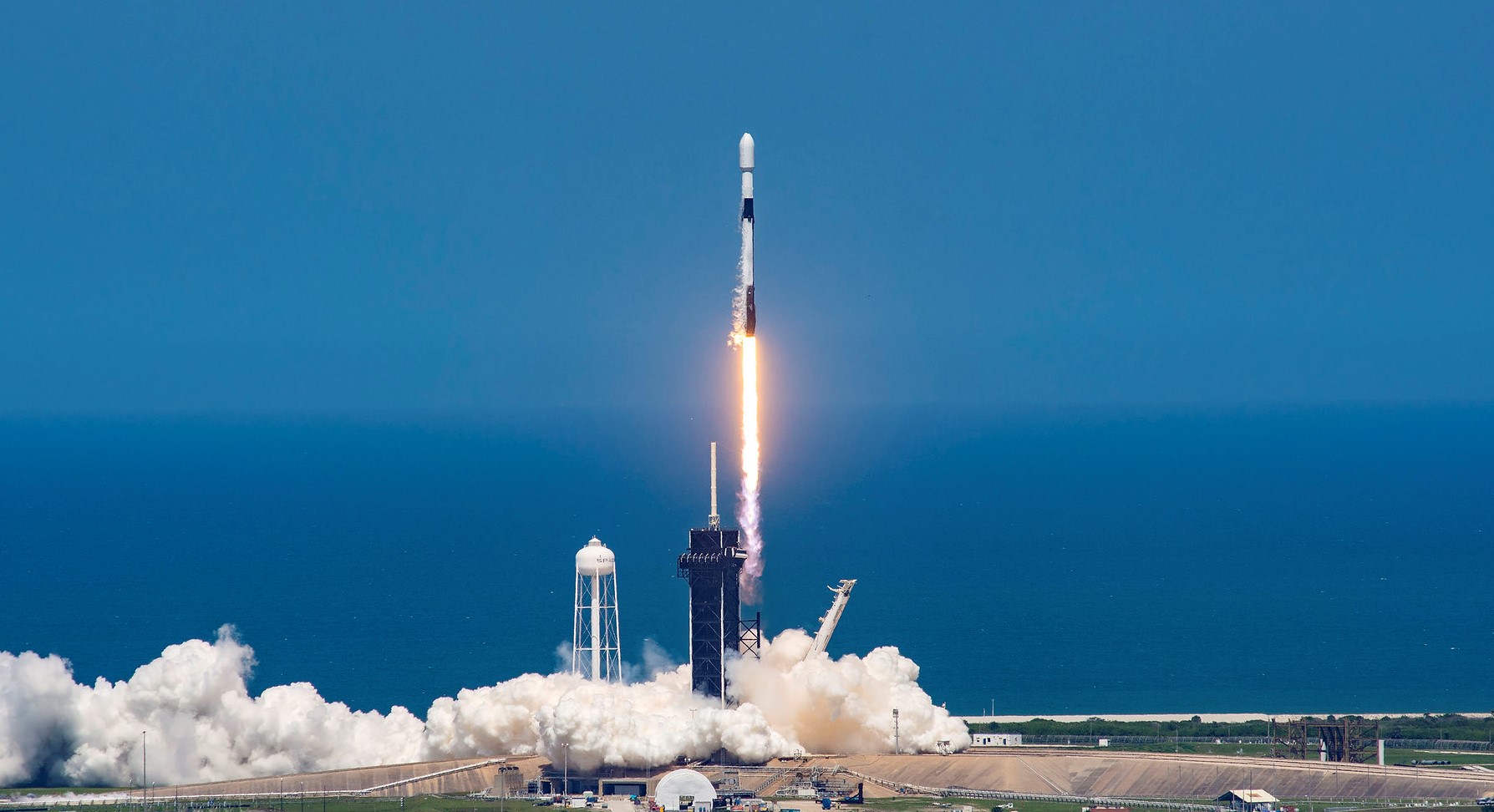
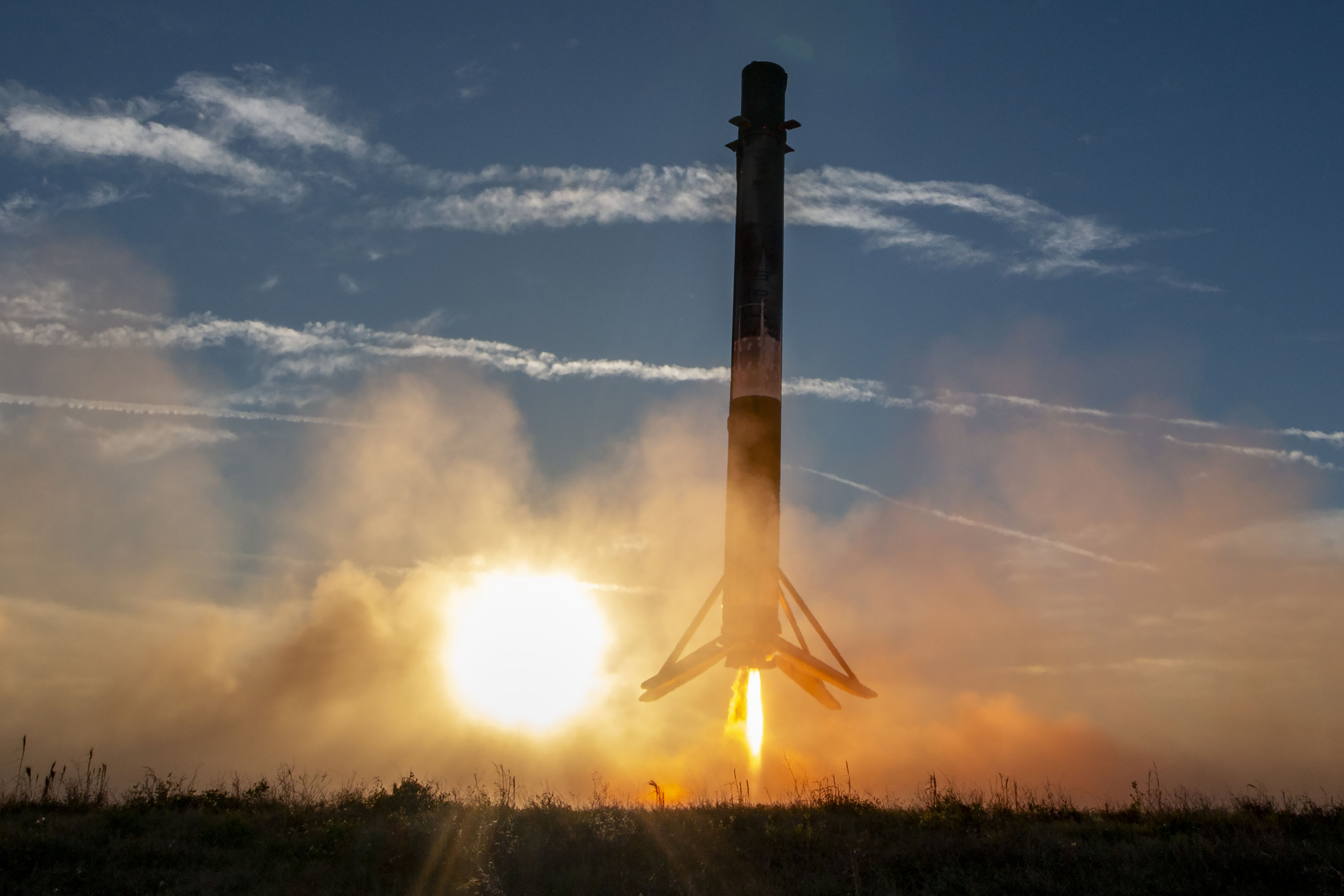
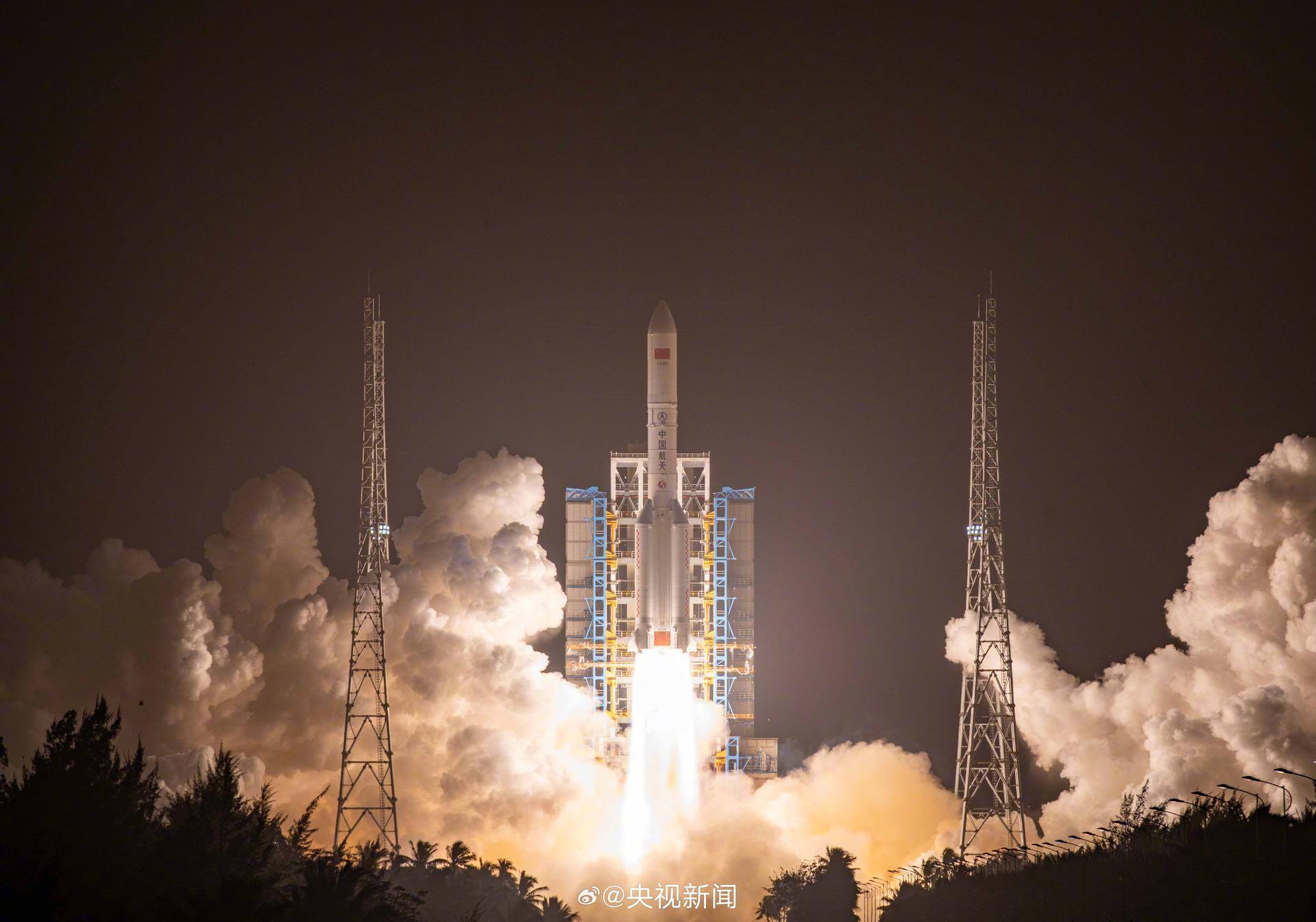
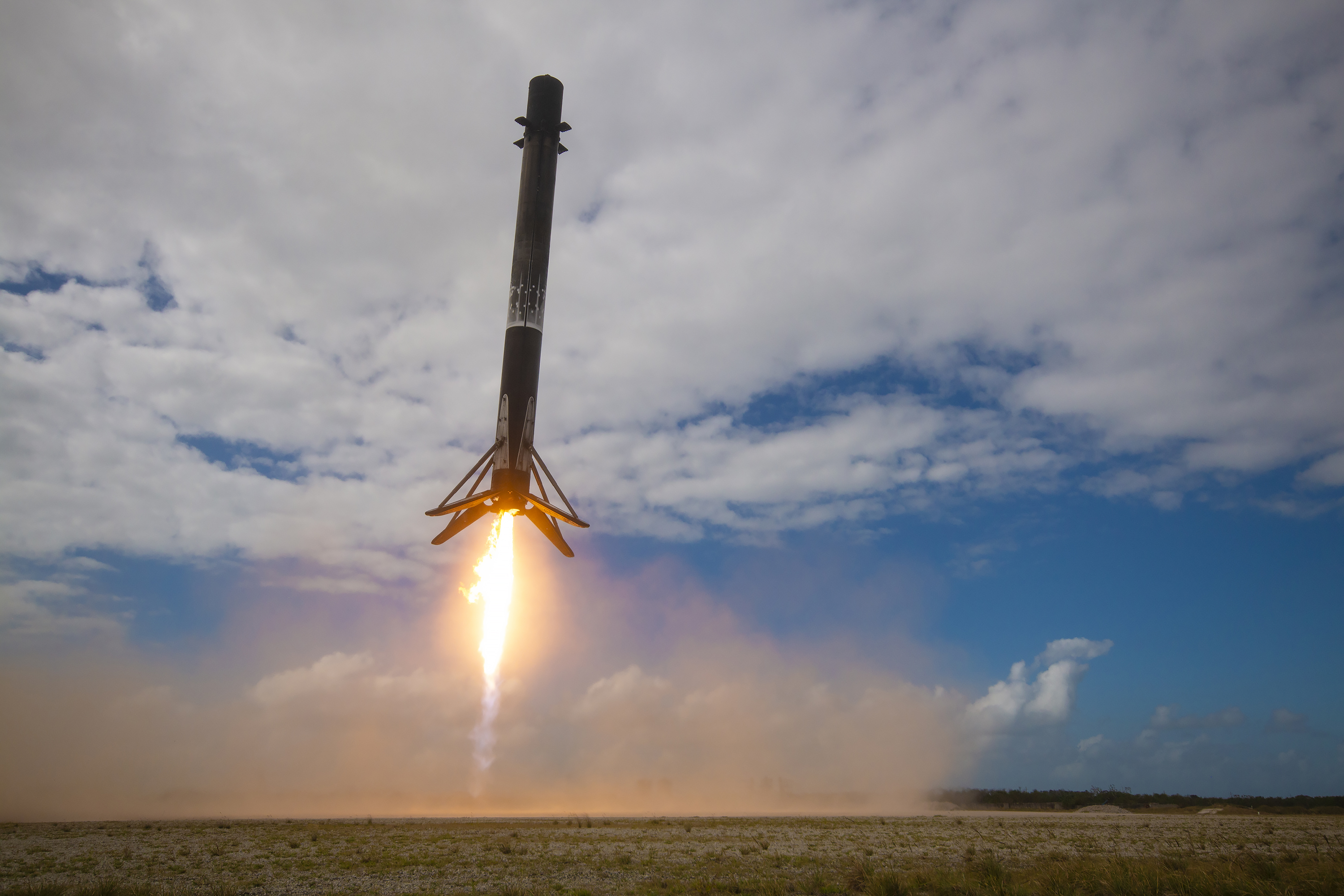
Landspace’s Zhuque-3 rocket lifted off from the Jiuquan Satellite Launch Center at 7:35 p.m. Eastern (2335 UTC) on August 18, and this time the first stage came home. The booster completed a powered descent and vertical landing at a site roughly 390 kilometres downrange in Minqin County, Gansu Province, at 7:43 p.m. Eastern, with landing legs deploying in the final moments of the burn ahead of a soft touchdown.
The first and second stages separated 137 seconds into the flight. The upper stage went on to insert the Honghu 03 satellite into orbit. Honghu 03 was built by Hongqing Technology, Landspace’s satellite manufacturing affiliate, which raised more than $191 million last month.
Zhuque-3 is a two-stage, stainless steel, methane-LOX rocket standing approximately 66 metres tall with a 4.5-metre diameter and a liftoff mass of about 570 metric tons. Nine Tianque-series engines power the first stage. The vehicle can deliver 21,000 kilograms to low Earth orbit expendable, or up to 18,300 kg with a downrange first-stage recovery — figures that place it in the same class as Falcon 9.
The landing marks China’s second orbital booster recovery, arriving just over a month after the Long March 10B became the country’s first, using a drone vessel and net-capture system at sea. Globally, Landspace becomes the third entity, after SpaceX and Blue Origin, to successfully land an orbital-class booster on legs. The result is a clear step forward from Zhuque-3’s debut flight in January, which reached orbit but lost the first stage during the latter stages of its landing attempt.
ISS Spacewalk Removes Failed Antenna, Spare Install Deferred
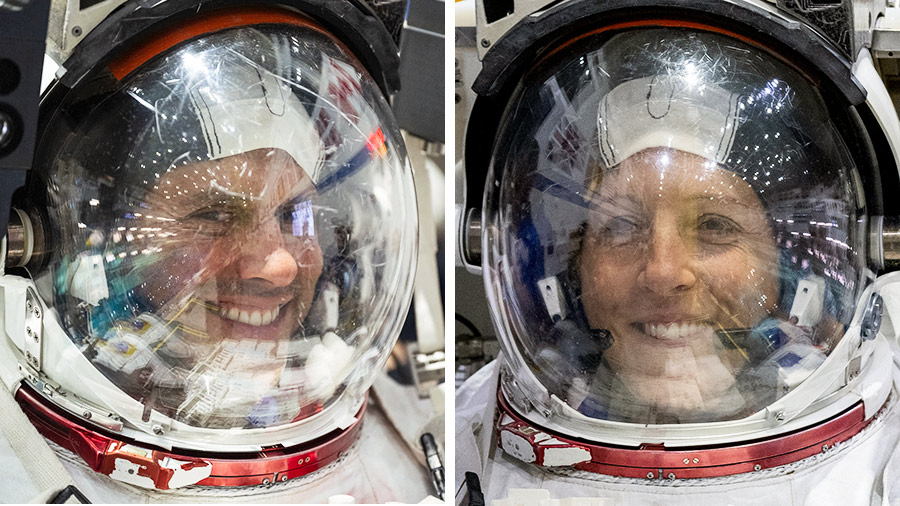
NASA astronaut Anil Menon and ESA astronaut Sophie Adenot exited the Quest airlock at 8:29 a.m. EDT on August 18 to replace a failed Space-to-Ground antenna (SGANT) on the International Space Station. The six-hour 23-minute excursion was the 282nd devoted to station assembly and maintenance, the fifth so far this year, and the first for Adenot, who became the first French woman to walk in space.
The spacewalk was only partially successful. Menon and Adenot removed the failed antenna, but freeing tight power and data cables, installing locking pins in the antenna’s gimbal assembly, and unbolting the unit from its boom took longer than expected. Flight controllers determined there was not enough time to move the failed antenna to its permanent storage location or to retrieve and install the spare. The failed unit was lashed down near its boom, where it will remain indefinitely, while its replacement stays bolted to a storage platform.
The station is equipped with two SGANTs and only one is needed for normal operations, but managers want two healthy units for redundancy. Another spacewalk is scheduled for next Tuesday, and flight controllers are weighing whether to install the replacement then or defer it to a later EVA.
Menon’s total EVA time now stands at 12 hours and 50 minutes. Total ISS EVA time has reached 74 days, 10 hours, and 44 minutes since assembly began in 1998.
Rocket Lab Wins $12 Million to Test Space Data Network
Rocket Lab will use one of its Photon spacecraft to demonstrate interoperability with the U.S. Space Force’s Space Data Network in orbit in 2027, the company announced on August 18. The $12 million contract covers design and ground testing for a Photon equipped with optical communications and networking hardware.
Rocket Lab is one of five companies selected by Space Systems Command for a $60 million effort, alongside Amazon LEO for Government, Lockheed Martin, Northrop Grumman, and York Space Systems, each receiving $12 million. The goal is to demonstrate that commercial satellites from different suppliers can connect to the Space Data Network backbone being built by SpaceX, which received a $2.29 billion contract in May for the SDN-B proliferated constellation using optical links.
The Space Force is working to establish common interfaces so spacecraft and networks from multiple vendors can connect to that backbone, avoiding dependence on proprietary technology from a single company. Rocket Lab said its Photon demonstration will test secure optical communications interoperability between satellites and ground systems as part of the Space Data Network consortium.
Provider: SpaceX Date: August 20, 2026 Time: 3:19 PM UTC Vehicle: Falcon 9
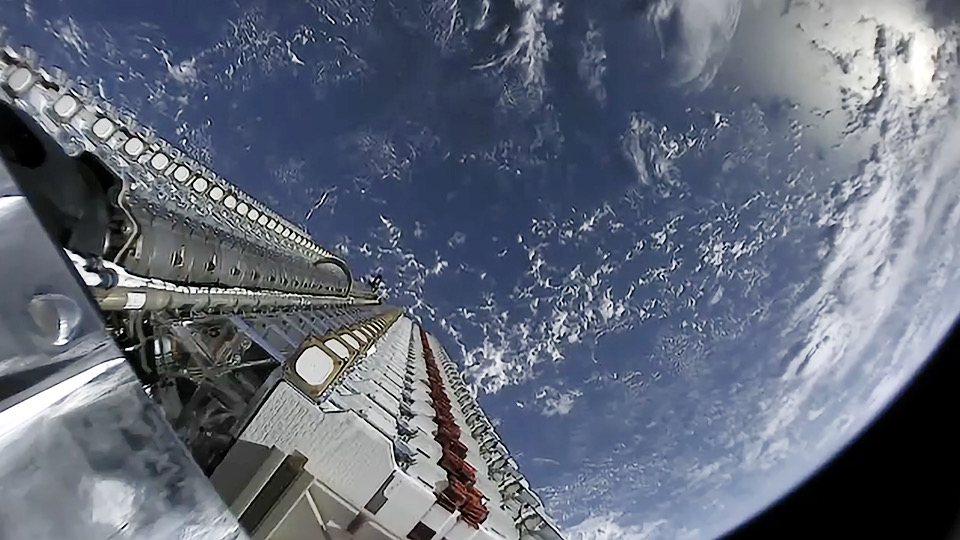
A batch of 29 satellites for the Starlink mega-constellation – SpaceX’s project for space-based Internet communication system.
Starlink Group 15-20
Provider: SpaceX Date: August 22, 2026 Time: 7:25 AM UTC Vehicle: Falcon 9
A batch of 27 satellites for the Starlink mega-constellation – SpaceX’s project for space-based Internet communication system.
Chang’e 7
Provider: China Aerospace Science and Technology Corporation Date: August 24, 2026 Time: 12:00 AM UTC Vehicle: Long March 5
Chang’e 7/CE-7 is scheduled to launch in 2026, including an orbiter, a lander, a mini-hopping probe, and a rover. The mission will land in the South Pole regions of the Moon to study lunar surface environment around the South Pole, especially in looking for water ice in lunar soil.
Starlink Group 10-49
Provider: SpaceX Date: August 25, 2026 Time: 5:49 AM UTC Vehicle: Falcon 9
A batch of 29 satellites for the Starlink mega-constellation – SpaceX’s project for space-based Internet communication system.
Starlink Group 15-22
Provider: SpaceX Date: August 25, 2026 Time: 9:42 AM UTC Vehicle: Falcon 9
A batch of 27 satellites for the Starlink mega-constellation – SpaceX’s project for space-based Internet communication system.
Starlink Group 10-39 ×
Mission Details
TypeCommunications
OrbitLow Earth Orbit
TargetEarth
A batch of 29 satellites for the Starlink mega-constellation – SpaceX’s project for space-based Internet communication system.
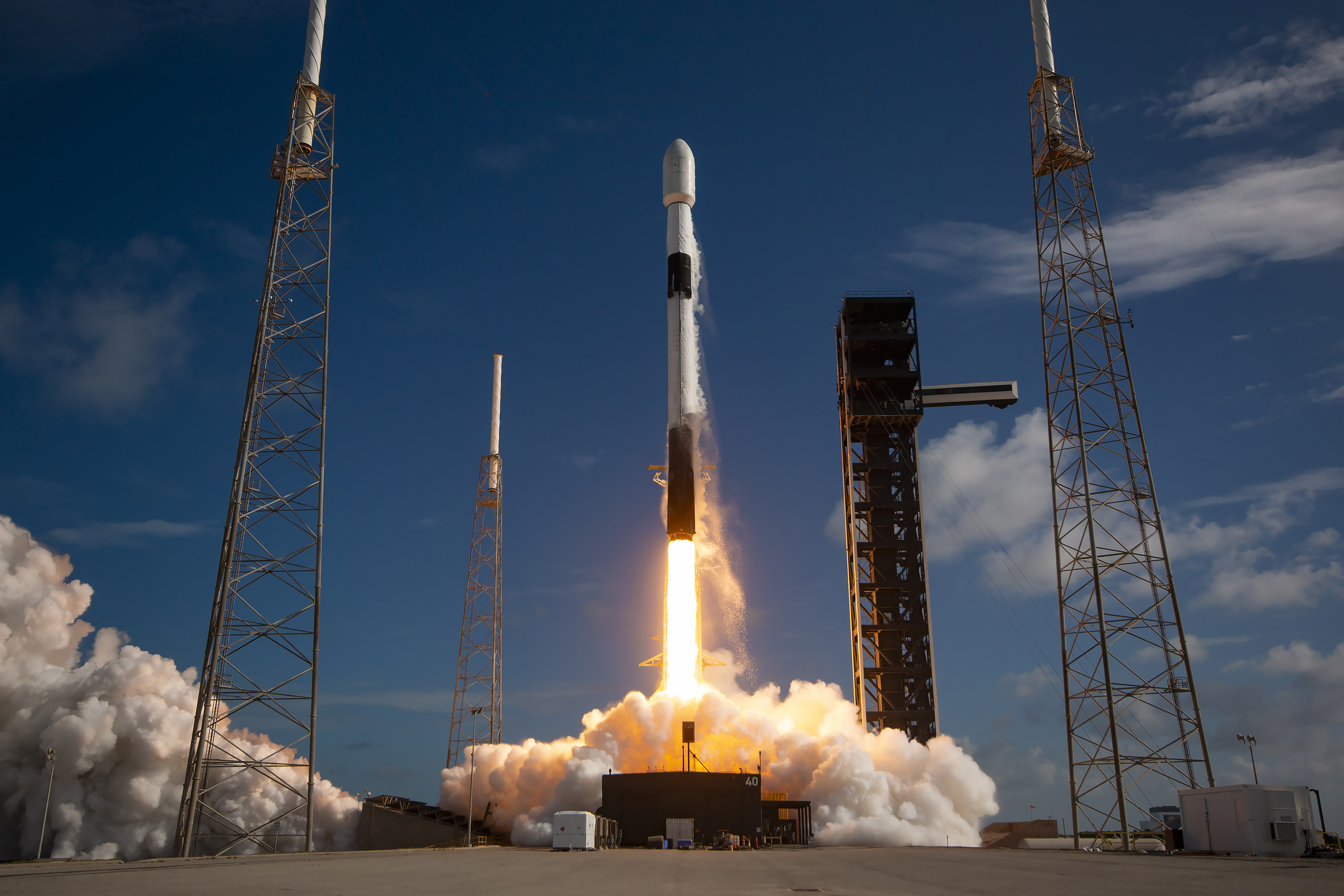
Falcon 9 is a two-stage rocket designed and manufactured by SpaceX for the reliable and safe transport of satellites and the Dragon spacecraft into orbit. The Block 5 variant is the fifth major interval aimed at improving upon the ability for rapid reusability.
Falcon 9 is a two-stage rocket designed and manufactured by SpaceX for the reliable and safe transport of satellites and the Dragon spacecraft into orbit. The Block 5 variant is the fifth major interval aimed at improving upon the ability for rapid reusability.
The Falcon 9 first stage B1100 will land on ASDS OCISLY after its 9th flight.
Chang’e 7 ×
Mission Details
TypePlanetary Science
OrbitLunar Orbit
TargetEarth
Chang’e 7/CE-7 is scheduled to launch in 2026, including an orbiter, a lander, a mini-hopping probe, and a rover. The mission will land in the South Pole regions of the Moon to study lunar surface environment around the South Pole, especially in looking for water ice in lunar soil.
Launch Provider: China Aerospace Science and Technology Corporation
Long March 5 is a Chinese heavy lift launch system developed by China Academy of Launch Vehicle Technology (CALT). CZ-5 is the first Chinese vehicle designed from the ground up to focus on non-hypergolic liquid rocket propellants. Currently, two CZ-5 vehicle configurations are planned, with maximum…
Falcon 9 is a two-stage rocket designed and manufactured by SpaceX for the reliable and safe transport of satellites and the Dragon spacecraft into orbit. The Block 5 variant is the fifth major interval aimed at improving upon the ability for rapid reusability.
Falcon 9 is a two-stage rocket designed and manufactured by SpaceX for the reliable and safe transport of satellites and the Dragon spacecraft into orbit. The Block 5 variant is the fifth major interval aimed at improving upon the ability for rapid reusability.
Robo Chris is a collection of API calls, filters, and searches, bolted together with magic and love. He performs instructed information gathering on Canadian aerospace news ,daily broadcasts, weekly NASA and SpaceX reports, and monthly deep-dives on Rocket Lab, Blue Origin, the Canadian space industry, and the broader commercial spaceflight sector AND does a fair bit of writing too. Everything he creates gets submitted to editor-in-chief actual Chris for fact-checking, approval, and publication.