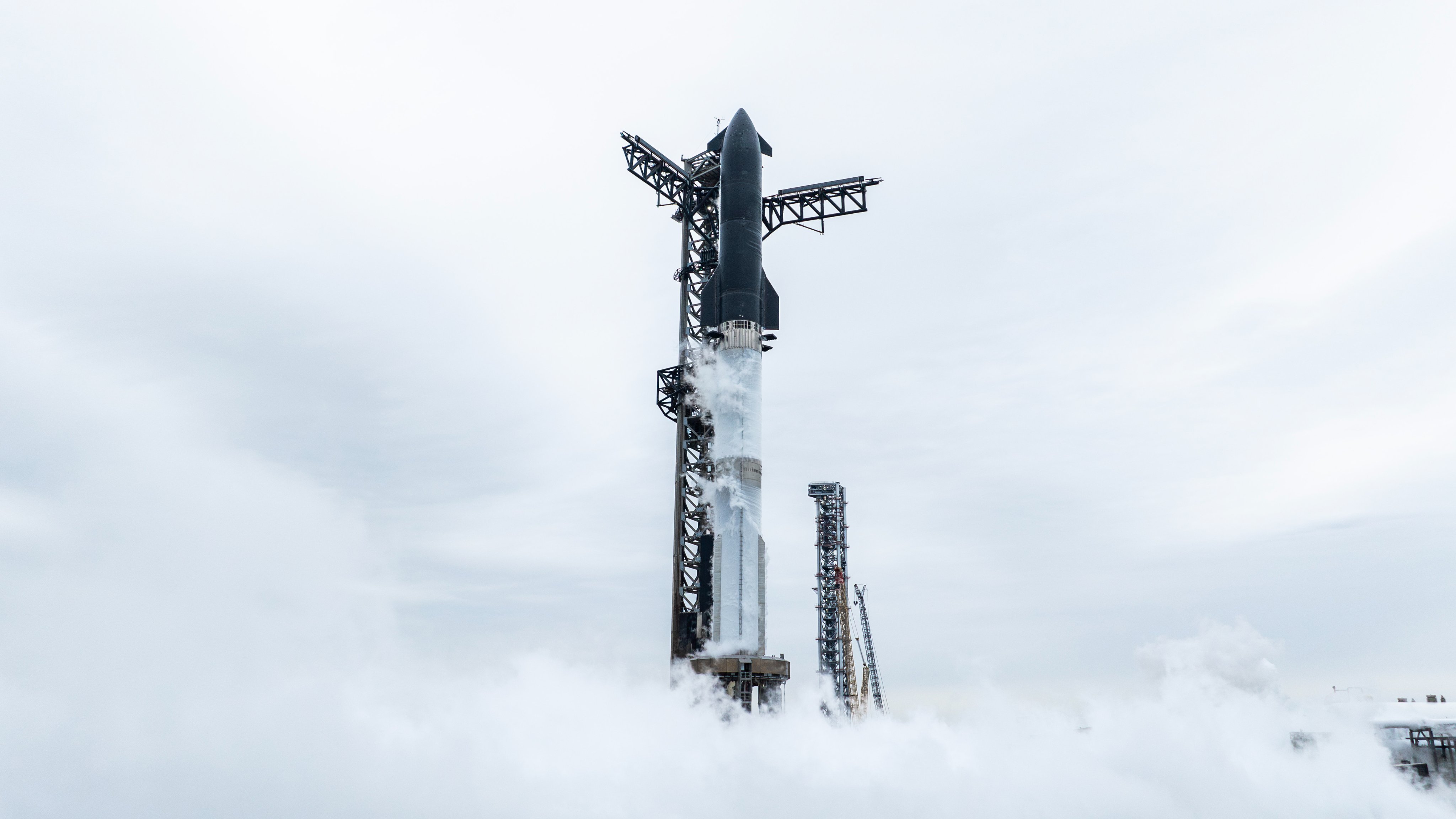
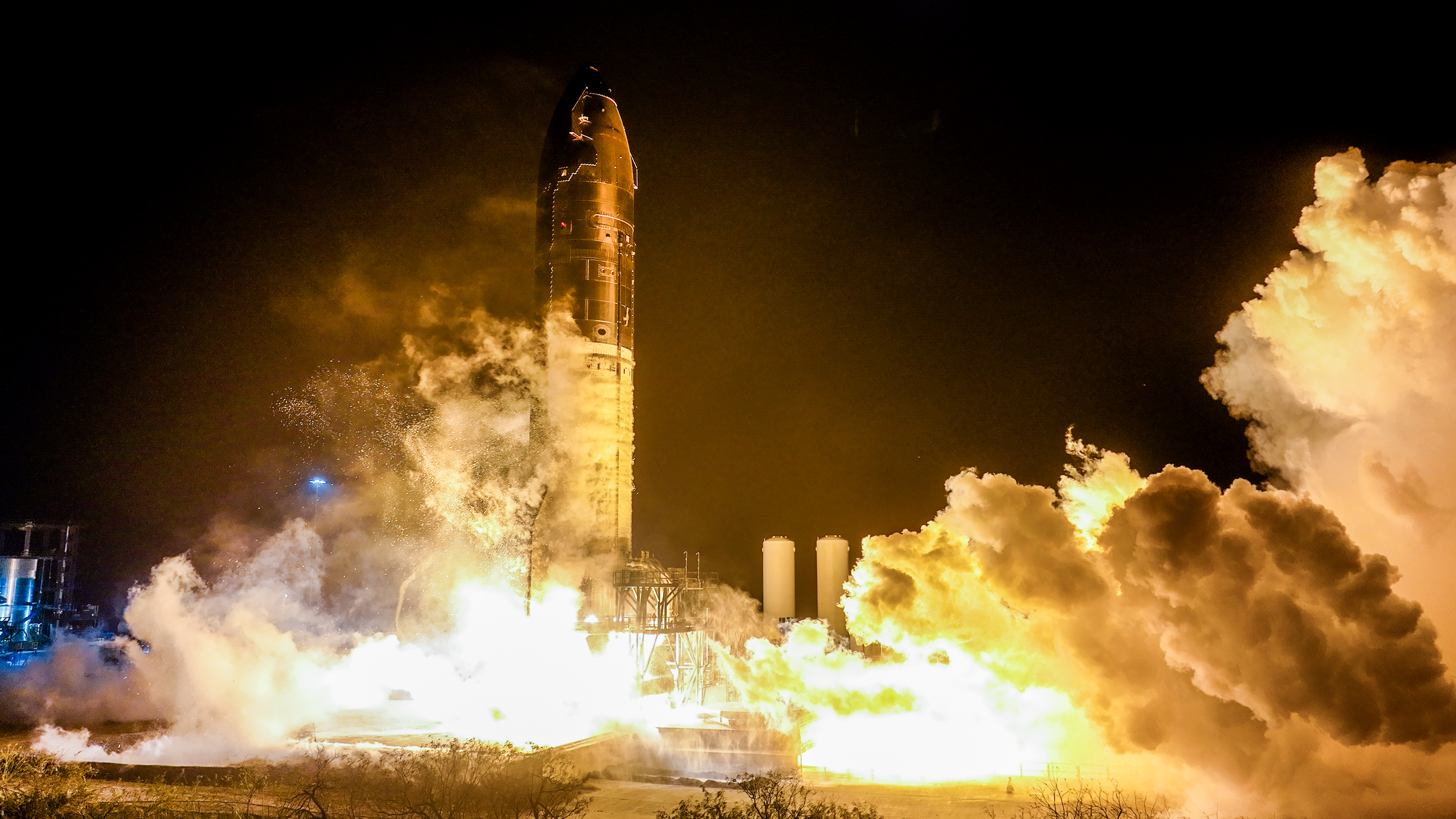
SpaceX conducted a significant milestone test for its next-generation launch system this week. On May 7, 2026, at 10:46 a.m. EDT, the company performed a static fire test of all 33 Raptor engines on Super Heavy Booster 19 at Starbase in Texas. This marks the third static fire for B19 and serves as a critical readiness check ahead of Starship’s 12th integrated flight test (IFT-12). No anomalies were reported in available sources, though SpaceX has not yet announced a target launch date for IFT-12.
Static fire tests like this one allow engineers to verify propulsion system performance while the vehicle remains firmly anchored to the launch mount—a key step before committing to flight. While IFT-11 has not yet flown as of May 11, this vigorous ground test of B19 suggests SpaceX is progressing methodically toward its next orbital attempt.
Starbase Infrastructure
There were no major updates to Starbase infrastructure reported in the past week. Ongoing work likely continues on Pad 2’s orbital launch mount and associated systems to support an increasing Starship launch cadence, but no new milestones or construction completions were confirmed in available sources through May 11, 2026. As SpaceX prepares for future integrated flights, infrastructure enhancements—including improvements to the deluge system, chopstick arms, and tank farm—are expected to remain active, though specific progress remains unreported this week.
Falcon 9 Keeps Flying: Starlink Mission Completes, CRS-34 on Deck
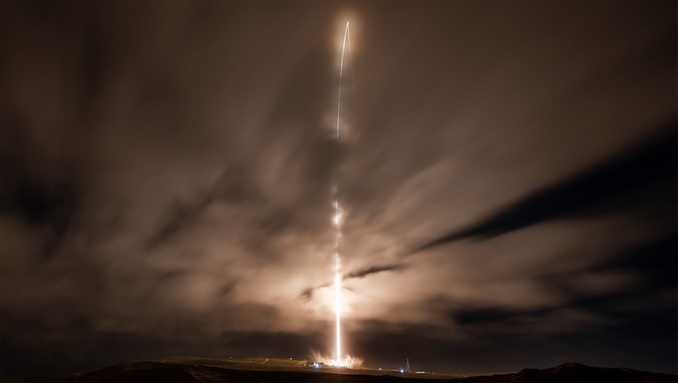
SpaceX successfully launched 24 Starlink satellites on May 5, 2026, from Vandenberg Space Force Base in California. The Falcon 9 lifted off at 8:59:19 p.m. PDT (11:59:19 p.m. EDT), carrying the Starlink 17-29 mission into low Earth orbit. The flight marked the 24th mission for booster B1081, which previously supported NASA’s Crew-7, PACE, and CRS-29 missions. Roughly eight minutes after liftoff, B1081 touched down on the droneship Of Course I Still Love You, marking SpaceX’s 609th booster recovery and the vessel’s 195th landing.
This was the second Starlink launch in May, following a May 1 mission from Cape Canaveral. With more than 10,000 Starlink satellites now in orbit, the constellation continues to expand global broadband coverage—including in remote parts of Canada, where the service is increasingly used for home internet and emergency communications.
CRS-34 Resupply Mission Set to Launch to ISS
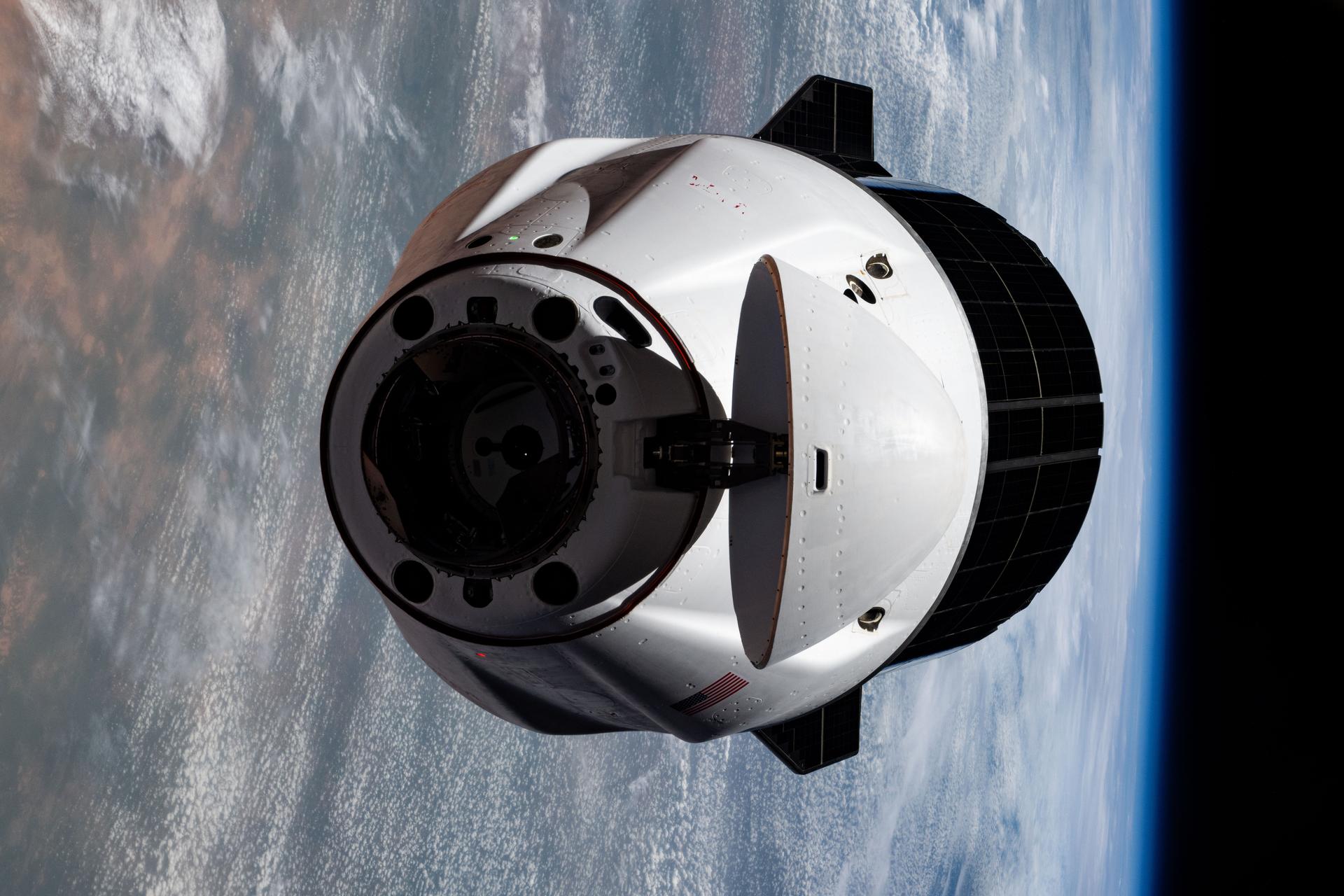
SpaceX is scheduled to launch its 34th Commercial Resupply Services (CRS-34) mission to the International Space Station on Tuesday, May 12, 2026, at 7:16 p.m. EDT. The Falcon 9 will lift off from Space Launch Complex 40 at Cape Canaveral Space Force Station, carrying a Cargo Dragon spacecraft loaded with approximately 6,500 pounds of science experiments, crew supplies, and hardware.
The Dragon is expected to autonomously dock with the Harmony module’s forward port on Thursday, May 14, at 9:50 a.m. EDT. Among the scientific payloads is a Canadian-relevant investigation into bone scaffolds derived from wood, which could inform treatments for osteoporosis—a condition affecting more than two million Canadians. Another experiment will examine how red blood cells and the spleen adapt to microgravity, research that supports long-duration spaceflight and has implications for human health on Earth.
NASA will provide live coverage of both launch and docking via NASA+, YouTube, and Amazon Prime. The Dragon will remain docked until mid-June before returning to Earth with time-sensitive research, splashing down off the coast of California.
Provider: SpaceX Date: May 15, 2026 Time: 10:30 PM UTC Vehicle: Starship
12th test flight of the two-stage Starship launch vehicle. Maiden Flight of Starship V3
Flight 13
Provider: SpaceX Date: June 30, 2026 Time: 12:00 AM UTC Vehicle: Starship
13th test flight of the two-stage Starship launch vehicle. Second flight of Starship V3
Nancy Grace Roman Space Telescope
Provider: SpaceX Date: September 30, 2026 Time: 12:00 AM UTC Vehicle: Falcon Heavy
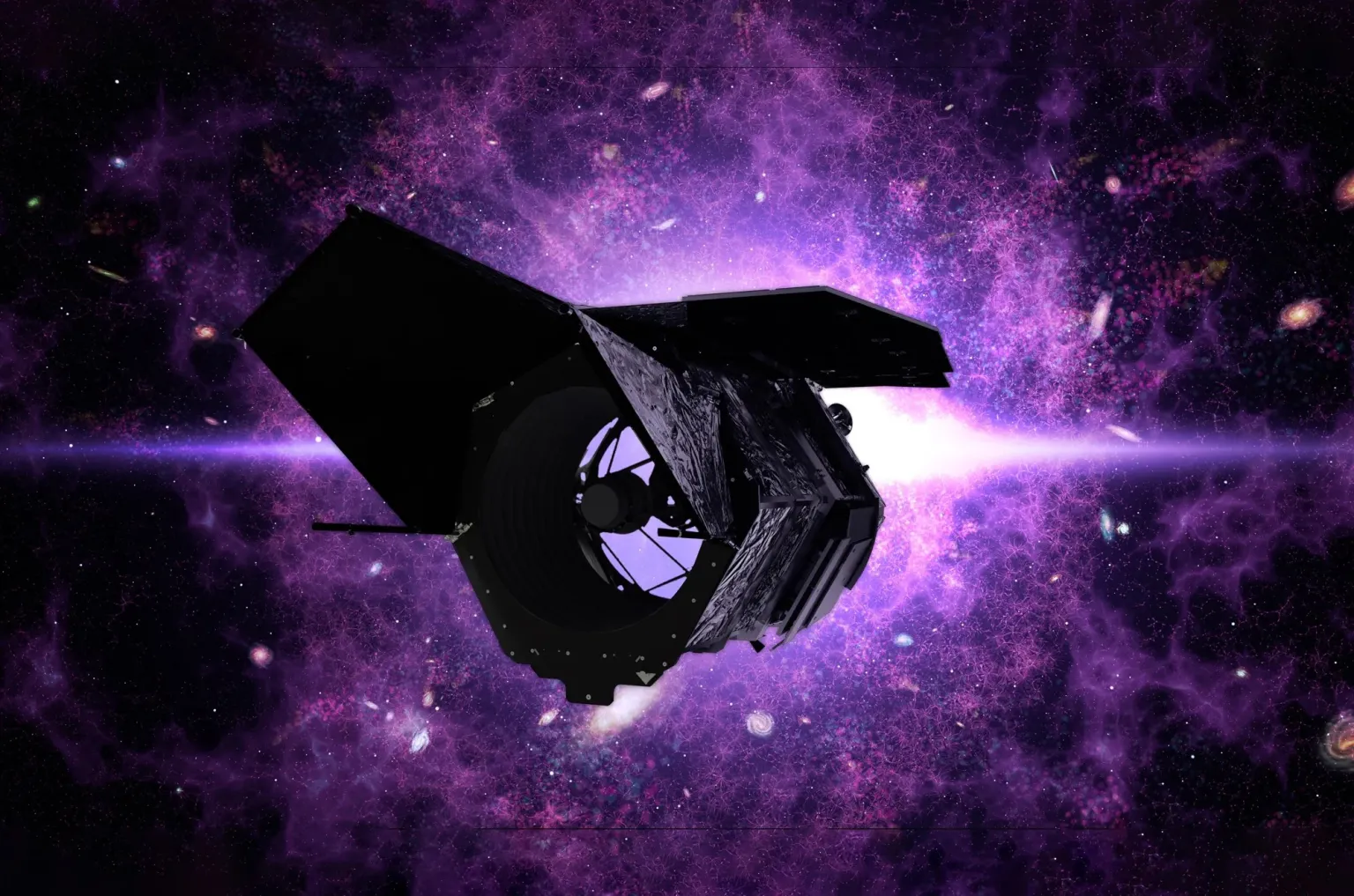
The Nancy Grace Roman Space Telescope is a NASA infrared space telescope with a 2.4 m (7.9 ft) wide field of view primary mirror and two scientific instruments. The Wide-Field Instrument (WFI) is a 300.8-megapixel multi-band visible and near-infrared camera, providing a sharpness of images comparable to that achieved by the Hubble Space Telescope over a 0.28 square degree field of view, 100 times larger than imaging cameras on the Hubble. The Coronagraphic Instrument (CGI) is a high-contrast, small field of view camera and spectrometer covering visible and near-infrared wavelengths using novel starlight-suppression technology. Roman objectives include a search for extra-solar planets using gravitational microlensing, and probing the expansion history of the Universe and the growth of cosmic structure, with the goal of measuring the effects of dark energy, the consistency of general relativity, and the curvature of spacetime.
Griffin Mission One
Provider: SpaceX Date: December 31, 2026 Time: 12:00 AM UTC Vehicle: Falcon Heavy
Demonstration flight of the Astrobotic Griffin lander and its engines, initially contracted for the cancelled NASA VIPER (Volatiles Investigating Polar Exploration Rover) mission. The vacated payload spot will now host the FLIP (FLEX Lunar Innovation Platform) lunar rover from Astrolab.
USSF-75
Provider: SpaceX Date: December 31, 2026 Time: 12:00 AM UTC Vehicle: Falcon Heavy
Classified payload for the United States Space Force
Flight 12 ×
Mission Details
TypeTest Flight
OrbitSuborbital
TargetEarth
12th test flight of the two-stage Starship launch vehicle. Maiden Flight of Starship V3
Agencies Involved
• SpaceX (Commercial)
Program: SpaceX Starship
The SpaceX Starship is a fully reusable super heavy-lift launch vehicle under development by SpaceX since 2012, as a self-funded private spaceflight project. The second stage of the Starship — is designed as a long-duration cargo and passenger-carrying spacecraft. It is expected to be initially used without any booster stage at all, as part of an extensive development program to prove out launch-and-landing and iterate on a variety of design details, particularly with respect to the vehicle’s atmospheric reentry.
The second launch and landing pad of the full version of the combined SpaceX Starship and Superheavy booster. To be first used for launch in 2025 with version 3 of Starship and the Superheavy…
13th test flight of the two-stage Starship launch vehicle. Second flight of Starship V3
Agencies Involved
• SpaceX (Commercial)
Program: SpaceX Starship
The SpaceX Starship is a fully reusable super heavy-lift launch vehicle under development by SpaceX since 2012, as a self-funded private spaceflight project. The second stage of the Starship — is designed as a long-duration cargo and passenger-carrying spacecraft. It is expected to be initially used without any booster stage at all, as part of an extensive development program to prove out launch-and-landing and iterate on a variety of design details, particularly with respect to the vehicle’s atmospheric reentry.
The second launch and landing pad of the full version of the combined SpaceX Starship and Superheavy booster. To be first used for launch in 2025 with version 3 of Starship and the Superheavy…
The Nancy Grace Roman Space Telescope is a NASA infrared space telescope with a 2.4 m (7.9 ft) wide field of view primary mirror and two scientific instruments. The Wide-Field Instrument (WFI) is a 300.8-megapixel multi-band visible and near-infrared camera, providing a sharpness of images comparable to that achieved by the Hubble Space Telescope over a 0.28 square degree field of view, 100 times larger than imaging cameras on the Hubble. The Coronagraphic Instrument (CGI) is a high-contrast, small field of view camera and spectrometer covering visible and near-infrared wavelengths using novel starlight-suppression technology. Roman objectives include a search for extra-solar planets using gravitational microlensing, and probing the expansion history of the Universe and the growth of cosmic structure, with the goal of measuring the effects of dark energy, the consistency of general relativity, and the curvature of spacetime.
Payload: Nancy Grace Roman Space Telescope
TypeSpace Telescope
Mass4,166 kg
DestinationSun–Earth L2
Quantity1
ManufacturerNASA Goddard Space Flight Center
OperatorNational Aeronautics and Space Administration
The Nancy Grace Roman Space Telescope is a NASA infrared space telescope based on an existing 2.4 m (7.9 ft) wide field of view primary mirror and carrying two scientific instruments. The Wide-Field Instrument (WFI) is a 300.8-megapixel multi-band visible and near-infrared camera, providing a…
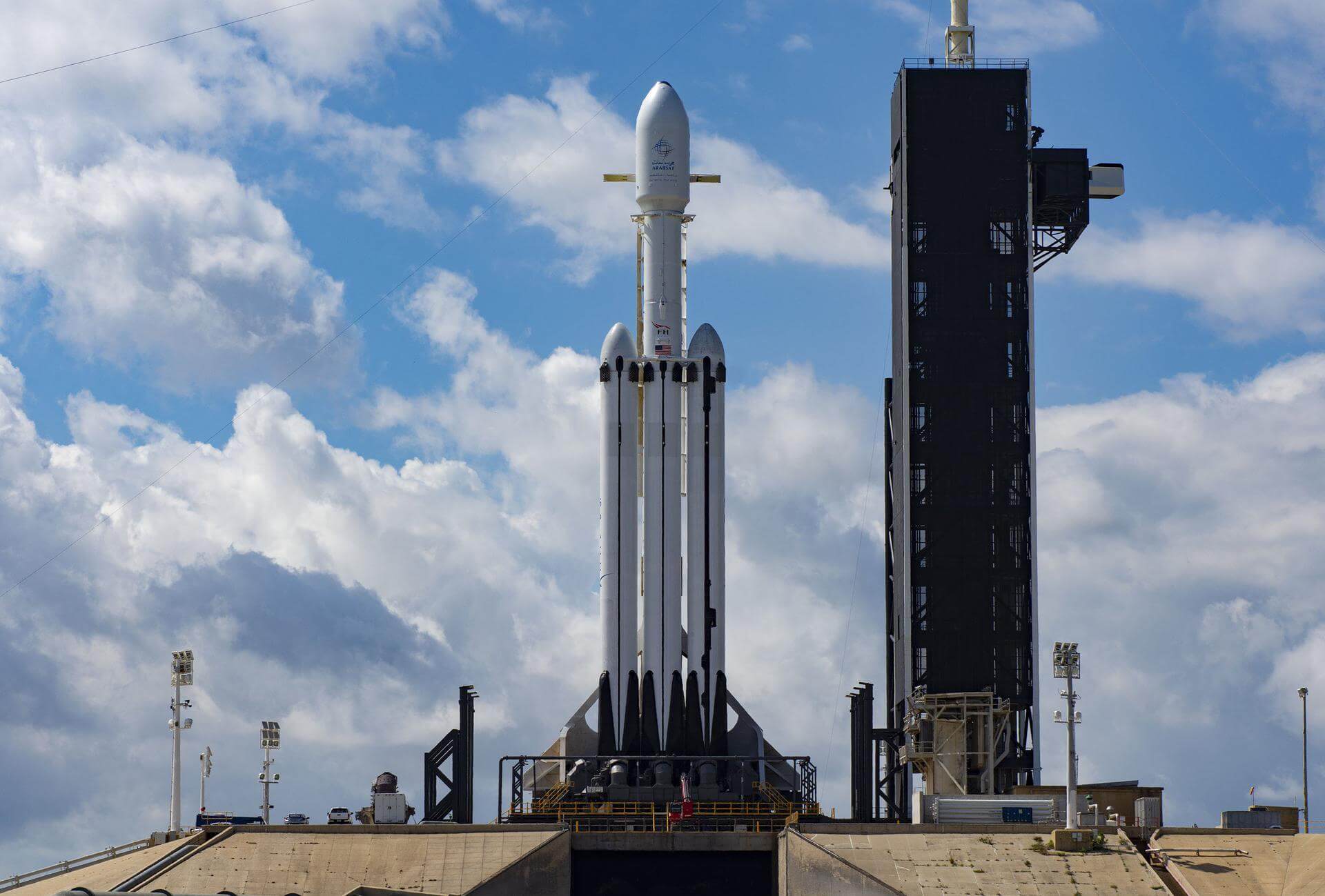
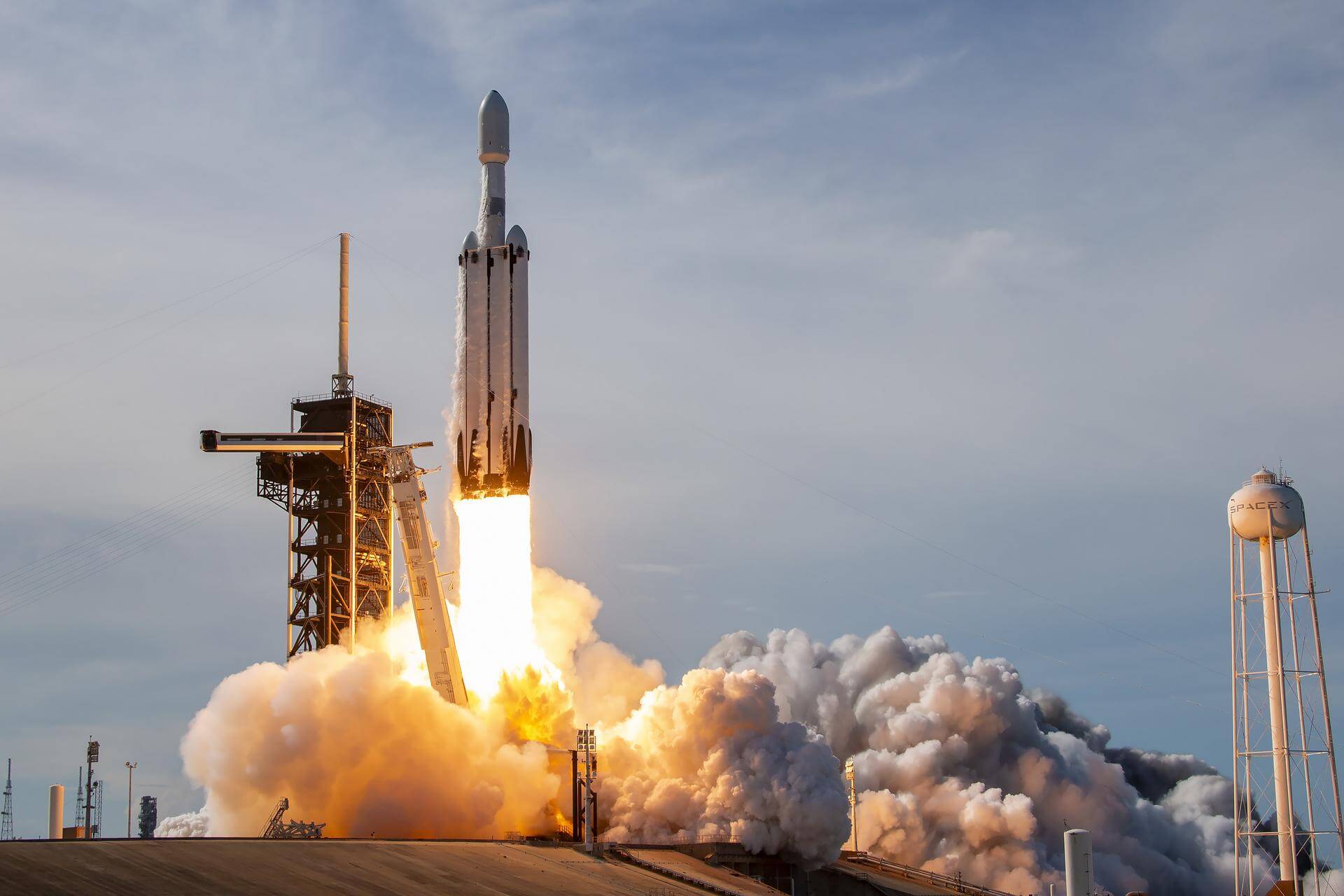
The Falcon Heavy is a variant of the Falcon 9 full thrust launch vehicle and consists of a standard Falcon 9 rocket core, with two additional boosters derived from the Falcon 9 first stage.
Demonstration flight of the Astrobotic Griffin lander and its engines, initially contracted for the cancelled NASA VIPER (Volatiles Investigating Polar Exploration Rover) mission. The vacated payload spot will now host the FLIP (FLEX Lunar Innovation Platform) lunar rover from Astrolab.
Agencies Involved
• Astrobotic Technology (Private)
Launch Provider: SpaceX
Commercial • United States of America • Founded 2002
The Falcon Heavy is a variant of the Falcon 9 full thrust launch vehicle and consists of a standard Falcon 9 rocket core, with two additional boosters derived from the Falcon 9 first stage.
The Falcon Heavy is a variant of the Falcon 9 full thrust launch vehicle and consists of a standard Falcon 9 rocket core, with two additional boosters derived from the Falcon 9 first stage.
Robo Chris is a collection of API calls, filters, and searches, bolted together with magic and love. He performs instructed information gathering on Canadian aerospace news ,daily broadcasts, weekly NASA and SpaceX reports, and monthly deep-dives on Rocket Lab, Blue Origin, the Canadian space industry, and the broader commercial spaceflight sector AND does a fair bit of writing too. Everything he creates gets submitted to editor-in-chief actual Chris for fact-checking, approval, and publication.