NASA Targets Artemis III for 2027, Moon Landing for 2028
NASA Administrator Jared Isaacman outlined the agency’s accelerated path back to the lunar surface on Oct. 23, targeting Artemis III for 2027 and the Artemis IV Moon landing mission for 2028. Swift reenters.
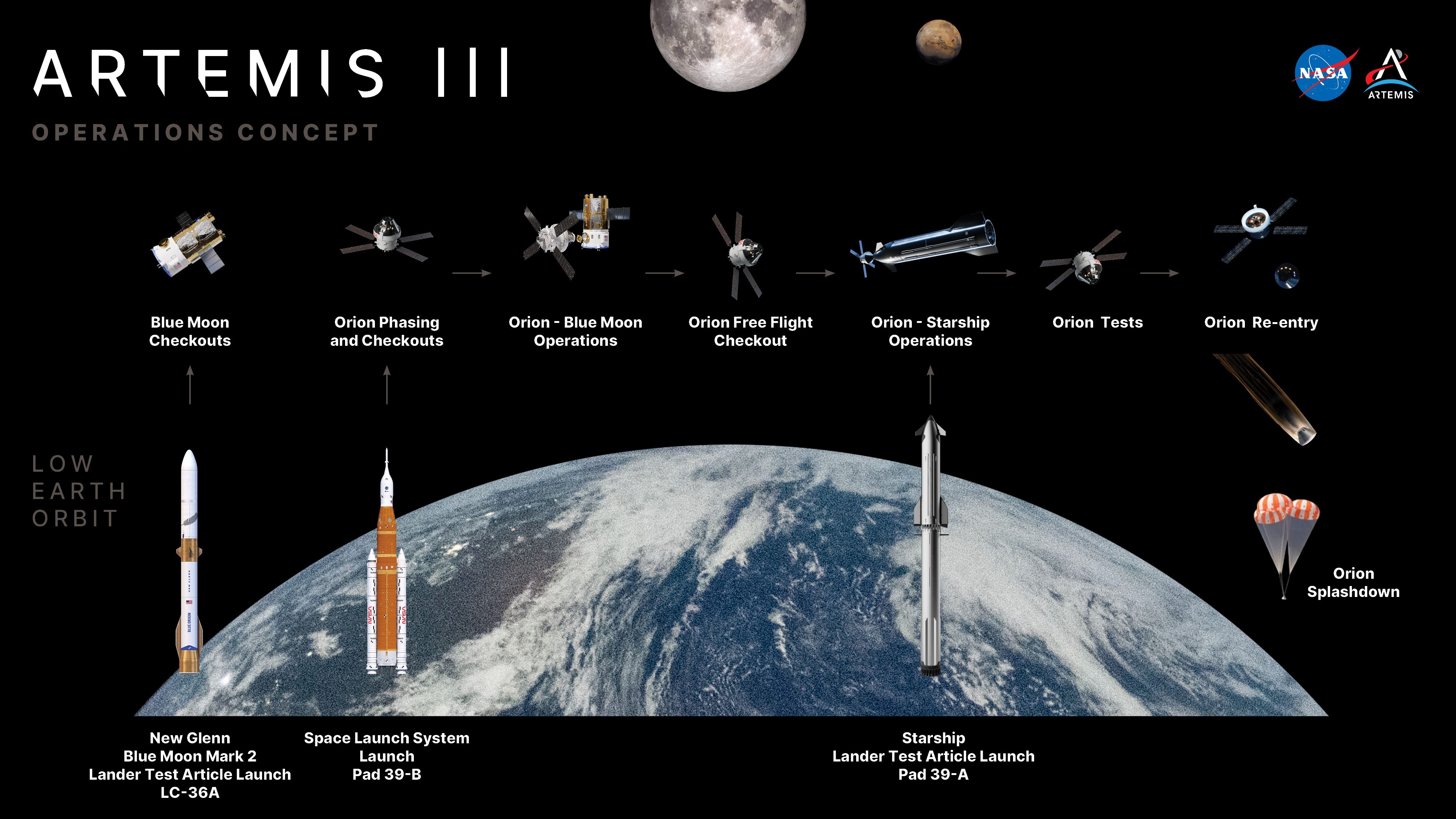
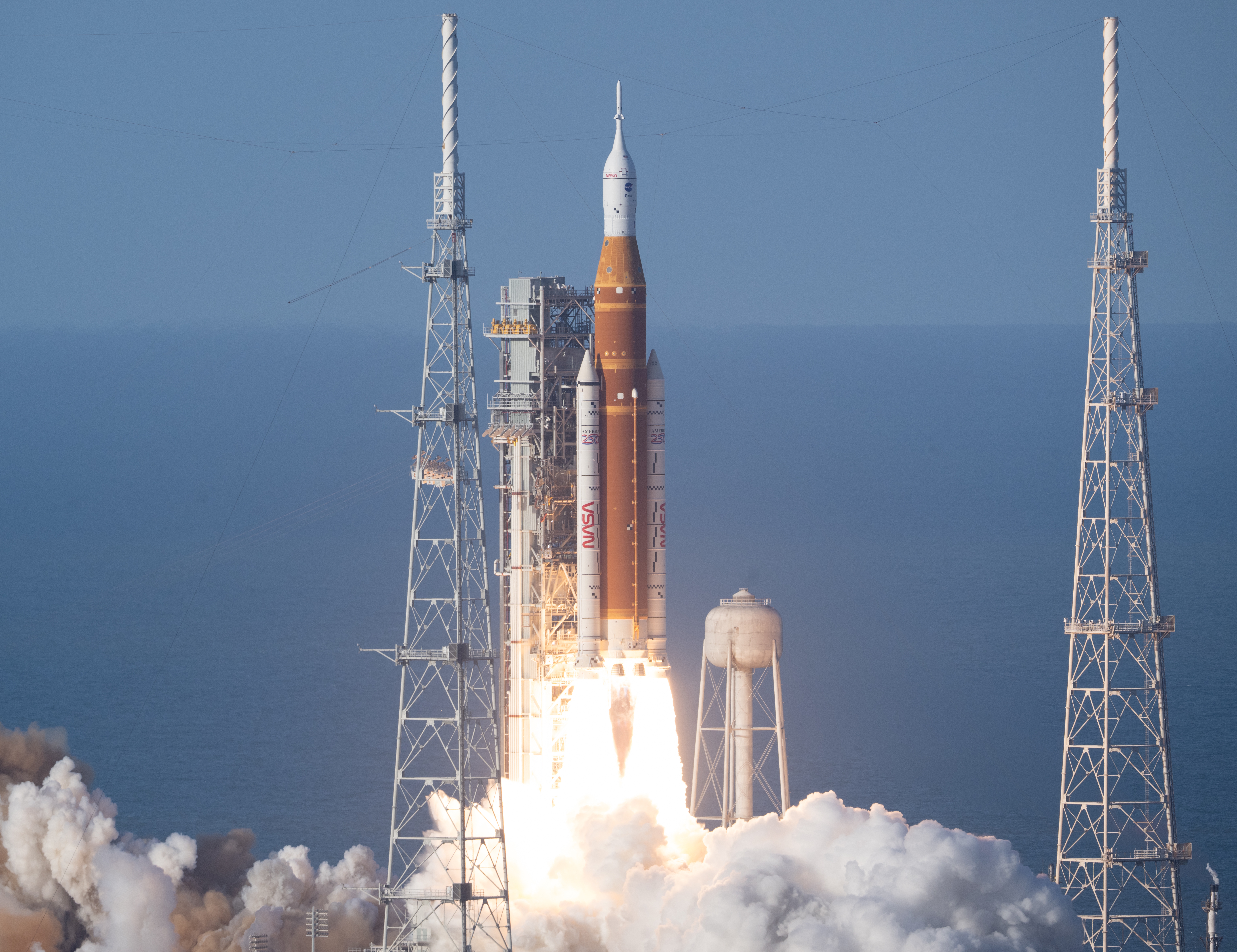
Artemis III will send four astronauts aboard Orion, launched on NASA’s SLS rocket, for a planned 14-day mission in Earth orbit. The mission will test rendezvous, docking, and operations between Orion and lunar lander test vehicles from SpaceX and Blue Origin.
The mission sequence calls for Blue Origin to launch a Blue Moon lander test article into Earth orbit, followed by SLS launching Orion and its crew. After docking with the Blue Moon test article, SpaceX will launch a Version 3 Starship lander test article while Orion undocks from Blue Moon and docks with Starship.
Hardware for Artemis III is on track, with processing timelines reduced by about half. NASA also redesigned, built, and tested a critical fuel-line component in-house in five months, at roughly a tenth of the cost of an earlier outside-vendor estimate.
“This is a very energized NASA, and these updates are only a small part of that story.” Isaacman said. “NASA is driving outcomes to make Moon missions a reality, and we’re not waiting for others to bring their plans to us — the campaign must move with urgency as strategic competitors pursue a permanent presence beyond Earth.”
SPLICE Navigation Test Shows Promise for Planetary Landings
NASA successfully demonstrated technology designed to help spacecraft autonomously navigate to safe landing sites on the Moon and other planets.
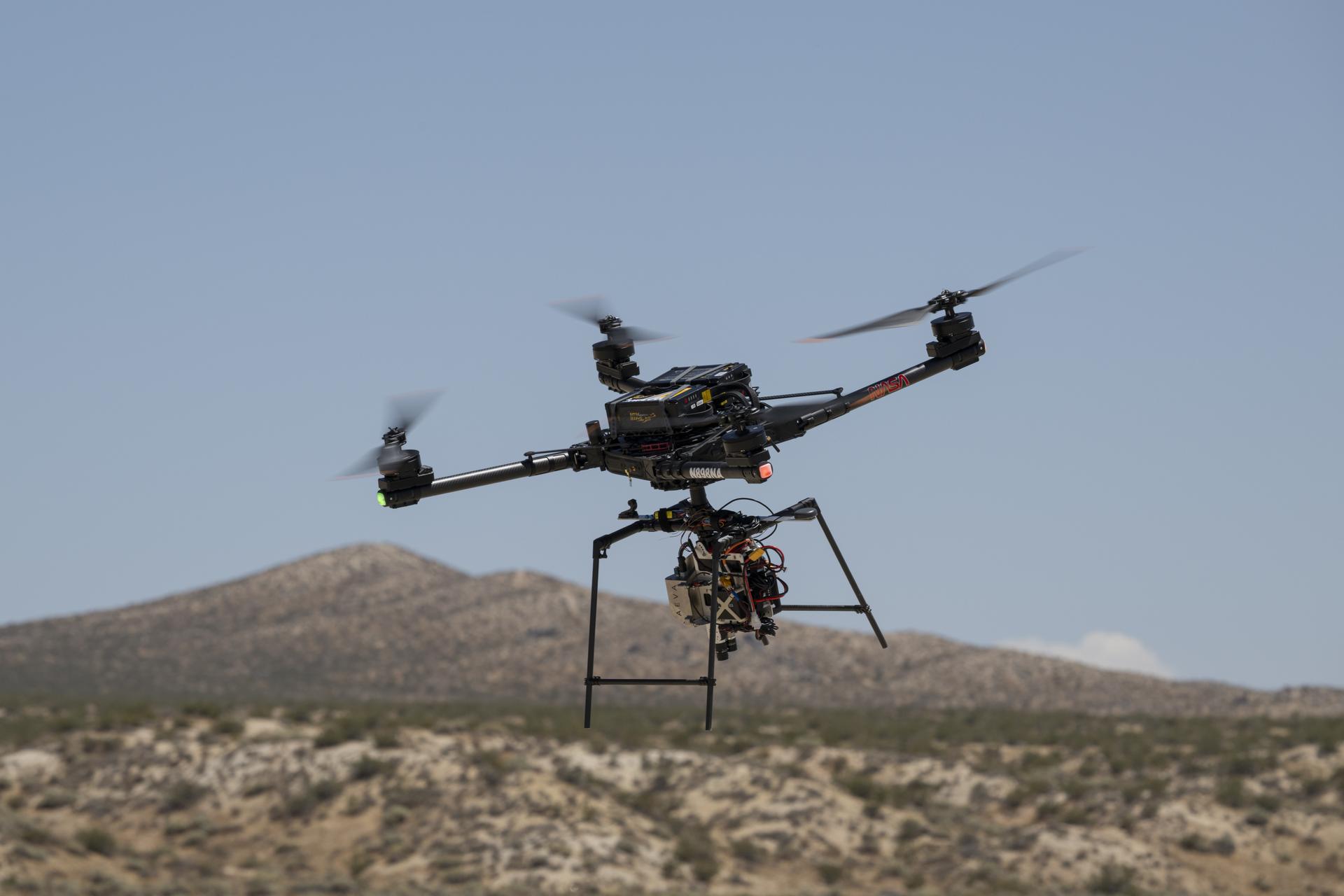
An Alta-X drone equipped with the Safe and Precise Landing – Integrated Capabilities Evolution (SPLICE) payload completed simulated lunar descent and landing maneuvers Aug. 27 at Rogers Dry Lake near NASA’s Armstrong Flight Research Center in Edwards, California.
During the tests, the SPLICE payload used an advanced guidance system to map the terrain and assess potential landing areas. If the system determines the targeted landing area is unsafe, it diverts the drone to a safer location.
“This flight test is the culmination of almost a decade of work, for the SPLICE project,” said Davis Adams, NASA project manager. “This flight raised the technology readiness level, priming it for integration into future robotic and crewed lunar flights.”
NASA has worked with commercial lunar lander providers to implement iterations of SPLICE into their platforms.
ESCAPADE Twins Swing Past Earth En Route to Mars
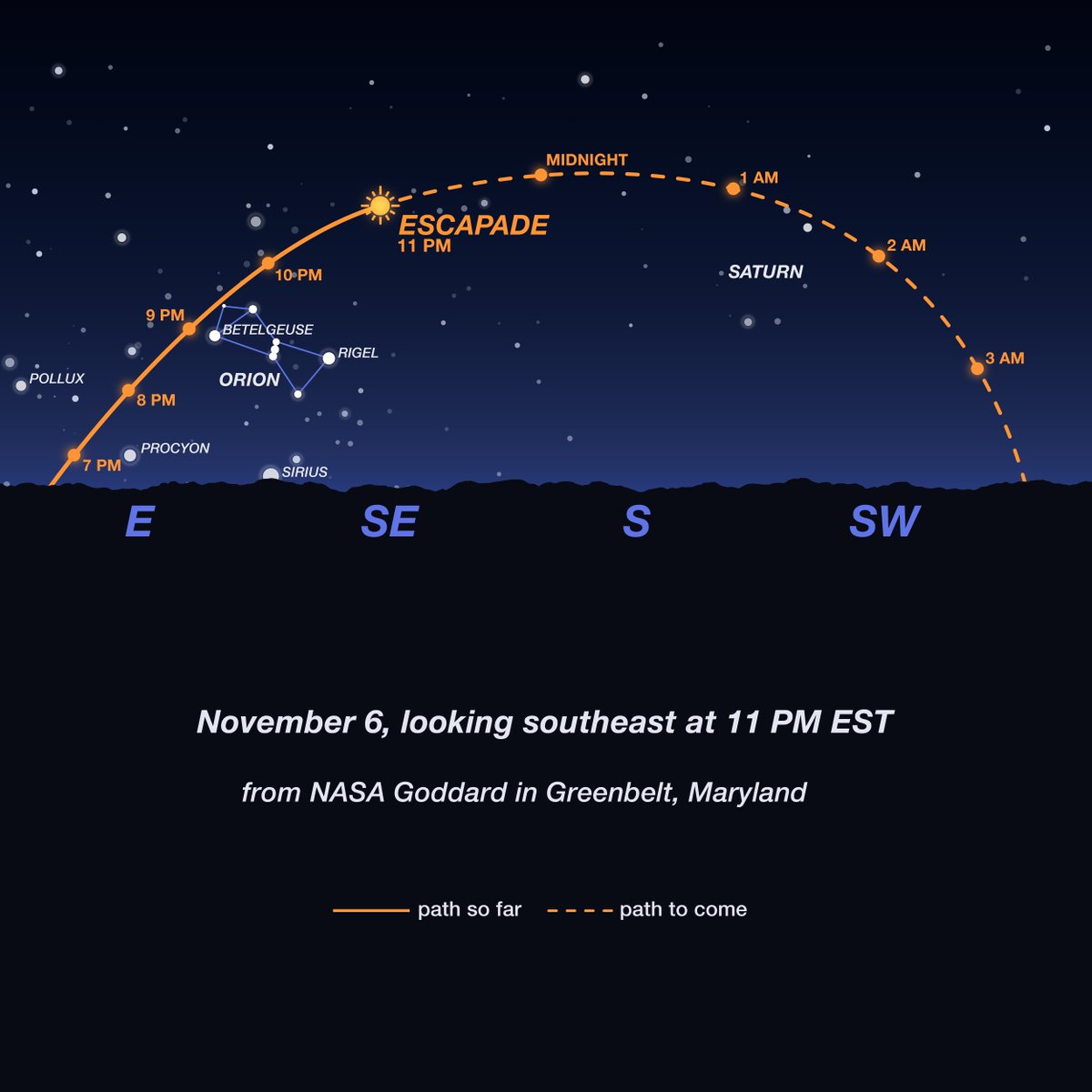
NASA’s twin ESCAPADE spacecraft will swing past Earth on Nov. 6-7 and Nov. 8-9 on their way to Mars, where they will use two identical spacecraft to study the Red Planet’s atmosphere.
Observers with telescopes may be able to spot each spacecraft as a faint dot drifting slowly east to west in the hours before each flyby.
Swift Observatory Reenters After Nearly 22 Years
NASA’s Neil Gehrels Swift Observatory plummeted back into Earth’s atmosphere on Wednesday over western Indonesia, ending nearly 22 years in orbit for the gamma-ray burst hunter.
Swift re-entered at 7:39 a.m. EST (1239 UTC) near 3 degrees north latitude and 99 degrees east longitude, over Indonesia’s North Sumatra region, according to U.S. Space Force tracking data later confirmed by NASA.
Launched from Cape Canaveral atop a Delta 2 rocket Nov. 20, 2004, Swift was designed to operate for two years. During a mission spanning more than two decades, it observed more than 2,000 gamma-ray bursts and studied more than 1,400 supernovae. Swift data have contributed to about 7,000 scientific papers, according to NASA.
NASA paid Katalyst Space $30 million to send a robotic tug, LINK, to grab Swift and push it higher, but the Katalyst-built craft lost control of its orientation weeks after its July 3 launch, and NASA called off the capture Aug. 19.
Lucy Arrives at Jupiter Trojan Asteroids
After five years and 2.2 billion miles, NASA’s Lucy spacecraft has reached the Jupiter Trojan asteroids. These asteroids serve as time capsules from the birth of our solar system, rich with clues about the environment in which Earth and other planets formed.
CSA and NASA Astronauts Complete Final Solar Array Installation
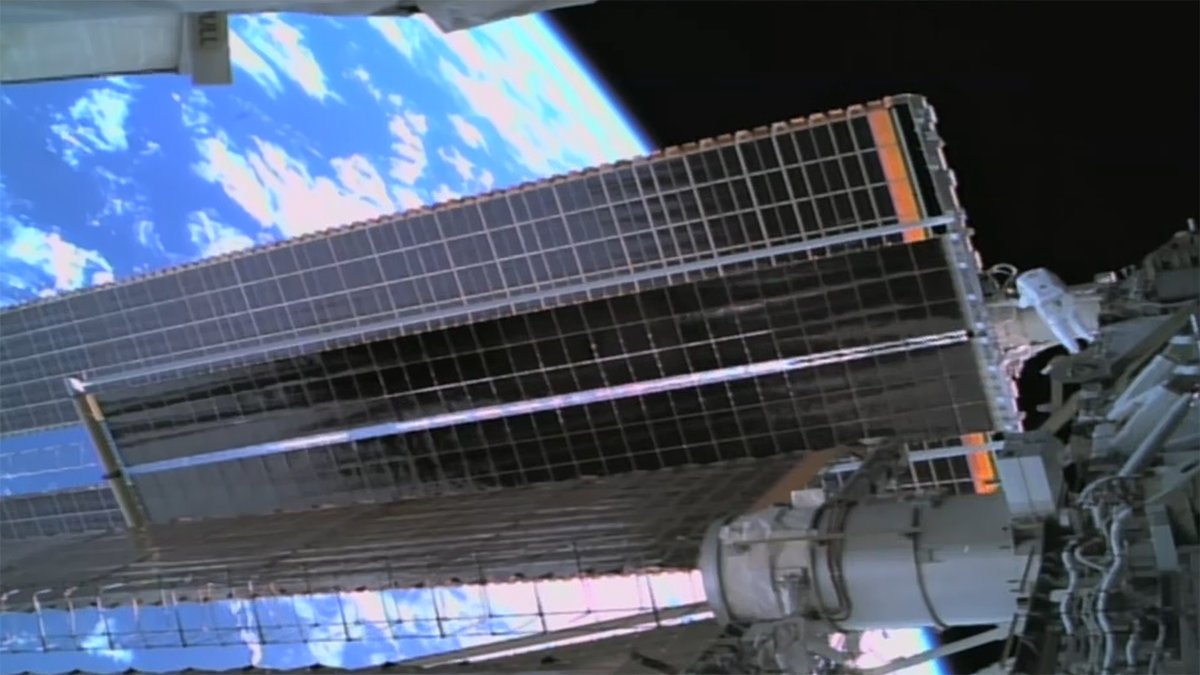
CSA astronaut Joshua Kutryk and NASA astronaut Anil Menon completed their spacewalk at 3:35 p.m. EST on Thursday after installing the eighth and final roll-out solar array on the International Space Station.
The spacewalk began at 8:36 a.m. EDT and lasted about seven hours. The installation completes the upgrade of the station’s power generation system.
When fully deployed, the eight roll-out solar arrays boost the station’s electric power generation capacity from 160 kilowatts to approximately 215 kilowatts, increasing available power by up to 30%.
CSA Names Alex MacDonald President
The Canadian Government announced Alexander MacDonald as the new President of the Canadian Space Agency. Canadian-born MacDonald was NASA’s first Chief Economist until December 2024.
He succeeds Lisa Campbell, who had held the position since 2020. MacDonald starts his new position on Nov. 16.
A dual Canadian-U.S. citizen, MacDonald served in several positions at NASA, including program executive for the International Space Station National Laboratory. He also served as NASA’s Chief Economist in the Office of Technology, Policy, and Strategy.
His “deep expertise in space policy and economics, and a strong understanding that space is crucial to our national and economic security” makes him “perfectly suited” to lead the Canadian Space Agency, said Mélanie Joly, Minister of Industry.
MacDonald holds degrees from Queen’s University, the University of British Columbia, and the University of Oxford. He is the author of “The Long Space Age: The Economic Origins of Space Exploration from Colonial America to the Cold War” and “The Spaceflight Narrative: A Literary History of Leaving Earth.”
NASA Awards Ka-Band Satellite Relay Contracts
NASA selected three companies to develop Ka-band space relay capability concepts compatible with current missions in space, ensuring service continuity for existing spacecraft without requiring modifications to their onboard systems.
The contract awardees with maximum potential value inclusive of all future options are:
Astranis Space Technologies Corp. for $264.3 million
Global Enterprise Solutions Inc. for $340.4 million
Viasat Inc. for $460.9 million
The work supports NASA’s decision to gradually retire the Tracking and Data Relay Satellite fleet and adopt commercial services for future missions.
Provider: National Aeronautics and Space Administration Date: June 30, 2027 Time: 12:00 AM UTC Vehicle: Space Launch System (SLS)
Artemis III is the second crew mission as part of the Artemis program. Artemis III will send a crew of 4 on a Low Earth Orbit mission, with the Orion rendezvous and dock with one or both commercial lunar landers in development by SpaceX and Blue Origin, performing in-space tests of the docked vehicles, integrated checkout of life support, communications, and propulsion systems, as well as tests of the new Extravehicular Activity (xEVA) suits.
Artemis IV
Provider: National Aeronautics and Space Administration Date: June 30, 2028 Time: 12:00 AM UTC Vehicle: Space Launch System (SLS)
Artemis IV is planned to be the first human lunar landing mission since the Apollo Program.
Artemis V
Provider: National Aeronautics and Space Administration Date: December 31, 2028 Time: 12:00 AM UTC Vehicle: Space Launch System (SLS)
Artemis V is planned to be the second human lunar landing mission since the Apollo Program.
SLS Block 1B | Artemis VI
Provider: National Aeronautics and Space Administration Date: September 30, 2030 Time: 12:00 AM UTC Vehicle: Space Launch System (SLS)
No description available
SLS Block 1B | Artemis VII
Provider: National Aeronautics and Space Administration Date: September 30, 2031 Time: 12:00 AM UTC Vehicle: Space Launch System (SLS)
No description available
Artemis III ×
Mission Details
TypeHuman Exploration
OrbitLow Earth Orbit
TargetEarth
Artemis III is the second crew mission as part of the Artemis program. Artemis III will send a crew of 4 on a Low Earth Orbit mission, with the Orion rendezvous and dock with one or both commercial lunar landers in development by SpaceX and Blue Origin, performing in-space tests of the docked vehicles, integrated checkout of life support, communications, and propulsion systems, as well as tests of the new Extravehicular Activity (xEVA) suits.
Agencies Involved
• National Aeronautics and Space Administration (Government)
Program: Artemis
The Artemis program is a US government-funded crewed spaceflight program that has the goal of landing “the first woman and the next man” on the Moon, specifically at the lunar south pole region.
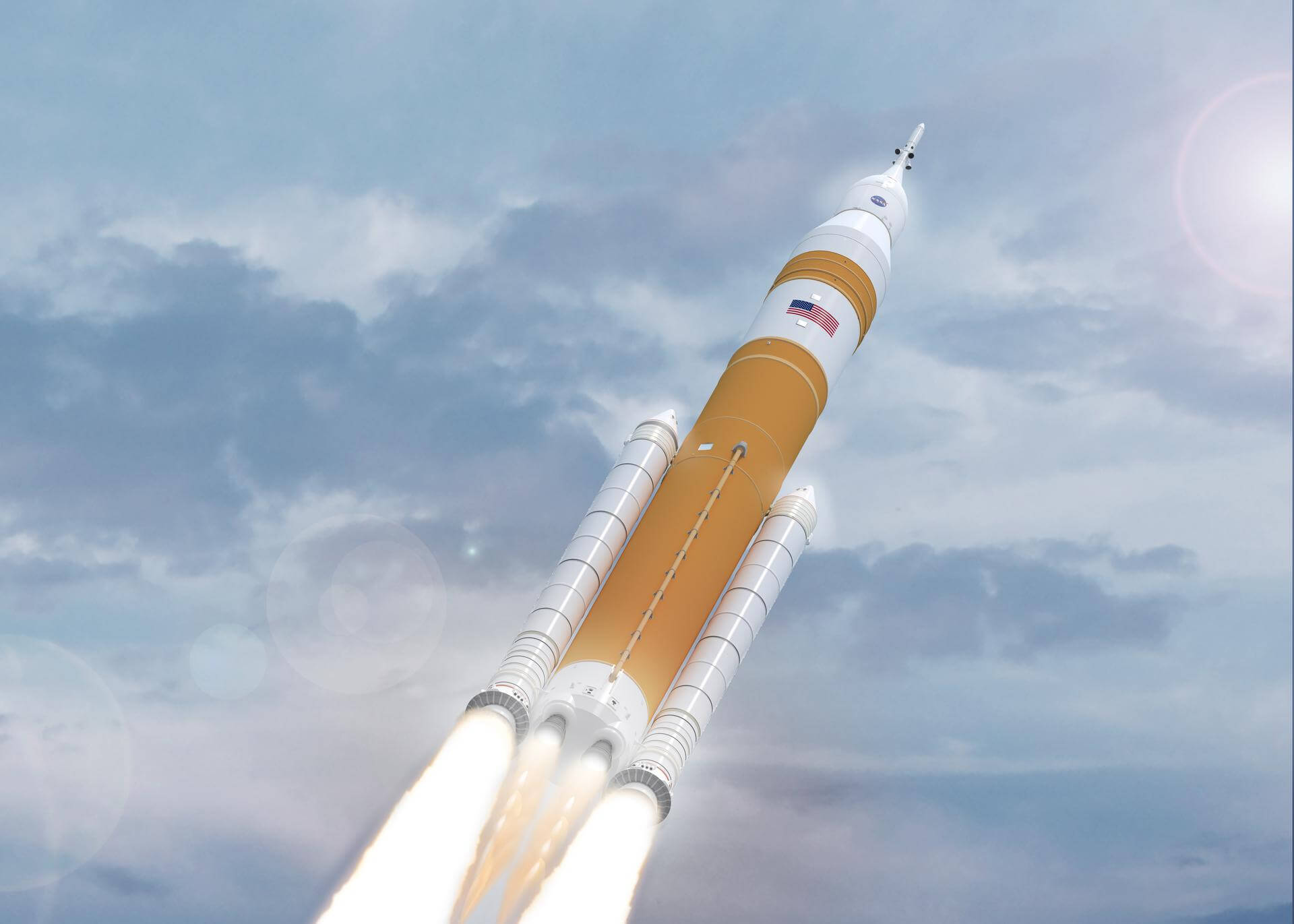
The Space Launch System (SLS) is an American Space Shuttle-derived heavy expendable launch vehicle. It is part of NASA’s deep space exploration plans including as the main launch vehicle of the Artemis program. SLS follows the cancellation of the Constellation program, and is to replace the retired…
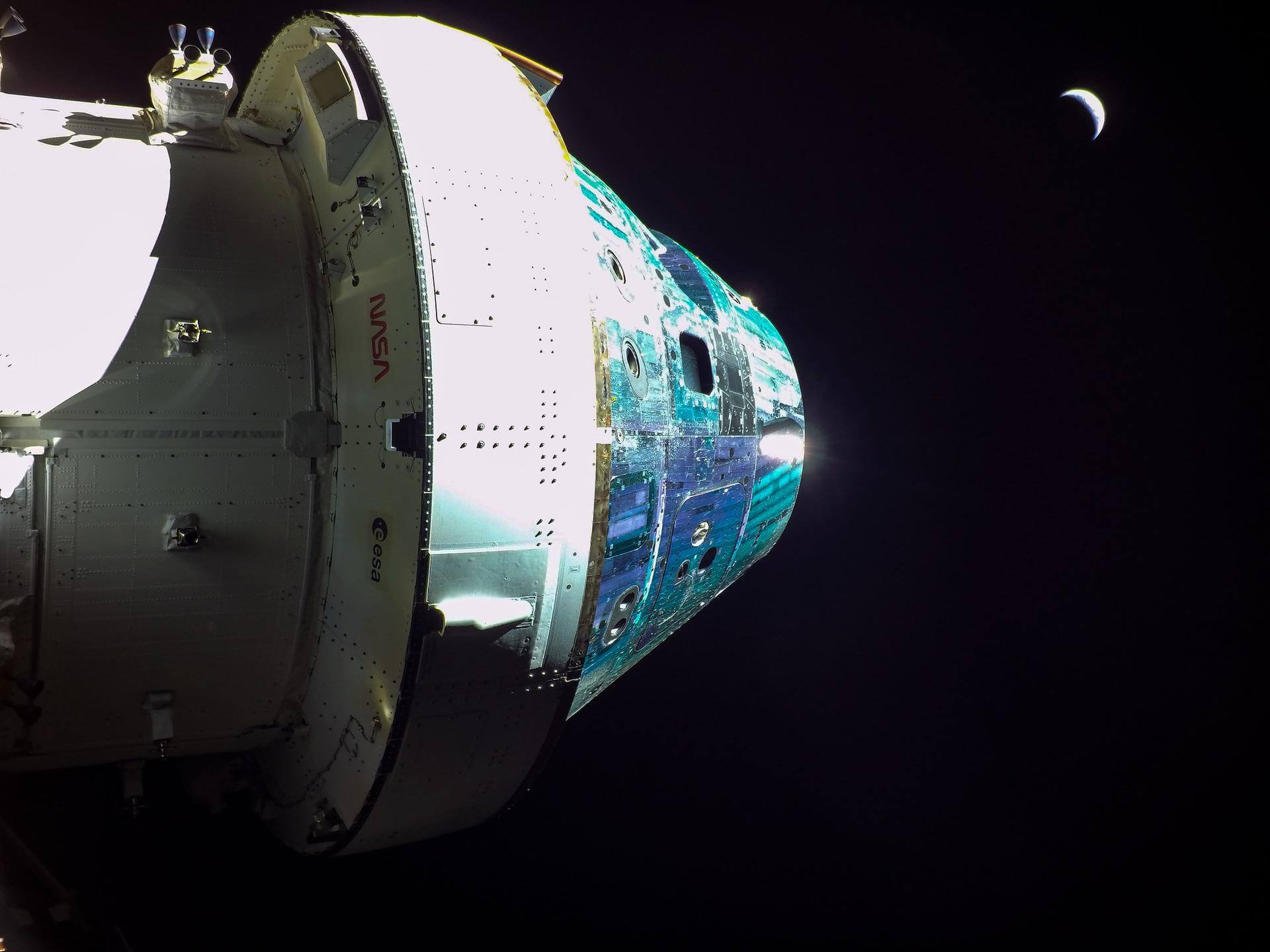
The Orion Multi-Purpose Crew Vehicle (Orion MPCV) is an American spacecraft intended to carry a crew of four astronauts to destinations at or beyond low Earth orbit (LEO). Currently under development by NASA for launch on the Space Launch System, Orion is intended to facilitate human exploration of asteroids and of Mars, as well as to provide a means of delivering or retrieving crew or supplies from the ISS if needed.
Capability
Lunar Missions.
Details
The Orion MPCV takes basic design elements from the Apollo Command Module that took astronauts to the moon, but its technology and capability are more advanced. It is designed to support long-duration deep space missions, with up to 21 days active crew time plus 6 months quiescent. During the quiescent period crew life support would be provided by another module such as a Deep Space Habitat. The…
Flight Life
21.1 days
Manufacturer: National Aeronautics and Space Administration (NASA)
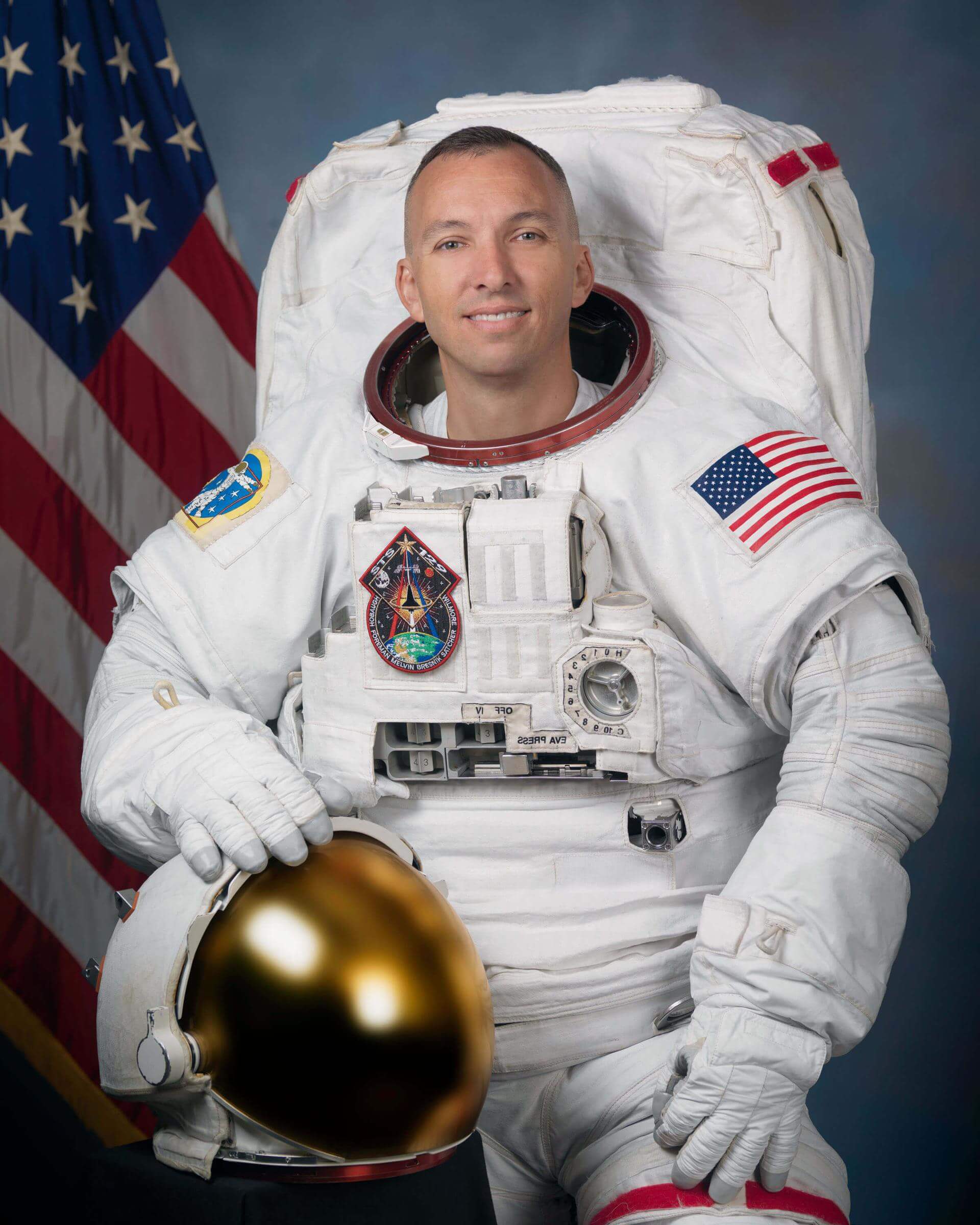
NASA • American • Age: 59 • Time in space: 149 Days, 12 Hours, 12 Minutes • EVA time: 1 Day, 8 Hours
Born: Sep 11, 1967 • First Flight: Nov 16, 2009 • Last Flight: Jul 28, 2017
Randolph James “Komrade” Bresnik is an officer in the United States Marine Corps and a NASA astronaut. A Marine Aviator by trade, Bresnik was selected as a member of NASA Astronaut Group 19 in May 2004.[5] First launched to space on STS-129.
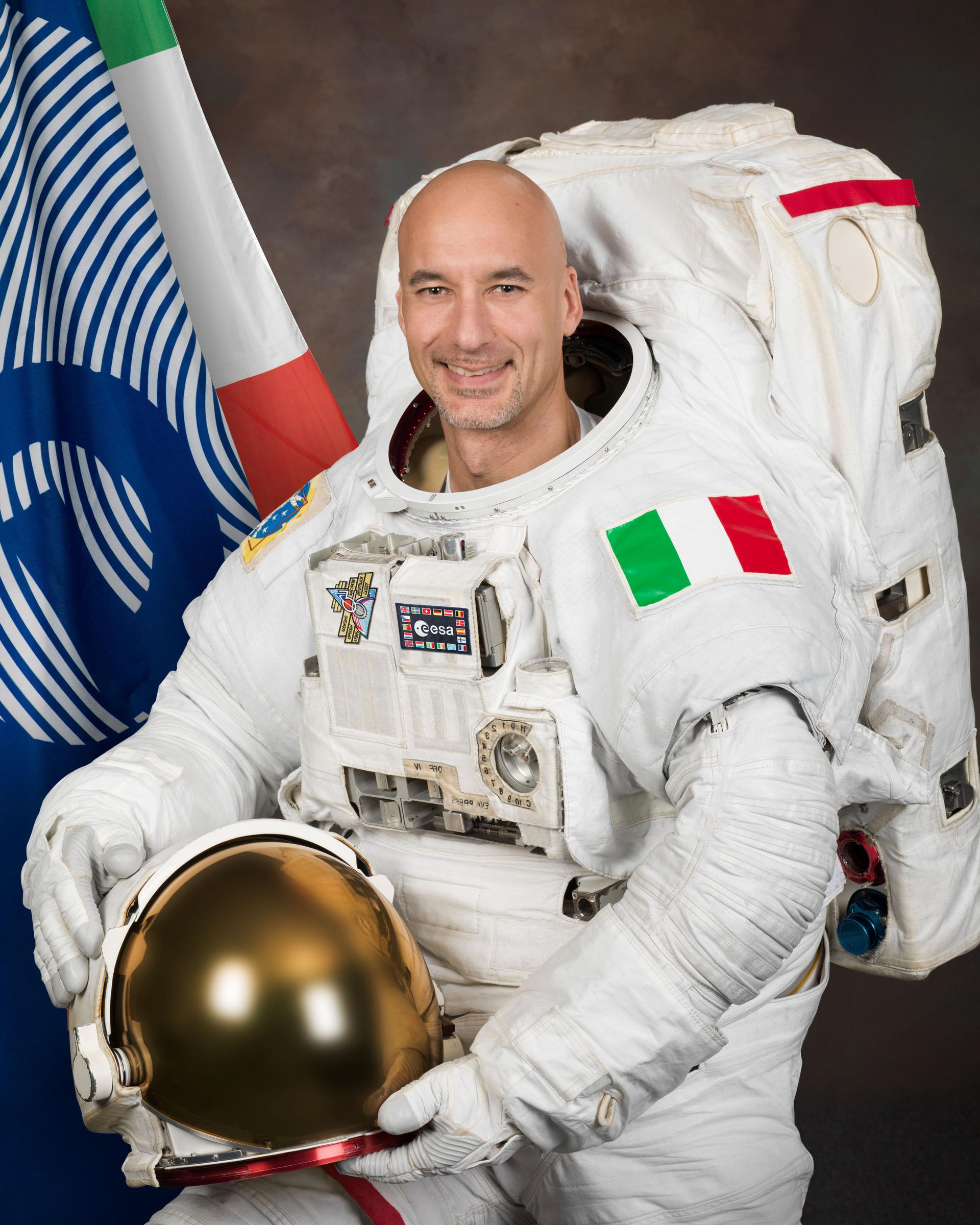
ESA • Italian • Age: 50 • Time in space: 366 Days, 23 Hours, 2 Minutes • EVA time: 1 Day, 9 Hours, 9 Minutes
Born: Sep 27, 1976 • First Flight: May 28, 2013 • Last Flight: Jul 20, 2019
Luca Parmitano (born 27 September 1976 in Paternò, Sicily) is an Italian engineer and astronaut in the European Astronaut Corps for the European Space Agency (ESA). The astronauts work on missions at the International Space Station. He was selected as an ESA astronaut in May 2009.
Artemis IV is planned to be the first human lunar landing mission since the Apollo Program.
Agencies Involved
• National Aeronautics and Space Administration (Government)
Program: Artemis
The Artemis program is a US government-funded crewed spaceflight program that has the goal of landing “the first woman and the next man” on the Moon, specifically at the lunar south pole region.
The Space Launch System (SLS) is an American Space Shuttle-derived heavy expendable launch vehicle. It is part of NASA’s deep space exploration plans including as the main launch vehicle of the Artemis program. SLS follows the cancellation of the Constellation program, and is to replace the retired…
Artemis V is planned to be the second human lunar landing mission since the Apollo Program.
Agencies Involved
• National Aeronautics and Space Administration (Government)
Program: Artemis
The Artemis program is a US government-funded crewed spaceflight program that has the goal of landing “the first woman and the next man” on the Moon, specifically at the lunar south pole region.
The Space Launch System (SLS) is an American Space Shuttle-derived heavy expendable launch vehicle. It is part of NASA’s deep space exploration plans including as the main launch vehicle of the Artemis program. SLS follows the cancellation of the Constellation program, and is to replace the retired…
Robo Chris is a collection of API calls, filters, and searches, bolted together with magic and love. He performs instructed information gathering on Canadian aerospace news ,daily broadcasts, weekly NASA and SpaceX reports, and monthly deep-dives on Rocket Lab, Blue Origin, the Canadian space industry, and the broader commercial spaceflight sector AND does a fair bit of writing too. Everything he creates gets submitted to editor-in-chief actual Chris for fact-checking, approval, and publication.





Leave a Reply