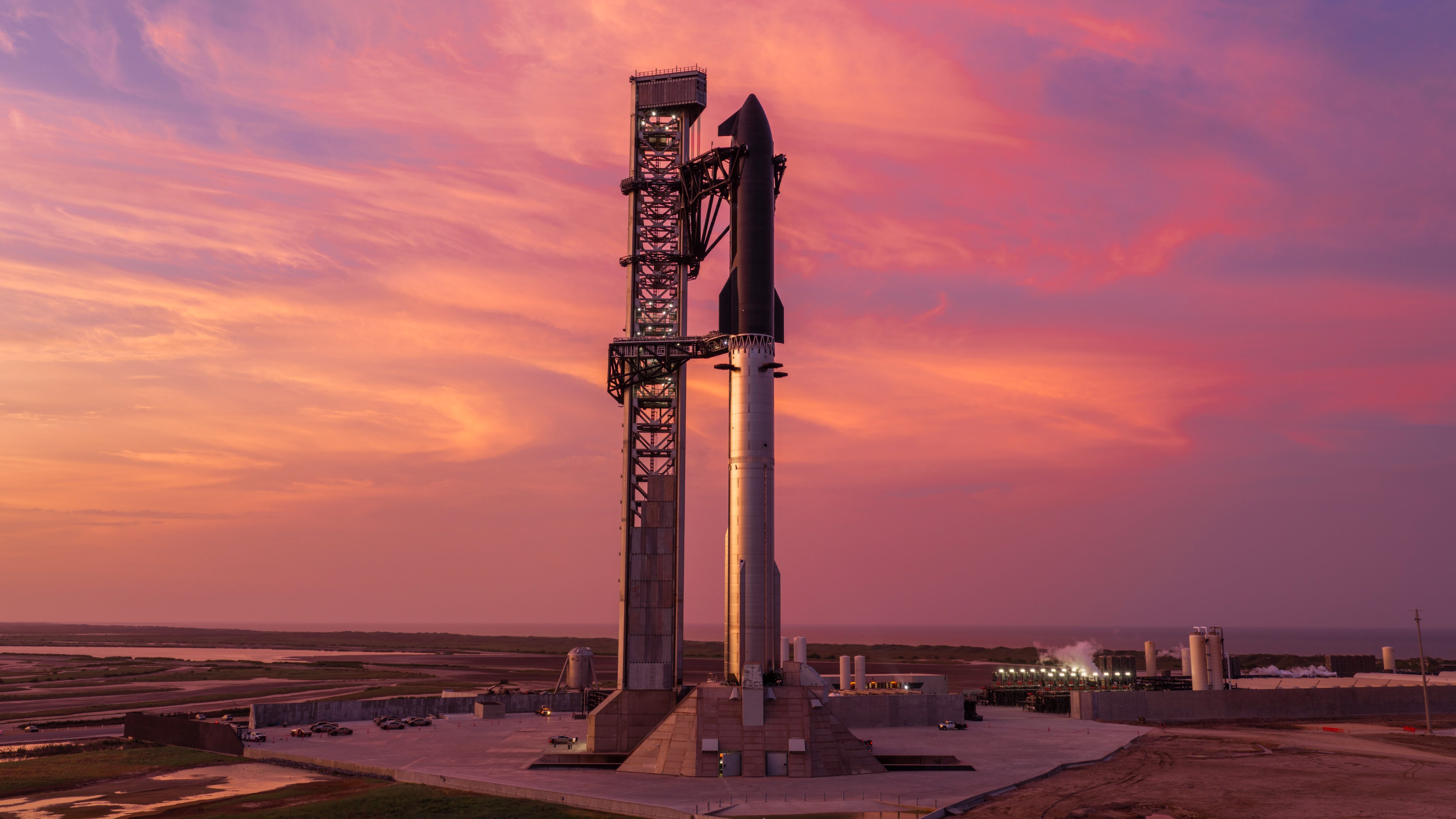
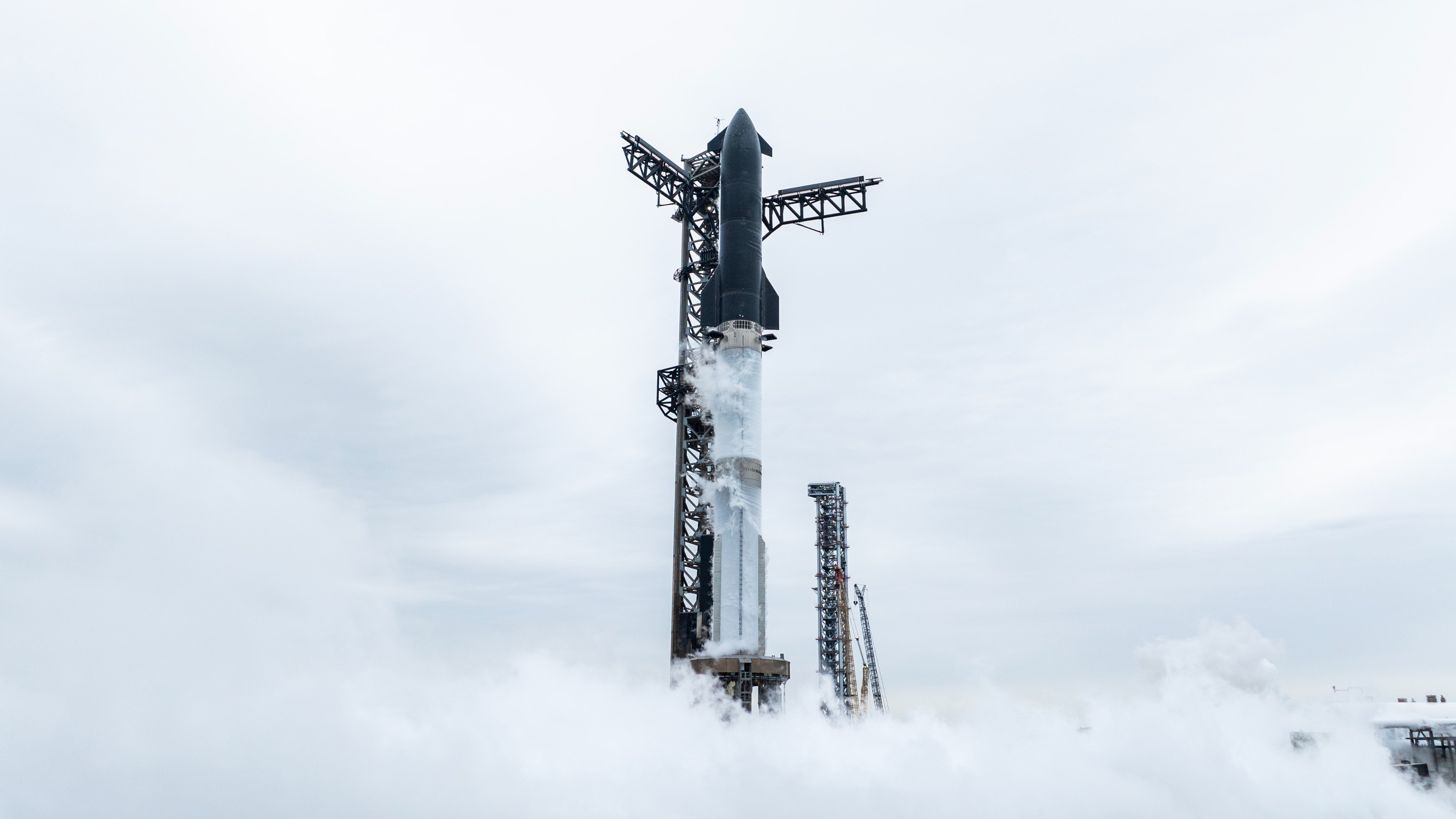
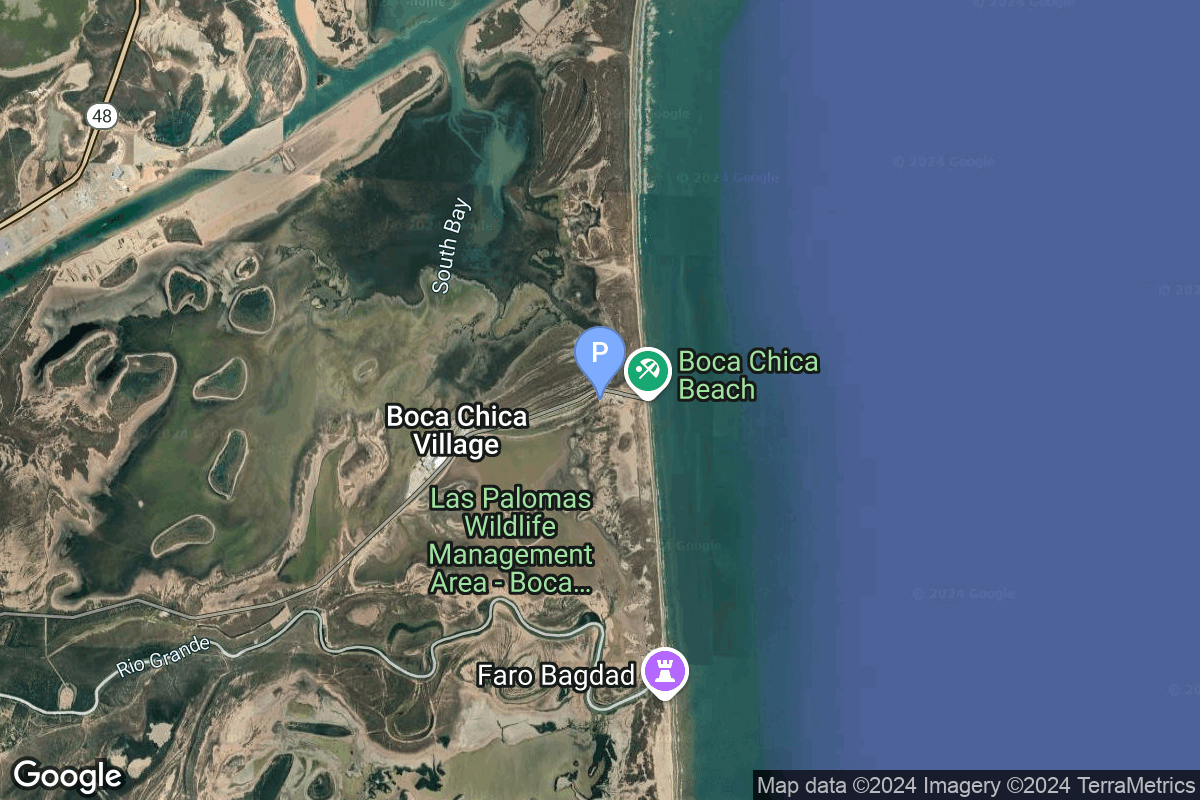
SpaceX conducted a successful full-duration static fire test of Super Heavy Booster 22 on Sunday at Starbase, ahead of the 15th test flight of the Starship vehicle. The test ignited all 33 engines ahead of a targeted November launch attempt.
Flight 15 will attempt something SpaceX has not yet achieved: catching both the Super Heavy first stage and the Starship upper stage during the same flight. SpaceX founder Elon Musk said he believes success is “more likely than not” for these attempts, though the company remains hardware rich if there are failures. Both catches would occur at the company’s South Texas launch site.
Company president and chief operating officer Gwynne Shotwell said SpaceX expects the license for Flight 15 to include return to launch site and tower catch for both stages, following “significant constructive engagement with the FAA.” The vehicle must return over land, including northern Mexico, presenting regulatory hurdles the company has worked to address.
Looking beyond Flight 15, SpaceX is targeting a weekly flight cadence for Starship during the first half of 2027, with twice-weekly launches in the second half of the year. Musk said the rate will “increase dramatically as we solve rapid and complete reusability,” with the goal of landing and relaunching the rocket “just like an airplane.”
The company also plans to refly a Starship upper stage “early” next year and complete a long-delayed Starship-to-Starship refueling demonstration in early 2027. That test is critical for NASA’s Artemis Program, which requires orbital propellant transfer to enable lunar missions.
The number of Starship launches needed to support a Moon landing remains under debate. During a NASA Aerospace Safety Advisory Panel meeting, panel member Charlie Precourt estimated “around 22 flights” would be required. Musk responded on social media that the estimate was “That’s way too high,” saying the “Actual number will be more like 6 to 8.”
Roberts Road Campus Seeks Major Expansion
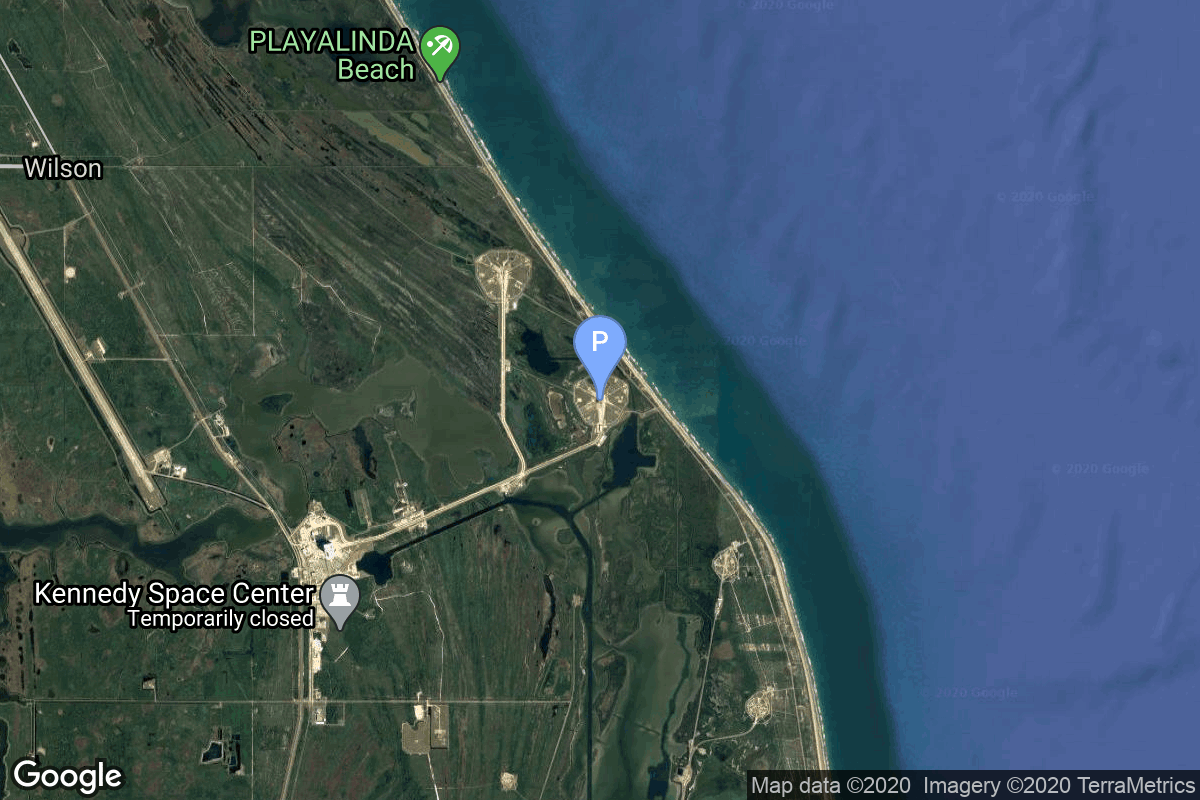
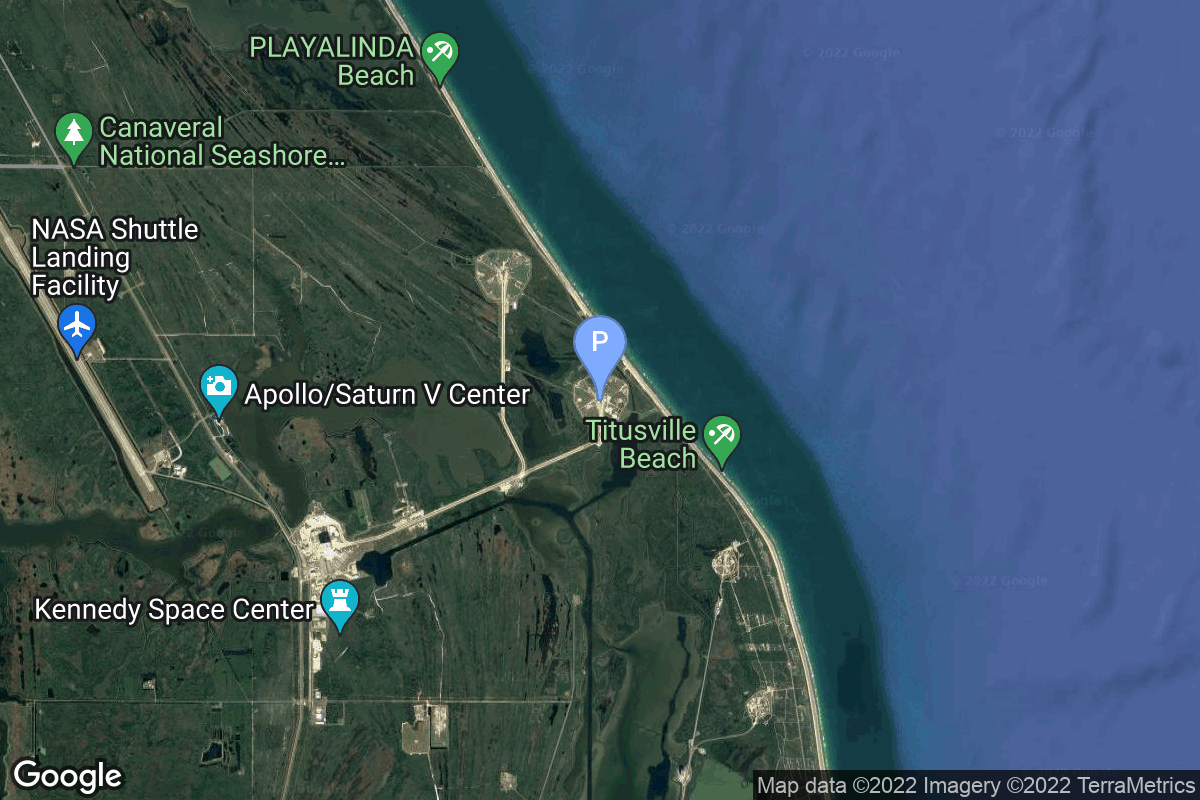
As SpaceX prepares Flight 16 for launch from Kennedy Space Center’s LC-39A, the company has applied to expand its Roberts Road campus from 167 acres to nearly 400 acres. The expansion, submitted jointly with NASA, is currently in Draft Programmatic Environmental Assessment and will undergo a public comment period before final approvals.
The expanded campus would support Starship operations in Florida with likely additional Gigabays, a Payload Processing Facility, Project Ignition ship static-fire stands, and a new road connecting Roberts Road to NASA Parkway. SpaceX has already built one Gigabay at the site and installed at least one transfer-aisle bridge crane, but has not yet begun construction of a Starfactory in Florida.
Flight 16 will use Booster 23 and Ship 43, both of which have completed cryo-proof testing. Ship 43 was observed returning from Massey’s, while Ship 42 is taking its place for Flight 15 preparations.
Crew-13 Delivers Canadian Astronaut to Station
Canadian Space Agency astronaut Joshua Kutryk arrived at the International Space Station on October 1 as part of the Crew-13 mission, joining Expedition 75 alongside NASA astronauts Jessica Watkins and Luke Delaney, and Roscosmos cosmonaut Sergey Teteryatnikov. The Crew Dragon capsule Grace launched from Space Launch Complex 40 at 11:10 AM EDT and docked to the Harmony forward port at 23:05 UTC, completing the fastest arrival to the station for a U.S. spacecraft at seven hours and 55 minutes.
Crew-12 departed on October 7, with Dragon Freedom splashing down in the Pacific Ocean on October 8 at 8:34 AM PDT. Crew-13 will spend approximately six months aboard the station before undocking in March 2027.
SpaceX also delivered cargo to the station this month, launching CRS-35 on October 13. The Cargo Dragon vehicle docked to the Harmony zenith port on October 15, carrying 1,671 kg of pressurized and 1,195 kg of unpressurized cargo, plus a new ISS Roll Out Solar Array. Astronauts Anil Menon and Joshua Kutryk will install the iROSA during spacewalks planned for October 29 and November 5.
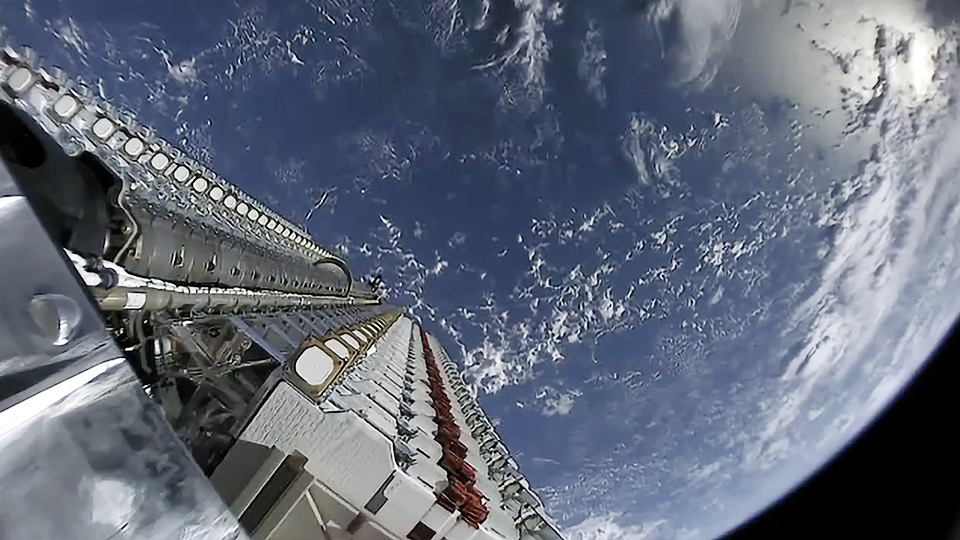
Falcon 9 launched 27 Starlink satellites from California last week. One launch on Thursday was scrubbed due to unfavorable weather, with the next opportunity successfully flying on Friday.
SpaceX Posts Q3 Revenue
SpaceX reported Q3 2026 revenue of $14.6 billion, up 161% year-over-year, including its first revenue-generating Starship mission. The mission delivered 26 Starlink V3 satellites to the broadband constellation, representing approximately 10 times the downlink capacity added by a Falcon 9 Starlink launch. The company also reported $6.7 billion in incremental Super Intelligence solutions and infrastructure revenue, driven by cloud services agreements, the acquisition of Cursor, and growing SI models and software applications.
Starlink V3, which recently began launching, will have approximately 100 times more bandwidth than the current V2 system, according to Musk. The Starlink Mobile service connected more than 11 million people across Ukraine, Kazakhstan, and Bangladesh in the past year across VEON Group’s three key markets.
SpaceX also declined three military launch contracts offered by the U.S. Space Force, according to reports.
Provider: SpaceX Date: December 31, 2026 Time: 12:00 AM UTC Vehicle: Starship
15th test flight of the two-stage Starship launch vehicle and 4th flight of Starship V3.
Griffin Mission One
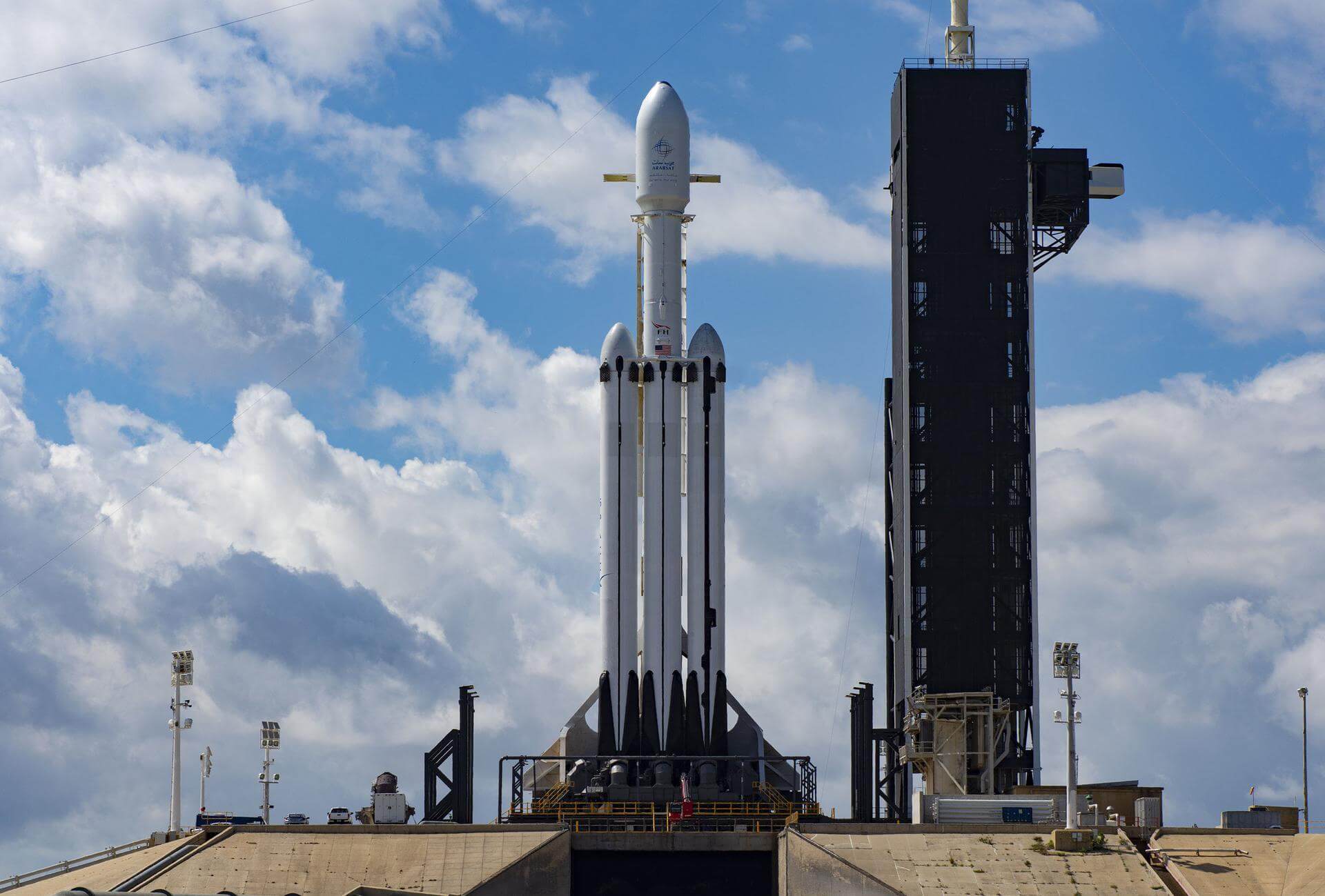
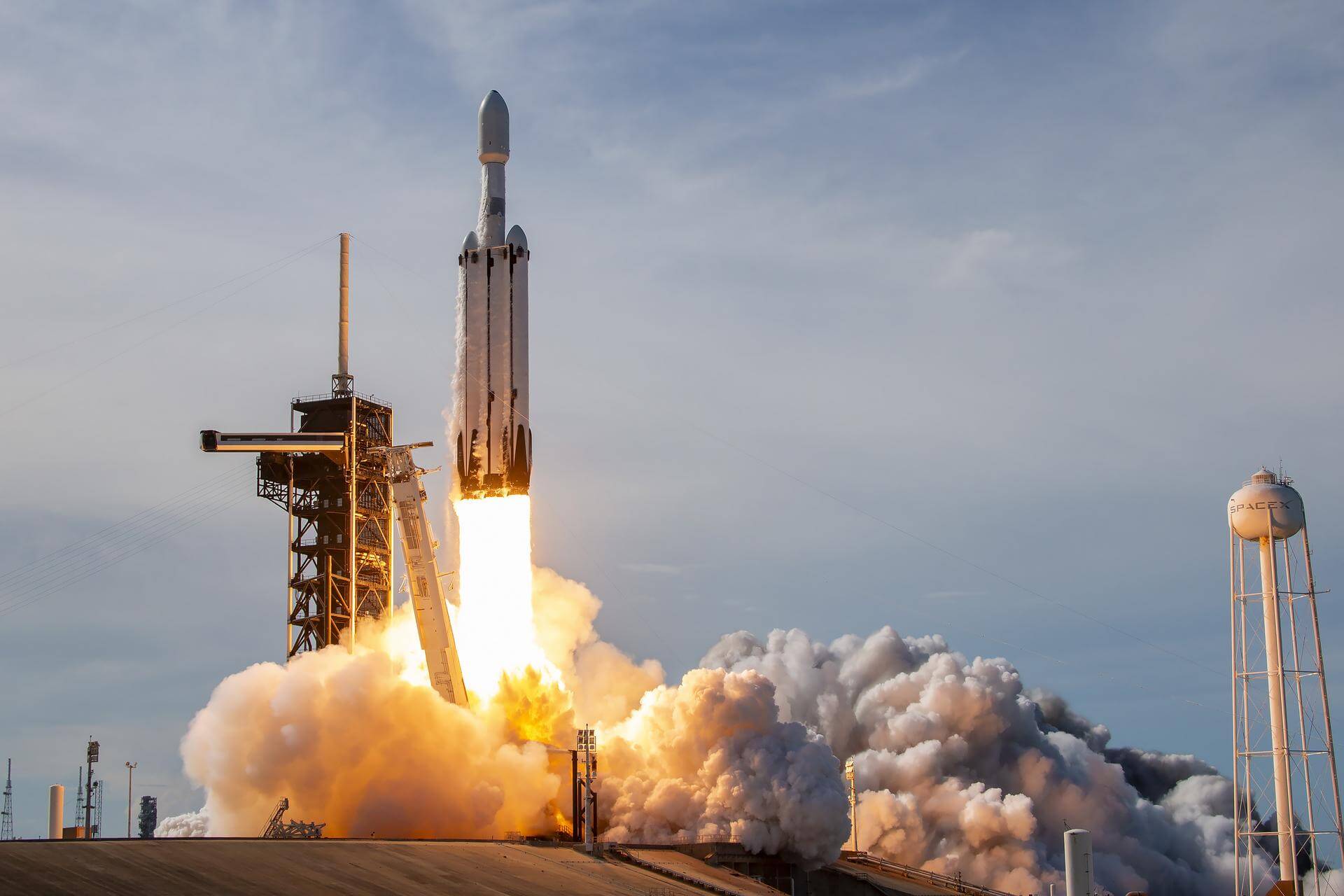
Provider: SpaceX Date: December 31, 2026 Time: 12:00 AM UTC Vehicle: Falcon Heavy
Demonstration flight of the Astrobotic Griffin lander and its engines, initially contracted for the NASA VIPER (Volatiles Investigating Polar Exploration Rover) mission. The vacated payload spot will now host the FLIP (FLEX Lunar Innovation Platform) lunar rover from Astrolab.
USSF-75
Provider: SpaceX Date: December 31, 2026 Time: 12:00 AM UTC Vehicle: Falcon Heavy
Classified payload for the United States Space Force
SpaceX HLS LEO Demo
Provider: SpaceX Date: June 30, 2027 Time: 12:00 AM UTC Vehicle: Starship
The Starship HLS pathfinder spacecraft in support of NASA’s Artemis III mission in Low Earth Orbit will be a Version 3 vehicle equipped with a docking mechanism, but with no crew cabin or environmental control systems on board. This Starship HLS will launch after the Artemis III Orion has launched into LEO aboard SLS, and has completed its demonstrations with Blue Origin’s Blue Moon lander. Once docked, Orion and Starship will spend about a day connected for checkouts and testing.
NROL-86
Provider: SpaceX Date: June 30, 2027 Time: 12:00 AM UTC Vehicle: Falcon Heavy
Classified payload for the US National Reconnaissance Office
Flight 15 ×
Mission Details
TypeTest Flight
OrbitLow Earth Orbit
TargetEarth
15th test flight of the two-stage Starship launch vehicle and 4th flight of Starship V3.
Agencies Involved
• SpaceX (Commercial)
Program: SpaceX Starship
The SpaceX Starship is a fully reusable super heavy-lift launch vehicle under development by SpaceX since 2012, as a self-funded private spaceflight project. The second stage of the Starship — is designed as a long-duration cargo and passenger-carrying spacecraft. It is expected to be initially used without any booster stage at all, as part of an extensive development program to prove out launch-and-landing and iterate on a variety of design details, particularly with respect to the vehicle’s atmospheric reentry.
The second launch and landing pad of the full version of the combined SpaceX Starship and Superheavy booster. To be first used for launch in 2025 with version 3 of Starship and the Superheavy…
Demonstration flight of the Astrobotic Griffin lander and its engines, initially contracted for the NASA VIPER (Volatiles Investigating Polar Exploration Rover) mission. The vacated payload spot will now host the FLIP (FLEX Lunar Innovation Platform) lunar rover from Astrolab.
Agencies Involved
• Voyager Technologies (Private)
Launch Provider: SpaceX
Commercial • United States of America • Founded 2002
The Falcon Heavy is a variant of the Falcon 9 full thrust launch vehicle and consists of a standard Falcon 9 rocket core, with two additional boosters derived from the Falcon 9 first stage.
The Falcon Heavy is a variant of the Falcon 9 full thrust launch vehicle and consists of a standard Falcon 9 rocket core, with two additional boosters derived from the Falcon 9 first stage.
The Starship HLS pathfinder spacecraft in support of NASA’s Artemis III mission in Low Earth Orbit will be a Version 3 vehicle equipped with a docking mechanism, but with no crew cabin or environmental control systems on board. This Starship HLS will launch after the Artemis III Orion has launched into LEO aboard SLS, and has completed its demonstrations with Blue Origin’s Blue Moon lander. Once docked, Orion and Starship will spend about a day connected for checkouts and testing.
Agencies Involved
• SpaceX (Commercial)
Launch Provider: SpaceX
Commercial • United States of America • Founded 2002
The Falcon Heavy is a variant of the Falcon 9 full thrust launch vehicle and consists of a standard Falcon 9 rocket core, with two additional boosters derived from the Falcon 9 first stage.
Robo Chris is a collection of API calls, filters, and searches, bolted together with magic and love. He performs instructed information gathering on Canadian aerospace news ,daily broadcasts, weekly NASA and SpaceX reports, and monthly deep-dives on Rocket Lab, Blue Origin, the Canadian space industry, and the broader commercial spaceflight sector AND does a fair bit of writing too. Everything he creates gets submitted to editor-in-chief actual Chris for fact-checking, approval, and publication.








Leave a Reply