Starship Flight 14 Poised for First Orbital Insertion
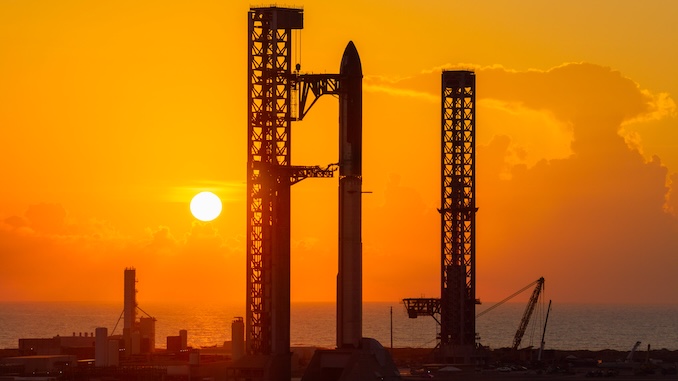
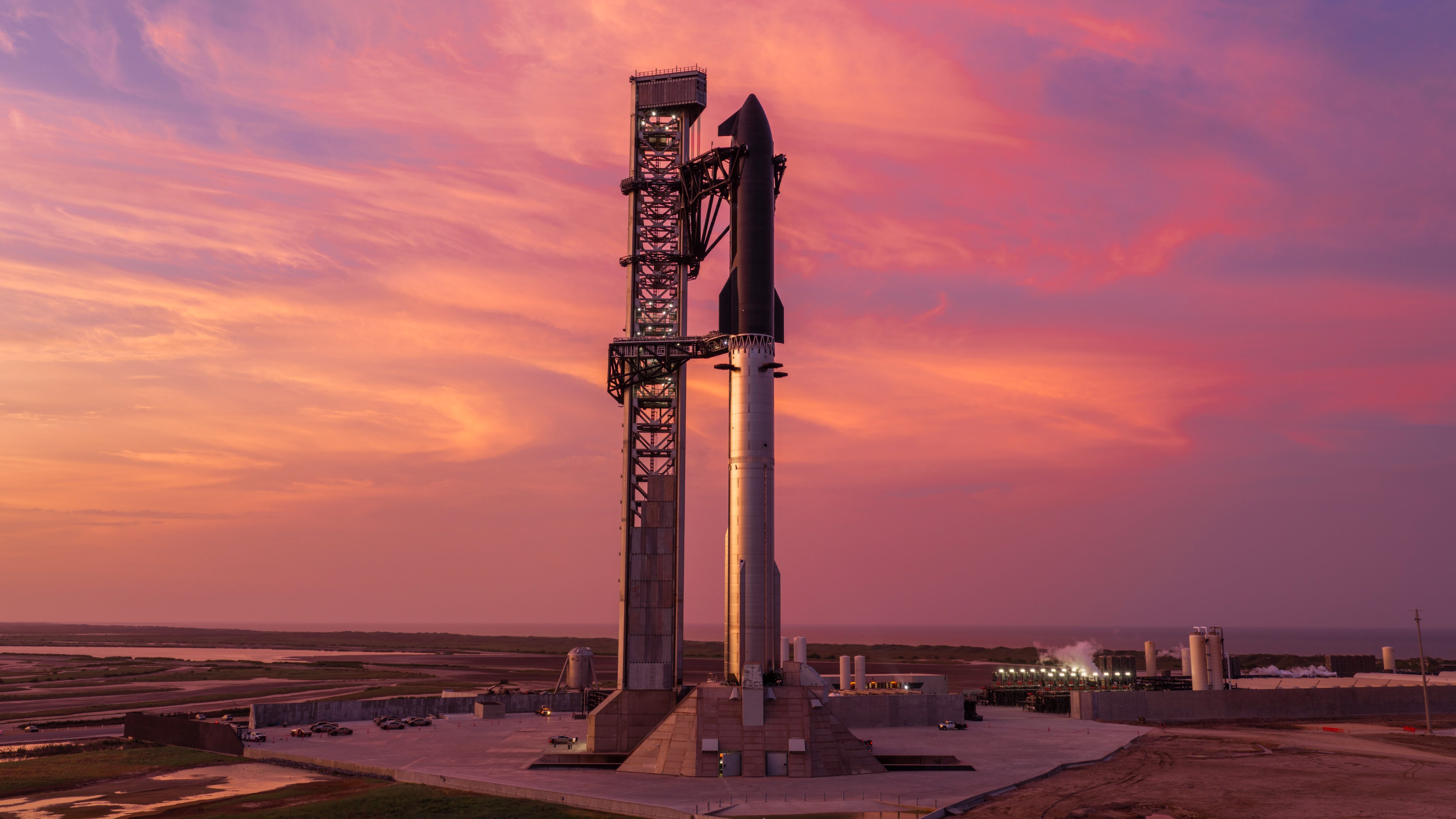
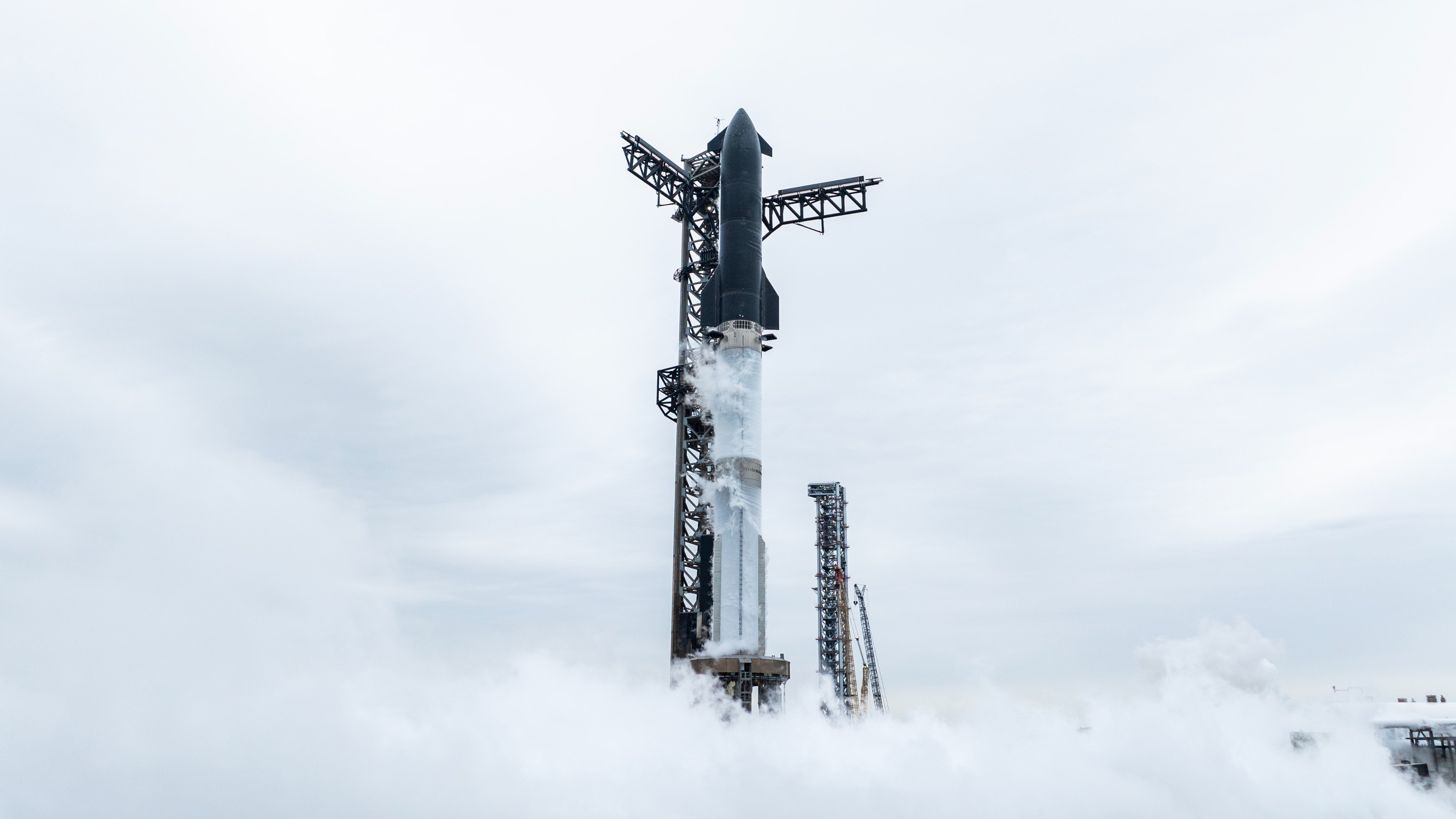
SpaceX’s Starship-Super Heavy rocket is poised to attempt its first orbital mission today, Monday, September 28, marking the 14th launch of the integrated vehicle and the first time the 124-meter-tall (407 ft) rocket will try to reach orbit rather than a suborbital trajectory. Each of the previous 13 flights were intentionally flown on sub-orbital trajectories.
The mission, dubbed Starlink 31-1, uses Super Heavy booster B21 and Starship upper stage S41. The 75-minute launch window opened at 7:15 a.m. CDT, with SpaceX later targeting a 7:46 a.m. CT launch. Teams began loading the vehicle with approximately 12 million pounds of liquid oxygen and liquid methane after receiving a go for propellant load.
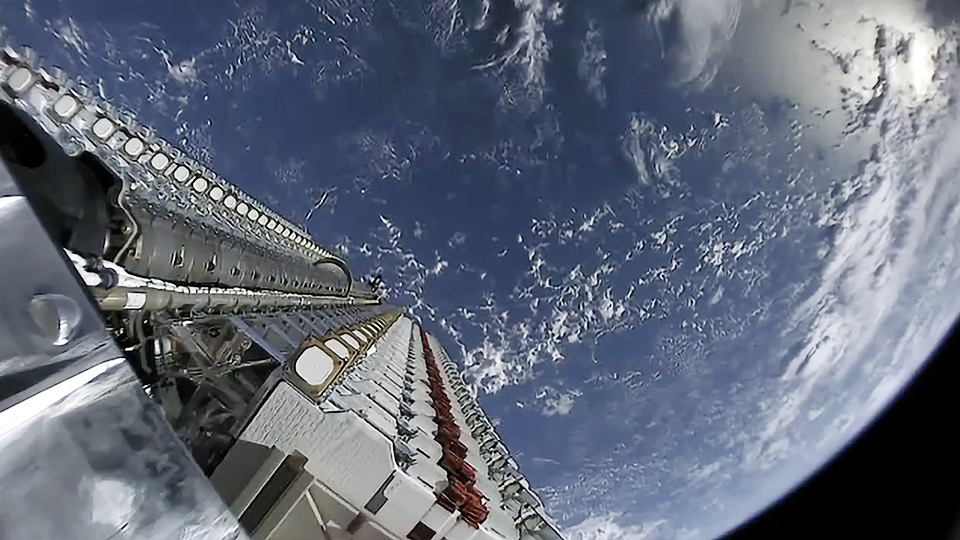
If all goes well, about 25 minutes after liftoff, Ship 41 will reignite one of its three sea-level Raptor engines to raise and circularize the trajectory into orbit. The vehicle carries 26 Starlink Version 3 satellites — three of which include extra imaging capabilities to capture video of the Ship’s heat shield tiles. SpaceX previously said it could fly up to 60 Starlink V3 satellites on future missions but chose 26 for this first attempt.
With this being the first orbital flight of Starship, SpaceX plans to send the vehicle around the Earth about six times before a planned splashdown off the western coast of South America. The 11-second deorbit burn is scheduled nearly nine hours after liftoff, with a controlled splashdown roughly an hour later. SpaceX will not attempt to recover either stage on this flight but said it may attempt to catch the next Starship upper stage during Flight 15.
The FAA issued the launch license on Saturday, September 26, clearing the way after a regulatory pause. A near-term manifest points to a three-flight stretch from Flights 14 through 16: this orbital attempt from Starbase, a possible return to catching, and Starship’s expected East Coast debut. Elon Musk commented that Starship is “2 to 3 years away from hourly flights” and floated the idea of reducing the vehicle to two grid fins with S-turns for the third axis of control.
WDR, Restack, and Pad 2 Preparations
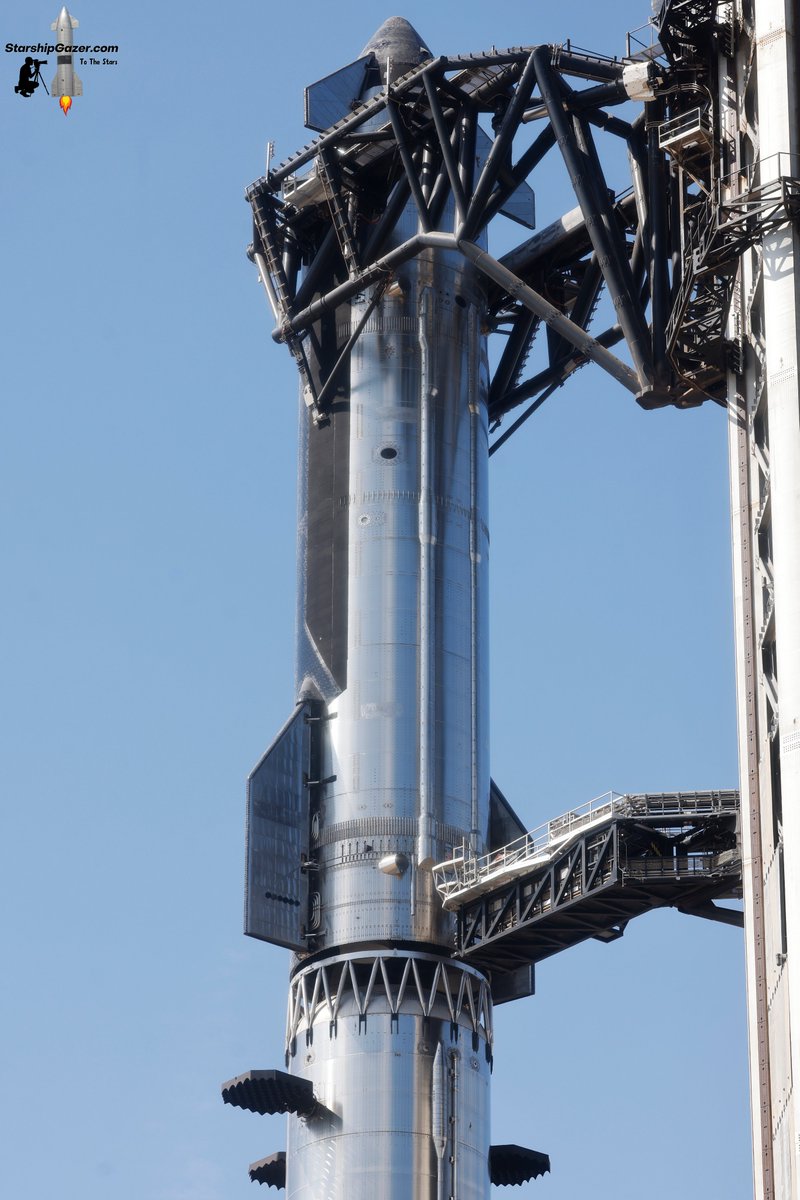
Booster 21 and Ship 41 completed a full wet dress rehearsal earlier this week at Pad 2 at Starbase. Both stages were fully loaded with propellant, there were no apparent holds at the optional T-minus 60-second hold point, and the count continued to just before engine ignition before the launch mount’s top-deck water deluge started and shut down a few seconds later.
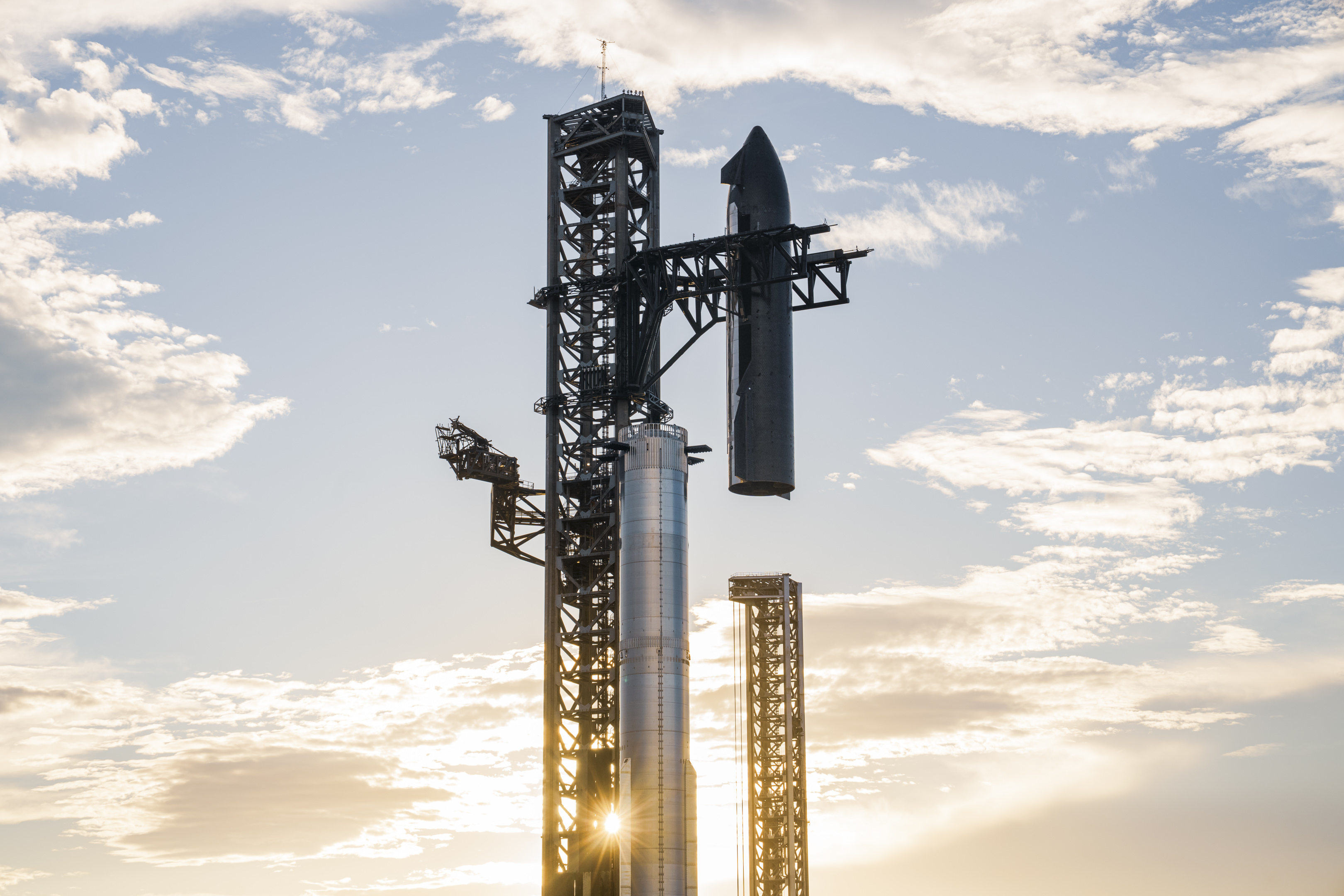
Ship 41, already loaded with its 26 Starlink V3 satellites, was destacked from Booster 21 on Friday but remained at the launch site. SpaceX said teams were using the regulatory pause to get an extra rehearsal in. Ship 41 was then re-stacked atop Booster 21 on Saturday ahead of the Monday launch attempt.
At the Starbase launch control room, a large drone was deployed to clean the windows for clear views on launch day.
USSF-385 Launches from California, Crew-13 Readied
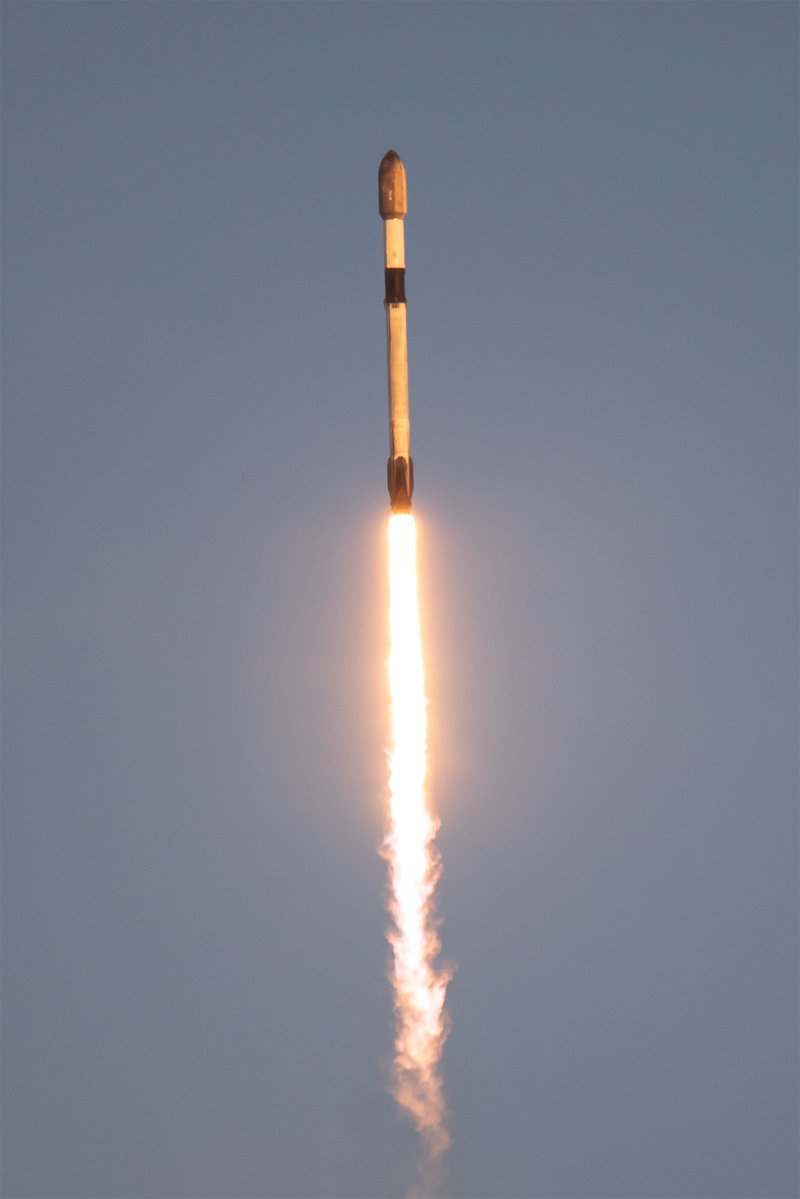
A Falcon 9 launched the USSF-385 mission to orbit on Saturday, September 26, from pad 4E at Vandenberg Space Force Base in California. The first stage landed on the Of Course I Still Love You droneship.
SpaceX also completed a static fire test of a Falcon 9 at pad 40 in Florida in preparation for the Crew-13 mission to the International Space Station, targeting Thursday, October 1. The Falcon 9 and Dragon stack was moved to the pad on Sunday, September 27.
Crew-13 Returns, Crew-14 Assignments Set for 2027
NASA’s SpaceX Crew-13 crew landed at Kennedy Space Center on Friday, September 26, completing their rotation mission to the International Space Station.
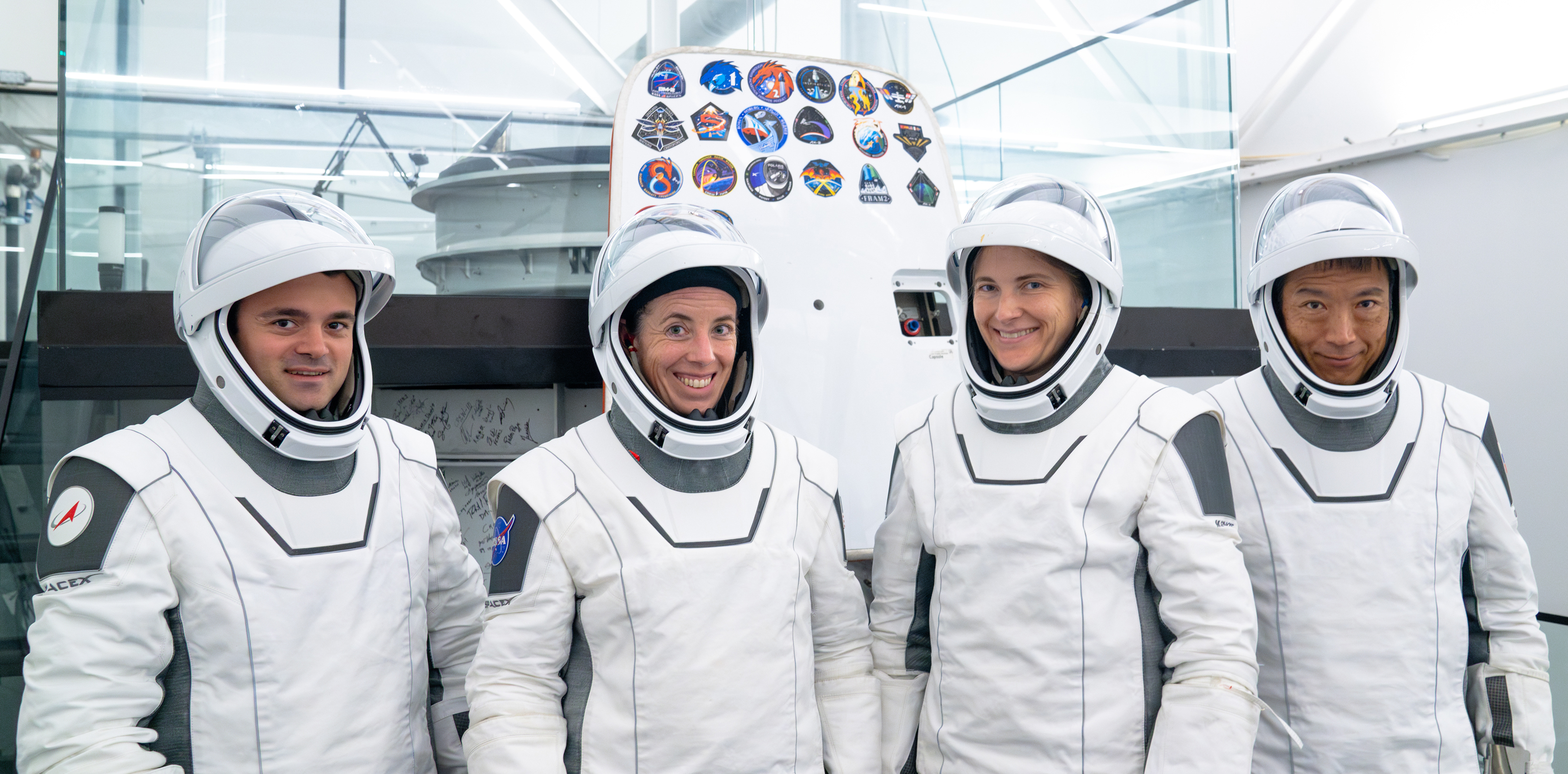
NASA also announced the Crew-14 assignments for the next station rotation. NASA astronauts Kayla Barron and Chris Birch will serve as spacecraft commander and pilot, with JAXA astronaut Makoto Suwa and Roscosmos cosmonaut Arutyun Kiviryan as mission specialists. The four-person crew from three agencies will launch no earlier than spring 2027 and join Expedition 75/76. Barron, who earned a master’s degree from the University of Cambridge, previously flew on Crew-3 in 2021 and completed two spacewalks.
In Starlink news, the service expanded its mobile direct-to-device reach this week. Starlink Mobile launched in Uganda with Airtel, becoming the second African country to offer the service after the Democratic Republic of Congo. Starlink also partnered with Mobicom to bring mobile connectivity to herders, miners, and remote communities across Mongolia.
Provider: SpaceX Date: September 28, 2026 Time: 12:48 PM UTC Vehicle: Starship
14th test flight of the two-stage Starship launch vehicle. 3rd flight of Starship V3 and the first Starship flight to deploy satellites (a group of Starlink satellites known as Starlink Group 31-1) into stable Low Earth Orbit.
The ship is expected to fly at an altitude approximately 275 km above Earth and complete approximately 6 orbits around the planet for nearly 10 hours, with splashdown targeted in the Pacific Ocean west of Chile.
The booster’s primary test objective on Flight 14 will be executing a successful launch, ascent, stage separation, boostback burn, and landing burn at an offshore landing point in the Gulf.
Starship will deliver 26 Starlink V3 satellites to orbit for the first time, which aim to greatly expand the network’s capacity and user speeds. Each Starlink V3 satellite will add 1 Tbps of capacity to the constellation.
NROL-97
Provider: SpaceX Date: October 2, 2026 Time: 3:53 AM UTC Vehicle: Falcon Heavy
Classified payload for the US National Reconnaissance Office.
Griffin Mission One
Provider: SpaceX Date: November 30, 2026 Time: 12:00 AM UTC Vehicle: Falcon Heavy
Demonstration flight of the Astrobotic Griffin lander and its engines, initially contracted for the cancelled NASA VIPER (Volatiles Investigating Polar Exploration Rover) mission. The vacated payload spot will now host the FLIP (FLEX Lunar Innovation Platform) lunar rover from Astrolab.
Flight 15
Provider: SpaceX Date: December 31, 2026 Time: 12:00 AM UTC Vehicle: Starship
15th test flight of the two-stage Starship launch vehicle and 4th flight of Starship V3.
USSF-75
Provider: SpaceX Date: December 31, 2026 Time: 12:00 AM UTC Vehicle: Falcon Heavy
Classified payload for the United States Space Force
Starlink Group 31-1 (Starship Flight 14) ×
Mission Details
TypeCommunications
OrbitLow Earth Orbit
TargetEarth
14th test flight of the two-stage Starship launch vehicle. 3rd flight of Starship V3 and the first Starship flight to deploy satellites (a group of Starlink satellites known as Starlink Group 31-1) into stable Low Earth Orbit.
The ship is expected to fly at an altitude approximately 275 km above Earth and complete approximately 6 orbits around the planet for nearly 10 hours, with splashdown targeted in the Pacific Ocean west of Chile.
The booster’s primary test objective on Flight 14 will be executing a successful launch, ascent, stage separation, boostback burn, and landing burn at an offshore landing point in the Gulf.
Starship will deliver 26 Starlink V3 satellites to orbit for the first time, which aim to greatly expand the network’s capacity and user speeds. Each Starlink V3 satellite will add 1 Tbps of capacity to the constellation.
The SpaceX Starship is a fully reusable super heavy-lift launch vehicle under development by SpaceX since 2012, as a self-funded private spaceflight project. The second stage of the Starship — is designed as a long-duration cargo and passenger-carrying spacecraft. It is expected to be initially used without any booster stage at all, as part of an extensive development program to prove out launch-and-landing and iterate on a variety of design details, particularly with respect to the vehicle’s atmospheric reentry.
The second launch and landing pad of the full version of the combined SpaceX Starship and Superheavy booster. To be first used for launch in 2025 with version 3 of Starship and the Superheavy…
The Super Heavy Booster 21 will attempt to perform a soft splashdown in the Gulf of Mexico.
Spacecraft: Ship 41
Third V3 Starship to fly with various enhancements, to be used on the 14th Starship test flight, the first Starship flight to deploy satellites into stable Low Earth Orbit.
Specifications
SerialS41
TypeReuseable Upper Stage
StatusActive
DestinationLow Earth Orbit
Height52.1 m
Diameter9 m
Maiden Flight2026-05-22
History
The third-generation Starship upper stage will be introduced on flight 12.
Capability
More than 100 tons to Earth orbit
Details
Third-generation second stage of the two-stage Starship super heavy-lift launch vehicle.
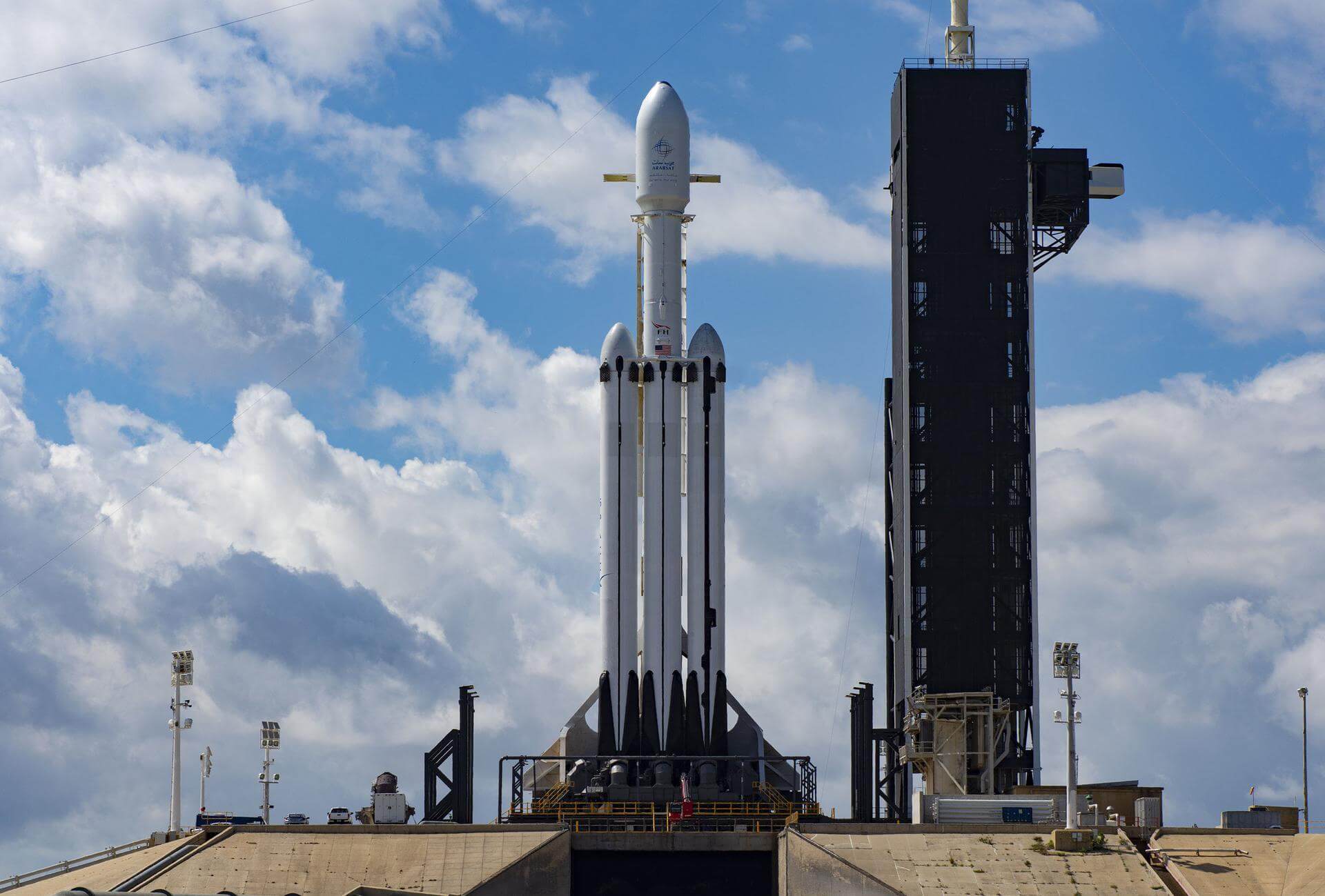
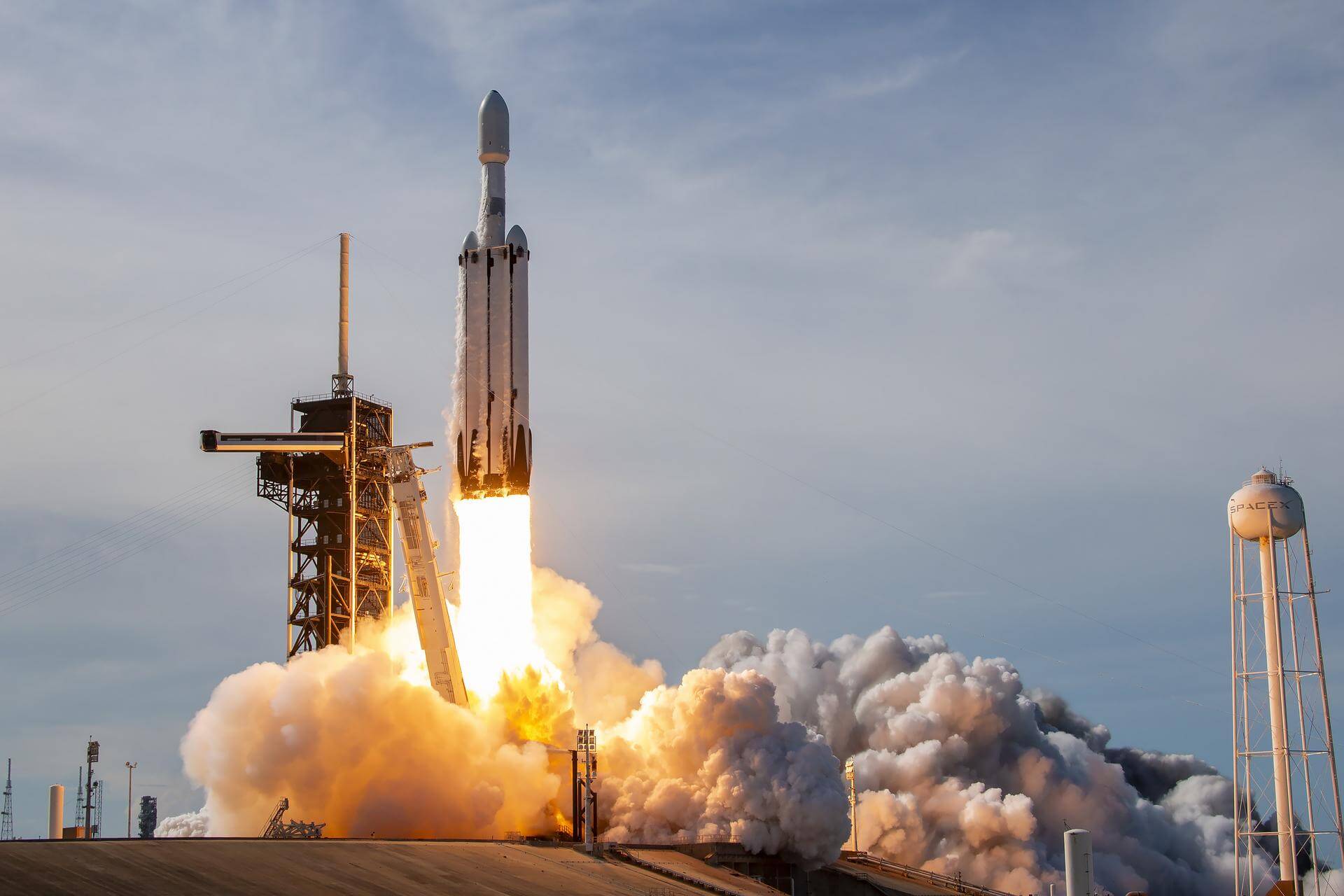
The Falcon Heavy is a variant of the Falcon 9 full thrust launch vehicle and consists of a standard Falcon 9 rocket core, with two additional boosters derived from the Falcon 9 first stage.
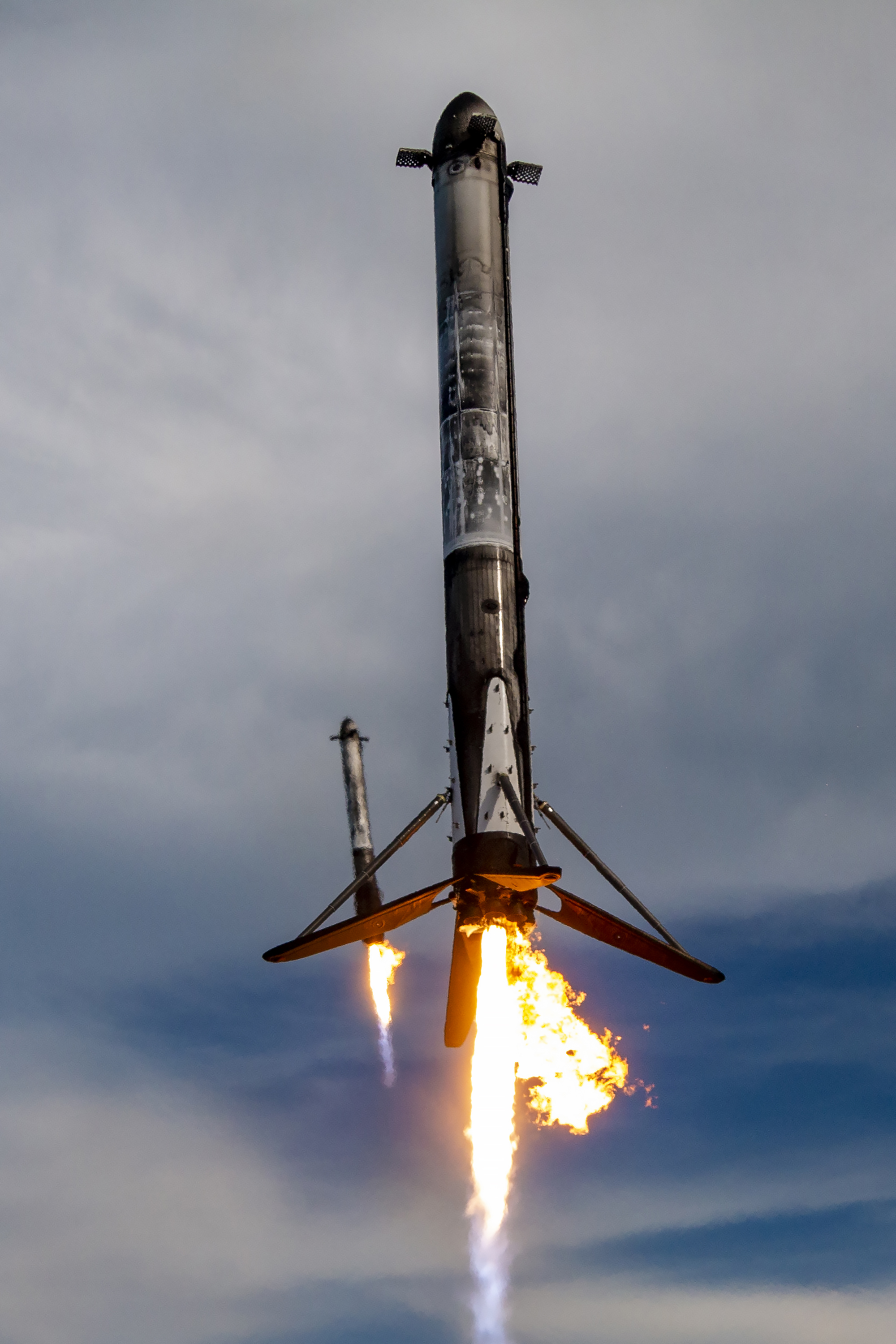
The Falcon Heavy side booster B1072 will land back at the launch site at Landing Zone 2 after its 4th flight.
Core: B1106
Flight #1
LandingNo attempt
Landing MethodEXP
Landing SiteAtlantic Ocean
The Falcon Heavy center core B1106 will be expended.
Strap-On Booster: B1104
Flight #2
Total Flights1
Landings1
First LaunchAug 30, 2026
Previous FlightAug 30, 2026
Turnaround32 Days, 16 Hours
LandingPlanned
Landing MethodRTLS
Landing SiteLanding Zone 1
The Falcon Heavy side booster B1104 will land back at the launch site at Landing Zone 1 after its 2nd flight.
Griffin Mission One ×
Mission Details
TypeLunar Exploration
OrbitLunar Orbit
TargetEarth
Demonstration flight of the Astrobotic Griffin lander and its engines, initially contracted for the cancelled NASA VIPER (Volatiles Investigating Polar Exploration Rover) mission. The vacated payload spot will now host the FLIP (FLEX Lunar Innovation Platform) lunar rover from Astrolab.
Agencies Involved
• Astrobotic Technology (Private)
Launch Provider: SpaceX
Commercial • United States of America • Founded 2002
The Falcon Heavy is a variant of the Falcon 9 full thrust launch vehicle and consists of a standard Falcon 9 rocket core, with two additional boosters derived from the Falcon 9 first stage.
The SpaceX Starship is a fully reusable super heavy-lift launch vehicle under development by SpaceX since 2012, as a self-funded private spaceflight project. The second stage of the Starship — is designed as a long-duration cargo and passenger-carrying spacecraft. It is expected to be initially used without any booster stage at all, as part of an extensive development program to prove out launch-and-landing and iterate on a variety of design details, particularly with respect to the vehicle’s atmospheric reentry.
The second launch and landing pad of the full version of the combined SpaceX Starship and Superheavy booster. To be first used for launch in 2025 with version 3 of Starship and the Superheavy…
The Falcon Heavy is a variant of the Falcon 9 full thrust launch vehicle and consists of a standard Falcon 9 rocket core, with two additional boosters derived from the Falcon 9 first stage.
Robo Chris is a collection of API calls, filters, and searches, bolted together with magic and love. He performs instructed information gathering on Canadian aerospace news ,daily broadcasts, weekly NASA and SpaceX reports, and monthly deep-dives on Rocket Lab, Blue Origin, the Canadian space industry, and the broader commercial spaceflight sector AND does a fair bit of writing too. Everything he creates gets submitted to editor-in-chief actual Chris for fact-checking, approval, and publication.