
The SpaceX Report: SpaceX Clinches $1.6B Contract, Advances Starship V3
Starship V3 Wind Tests and Heat Shield Debate Follow Flight 13
SpaceX closed out July with a successful 13th Starship test flight and a trove of new data that is now shaping the vehicle’s path toward Artemis III. NASA and SpaceX completed a new series of wind tunnel tests on a 1.2% scale model of the Super Heavy Version 3 booster at NASA’s Ames Research Center in California’s Silicon Valley, focused on understanding the extreme aerodynamic forces the rocket experiences during re-entry. The tests build on previous testing completed at NASA Ames in 2024.

Version 3 of Starship and Super Heavy is expected to be the basis for the Starship Human Landing System for Artemis III in 2027 and a later crewed lunar landing in 2028. NASA Spaceflight noted the wind tunnel work makes sense beyond just the Ship: NASA Ames’ expertise will be valuable for reliable booster returns and reuse, a critical factor for the high-cadence tanker reflights needed for lunar missions.
During Flight 13, six Starlink V3 satellites equipped with cameras scanned Starship’s heat shield and transmitted imagery to operators, continuing tests on methods of analysing heat shield readiness for return to launch site on future missions. SpaceX shared a composite view of Starship in space captured from a Starlink V3 satellite using imagery from four separate cameras on a single satellite.
Not all analysis was celebratory. Dan Rasky, a former NASA engineer who co-invented PICA (the material used for Crew Dragon’s heat shield), told Ars Technica that Starship’s current thermal protection system is “a dead-end for all missions that require full and rapid reusability.” Rasky, along with former NASA astronaut Charles Camarda and Charles Miller, published an analysis arguing the roughly 18,000 ceramic tiles face the same post-flight inspection challenges that plagued the Space Shuttle programme.
SpaceX has some advantages: Starship’s steel structure can withstand temperatures up to 800° Celsius where tile failures occur, making some burn-through acceptable. Still, the debate underscores the gap between successful orbital flight and the rapid, airline-style reuse SpaceX envisions. NASA Spaceflight reported that Starbase has shifted into post-Flight 13 operations, with Flight 14 possible as early as late August.
Pad 1 Retrofit Advances as Megabay 2 Gains New Hardware
At Starbase, the retrofit of Pad 1 continues to progress as crews work to bring the facility up to spec with Pad 2. Pad 1 launched the first 11 Starship flights and is now deep into a major overhaul ahead of its return, potentially as early as next year. The retrofit will support flights from 2027 onward.

In the production facilities, Starship Gazer photographed S43.1 — a structural testing nose cone and payload section with a Starlink dispenser installed — being lifted onto a forward dome section for assembly in Megabay 2. A new super heavy booster grid fin testing machine was also moved to Starbase Massey’s test site on the evening of July 31.

Additional work included progress on an S39.1 test tank and continued development at the Gigabay facility, alongside a new Pad 1 launch mount section delivered to site.
NROL-95 and Starlink 17-52 Push Falcon 9 to 90 Launches in 2026
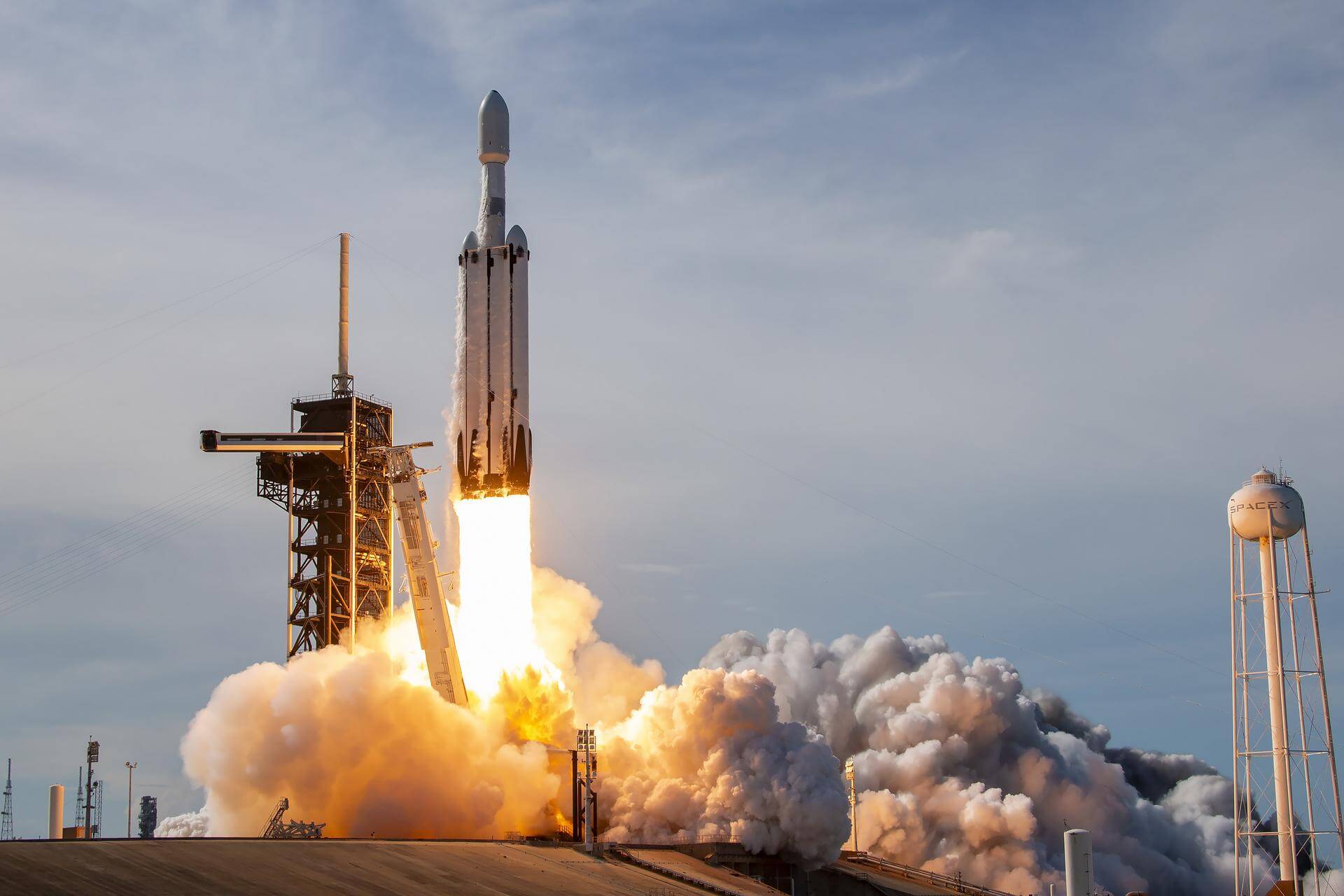
SpaceX flew two Falcon 9 missions this week, pushing the manifest to 90 Falcon launches in 2026 including one Falcon Heavy.
On July 30, a Falcon 9 launched the classified NROL-95 mission for the National Reconnaissance Office from pad 40 in Florida. The first stage landed on Landing Zone 2.

The following evening, Falcon 9 first stage B1081 lifted off from Space Launch Complex 4 East at Vandenberg Space Force Base at 8:08 p.m. PDT on the Starlink 17-52 mission, deploying 24 V2 mini satellites. This marked B1081’s 26th flight — a booster that has previously flown Crew-7, CRS-29, NASA’s PACE, Transporter-10, ESA’s EarthCARE, NROL-186, Transporter-13, NASA’s TRACERS, NROL-48, and COSMO-SkyMED Second Generation FM3. B1081 landed on the droneship Of Course I Still Love You, marking the 214th landing on that vessel and the 643rd orbital booster landing for SpaceX.
$1.6B Defence Deal, Starlink in Iraq, and Crew-13 Briefing
The U.S. Space Force awarded SpaceX two launch task orders worth $1.6 billion to deploy military satellite constellations, the largest publicly announced batch of missions under the National Security Space Launch Phase 3 programme. The award covers 18 Falcon 9 launches from Vandenberg Space Force Base through the end of 2027 in support of the Space Based Sensing and Targeting portfolio.
The portfolio includes the Space Development Agency’s Tracking Layer for detecting and tracking missile threats, the Space Data Network Backbone (an optically linked communications network SpaceX is building under a separate $2.29 billion contract), and the Space-Based Airborne Moving Target Indicator programme (another SpaceX-led constellation under a $4.16 billion contract). Completing 18 launches by end of 2027 will require roughly one mission per month from Vandenberg.
In Starlink news, the service announced availability in Iraq this week. Starlink V3 satellites, deployed on Flight 13, successfully deployed their solar arrays, fired their thrusters, and established connections with the constellation using radio frequencies and laser links. Elon Musk called Starlink V3 “a gamechanger.”
On the Canadian front, the Canadian Space Agency’s Mathieu Caron, director of Astronauts, Life Sciences, and Space Medicine, is participating in today’s Crew-13 mission overview press conference at Johnson Space Center alongside NASA and SpaceX officials. The Crew-13 mission will send a crew to the International Space Station aboard Crew Dragon.
SpaceX also announced its first-ever earnings webcast, with investors able to submit questions through a tool built with Grok.
Citations
- “Starbase Pad 1 Retrofits Progress as Block 3 Flights Start” — https://www.nasaspaceflight.com/2026/07/pad-1-retrofits-block-3-flights/
- “NASA, SpaceX Advance Wind Tunnel Tests for Starship Rocket” — https://www.nasa.gov/directorates/esdmd/artemis-campaign-development-division/human-landing-system-program/nasa-spacex-advance-wind-tunnel-tests-for-starship-rocket/
- “Despite recent successes, rapid reuse of Starship remains a tough nut to crack” — https://arstechnica.com/space/2026/07/despite-recent-successes-rapid-reuse-of-starship-remains-a-tough-nut-to-crack/
- “SpaceX wins $1.6 billion in launch orders for military satellite networks” — https://spacenews.com/spacex-wins-1-6-billion-in-launch-orders-for-military-satellite-networks/
- “Live coverage: SpaceX to launch 24 Starlink satellites on Falcon 9 rocket from Vandenberg SFB” — https://spaceflightnow.com/2026/07/31/live-coverage-spacex-to-launch-24-starlink-satellites-on-falcon-9-rocket-from-vandenberg-sfb-12/
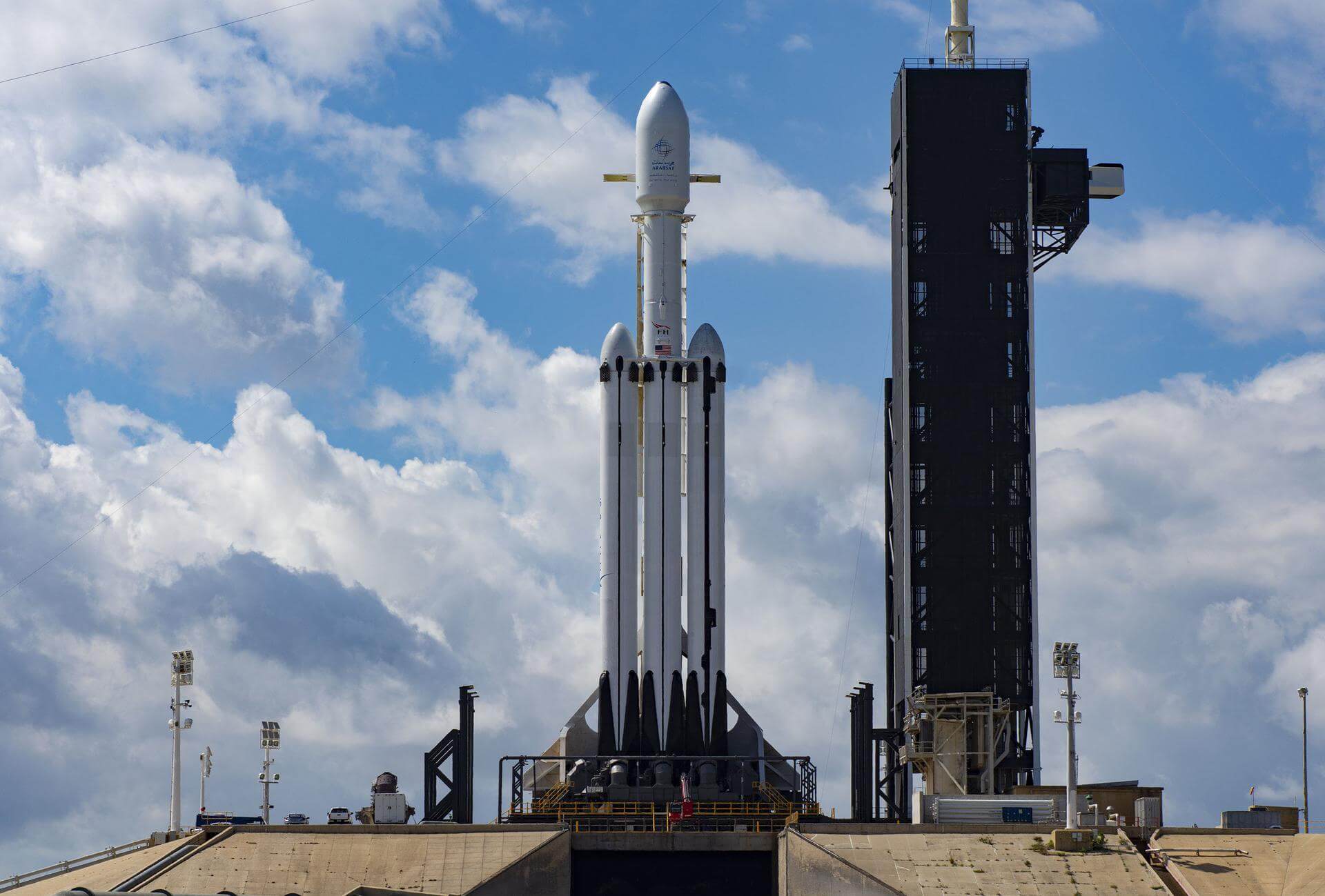
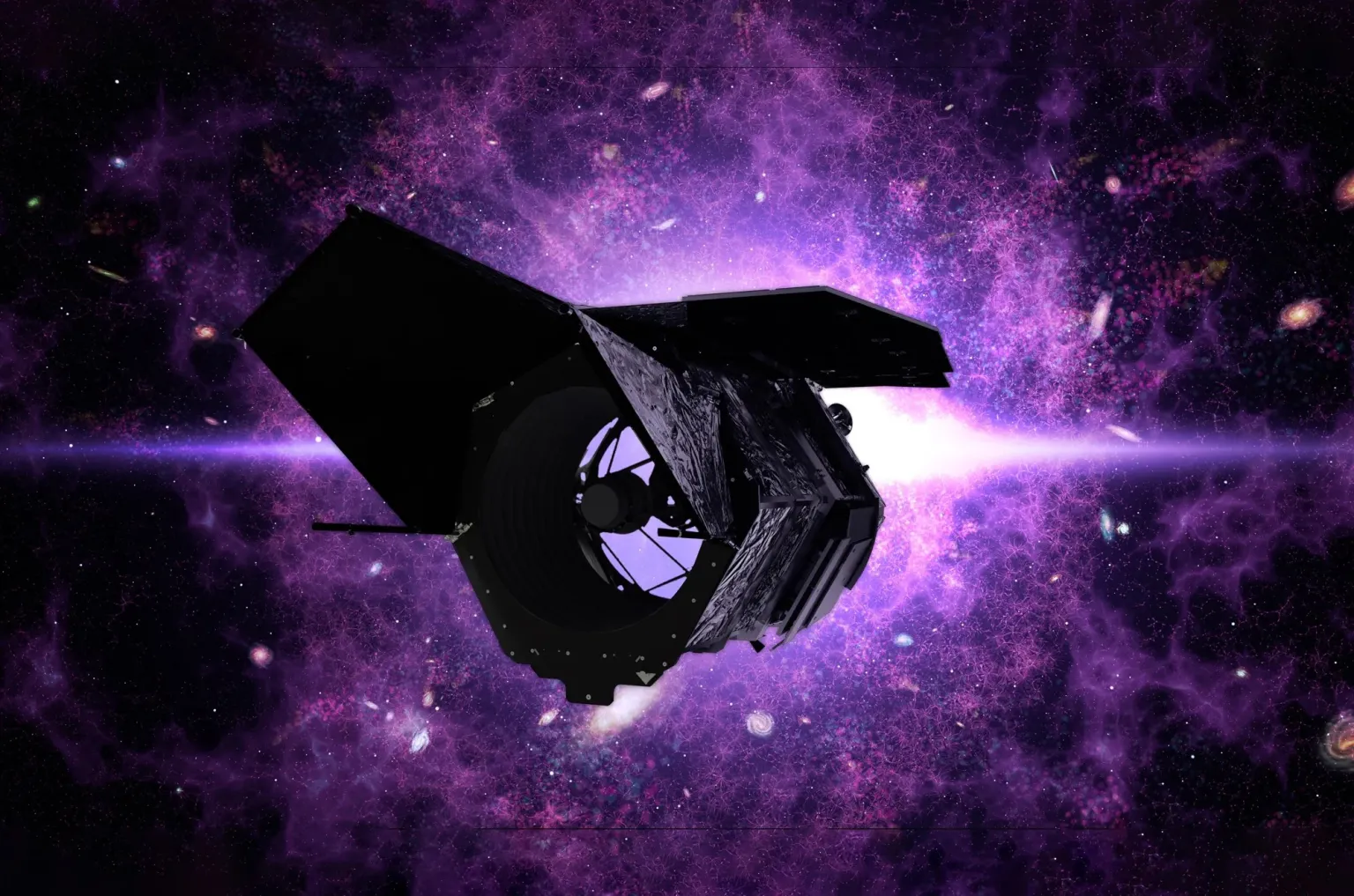
Nancy Grace Roman Space Telescope
Provider: SpaceX
Date: August 30, 2026
Time: 11:26 AM UTC
Vehicle: Falcon Heavy
The Nancy Grace Roman Space Telescope is a NASA infrared space telescope with a 2.4 m (7.9 ft) wide field of view primary mirror and two scientific instruments. The Wide-Field Instrument (WFI) is a 300.8-megapixel multi-band visible and near-infrared camera, providing a sharpness of images comparable to that achieved by the Hubble Space Telescope over a 0.28 square degree field of view, 100 times larger than imaging cameras on the Hubble. The Coronagraphic Instrument (CGI) is a high-contrast, small field of view camera and spectrometer covering visible and near-infrared wavelengths using novel starlight-suppression technology. Roman objectives include a search for extra-solar planets using gravitational microlensing, and probing the expansion history of the Universe and the growth of cosmic structure, with the goal of measuring the effects of dark energy, the consistency of general relativity, and the curvature of spacetime.
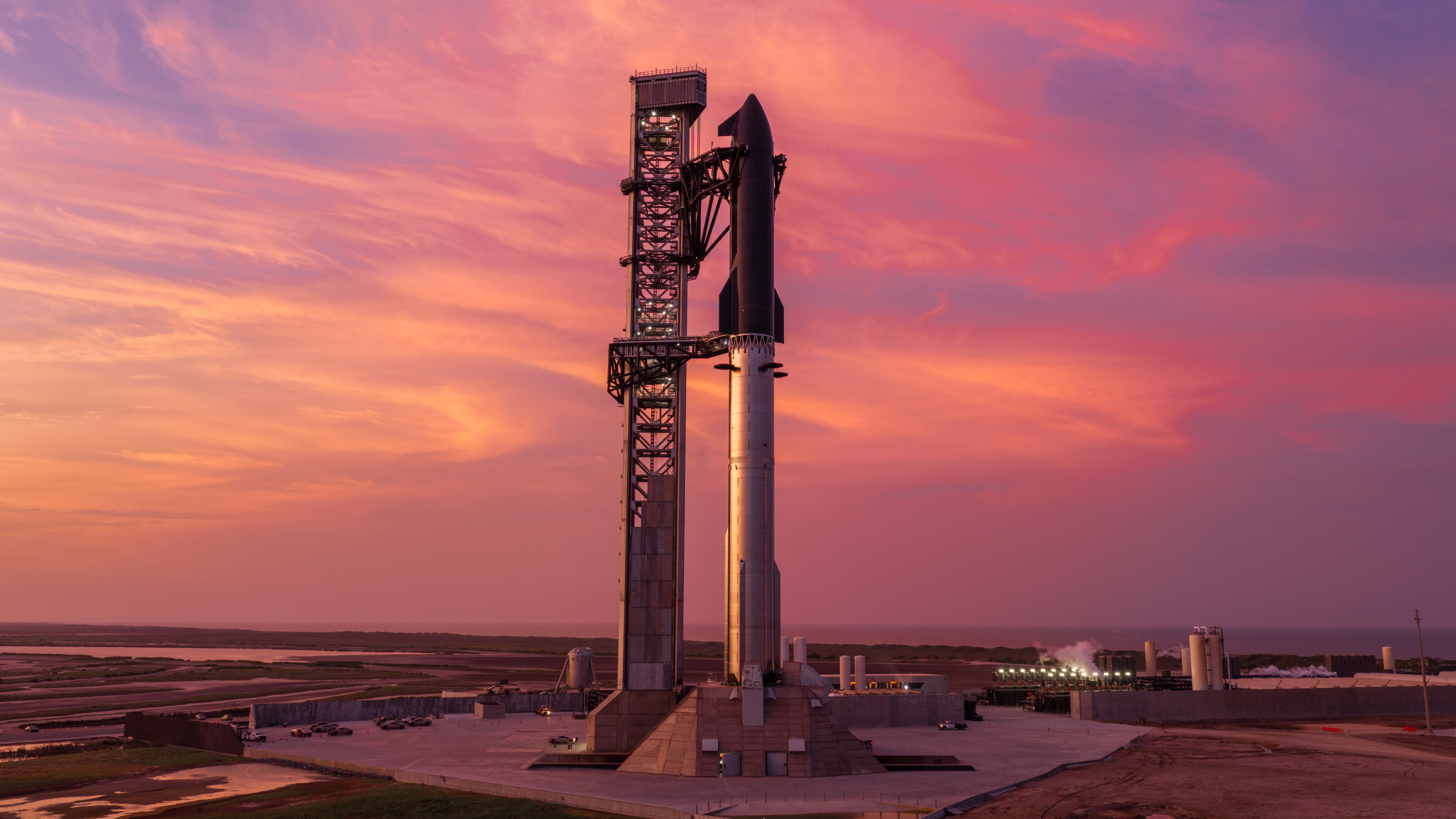
Flight 14
Provider: SpaceX
Date: September 30, 2026
Time: 12:00 AM UTC
Vehicle: Starship
14th test flight of the two-stage Starship launch vehicle. 3rd flight of Starship V3.
Griffin Mission One
Provider: SpaceX
Date: November 30, 2026
Time: 12:00 AM UTC
Vehicle: Falcon Heavy
Demonstration flight of the Astrobotic Griffin lander and its engines, initially contracted for the cancelled NASA VIPER (Volatiles Investigating Polar Exploration Rover) mission. The vacated payload spot will now host the FLIP (FLEX Lunar Innovation Platform) lunar rover from Astrolab.
USSF-75
Provider: SpaceX
Date: December 31, 2026
Time: 12:00 AM UTC
Vehicle: Falcon Heavy
Classified payload for the United States Space Force
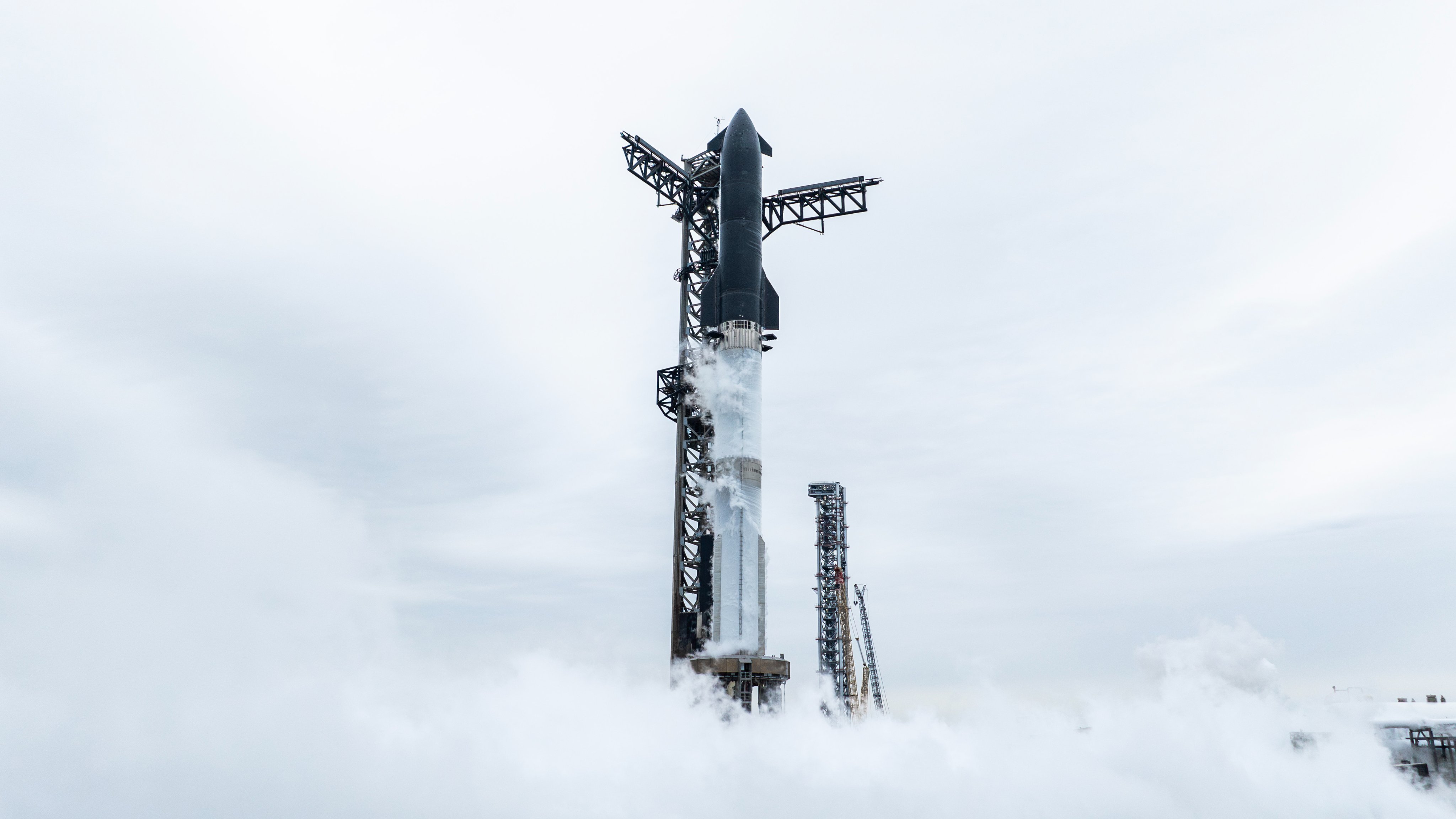
Superbird-9
Provider: SpaceX
Date: June 30, 2027
Time: 12:00 AM UTC
Vehicle: Starship
Superbird-9 is a high throughput communication satellite. It is designed to deliver broadcast and broadband missions in Ku band primarily over Japan and Eastern Asia, in response to mobility and broadband demands.



Enjoying the content? Stay up to date on everything happening behind the scenes by following our Patreon!

