
The Daily Broadcast: Roman Space Telescope Launches With Canadian Cameras
Roman Telescope Begins Dark Energy and Exoplanet Hunt
NASA’s Nancy Grace Roman Space Telescope launched from Kennedy Space Center on Aug. 30 at 7:26 a.m. EDT atop a SpaceX Falcon Heavy rocket, beginning a three-month voyage to the second Sun-Earth Lagrange point, roughly a million miles from Earth.
Roman’s primary mission is to survey the sky in visible to near-infrared light to investigate dark energy and dark matter. Its field of view is at least 100 times larger than the Hubble Space Telescope’s. The telescope’s main mirror began as a spare spy-satellite telescope matched to Hubble’s mirror size, handed over to NASA by U.S. intelligence officials.
Riding along is the Coronagraph Instrument, a technology demonstration built in part with Canadian cameras. The instrument works by blocking a star’s light almost perfectly with a tiny mask, revealing far fainter planets nearby that would otherwise be lost in the glare. If successful, the same approach is meant to fly on NASA’s Habitable Worlds Observatory, a future mission designed to search nearby stars for Earth-like planets. NASA science chief Nicky Fox called the coronagraph’s first images “the first milestone” toward that telescope.
The European Space Agency contributed star trackers, batteries, and detectors for the coronagraph instrument. ESA will also provide communications support through its Estrack ground station network and its new 35-metre antenna in New Norcia, Australia. ESA Director of Science Carole Mundell said the agency is “proud to have provided essential hardware and to continue supporting Roman’s ambitious scientific goals.” ESA Roman Project Scientist Bethan James added that the telescope’s “unprecedented combination of depth, area, and image quality” gives it “every opportunity to surprise us.”
The telescope is named after Nancy Grace Roman, NASA’s first Chief of Astronomy and the “mother” of the Hubble Space Telescope. NASA expects to release the first images from Roman early next year.

Canadarm2 Guides Antenna Swap as Crew-13 Launch Slips
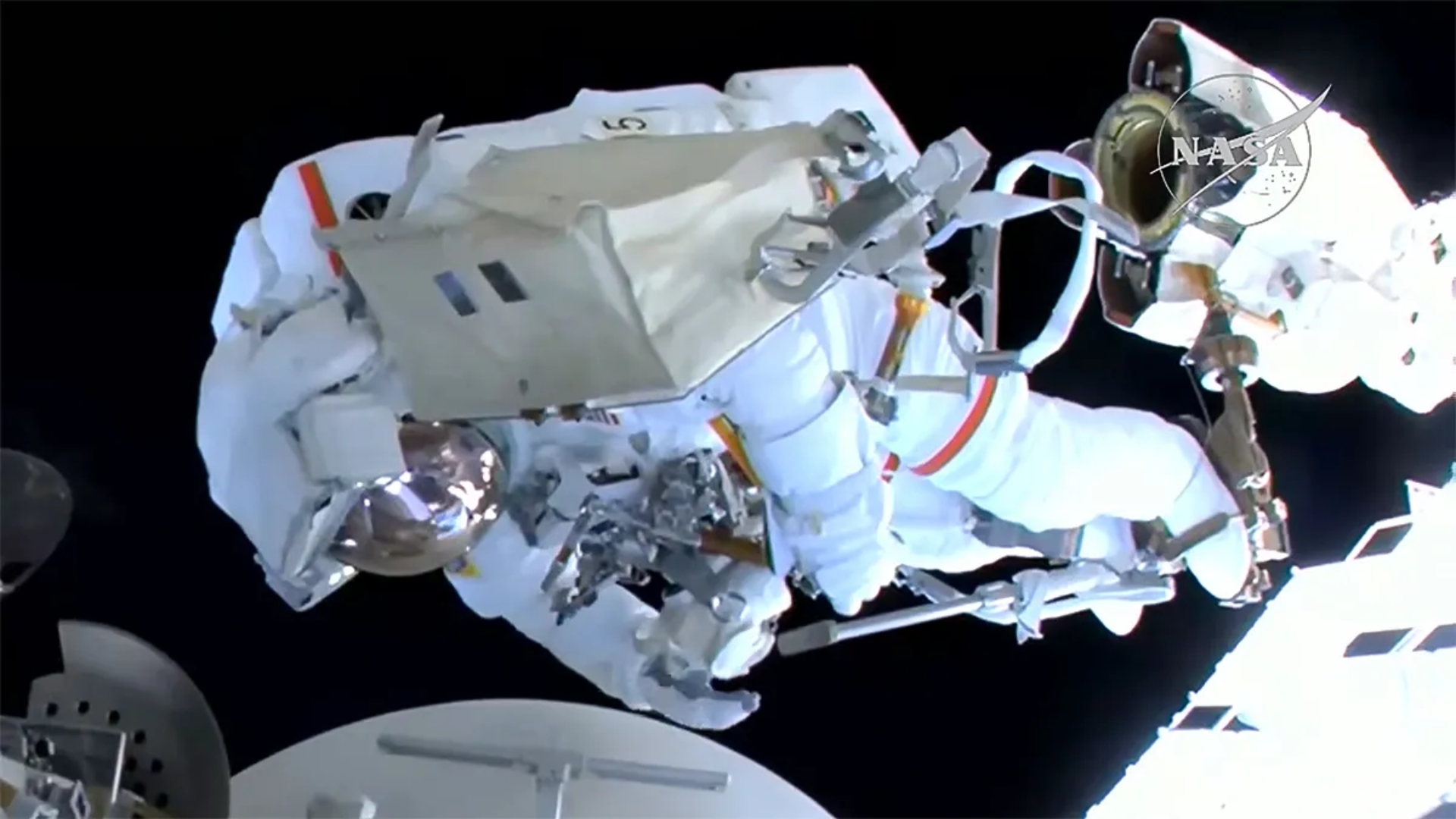
Canada’s Canadarm2 robotic arm guided NASA astronaut Anil Menon during an Aug. 25 spacewalk that completed a swap of the International Space Station’s space-to-ground antenna, the high-speed communications link between the station and Mission Control in Houston. ESA astronaut Sophie Adenot worked alongside Menon during the six-and-a-half-hour excursion — Menon’s third career spacewalk, Adenot’s second, and the station’s 283rd overall.
Meanwhile, Canadian Space Agency astronaut Joshua Kutryk’s launch to the station aboard SpaceX Crew-13 no longer has a firm date. NASA announced on Aug. 29 that the mission is on hold after an oxidizer leak was found in Dragon’s propulsion system during standard prelaunch checks. The launch had been scheduled for Sept. 12; a new target date will be announced once the review is complete.
New Goldstone Antenna Boosts Deep Space Network
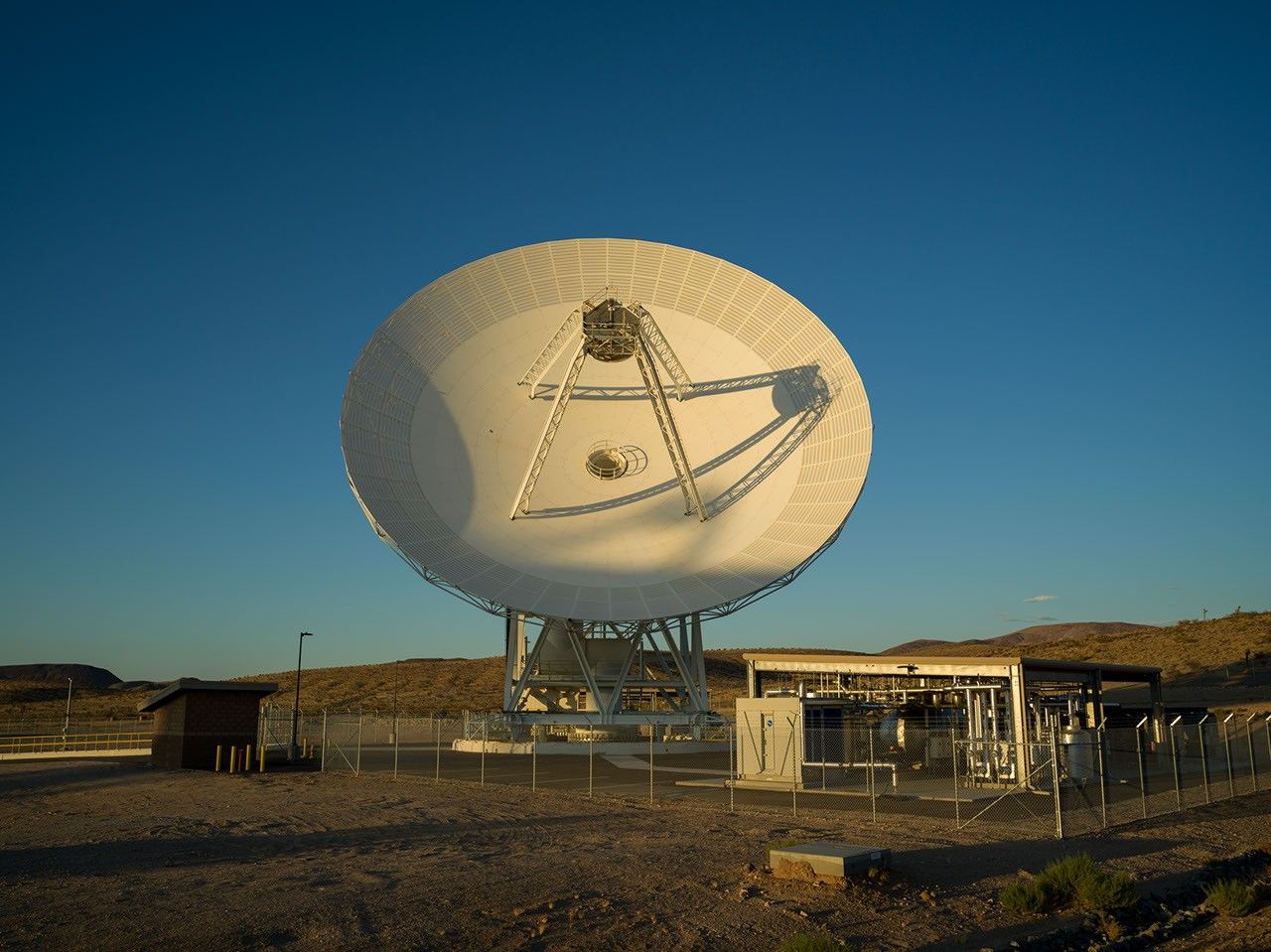
NASA cut the ribbon on Deep Space Station 23 on Aug. 25 at the Deep Space Network’s Goldstone complex near Barstow, California. The 34-metre (114-foot) multifrequency beam-waveguide antenna is the latest addition under the DSN’s Aperture Enhancement Project, which began in 2009 to add six new antennas to the network.
The DSN allows missions to track, send commands to, and receive scientific data from distant spacecraft. The new antenna will boost the network’s capacity and enhance deep space communications capabilities for decades. The network is managed by NASA’s Jet Propulsion Laboratory, a division of Caltech, for the agency’s Space Communications and Navigation (SCaN) Program.
Citations
- “Canadian cameras join NASA’s hunt for another Earth” — https://spaceq.ca/roman-space-telescope-canadian-cameras-another-earth/
- “Roman lifts off on a mission to survey the infrared sky” — https://www.esa.int/ESA_Multimedia/Images/2026/08/Roman_lifts_off_on_a_mission_to_survey_the_infrared_sky
- “Nancy Grace Roman Space Telescope Lifts Off to Open New Insights Into the Universe” — https://spacepolicyonline.com/news/nancy-grace-roman-space-telescope-lifts-off-to-open-new-insights-into-the-universe/
- “Weekly ISS update: Canadarm2 helps with antenna swap as Crew-13 launch slips” — https://spaceq.ca/weekly-iss-update-canadarm2-helps-with-antenna-swap-as-crew-13-launch-slips/
- “NASA Deep Space Network’s New Goldstone Antenna Goes Online” — https://science.nasa.gov/photojournal/nasa-deep-space-networks-new-goldstone-antenna-goes-online/
- “Ribbon-Cutting Event for NASA Deep Space Network’s Deep Space Station 23” — https://science.nasa.gov/photojournal/ribbon-cutting-event-for-nasa-deep-space-networks-deep-space-station-23/

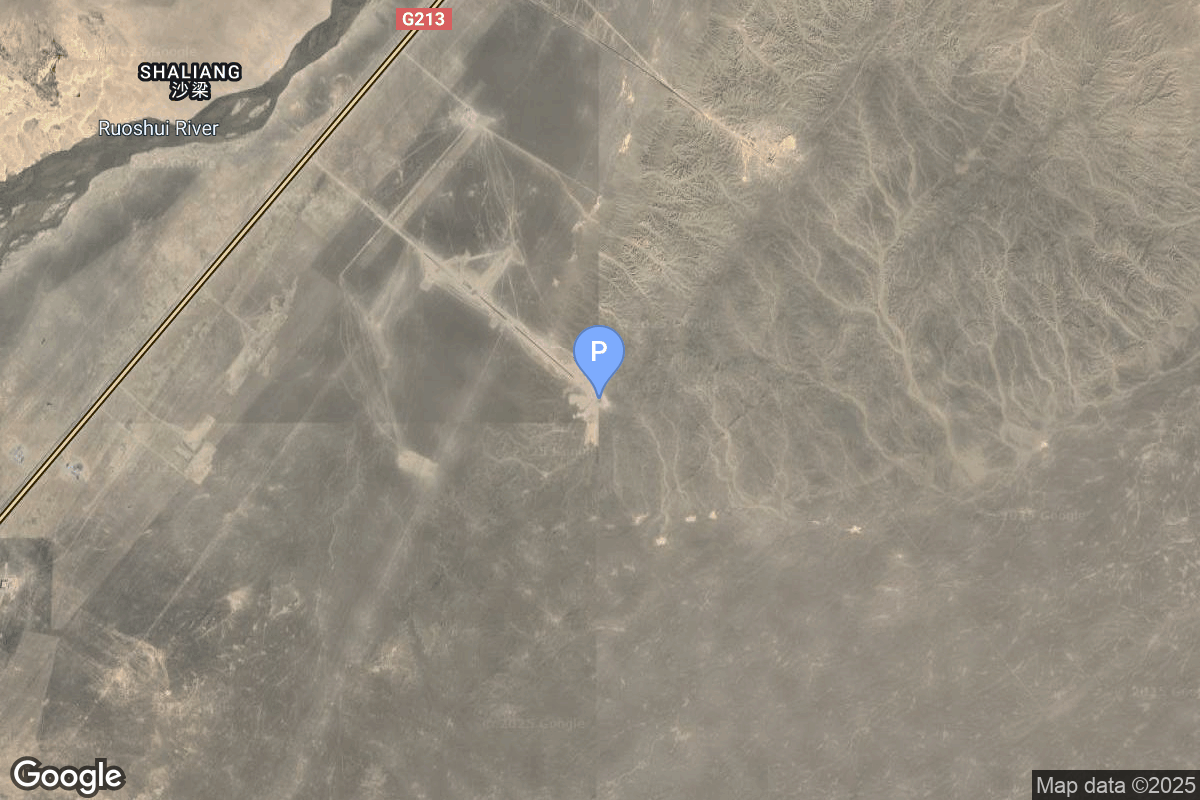
Demo Flight
Provider: Galactic Energy
Date: September 1, 2026
Time: 2:00 AM UTC
Vehicle: Pallas-1
First test launch of Galactic Energy’s Pallas-1 rocket.
Owl Around The World (StriX Launch 11)
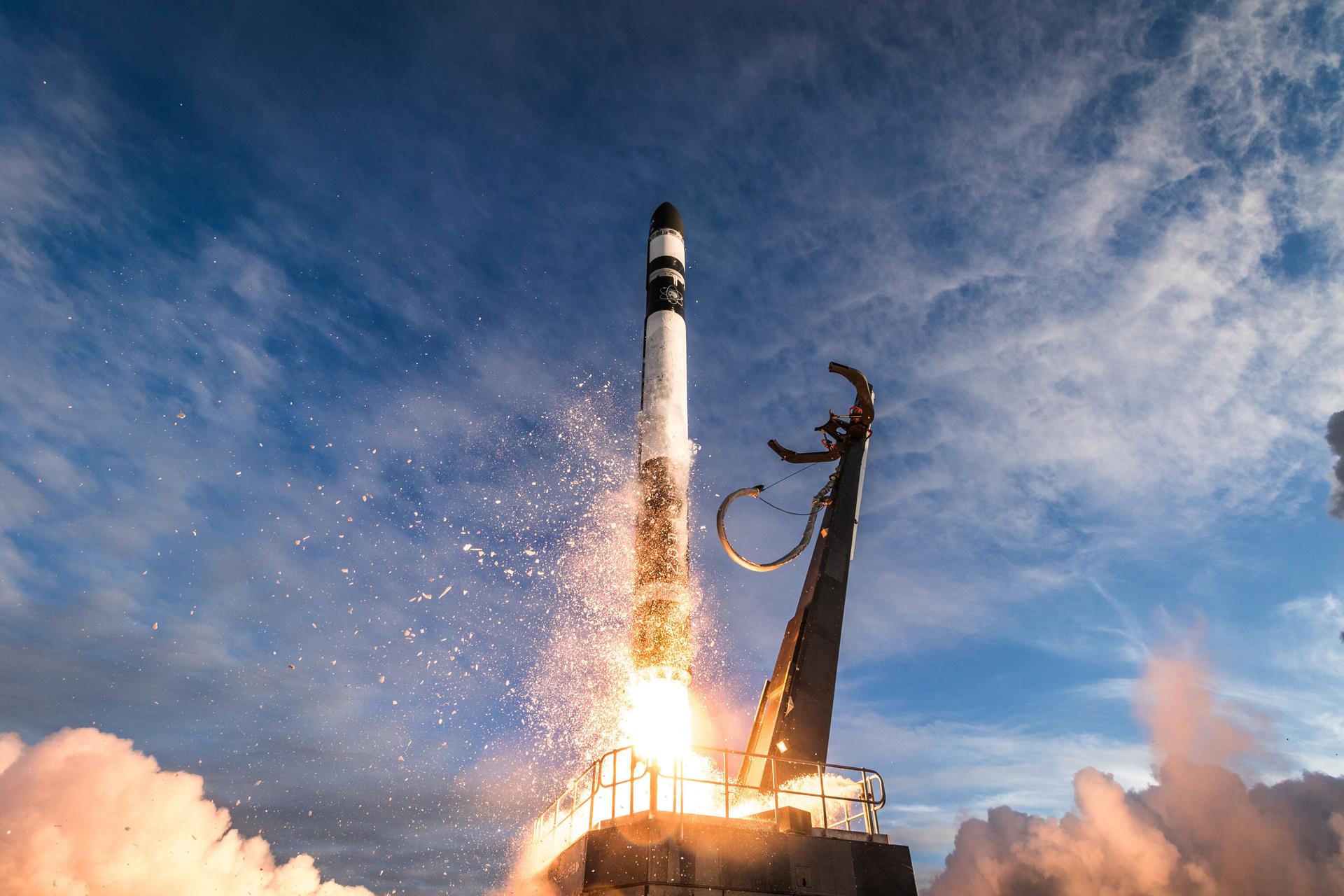
Provider: Rocket Lab
Date: September 1, 2026
Time: 11:30 AM UTC
Vehicle: Electron
Synthetic aperture radar satellite for Japanese Earth imaging company Synspective.

Starlink Group 15-23
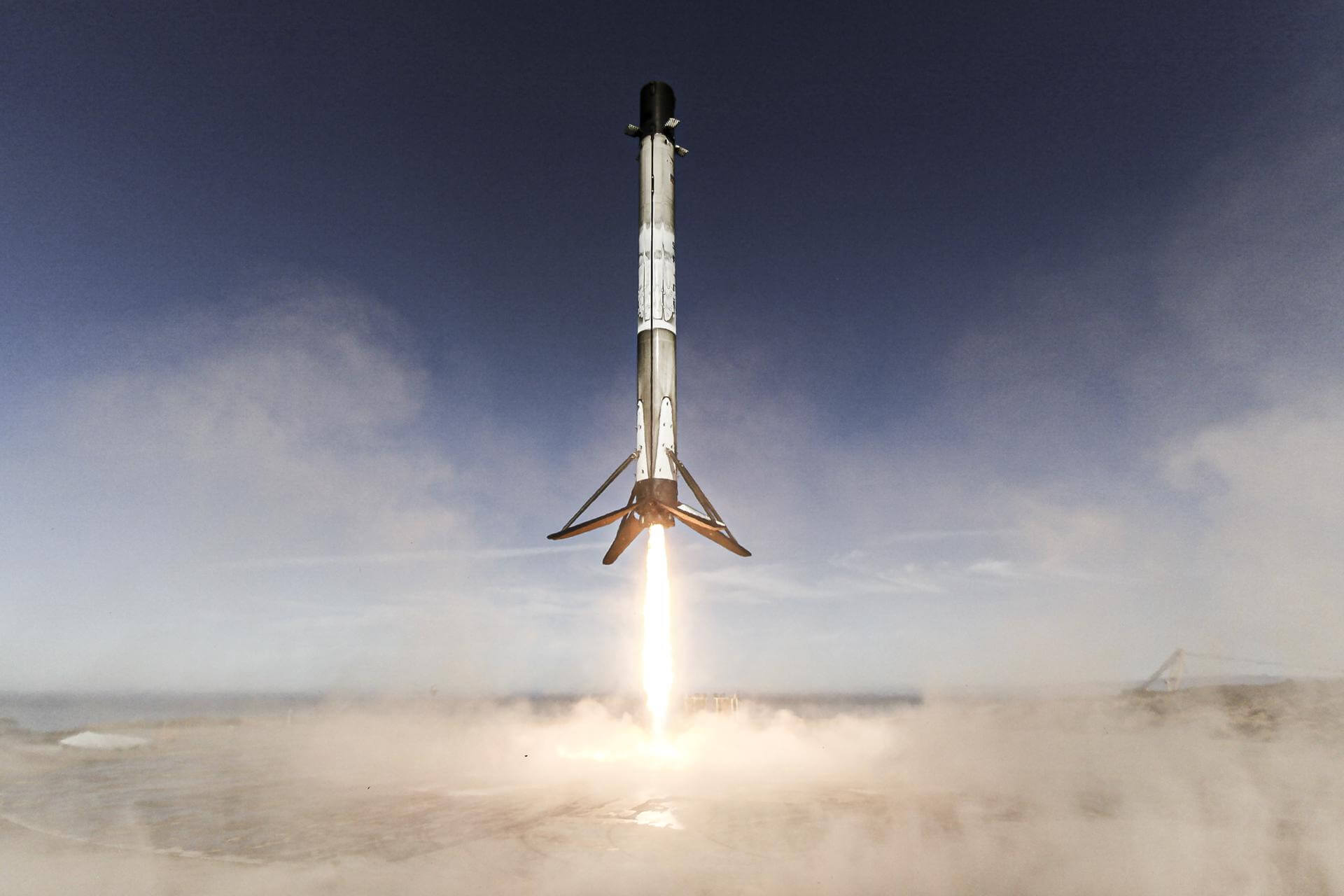
Provider: SpaceX
Date: September 2, 2026
Time: 7:46 AM UTC
Vehicle: Falcon 9
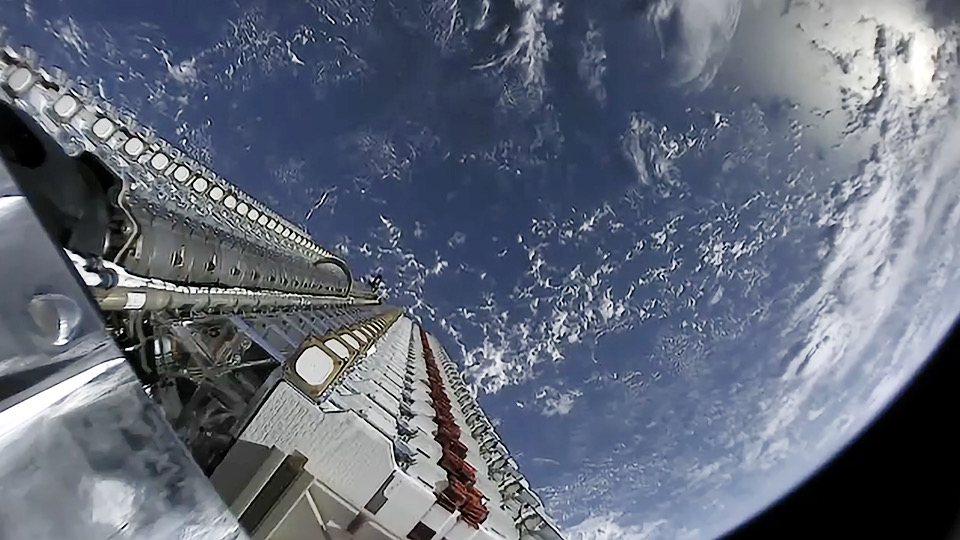
A batch of 27 satellites for the Starlink mega-constellation – SpaceX’s project for space-based Internet communication system.
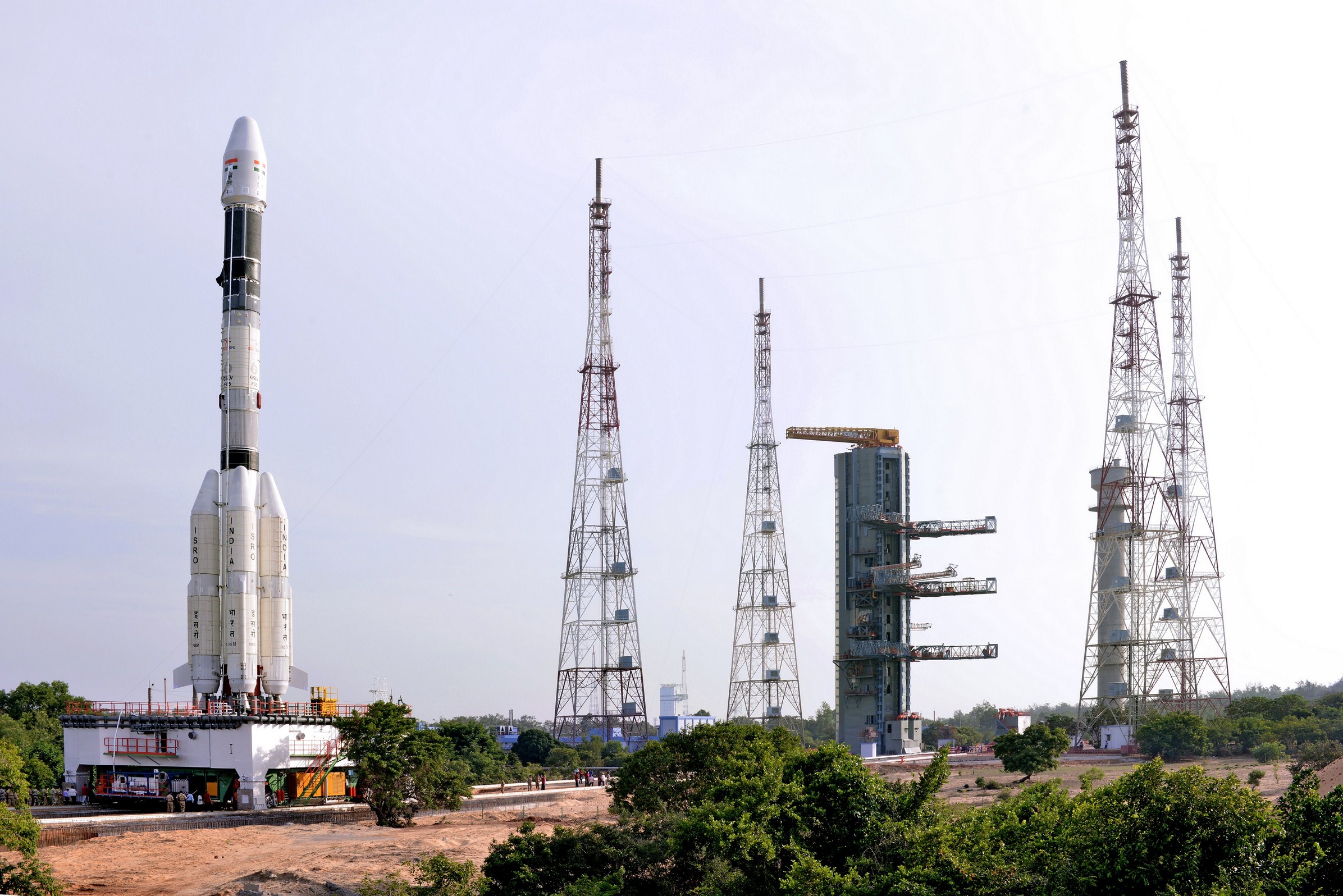
GISAT-1A (EOS-05)
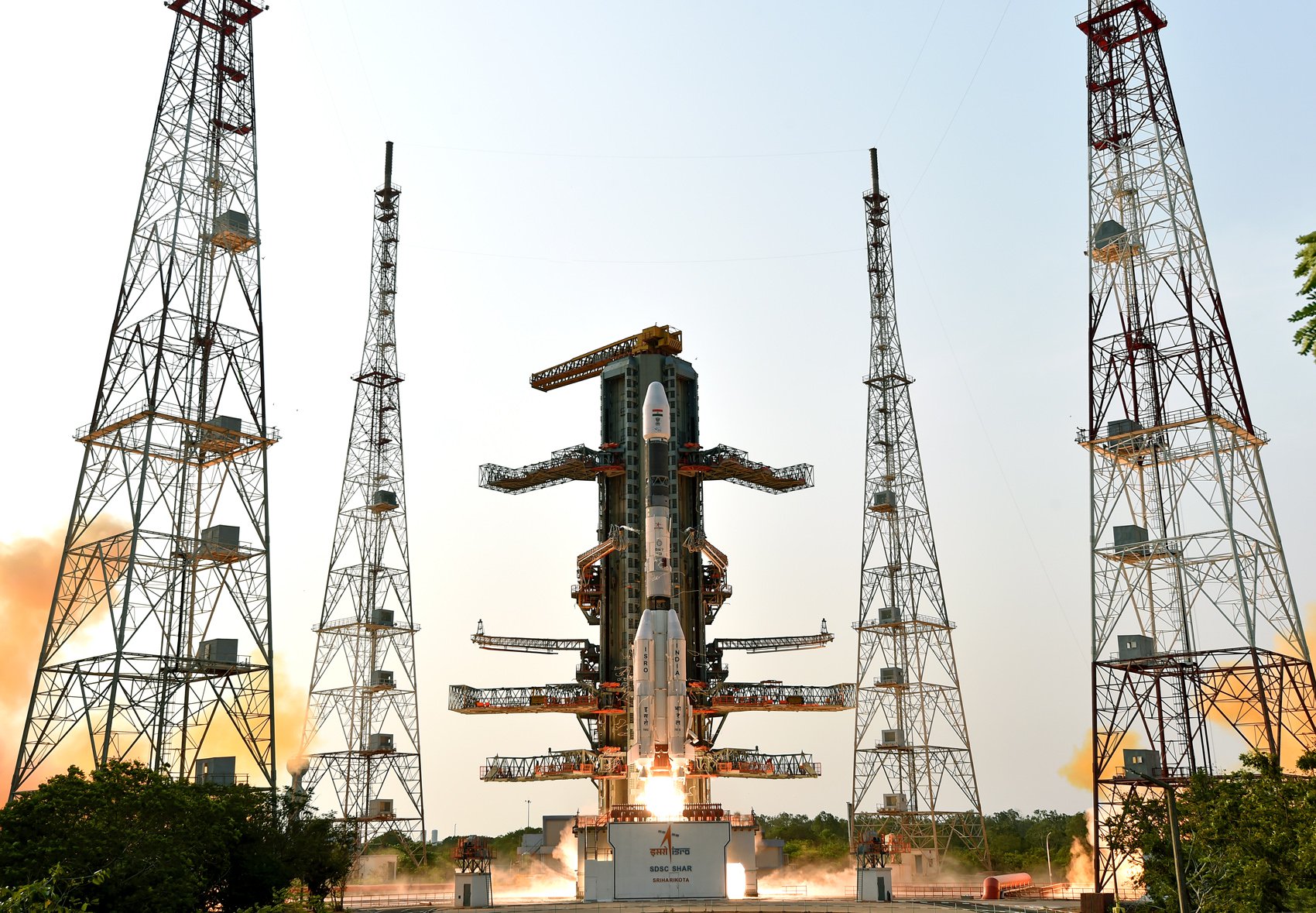
Provider: Indian Space Research Organization
Date: September 3, 2026
Time: 9:25 PM UTC
Vehicle: GSLV Mk II
GISAT-1A (GEO Imaging Satellite) is an Indian earth observing satellite operating from geostationary orbit to facilitate continuous observation of Indian sub-continent, quick monitoring of natural hazards and disaster.
EOS-05/GISAT-1A will replace EOS-03/GISAT-1 lost in launch failure in 2021.
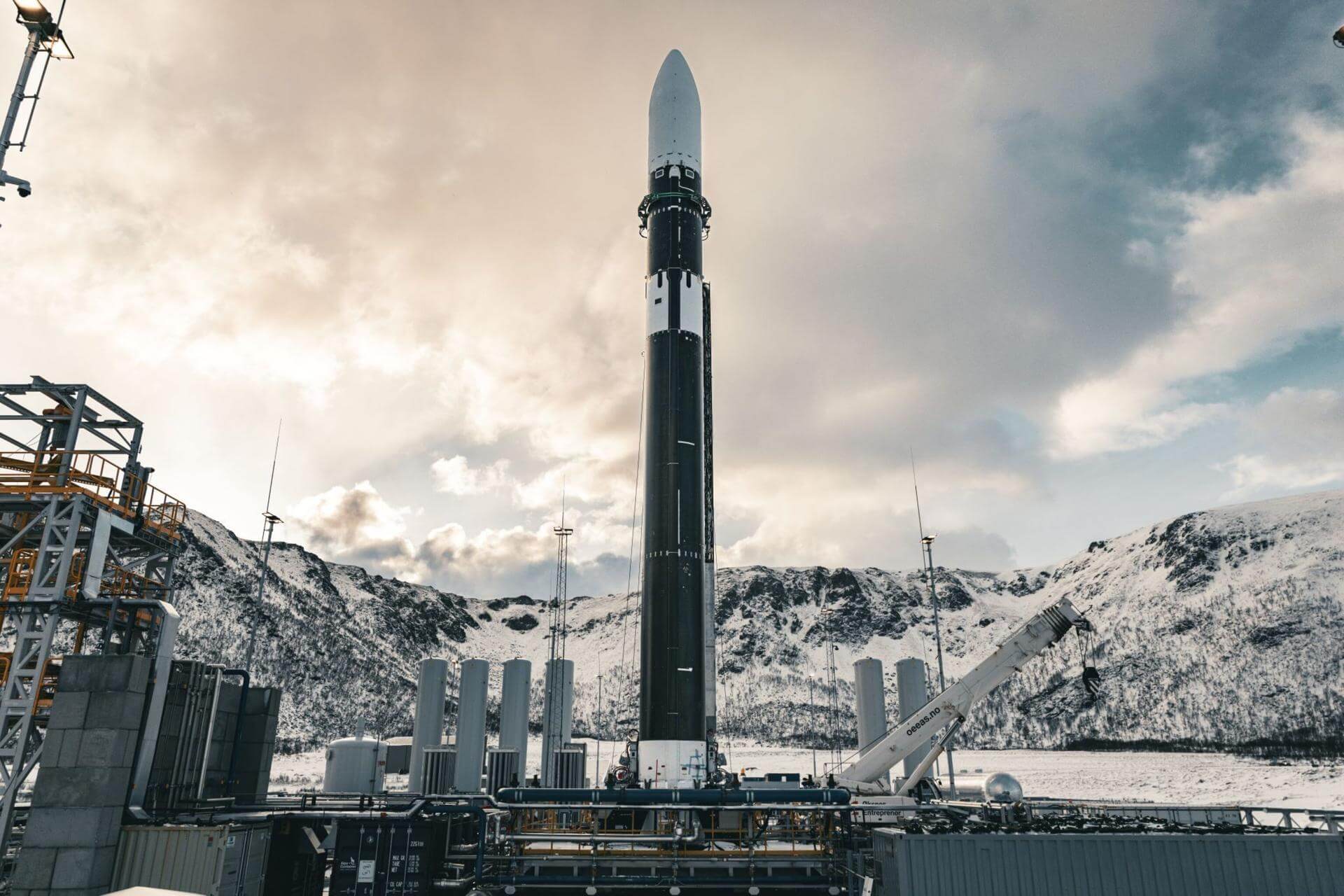
Onward and Upward
Provider: Isar Aerospace
Date: September 4, 2026
Time: 8:00 PM UTC
Vehicle: Spectrum
Second test flight of the Isar Spectrum launch vehicle. This launch will carry 5 cubesats and 1 non-separable experiment as part of European Space Agency (ESA)’s “Boost!” program:
* CyBEEsat (TU Berlin)
* TriSat-S (University of Maribor)
* Platform 6 (EnduroSat)
* FramSat-1 (NTNU)
* SpaceTeamSat1 (TU Wien Space Team)
* Let It Go (Dcubed, non-separable experiment)








Enjoying the content? Stay up to date on everything happening behind the scenes by following our Patreon!


Leave a Reply