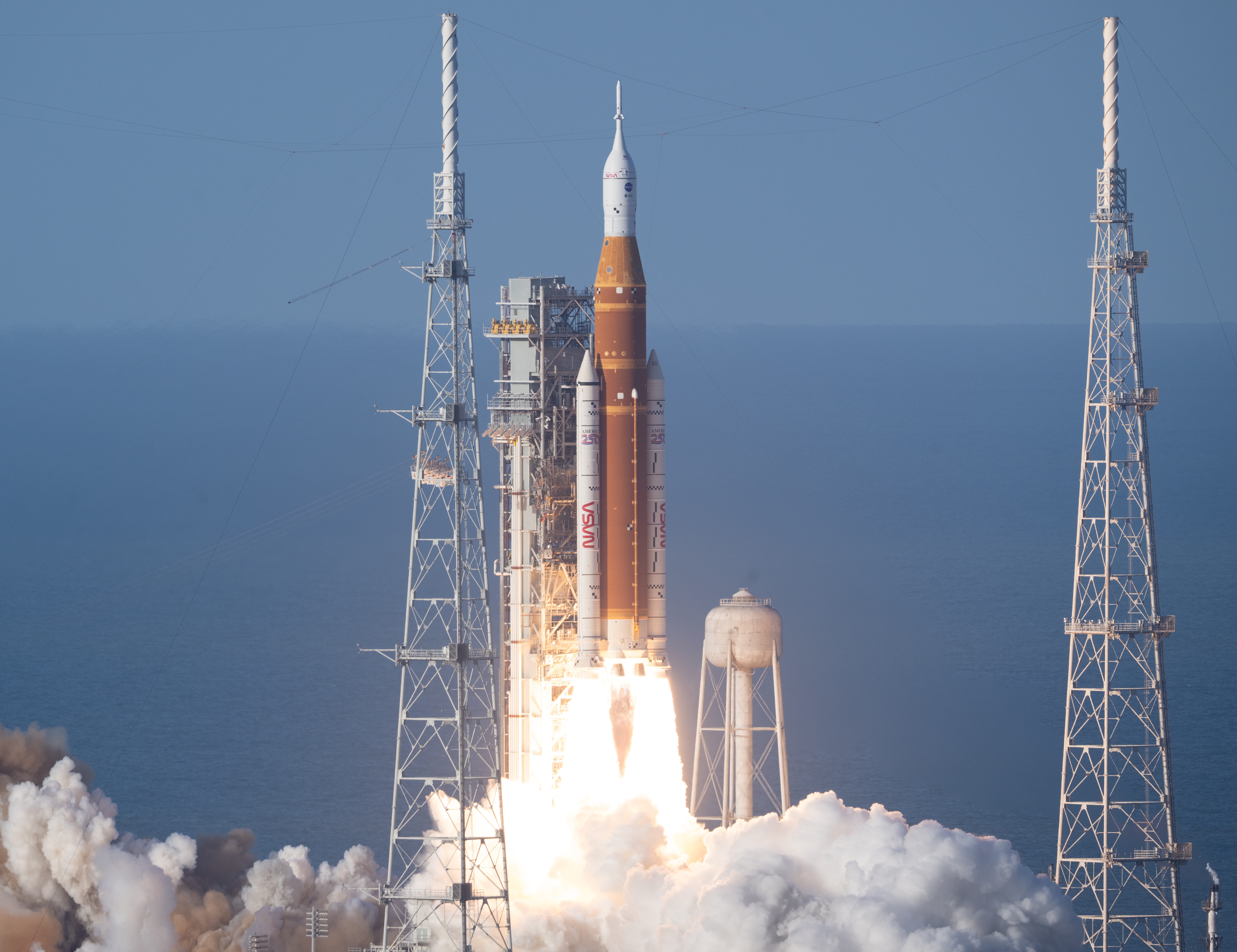
Northrop Grumman’s solid rocket booster segments for Artemis III continue arriving at Kennedy Space Center. This week, the left forward segment — the latest piece stacked for the twin SLS boosters — was lifted into place, leaving just one more segment before all 10 are together.
The twin SLS solid rocket boosters will provide more than 75% of the thrust at liftoff when Artemis III eventually launches. The mission, which will send astronauts to the lunar surface for the first time under the Artemis programme, depends on this hardware sequence staying on schedule.
Isaacman Flags South Pole Access Concerns as China Delays Chang’e 7
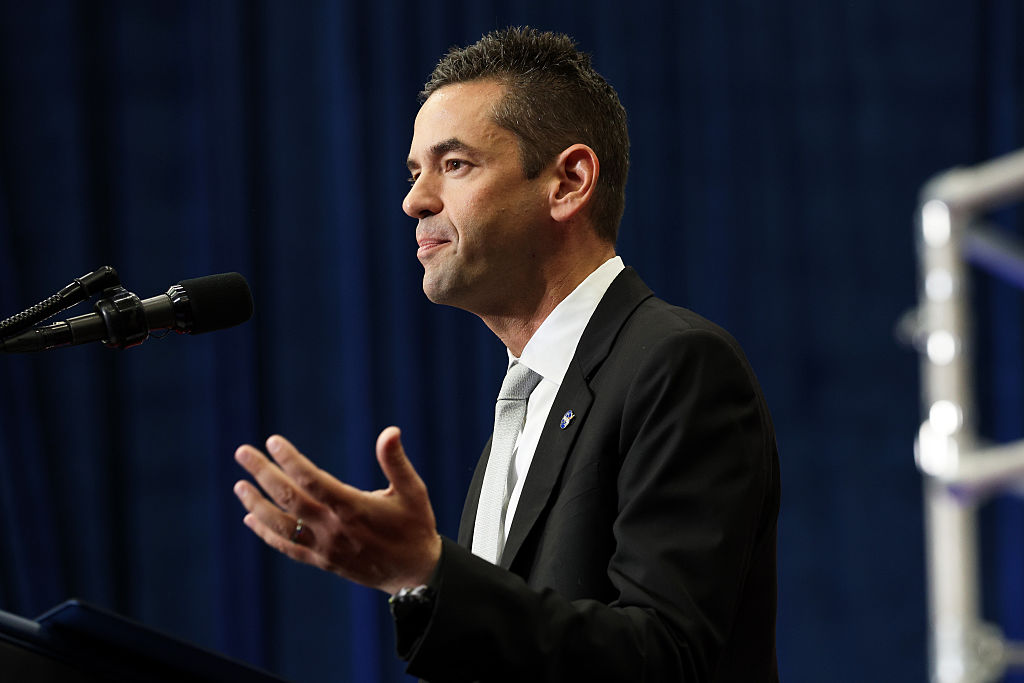
NASA Administrator Jared Isaacman used his appearance at the Off World conference in Houston on Wednesday evening to raise concerns about China’s lunar ambitions and the race for south pole terrain.
“They are targeting the exact same location on lunar south pole,” Isaacman said. “We may have dodged a bullet with the Chang’e 7 mission a couple of weeks ago because that would have gone to the Shackleton crater.”
China delayed Chang’e 7 until early 2027 without a detailed explanation. The mission carries rovers and hopper drones to the south pole, where permanently shadowed regions known as cold traps are believed to hold water ice accumulated over billions of years.
“It has rovers, it has hopper drones like we now have in development but didn’t eight months ago, and could have potentially denied access to some of the most interesting spots,” Isaacman said. “They want to interact with the water ice, and they want to get really good at the skills for where they’ll want to go next for their Neil Armstrong-like moment. Except it won’t be on the Moon, it’ll be on Mars.”
The delay opens a window for NASA. Blue Origin’s Blue Moon Mark 1 lander could carry two NASA probes to the south pole, possibly as early as spring 2027. No country has yet softly landed a spacecraft at the lunar poles.
Perseverance Data Reveals Complex Ancient Water Systems in Jezero
A new study using data from the Perseverance rover reveals that rocks in Jezero Crater were shaped by a complex sequence of ancient lakes, groundwater systems, and hydrothermal fluids — a more intricate hydrological history than previously understood.
The findings represent what NASA described as an important signpost in the search for ancient life on Mars. The layered deposits suggest multiple episodes of water activity, each potentially creating conditions favourable for microbial life.
Separately, the Mars Reconnaissance Orbiter continues to map the Arabia Terra region, where rhythmic layered deposits preserve a record of the planet’s ancient climate. Scientists suggest the layering could result from cyclic processes such as dust storms, possibly involving groundwater.
NASA Selects PRIMA Far-Infrared Telescope for 2033 Launch
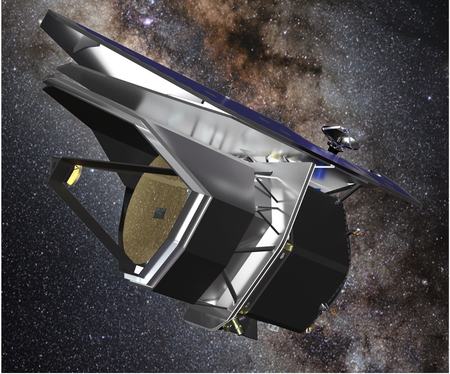
NASA announced Wednesday that PRIMA (PRobe far-Infrared Mission for Astrophysics) is advancing to Phase B development, making it the first mission in a new class of Probe Explorers within the agency’s Explorers programme.
“The PRIMA mission is humanity’s next window into the deep universe,” said Nicky Fox, associate administrator for NASA’s Science Mission Directorate. “It will unveil the obscure across cosmic time to better understand the formation of planets, stars, black holes, and even how water on Earth came to be.”
PRIMA features a cryogenically cooled 1.8-metre telescope along with two instruments: PRIMAger, an imaging polarimeter, and FIRESS, a high-resolution spectrometer. If confirmed after a readiness review, the project cost is capped at $1.2 billion, not including launch services. The observatory is targeted to launch in 2033 for a planned five-year mission.
Canada is among the international partners, alongside France, Germany, Japan, South Korea, and the United Kingdom. NASA’s Jet Propulsion Laboratory will manage the mission, with contributions from Goddard Space Flight Center and Marshall Space Flight Center. Caltech’s Infrared Processing and Analysis Center (IPAC) is designated as the mission science centre.
“By combining detector technology pioneered by our colleagues with deep scientific expertise across Caltech, JPL, and IPAC, PRIMA will help reveal fundamental cosmic processes that have long been hidden from view,” said Caltech President Ray Jayawardhana.
Crew-13 Preps for Oct. 1 Launch as Crew-14 Assignments Announced
NASA and SpaceX are targeting 11:10 a.m. EDT, Thursday, Oct. 1, for the Crew-13 launch from Space Launch Complex 40 at Cape Canaveral Space Force Station in Florida. For an Oct. 1 liftoff, docking at the station is planned for about 8 p.m. at the forward-facing port of the Harmony module.
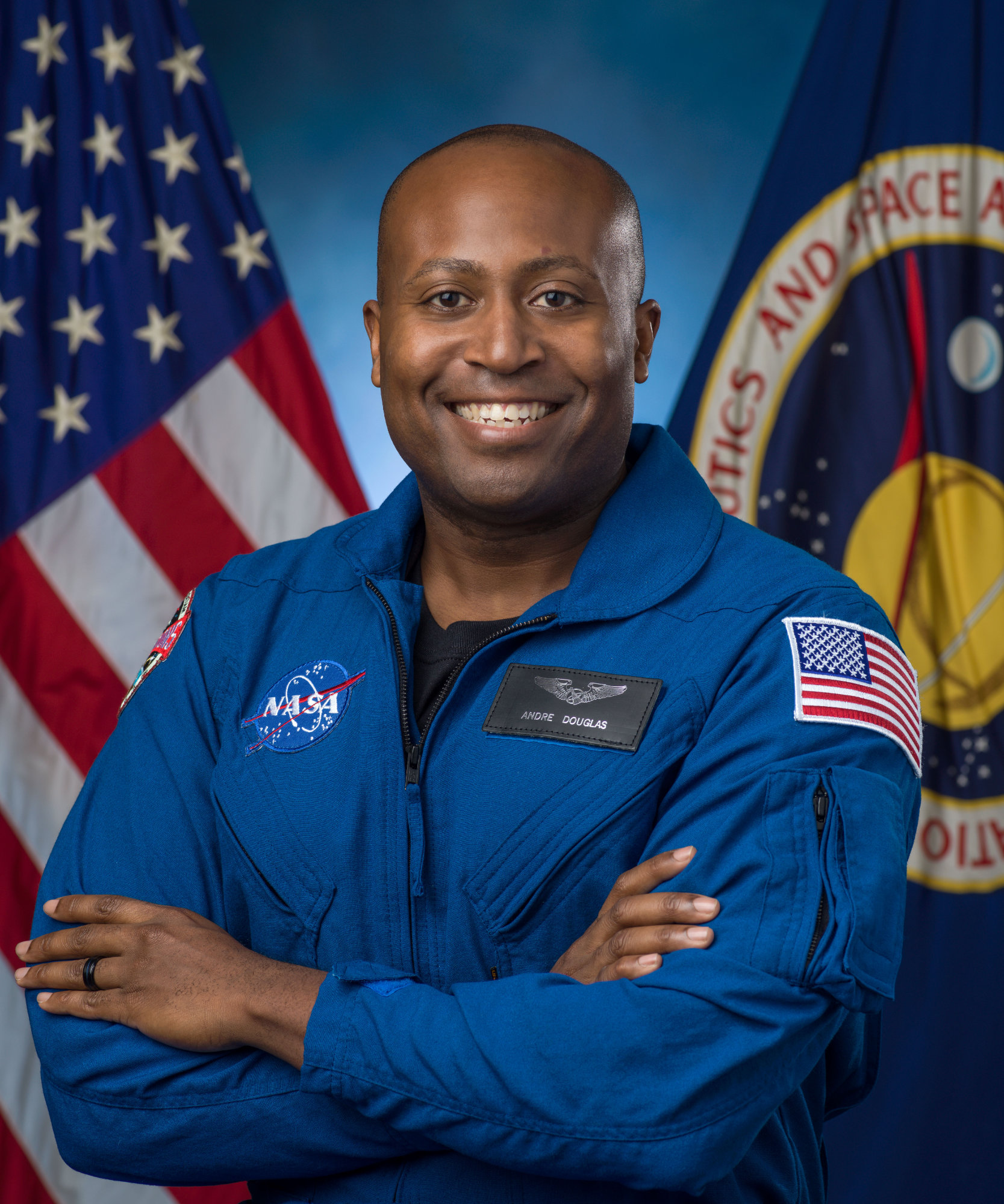
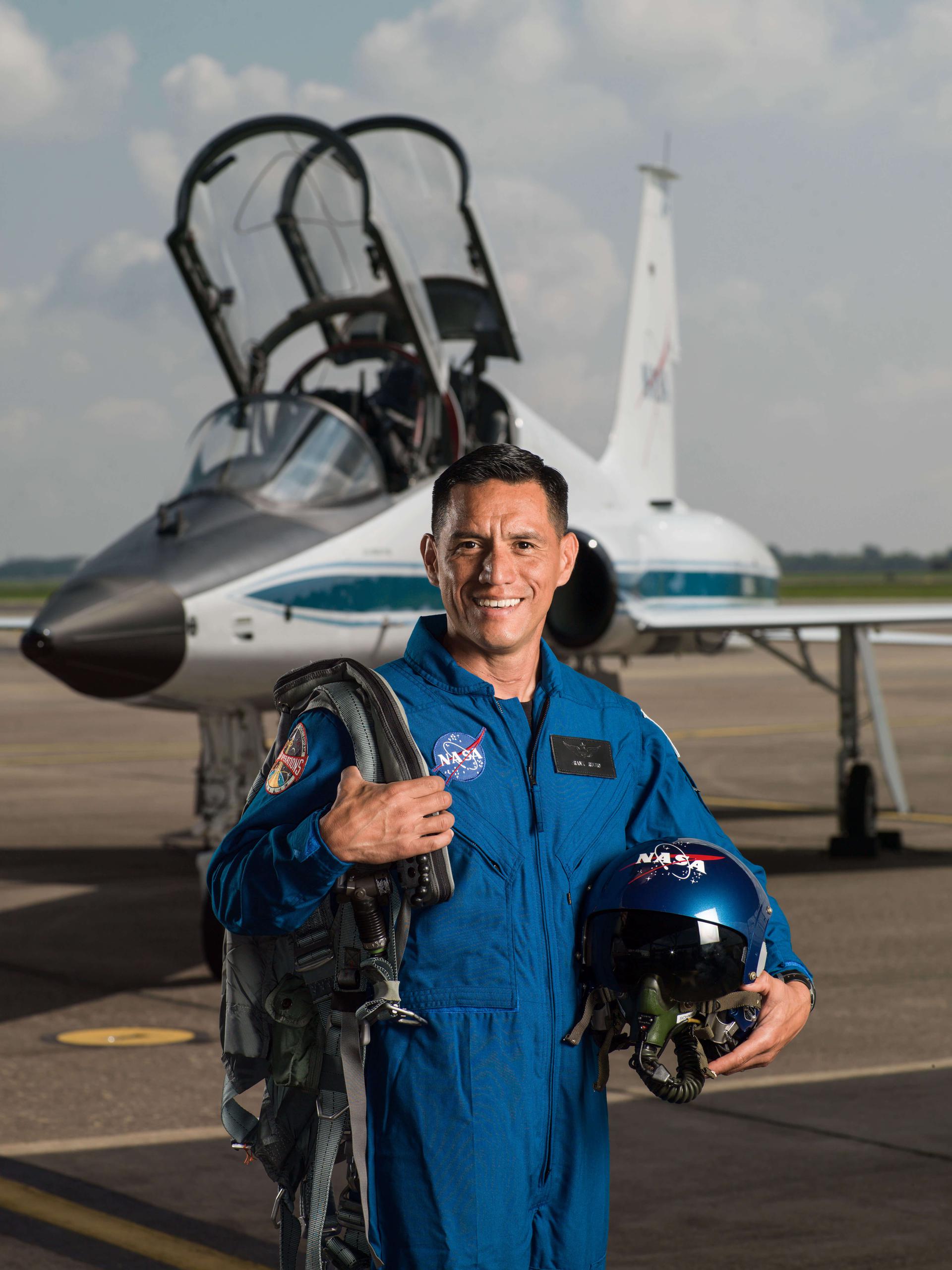
The Crew-13 roster includes NASA astronauts Jessica Watkins and Luke Delaney, Roscosmos cosmonaut Sergey Teteryatnikov, and CSA (Canadian Space Agency) astronaut Joshua Kutryk. Kutryk will join Expedition 75/76 for a long-duration stay aboard the station.
NASA also announced Crew-14 assignments this week. NASA astronauts Kayla Barron and Chris Birch will serve as spacecraft commander and pilot, with JAXA astronaut Makoto Suwa and Roscosmos cosmonaut Arutyun Kiviryan as mission specialists. The mission targets a spring 2027 launch.
Crew-14 will be Barron’s second flight. She first launched aboard Crew-3 in 2021, spending 177 days in space across Expeditions 66/67. She holds a master’s degree in nuclear engineering from the University of Cambridge and most recently supported development of operational concepts for NASA’s Artemis programme.
Provider: National Aeronautics and Space Administration Date: June 30, 2027 Time: 12:00 AM UTC Vehicle: Space Launch System (SLS)
Artemis III is the second crew mission as part of the Artemis program. Artemis III will send a crew of 4 on a Low Earth Orbit mission, with the Orion rendezvous and dock with one or both commercial lunar landers in development by SpaceX and Blue Origin, performing in-space tests of the docked vehicles, integrated checkout of life support, communications, and propulsion systems, as well as tests of the new Extravehicular Activity (xEVA) suits.
Artemis IV
Provider: National Aeronautics and Space Administration Date: June 30, 2028 Time: 12:00 AM UTC Vehicle: Space Launch System (SLS)
Artemis IV is planned to be the first human lunar landing mission since the Apollo Program.
Artemis V
Provider: National Aeronautics and Space Administration Date: December 31, 2028 Time: 12:00 AM UTC Vehicle: Space Launch System (SLS)
Artemis V is planned to be the second human lunar landing mission since the Apollo Program.
SLS Block 1B | Artemis VI
Provider: National Aeronautics and Space Administration Date: September 30, 2030 Time: 12:00 AM UTC Vehicle: Space Launch System (SLS)
No description available
SLS Block 1B | Artemis VII
Provider: National Aeronautics and Space Administration Date: September 30, 2031 Time: 12:00 AM UTC Vehicle: Space Launch System (SLS)
No description available
Artemis III ×
Mission Details
TypeHuman Exploration
OrbitLow Earth Orbit
TargetEarth
Artemis III is the second crew mission as part of the Artemis program. Artemis III will send a crew of 4 on a Low Earth Orbit mission, with the Orion rendezvous and dock with one or both commercial lunar landers in development by SpaceX and Blue Origin, performing in-space tests of the docked vehicles, integrated checkout of life support, communications, and propulsion systems, as well as tests of the new Extravehicular Activity (xEVA) suits.
Agencies Involved
• National Aeronautics and Space Administration (Government)
Program: Artemis
The Artemis program is a US government-funded crewed spaceflight program that has the goal of landing “the first woman and the next man” on the Moon, specifically at the lunar south pole region.
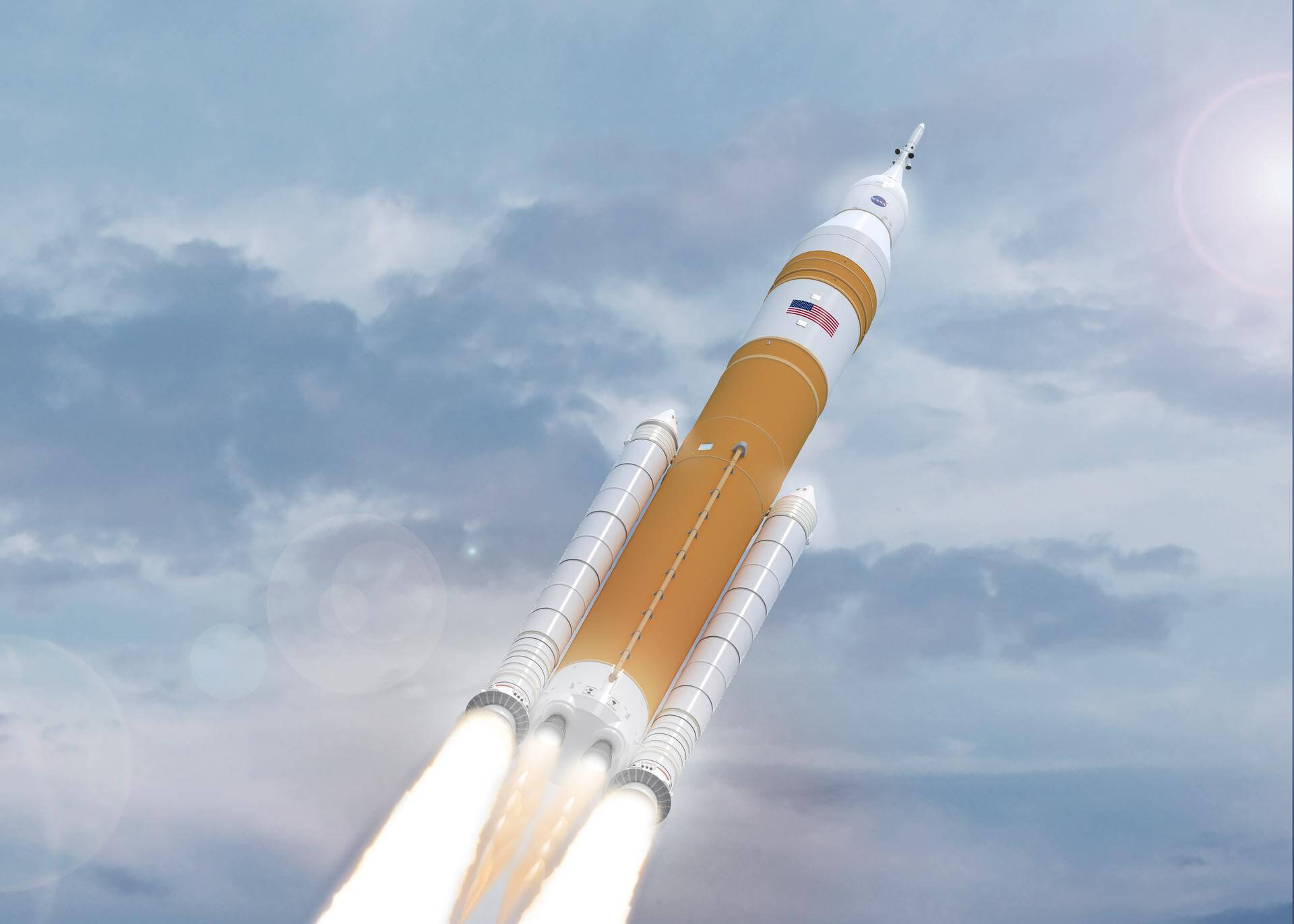
The Space Launch System (SLS) is an American Space Shuttle-derived heavy expendable launch vehicle. It is part of NASA’s deep space exploration plans including as the main launch vehicle of the Artemis program. SLS follows the cancellation of the Constellation program, and is to replace the retired…
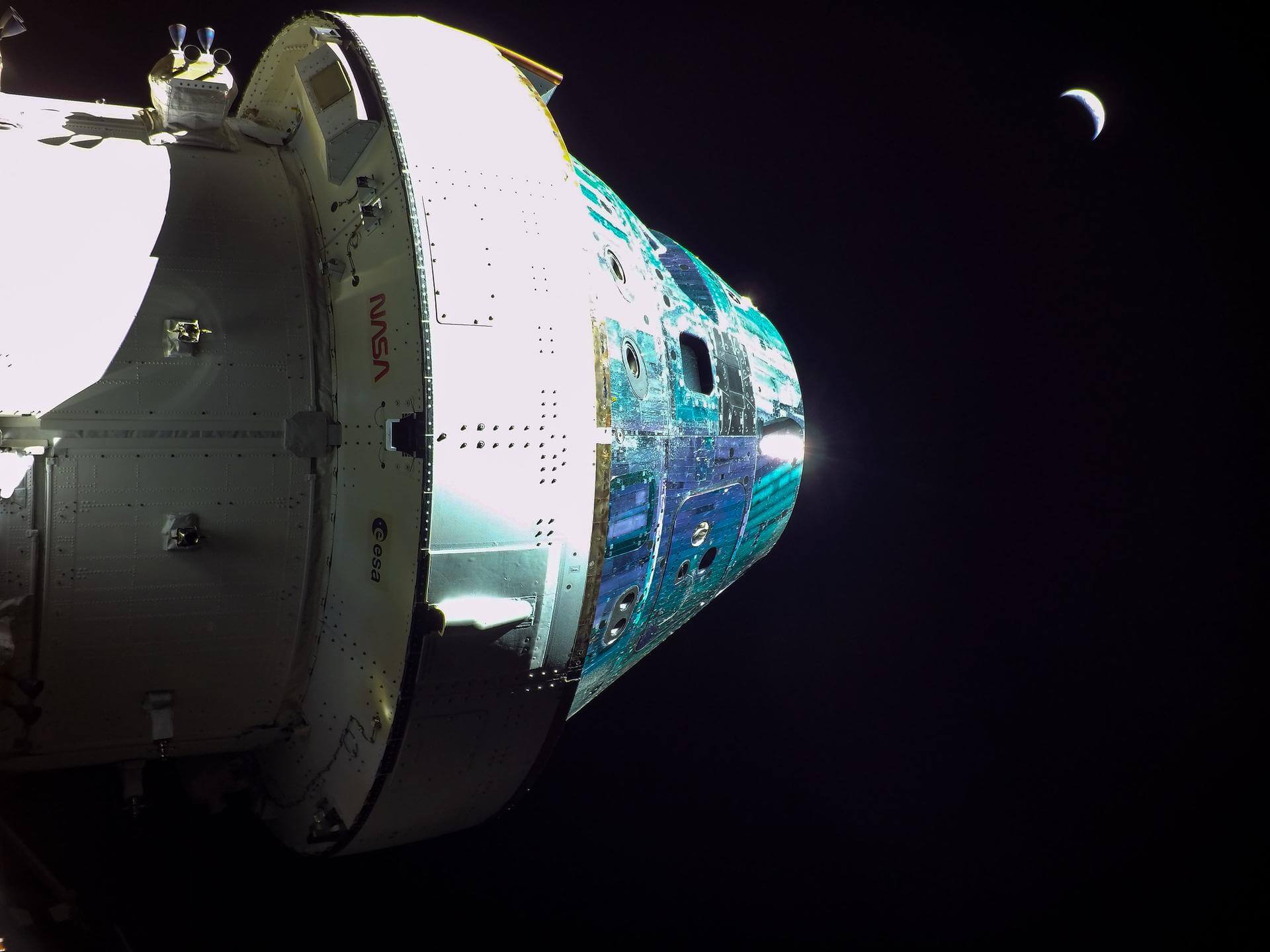
The Orion Multi-Purpose Crew Vehicle (Orion MPCV) is an American spacecraft intended to carry a crew of four astronauts to destinations at or beyond low Earth orbit (LEO). Currently under development by NASA for launch on the Space Launch System, Orion is intended to facilitate human exploration of asteroids and of Mars, as well as to provide a means of delivering or retrieving crew or supplies from the ISS if needed.
Capability
Lunar Missions.
Details
The Orion MPCV takes basic design elements from the Apollo Command Module that took astronauts to the moon, but its technology and capability are more advanced. It is designed to support long-duration deep space missions, with up to 21 days active crew time plus 6 months quiescent. During the quiescent period crew life support would be provided by another module such as a Deep Space Habitat. The…
Flight Life
21.1 days
Manufacturer: National Aeronautics and Space Administration (NASA)
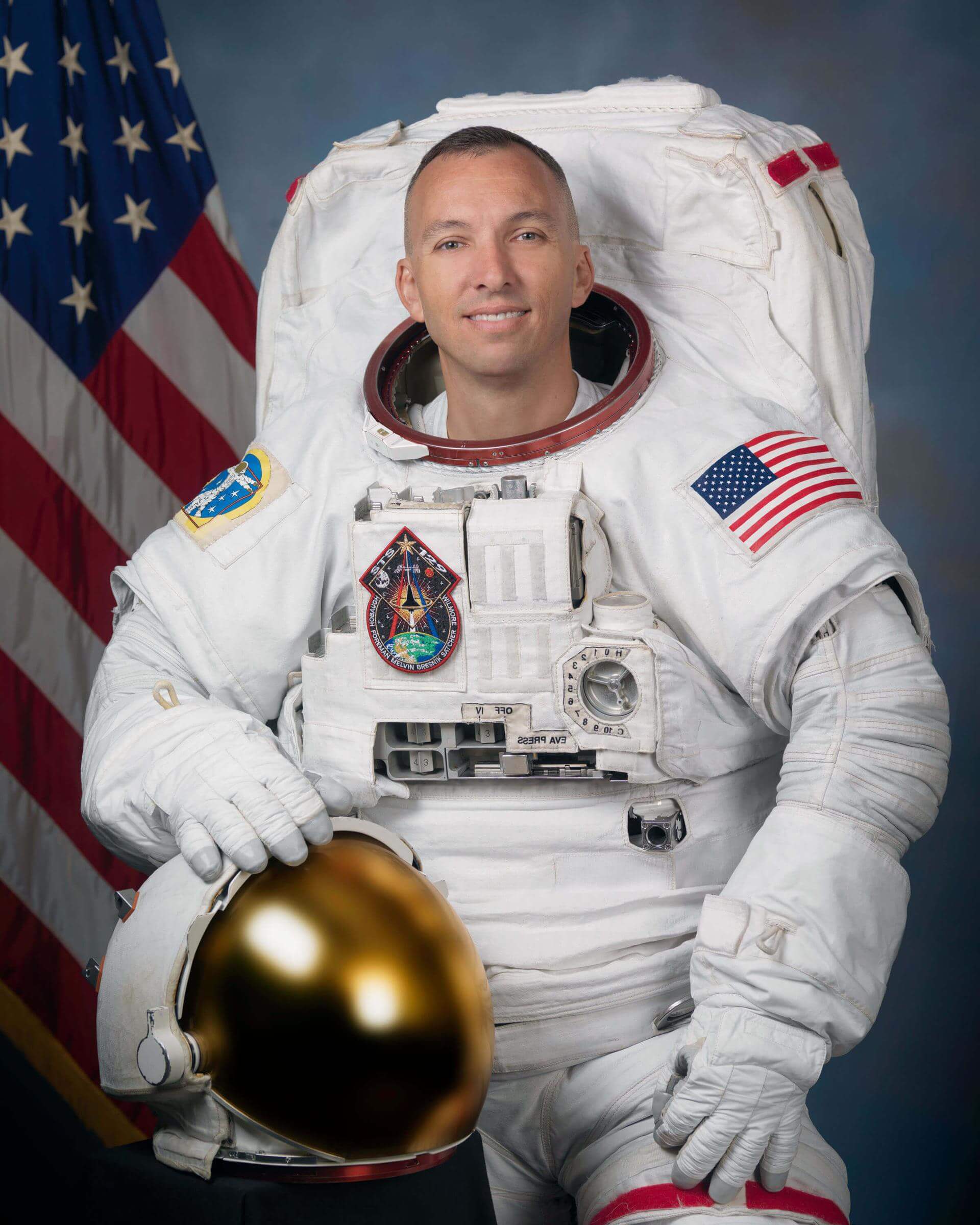
NASA • American • Age: 59 • Time in space: 149 Days, 12 Hours, 12 Minutes • EVA time: 1 Day, 8 Hours
Born: Sep 11, 1967 • First Flight: Nov 16, 2009 • Last Flight: Jul 28, 2017
Randolph James “Komrade” Bresnik is an officer in the United States Marine Corps and a NASA astronaut. A Marine Aviator by trade, Bresnik was selected as a member of NASA Astronaut Group 19 in May 2004.[5] First launched to space on STS-129.
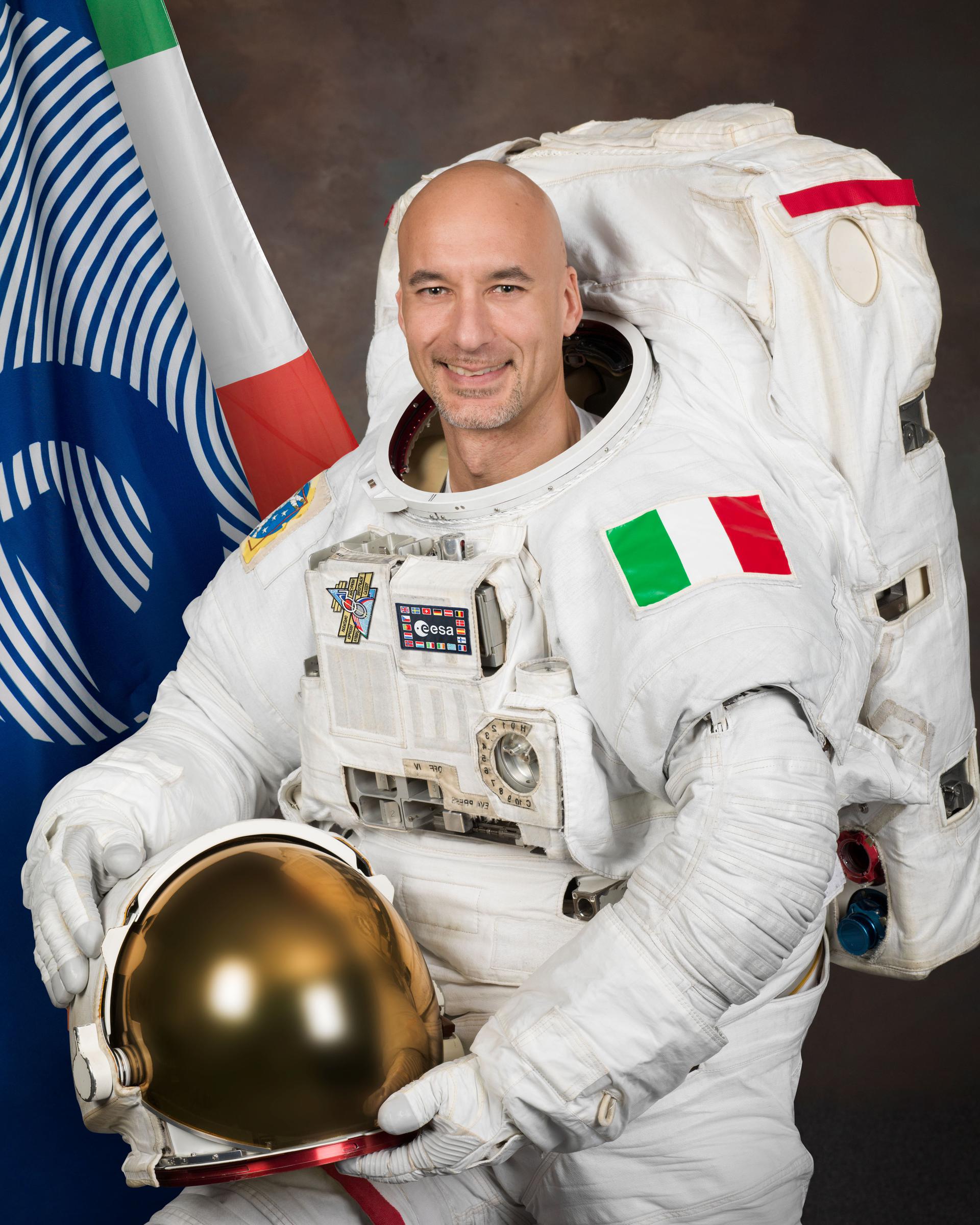
ESA • Italian • Age: 49 • Time in space: 366 Days, 23 Hours, 2 Minutes • EVA time: 1 Day, 9 Hours, 9 Minutes
Born: Sep 27, 1976 • First Flight: May 28, 2013 • Last Flight: Jul 20, 2019
Luca Parmitano (born 27 September 1976 in Paternò, Sicily) is an Italian engineer and astronaut in the European Astronaut Corps for the European Space Agency (ESA). The astronauts work on missions at the International Space Station. He was selected as an ESA astronaut in May 2009.
Artemis IV is planned to be the first human lunar landing mission since the Apollo Program.
Agencies Involved
• National Aeronautics and Space Administration (Government)
Program: Artemis
The Artemis program is a US government-funded crewed spaceflight program that has the goal of landing “the first woman and the next man” on the Moon, specifically at the lunar south pole region.
The Space Launch System (SLS) is an American Space Shuttle-derived heavy expendable launch vehicle. It is part of NASA’s deep space exploration plans including as the main launch vehicle of the Artemis program. SLS follows the cancellation of the Constellation program, and is to replace the retired…
Artemis V is planned to be the second human lunar landing mission since the Apollo Program.
Agencies Involved
• National Aeronautics and Space Administration (Government)
Program: Artemis
The Artemis program is a US government-funded crewed spaceflight program that has the goal of landing “the first woman and the next man” on the Moon, specifically at the lunar south pole region.
The Space Launch System (SLS) is an American Space Shuttle-derived heavy expendable launch vehicle. It is part of NASA’s deep space exploration plans including as the main launch vehicle of the Artemis program. SLS follows the cancellation of the Constellation program, and is to replace the retired…
The Artemis program is a US government-funded crewed spaceflight program that has the goal of landing “the first woman and the next man” on the Moon, specifically at the lunar south pole region.
The Space Launch System (SLS) is an American Space Shuttle-derived heavy expendable launch vehicle. It is part of NASA’s deep space exploration plans including as the main launch vehicle of the Artemis program. SLS follows the cancellation of the Constellation program, and is to replace the retired…
The Artemis program is a US government-funded crewed spaceflight program that has the goal of landing “the first woman and the next man” on the Moon, specifically at the lunar south pole region.
The Space Launch System (SLS) is an American Space Shuttle-derived heavy expendable launch vehicle. It is part of NASA’s deep space exploration plans including as the main launch vehicle of the Artemis program. SLS follows the cancellation of the Constellation program, and is to replace the retired…
Robo Chris is a collection of API calls, filters, and searches, bolted together with magic and love. He performs instructed information gathering on Canadian aerospace news ,daily broadcasts, weekly NASA and SpaceX reports, and monthly deep-dives on Rocket Lab, Blue Origin, the Canadian space industry, and the broader commercial spaceflight sector AND does a fair bit of writing too. Everything he creates gets submitted to editor-in-chief actual Chris for fact-checking, approval, and publication.






Leave a Reply