
The Daily Broadcast: NordSpace Details Tempest Rocket and Atlantic Spaceport Strategy

NordSpace Outlines Path to Medium-Lift Launch with Tempest Rocket
NordSpace, one of three winners of Canada’s $25-million Launch the North IDEaS Challenge, is pursuing an ambitious three-launcher strategy to establish domestic space launch capability. In a recent interview with SpaceQ, CEO Rahul Goel detailed the company’s progress on the suborbital Taiga, small-lift Tundra, and the newly renamed medium-lift Tempest rocket — along with construction of the Atlantic Spaceport Complex in Newfoundland and Labrador.
The shift in naming from Titan to Tempest reflects NordSpace’s operational philosophy. “We wanted a name that captured the energy and spirit of what we’re attempting with that vehicle and the spirit of the Atlantic coast of Canada,” Goel said. The change is partly symbolic but rooted in pragmatism: Goel originally hoped to send a payload on the Titan to Saturn’s moon Titan, but the team ultimately preferred Tempest’s evocation of Canadian-inspired natural forces.
The Tempest is designed as a reusable medium-lift vehicle. Development remains in early stages, particularly for the Hadfield 350 engines, which Goel emphasised were engineered for manufacturability and reliability rather than novelty. “Our goal is for our engine to be as ordinary as possible,” he said. “Building rockets is hard enough.” The engine’s dual combustion chambers offer multiple advantages — deeper throttling, in-house manufacturing, easier testing, and the ability to survive an engine-out on the first stage. That architectural decision alone shaved “3–4 years off our development timeline,” Goel noted, making the tight 2028 Launch the North deadline more achievable.
NordSpace’s manufacturing strategy underscores this focus on pragmatism. The company’s new facility in Markham, Ontario will house what Goel described as “the largest-scale metal additive manufacturing in all of Canada” and “the largest-scale robotic automated-fibre-placement composites manufacturing in all of Canada.” These capabilities will enable the company to 3D-print engines and composite structures at scale — a critical advantage for rapid production and iteration.
Atlantic Spaceport Complex Takes Shape in Newfoundland
The Atlantic Spaceport Complex (ASX) on the Burin Peninsula is being developed in two main launch areas: SLC-01 for orbital and medium-lift launches, and SLC-02 for suborbital and smaller flights. Construction on SLC-02 began last year and has “gone through an incredible amount of studies and design iteration,” Goel said. The team is working closely with people who designed and built Rocket Lab’s facility in Mahia, New Zealand — an inspiration for treating ground infrastructure as a “sub-system of the launch vehicle itself.”
SLC-02 development continues “as we speak,” Goel said, with “installation of new hangars, pad extensions and security features” underway. Meanwhile, NordSpace has issued tenders for SLC-01 construction, including pads for orbital launches and test facilities for vertical integration stack tests. The company is prioritising redundant infrastructure and ground support equipment early to ensure that vehicle issues don’t jeopardise the Launch the North schedule. Goel also mentioned a private 50-acre propulsion test range in eastern Ontario to keep pace with the “aggressive timeline” of the programme.
Partnerships with local contractors and C-CORE, a Newfoundland-based research firm, are underway. Goel said NordSpace has been “welcomed as guests into these communities,” and the company is committed to respecting that relationship as launch cadence increases. An announcement regarding “an exciting project related to ground stations” with C-CORE is expected in the coming months.
Tundra and Tundra+ Bridge Small to Medium Lift
The Tundra small-lift launcher, capable of 1,100 kilograms to low Earth orbit, remains the focus of “the vast majority of our team,” Goel said. A new variant, Tundra+, will bridge to medium-lift capability by carrying “just over 2,000 kilograms to LEO.” The upgrade requires only “tank extensions and some engine optimisations,” minimising the engineering burden. “We specifically architected Tundra so that moving to the Tundra+ variant requires very little modifications,” Goel explained. “It almost gets Canada a medium-lift vehicle for free compared to the cost of developing a medium-lift launcher from scratch.”
The Tundra+ decision stems from NordSpace’s analysis that the Launch the North success criterion of 200 kilograms was too modest. Larger payloads — such as those based on MDA’s AURORA and Telesat’s Lightspeed satellite buses — require greater capacity. Tundra can reach sun-synchronous orbit with small payloads, whilst Tundra+ offers the flexibility for more valuable, larger missions whilst maintaining design continuity.
Regarding the first Taiga suborbital test in August 2025, Goel reflected on the lessons learned. “Everything worked really well, but the challenge was that everything worked really well in individual pieces.” The team encountered a liquid oxygen supply issue that “cascaded” beyond their ability to repair on-site with limited resources. Isolated in Newfoundland, far from the Markham facility, they lacked rapid access to diagnostics and equipment. “You need to be prepared for that eventuality,” Goel said, explaining why NordSpace is now building more infrastructure to test integrated systems in their operational environment quickly and to “keep retiring risk for our orbital programme by testing hardware in flight.”
Euclid’s Galactic Bulge Survey Preps Roman’s Exoplanet Hunt

The European Space Agency’s Euclid space telescope has released an unprecedented image of the Milky Way’s centre, revealing over 60 million stars in what is known as the galactic bulge. The photograph, a mosaic of nine individual pointings captured on 23 March 2025 during a 26-hour observation, represents the largest and most detailed survey of this region to date. The data is now available to the scientific community and serves a crucial purpose: preparing the way for NASA’s Nancy Grace Roman Space Telescope, which is scheduled to launch no earlier than 30 August aboard a SpaceX Falcon Heavy.
The Euclid observation was conducted outside Euclid’s regular cosmological survey — a rare interruption of its ongoing work to map dark matter distribution across billions of galaxies. “This is the only time Euclid has paused its normal sky survey… it really has to be something with a high impact for science,” said Jason Rhodes, NASA’s Euclid science lead and Roman project scientist at the Jet Propulsion Laboratory. ESA used ground-based data from the Canada-France-Hawai’i Telescope (CFHT) to add colour to Euclid’s monochromatic visible-light observations, enhancing the image for scientific analysis.
Roman will focus on microlensing — a technique that has revealed nearly 300 exoplanets from ground-based observations over the past two decades, all concentrated on the galactic centre. Microlensing occurs when a foreground star’s gravity bends the light of a background star, and if the foreground star harbours a planet, the planet’s gravity creates a subtle additional distortion that reveals its presence. Euclid’s galactic bulge image contains 51 known planetary systems and will help astronomers discern lens stars and measure their masses. Crucially, Euclid captured the “before” images of stars that will later align during Roman’s observations, allowing scientists to measure stellar motion over time and confirm planetary existence more precisely.
“Euclid has already captured the stars involved in all the future microlensing events that the Roman space telescope will detect, but before the stars and planets involved have aligned,” explained Natalia Rektsini of the Institut d’Astrophysique de Paris. Roman will also study dark matter, dark energy, and perform a Galactic Plane Survey to map the galaxy in unprecedented detail.
NASA completed Roman’s construction in November 2025 and subjected it to rigorous testing before shipment to Kennedy Space Centre in Florida. The telescope arrived on 21 June aboard NASA’s Pegasus barge. Technicians are now performing final checks on solar panels, loading hydrazine fuel, and conducting inspections to ensure flight readiness. Both Euclid and Roman will eventually reside at the Sun-Earth Lagrange point 2, where the James Webb Space Telescope also operates.
Canadarm2 Spacewalk Slated for Tuesday Repairs
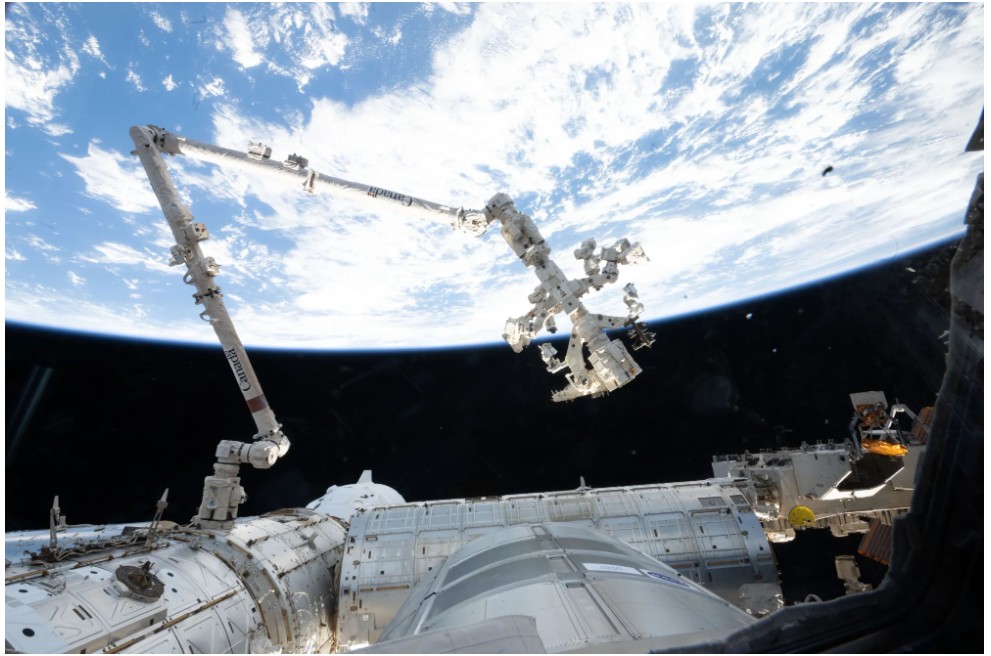
NASA astronauts Chris Williams and Jessica Meir will conduct a spacewalk on Tuesday, 30 June at 8:35 a.m. ET to repair Canada’s Canadarm2 robotic arm on the International Space Station. The 17.6-metre arm’s wrist joint malfunctioned on 27 May, affecting critical ISS operations including the capture and berthing of cargo spacecraft and the servicing of station hardware during spacewalks.
The repair mission is a collaboration between NASA and the Canadian Space Agency. A joint NASA–CSA video released this week provides a detailed overview of the planned repair work. The spacewalk is expected to last approximately 6.5 hours, with live coverage beginning at 7:00 a.m. ET. Canadarm2 remains essential to the station’s operational capability, making this repair a priority for upcoming cargo operations and future spacewalk activities.
Events This Week
Calendar is quiet through the next seven days.
Citations
- “NordSpace CEO Rahul Goel details spaceport progress and new Tempest rocket” — https://spaceq.ca/nordspace-ceo-rahul-goel-details-spaceport-progress-and-new-tempest-rocket/
- “Euclid studies Milky Way center, supports future Roman observations” — https://www.nasaspaceflight.com/2026/06/euclid-galactic-bulge-survey/
- “What’s Happening in Space Policy June 28-July 4, 2026” — https://spacepolicyonline.com/news/whats-happening-in-space-policy-june-28-july-4-2026/
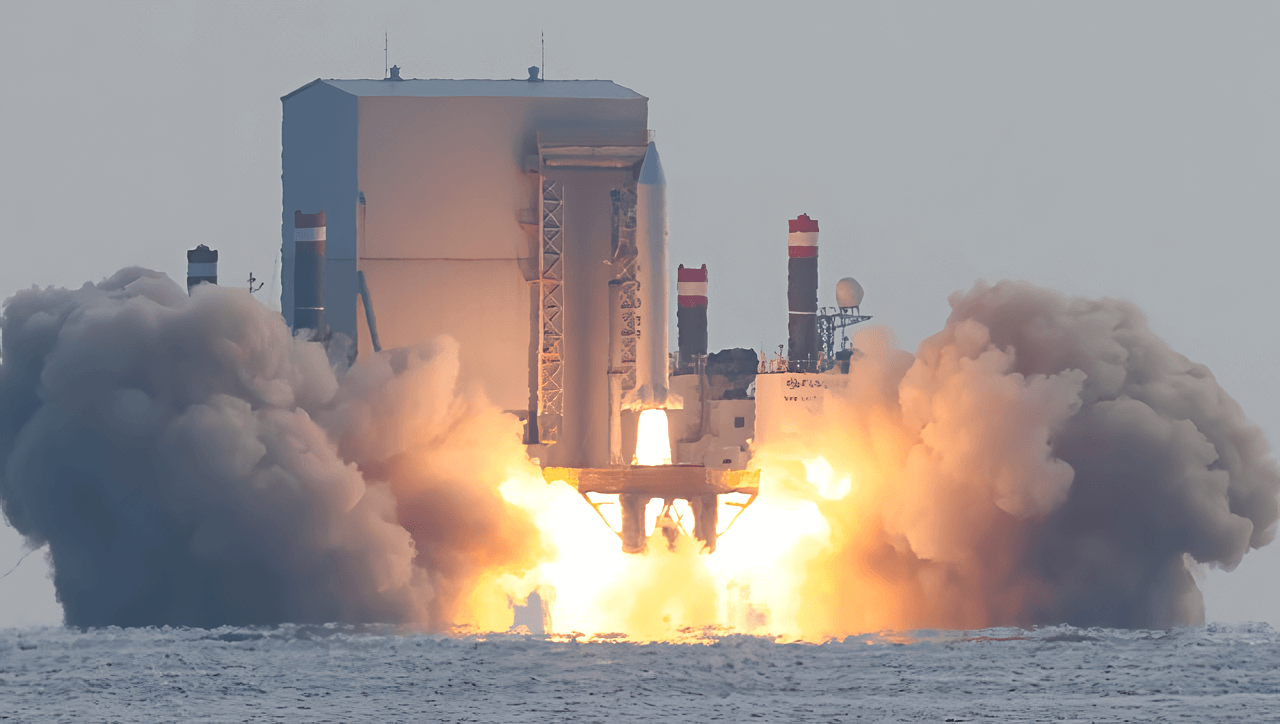
Demo Flight
Provider: Agency for Defense Development
Date: June 30, 2026
Time: 5:00 AM UTC
Vehicle: South Korean ADD Solid-Fuel SLV
Note: Launch vehicle name is provisional.
First orbital full version launch of the South Korean military small satellite launch vehicle, after 2 sub-orbital tests of individual stages on 30 March and 30 December 2022, and 1 orbital test flight without the 2nd stage on 4 December 2023. Details TBD.
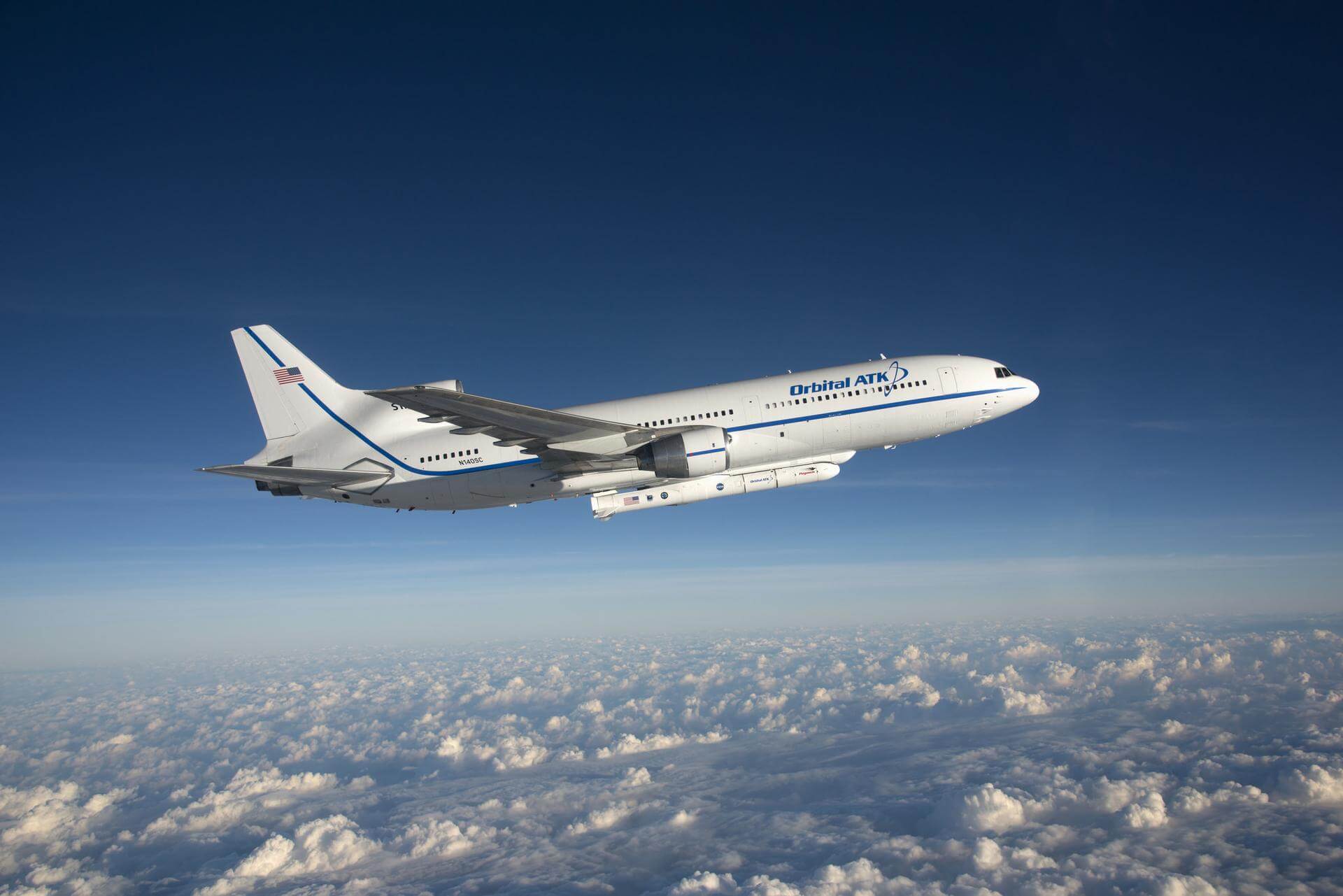
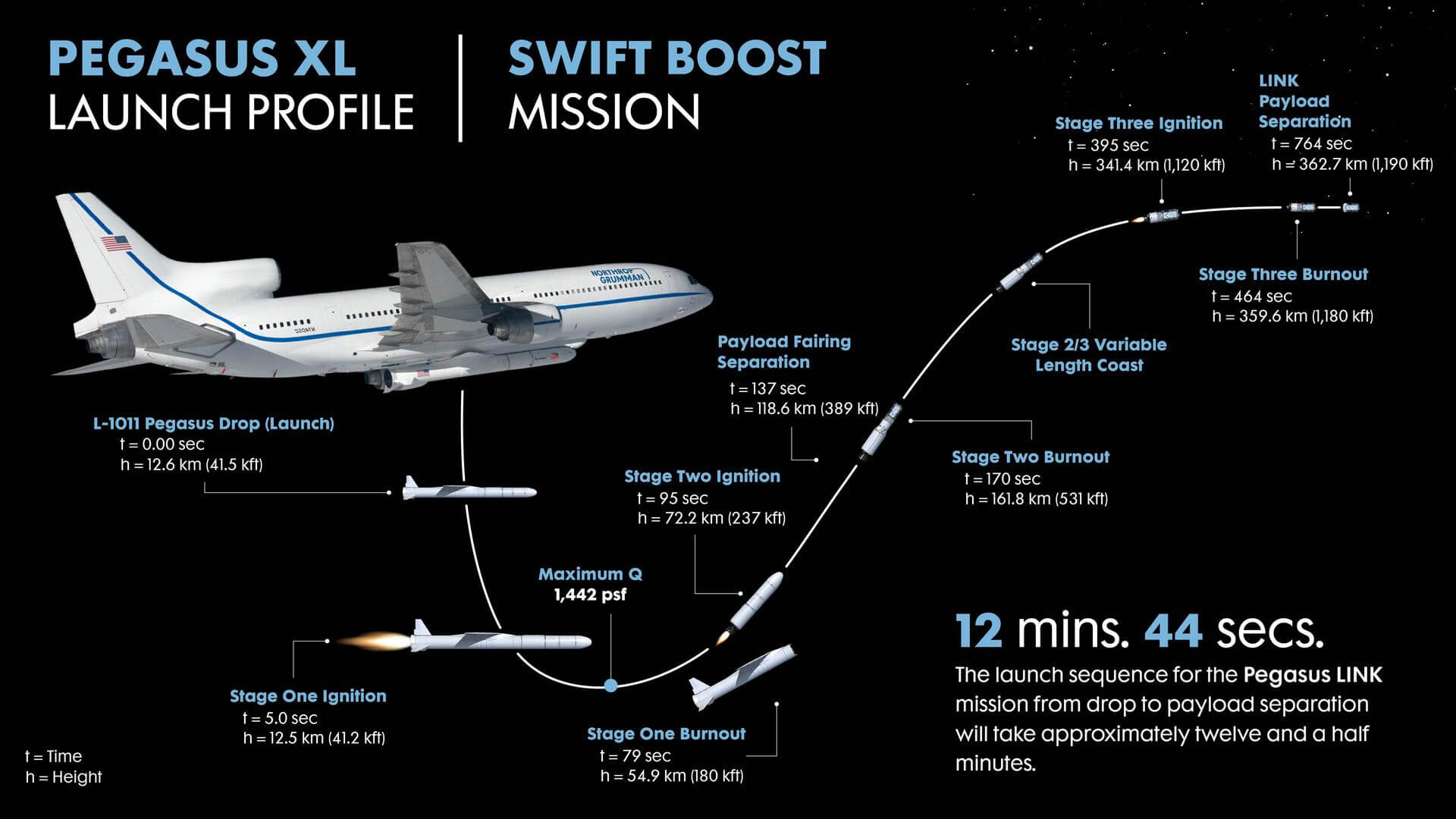
Swift Boost Mission
Provider: Northrop Grumman Space Systems
Date: June 30, 2026
Time: 10:23 AM UTC
Vehicle: Pegasus XL
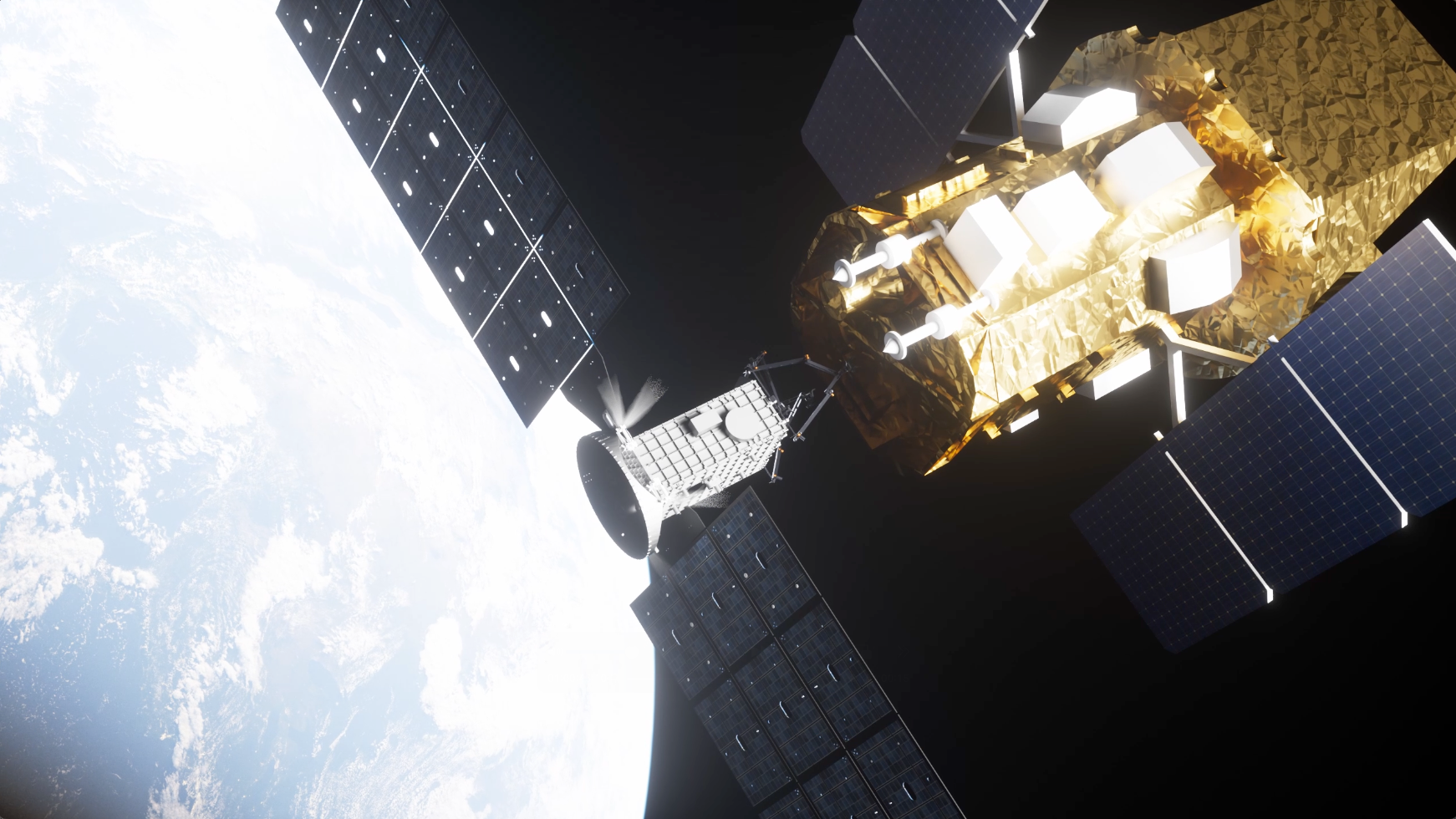
Contracted by NASA under the Small Business Innovation Research Phase 3 contract, Katalyst Space Technologies’ LINK servicing spacecraft will rendezvous and attach to NASA’s Neil Gehrels Swift Observatory to re-boost its orbit. This aims to demonstrate a key capability for the future of space exploration and extending the Swift mission’s science lifetime in gamma ray astronomy.
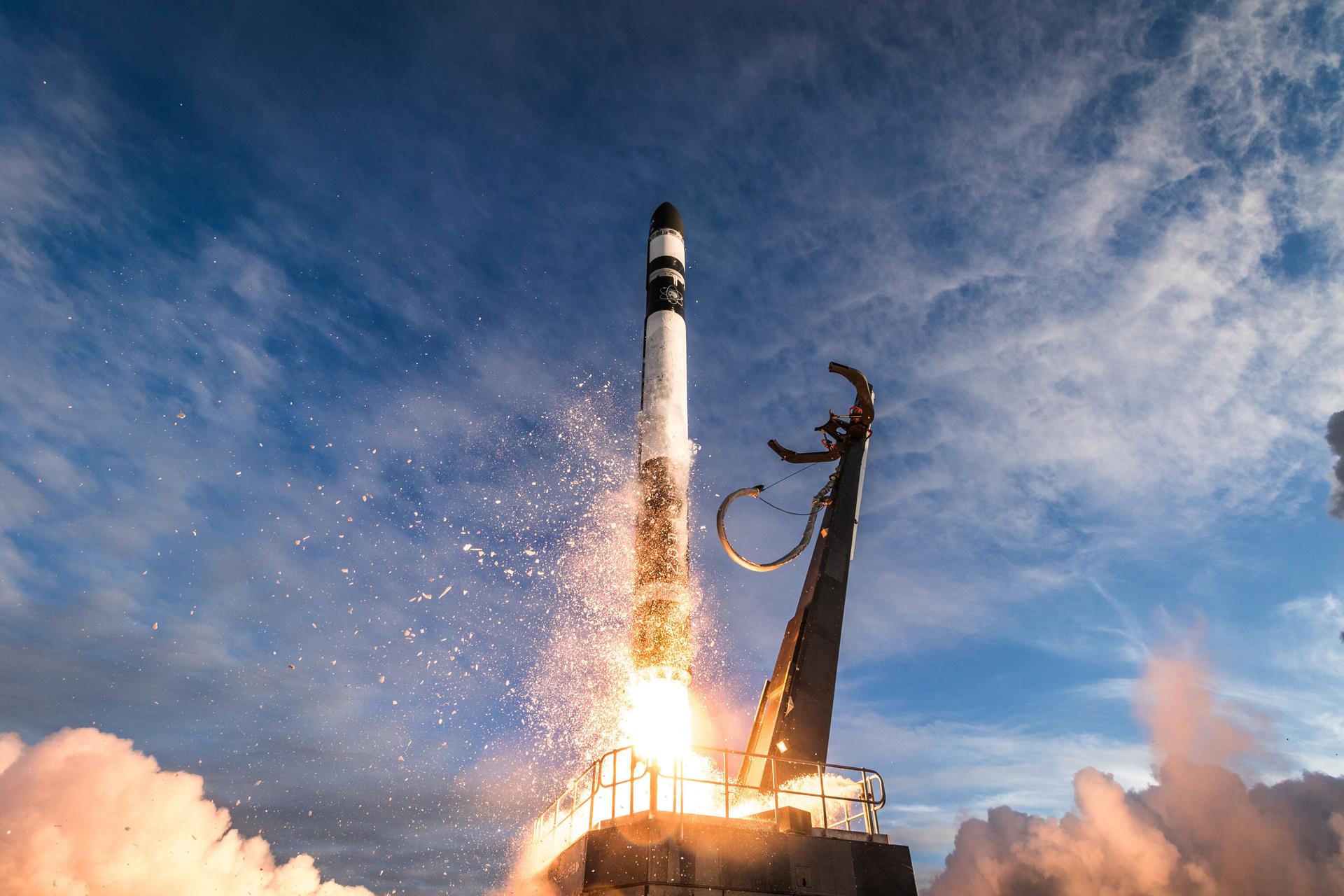
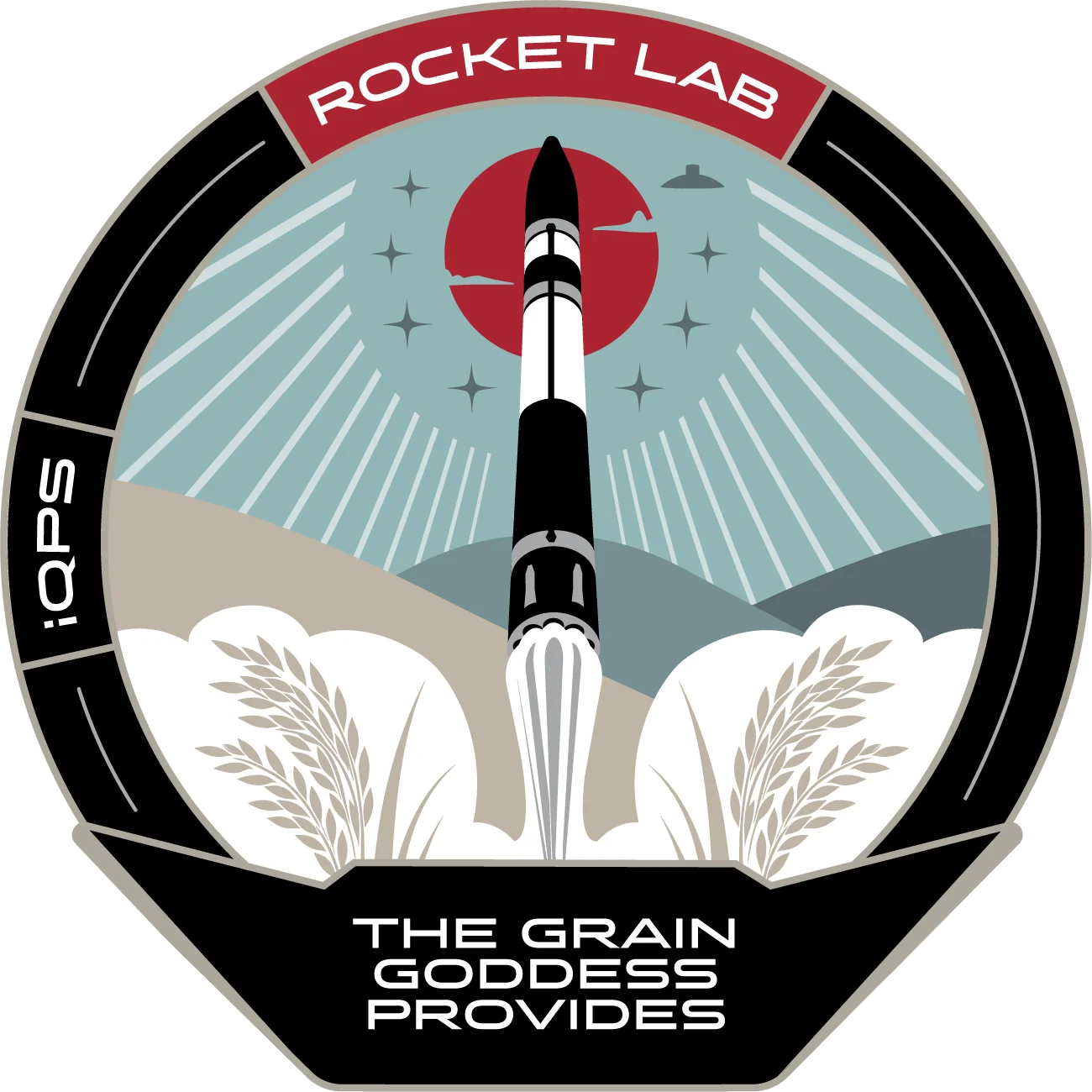
The Grain Goddess Provides (iQPS Launch 7)
Provider: Rocket Lab
Date: July 1, 2026
Time: 1:00 PM UTC
Vehicle: Electron
Synthetic aperture radar Earth observation satellite for Japanese Earth imaging company iQPS.
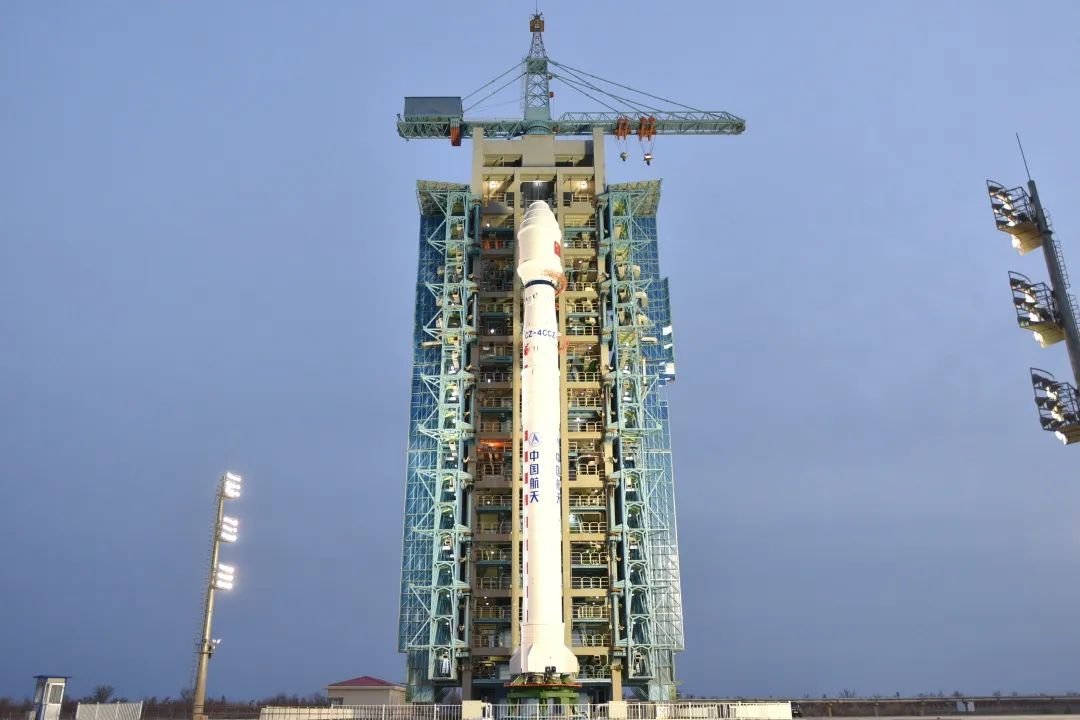
Unknown Payload
Provider: China Aerospace Science and Technology Corporation
Date: July 1, 2026
Time: 11:45 PM UTC
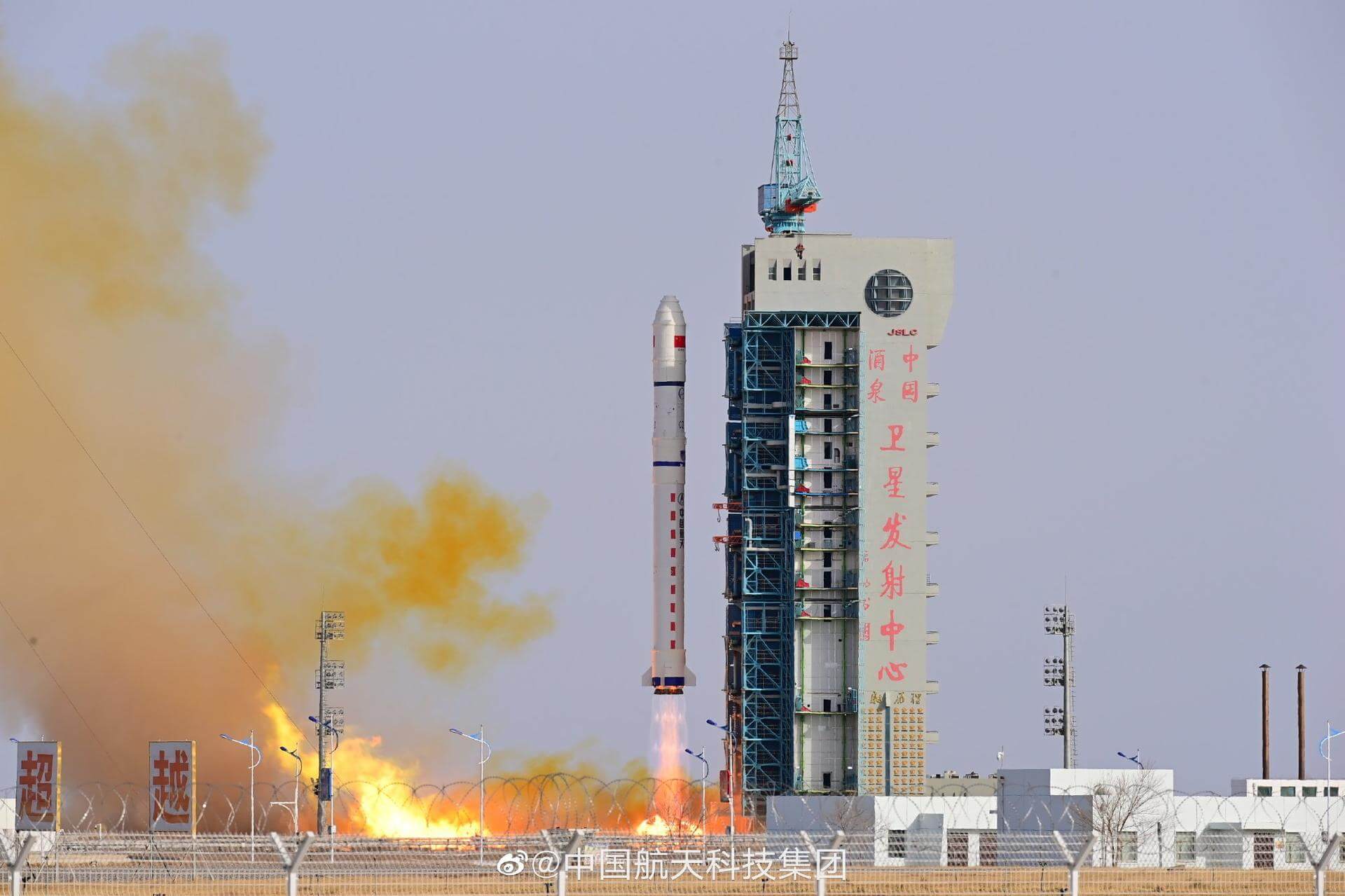
Vehicle: Long March 4C
Details TBD.

Starlink Group 17-46
Provider: SpaceX
Date: July 2, 2026
Time: 2:00 AM UTC
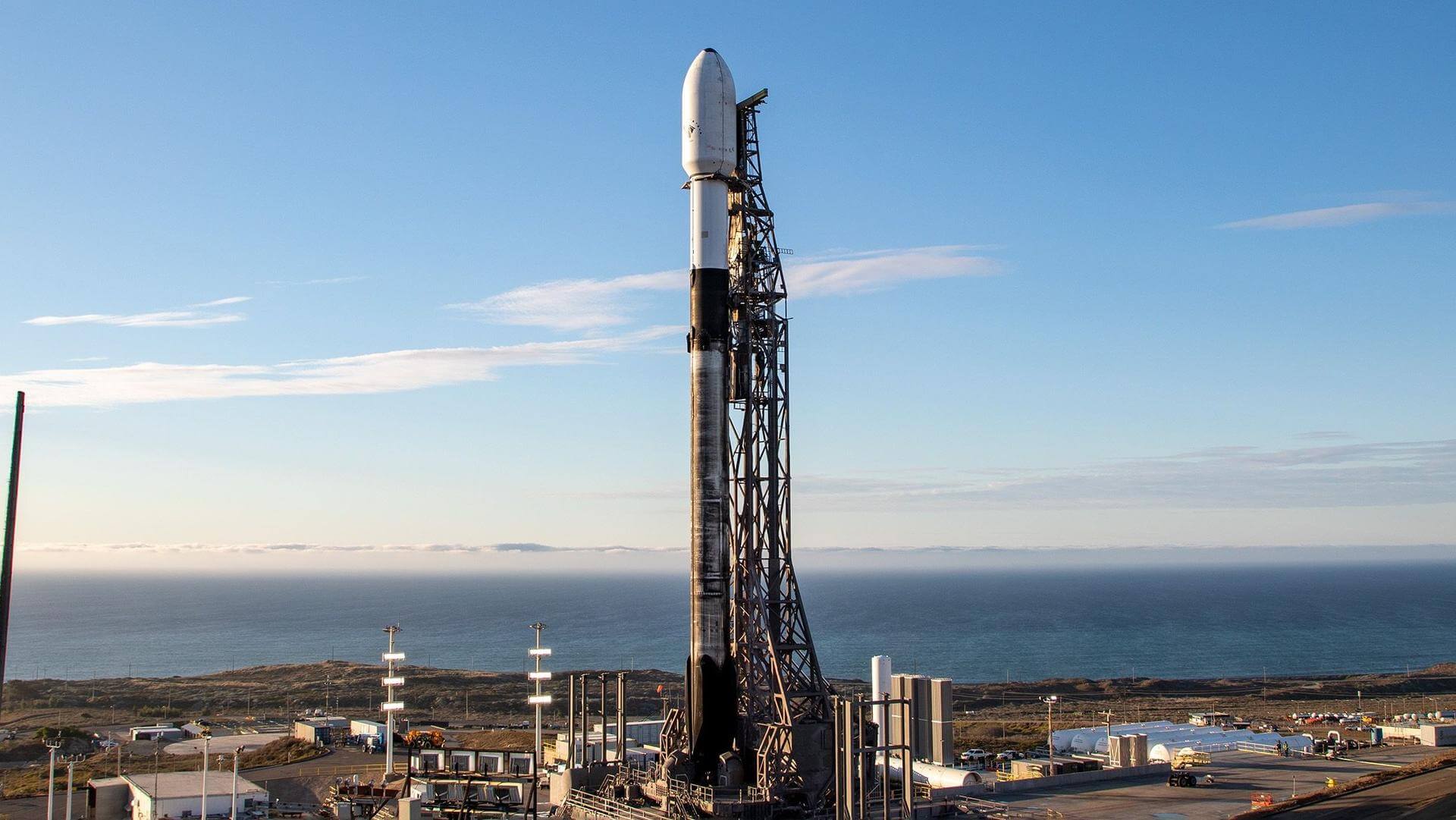
Vehicle: Falcon 9
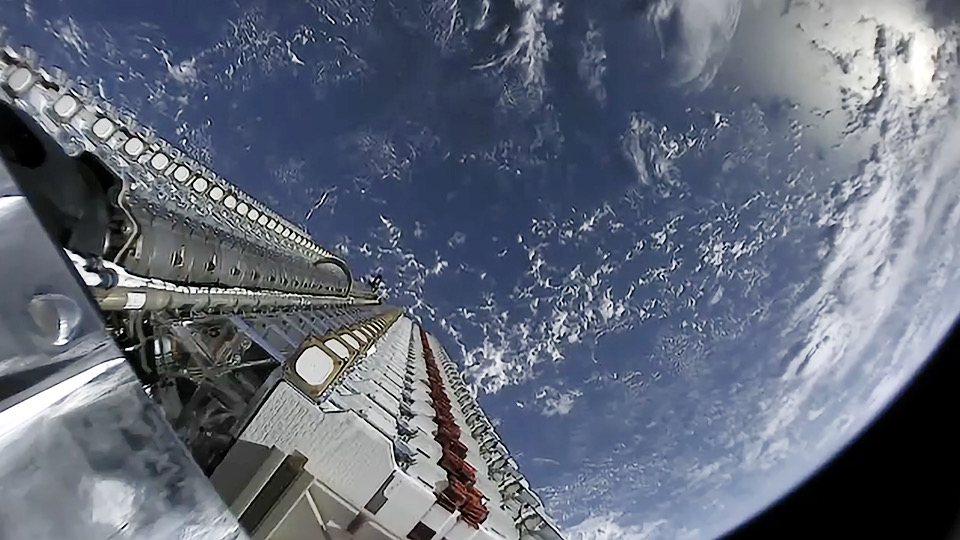
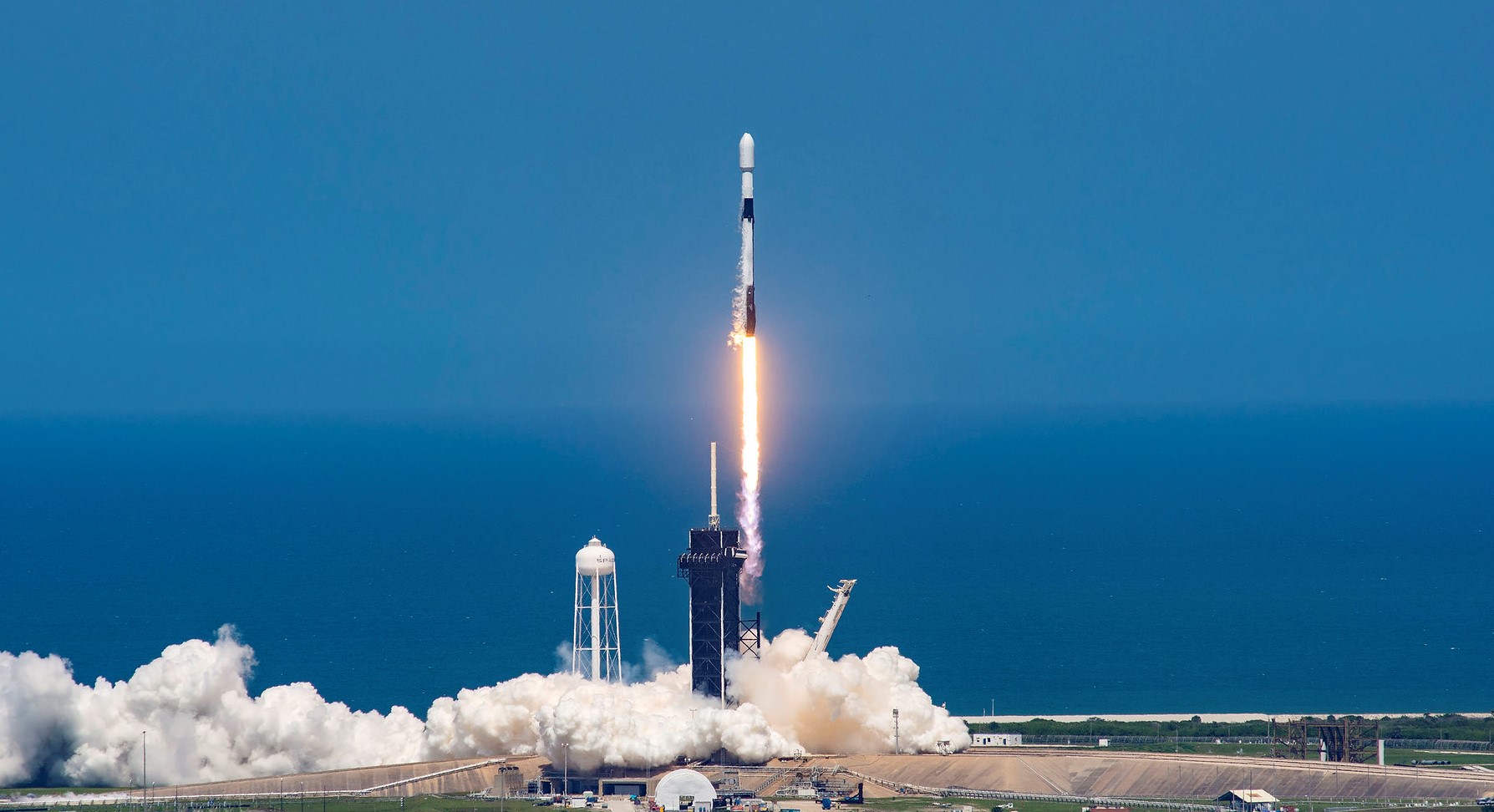
A batch of 24 satellites for the Starlink mega-constellation – SpaceX’s project for space-based Internet communication system.








Enjoying the content? Stay up to date on everything happening behind the scenes by following our Patreon!

