
NASA RS-25 Engine Tested, Moon Rovers Advance
RS-25 Engine Test Fires for 500 Seconds at Stennis
NASA tested RS-25 engine No. 10001 on October 21 on the Fred Haise Test Stand at NASA’s Stennis Space Center near Bay St. Louis, Mississippi. Test teams fired the developmental engine for almost eight-and-a-half minutes (500 seconds), the same amount of time RS-25 engines fire during launch of NASA’s SLS rocket.
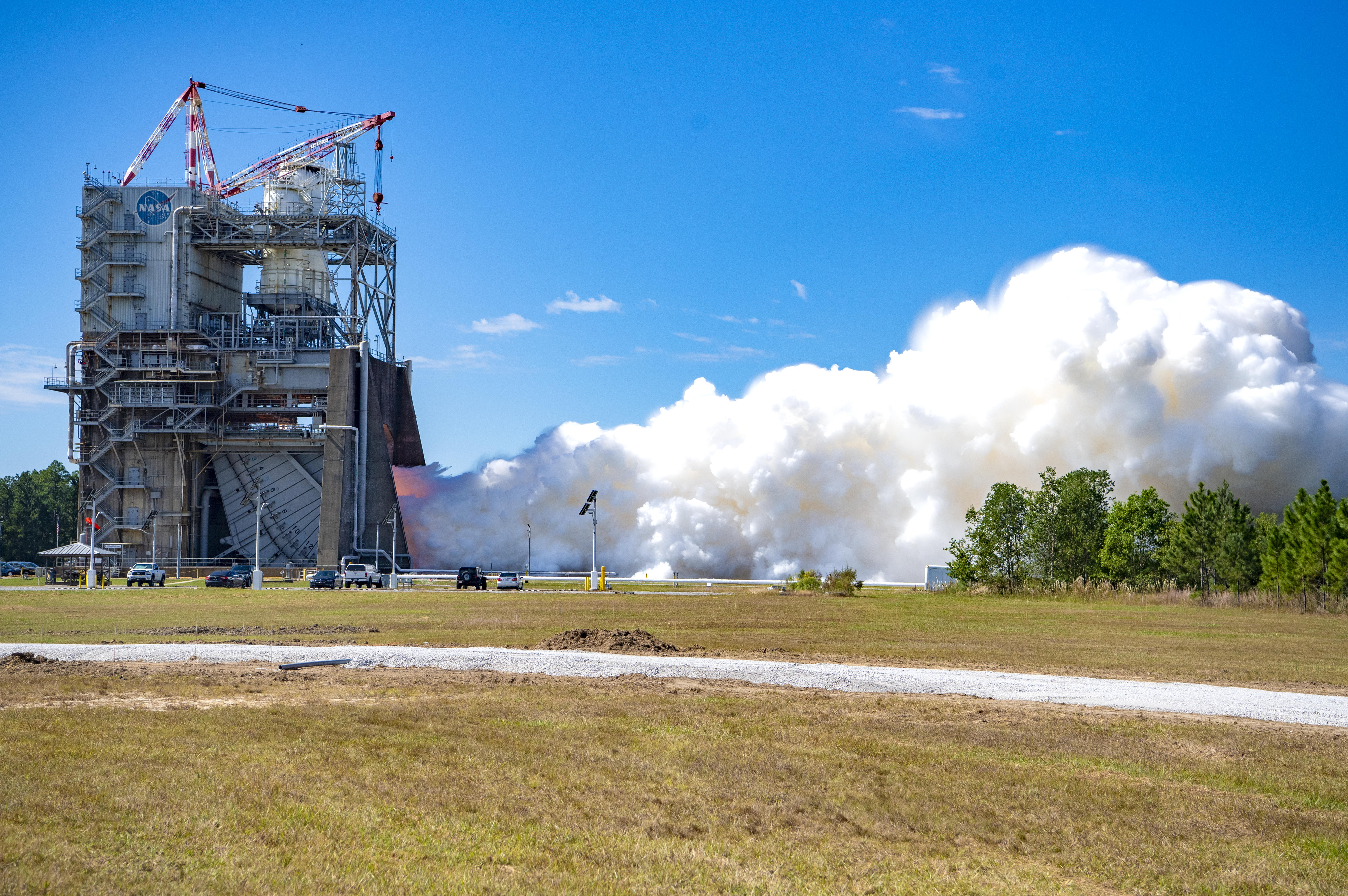
During the test, operators fired the engine up to the 111% power level, matching the thrust needed for new production engines to launch the SLS rocket and the Orion spacecraft to orbit. The main objectives were to acceptance test RS-25 flight components for future Artemis missions and validate the new thermal protection system, which protects the RS-25 engine nozzle from the thermal environment surrounding SLS during launch.
While this developmental engine will not be used in flight, the hot fire test provides NASA and prime contractor L3Harris Technologies with capability to capture critical data to improve engine performance and reliability. Four RS-25 engines produce up to 2 million pounds of combined thrust to help launch the SLS rocket for each Artemis mission.
The Aerospace Safety Advisory Panel discussed Artemis IV and future access to low Earth orbit at its fourth quarter 2026 meeting. The panel praised NASA Administrator Jared Isaacman for positive changes at the agency but raised worries about the Artemis IV lunar landing mission. ASAP member Charlie Precourt noted that 22 launches would be needed to provide the requisite amount of propellant for the lander to reach lunar orbit, though SpaceX CEO Elon Musk stated on X that the number would be 6-8.
The panel highlighted that Artemis IV involves completely new Human Landing System designs requiring in-space refueling, and that orbiting fuel depots don’t yet exist. Kelvin Manning, NASA Deputy Associate Administrator for Human Exploration, said SpaceX plans to demonstrate in-space cryogenic propellant transfer in early 2027. The uncrewed SpaceX landing test is planned for late 2027.
NASA will hold an Artemis acceleration press conference today, October 23, at 2 p.m. ET, featuring Administrator Jared Isaacman, Associate Administrator Amit Kshatriya, and Artemis program manager Jeremy Parsons.
Moon Base Rover Progress and VIPER Testing
NASA released a Moon Base video update on October 20 offering a closer look at progress on commercial lunar terrain vehicles and robotic rovers that will enable surface mobility for humanity’s first lunar outpost. “Lunar rovers are central to our surface mobility strategy,” said Robert Pickle, director of the Surface Mobility Office within the agency’s Moon Base Program.
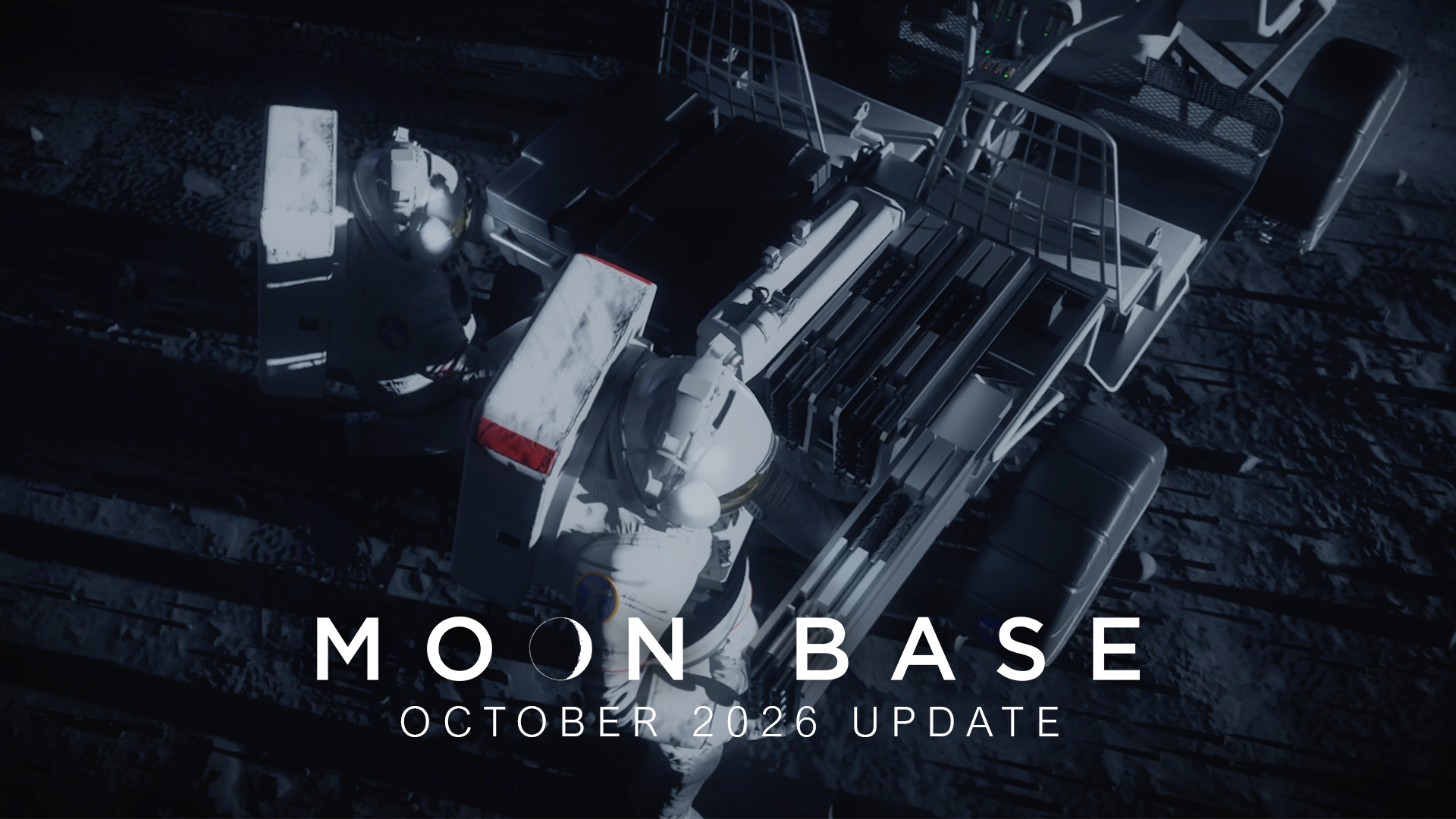
NASA’s VIPER (Volatiles Investigating Polar Exploration Rover) will embark on a mission to the lunar South Pole region in 2027 to venture into permanently shadowed craters looking for water and other valuable resources. After delivery to the lunar surface by a Blue Moon Mark 1 lander, VIPER will travel more than 18 miles (30 kilometers), collecting information about the thermal, lighting, and terrain environment in the Moon’s South Pole region.
The VIPER rover is currently at NASA’s Johnson Space Center in Houston where it is fully built and undergoing final testing before traveling to NASA’s Kennedy Space Center in Florida for launch to the Moon. Mission operations for VIPER will be run out of NASA’s Ames Research Center in Silicon Valley where teams are simulating possible scenarios for when the rover begins its mission.
To advance surface mobility on the Moon, NASA awarded Astrolab and Lunar Outpost task orders to build the first phase of Moon Base rovers capable of carrying crew, called lunar terrain vehicles (LTVs), that will be delivered to the Moon ahead of crewed Artemis missions. NASA awarded Blue Origin a task order to deliver the LTVs to the lunar South Pole region by 2028 through the agency’s Commercial Lunar Payload Services initiative.
Engineers at NASA’s Jet Propulsion Laboratory recently completed environmental testing of Griffin-1, a commercial lander supporting early Moon Base development. NASA also shared an interactive tour of the lunar South Pole region where the Moon Base will take shape, allowing users to explore its distinctive lighting, rugged terrain, and notable landmarks.
Mars Helicopter Blade Designs Target 18.7 Kilometer Flights
NASA researchers are developing the future of flight on Mars, laying the groundwork for helicopters with the ability to fly higher and farther while conducting science on the Red Planet. Using high-fidelity computer simulations and wind tunnel tests, engineers are reimagining the rotorcraft blades that could carry the next generation of Mars flyers.
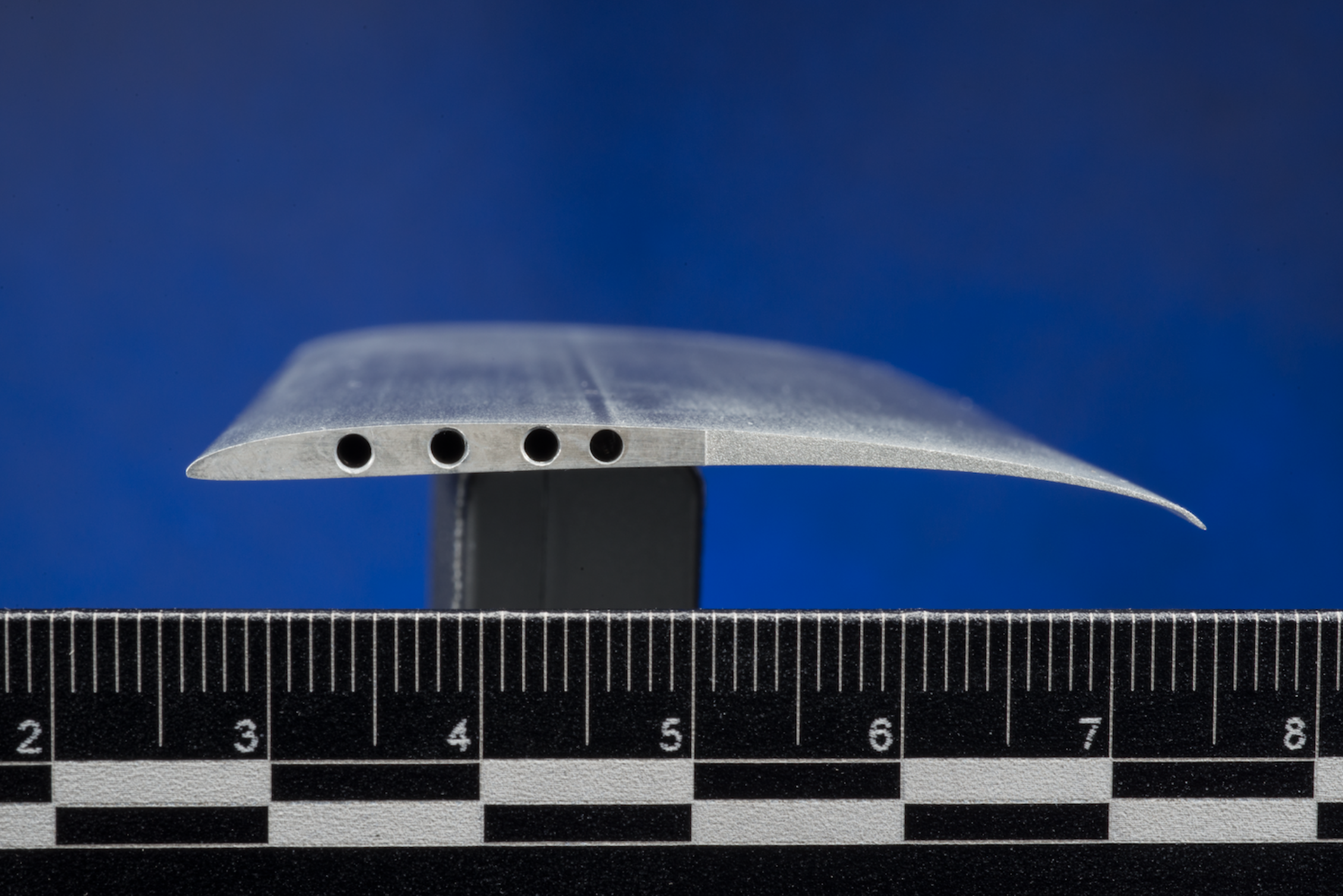
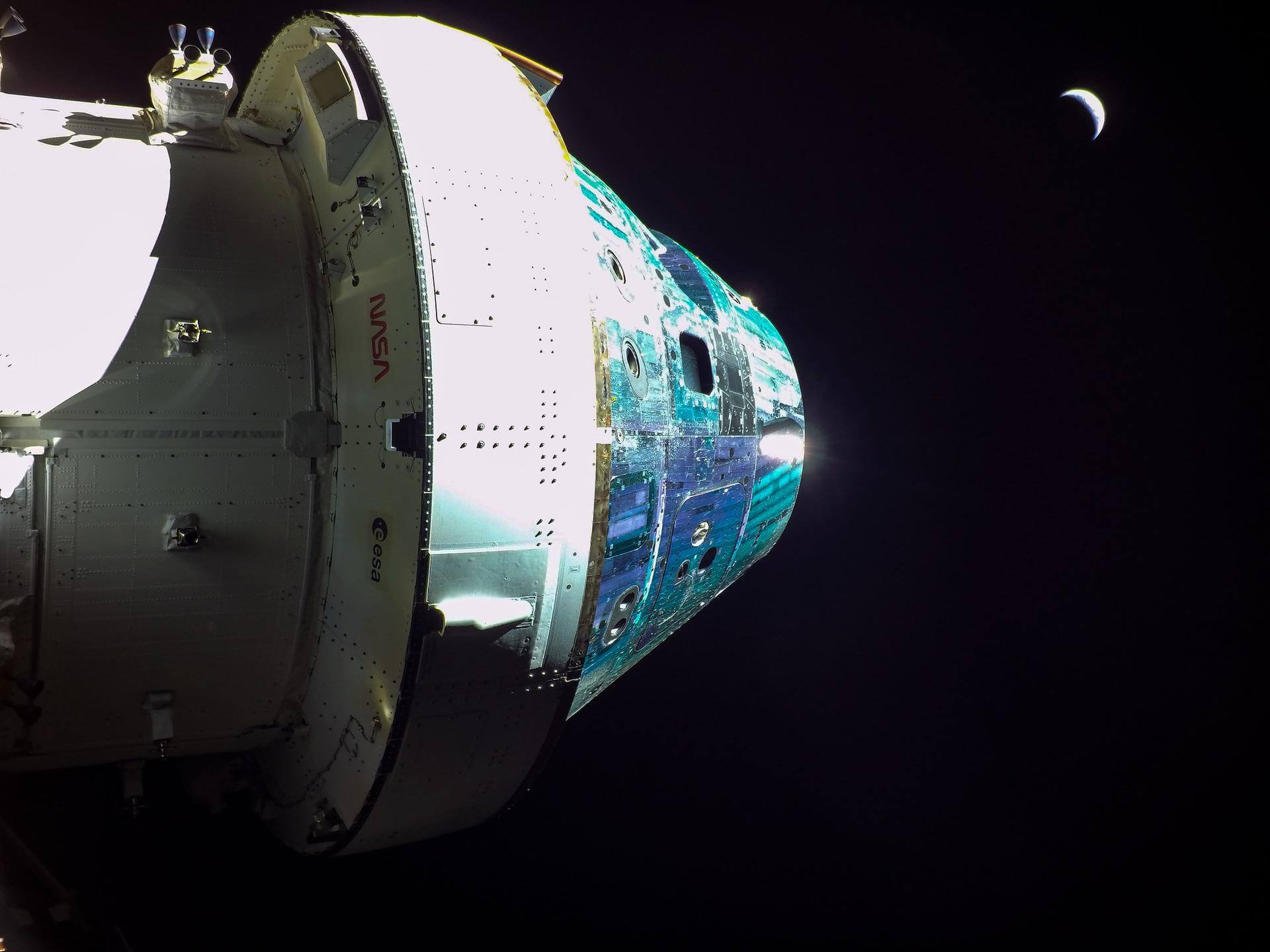
NASA’s Ingenuity helicopter made history as the first powered aircraft to fly on another planet. The SkyFall mission, scheduled for launch in 2028, builds on that legacy with a trio of helicopters destined for Mars exploration. Researchers are exploring unconventional blade designs that are thinner and sharper, aiming to enable future missions after SkyFall to expand their single-flight range across Mars.
One team at NASA’s Ames Research Center in California’s Silicon Valley is working with Imperial College London and Nagoya University, Japan, to test a new blade cross-section, or airfoil, that promises to significantly boost aerodynamic performance on Mars. Researchers designed the new airfoil, called roamx-0201, using advanced simulations and algorithms tuned to Mars conditions, pointing researchers toward a thinner, asymmetrical shape.
Subsequent wind tunnel tests showed that the optimized design boosted performance and was better able to recover in risky flight conditions. Researchers found that the redesigned blades could enable future Mars helicopters to expand the distances that can be covered in one uninterrupted flight from Ingenuity’s 0.7 kilometers to as much as 18.7 kilometers while carrying scientific instruments. The findings were announced in a paper published September 22 in the journal of the American Institute of Aeronautics and Astronautics.
Since breaking the all-time off-world driving distance record on October 11, Perseverance has continued work on the Red Planet, exploring some of the oldest rocks ever encountered on Mars or Earth. NASA is also providing communication and navigation support to JAXA’s MMX mission via NASA’s Deep Space Network. The MMX spacecraft carries two pieces of NASA hardware: the MEGANE instrument will measure elemental composition to reveal the origin of Mars’s moons, and the P-Sampler demonstration will advance capabilities for surface material acquisition in low gravity.
SR-1 Freedom Nuclear Power Module Advances
NASA’s Space Reactor-1 (SR-1) Freedom will be humanity’s first fission-powered spacecraft to travel outside Earth’s orbit. Announced during NASA’s “Ignition” event, this mission will demonstrate nuclear electric propulsion in deep space, and progress is underway on its key element: the nuclear power module.
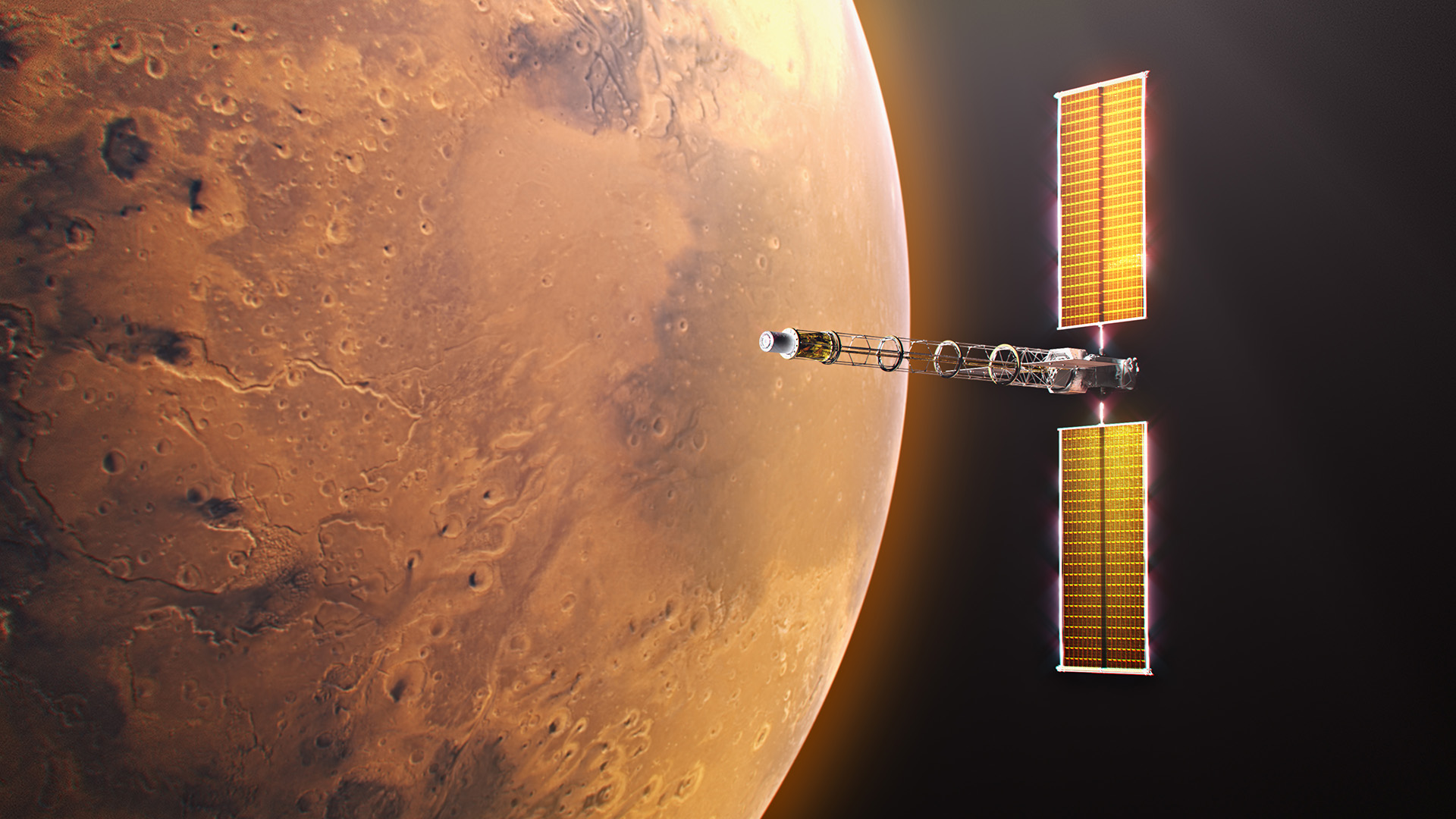
Sierra Lobo Inc. will provide the nuclear power module’s closed Brayton cycle power conversion system, which converts thermal energy from its fission reactor into electrical power needed for SR-1 Freedom’s nuclear electric propulsion demonstration. The work will be conducted under the Space Flight Systems Development and Operations Contract III, awarded in 2024, to support spaceflight hardware design, development, testing, and operations at NASA’s Glenn Research Center in Cleveland.
The power conversion system will be integrated with the fission reactor, which is being designed and developed by the Department of Energy’s Idaho National Laboratory to complete the nuclear power module. The nuclear reactor portion of SR-1 Freedom will remain inactive until the spacecraft leaves Earth orbit.
Launching in late 2028, SR-1 Freedom will deliver the SkyFall science mission, a team of three Mars helicopters evolved from the Ingenuity design, to collect scientific data, demonstrate exploration zones, and identify potential water sources. The mission will pave the way for deep space exploration and next-generation fission-powered systems designed to keep NASA’s Moon Base operating through periods of darkness and in locations where solar power alone is not sufficient.
NASA’s Psyche spacecraft has fired up its thrusters and is accelerating to the metal-rich asteroid of the same name. The spacecraft’s solar-powered propulsion system uses electromagnetic fields to steadily deliver thrust as it journeys toward its target, which may be a partial core of a planetesimal, a building block of an early planet.
Expedition 75 Prepares for Spacewalks 100 and 101
The Expedition 75 crew bioprinted blood vessels, tried on a spacesuit, trained to use a pair of robotic arms, and set up Earth photography sessions this week. Crew members also processed tumor cells and videotaped an advanced workout session to benefit human health. Preparations continue for two spacewalks scheduled for October 29 and November 5.

NASA astronaut Anil Menon and CSA astronaut Joshua Kutryk will exit the station’s Quest airlock to install and deploy an International Space Station Roll-Out Solar Array (IROSA) on the 2A electrical power channel. The solar array will be the seventh IROSA and will provide additional power to support critical station operations, including its safe and controlled deorbit.
The crew continued to test ways to grow fresh food in microgravity using plant pillows, advancing research on seed storage and crop growth capabilities for future exploration missions. On October 16, Expedition 75 had begun unloading a SpaceX Dragon and was activating new research to create artificial retinas, grow heart tissues, and develop more precise cancer treatments.
Uzbekistan Joins Artemis Accords
Uzbekistan has joined 76 other nations around the world by committing to the peaceful and safe exploration of space through the Artemis Accords.

Artemis II’s Jeremy Hansen and Victor Glover reflected on their historic trip around the Moon in the latest Houston We Have A Podcast.
Citations
- NASA Safety Panel Concerned About Artemis IV, Future Access to LEO — spacepolicyonline.com
- NASA Conducts RS-25 Engine Test in Support of Future Artemis Missions — nasa.gov
- NASA Provides Progress Update on Moon Base Rovers — nasa.gov
- NASA Experimental Mars Helicopter Blade Designs Target Longer Flights — nasa.gov
- NASA’s SR-1 Freedom Advances with Progress on Nuclear Power Module — nasa.gov
- Launch Library 2: Space Events This Week — ll.thespacedevs.com
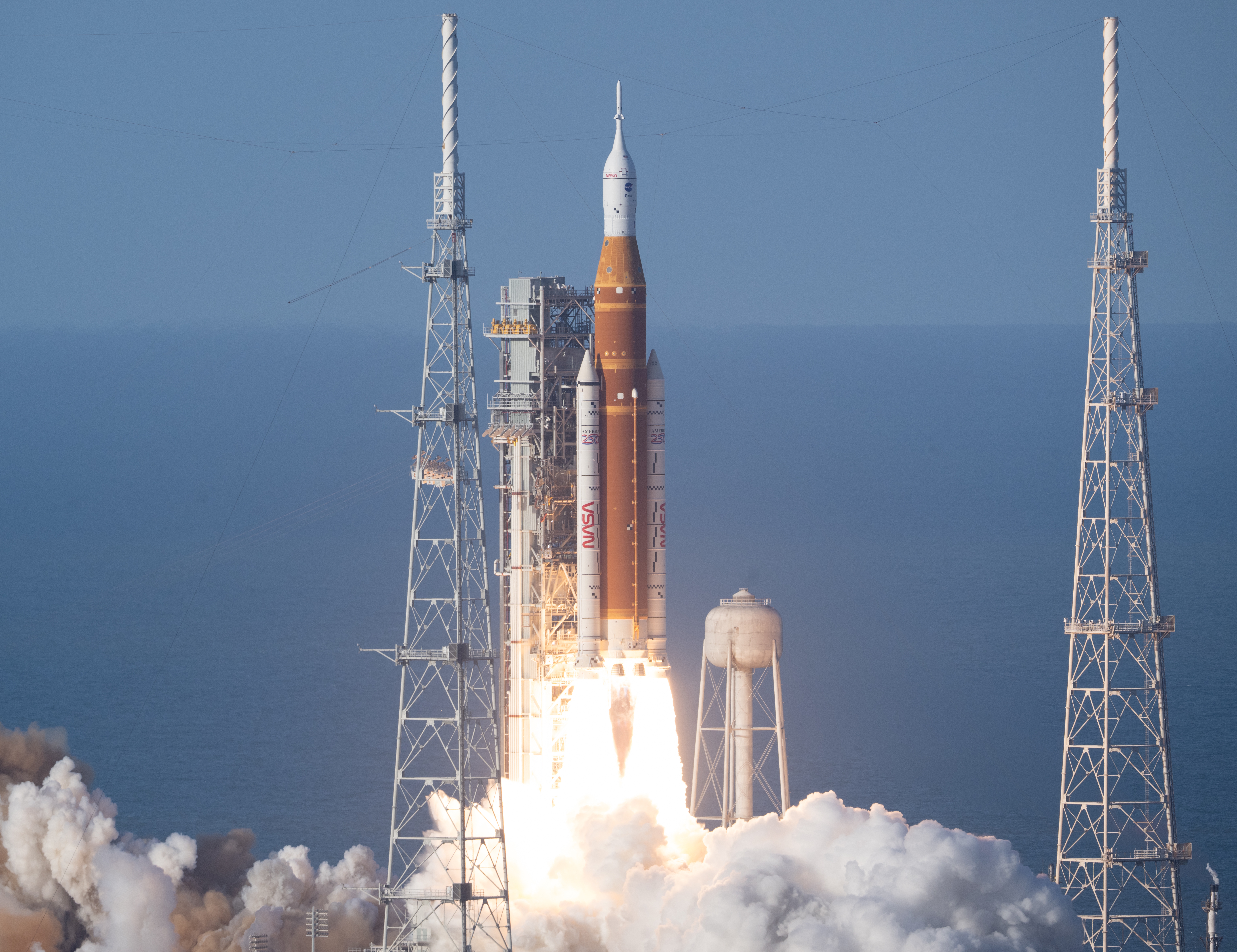
Artemis III
Provider: National Aeronautics and Space Administration
Date: June 30, 2027
Time: 12:00 AM UTC
Vehicle: Space Launch System (SLS)
Artemis III is the second crew mission as part of the Artemis program. Artemis III will send a crew of 4 on a Low Earth Orbit mission, with the Orion rendezvous and dock with one or both commercial lunar landers in development by SpaceX and Blue Origin, performing in-space tests of the docked vehicles, integrated checkout of life support, communications, and propulsion systems, as well as tests of the new Extravehicular Activity (xEVA) suits.
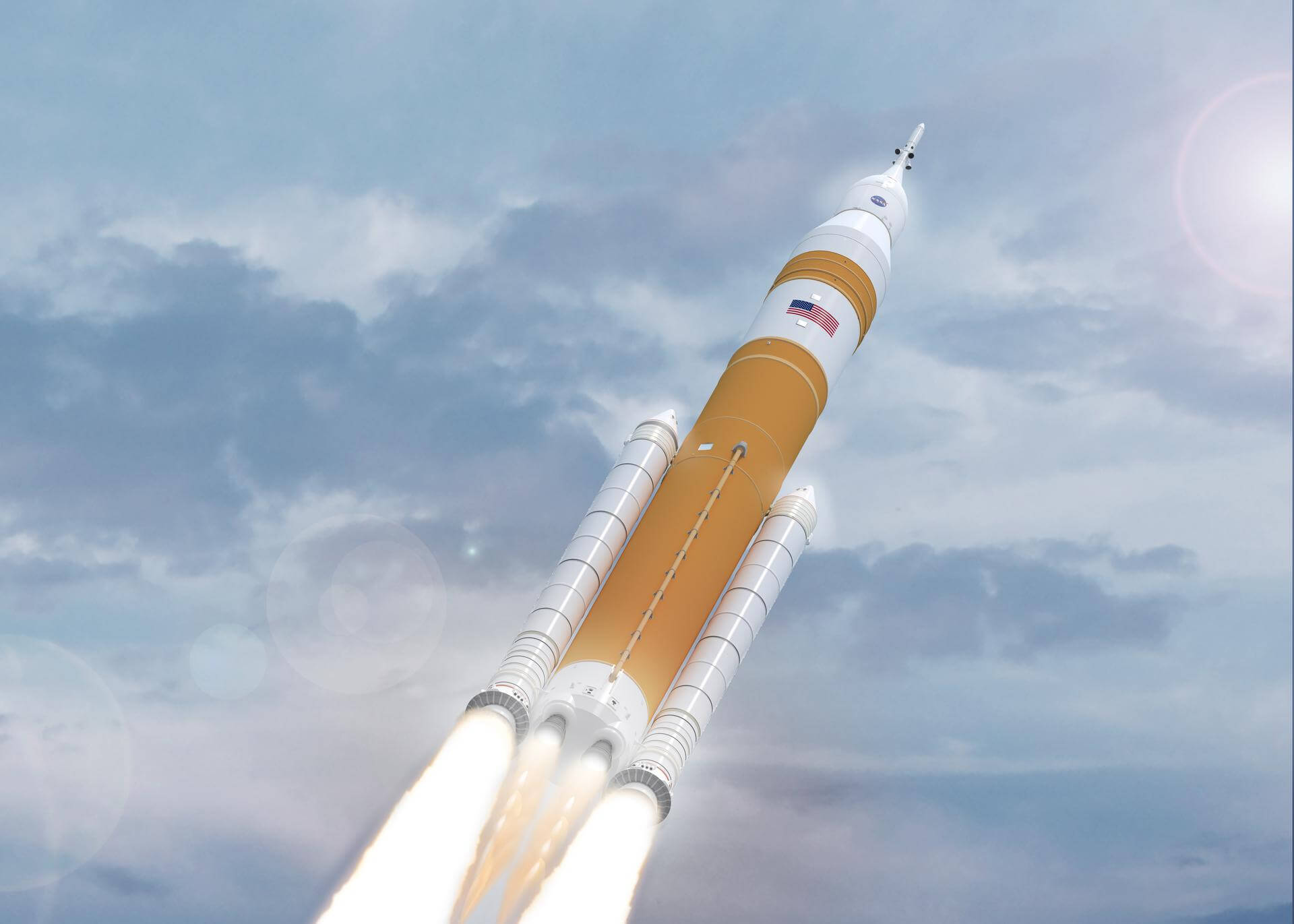
Artemis IV
Provider: National Aeronautics and Space Administration
Date: June 30, 2028
Time: 12:00 AM UTC
Vehicle: Space Launch System (SLS)
Artemis IV is planned to be the first human lunar landing mission since the Apollo Program.
Artemis V
Provider: National Aeronautics and Space Administration
Date: December 31, 2028
Time: 12:00 AM UTC
Vehicle: Space Launch System (SLS)
Artemis V is planned to be the second human lunar landing mission since the Apollo Program.
SLS Block 1B | Artemis VI
Provider: National Aeronautics and Space Administration
Date: September 30, 2030
Time: 12:00 AM UTC
Vehicle: Space Launch System (SLS)
No description available
SLS Block 1B | Artemis VII
Provider: National Aeronautics and Space Administration
Date: September 30, 2031
Time: 12:00 AM UTC
Vehicle: Space Launch System (SLS)
No description available

Enjoying the content? Stay up to date on everything happening behind the scenes by following our Patreon!


Leave a Reply