
The NASA Overview: NASA Roman Nears Launch as Curiosity Maps Mars Polygons
A Quiet Week on Artemis as Orion Gains Calibration Support
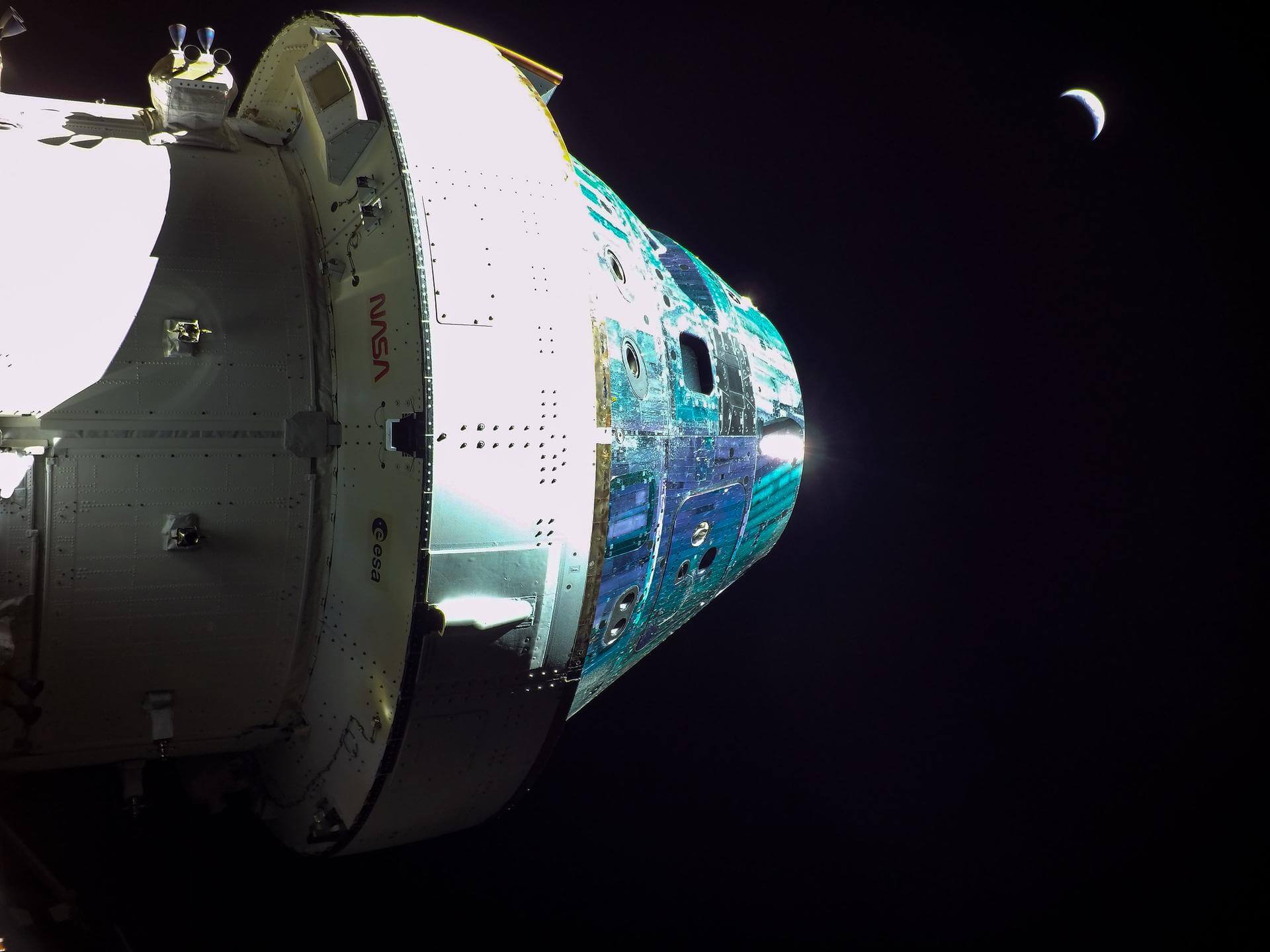
The Artemis programme had a relatively quiet week on the social front. The most substantive update came via NASA’s Artemis account, which highlighted an intern effort at Johnson Space Center where Alex Gregor is analysing and calibrating cameras for the optical navigation system used on Orion and other spacecraft — a small but ongoing piece of the puzzle needed for future crewed missions around the Moon.

Beyond that, no major SLS stacking, Gateway, or HLS milestones were announced this week.
Lunar Infrastructure Push: Stennis Tests, Cislunar Demos, and a Griffin Lander at JPL
NASA’s lunar surface effort picked up several threads this week on the path toward a sustained Moon presence near the south pole. The agency announced it is partnering with Blue Origin to support testing of the company’s New Glenn rocket at NASA’s Stennis Space Center in Mississippi, an arrangement aimed at advancing the commercial capabilities that will underpin future lunar missions and the planned Moon Base.

NASA also revealed it is sending two small spacecraft to lunar orbit to demonstrate advanced rendezvous and proximity operations, autonomous navigation, and cislunar communications. Those demonstrations will help validate the capabilities needed for sustained lunar exploration and for building out the communications backbone of a future Moon Base.
On the commercial lander side, Voyant Technologies’ Griffin-1 lander has arrived at the Jet Propulsion Laboratory, where it will undergo environmental testing to verify it can withstand launch, landing, and the harsh conditions of space before its commercial mission supporting the lunar surface programme.

The week’s NIAC awards, covered below, also stacked up several concepts with direct lunar application — including hovering robots designed to explore lava tubes under the lunar surface, thermal management systems for small mobile exploration robots, and the integration of radioisotope heat sources into astronaut suits to address the nearly two-week-long lunar nights at the south pole.
Curiosity Returns a Sea of Polygons from Valle Grande
NASA’s Curiosity rover sent back one of its most striking vistas yet this week: a 360-degree panorama stitched together from 340 images taken on June 19 and 20, the 4,930th and 4,931st Martian sols of the mission. The view shows the rover’s new working area in a Martian valley nicknamed “Valle Grande,” where the ground is laced with honeycomb-like polygonal fractures spreading in every direction, each roughly 1.5 to 3 inches (4 to 8 centimetres) across.

The polygons even wrap around the sides of a sand-capped butte the team nicknamed “Miraflores,” a 20-foot-tall (6-metre-tall) feature topped with a thick cap of sand. Mission scientists say the textures can form several ways — drying mud, temperature cycling, sediment compaction, or shrinkage from water loss or mineral changes — and are now measuring the shapes and chemistry to determine which process was at work.
“We’ve seen a lot of fascinating landscapes through Curiosity’s eyes, but this sea of polygons took our breath away,” said Ashwin Vasavada, the mission’s project scientist at JPL in Southern California. “We measured their shapes and chemistry carefully and are hopeful there are clues in the data as to how these features formed.”
Separately, NASA Mars confirmed the twin ESCAPADE spacecraft remain on track to arrive at Mars in September 2027, where they will study how the solar wind interacts with the Martian environment and drives atmospheric loss at the Red Planet.
Roman Telescope Readies for Aug. 30 Launch; Webb Digs Into Little Red Dots
The headliner in deep-space news this week is the Nancy Grace Roman Space Telescope. NASA held a virtual pre-launch media briefing on July 29 with officials from Goddard and Headquarters, previewing a mission now scheduled to lift off from Kennedy Space Center on Sunday, Aug. 30. Roman will join Hubble and Webb in surveying the cosmos, distinguished by its wide field of view and specialisation in dark-energy and exoplanet science.
The Webb team, meanwhile, published a new study on July 29 in The Astrophysical Journal tackling the puzzle of “little red dots” — extremely distant, compact red sources that have intrigued astronomers since Webb first found them in 2022. A team led by Pierluigi Rinaldi of the University of Arizona’s Steward Observatory, now at the Space Telescope Science Institute in Baltimore, argues that at least part of the LRD phenomenon can be explained by observational bias: some features simply do not appear at higher redshifts with current technology.
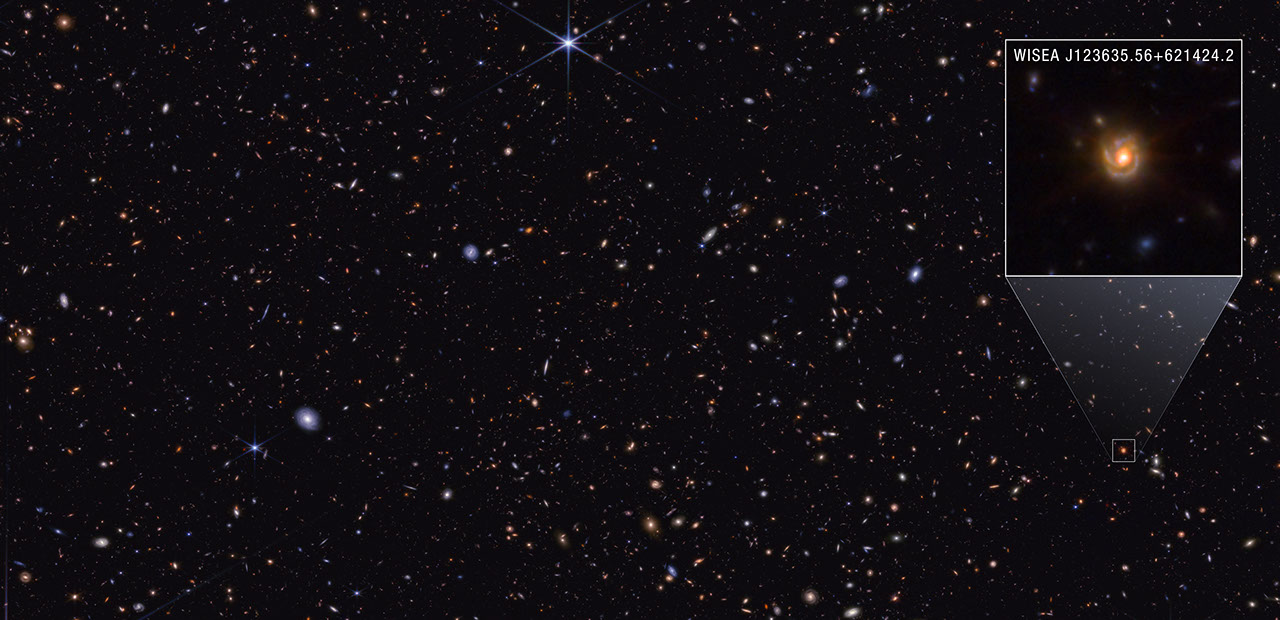
The study proposes one evolutionary pathway the dots may follow as the universe ages, suggesting they are not, strictly speaking, a unique galaxy population at all — a conclusion that could reshape how astronomers interpret Webb’s earliest census of the distant universe.
Over at JPL, the week brought a milestone for the NISAR mission, which celebrated one year since launching from India to study Earth’s land and ice surfaces. The satellite recently announced full access to data from both its L-band and S-band radars.
Command Changes, an August Spacewalk Trio, and Burnham Assigned to Expedition 76
The week opened with a change of command aboard the station. Roscosmos cosmonaut Sergey Kud-Sverchkov handed the station’s command to NASA astronaut Jessica Meir during a ceremony on July 25. The following day, the Soyuz MS-28 spacecraft landed near Dzhezkazgan, Kazakhstan, carrying home Expedition 74 crew members NASA’s Chris Williams and Roscosmos’s Kud-Sverchkov and Sergei Mikaev after their tour aboard the station.
NASA also announced the next crew step for the orbiting laboratory: astronaut Deniz Burnham has been assigned to the station as an Expedition 76 flight engineer. Burnham will launch aboard a Roscosmos Soyuz MS-30 spacecraft alongside cosmonauts Dmitri Petelin and Konstantin Borisov from the Baikonur Cosmodrome in Kazakhstan, with a March 2027 target and a roughly seven-month stay planned.
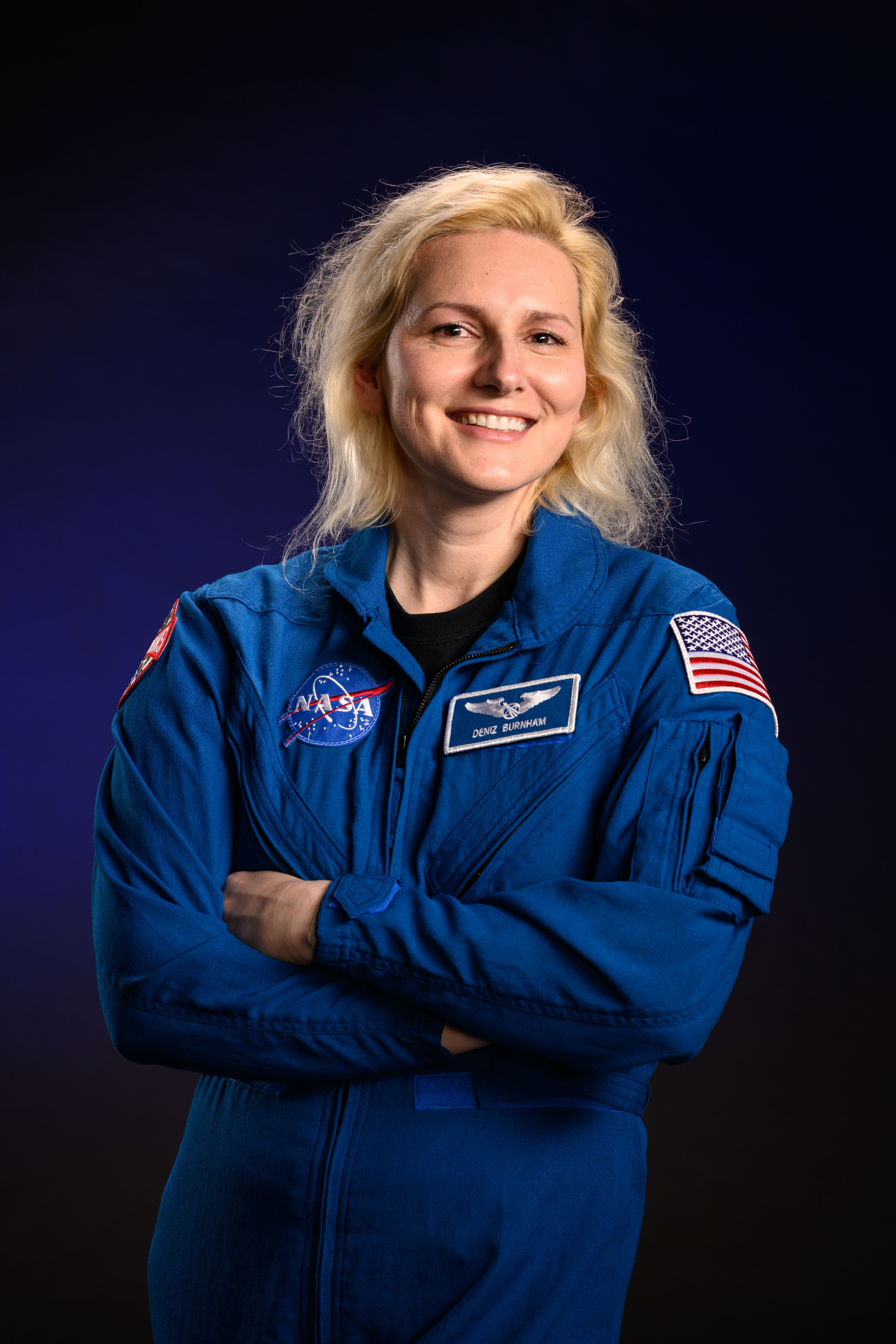
Burnham was selected as a NASA astronaut in 2021 and graduated with the agency’s 23rd astronaut class in 2024. Born at Incirlik Air Base in Adana, Turkey, she was living in Wasilla, Alaska, at the time of her selection. She brings a background in chemical and mechanical engineering, more than a decade managing onsite drilling operations on oil rigs across North America, service in the U.S. Navy Reserves, and a private pilot licence with rotorcraft-helicopter ratings.
Looking ahead, NASA and the ISS programme are preparing for three U.S. spacewalks scheduled for August, previewed during a July 30 news conference with flight directors at Johnson. The crew-side work includes ongoing experiments in plant growth outside dedicated facilities, 3D-printed living cartilage cells, and research into more effective in-space exercise — work that feeds directly into the long-duration demands of lunar and Mars missions.
NIAC Hands Out $3.2 Million for 18 Visionary Concepts Spanning Moon, Venus, and Saturn’s Rings
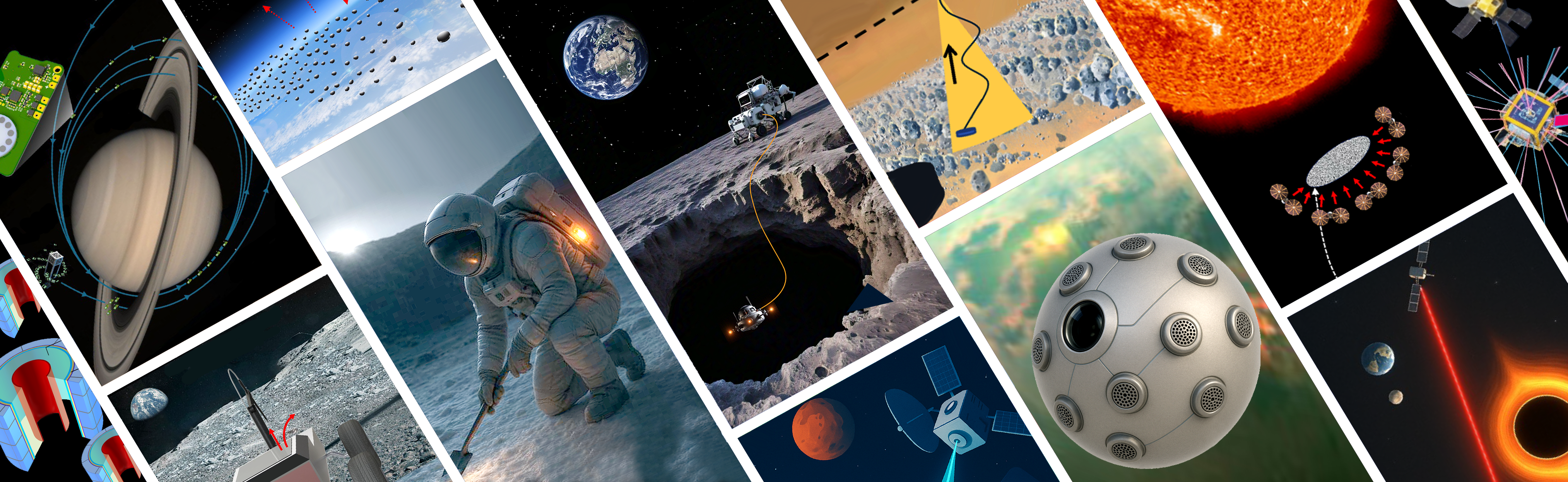
NASA’s Innovative Advanced Concepts programme announced 18 new Phase I awards this week, totalling $3.2 million. Each award provides up to $175,000 for a nine-month early-stage investigation — ideas, not yet official missions, meant to seed the agency’s next generation of aerospace capabilities.
“NASA has outlined an ambitious vision for the future of space exploration — we’re returning to the Moon to stay, advancing to Mars, and pushing to deepen our understanding of space,” said Greg Stover, director of the Advanced Research and Technology division within the Research and Technology Mission Directorate at NASA Headquarters in Washington. “Achieving that will require more than incremental technological advancement. It means we need great leaps. These awards are the kinds of innovation the world needs NASA to help foster.”
Phillip Williams, NIAC’s acting program executive, added: “Every innovation, every leap in technology, starts with a seed of an idea. The NIAC program allows NASA to germinate those seeds and determine if there’s something that could be grown to benefit future space missions and our nation’s aerospace economy.”
The 2026 cohort is heavy on lunar concepts — hovering robots designed to scout lava tubes, thermal systems for small mobile exploration robots, and radioisotope-heated suits to keep astronauts warm through the Moon’s roughly two-week-long nights. Beyond the Moon, one team will explore hardening instruments for longer Venus missions, another will deploy a swarm of 10,000 tiny satellites to map Saturn’s rings, and a third will build a sample-collection system targeting the rings of Saturn, Uranus, and Neptune.
Citations
- “NASA’s Curiosity Discovers a Field of Martian Polygons” — https://science.nasa.gov/photojournal/nasas-curiosity-discovers-a-field-of-martian-polygons/
- “NASA’s Curiosity Mars Rover Discovers Field of Honeycomb Textures” — https://www.nasa.gov/missions/mars-science-laboratory/curiosity-rover/nasas-curiosity-mars-rover-discovers-field-of-honeycomb-textures/
- “NASA Assigns Astronaut Deniz Burnham to First Space Station Mission” — https://www.nasa.gov/news-release/nasa-assigns-astronaut-deniz-burnham-to-first-space-station-mission/
- “NASA Webb Explores Family Tree of Newly Discovered Distant Objects” — https://science.nasa.gov/missions/webb/nasa-webb-explores-family-tree-of-newly-discovered-distant-objects/
- “NASA Awards 2026 Innovative Technology Concepts” — https://www.nasa.gov/news-release/nasa-awards-2026-innovative-technology-concepts/
- “Space Events This Week” — Launch Library 2 summary
- NASA — Official X feed — https://x.com/NASA
- NASA JPL — Official X feed — https://x.com/NASAJPL
- NASA Artemis — Official X feed — https://x.com/NASAArtemis
- NASA Mars — Official X feed — https://x.com/NASAMars
- International Space Station — Official X feed — https://x.com/Space_Station
- NASA Moon to Mars — Official X feed — https://x.com/NASAMoonBase
Artemis III
Provider: National Aeronautics and Space Administration
Date: June 30, 2027
Time: 12:00 AM UTC
Vehicle: Space Launch System (SLS)
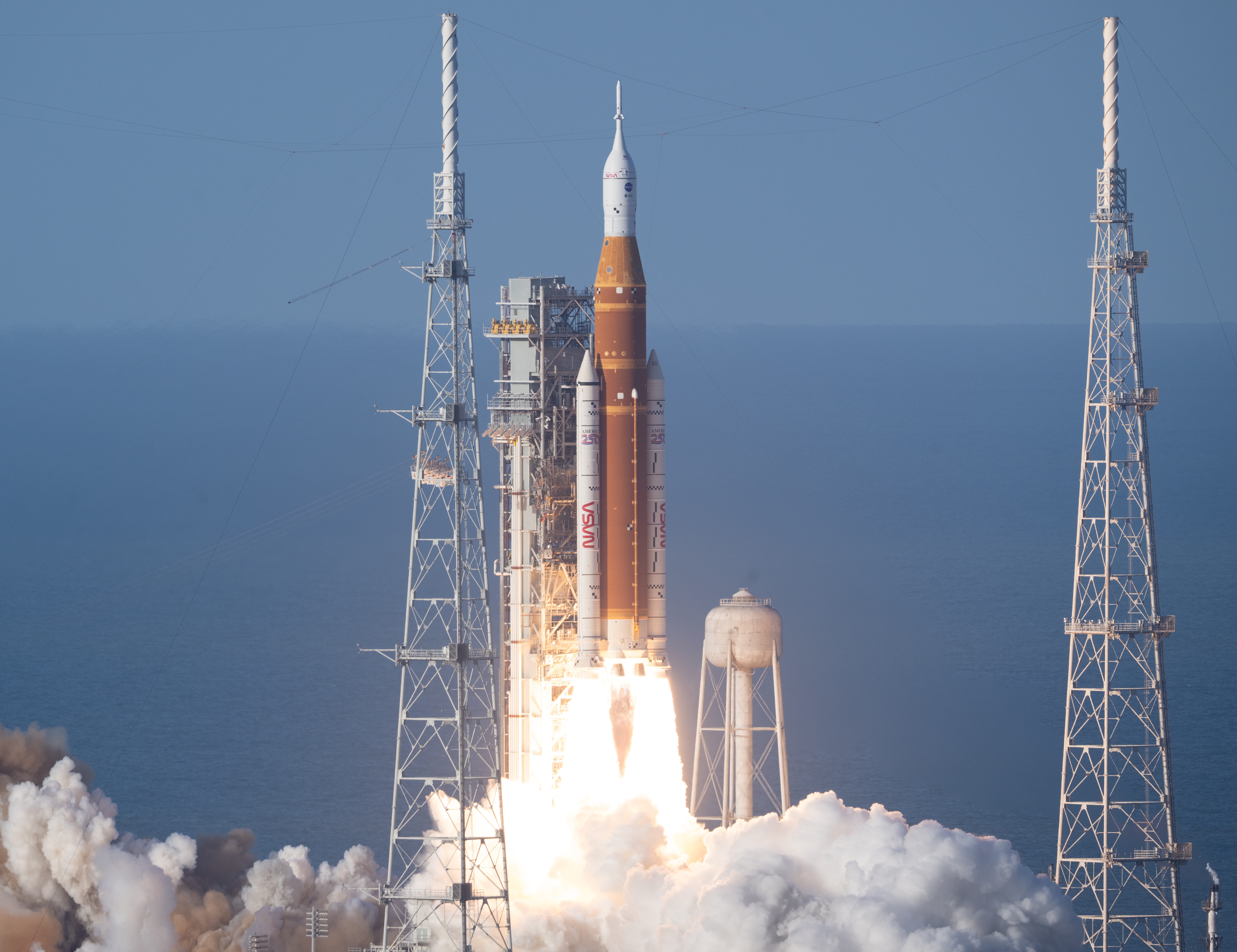
Artemis III is the second crew mission as part of the Artemis program. Artemis III will send a crew of 4 on a Low Earth Orbit mission, with the Orion rendezvous and dock with one or both commercial lunar landers in development by SpaceX and Blue Origin, performing in-space tests of the docked vehicles, integrated checkout of life support, communications, and propulsion systems, as well as tests of the new Extravehicular Activity (xEVA) suits.
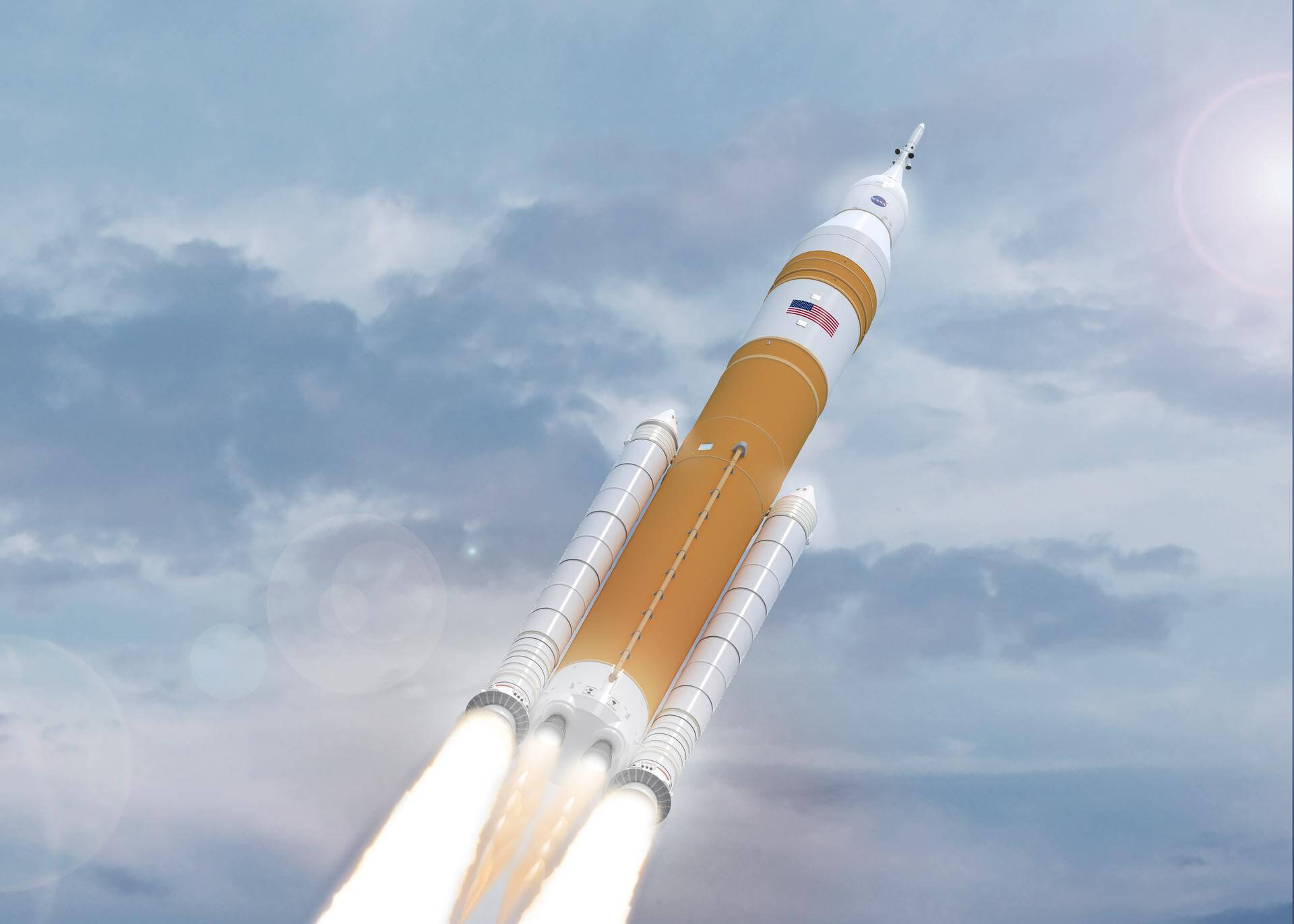
Artemis IV
Provider: National Aeronautics and Space Administration
Date: June 30, 2028
Time: 12:00 AM UTC
Vehicle: Space Launch System (SLS)
Artemis IV is planned to be the first human lunar landing mission since the Apollo Program.
Artemis V
Provider: National Aeronautics and Space Administration
Date: December 31, 2028
Time: 12:00 AM UTC
Vehicle: Space Launch System (SLS)
Artemis V is planned to be the second human lunar landing mission since the Apollo Program.
SLS Block 1B | Artemis VI
Provider: National Aeronautics and Space Administration
Date: September 30, 2030
Time: 12:00 AM UTC
Vehicle: Space Launch System (SLS)
No description available
SLS Block 1B | Artemis VII
Provider: National Aeronautics and Space Administration
Date: September 30, 2031
Time: 12:00 AM UTC
Vehicle: Space Launch System (SLS)
No description available
Enjoying the content? Stay up to date on everything happening behind the scenes by following our Patreon!

