
The NASA Overview: NASA Ends Swift Reboost, Advances Artemis III Stacking
Four Booster Segments Stacked for Artemis III
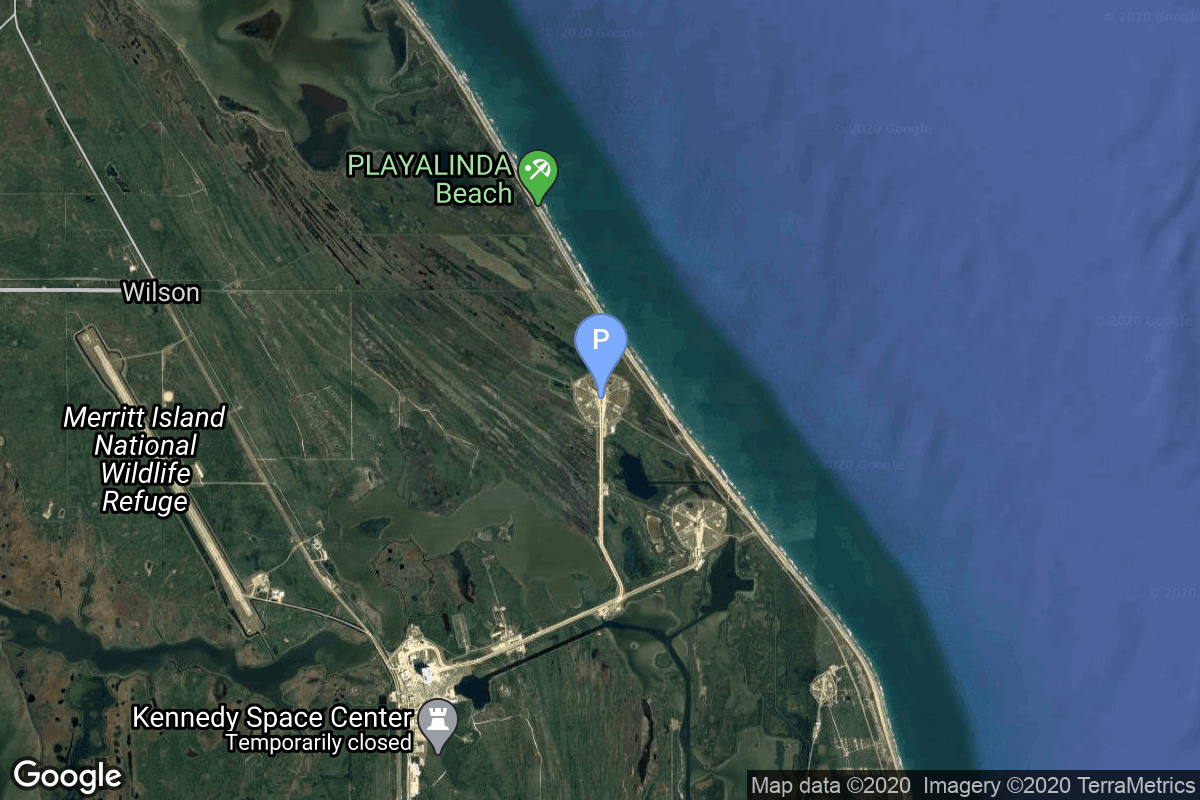
NASA confirmed this week that four of ten solid rocket booster motor segments for the Artemis III SLS rocket are now stacked at Kennedy Space Center. The mission is scheduled to launch in 2027 and will test rendezvous and docking capabilities between Orion and commercial lunar landers.

Beyond hardware stacking, the agency continues work on lunar surface challenges. NASA’s Electrodynamic Dust Shield uses electric fields to lift and remove lunar dust without moving parts, one of several approaches under development to manage dust tolerance for sustained exploration.
Surface mobility also advanced this week. The top five teams from the Rock and Roll with NASA challenge tested their wheel designs at Johnson Space Center’s rock yard, working toward solutions for crew transport across the lunar surface.
LRO Captures Falcon 9 Impact Crater, NavCube Heads to the Moon
NASA’s Lunar Reconnaissance Orbiter captured images of a new crater formed when a SpaceX Falcon 9 upper stage struck the Moon on Aug. 5, 2026. The debris impacted the surface following its January 2025 launch of the Firefly Blue Ghost 1 mission.
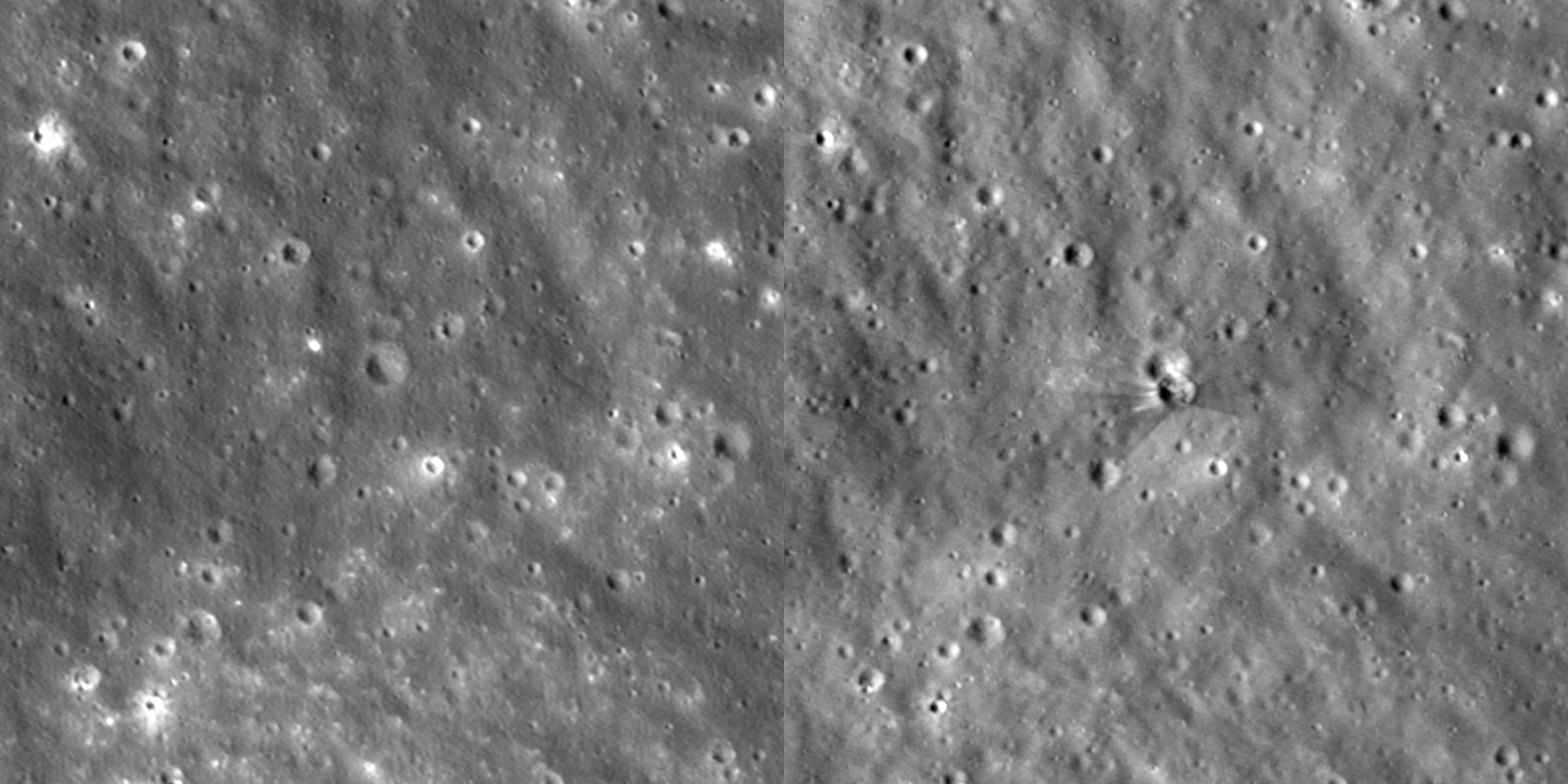
Engineers tilted LRO so its Narrow-Angle Camera pointed toward the crater during passes about 60 miles above the surface, traveling 1 mile per second. The orbiter circles the Moon from pole to pole every two hours, requiring six days of waiting for the target to rotate into view. If the camera snapped even 10 seconds too early or too late, the target would drift off-centre by 10 miles. Scientists measured the crater at 60 feet wide and less than 10 feet deep.
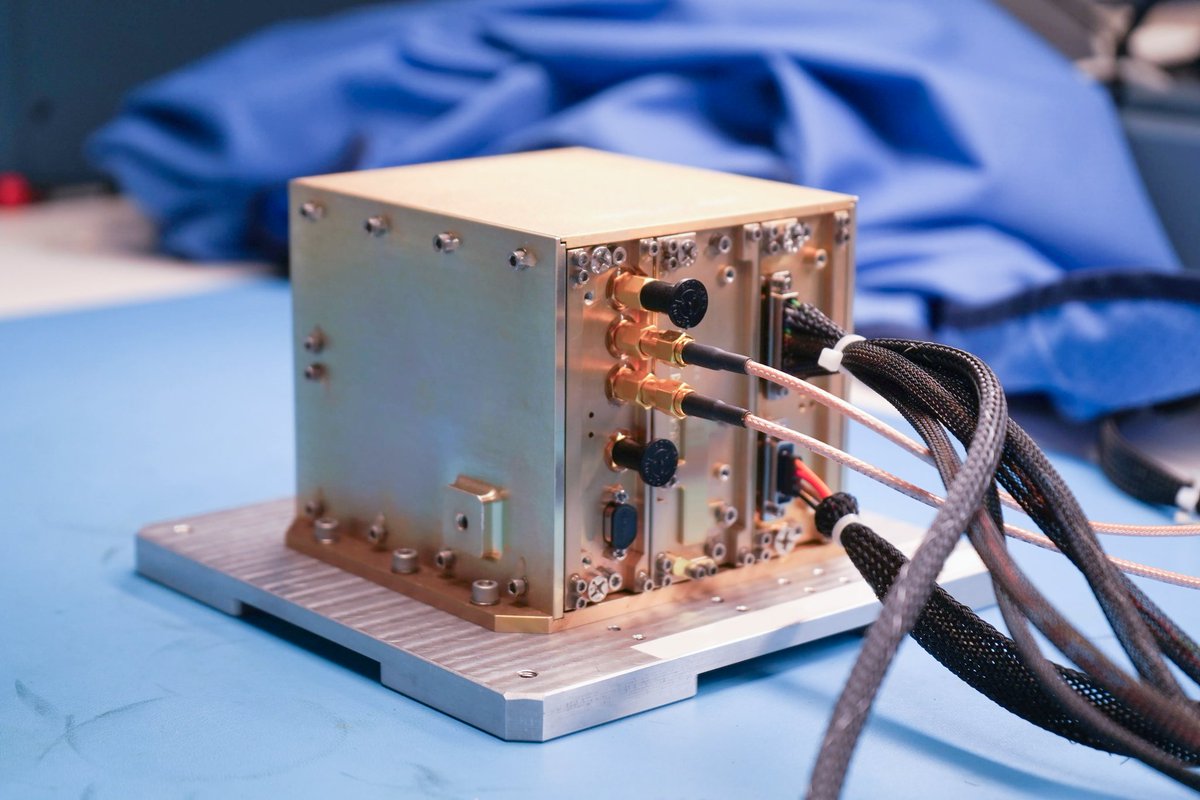
In lunar navigation news, NASA’s NavCube3-mini was delivered to Intuitive Machines for integration into the Altus-1 lunar relay satellite. Weighing just 3.5 pounds, the receiver will test whether GPS and Galileo signals can determine a spacecraft’s position near the Moon. Altus-1 is the first relay satellite in a planned network for lunar communications and navigation.
A separate study published Aug. 19 in Science Advances found that some human-related microbes could survive in shaded niches near the Moon’s South Pole. Led by Prabal Saxena at NASA’s Goddard Space Flight Center, the research highlights the challenge of distinguishing ancient lunar chemistry from contamination as humans build a permanent presence on the Moon.
Curiosity Panoramas Gale Crater, MMX Mission Gains NASA Instrument
The Curiosity rover captured a panoramic view of terrain in Gale Crater in June, shared by the NASA Mars account this week. It was a quiet week otherwise for Mars surface operations.

NASA contributed a gamma-ray and neutron spectrometer instrument to JAXA’s MMX mission, which will explore the Martian moons Phobos and Deimos and deliver a sample from Phobos to Earth.
Tarantula Nebula Glows in Three-Telescope Composite
Combined data from Hubble, Chandra, and Webb produced a vibrant composite of the Tarantula Nebula, a star-forming region located 160,000 light-years from Earth in the Large Magellanic Cloud.

JPL also noted that Venus reached its greatest elongation recently, offering the greatest visual separation between the planet and the Sun as seen from Earth — an ideal window for observation.
Menon and Adenot Swap Antenna in Six-Hour Spacewalk
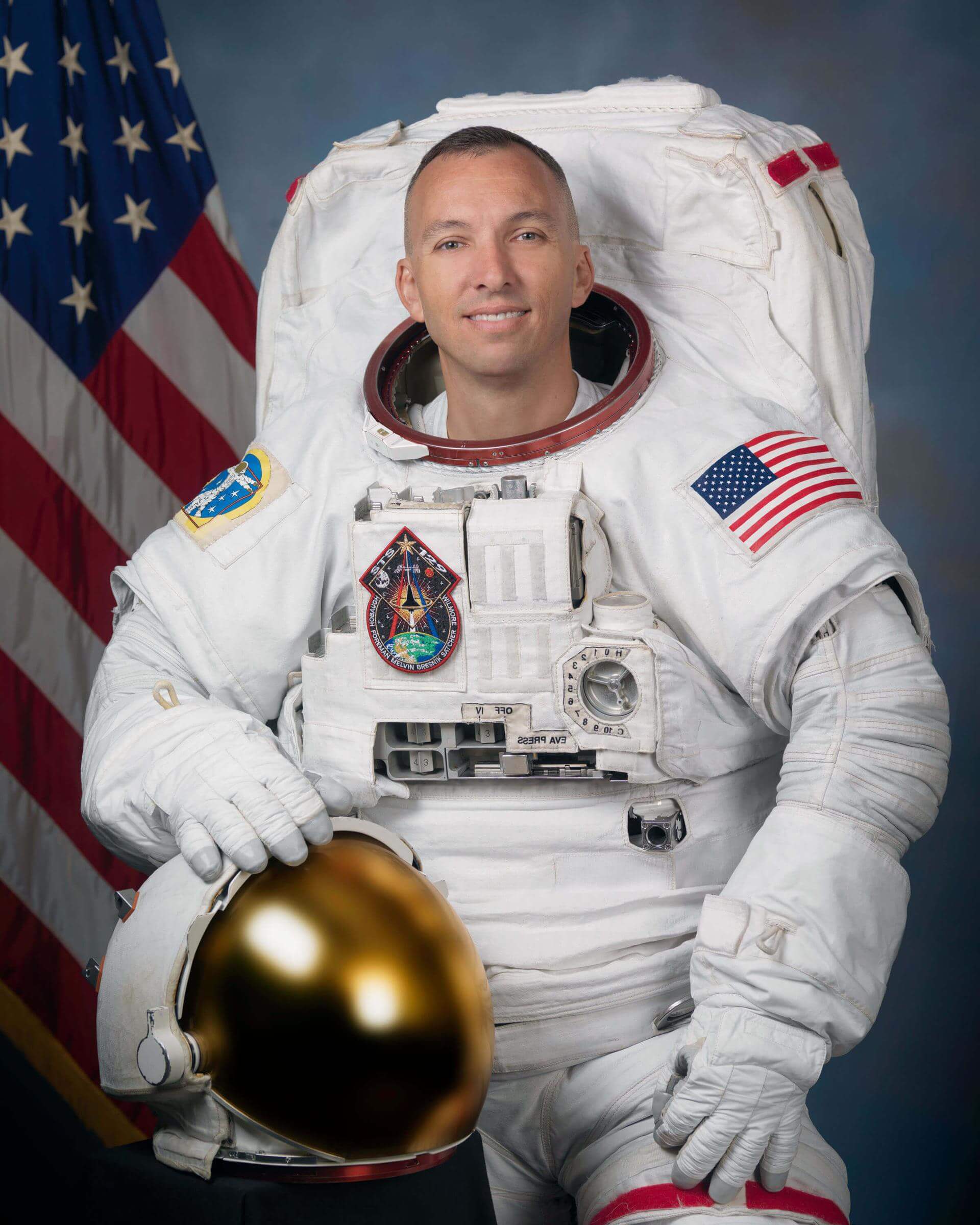
NASA astronaut Anil Menon and ESA astronaut Sophie Adenot completed a 6-hour, 23-minute spacewalk on Tuesday, Aug. 18, beginning at 8:29 a.m. EDT and concluding at 2:52 p.m. EDT. The crew removed a failed Space-to-Ground antenna and performed a long-duration tie down of the unit on the station’s truss structure.
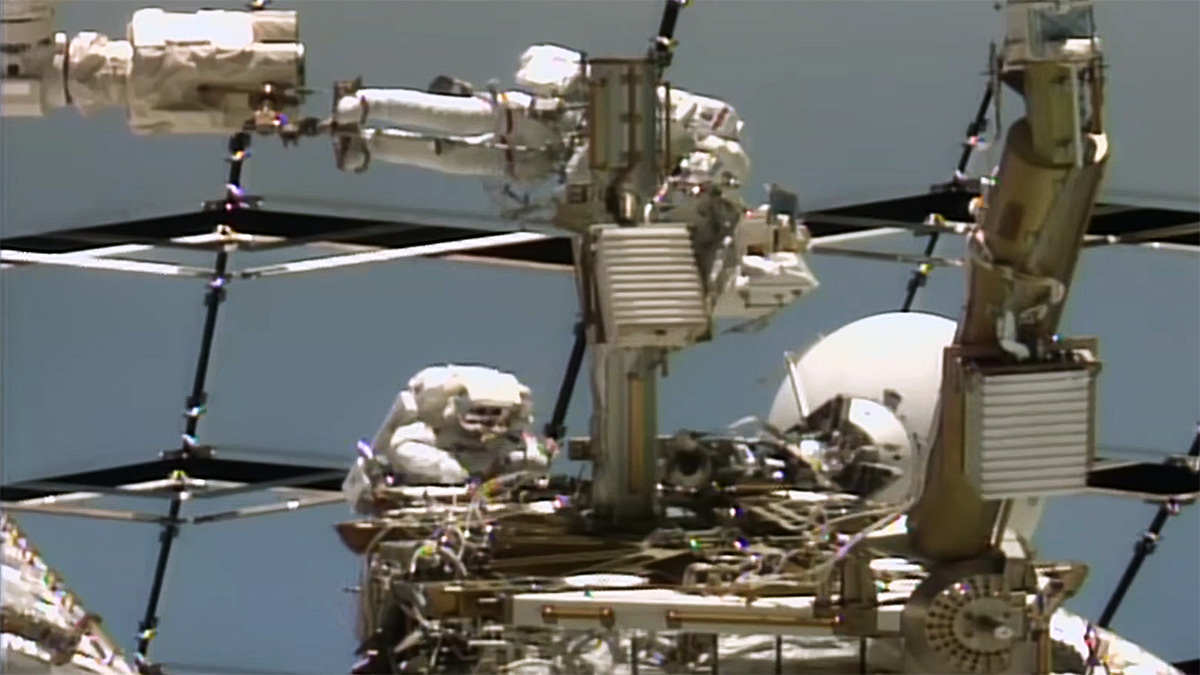
The spacewalk ran longer than expected as the crew needed additional time to disconnect electrical cables and loosen bolts, delaying installation of the replacement antenna. That work will be completed during a future spacewalk. Near the end of the EVA, Menon and Adenot also performed cleanup tasks and swapped a portable foot restraint near the Quest airlock.
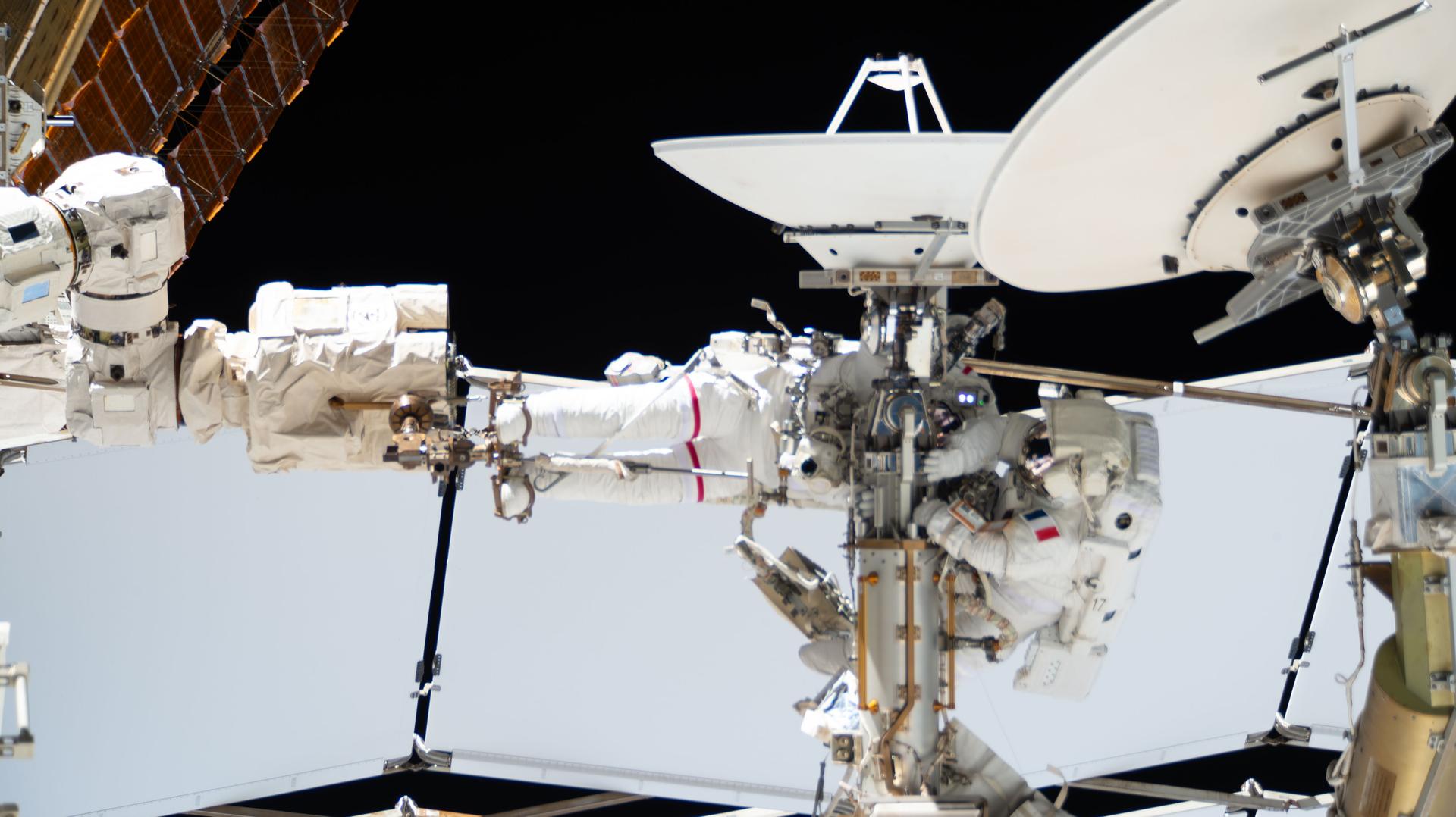
A second spacewalk, US EVA-98, is scheduled for Tuesday, Aug. 25. Menon and Adenot will install the replacement Space-to-Ground antenna and replace a retroreflector used for spacecraft docking on the Harmony module’s forward port.
Between spacewalk preparations, Expedition 75 studied the circulatory system, tested AI tools, and photographed Earth.
Katalyst and NASA Abandon Swift Reboost After Attitude Control Failures
Katalyst Space and NASA announced on Aug. 20 that the company’s LINK spacecraft will not capture or boost the Neil Gehrels Swift Observatory to a higher orbit, ending an 11-month, $30 million effort to extend the telescope’s science mission. The decision was driven by ongoing attitude control problems with LINK.
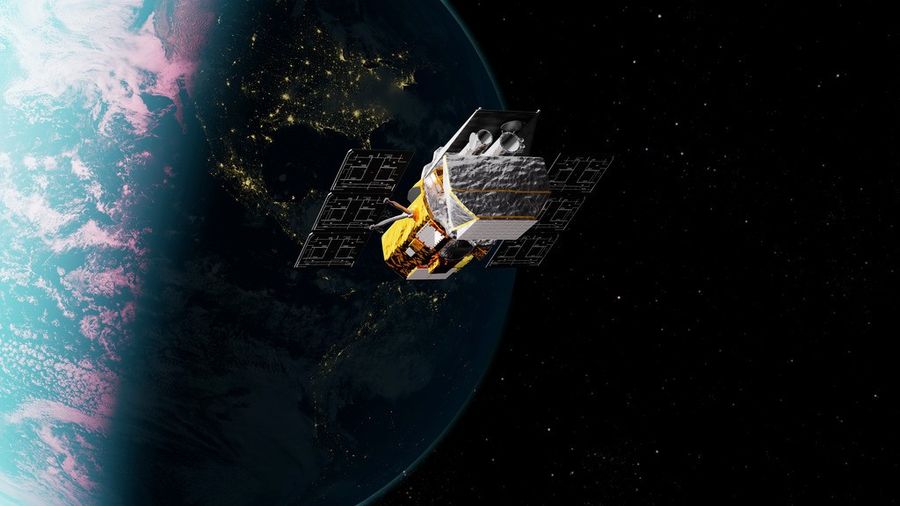
LINK launched on a Pegasus XL rocket from Kwajalein Island in the Pacific on July 3, 2026. The spacecraft initially appeared healthy, but on July 28 Katalyst reported it had entered a multi-axis spin caused by the loss of two of its three reaction wheels, with reaction control system thrusters only partially working. By Aug. 5, the team had reduced the spin rate from 9 degrees per second to 1.47 degrees per second using electric thrusters intended for orbital changes. A software update with new attitude controllers was uploaded on Aug. 11, but the team ultimately concluded the reboost was not possible.
The original plan called for LINK to manoeuvre close to Swift — which was not designed to be reboosted and has no grappling fixtures — and find capture locations where one of its three grippers could attach. LINK’s thrusters would then have boosted the observatory back to its original 600-kilometre orbit over two to three months.
LINK will still attempt rendezvous and proximity operations with Swift to demonstrate key capabilities and gather data for future satellite servicing. Without intervention, NASA anticipates Swift is likely to re-enter Earth’s atmosphere later this year.
“NASA should be willing to move quickly and take smart risks when the potential return is worth it, and that is exactly what we did with this mission,” said NASA Administrator Jared Isaacman. “This is not the outcome we were working toward, but it does not change why this mission was worth attempting.”
Katalyst CEO Ghonhee Lee added: “We designed, developed, and launched an experimental spacecraft to go after an ambitious mission on an aggressive timeline. We took on this high-risk, high-reward challenge and are proud of the milestones we reached along the way.”
Citations
- “Human-Related Microbes May Survive Moon’s South Pole, NASA Finds” — https://science.nasa.gov/humans-in-space/human-related-microbes-may-survive-moons-south-pole-nasa-finds/
- “NASA Updates Next Steps for Commercial Swift Boost Mission” — https://www.nasa.gov/news-release/nasa-updates-next-steps-for-commercial-swift-boost-mission/
- “No-Go for Katalyst’s Reboost of NASA’s Swift Observatory” — https://spacepolicyonline.com/news/no-go-for-katalysts-reboost-of-nasas-swift-observatory/
- “Katalyst Space and NASA abandon plans for Swift reboost” — https://spacenews.com/katalyst-space-and-nasa-abandon-plans-for-swift-reboost/
- “NASA’s LRO Images Falcon 9 Crater on Moon, Learns New Details” — https://science.nasa.gov/solar-system/moon/nasas-lro-images-falcon-9-crater-on-moon-learns-new-details/
- “NASA, ESA Astronauts Begin Spacewalk to Swap High-Speed Antenna” — https://www.nasa.gov/blogs/spacestation/2026/08/18/nasa-esa-astronauts-begin-spacewalk-to-swap-high-speed-antenna/
- “NASA, ESA Astronauts Wrap Up Station Spacewalk” — https://www.nasa.gov/blogs/spacestation/2026/08/18/nasa-esa-astronauts-wrap-up-station-spacewalk/
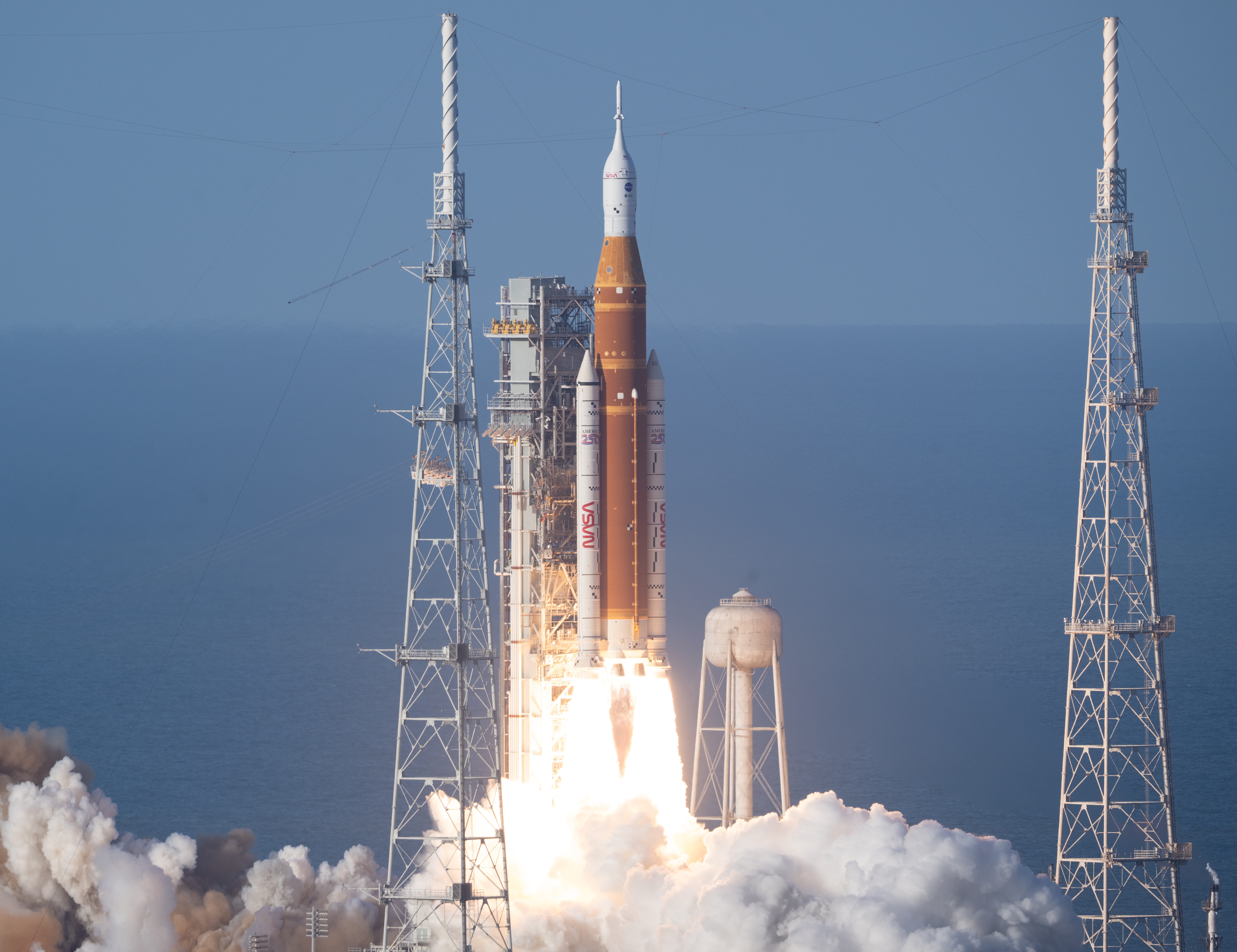
Artemis III
Provider: National Aeronautics and Space Administration
Date: June 30, 2027
Time: 12:00 AM UTC
Vehicle: Space Launch System (SLS)
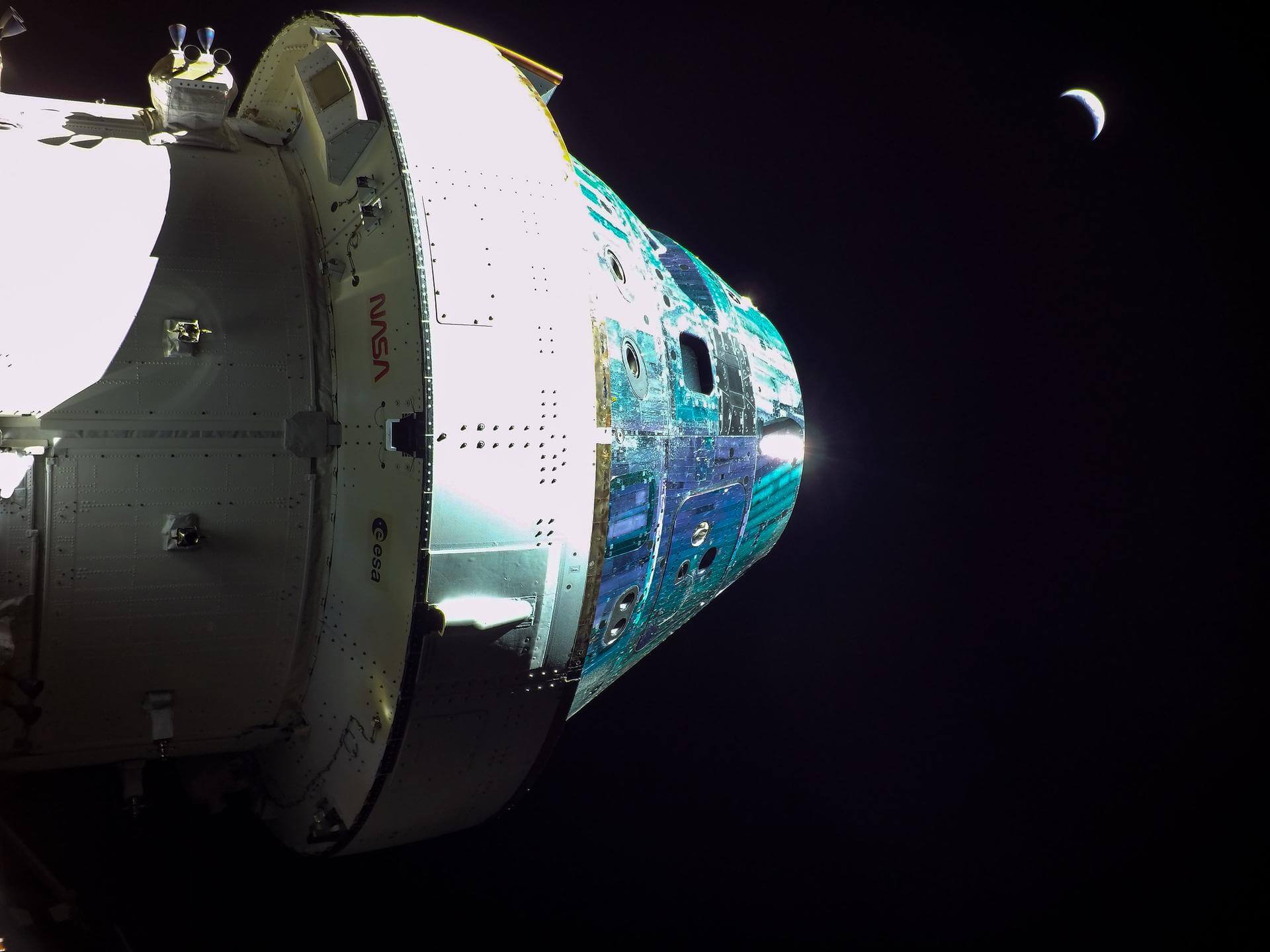
Artemis III is the second crew mission as part of the Artemis program. Artemis III will send a crew of 4 on a Low Earth Orbit mission, with the Orion rendezvous and dock with one or both commercial lunar landers in development by SpaceX and Blue Origin, performing in-space tests of the docked vehicles, integrated checkout of life support, communications, and propulsion systems, as well as tests of the new Extravehicular Activity (xEVA) suits.
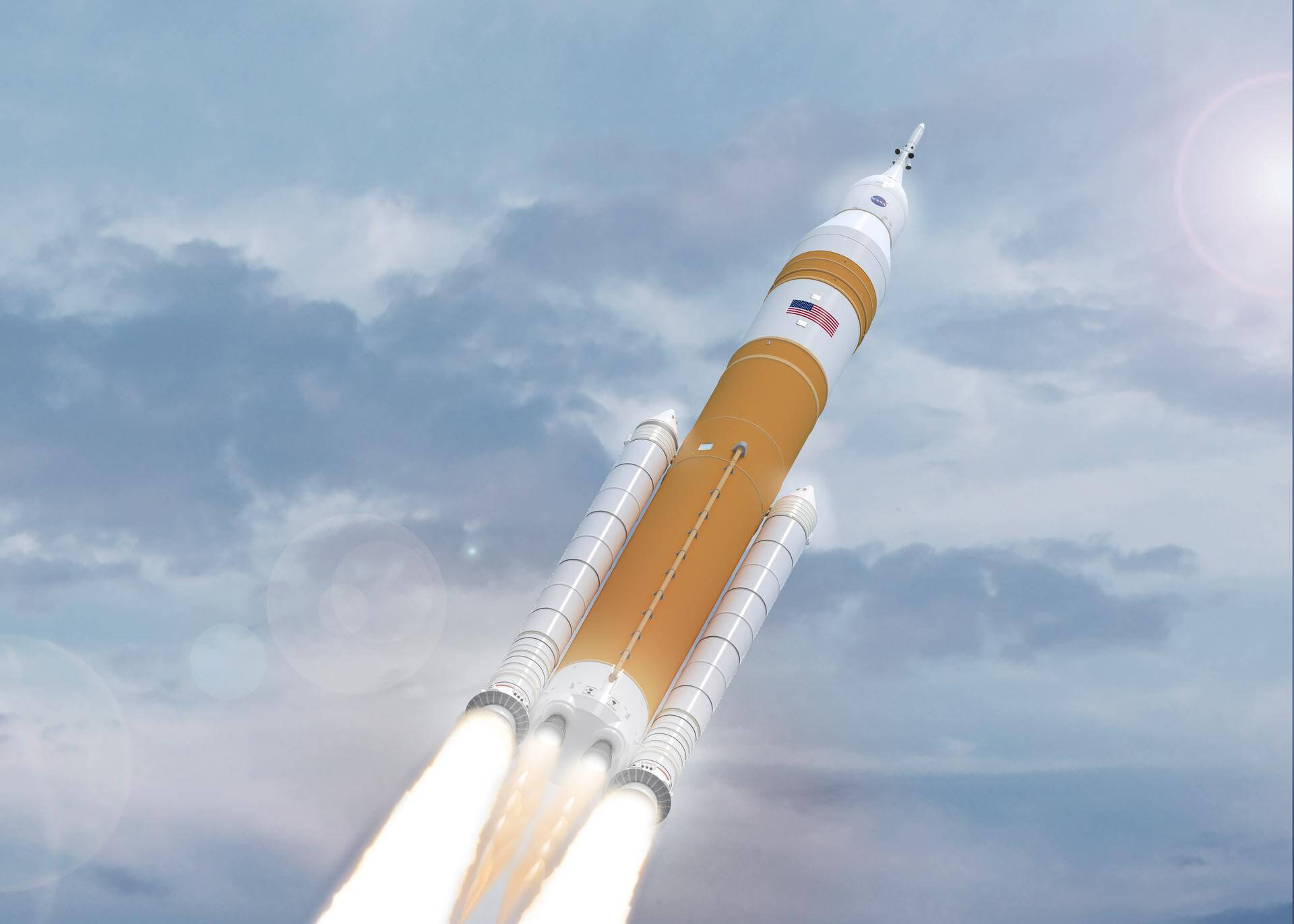
Artemis IV
Provider: National Aeronautics and Space Administration
Date: June 30, 2028
Time: 12:00 AM UTC
Vehicle: Space Launch System (SLS)
Artemis IV is planned to be the first human lunar landing mission since the Apollo Program.
Artemis V
Provider: National Aeronautics and Space Administration
Date: December 31, 2028
Time: 12:00 AM UTC
Vehicle: Space Launch System (SLS)
Artemis V is planned to be the second human lunar landing mission since the Apollo Program.
SLS Block 1B | Artemis VI
Provider: National Aeronautics and Space Administration
Date: September 30, 2030
Time: 12:00 AM UTC
Vehicle: Space Launch System (SLS)
No description available
SLS Block 1B | Artemis VII
Provider: National Aeronautics and Space Administration
Date: September 30, 2031
Time: 12:00 AM UTC
Vehicle: Space Launch System (SLS)
No description available
Enjoying the content? Stay up to date on everything happening behind the scenes by following our Patreon!

