
Commercial Space Partnerships: Elytra Review, Axiom-ESA Ties
Firefly’s Moon Systems and Defence Tech Advance
Commercial space partnerships: Firefly Aerospace completed the preliminary design review (PDR) for its Elytra spacecraft, the orbital transfer vehicle designed to deliver NASA’s Jet Propulsion Laboratory drones to the Moon’s south pole as part of the agency’s MoonFall mission. The PDR, conducted with NASA and JPL representatives, validated Elytra’s structural, thermal, propulsion, avionics, trajectory design, guidance and navigation, communications, and control systems against mission requirements. Firefly will now advance toward the critical design review (CDR) ahead of hardware production and assembly. MoonFall is targeted to be ready for launch by late 2028 as part of NASA’s Moon Base program, a long-term lunar exploration initiative aimed at enabling sustained human presence at the lunar south pole.
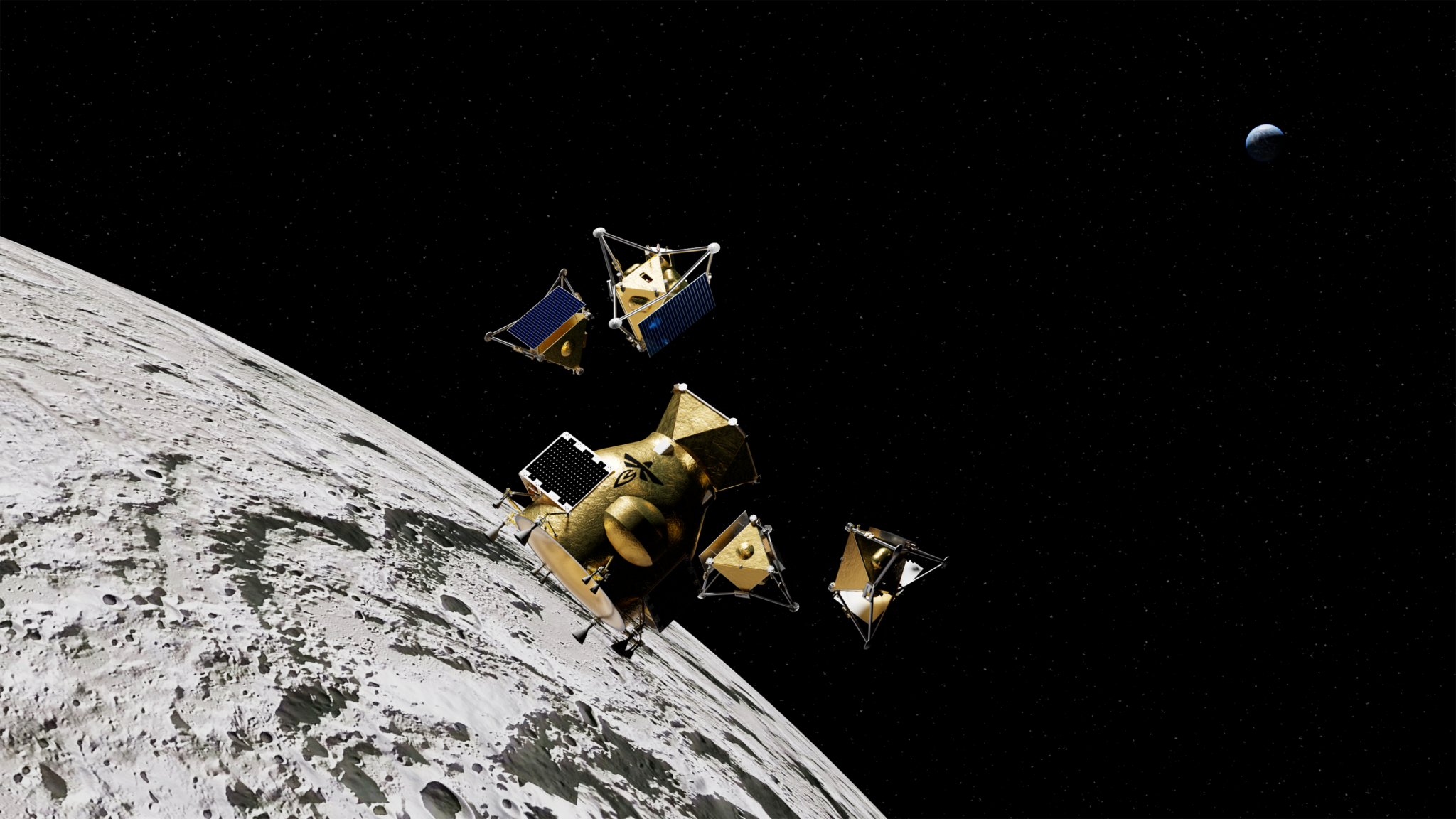
“Completing PDR less than four months after contract award is a testament to the speed and rigor Firefly brings to every mission,” said Ray Allensworth, Vice President of Spacecraft at Firefly Aerospace. Allensworth noted that Firefly is scaling spacecraft production to support MoonFall and other lunar surface missions using proven systems and operations from the company’s first successful Blue Ghost landing.
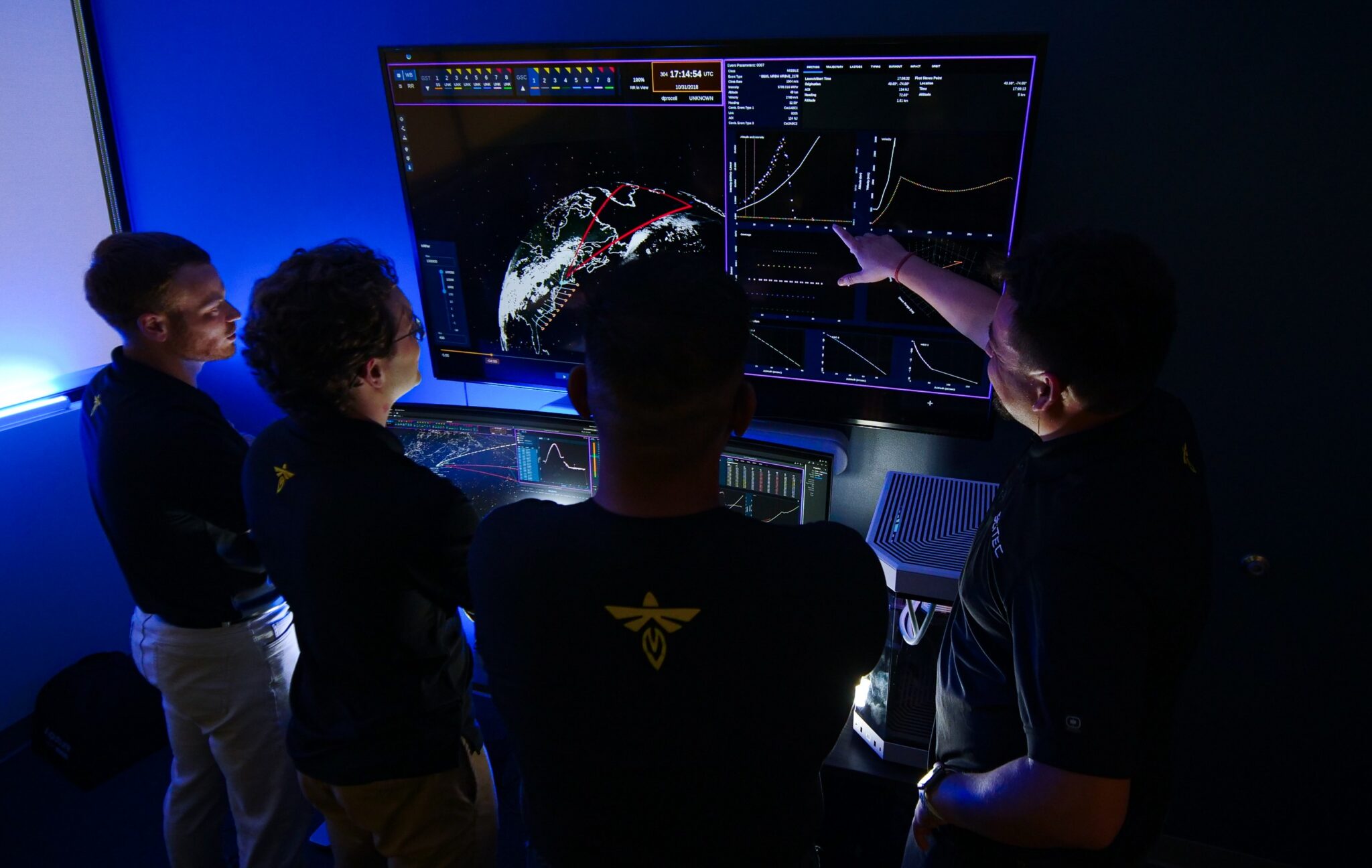
In parallel, Firefly’s SciTec subsidiary expanded its existing contract with the U.S. Air Force Command, Control, Communications, and Battle Management to integrate counter-unmanned aerial system (CUAS) sensor feeds into the Advanced Battle Management System. The $1.5 million extension brings the total contract value to $31 million. The expansion enables SciTec’s cloud-based command and control (CBC2) system to ingest additional approved counter-UAS sensor data, supporting improved situational awareness for mission partners.
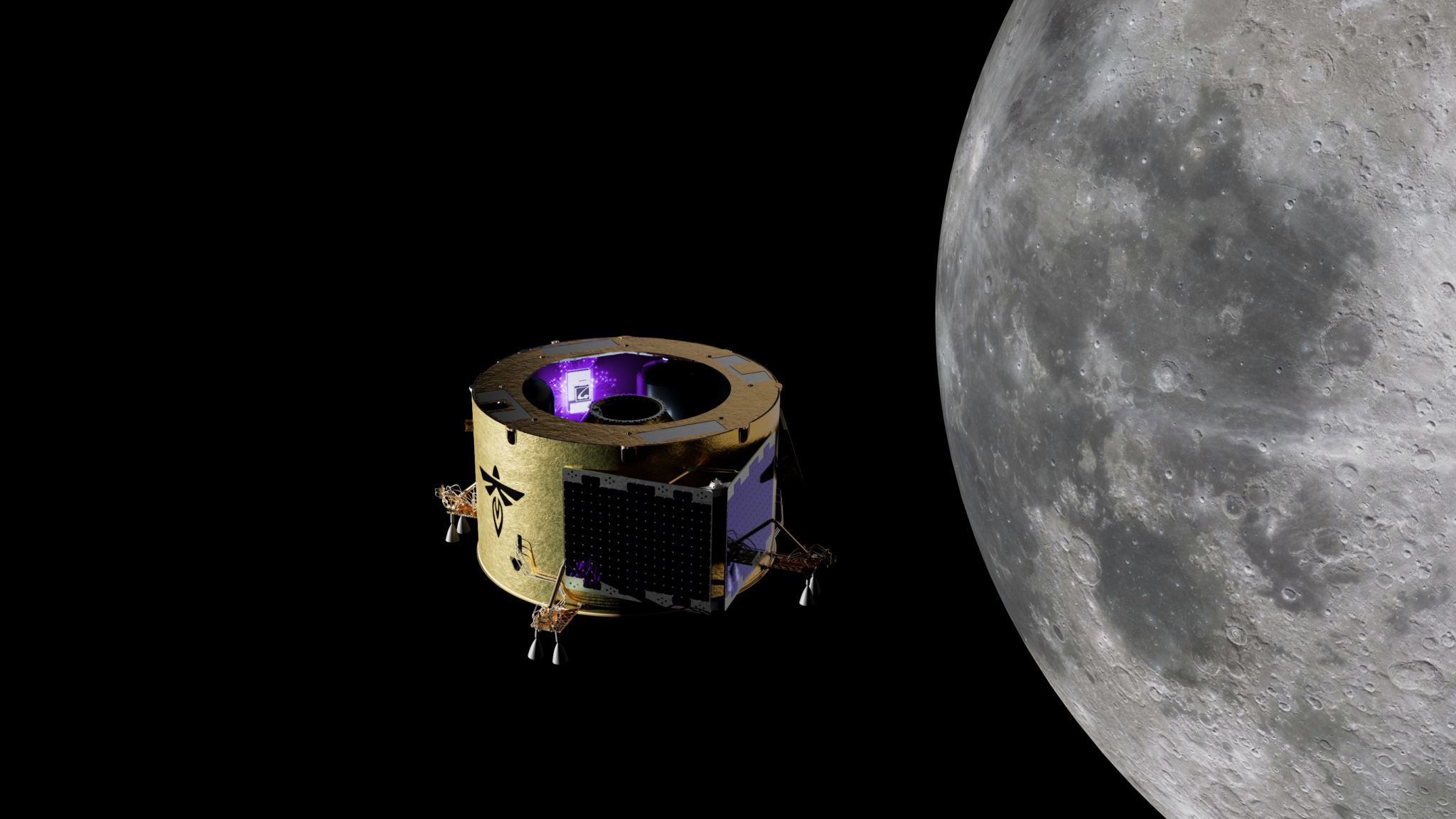
On the commercial front, Firefly announced a payload partnership with Starcloud, a company specialising in space-based AI computing. Starcloud’s SC-1L processor will fly aboard Elytra on Firefly’s third lunar mission, targeted for launch no earlier than 2028. On that mission, Elytra will first serve as a transfer vehicle and communications relay for Firefly’s Blue Ghost lander at the Moon’s Gruithuisen Domes, operating science and technology instruments as part of NASA’s Commercial Lunar Payload Services (CLPS). After Blue Ghost completes its surface operations, Elytra will remain in lunar orbit for five years, during which Starcloud’s payload will ingest data from Firefly’s onboard Solux vision system, perform high-power AI computing on orbit, and transmit processed results to Earth—demonstrating the core capabilities of a future data centre around the Moon.
Axiom Expands Station Infrastructure and International Partnerships
Axiom Space and the European Space Agency signed a memorandum of understanding (MoU) in Paris to expand Europe’s access to low-Earth orbit. The agreement commits both organisations to explore cooperation on space infrastructure, research, and commercial activities in LEO, including potential future astronaut missions to the International Space Station and Axiom Station, and the use of European cargo return services. The MoU also encompasses potential cooperation on Axiom Space’s spacesuits—including the AxEMU suit for lunar applications—and opportunities for the European Astronaut Centre to enhance its Extra Vehicular Activity (EVA) and lunar training using AxEMU.
Dr. Jonathan Cirtain, CEO and President of Axiom Space, stated that “The path to a sustainable human presence in space runs through international collaboration — reliable supply chains, shared innovation, and partners who bring real capability.” Daniel Neuenschwander, Director of Human and Robotic Exploration at ESA, emphasised the urgency: “With the upcoming de-orbitation of the ISS, it is our duty to anticipate and prepare future solutions to ensure our access to low-Earth orbit.”
On infrastructure, Redwire Corporation was awarded a follow-on contract to design and deliver two Roll-Out Solar Array (ROSA) wings for Axiom Station’s second space station module, building on its existing contract for the first module’s solar arrays. The ROSA system has demonstrated 100 percent success across LEO, geostationary orbit, and beyond. Axiom Station’s first module is undergoing final assembly at Thales Alenia Space in Turin, Italy, with a planned 2028 launch; the second module is planned to launch less than a year later and can loiter on orbit until ready to dock with the first module and form a four crew-capable, operational free-flying station.
Axiom also advanced its Axiom Resilient Compute (ARC) platform, a step toward a distributed model for space-based workload orchestration and post-quantum secure communications. The company currently operates two ARCs on orbit, launched earlier this year as part of Kepler Communications’ optical data relay satellite constellation and developed with funding from the Texas Space Commission. Axiom has confirmed ARC-to-ARC and ARC-to-ground communications and completed a ground demonstration in which a post-quantum cryptography (PQC) encrypted workload was successfully migrated—an early proof of securing compute at the edge of the network, in space or on Earth. This effort responds to a June 2026 U.S. Executive Order and accompanying OMB guidance requiring U.S. agencies to migrate high-value assets and high-impact systems to post-quantum cryptography keys by the end of 2030.
In biomedical research, Axiom Space, the National Stem Cell Foundation (NSCF), and the Saudi Space Agency announced a collaboration that launched aboard SpaceX CRS-35 to the ISS this month. For the first time, NSCF researchers are adding cell lines from Saudi Arabia—prepared with support from King Abdullah University of Science and Technology (KAUST)—to their ongoing study of Parkinson’s disease, Primary Progressive Multiple Sclerosis, and Alzheimer’s disease. The mission also includes cell lines from the United Kingdom from individuals with a mutation for early-onset Alzheimer’s, enabling researchers to evaluate how disease biology and therapeutic responses may vary across genetically and ethnically diverse populations. Dr. Pinar Mesci, NSCF Scientific Advisor and Global Head of Biomanufacturing and Biotechnology at Axiom Space, noted that “Commercial space platforms are opening new opportunities for biomedical research that cannot be replicated on Earth.”
Relativity Advances Terran R Build and Test Campaign
Relativity Space reported progress across its Terran R programme in September, with key advances in vehicle build, ground testing, and launch readiness. On the build front, stage one integration progressed: the team installed the downcomer—a component that delivers liquid oxygen from the tank to the engines—a milestone setting up the next major phase of tank leak check. Remaining structures work and weld operations continue, with all primary hardware on the aft dome now complete. On the interstage, belt joints are complete and barrel and joiner drilling finished; the structure is being prepared for structural testing.
In engine production, the team completed the first autogenous laser weld for the Aeon V nozzle extension, which increases the engine’s expansion ratio to improve efficiency in the vacuum environment. Engine production is ramping up month over month, with flight two and flight three engines well into manufacturing.
On the test side, with all 13 engines now installed on the thrust structure, Relativity transitioned into integrated testing, including gimbal testing to validate clearances so each engine can pivot precisely for vehicle steering and stabilisation. At NASA Stennis, the A2 stage test stand is coming online: the team completed diverter flushes and activations, hold-down wiring checkouts, and activated the first phase of the lightning protection system. After those preparations, stage two rolled onto the test stand and received the Aeon V engine. The team completed a test readiness review, a formal gate validating hardware configuration, instrumentation, safety systems, and procedures. They then conducted a wet dress rehearsal campaign, spanning ground-controlled tanking, cryogenic fills, engine chill operations, and a simulated stage one ascent timeline—building confidence ahead of the first hot fire test.
Citations
- Firefly Aerospace Completes Preliminary Design Review for NASA MoonFall Mission — fireflyspace.com
- Firefly’s SciTec Expands Contract with U.S. Air Force to Add Counter UAS Data in Advanced Battle Management System — fireflyspace.com
- Firefly Aerospace Signs Starcloud as Commercial Customer, Demonstrating Data Center Capabilities Around the Moon — fireflyspace.com
- Axiom Space, Kepler Ready Orbital Computing for Quantum Era — axiomspace.com
- Redwire Awarded Follow-On Contract to Provide Roll-Out Solar Array Wings for Axiom Space’s Second Space Station Module — axiomspace.com
- Axiom Space, National Stem Cell Foundation, Saudi Space Agency Collaborate to Expand Study of Neurodegenerative Disease in Microgravity — axiomspace.com
- Axiom Space, European Space Agency Sign Memorandum of Understanding to Expand Europe’s Access to Low-Earth Orbit — axiomspace.com
- September 2026 Company Update — relativityspace.com
ConnectedCosmos Launch 1
Provider: Firefly Aerospace
Date: December 31, 2026
Time: 12:00 AM UTC
Vehicle: Firefly Alpha Block 2
First of at least four missions carrying 6 satellites for Open Cosmos’ secure LEO broadband constellation, designed to provide independent and resilient connectivity infrastructure for Europe and the world using high-priority Ka-band spectrum filings by the Principality of Liechtenstein.
ConnectedCosmos Launch 2
Provider: Firefly Aerospace
Date: December 31, 2026
Time: 12:00 AM UTC
Vehicle: Firefly Alpha Block 2
Second of at least four missions carrying 6 satellites for Open Cosmos’ secure LEO broadband constellation, designed to provide independent and resilient connectivity infrastructure for Europe and the world using high-priority Ka-band spectrum filings by the Principality of Liechtenstein.
TacSat
Provider: Firefly Aerospace
Date: December 31, 2026
Time: 12:00 AM UTC
Vehicle: Firefly Alpha Block 2
TacSat is an intelligence, surveillance and reconnaissance spacecraft with a mission to prove specialized sensing and communications capabilities on orbit. The satellite will participate in exercises that highlight cross-domain kill-web connectivity, enabling timely execution of tactical space missions.
TacSat will host a proven Lockheed Martin infrared sensor on board that brings previously developed technology to space for the first time. This sensor produces high quality imagery and it can interface with federated Battle Management Command & Control (BMC2) combat systems to provide joint forces with a comprehensive view of threats.
The satellite will also feature Lockheed Martin’s first 5G.MIL® payload on orbit. This provides cellular-like networking for military space assets, making satellite constellations more resilient. It also helps enable seamless connectivity with tools in the air, at sea and on land.
Launch operation will also again demonstrate responsive space pre-launch operation capabilities.

Intelsat-1
Provider: Relativity Space
Date: December 31, 2026
Time: 12:00 AM UTC
Vehicle: Terran R
First mission part of a multi-year, multi-launch agreement signed between Intelsat and Relativity Space in 2023.

Mars Lander
Provider: Relativity Space
Date: December 31, 2026
Time: 12:00 AM UTC
Vehicle: Terran R
Impulse Space’s Mars Lander is designed to support research and development needed for human exploration of Mars.

Enjoying the content? Stay up to date on everything happening behind the scenes by following our Patreon!


Leave a Reply