
Commercial space expansion: Nova Pathfinder, Stoke $1B
Stoked Space: Pathfinder manifest and $1 billion Series E funding
September brought a flurry of expansion across the commercial space sector, beginning with Stoked Space’s announcement of Nova Pathfinder’s customer manifest and the close of its $1 billion Series E funding round. The round brings total capital raised to $2.3 billion and positions the company to accelerate production and launch operations ahead of Pathfinder’s first orbital flight targeted for early 2027.

The Series E was co-led by Point72 Ventures and Spark Capital, with participation from General Innovation, Glade Brook Capital, US Innovation Technology, Washington Harbour Partners, Woven Capital, Y Combinator, and others. Co-founder and CEO Andy Lapsa framed the moment: “Every mature transportation system is built around fully reusable vehicles. It’s the only way to reach the cost floor while scaling availability. Space transportation will be no different.”
On the mission side, AstroForge will fly Autonomy-1, a demonstration of its Solo autonomous spacecraft intelligence system designed to operate without ground commands and to support NASA Goddard’s COMPASS heliophysics payload. Celestis will also fly their Infinite Flight payload on the mission. Pathfinder will test Nova’s core reuse technologies—the Zenith full-flow staged combustion engines on Stage 1 and the Andromeda actively cooled engine with metallic re-entry heat shield on Stage 2—while delivering paying customers to orbit from Space Launch Complex 14 at Cape Canaveral Space Force Station.
In parallel, Stoked Space unveiled Nova Block 2 publicly for the first time: a larger configuration delivering 15 metric tons to low Earth orbit in a fully reusable configuration, carrying forward Pathfinder’s propulsion, manufacturing, and operational principles. The team is moving through final integration in Washington state, with hardware delivery to SLC-14 on track for first flight in the first part of 2027.
Firefly Aerospace: Cleanroom expansion and European launch footprint
Firefly Aerospace marked September 22 with the ribbon cutting of its new spacecraft cleanroom facility in Cedar Park, Texas—four times the size of its existing cleanroom and part of a 144,000-square-foot campus. The dual cleanrooms, rated ISO Class 8, enable a dedicated assembly line capable of supporting up to 12 lunar landers and orbital vehicles simultaneously, dramatically increasing throughput as the company ramps production for its Blue Ghost lunar lander and Elytra orbital transfer vehicle.
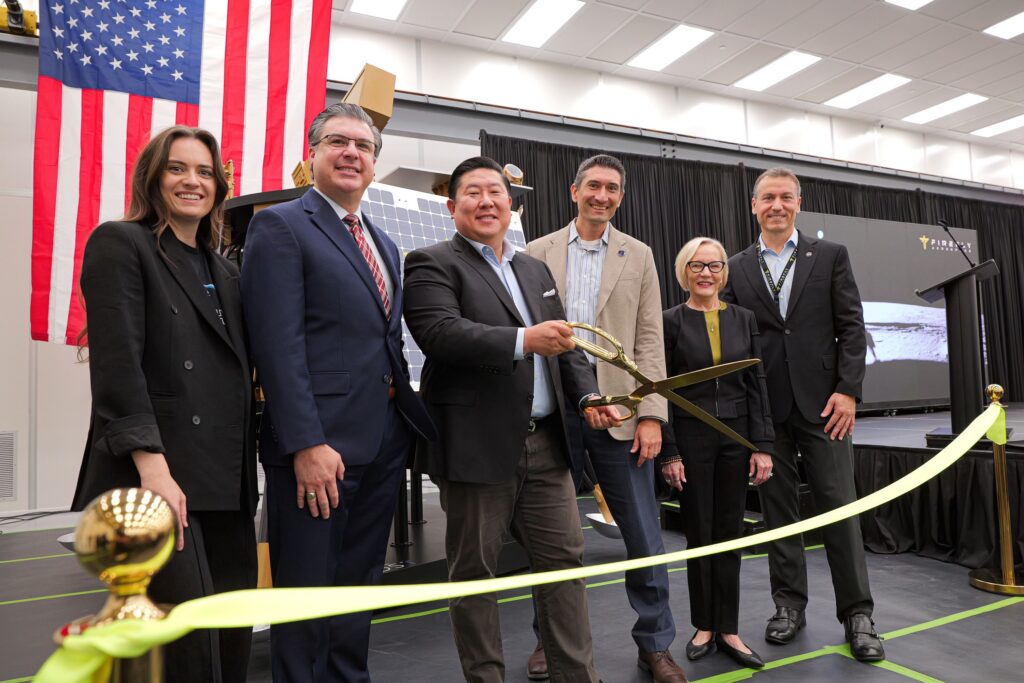
The event drew participation from Texas Space Commission leadership, NASA’s Commercial Lunar Payload Services and Moon Base Program managers, and state and federal government representatives—an indication of the strategic weight of Firefly’s expansion. COO Ramon Sanchez noted the facility enables “making the Moon more accessible with reliable, high-cadence spacecraft for our government and commercial customers.”
Two weeks earlier, Firefly had signed a multi-launch agreement with SSC Space for two Alpha rocket launches from Esrange Space Center in Sweden, targeted to launch no earlier than 2028 and serving Sweden’s national security customers as well as commercial rideshare payload. The deal advances orbital launch capability directly from mainland Europe and represents “launch as a franchise” in Firefly’s model—SSC Space securing full payload capacity and allocating space to its own government and commercial partners. Launch Complex 3C at Esrange has completed its launch control centre, payload processing facility, vehicle integration building, and tracking systems; final pad construction is underway.
Relativity Space: Terran R progresses toward first flight
Relativity Space’s Terran R entered NASA’s Launch Services II contract as an available provider, securing a slot on the indefinite-delivery/indefinite-quantity framework through June 2030 (ordering period) and December 2032 (performance period). The NLS II contract expands Relativity’s pathway to carry NASA missions while the company advances hardware toward first flight.

At Cape Canaveral, Relativity’s Launch Complex 16 and Stoked Space’s LC-14 are rising as near-neighbours along Missile Row. Relativity has completed structural qualification of Terran R’s first stage and progressed the second stage through cryoproof and composite overwrapped pressure vessel testing.
The August 2026 company update reveals the scale of flight-one hardware integration: all 13 Aeon R sea-level engines—each producing 269,000 pounds-force of thrust—have been installed onto the thrust structure, combining for 3,497,000 pounds-force of liftoff thrust. Stage one structural integration is approaching completion. At NASA Stennis, the stage two tank completed cryoproof and COPV proof testing and is undergoing post-test inspections ahead of engine installation. Flight two barrel fabrication is complete; flight three panel fabrication is halfway done. Relativity’s parallel production cadence signals preparation for sustained launch operations once Terran R reaches orbit.
Axiom Space: ESA partnership, AxEMU progress, and regional expansion
Axiom Space and the European Space Agency signed a memorandum of understanding in Paris on September 10, pledging to explore cooperation on space infrastructure, research, and commercial activities in low-Earth orbit. The MoU opens pathways for future astronaut missions aboard the International Space Station and Axiom Station, and contemplates a potential European Cargo Return service and crew vehicle as part of transportation systems for Axiom Station operations. CEO Dr. Jonathan Cirtain framed the significance: “Europe’s contributions to microgravity science and deep space technology make ESA exactly that kind of partner.”
The AxEMU lunar spacesuit continues development. In June, Axiom and Prada unveiled the Liquid Cooling and Ventilation Garment—the inner layer worn by astronauts beneath the AxEMU outer shell during lunar surface operations. Prada’s expertise in engineered knitting and advanced materials yielded a garment designed for up to 8-hour spacewalks, built for repeated use across long-duration missions and maintaining thermal regulation and comfort in the extreme environment of the lunar South Pole.
Axiom’s infrastructure investments mirror its ambitions. In June, the company redomiciled its legal incorporation to Texas, anchoring headquarters and operations in Houston. The company now employs approximately 700 people, the majority in Texas. A $525 million financing round closed in June, oversubscribed and drawing new investor MUFG Bank, Japan’s largest bank, alongside continued backing from existing institutional partners. In May, Axiom established Axiom Space Japan as a wholly owned subsidiary, with Dr. Koichi Wakata serving as Chief Technology Officer for Asia-Pacific. The Japanese office became operational July 1 and is positioned to deepen partnerships with JAXA, Japanese government agencies, and industrial partners including Mitsui, Mitsubishi Heavy Industries, and Mitsubishi Electric. In September, Axiom and Japanese startup ElevationSpace signed a memorandum of understanding to assess high-frequency re-entry and cargo recovery services for Axiom Station, leveraging ElevationSpace’s payload handling and return systems to enable quick, safe, precision landing of research samples to Earth.
Citations
- “Manifest Update: Nova Pathfinder Flight 1” — https://www.stokespace.com/news/Manifest-Update-Nova-Pathfinder-Flight-1
- “Stoke Space Raises $1 Billion to Accelerate Fully Reusable Launch” — https://www.stokespace.com/news/stoke-space-series-e
- “Scaling Nova” — https://www.stokespace.com/news/scaling-nova
- “Firefly Aerospace Completes New Cleanroom to Accelerate Spacecraft Production” — https://fireflyspace.com/news/firefly-aerospace-completes-new-cleanroom-to-accelerate-spacecraft-production/
- “Firefly Aerospace Signs Contract with SSC Space for Two Alpha Launches from Esrange Space Center” — https://fireflyspace.com/news/firefly-aerospace-signs-contract-with-ssc-space-for-two-alpha-launches-from-esrange-space-center/
- “NASA Adds Relativity Space’s Terran R to Launch Services Contract” — https://www.nasa.gov/news-release/nasa-adds-relativity-spaces-terran-r-to-launch-services-contract/
- “Cape neighbors Stoke and Relativity advance LC-14 and LC-16 toward first flights” — https://www.nasaspaceflight.com/2026/09/cape-neighbors-stoke-relativity-advance-lc-14-lc-16/
- “August 2026 Company Update” — https://www.relativityspace.com/press-release/2026/9/10/august-2026-company-update
- “Axiom Space, European Space Agency Sign Memorandum of Understanding to Expand Europe’s Access to Low-Earth Orbit” — https://www.axiomspace.com/release/axiom-space-european-space-agency-mou
- “Axiom Space, Prada Unveil Inner Layer of Next-Gen Lunar Spacesuit” — https://www.axiomspace.com/release/axiom-space-prada-unveil-inner-layer-of-next-gen-lunar-spacesuit
- “Axiom Space Redomiciles to Texas, Building the Space Ecosystem to Enable Humanity’s Future” — https://www.axiomspace.com/release/axiom-space-redomiciles-to-texas
- “Axiom Space Closed Oversubscribed Financing at $525M+” — https://www.axiomspace.com/release/axiom-space-closes-oversubscribed-financing-at-525m
- “Axiom Space to Establish Japan Subsidiary to Serve Growing Asia-Pacific Demand” — https://www.axiomspace.com/news/axiom-space-japan-subsidiary
- “Axiom Space, ElevationSpace Sign Agreement to Assess High-Frequency Re-Entry and Recovery Services” — https://www.axiomspace.com/news/mou-elevationspace
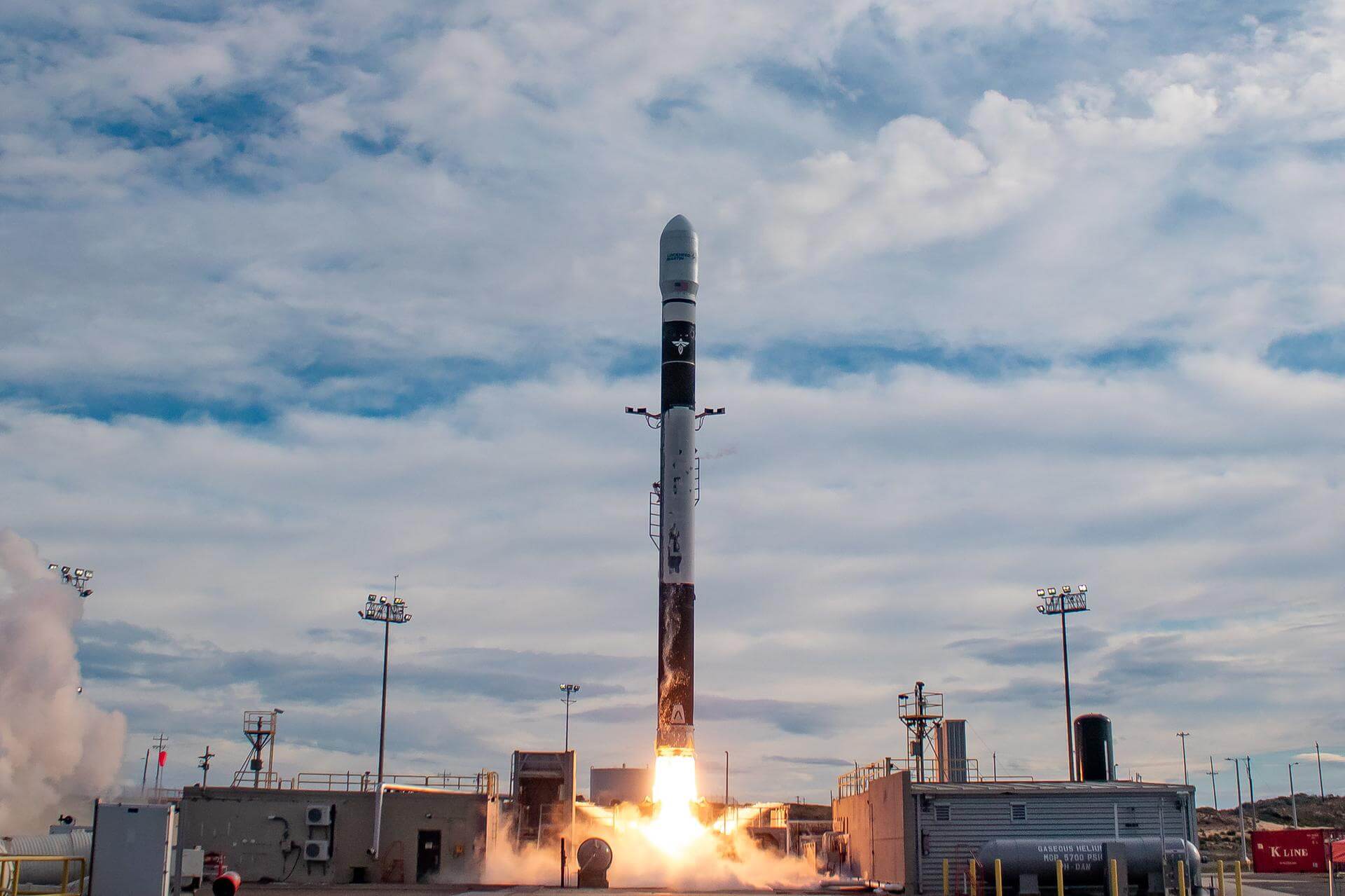
ConnectedCosmos Launch 1
Provider: Firefly Aerospace
Date: December 31, 2026
Time: 12:00 AM UTC
Vehicle: Firefly Alpha Block 2
First of at least four missions carrying 6 satellites for Open Cosmos’ secure LEO broadband constellation, designed to provide independent and resilient connectivity infrastructure for Europe and the world using high-priority Ka-band spectrum filings by the Principality of Liechtenstein.
ConnectedCosmos Launch 2
Provider: Firefly Aerospace
Date: December 31, 2026
Time: 12:00 AM UTC
Vehicle: Firefly Alpha Block 2
Second of at least four missions carrying 6 satellites for Open Cosmos’ secure LEO broadband constellation, designed to provide independent and resilient connectivity infrastructure for Europe and the world using high-priority Ka-band spectrum filings by the Principality of Liechtenstein.
TacSat
Provider: Firefly Aerospace
Date: December 31, 2026
Time: 12:00 AM UTC
Vehicle: Firefly Alpha Block 2
First of up to 25 launches of Low Earth Orbit technology demonstration satellites to be built and operated by Lockheed Martin.
TacSat is an intelligence, surveillance and reconnaissance spacecraft with a mission to prove specialized sensing and communications capabilities on orbit. The satellite will participate in exercises that highlight cross-domain kill-web connectivity, enabling timely execution of tactical space missions.
TacSat will host a proven Lockheed Martin infrared sensor on board that brings previously developed technology to space for the first time. This sensor produces high quality imagery and it can interface with federated Battle Management Command & Control (BMC2) combat systems to provide joint forces with a comprehensive view of threats.
The satellite will also feature Lockheed Martin’s first 5G.MIL® payload on orbit. This provides cellular-like networking for military space assets, making satellite constellations more resilient. It also helps enable seamless connectivity with tools in the air, at sea and on land.
Launch operation will also again demonstrate responsive space pre-launch operation capabilities.
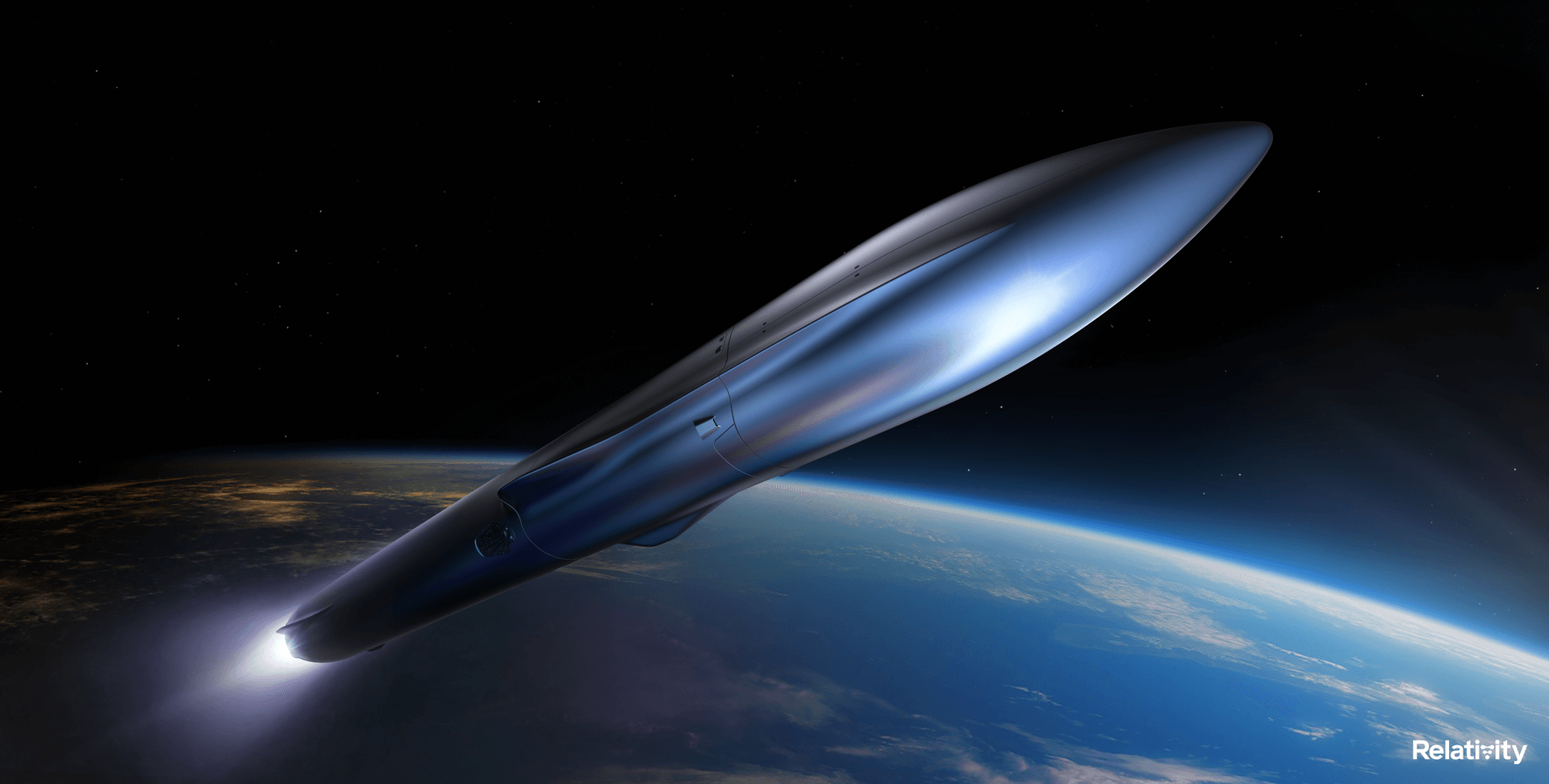
Intelsat-1
Provider: Relativity Space
Date: December 31, 2026
Time: 12:00 AM UTC
Vehicle: Terran R
First mission part of a multi-year, multi-launch agreement signed between Intelsat and Relativity Space in 2023.
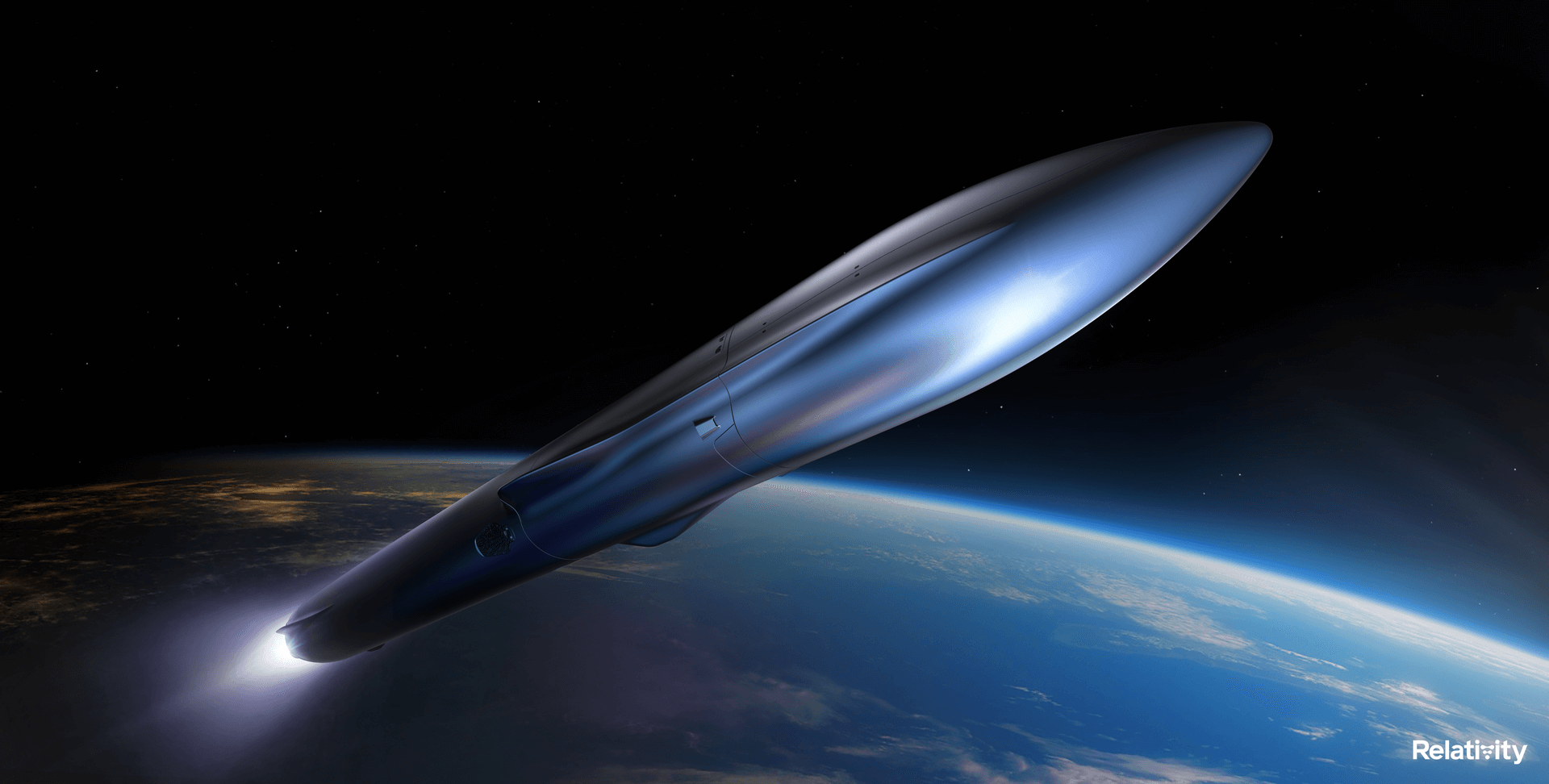
Mars Lander
Provider: Relativity Space
Date: December 31, 2026
Time: 12:00 AM UTC
Vehicle: Terran R
Impulse Space’s Mars Lander is designed to support research and development needed for human exploration of Mars.

Enjoying the content? Stay up to date on everything happening behind the scenes by following our Patreon!


Leave a Reply