
The Daily Broadcast: Chris Williams Returns From ISS After 241 Days
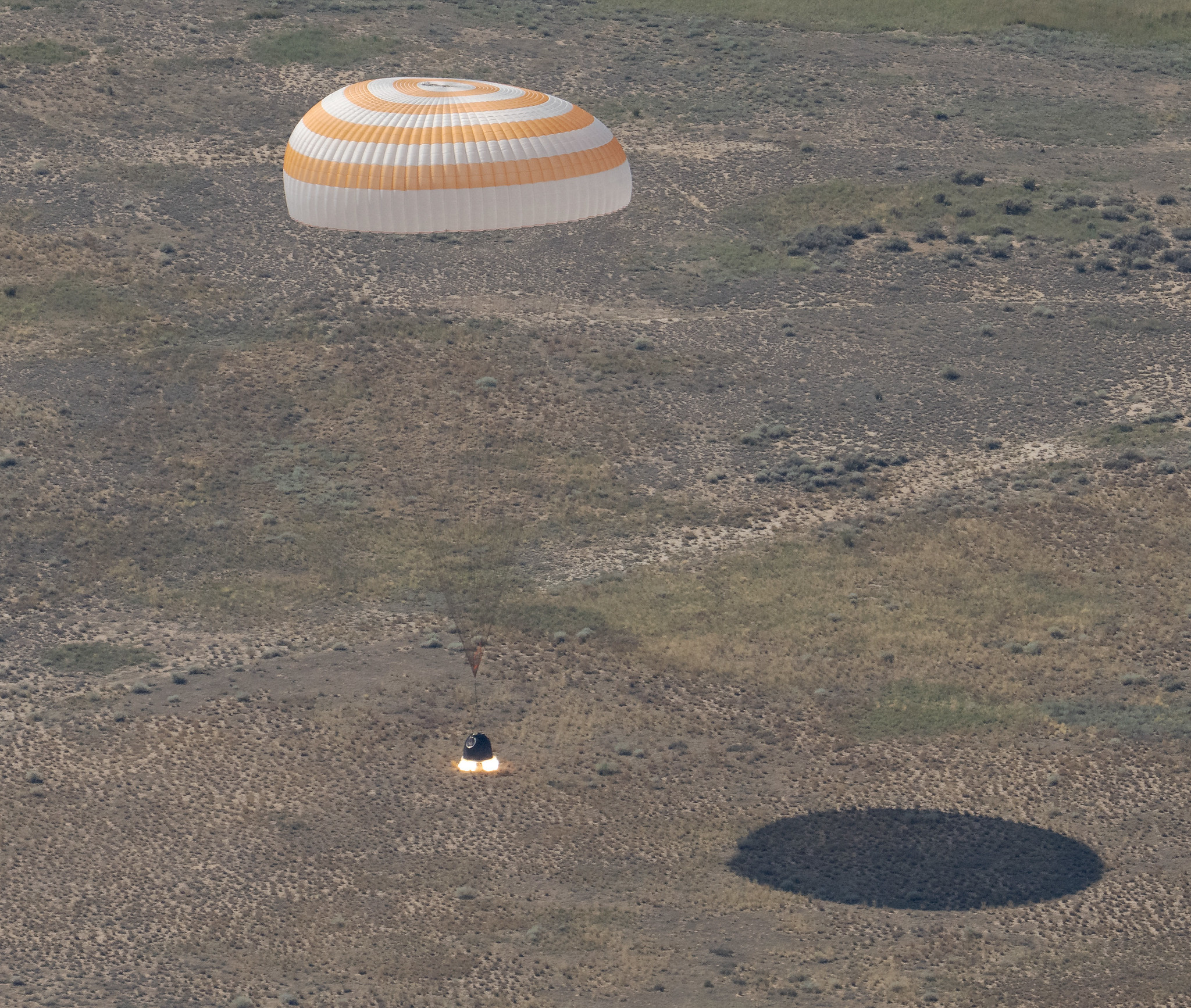
Chris Williams Returns From ISS After 241-Day Expedition
NASA astronaut Chris Williams returned from the International Space Station on Sunday alongside Roscosmos cosmonauts Sergey Kud-Sverchkov and Sergei Mikaev, concluding an eight-month mission that included a Canadarm2 robotic arm repair.
The crew of Soyuz MS-28 undocked from the station and touched down on the steppe of Kazakhstan, southeast of Dzhezkazgan, at 5:27 a.m. CDT (3:27 p.m., Kazakhstan time). The 241-day mission, which launched November 27, 2025, saw the crew orbit Earth 3,856 times and travel more than 102 million miles.

For Williams, it was his first spaceflight. He completed two spacewalks during his time aboard — one to replace a faulty joint on the Canadarm2 robotic arm and another to prepare for space station power system upgrades. He also supported the station’s wide range of scientific investigations, including research into new cancer treatments and in-space manufacturing of materials used in high-performance computers and electronics.
The mission was the first flight for both Williams and cosmonaut Sergei Mikaev, and the second for Kud-Sverchkov. Their Soyuz MS-29 replacements — NASA astronaut Anil Menon and Roscosmos cosmonauts Pyotr Dubrov and Anna Kikina — arrived at the ISS on July 14.
The station is now under the command of NASA astronaut Jessica Meir, who received the ceremonial key from Kud-Sverchkov during a traditional Change-of-Command ceremony on July 25. Meir also commands NASA’s Crew-12, which includes NASA’s Jack Hathaway, ESA’s Sophie Adenot and Roscosmos’s Andrey Fedyaev.
Following post-landing medical checks, the returning crew members flew by helicopter to Karaganda, Kazakhstan, where recovery teams are based. Williams then boarded a NASA aircraft bound for Johnson Space Center in Houston.
Juno Reveals Io’s Hidden Subsurface Heat

Following two flybys of Jupiter’s innermost Galilean moon Io, teams using data from NASA’s Juno spacecraft have released the first measurements of temperature below Io’s surface.
The flybys, made with Juno’s Microwave Radiometer (MWR), revealed substantial subsurface heating, along with a surface that is extremely smooth and composed of low-density materials.
Io is the most volcanically active celestial body in the solar system, a consequence of Jupiter’s tidal forces that stretch and squeeze the moon as it orbits, generating internal heat output significantly greater than that of Earth. Until these results, however, everything known about Io’s thermal state came from infrared observations of its surface alone.
The MWR — designed to make deep observations into Jupiter’s thick atmosphere — is multi-wavelength, supporting radiation observations from 1.3 cm to 51 cm wavelengths (600 MHz to 22 GHz frequencies) through six differently sized antennas mounted to the sides of Juno. The instrument has also conducted observations of Ganymede and Europa.
ESA Cebreros, NASA’s Madrid Complex Recover After Spain Wildfires
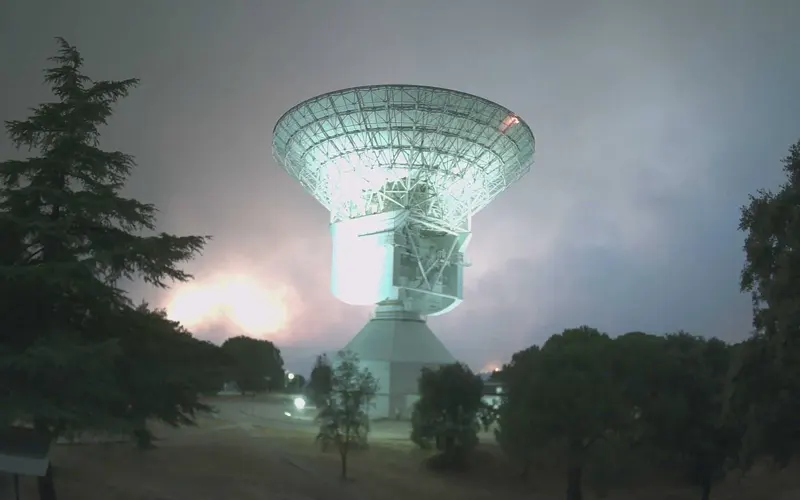
European Space Agency Director General Josef Aschbacher announced on July 26 that ESA’s Cebreros deep-space ground station in Spain has been cleared to return to service after inspections confirmed the facility escaped damage from nearby wildfires.
The 35-metre antenna at Cebreros, located 77 kilometres west of Madrid, was declared green for nominal operations as of July 27. Aschbacher noted that any on-site presence would be kept to a minimum in accordance with restrictions still in force in the area.
The wildfire emergency began several days earlier. On Thursday, July 23, the Spanish government declared a national emergency as large fires spread through the province of Ávila and neighbouring Madrid, threatening inhabited areas. On July 24, images emerged showing wildfires approaching Cebreros, prompting an evacuation of the facility.
NASA’s nearby Madrid Deep Space Communications Complex, one of three main Deep Space Network sites located in Robledo de Chavela about 65 kilometres west of Madrid, was also affected. NASA announced on July 24 that it had evacuated the complex, with the agency stating that all personnel were safely removed and damage would be assessed once conditions permitted.

NASA press secretary Bethany Stevens reported on July 25 that an initial onsite inspection by the MDSCC emergency response team found wildfire damage primarily to pavement and surrounding vegetation, with no significant structural damage observed to antennas or buildings. She noted that further tests and inspections are planned as conditions stabilize.
According to NASA’s Deep Space Network Now website, none of the antennas at the Madrid site have been actively communicating with spacecraft since at least July 24. The Canberra and Goldstone sites have assumed control of the DSN under the follow-the-sun management approach, maintaining continuity of operations and uninterrupted spacecraft communications.
The Madrid complex hosts a 70-metre antenna and five 34-metre antennas used for communicating with NASA spacecraft throughout the solar system. Its disruption comes as the DSN already faces a capacity crunch: the 70-metre antenna at Goldstone remains out of service until 2028 for repairs and upgrades stemming from an incident NASA had attributed to poor training and procedures.
Citations
- “Soyuz MS-28 Back Home After 8 Months on ISS” — https://spacepolicyonline.com/news/soyuz-ms-28-back-home-after-8-months-on-iss/
- “NASA Astronaut Chris Williams, Crewmates Return from Space Station” — https://www.nasa.gov/news-release/nasa-astronaut-chris-williams-crewmates-return-from-space-station/
- “Juno reveals surprising subsurface tempertures at Io, remarkably smooth surface” — https://www.nasaspaceflight.com/2026/07/juno-io-subsurface-temps/
- “ESA Ground Station in Spain Cleared to Return to Service After Wildfire Threat” — https://europeanspaceflight.com/esa-ground-station-in-spain-cleared-to-return-to-service-after-wildfire-threat/
- “NASA and ESA facilities avoid major damage from wildfires in Spain” — https://spacenews.com/nasa-and-esa-facilities-avoid-major-damage-from-wildfires-in-spain/

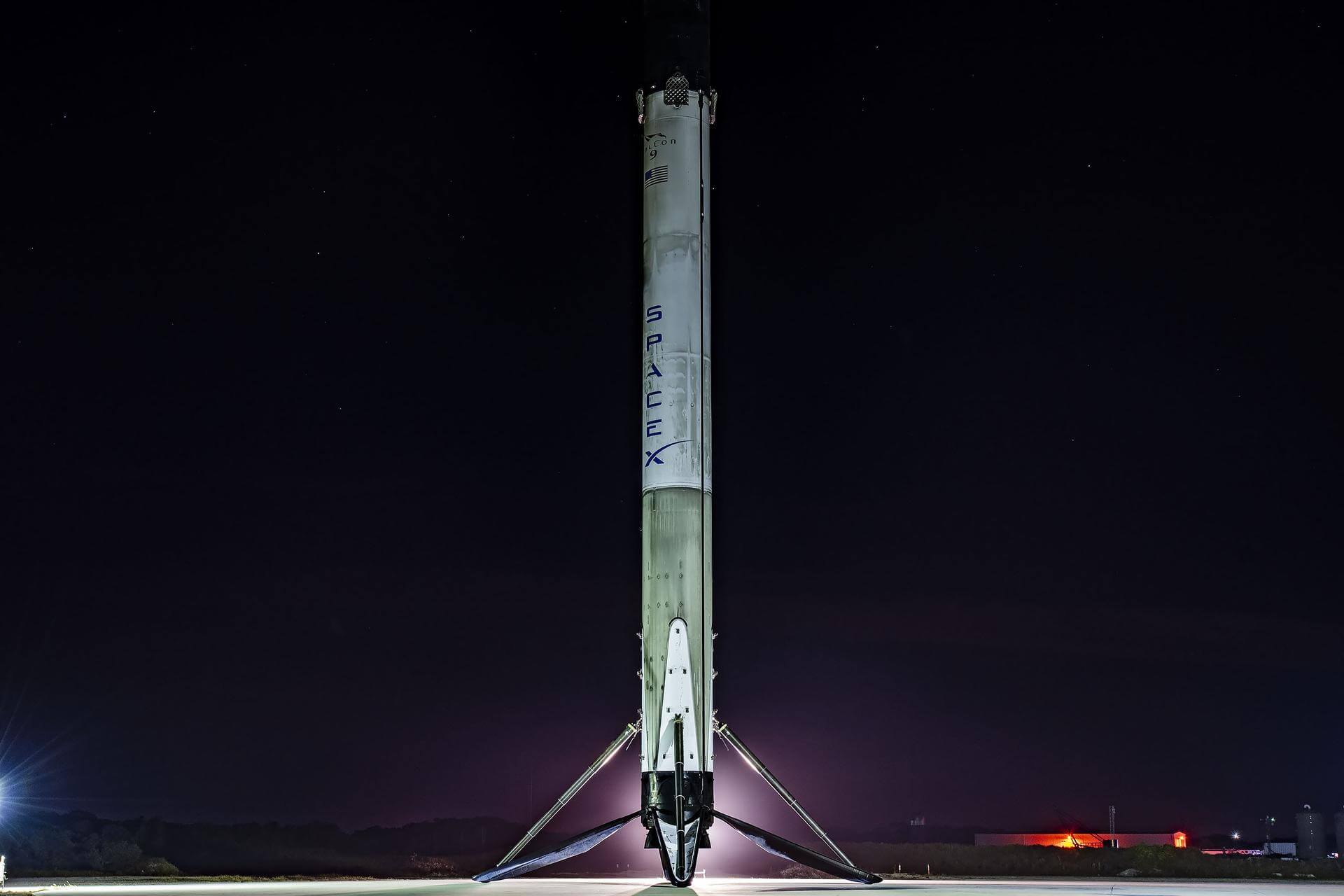
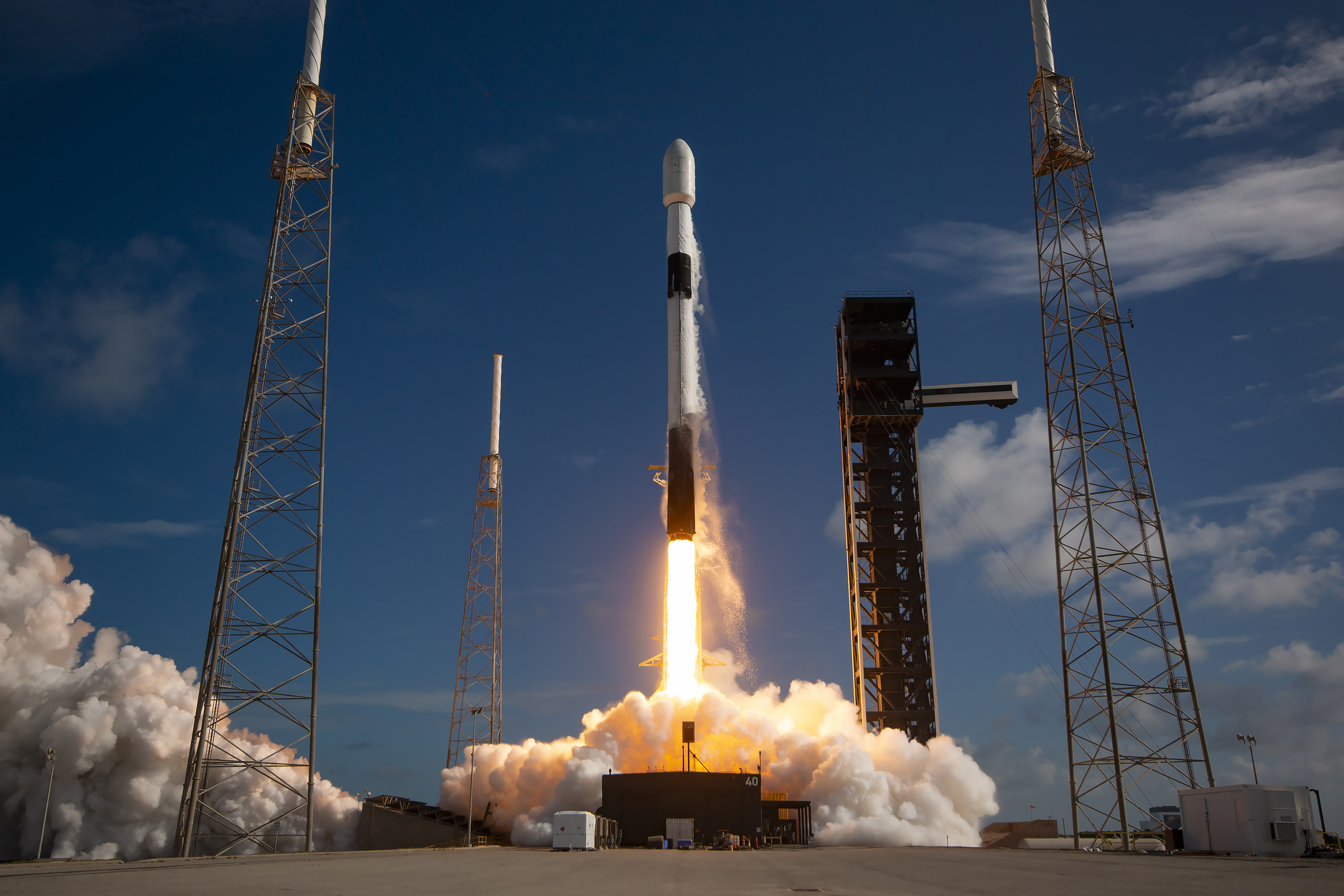
Starlink Group 17-52
Provider: SpaceX
Date: July 29, 2026
Time: 2:00 AM UTC
Vehicle: Falcon 9
A batch of 24 satellites for the Starlink mega-constellation – SpaceX’s project for space-based Internet communication system.
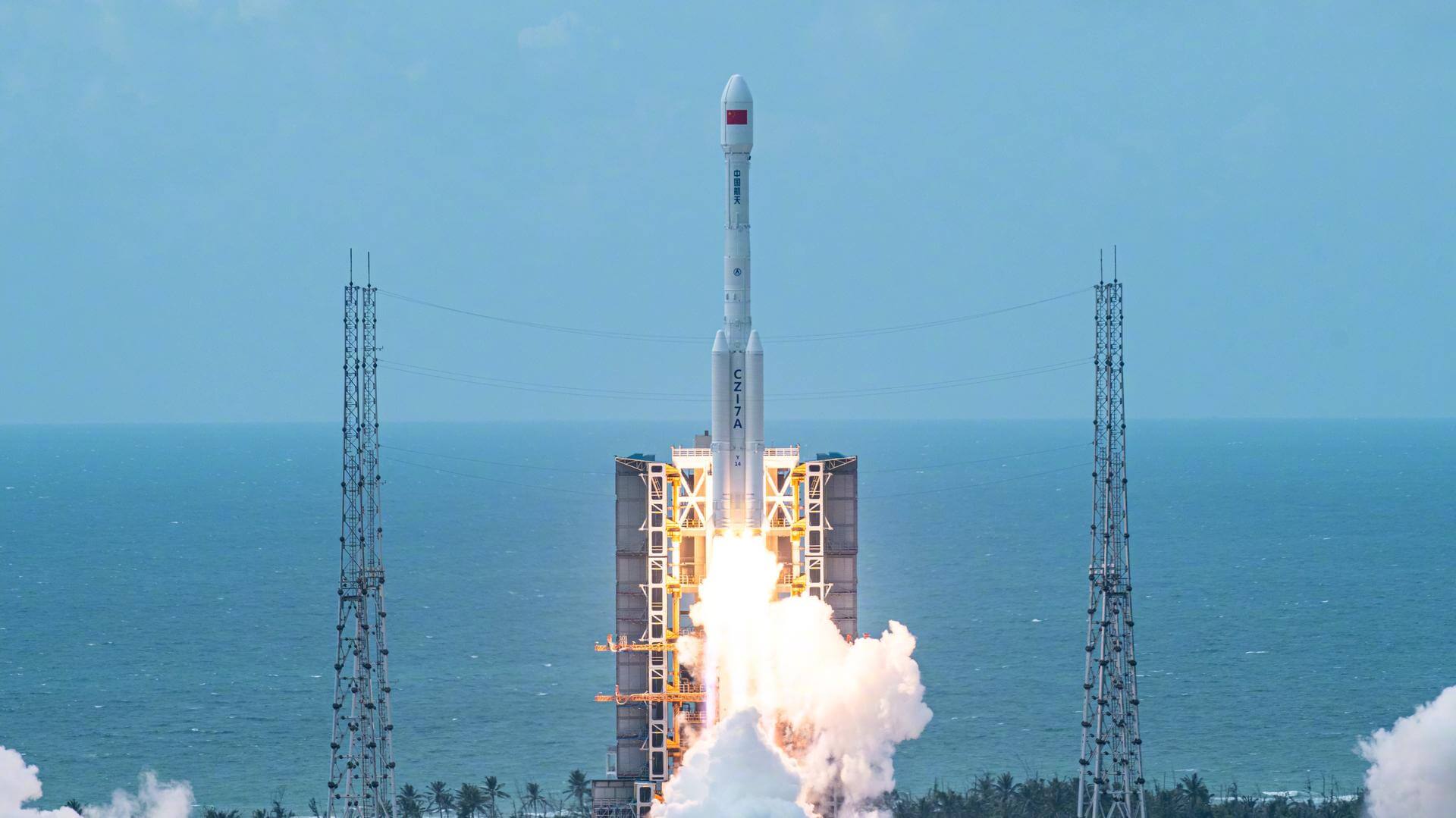
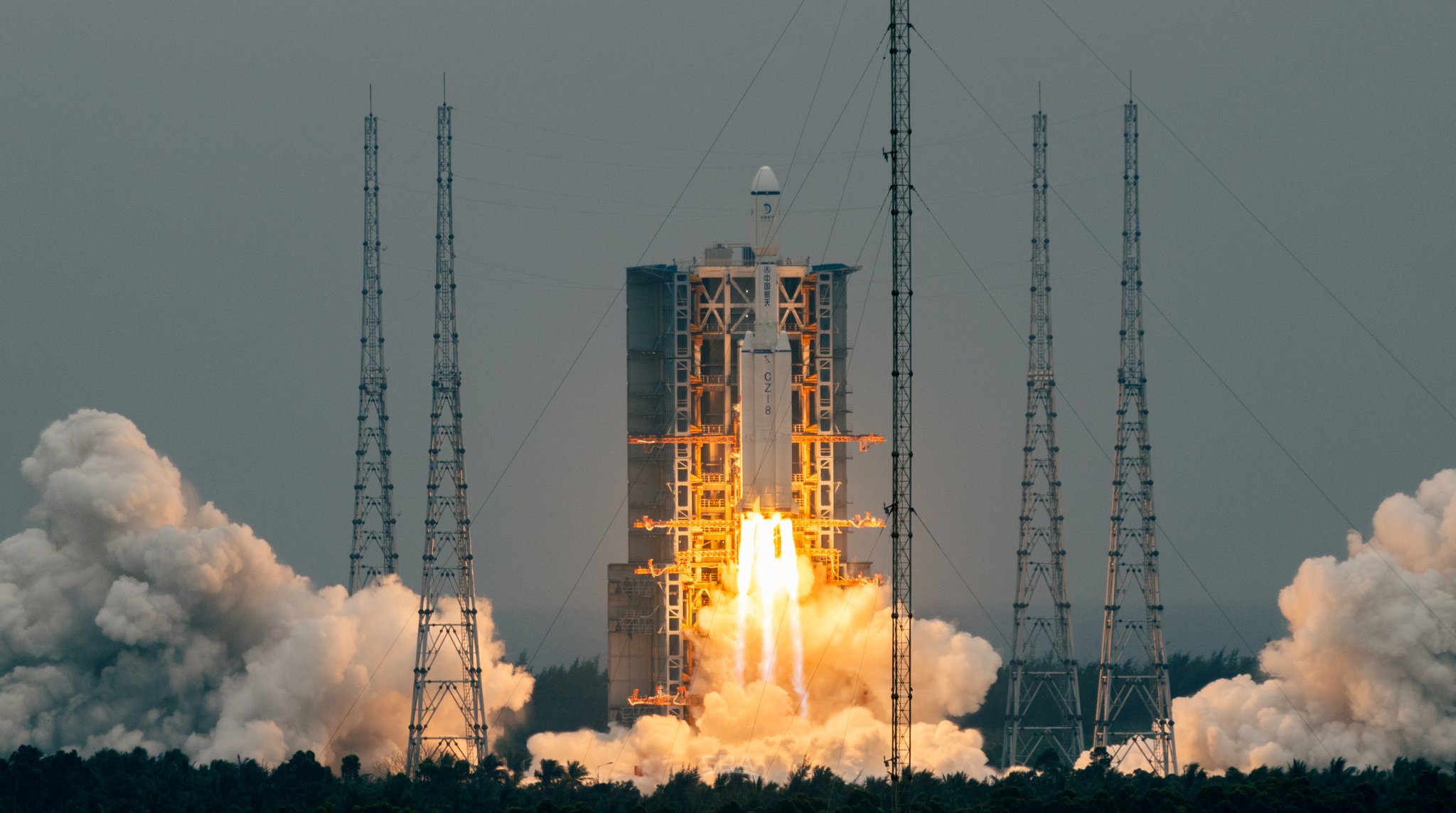
Unknown Payload
Provider: China Aerospace Science and Technology Corporation
Date: July 29, 2026
Time: 11:50 AM UTC
Vehicle: Long March 7A
Details TBD.
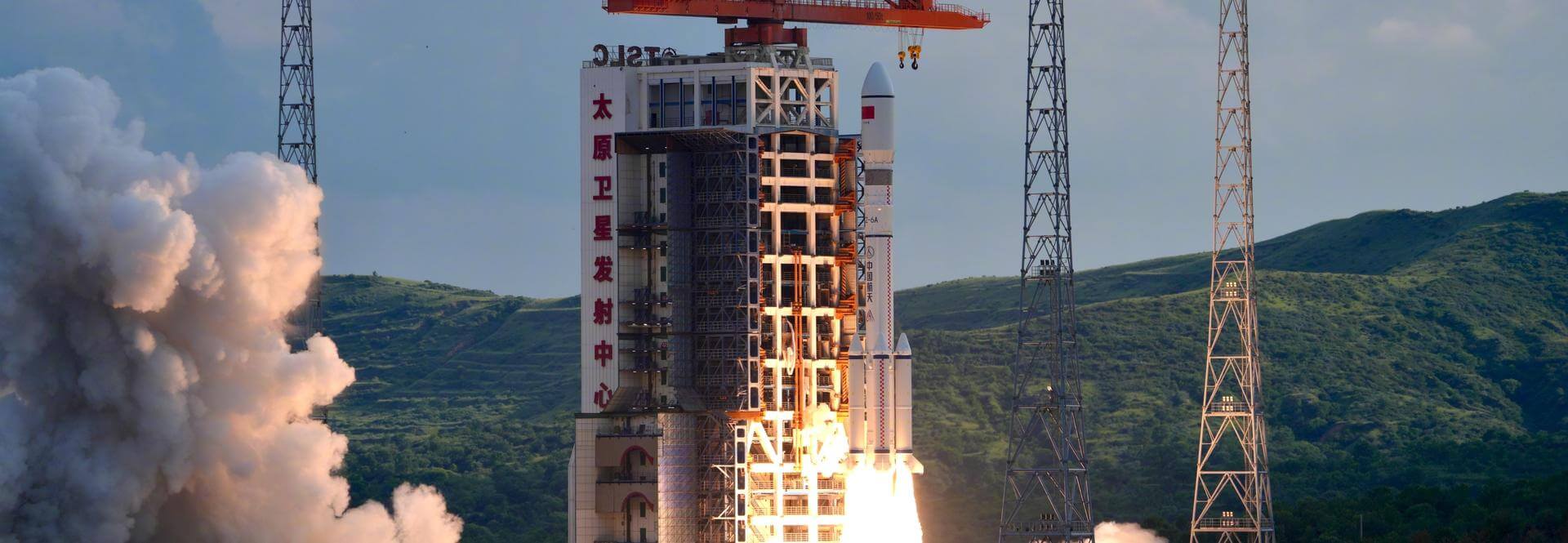
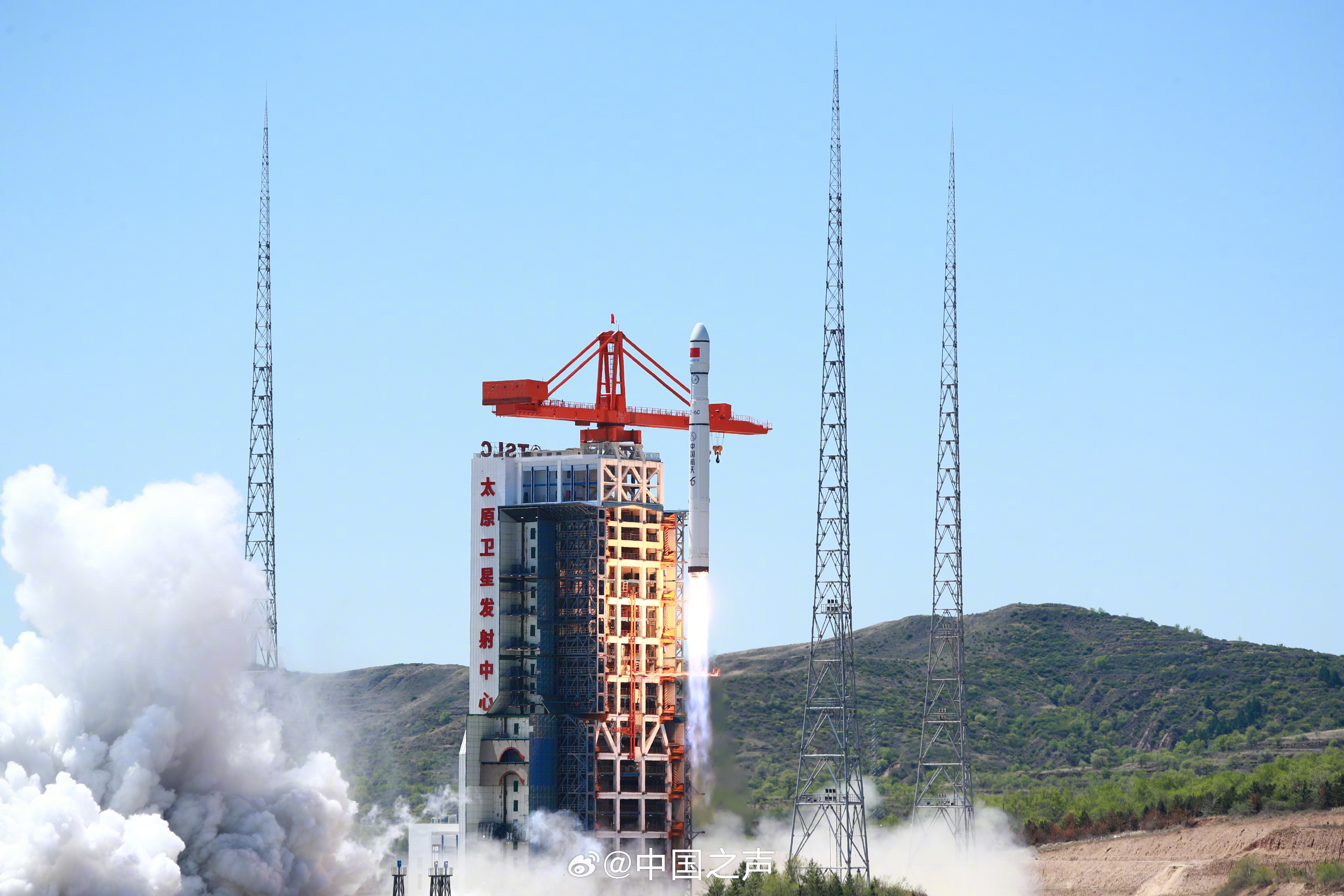
Unknown Payload
Provider: China Aerospace Science and Technology Corporation
Date: July 30, 2026
Time: 1:00 AM UTC
Vehicle: Long March 6A
Details TBD.

NROL-95
Provider: SpaceX
Date: July 30, 2026
Time: 7:09 AM UTC
Vehicle: Falcon 9
Classified payload for the US National Reconnaissance Office.
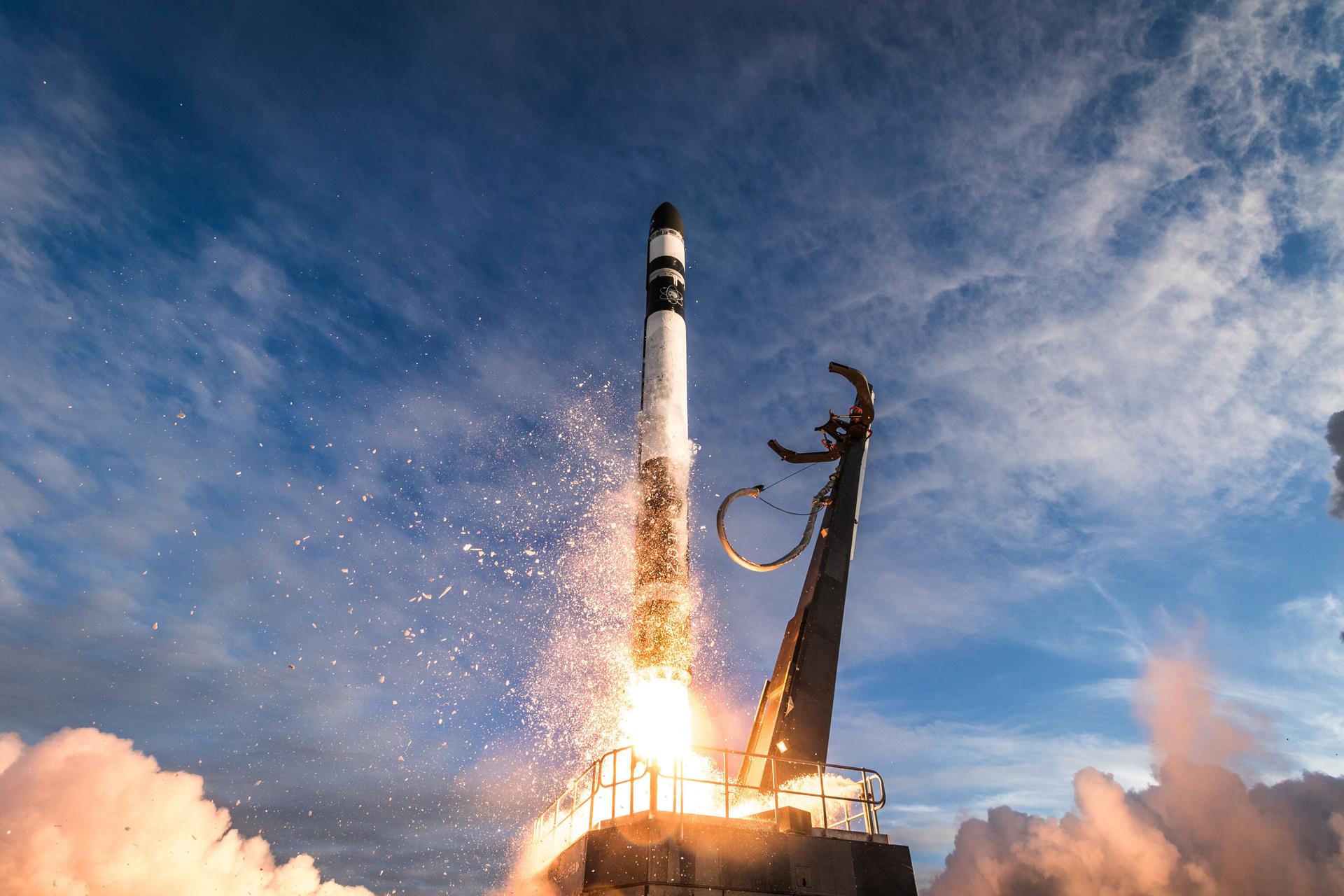
LOXSAT 1
Provider: Rocket Lab
Date: July 31, 2026
Time: 12:00 AM UTC
Vehicle: Electron
LOXSAT 1 is a demonstration satellite of a complete cryogenic oxygen fluid management system in orbit, developed by Eta Space and sponsored by NASA’s Tipping Point program.
The system will be integrated on a Rocket Lab Photon-LEO satellite bus and collect critical cryogenic fluid management data in orbit for 9 months, demonstrating capabilities of in-space cryogenic storage and transferal. Eta Space plans to use technology developed for this mission to develop a truly commercial depot intended to serve multiple customers in the future.








Enjoying the content? Stay up to date on everything happening behind the scenes by following our Patreon!

