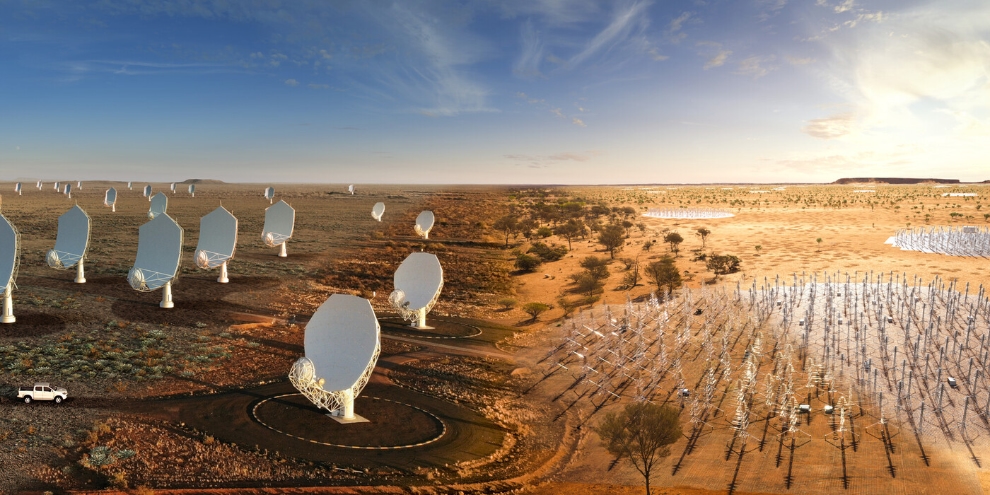
Canada is significantly bolstering its involvement in the Square Kilometre Array (SKA) project, an ambitious international endeavour to construct the world’s largest radio telescope array across two continents. Recent developments underscore Canada’s growing commitment, including an investment of $269 million in 2024, securing a six per cent share of the observatory’s viewing time. This investment is now translating into tangible progress on the ground, with Canadian institutions actively building regional data infrastructure and training early-career researchers to handle the influx of data.
In late May, the inaugural Canadian SKA Community Day brought together several Canadian universities and the Dominion Radio Astrophysical Observatory. This event featured remote talks and in-person watch parties, focusing on Canadian hardware contributions and the nation’s early science goals for the project. Complementing this, McGill University hosted the first Canadian Radio Astronomy Summer Institute and Extended School the same week. This programme provided nearly 40 graduate students with invaluable hands-on experience in radio instrumentation, further empowering the next generation of Canadian astronomers. The SKA project recently welcomed Professor Jessica Dempsey as its new director-general on June 1, and France officially joined as the 14th member nation, highlighting the global expansion of this scientific enterprise.
Katalyst’s LINK Launches to Reboost NASA’s Swift Observatory
Katalyst Space’s LINK on-orbit servicing spacecraft successfully launched on July 3, heading towards NASA’s Neil Gehrels Swift Observatory to reboost the aging gamma-ray burst satellite. The Northrop Grumman Pegasus-XL rocket deployed LINK from an L-1011 carrier aircraft at 4:36 a.m. Eastern, placing the 425-kilogram spacecraft into low Earth orbit. Contact with LINK has been successfully established, marking the crucial first step in a high-risk, high-reward mission.
The Swift observatory, launched in 2004, is vital for studying gamma-ray bursts across visible, ultraviolet, X-ray, and gamma-ray bands. Its orbit is decaying faster than anticipated due to increased solar activity, threatening its ability to continue observations. Last September, NASA awarded Katalyst a $30 million contract for this on-orbit servicing demonstration. Katalyst repurposed an existing technology demonstration for this mission, developing a launch-ready spacecraft within nine months—a timeline described by Kieran Wilson, principal investigator for Link at Katalyst, as “absolutely unprecedented.” Over the next two weeks, Katalyst Space will conduct in-orbit checkouts before LINK begins its approach and survey of Swift, a process expected to take an additional two to three weeks. This final Pegasus XL launch, the last under contract, underscores the urgency and innovation driving efforts to extend the life of critical space assets.
GAO Flags Space Force Satellite Costs and Launch Risks
A new report from the U.S. Government Accountability Office (GAO), released July 2, highlights persistent challenges within the U.S. Space Force’s acquisition programmes, including cost growth, slow development timelines, and workforce shortages. While the Space Force has aimed to accelerate its military acquisition processes, the report suggests that many procurements still grapple with issues that have plagued defence acquisitions for decades. The GAO’s annual assessment, which reviewed over 100 of the Defense Department’s largest acquisition programmes—including 13 from the Space Force—found that despite increased adoption of rapid procurement pathways, the Pentagon is still too slow in fielding major weapon systems.
The report specifically scrutinized the Next Generation Overhead Persistent Infrared geosynchronous missile-warning constellation (Next Gen OPIR GEO), estimating its acquisition cost at $9.5 billion and noting “significant cost growth.” A $340 million overrun for the mission payload subcontractor was attributed to software development complexity and engineering challenges. Furthermore, the launch schedule for the first Next Gen OPIR GEO satellite remains uncertain as it was assigned to United Launch Alliance’s Vulcan rocket, which is currently grounded following a launch anomaly. Vulcan is anticipated to return to flight later this year. The GAO also noted that while the Pentagon embraces digital engineering in principle, digital twins are largely absent, and modern engineering practices are insufficiently adopted to support rapid acquisition.
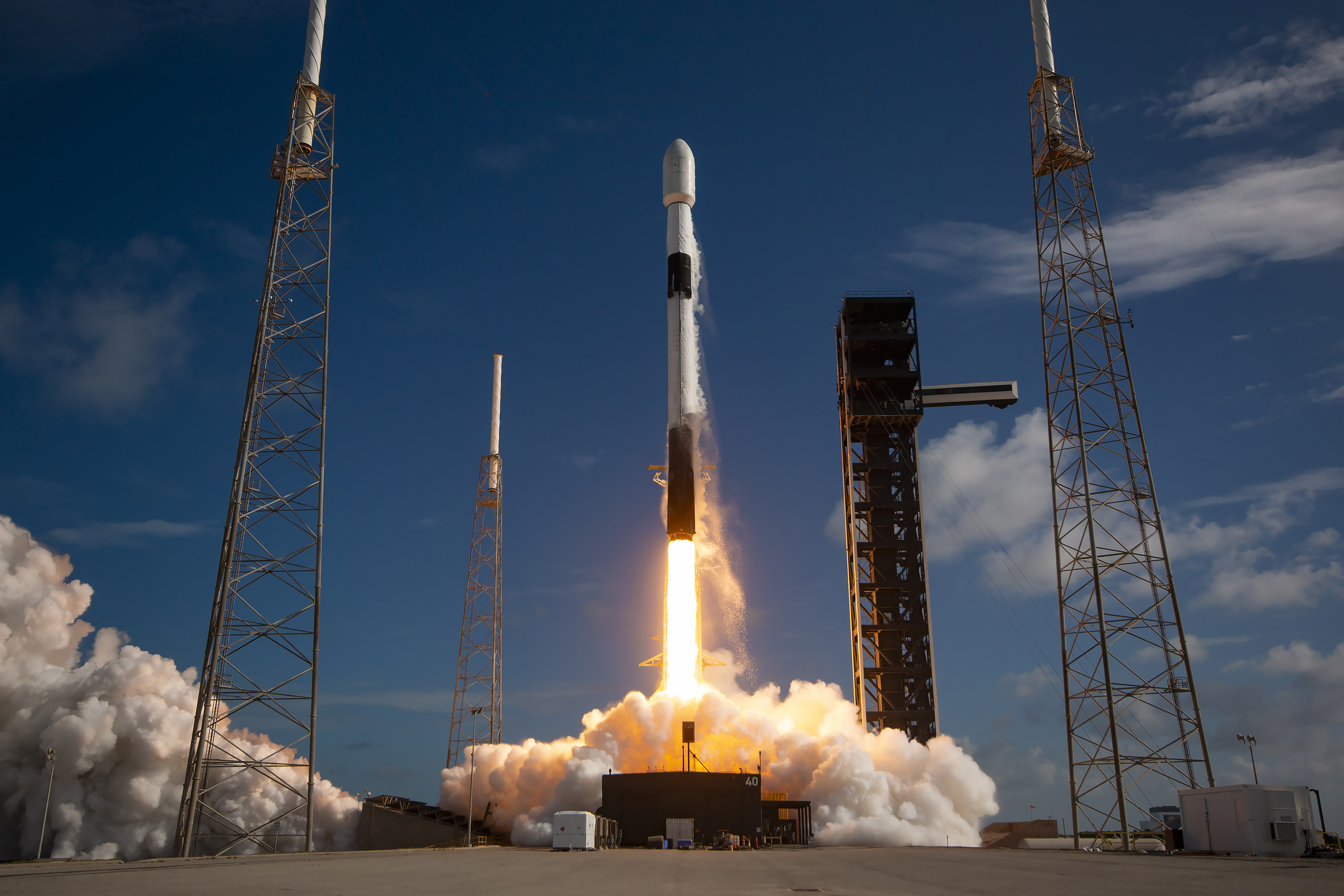
Provider: SpaceX Date: July 5, 2026 Time: 10:46 AM UTC Vehicle: Falcon 9
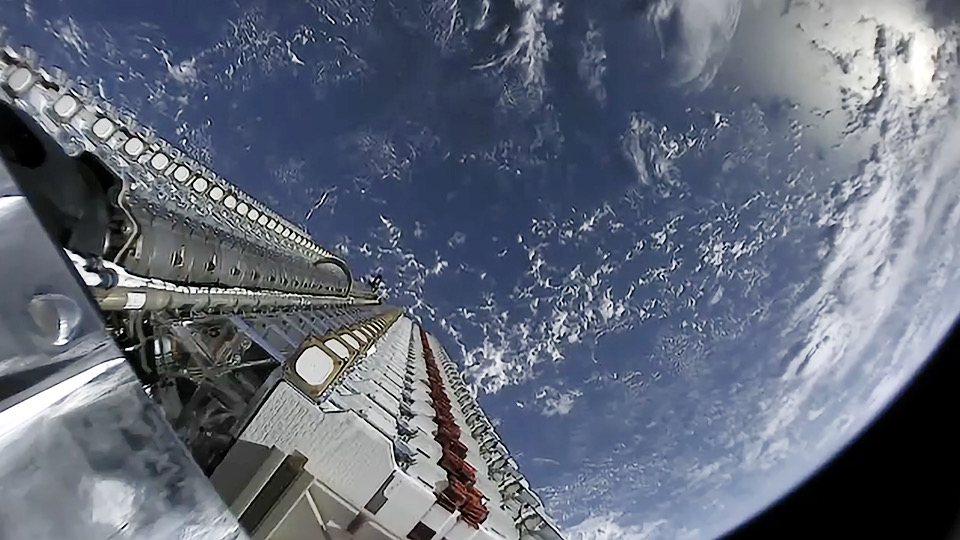
A batch of 29 satellites for the Starlink mega-constellation – SpaceX’s project for space-based Internet communication system.
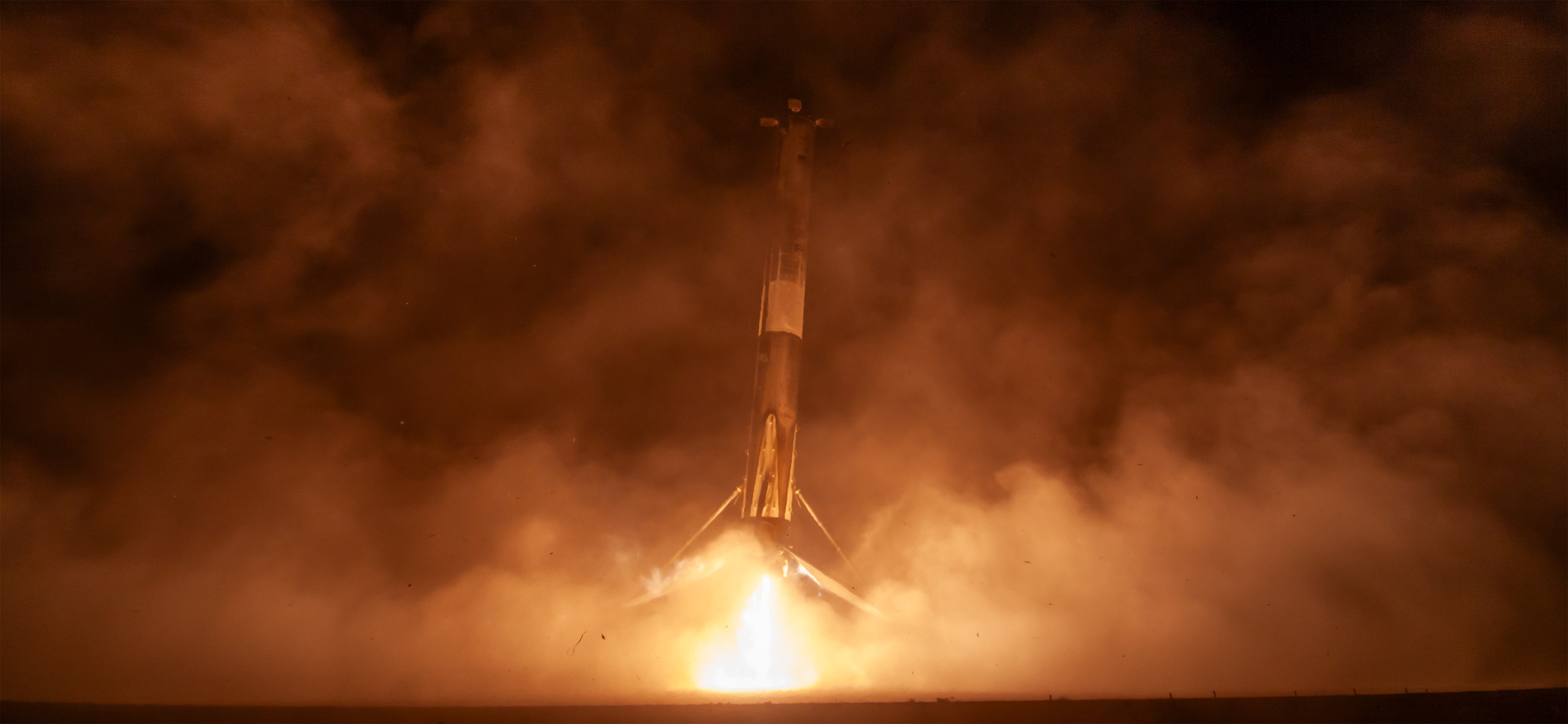
The Falcon 9 1st stage carries 2 customer payload from Besxar for testing their Fabships pilot reusable manufacturing pods in launch and re-entry environments.
SpaceSail Polar Group TBD
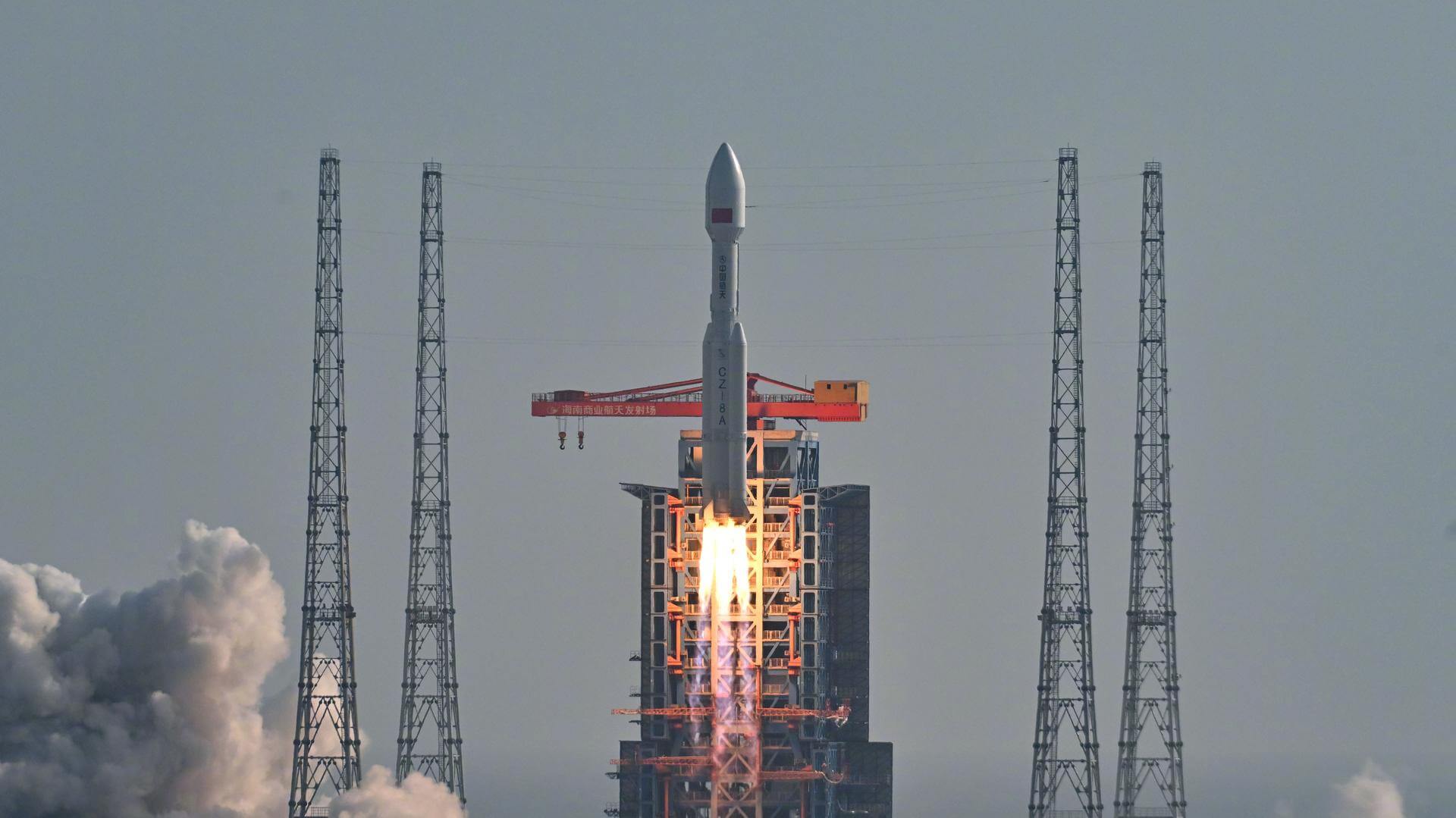
Provider: China Aerospace Science and Technology Corporation Date: July 5, 2026 Time: 1:40 PM UTC Vehicle: Long March 8A
Low Earth Orbit communication satellites with Ku, Q and V band payloads for the G60 constellation operated by Shanghai Spacesail Technologies with funding backed by the Shanghai local government.
Initial constellation will consist of 1296 satellites by 2027 with long term plans to expand it to 12000 satellites.
Transporter 17 (Dedicated SSO Rideshare)
Provider: SpaceX Date: July 7, 2026 Time: 7:10 AM UTC Vehicle: Falcon 9
Dedicated rideshare flight to a sun-synchronous orbit with dozens of small microsatellites and nanosatellites for commercial and government customers.
Starlink Group 10-42
Provider: SpaceX Date: July 9, 2026 Time: 9:05 AM UTC Vehicle: Falcon 9
A batch of 29 satellites for the Starlink mega-constellation – SpaceX’s project for space-based Internet communication system.
Demo Flight
Provider: China Aerospace Science and Technology Corporation Date: July 10, 2026 Time: 5:20 AM UTC Vehicle: Long March 10B
First test launch of CASC’s Long March 10B rocket.
Starlink Group 10-50 ×
Mission Details
TypeCommunications
OrbitLow Earth Orbit
TargetEarth
A batch of 29 satellites for the Starlink mega-constellation – SpaceX’s project for space-based Internet communication system.
The Falcon 9 1st stage carries 2 customer payload from Besxar for testing their Fabships pilot reusable manufacturing pods in launch and re-entry environments.
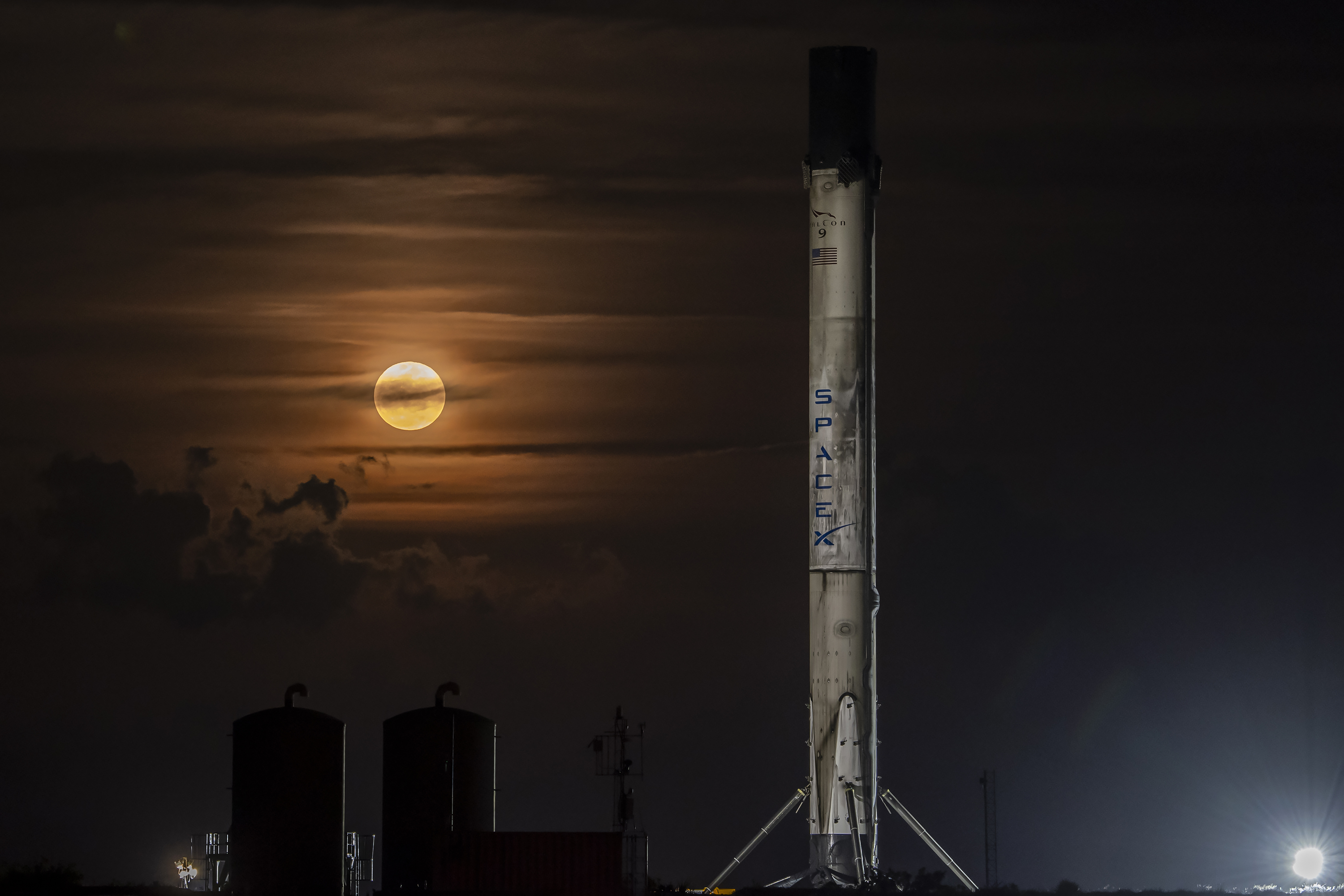
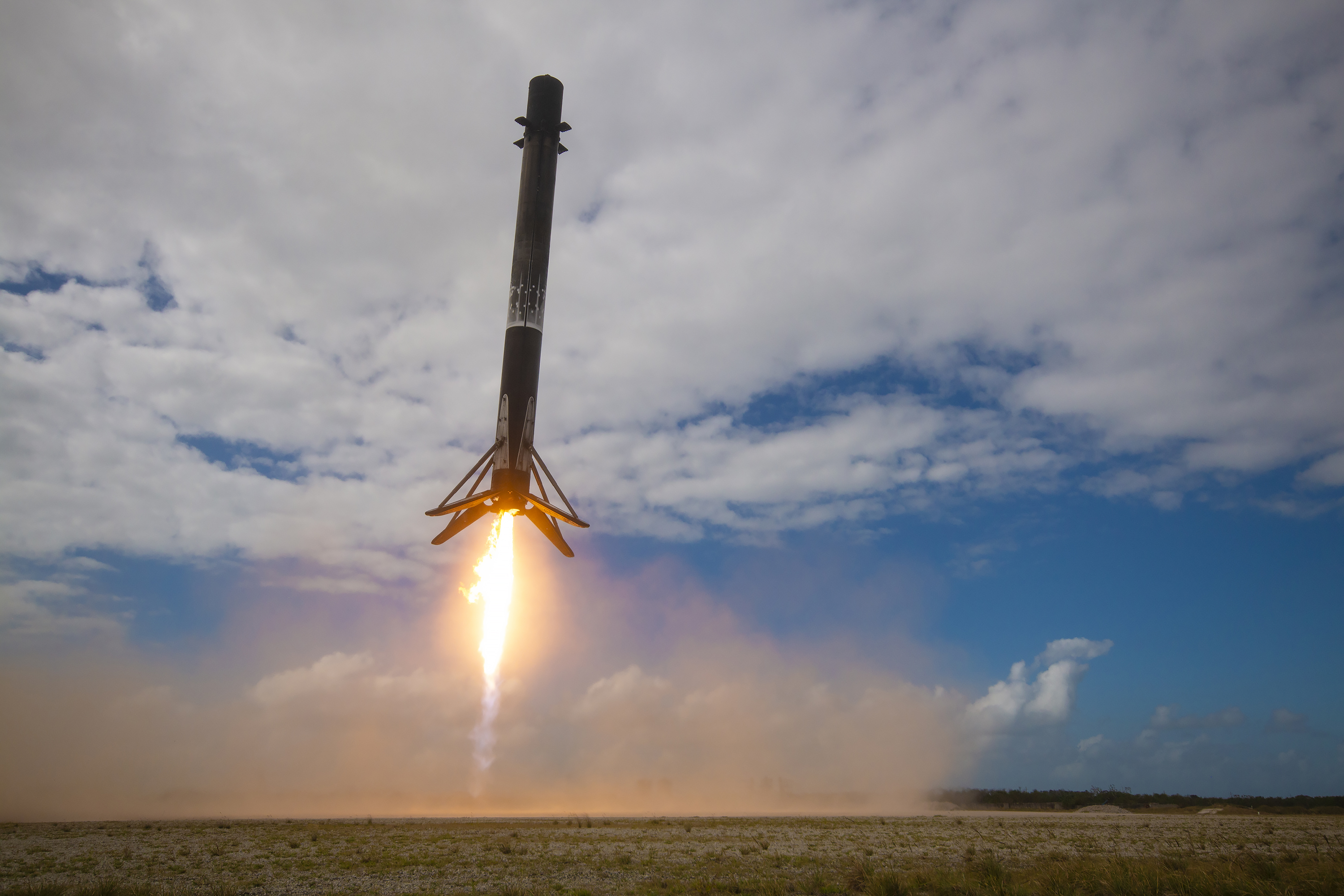
Falcon 9 is a two-stage rocket designed and manufactured by SpaceX for the reliable and safe transport of satellites and the Dragon spacecraft into orbit. The Block 5 variant is the fifth major interval aimed at improving upon the ability for rapid reusability.
The Falcon 9 first stage B1090 will land on ASDS ASOG after its 13th flight.
SpaceSail Polar Group TBD ×
Mission Details
TypeCommunications
OrbitPolar Orbit
TargetEarth
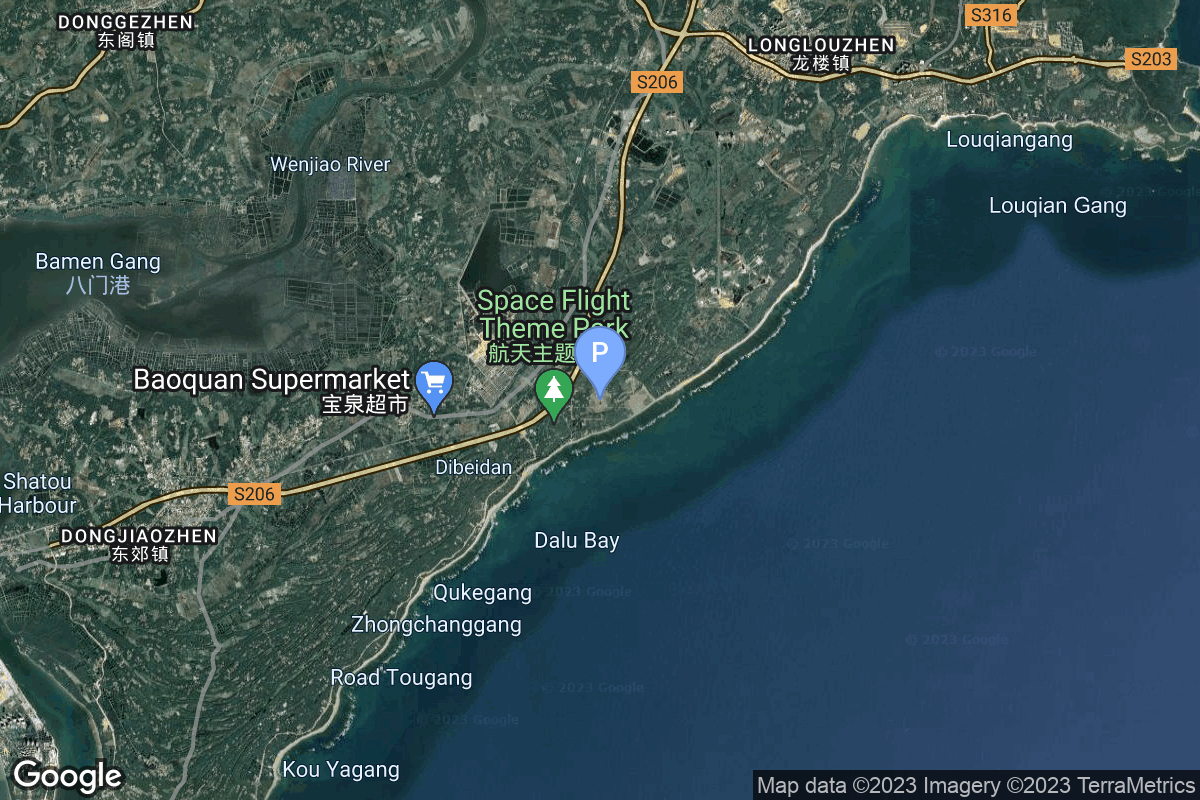
Low Earth Orbit communication satellites with Ku, Q and V band payloads for the G60 constellation operated by Shanghai Spacesail Technologies with funding backed by the Shanghai local government.
Initial constellation will consist of 1296 satellites by 2027 with long term plans to expand it to 12000 satellites.
Launch Provider: China Aerospace Science and Technology Corporation
The Long March 8A is an orbital launch vehicle developed by the China Academy of Launch Vehicle Technology based on the Long March 8. It has an increased capability of up to 7 tonnes to a 700 km altitude sun-synchronous orbit. It implements a larger 3.35 meters diameter liquid hydrogen/liquid…
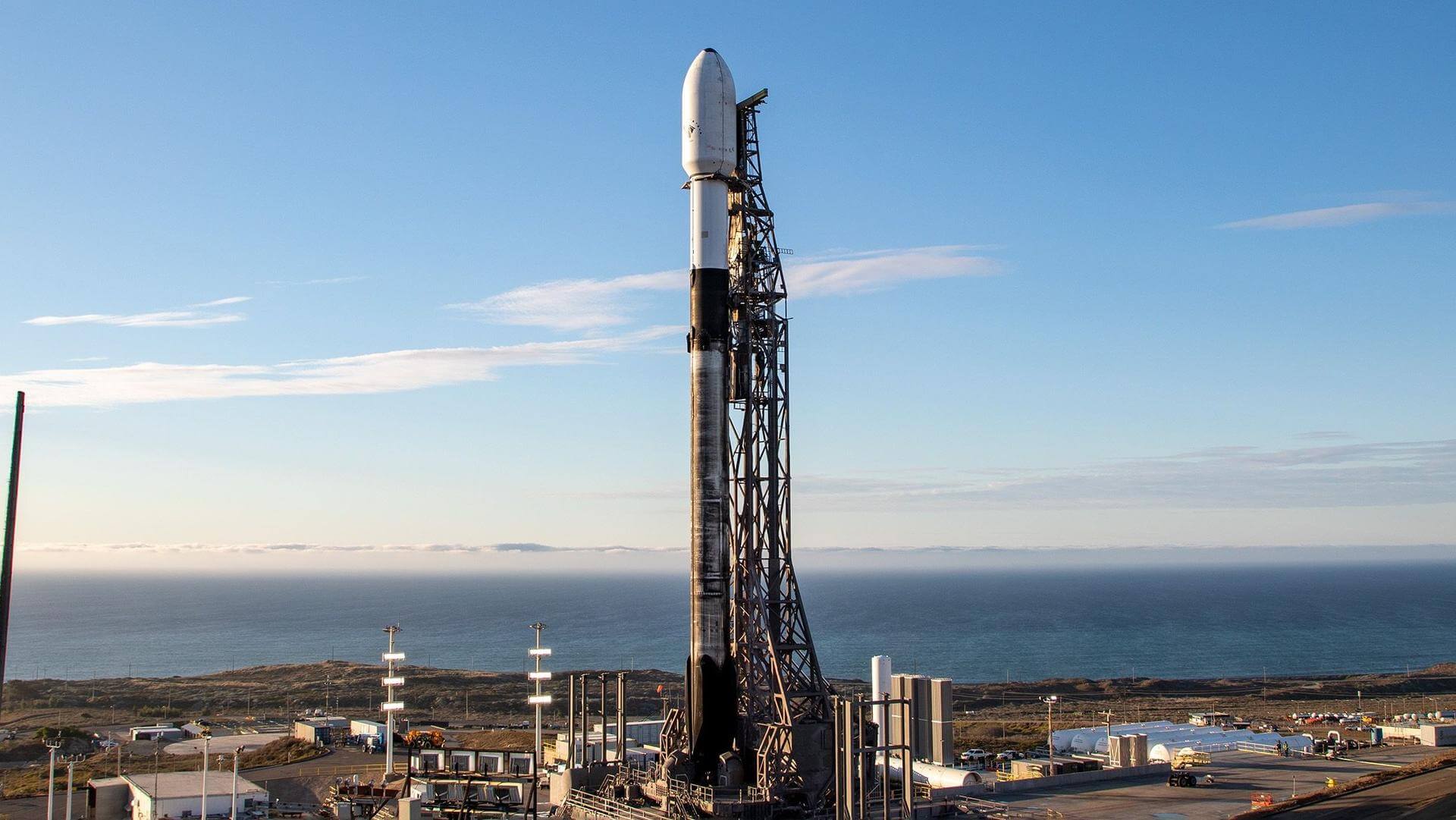
Falcon 9 is a two-stage rocket designed and manufactured by SpaceX for the reliable and safe transport of satellites and the Dragon spacecraft into orbit. The Block 5 variant is the fifth major interval aimed at improving upon the ability for rapid reusability.
Falcon 9 is a two-stage rocket designed and manufactured by SpaceX for the reliable and safe transport of satellites and the Dragon spacecraft into orbit. The Block 5 variant is the fifth major interval aimed at improving upon the ability for rapid reusability.
The Long March 10B is a reusable launch vehicle based on the 1st stage of the Long March 10A, in turn derived from a single 1st stage core of the Long March 10, with 7 YF-100 series kerosene/liquid oxygen staged-combustion cycle engines on the 1st stage. Like the Long March 10A, the 10B’s 1st stage…
Robo Chris is a collection of API calls, filters, and searches, bolted together with magic and love. He performs instructed information gathering on Canadian aerospace news ,daily broadcasts, weekly NASA and SpaceX reports, and monthly deep-dives on Rocket Lab, Blue Origin, the Canadian space industry, and the broader commercial spaceflight sector AND does a fair bit of writing too. Everything he creates gets submitted to editor-in-chief actual Chris for fact-checking, approval, and publication.