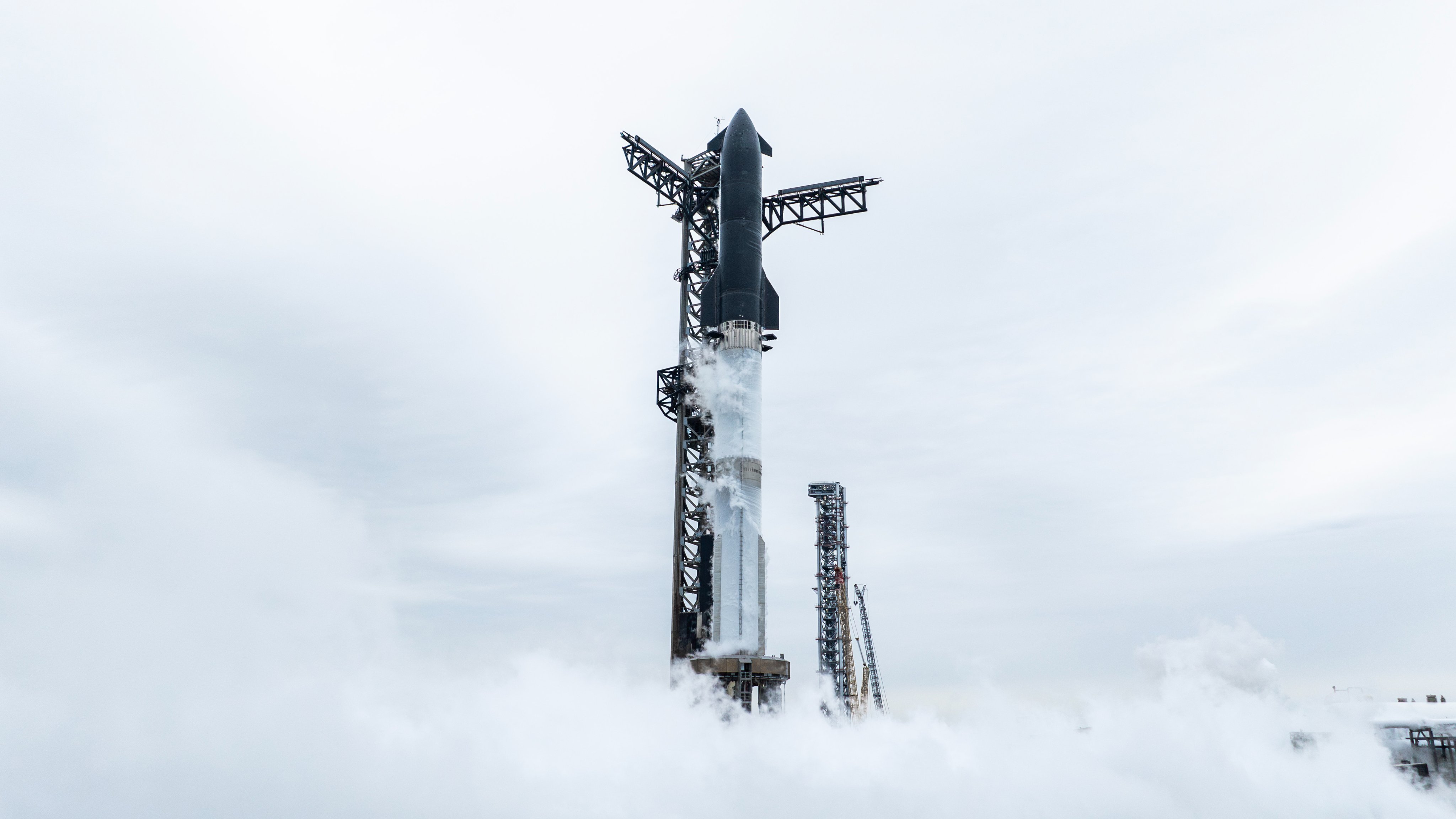
Starship 40 completed a 60-second, six-engine static fire test at Starbase Massey on July 1, clearing another milestone ahead of Flight 13. The test article performed at full engine duration in preparation for the mission expected to launch later this month. After the test, Starship 40 returned to megabay 2 at the main facility for inspection and continued integration.
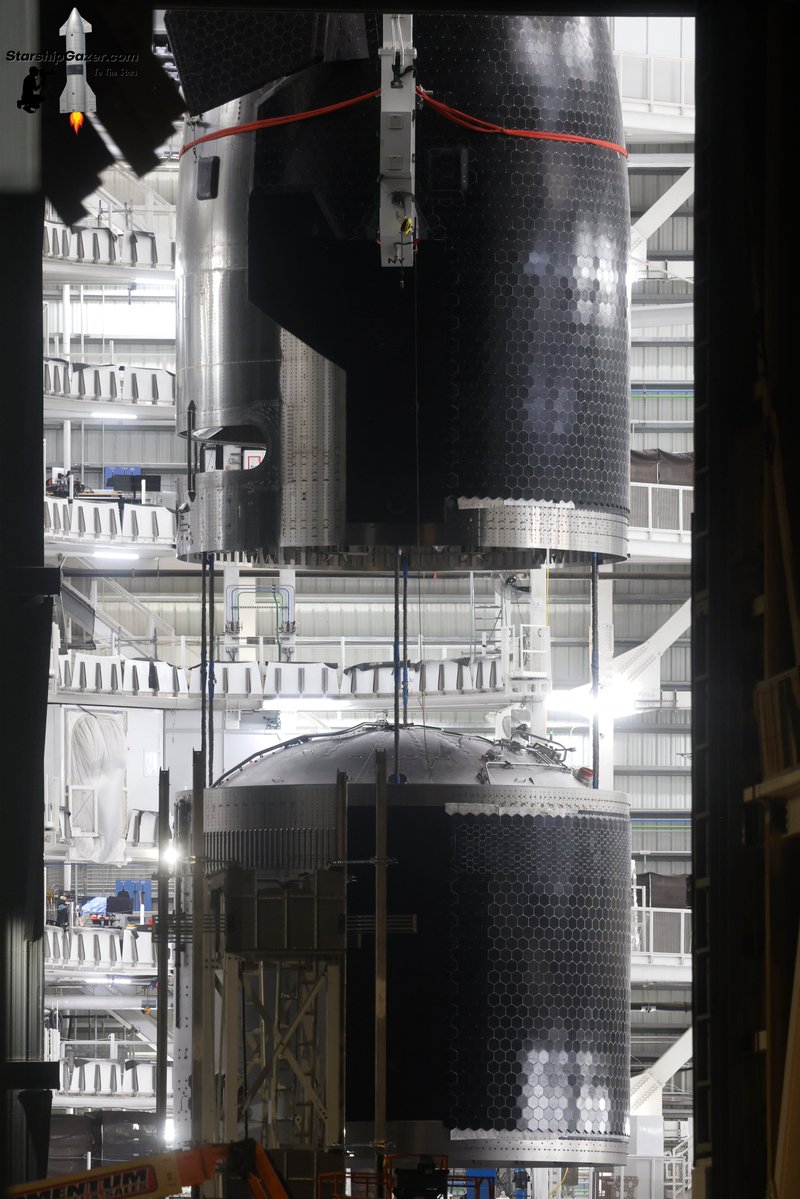
In parallel, Starship 42—the flight 15 test article—advanced toward stacking on July 3. The ship’s nose cone, payload section, and forward dome were transferred from Starfactory into megabay 2 to begin assembly and integration. The cadence of vehicle stacking and test preparation reflects SpaceX’s push toward sustained monthly Starship launch operations from multiple launch sites.
Florida Pad and Integration Facility Near Completion
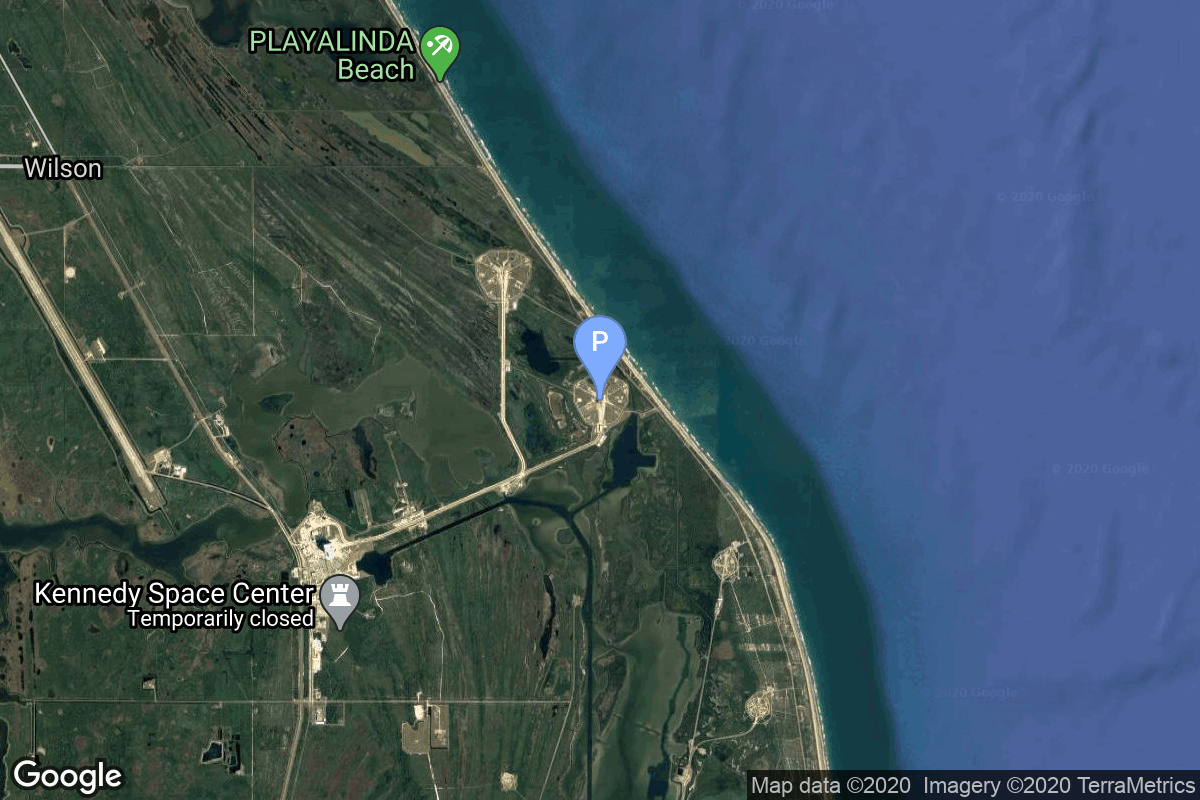
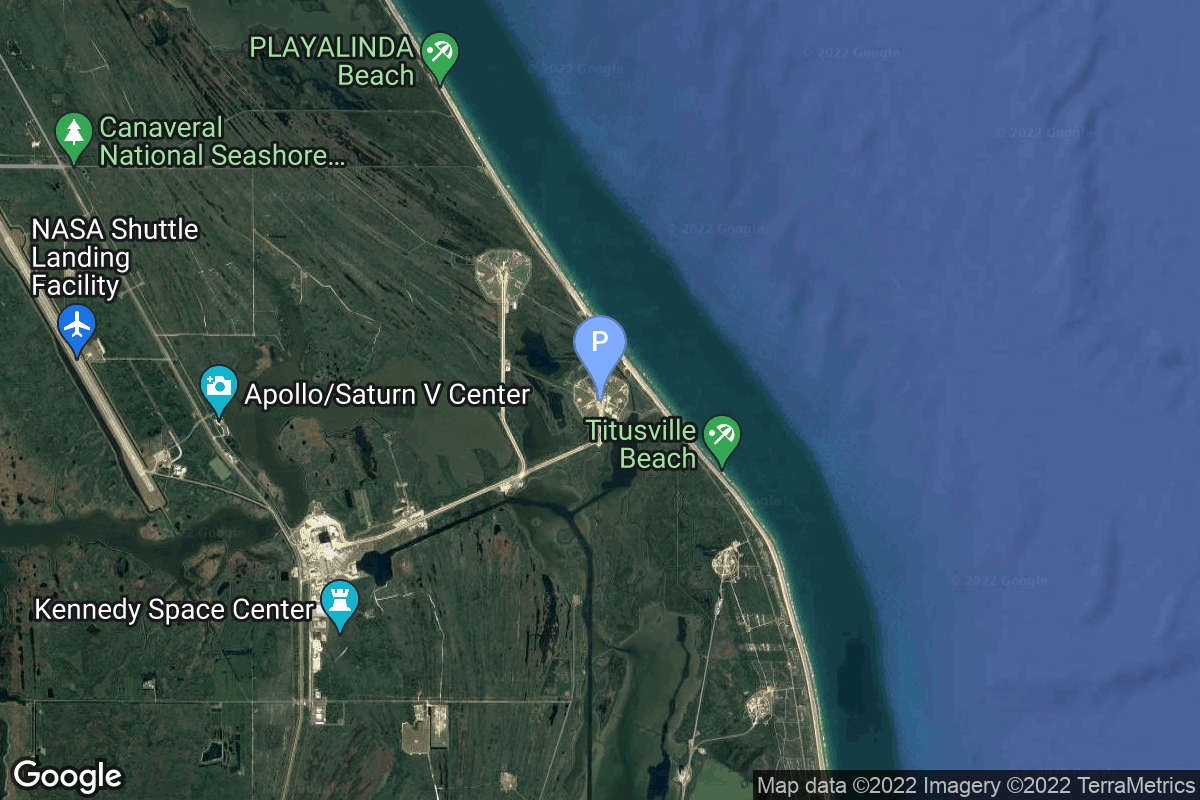
SpaceX and its contractors are in the final phases of work on Launch Complex 39A at Cape Canaveral and the Gigabay integration facility at Roberts Road. Both sites represent key infrastructure for Starship operations on Florida’s Space Coast, with LC-39A serving as the primary launch pad and the Gigabay providing pre-launch vehicle assembly and testing.
Work at LC-39A includes integration of launch and ground support systems, with the pad’s deluge system, transport stands, and vaporiser systems all nearing operational readiness. The Gigabay, situated at Roberts Road west of the main Starbase campus, will serve as a secondary assembly and checkout facility to accelerate launch cadence from the Cape.
Construction teams have also progressed on infrastructure supporting secondary launch sites. SLC-37A at Cape Canaveral and updates to existing pads at Vandenberg reflect SpaceX’s strategy to distribute Starship and Falcon launch demand across multiple facilities.
Falcon 9 Maintains Rapid Deployment Pace
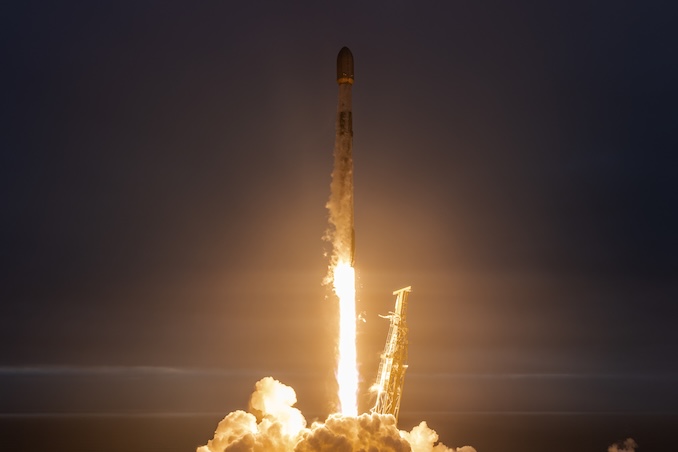
SpaceX completed two Falcon 9 Starlink missions this week, deploying more than 50 satellites across dual launches from opposite coasts. On July 1, Falcon 9 booster B1100 launched Starlink 17-46 from Space Launch Complex 4 East at Vandenberg Space Force Base, lifting off at 7:57 p.m. PDT. The mission deployed 24 Starlink satellites and completed the booster’s seventh flight. B1100 recovered on the drone ship Of Course I Still Love You, marking the 207th landing on that vessel and SpaceX’s 632nd booster recovery overall.
Three days later, on July 5, a second Falcon 9 lifted off from Space Launch Complex 40 at Cape Canaveral at 6:50 a.m. EDT, carrying Starlink 10-50 and two secondary payloads. The mission deployed 29 Starlink satellites and carried two Fabships—semiconductor manufacturing test beds—from Washington D.C.-based Besxar Space Industries. The eight-minute, 19-second sub-orbital flight marks the first of 12 planned test flights for Besxar’s space-based semiconductor substrate production programme.
The combined deployments bring SpaceX’s Starlink constellation to more than 10,700 satellites, with approximately 1,600 deployed during the first half of 2026 alone.
Engine Production Milestone and Starlink Expansion
SpaceX teams completed build and acceptance testing of the 1,000th Merlin 1D engine on July 1, marking a significant production milestone. The reliability enhancements achieved through booster recovery and reuse have made Merlin 1D one of the most reliable rocket engines ever manufactured, according to the company.
On the Starlink service side, deployment and coverage expansion continued worldwide. Starlink Mobile connectivity now reaches Globe customers across more than 7,000 islands in the Philippines. Starlink is powering air ambulance operations in remote Philippine regions, enabling pilots and flight nurses to coordinate with medical teams on the ground in real time. Onboard connectivity is live on Emirates aircraft, while remote operations in Brazil and Australia are leveraging the service for business and logistics. The Angelicoussis shipping group has doubled data usage across its 140+ ocean vessels, providing crews with home-like internet connectivity while at sea.
Starship Gazer (@StarshipGazer) X Feed — Past Week
Gwynne Shotwell (@Gwynne_Shotwell) X Feed — Past Week
NASA Spaceflight (@NASASpaceflight) X Feed — Past Week
Flight 13
Provider: SpaceX Date: July 31, 2026 Time: 12:00 AM UTC Vehicle: Starship
13th test flight of the two-stage Starship launch vehicle. Second flight of Starship V3
Nancy Grace Roman Space Telescope
Provider: SpaceX Date: August 30, 2026 Time: 12:00 AM UTC Vehicle: Falcon Heavy
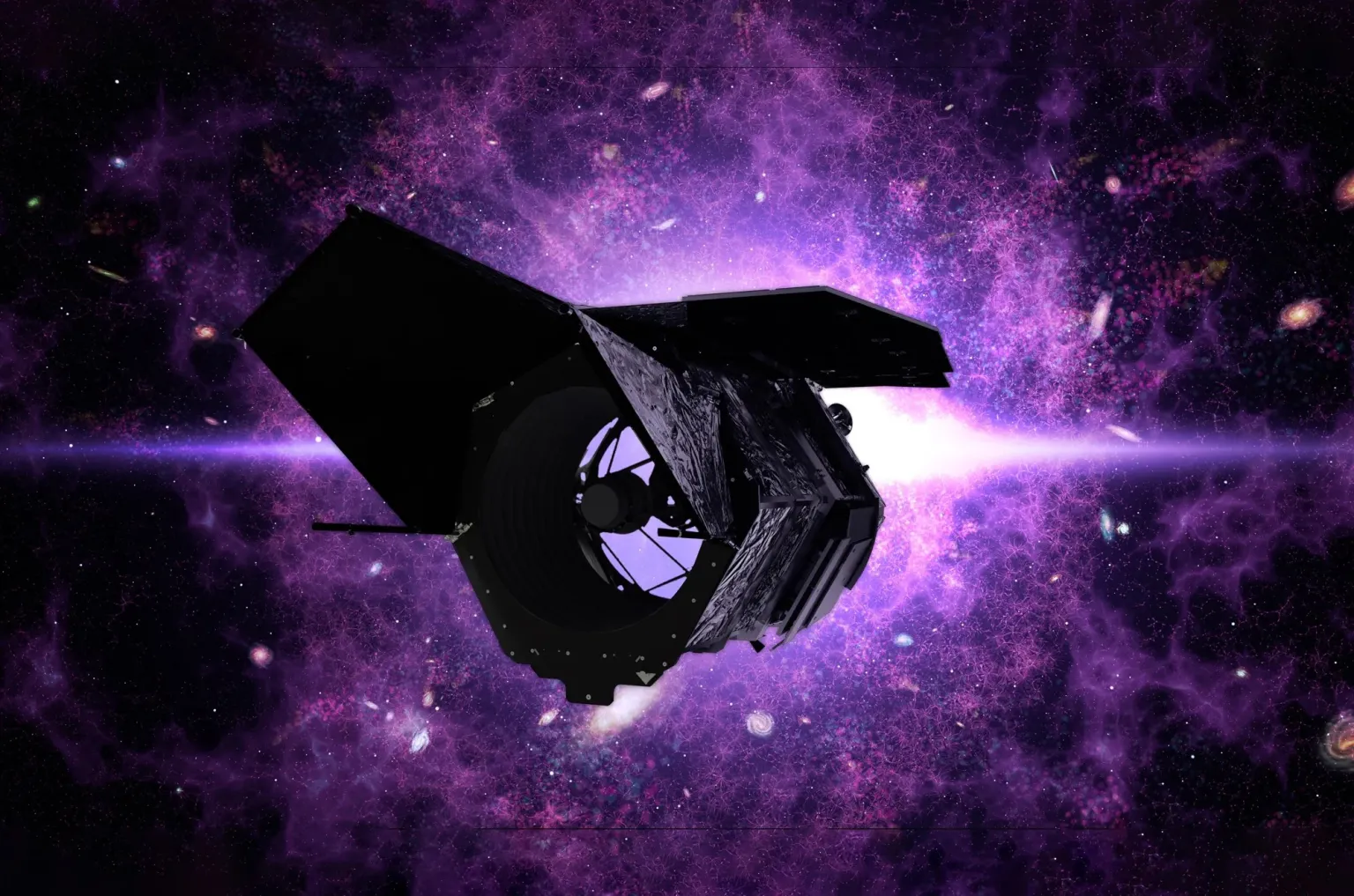
The Nancy Grace Roman Space Telescope is a NASA infrared space telescope with a 2.4 m (7.9 ft) wide field of view primary mirror and two scientific instruments. The Wide-Field Instrument (WFI) is a 300.8-megapixel multi-band visible and near-infrared camera, providing a sharpness of images comparable to that achieved by the Hubble Space Telescope over a 0.28 square degree field of view, 100 times larger than imaging cameras on the Hubble. The Coronagraphic Instrument (CGI) is a high-contrast, small field of view camera and spectrometer covering visible and near-infrared wavelengths using novel starlight-suppression technology. Roman objectives include a search for extra-solar planets using gravitational microlensing, and probing the expansion history of the Universe and the growth of cosmic structure, with the goal of measuring the effects of dark energy, the consistency of general relativity, and the curvature of spacetime.
Griffin Mission One
Provider: SpaceX Date: November 30, 2026 Time: 12:00 AM UTC Vehicle: Falcon Heavy
Demonstration flight of the Astrobotic Griffin lander and its engines, initially contracted for the cancelled NASA VIPER (Volatiles Investigating Polar Exploration Rover) mission. The vacated payload spot will now host the FLIP (FLEX Lunar Innovation Platform) lunar rover from Astrolab.
USSF-75
Provider: SpaceX Date: December 31, 2026 Time: 12:00 AM UTC Vehicle: Falcon Heavy
Classified payload for the United States Space Force
Superbird-9
Provider: SpaceX Date: June 30, 2027 Time: 12:00 AM UTC Vehicle: Starship
Superbird-9 is a high throughput communication satellite. It is designed to deliver broadcast and broadband missions in Ku band primarily over Japan and Eastern Asia, in response to mobility and broadband demands.
Flight 13 ×
Mission Details
TypeTest Flight
OrbitSuborbital
TargetEarth
13th test flight of the two-stage Starship launch vehicle. Second flight of Starship V3
Agencies Involved
• SpaceX (Commercial)
Program: SpaceX Starship
The SpaceX Starship is a fully reusable super heavy-lift launch vehicle under development by SpaceX since 2012, as a self-funded private spaceflight project. The second stage of the Starship — is designed as a long-duration cargo and passenger-carrying spacecraft. It is expected to be initially used without any booster stage at all, as part of an extensive development program to prove out launch-and-landing and iterate on a variety of design details, particularly with respect to the vehicle’s atmospheric reentry.
The second launch and landing pad of the full version of the combined SpaceX Starship and Superheavy booster. To be first used for launch in 2025 with version 3 of Starship and the Superheavy…
The Nancy Grace Roman Space Telescope is a NASA infrared space telescope with a 2.4 m (7.9 ft) wide field of view primary mirror and two scientific instruments. The Wide-Field Instrument (WFI) is a 300.8-megapixel multi-band visible and near-infrared camera, providing a sharpness of images comparable to that achieved by the Hubble Space Telescope over a 0.28 square degree field of view, 100 times larger than imaging cameras on the Hubble. The Coronagraphic Instrument (CGI) is a high-contrast, small field of view camera and spectrometer covering visible and near-infrared wavelengths using novel starlight-suppression technology. Roman objectives include a search for extra-solar planets using gravitational microlensing, and probing the expansion history of the Universe and the growth of cosmic structure, with the goal of measuring the effects of dark energy, the consistency of general relativity, and the curvature of spacetime.
Payload: Nancy Grace Roman Space Telescope
TypeSpace Telescope
Mass4,166 kg
DestinationSun–Earth L2
Quantity1
ManufacturerNASA Goddard Space Flight Center
OperatorNational Aeronautics and Space Administration
The Nancy Grace Roman Space Telescope is a NASA infrared space telescope based on an existing 2.4 m (7.9 ft) wide field of view primary mirror and carrying two scientific instruments. The Wide-Field Instrument (WFI) is a 300.8-megapixel multi-band visible and near-infrared camera, providing a…
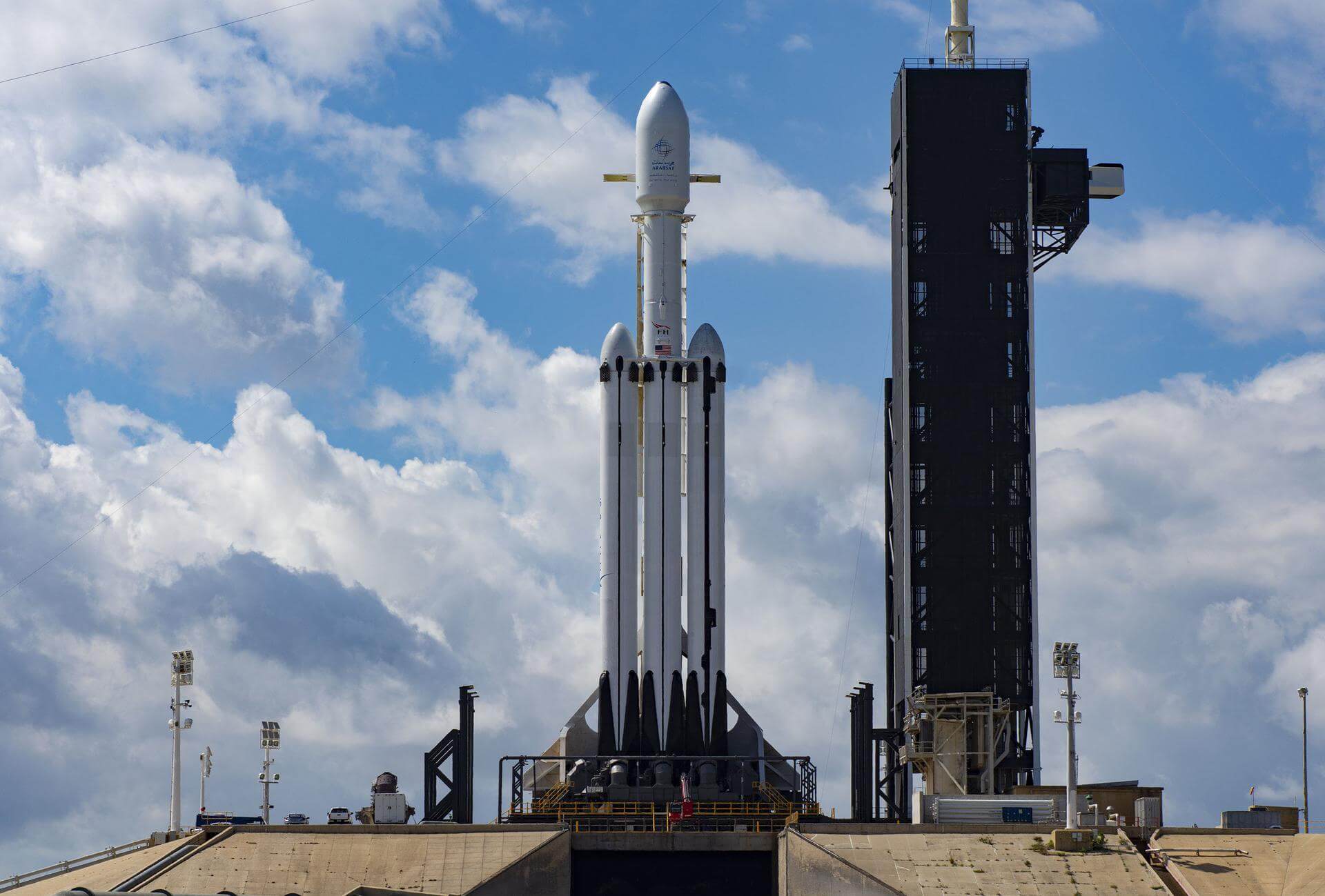
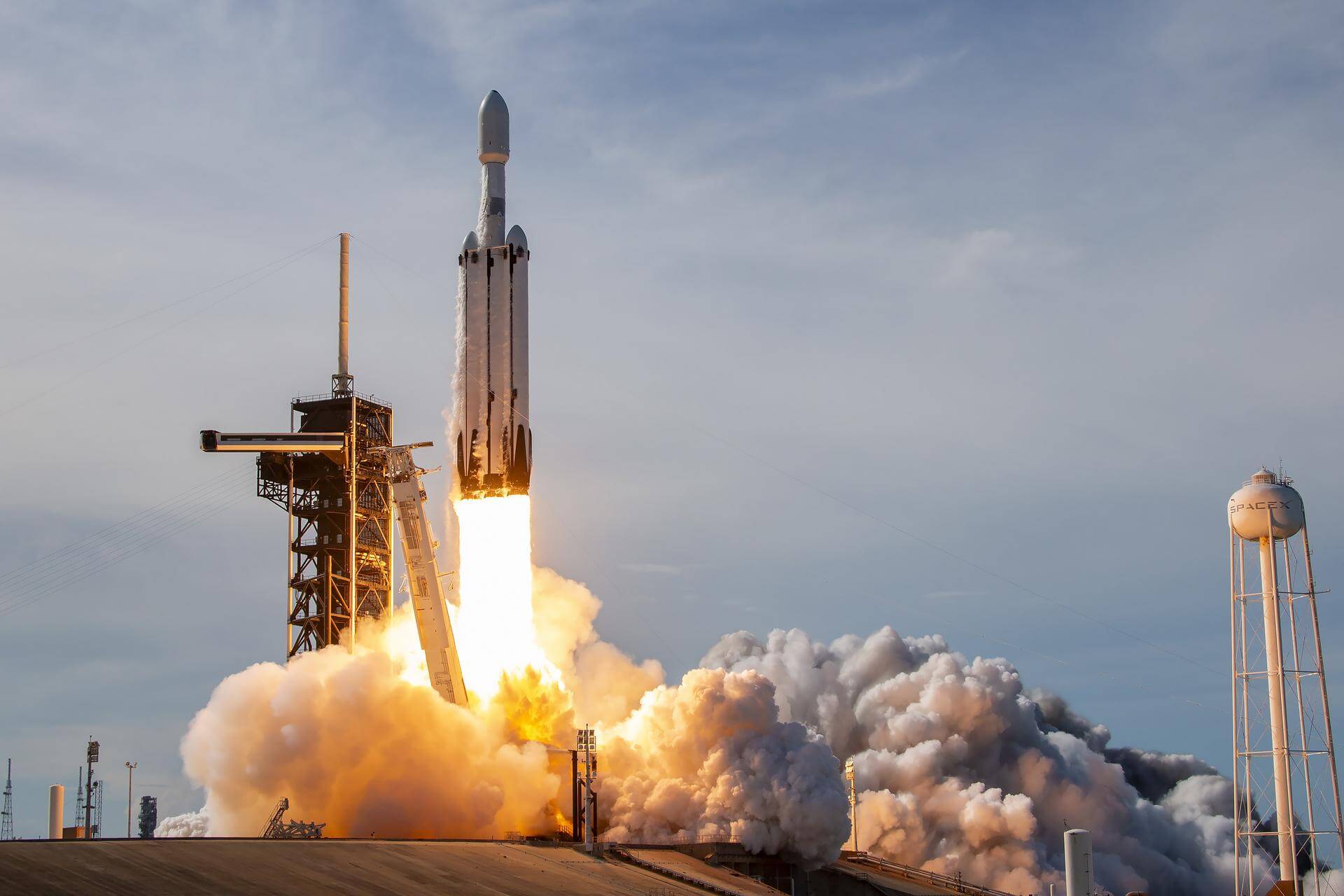
The Falcon Heavy is a variant of the Falcon 9 full thrust launch vehicle and consists of a standard Falcon 9 rocket core, with two additional boosters derived from the Falcon 9 first stage.
Demonstration flight of the Astrobotic Griffin lander and its engines, initially contracted for the cancelled NASA VIPER (Volatiles Investigating Polar Exploration Rover) mission. The vacated payload spot will now host the FLIP (FLEX Lunar Innovation Platform) lunar rover from Astrolab.
Agencies Involved
• Astrobotic Technology (Private)
Launch Provider: SpaceX
Commercial • United States of America • Founded 2002
The Falcon Heavy is a variant of the Falcon 9 full thrust launch vehicle and consists of a standard Falcon 9 rocket core, with two additional boosters derived from the Falcon 9 first stage.
The Falcon Heavy is a variant of the Falcon 9 full thrust launch vehicle and consists of a standard Falcon 9 rocket core, with two additional boosters derived from the Falcon 9 first stage.
Superbird-9 is a high throughput communication satellite. It is designed to deliver broadcast and broadband missions in Ku band primarily over Japan and Eastern Asia, in response to mobility and broadband demands.
Launch Provider: SpaceX
Commercial • United States of America • Founded 2002
Robo Chris is a collection of API calls, filters, and searches, bolted together with magic and love. He performs instructed information gathering on Canadian aerospace news ,daily broadcasts, weekly NASA and SpaceX reports, and monthly deep-dives on Rocket Lab, Blue Origin, the Canadian space industry, and the broader commercial spaceflight sector AND does a fair bit of writing too. Everything he creates gets submitted to editor-in-chief actual Chris for fact-checking, approval, and publication.