
The Bright Blue Origin: Blue Origin Lands NASA Mars Telecom Deal; Cape Canaveral Expansion
Blue Origin Wins NASA Mars Telecommunications Contract
NASA has selected Blue Origin to develop the Mars Telecommunications Orbiter (MTO) as part of NASA’s Mars Telecommunications Network (MTN). The firm-fixed-price contract carries a maximum value of approximately $700 million, with delivery required by 31 December 2028.
The MTO will be the first dedicated, high-speed communications relay at Mars, providing continuous coverage between Earth and the Red Planet. Built on Blue Origin’s Blue Ring platform, the orbiter will transmit science data, imagery, navigation information, and critical mission communications for spacecraft operating on and around Mars.
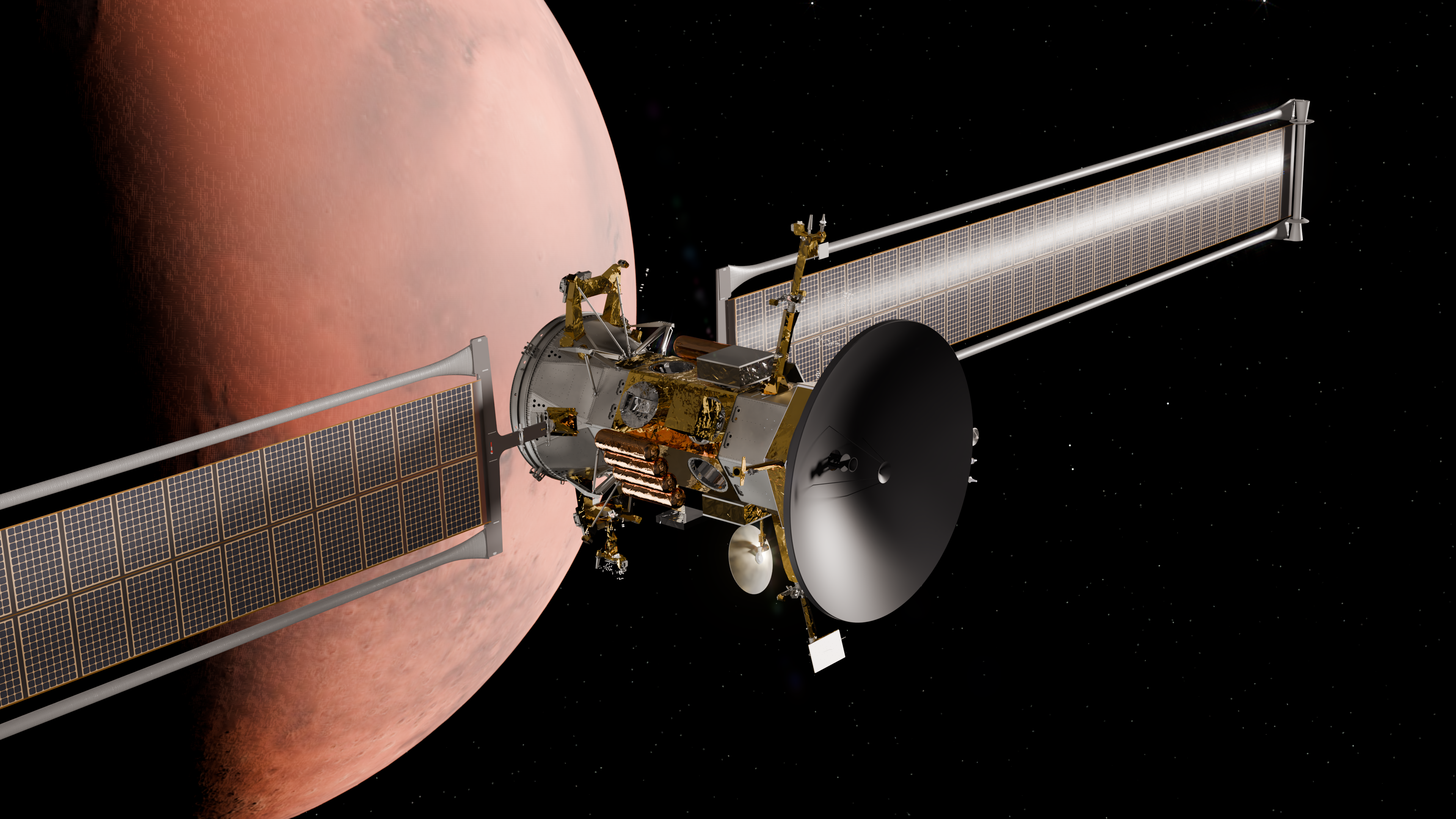
According to NASA, the network is expected to be operational at Mars by 2030 and will support both current and future Mars missions as the agency ventures deeper into space. The selection reflects NASA’s strategy to harness commercial partnerships for transportation and communications services, enabling the agency to focus on exploration and scientific discovery.
Dave Limp, CEO of Blue Origin, said the company is “honored” to have been selected. “Before the first human steps on Mars, we have to build the road,” Limp wrote on X, framing the effort as foundational for human exploration.
Artemis III Crew Tours Blue Origin Facilities
On 4 September, Blue Origin hosted the Artemis III flight crew at its Rocket Park facility near Cape Canaveral. Astronauts Randy Bresnik, Luca Parmitano, Andre Douglas, and Frank Rubio — along with backup astronaut Bob Hines — toured the production facilities for New Glenn and Blue Origin’s lunar landers.

The crew also visited Launch Complex 36 (LC-36), where Blue Origin is preparing to launch its MK2 Earth Orbit Rendezvous demonstration vehicle in support of Artemis III. Dave Limp thanked the crew “for your encouraging words and for taking the time to speak with Team Blue.”
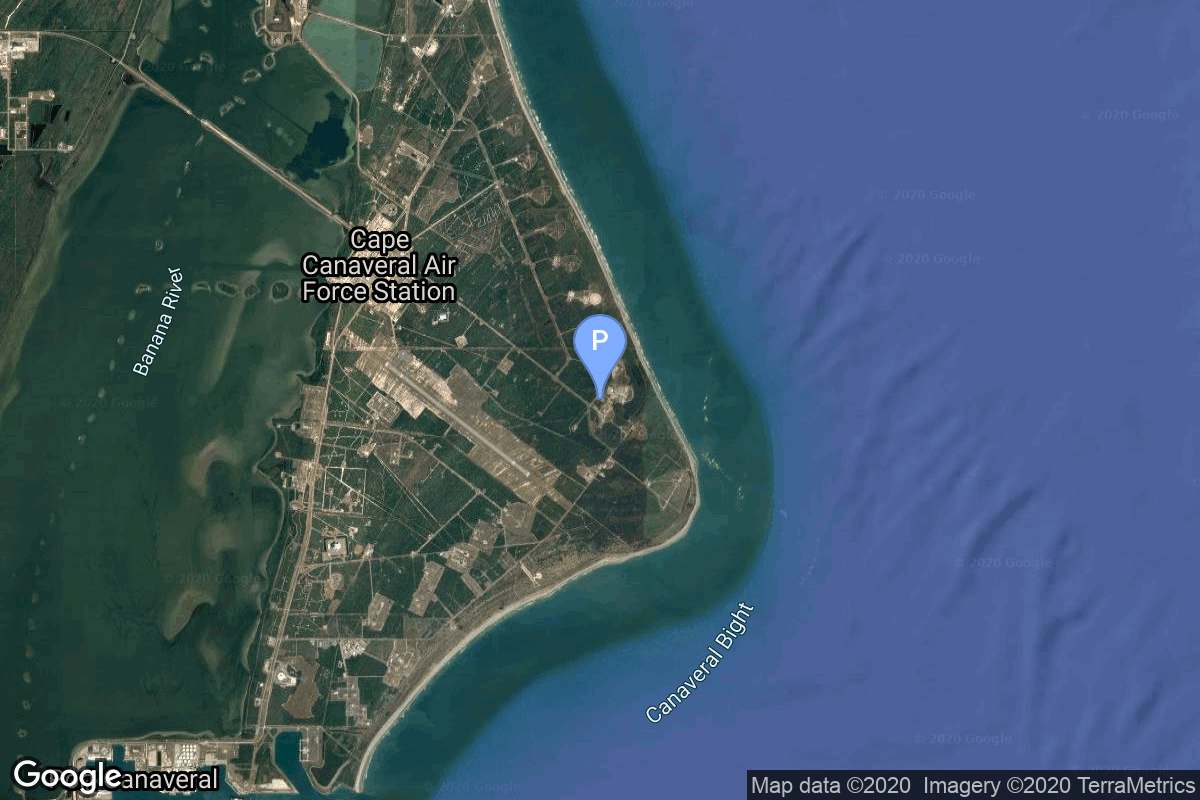
LC-36 Expansion: New Pad and Processing Facility
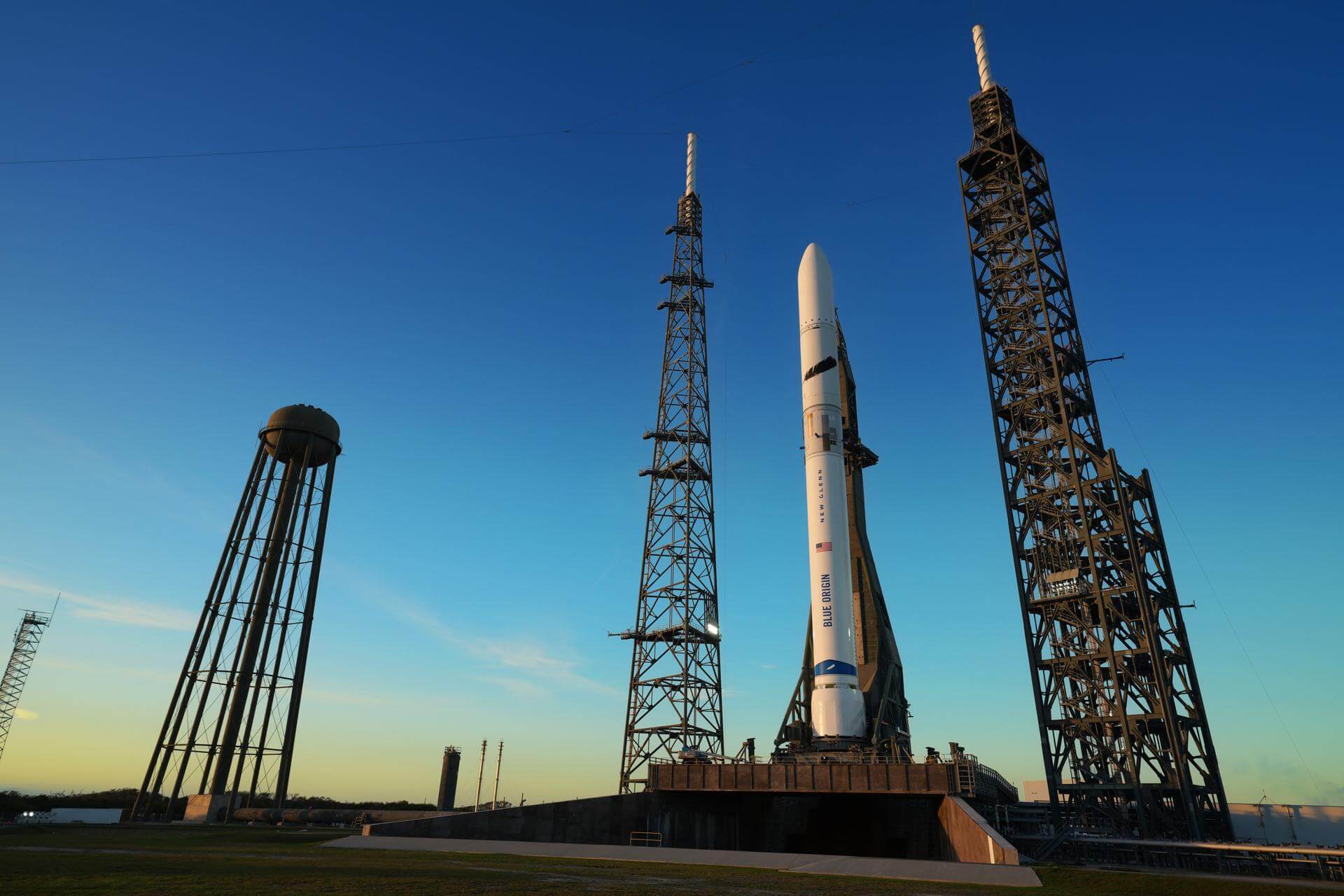
Blue Origin is developing Launch Complex 36B (LC-36B) at Cape Canaveral Space Force Station to support New Glenn’s 9×4 vehicle configuration. Once operational, LC-36B will serve as the launch pad for the larger variant, while LC-36A remains home to the 7×2 vehicle.

In addition to the second launch pad, Blue Origin broke ground on 31 August on a new Payload Processing Facility (PPF) on the Eastern Range. The 120,000-square-foot facility will support both New Glenn variants and other National Security Space Launch providers. According to Dave Limp, the facility will house four payload processing bays, two encapsulation bays, and a multi-manifest area. The PPF is the first ever built to support the 8.7-metre fairing used by New Glenn’s 9×4 variant.

The facility expands Blue Origin’s footprint across Brevard and Orange counties. Limp noted that the expansion supports continued job growth: Blue Origin now employs more than 4,500 people in the region.
Quartz Ground Station Network Expands Globally
Blue Origin continues rolling out its Quartz ground communications network, with the first three stations installed and tested in Bermuda, New Zealand, and Australia. The phased global rollout will reach nine sites by the end of 2026.
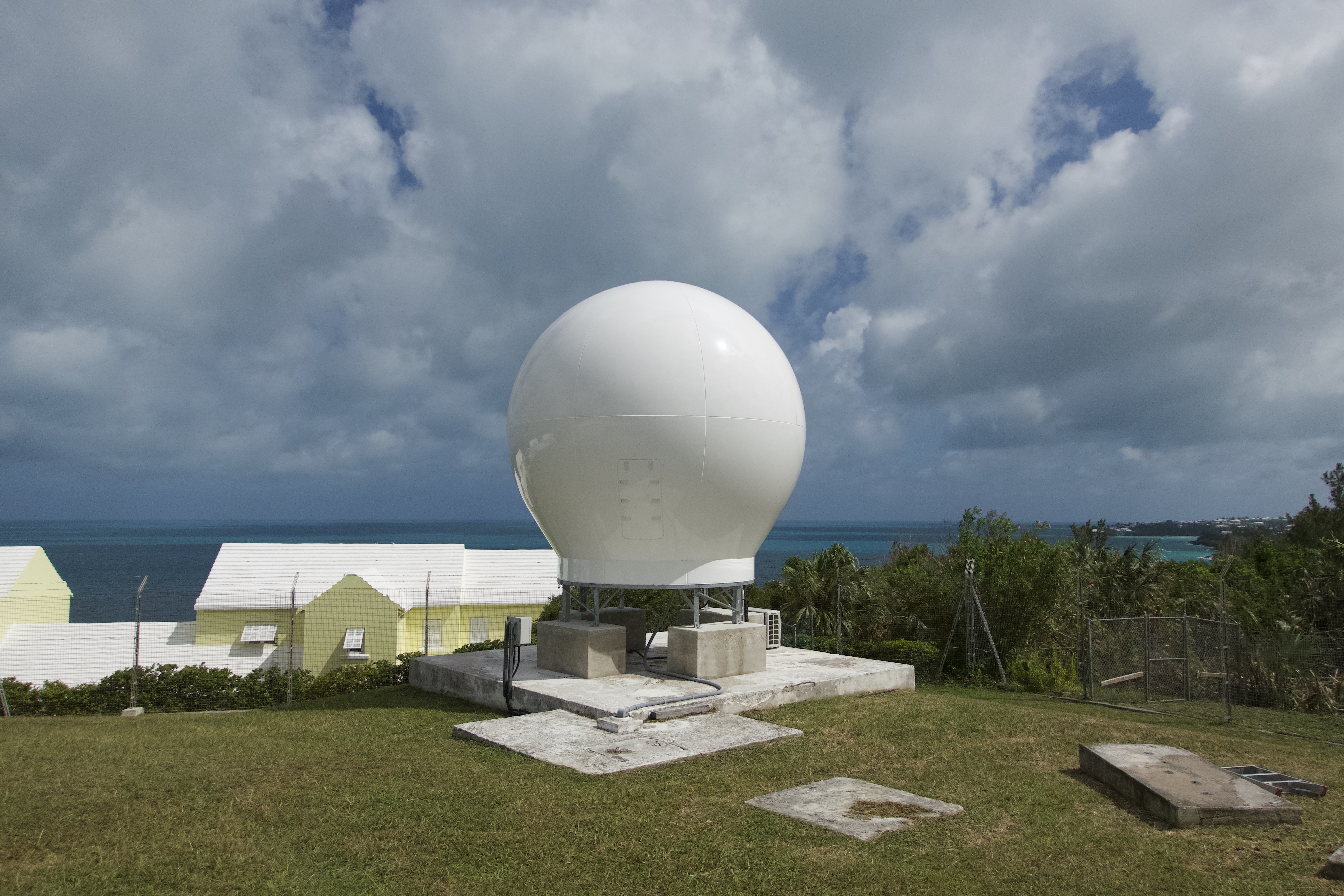
Quartz is designed to address fragmented ground infrastructure and limited contact window availability that have constrained space operators. Phase one stations feature 3.7-metre aperture antennas supporting S-band and X-band frequencies for low Earth orbit (LEO) operations. Later installations will feature 9-metre apertures supporting L-, S-, X-, and Ka-band frequencies for missions to geostationary transfer orbit (GTO), geostationary orbit (GEO), cislunar, and beyond.
Tory Bruno, president of National Security at Blue Origin, described Quartz as offering “one interface, one operations team, transparent pricing, and a security architecture built to meet the most demanding mission requirements.” Blue Origin’s Global Network Operations Centre provides continuous oversight across all sites with no third-party dependencies. To accelerate the rollout, Blue Origin partnered with RBC Signals for site surveys, antenna procurement, and deployment.
New Shepard Capsule Heads to Mississippi
On 9 September, Dave Limp announced that the next New Shepard crew capsule (GS2) has departed Blue Origin’s Rocket Park and headed to the Army Wharf for transport to Mississippi.

The capsule transport signals continued preparation for New Shepard suborbital operations, though specific launch timelines were not disclosed in the update.
Citations
- “Blue Origin Selected by NASA to Help Build America’s Mars Telecommunications Network” — https://www.blueorigin.com/news/blue-origin-selected-by-nasa-to-help-build-mars-telecommunications-network
- “NASA Selects Blue Origin as Mars Telecommunications Network Provider” — https://www.nasa.gov/news-release/nasa-selects-blue-origin-as-mars-telecommunications-network-provider/
- “Returning Launch Complex 36 to Two Pads: Blue Origin Begins Construction of LC-36B” — https://www.blueorigin.com/news/returning-launch-complex-36-to-two-pads
- “Blue Origin Begins Global Rollout of Quartz Ground Station Network” — https://www.blueorigin.com/news/blue-origin-begins-global-rollout-quartz-ground-station-network
- Blue Origin Official X account — https://x.com/blueorigin
- Dave Limp X account — https://x.com/davill
Amazon Leo (LN-01)
Provider: Blue Origin
Date: December 31, 2026
Time: 12:00 AM UTC
Vehicle: New Glenn
Amazon Leo, formerly known as Project Kuiper, is a mega constellation of satellites in Low Earth Orbit that will offer broadband internet access, this constellation will be managed by Kuiper Systems LLC, a subsidiary of Amazon. This constellation is planned to be composed of 3,276 satellites. The satellites are projected to be placed in 98 orbital planes in three orbital layers, one at 590 km, 610 km and 630 km altitude.
48 satellites will be carried on this New Glenn launch.
BlueBird Block 2
Provider: Blue Origin
Date: December 31, 2026
Time: 12:00 AM UTC
Vehicle: New Glenn
AST SpaceMobile’s Block 2 BlueBird satellites are designed to deliver up to 10 times the bandwidth capacity of the BlueBird Block 1 satellites, required to achieve 24/7 continuous cellular broadband service coverage in the United States, with beams designed to support a capacity of up to 40 MHz, enabling peak data transmission speeds up to 120 Mbps, supporting voice, full data and video applications. The Block 2 BlueBirds, featuring as large as 2400 square foot communications arrays, will be the largest satellites ever commercially deployed in Low Earth orbit once launched.
This launch will feature 8 satellites.
Blue Moon Pathfinder
Provider: Blue Origin
Date: March 31, 2027
Time: 12:00 AM UTC
Vehicle: New Glenn
First flight of Blue Origin’s Blue Moon MK1 lunar lander, MK1-SN001 “Endurance”.
Blue Origin HLS LEO Demo
Provider: Blue Origin
Date: June 30, 2027
Time: 12:00 AM UTC
Vehicle: New Glenn
The Blue Moon HLS pathfinder spacecraft in support of NASA’s Artemis III mission in Low Earth Orbit will be a modified Blue Moon Mark 1 vehicle equipped with a docking mechanism, a crew cabin and environmental control systems on board. This Blue Moon HLS will launch before the Artemis III Orion has launched into LEO aboard SLS. Once docked, Orion and Blue Moon will spend about two days docked together for tests and technology demonstrations, with the Artemis III crew scheduled to enter the lander.
Blue Moon Pathfinder Mission 2 & VIPER
Provider: Blue Origin
Date: December 31, 2027
Time: 12:00 AM UTC
Vehicle: New Glenn
2nd of the National Team’s Blue Moon MK1 lunar lander test missions to validate the necessary technologies for its HLS lunar module. Some of the life support hardware will travel on this mission in preparation for the first crew Blue Moon flight.
This mission will also carry NASA’s VIPER (Volatiles Investigating Polar Exploration Rover) lunar rover. VIPER is designed to explore the relatively nearby but extreme environment of the Moon in search of ice and other potential resources. This mobile robot will land at the South Pole of the Moon on a 100-day mission, in order to teach us about the origin and distribution of water on the Moon and help determine how we can harvest the Moon’s resources for future human space exploration.
VIPER is designed to roam the Moon using its three instruments and a 1 meter long drill to detect and analyze various lunar soil environments at a range of depths and temperatures. The rover can venture into permanently shadowed craters, some of the coldest spots in the solar system, where ice reserves have endured for billions of years.
The rover was originally slated to launch on Astrobotic’s Griffin Mission One lunar lander (with the Falcon Heavy rocket), but the VIPER mission was cancelled in July 2024 due to budget cuts. After consulting with the industry to find alternative ways to deliver the rover to the lunar surface, NASA ultimately chose to launch it with Blue Origin’s 2nd Blue Moon MK1 lander mission.


Enjoying the content? Stay up to date on everything happening behind the scenes by following our Patreon!


Leave a Reply