
The Commercial Space: Axiom Financing Round Closes; Firefly Advances Lunar, Launch
Axiom Space Caps Capital Push, Expands Spacesuits and Global Footprint
Axiom Space closed an oversubscribed $525 million financing round in June, bolstering its push to build commercial spacefaring infrastructure across crewed missions, spacesuits, and the successor to the International Space Station.
The round drew participation from new and existing investors, including MUFG Bank, Ltd.—Japan’s largest financial institution—signalling growing international appetite for commercial low-Earth orbit commerce. The capital will accelerate development of Axiom’s core programmes: crewed human spaceflight missions, the AxEMU spacesuit system for NASA’s Artemis missions, and Axiom Station, the commercial LEO successor platform set to replace the ISS.
On the spacesuit front, Axiom and Prada unveiled the Liquid Cooling and Ventilation Garment (LCVG) in June—the inner layer of the AxEMU designed to keep lunar explorers alive during up to eight-hour spacewalks on the Moon. The partnership leveraged Prada’s expertise in engineered knitting and high-performance materials to develop a garment that maintains thermal regulation and comfort through advanced 3D modelling. This followed Axiom and Prada’s 2024 unveiling of the AxEMU’s outer shell, designed to withstand the extreme thermal environment and micrometeoroid hazard of the lunar South Pole.
Operationally, Axiom redomiciled its legal home from Delaware to Texas in June, anchoring the company fully in Houston as both operational and legal headquarters. The move reflects the state’s commitments to space infrastructure; Axiom now employs approximately 700 people, the majority based in Texas. Geographically, the company announced it will establish Axiom Space Japan—a wholly owned subsidiary operational from July 1—to serve Asia-Pacific demand for orbital infrastructure, research, and human spaceflight. Dr. Koichi Wakata will serve as Chief Technology Officer for Asia-Pacific and lead the Japan operations.
Firefly Accelerates Lunar Missions, Defence, and Launch Reach
Firefly announced a cluster of significant contracts and partnerships that extend the company’s reach across lunar operations, national defence, and launch infrastructure.
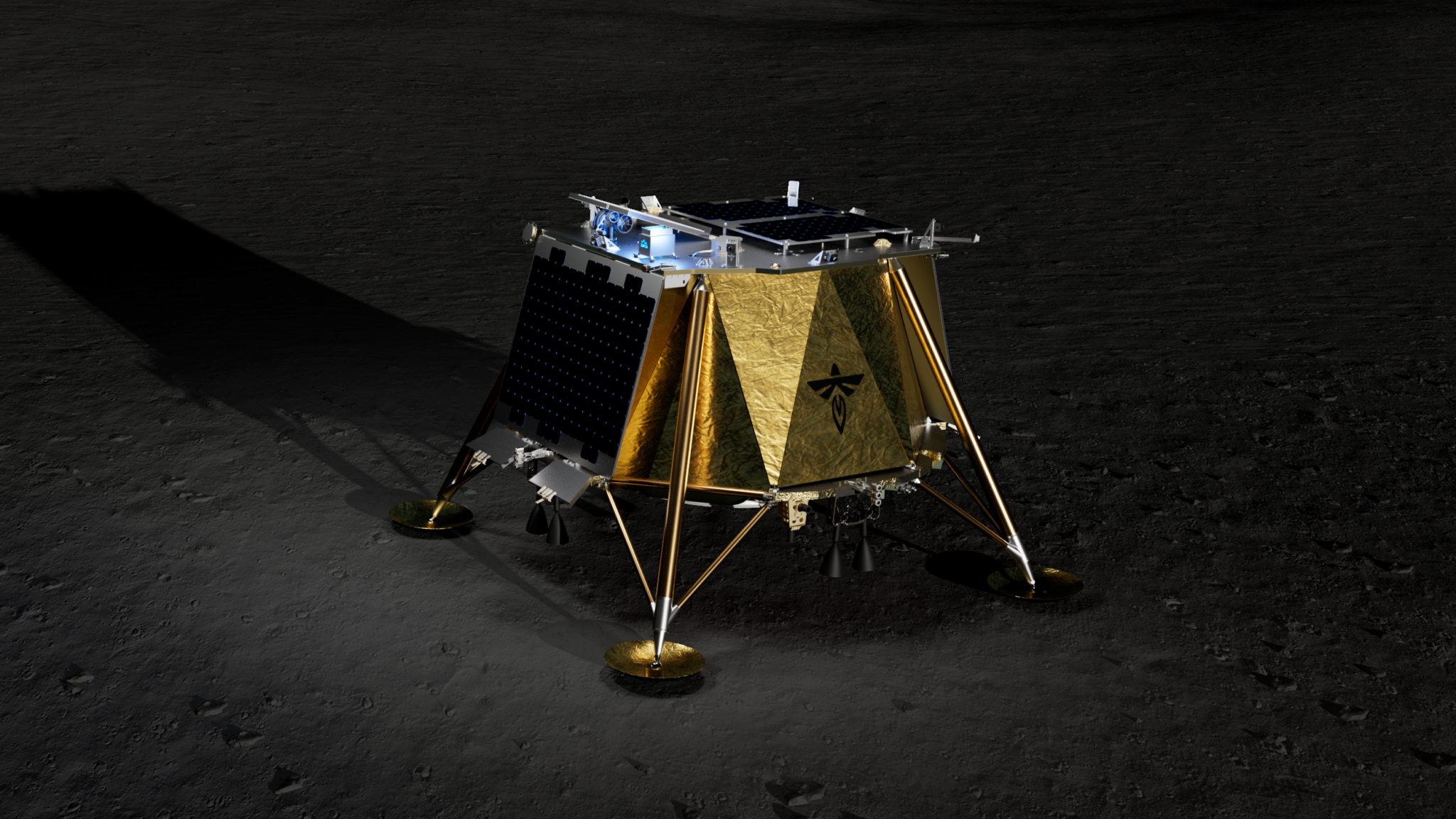
Blue Ghost, Firefly’s lunar lander, will carry Zeno Power Systems’ Survive-the-Night Package—a radioisotope heater unit designed to enable payloads and surface infrastructure to operate through the Moon’s 14-day night. The mission is scheduled no earlier than 2028 as part of NASA’s Commercial Lunar Payload Services programme. Blue Ghost will first operate NASA CLPS payloads during the lunar day using solar power, then transition to Zeno’s thermal system for night-side operations, demonstrating technologies critical for sustained lunar exploration and the eventual Moon Base initiative.
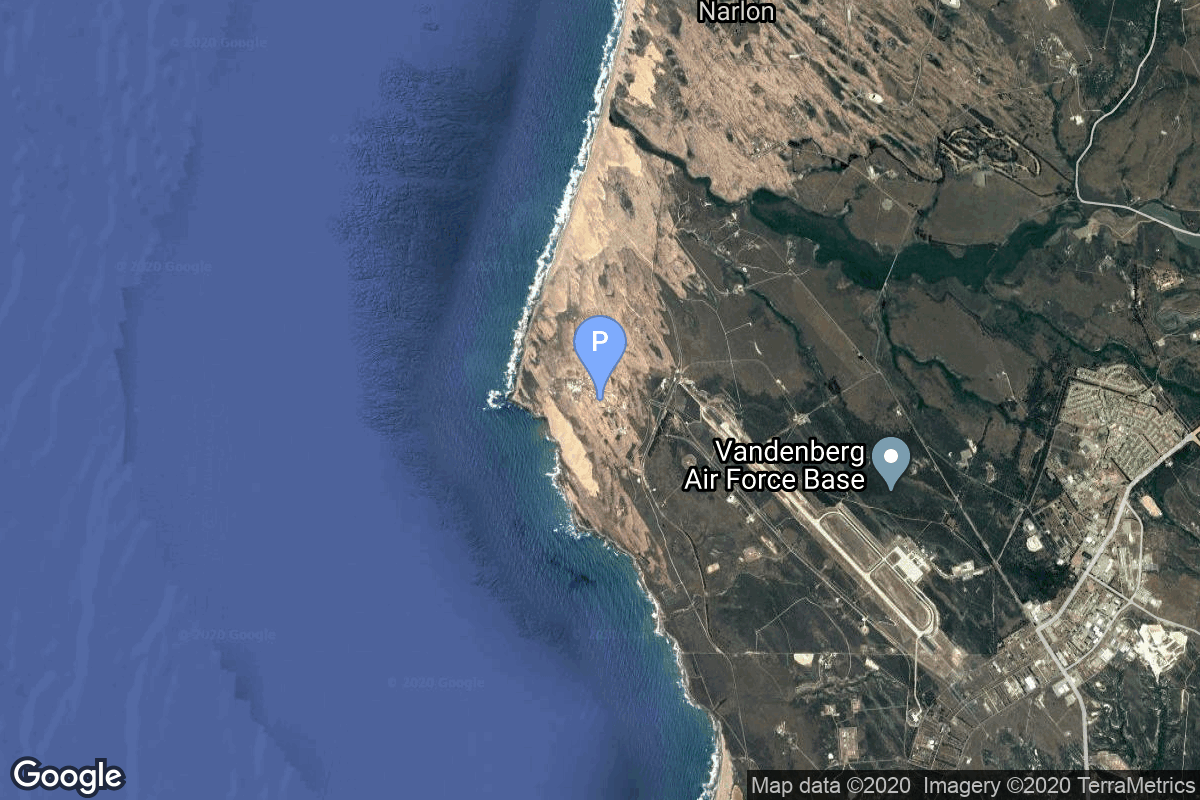
On launch infrastructure, Firefly was awarded a NASA Spacecraft Processing Operations Contract to provide commercial payload processing services at its facility near Space Launch Complex 2 at Vandenberg Space Force Base. The facility, located 0.5 miles from SLC-2, includes cleanroom, fueling, and integration capabilities for small- and medium-class payloads ahead of launch.
Firefly’s Elytra orbital transfer vehicle received a contract from the Department of Defence Innovation Unit and Space Development Agency to complete a preliminary design review for a deorbit mission capability. The Elytra system, built on flight-proven components from Firefly’s rockets and Blue Ghost lander, is designed to perform satellite deorbit operations across low, medium, and geostationary Earth orbits—aligning with the White House’s priority on orbital debris mitigation.
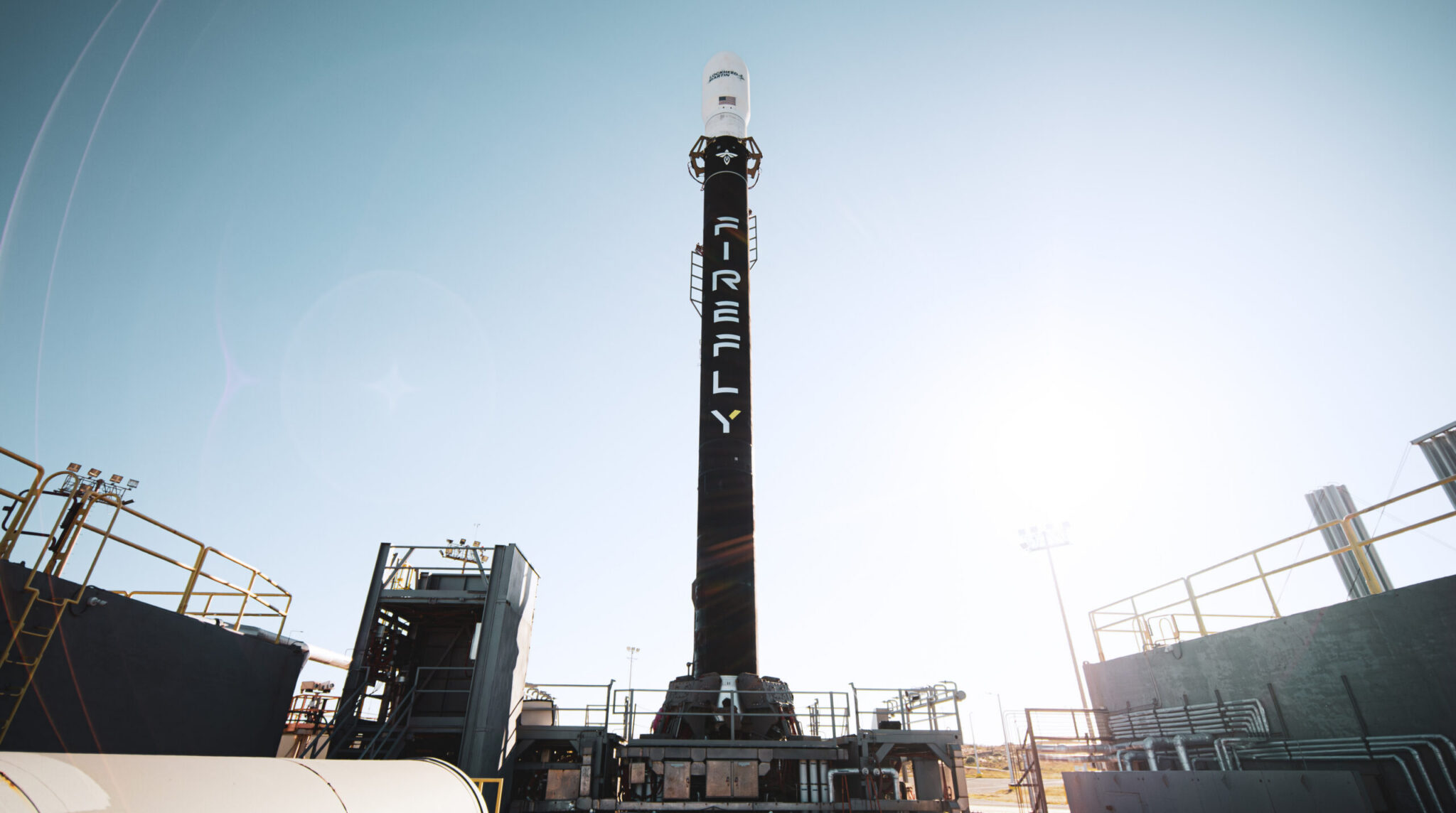
Strategic partnerships deepened with a two-year extension of Firefly’s multi-launch agreement with Lockheed Martin, securing up to 25 additional Alpha Block II rocket launches through 2031. The Alpha Block II configuration increases manufacturability, reliability, and responsiveness to support higher flight rates and fill demand for dedicated 1,000 kg-class launch services among government and commercial customers seeking responsive access to space.
Finally, SciTec—a Firefly-owned subsidiary—was awarded a $93.7 million firm-fixed-price contract from the U.S. Space Force to modernize ground-based radar systems. SciTec will develop common architecture and design upgrades for missile warning and space domain awareness radars.
Relativity Space Advances Terran R Towards First Flight
Relativity Space’s Terran R reusable rocket programme marked significant progress in July, with stage one structural qualification testing completed and manufacturing advancing across multiple flight articles.
The stage one structural qualification campaign—conducted on a dedicated test stand known as the Tender Loving Crusher (TLC)—successfully completed lifecycle and burst-pressure testing. The test vehicle experienced 420 pressure cycles, 62 proof and ultimate loading cases, and compression loading reaching 4.3 million pounds-force (19.4 million Newtons) while pressurized. This validation confirms the stage one tank can withstand the demanding loads of ground operations, launch, and flight environments.
In parallel, stage two advanced through cryoproof testing at NASA’s Stenlis Space Center, while manufacturing released 1,130 flight parts in July and completed the full release of stage one shipping assemblies. The team is installing tank components—joiners, stringers, doublers—across multiple flight articles. Landing leg laser tracking began, grid fin weldment review completed, and flight one engines are being prepared for installation.
Relativity also successfully produced, laminated, and cured a carbon-fibre composite panel in-house—a step toward scaling manufacturing capabilities for the Terran R programme.
Citations
- “Axiom Space Closed Oversubscribed Financing at $525M+” — https://www.axiomspace.com/release/axiom-space-closes-oversubscribed-financing-at-525m
- “Axiom Space, Prada Unveil Inner Layer of Next-Gen Lunar Spacesuit” — https://www.axiomspace.com/release/axiom-space-prada-unveil-inner-layer-of-next-gen-lunar-spacesuit
- “Axiom Space Redomiciles to Texas, Building the Space Ecosystem to Enable Humanity’s Future” — https://www.axiomspace.com/release/axiom-space-redomiciles-to-texas
- “Axiom Space to Establish Japan Subsidiary to Serve Growing Asia-Pacific Demand” — https://www.axiomspace.com/news/axiom-space-japan-subsidiary
- “Firefly Aerospace Onboards Zeno Power on Blue Ghost Mission to Demonstrate Radioisotope Technologies to Survive the Lunar Night” — https://fireflyspace.com/news/firefly-aerospace-onboards-zeno-power-on-blue-ghost-mission-to-demonstrate-radioisotope-technologies-to-survive-the-lunar-night/
- “Firefly Aerospace Onboarded to NASA Spacecraft Processing Operations Contract” — https://fireflyspace.com/news/firefly-aerospace-onboarded-to-nasa-spacecraft-processing-operations-contract/
- “Firefly Aerospace Awarded Contract to Design Elytra Deorbit System for Defense Innovation Unit” — https://fireflyspace.com/news/firefly-aerospace-awarded-contract-to-design-elytra-deorbit-system-for-defense-innovation-unit/
- “Firefly Aerospace Announces Extension of Multi-Launch Agreement with Lockheed Martin Through 2031” — https://fireflyspace.com/news/firefly-aerospace-announces-extension-of-multi-launch-agreement-with-lockheed-martin-through-2031/
- “Firefly’s SciTec Awarded $94 Million U.S. Space Force Contract to Advance Ground-Based Radar Digitization Program” — https://fireflyspace.com/news/fireflys-scitec-awarded-94-million-u-s-space-force-contract-to-advance-ground-based-radar-digitization-program/
- “July 2026 Company Update” — https://www.relativityspace.com/press-release/2026/8/11/july-2026-company-update
ConnectedCosmos Launch 1
Provider: Firefly Aerospace
Date: December 31, 2026
Time: 12:00 AM UTC
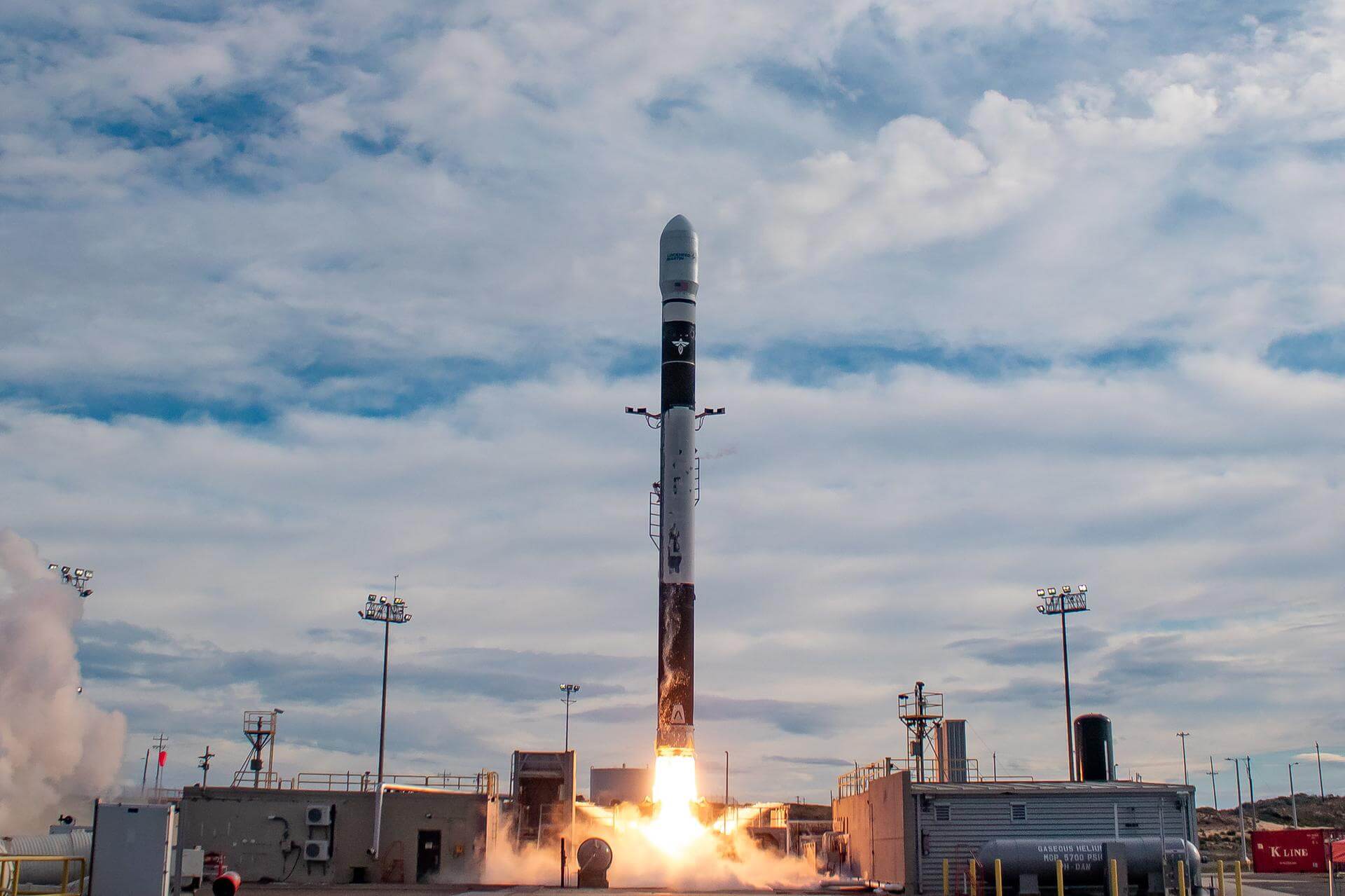
Vehicle: Firefly Alpha Block 2
First of at least four missions carrying 6 satellites for Open Cosmos’ secure LEO broadband constellation, designed to provide independent and resilient connectivity infrastructure for Europe and the world using high-priority Ka-band spectrum filings by the Principality of Liechtenstein.
ConnectedCosmos Launch 2
Provider: Firefly Aerospace
Date: December 31, 2026
Time: 12:00 AM UTC
Vehicle: Firefly Alpha Block 2
Second of at least four missions carrying 6 satellites for Open Cosmos’ secure LEO broadband constellation, designed to provide independent and resilient connectivity infrastructure for Europe and the world using high-priority Ka-band spectrum filings by the Principality of Liechtenstein.
QuickSounder
Provider: Firefly Aerospace
Date: December 31, 2026
Time: 12:00 AM UTC
Vehicle: Firefly Alpha Block 2
QuickSounder is the first satellite mission of the Near Earth Orbit Network (NEON) program of the National Oceanic and Atmospheric Administration (NOAA), which aims to replace the current Joint Polar Satellite System (JPSS) series of polar orbit weather satellites. This pathfinder mission will demonstrate NOAA’s ability to launch a small satellite within 3 years, flying a refurbished Advanced Technology Microwave Sounder (ATMS) instrument to polar orbit.
TacSat
Provider: Firefly Aerospace
Date: December 31, 2026
Time: 12:00 AM UTC
Vehicle: Firefly Alpha Block 2
First of up to 25 launches of Low Earth Orbit technology demonstration satellites to be built and operated by Lockheed Martin.
TacSat is an intelligence, surveillance and reconnaissance spacecraft with a mission to prove specialized sensing and communications capabilities on orbit. The satellite will participate in exercises that highlight cross-domain kill-web connectivity, enabling timely execution of tactical space missions.
TacSat will host a proven Lockheed Martin infrared sensor on board that brings previously developed technology to space for the first time. This sensor produces high quality imagery and it can interface with federated Battle Management Command & Control (BMC2) combat systems to provide joint forces with a comprehensive view of threats.
The satellite will also feature Lockheed Martin’s first 5G.MIL® payload on orbit. This provides cellular-like networking for military space assets, making satellite constellations more resilient. It also helps enable seamless connectivity with tools in the air, at sea and on land.
Launch operation will also again demonstrate responsive space pre-launch operation capabilities.
Demo Flight
Provider: Stoke Space
Date: December 31, 2026
Time: 12:00 AM UTC
Vehicle: Nova
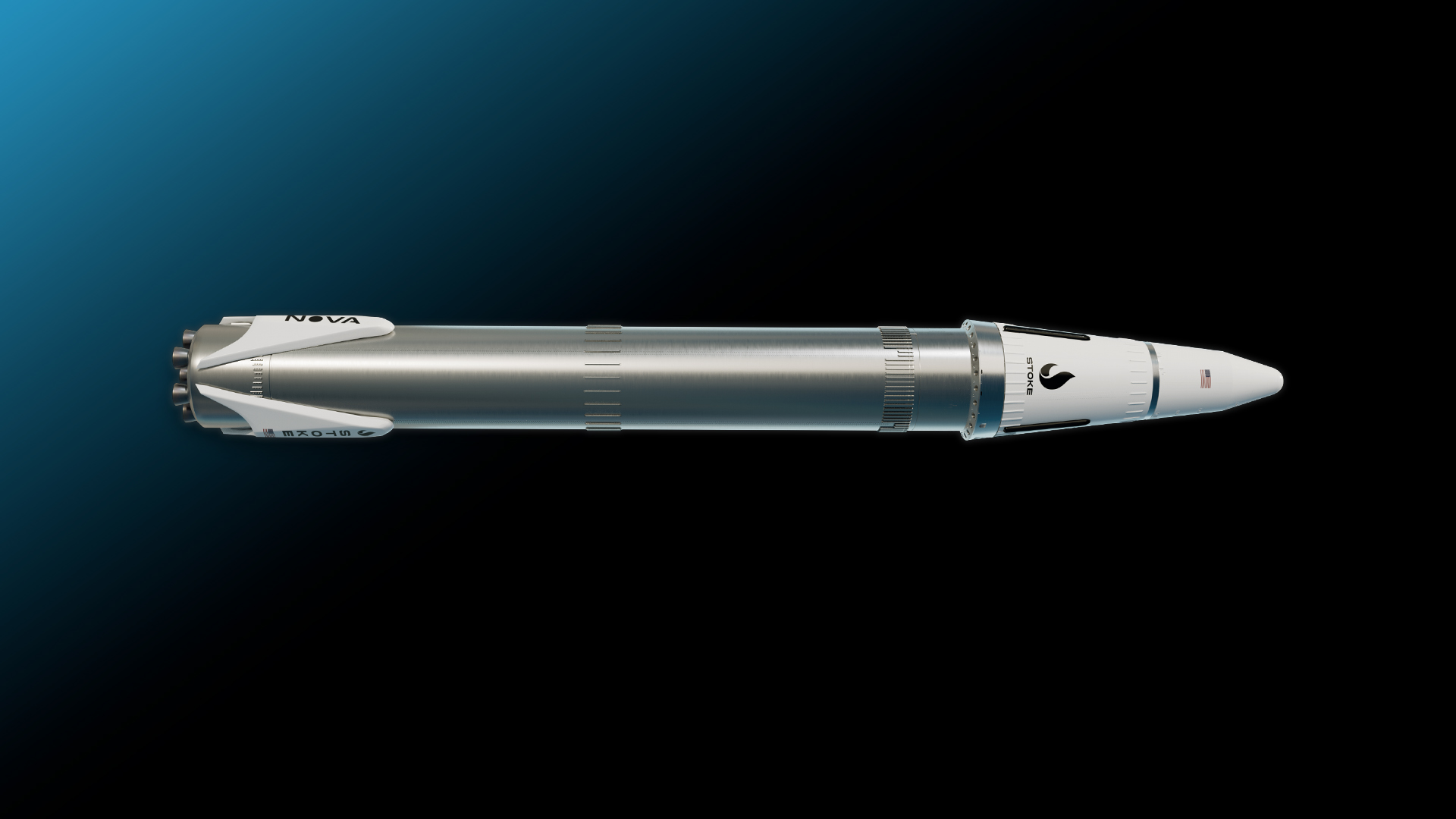
First launch of Stoke Space’s Nova launch vehicle. Asteroid mining technologies company AstroForge will fly a spacecraft on this launch. Planned reusability of the 2 stages is TBD.

Enjoying the content? Stay up to date on everything happening behind the scenes by following our Patreon!


Leave a Reply