NASA Orders Simpler Sortie Suit to Accelerate Artemis IV
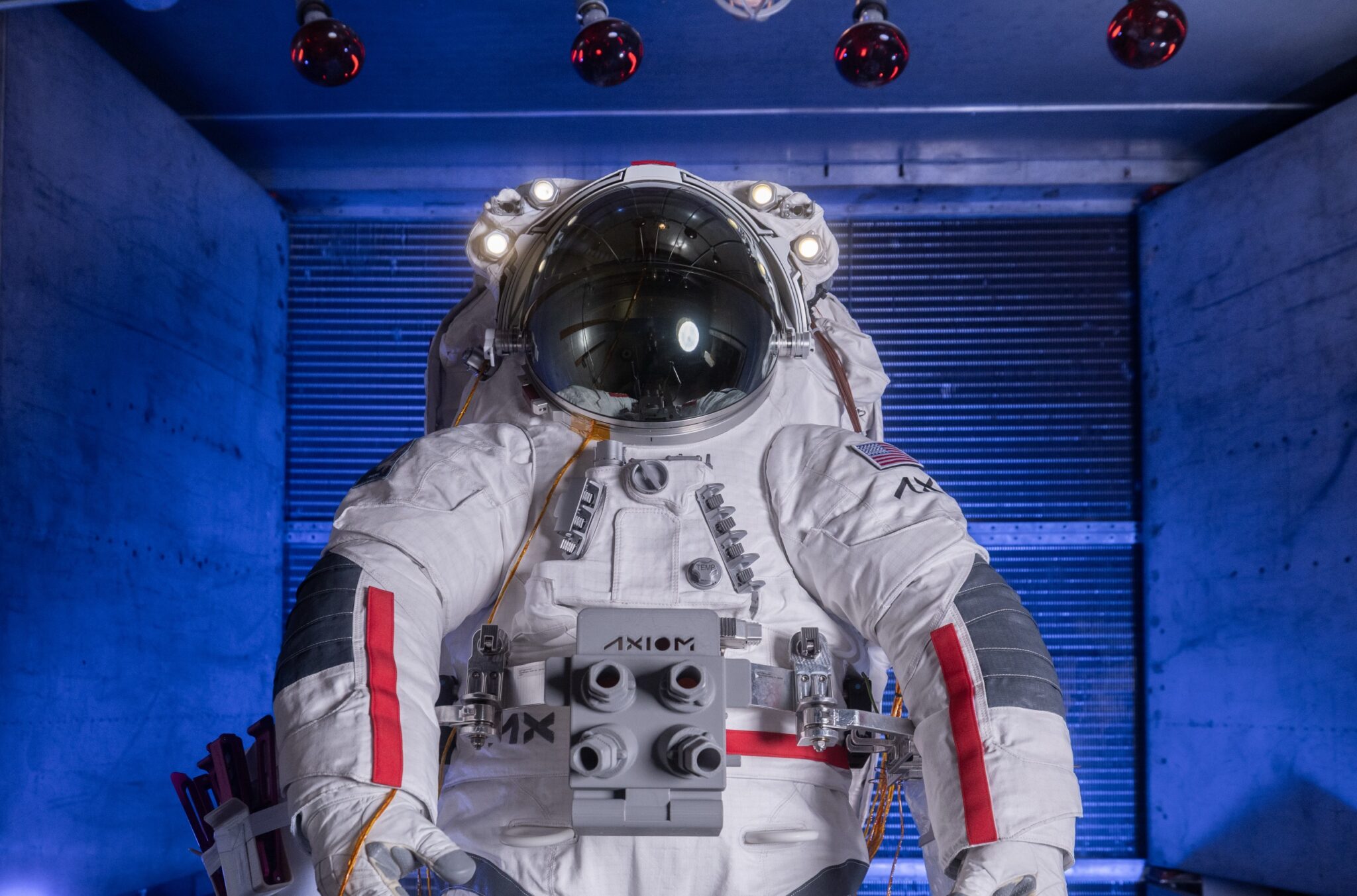
NASA is redesigning its lunar spacesuit for the Artemis IV mission, opting for a simpler “Sortie Suit” variant to accelerate plans for a human landing at the Moon’s south pole as early as 2028. Artemis Program Manager Jeremy Parsons directed the change during an internal meeting this week, according to Ars Technica. The agency will work with Axiom Space, its current spacesuit-as-a-service provider, to lower the suit’s mass, reduce complexity, and simplify interfaces between the spacesuits and lunar landers from both SpaceX and Blue Origin.
The decision follows a comprehensive review of the Artemis program since Administrator Jared Isaacman arrived at NASA in December 2025. Isaacman has already streamlined SLS production, cancelled the Lunar Gateway, and pushed to align lander development with crewed mission timelines. The Sortie Suit will be used for initial landing missions on both SpaceX and Blue Origin landers.
Meanwhile, SLS core stage production continues at Michoud Assembly Facility in New Orleans. Core Stage V’s engine section barrel was loaded into the Vertical Assembly Center, with a ring installed as the attachment point for the liquid hydrogen tank. Core Stage IV completed hydrostatic proof testing on both its liquid oxygen and liquid hydrogen tanks, and its boat tail is en route to Kennedy Space Center.
The Artemis II crew — the first humans to travel beyond the Moon in more than 50 years — received the Congressional Space Medal of Honor for their early April 2026 mission, which set a new record for the farthest distance humans have travelled in space.
Lunar Terrain Vehicles Target the South Pole
NASA highlighted its lunar mobility plans this week, pointing to lunar terrain vehicles under development by Astrolab Space and LunarOutpost as key tools for Artemis astronauts working in the Moon’s south pole region. The agency framed the vehicles as the next evolution of lunar roving, building on the Apollo-era legacy to help crews travel farther and explore longer as groundwork begins for a permanent Moon Base.
Blue Origin Wins $700M Mars Telecommunications Contract
NASA awarded Blue Origin a firm-fixed-price contract worth up to approximately $700 million to develop the Mars Telecommunications Network. The orbiter must be delivered no later than Dec. 31, 2028, and the network is expected to be operational at Mars by 2030. Blue Origin will design, develop, integrate, launch, and operate the spacecraft, which will transmit science data, imagery, navigation information, and mission communications for spacecraft operating on and around the planet.
The selection follows a request for proposal issued in May. The network is managed by NASA’s Space Communications and Navigation program.
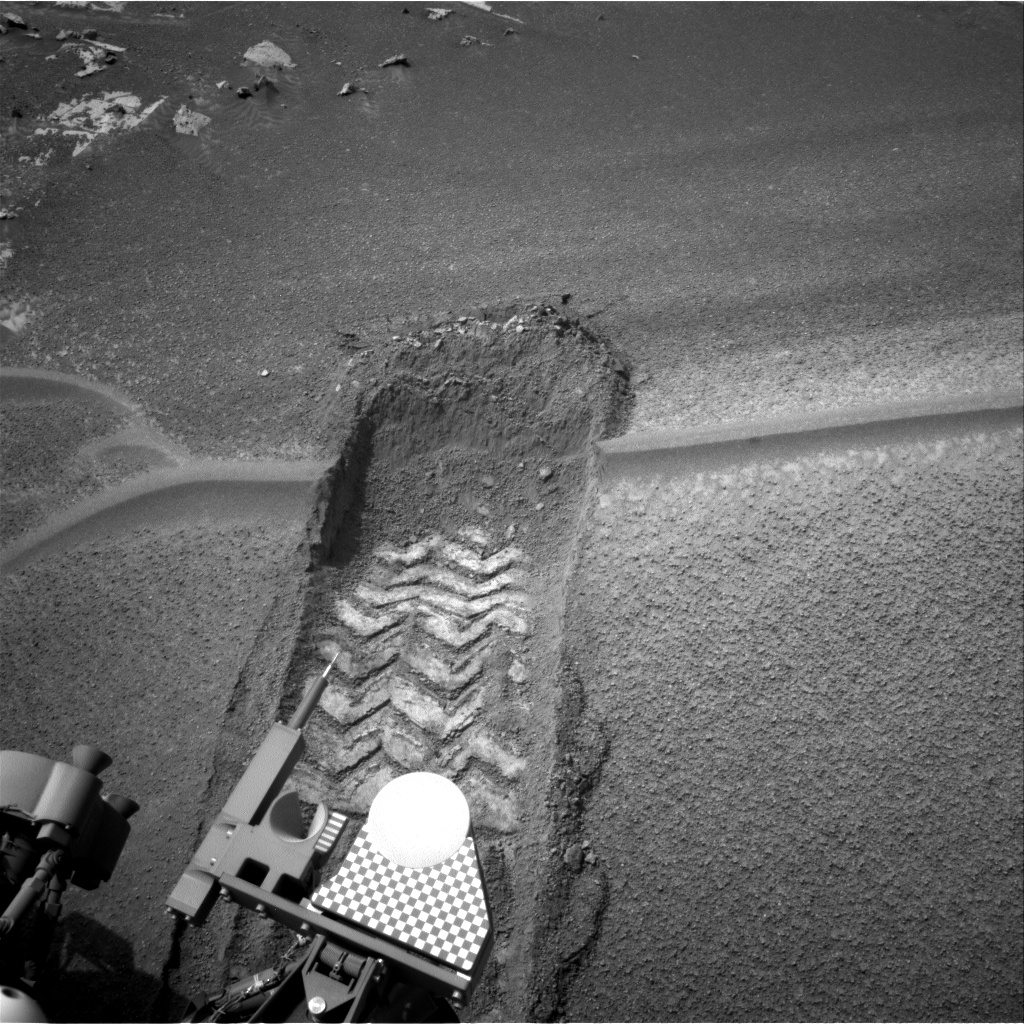
On the surface, Curiosity passed 5,000 Martian days — or sols — of exploration. Each sol is about 24.6 hours long. The rover marked the occasion by examining a wind-formed ripple, scuffing it with a wheel and studying the trench with its cameras and instruments.
Roman Telescope Launches; BepiColombo Advances at Mercury
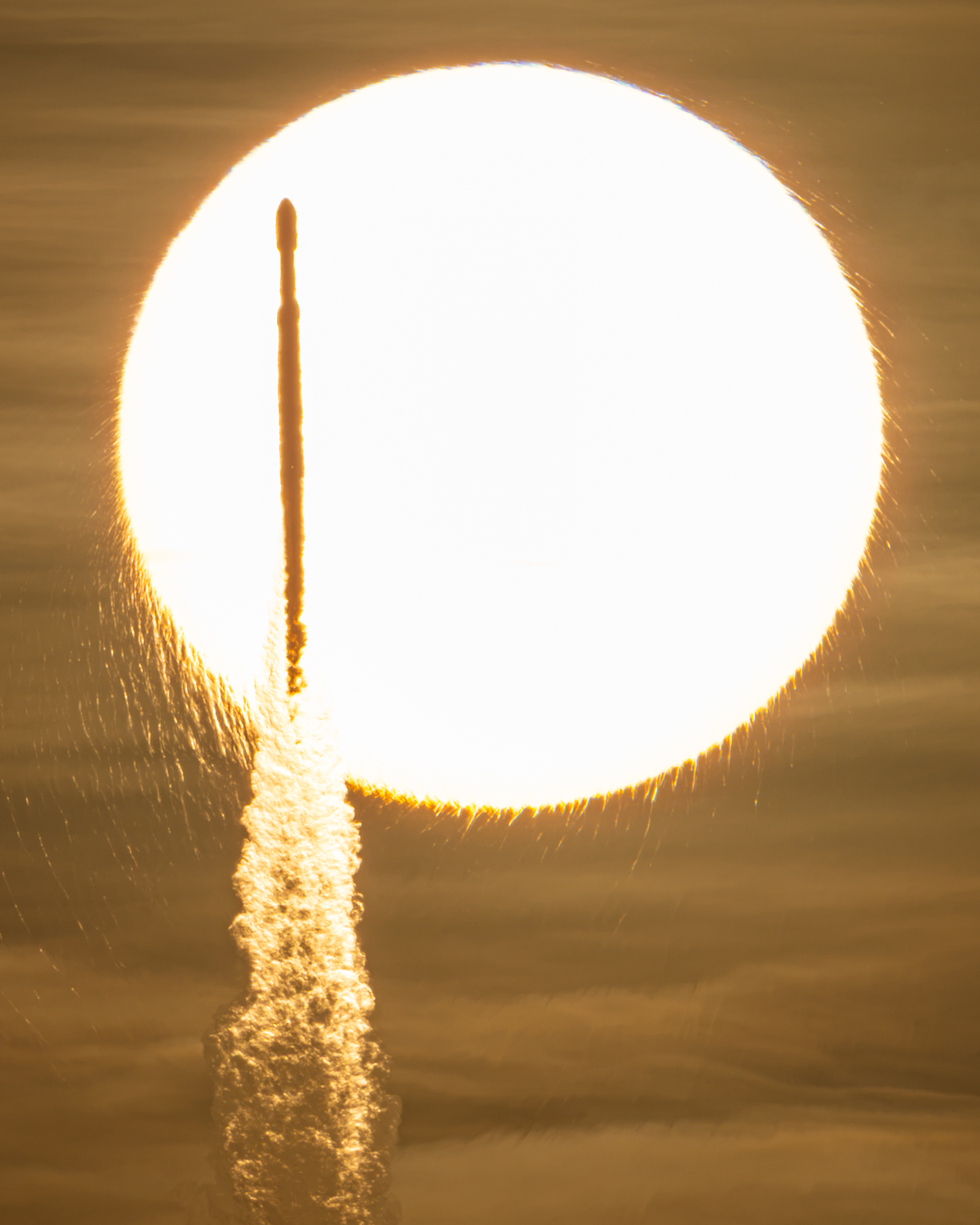
NASA’s Nancy Grace Roman Space Telescope launched aboard a SpaceX Falcon Heavy from Kennedy Space Center on Aug. 30, 2026. Roman will survey billions of stars and galaxies with a field of view far larger than Hubble’s, helping scientists study dark energy, exoplanets, and the evolution of the universe.
In planetary science, ESA’s BepiColombo mission took its first critical step towards arriving at Mercury. NASA’s Strofio instrument, a component of the SERENA instrument on the ESA orbiter, will study Mercury’s thin atmosphere.
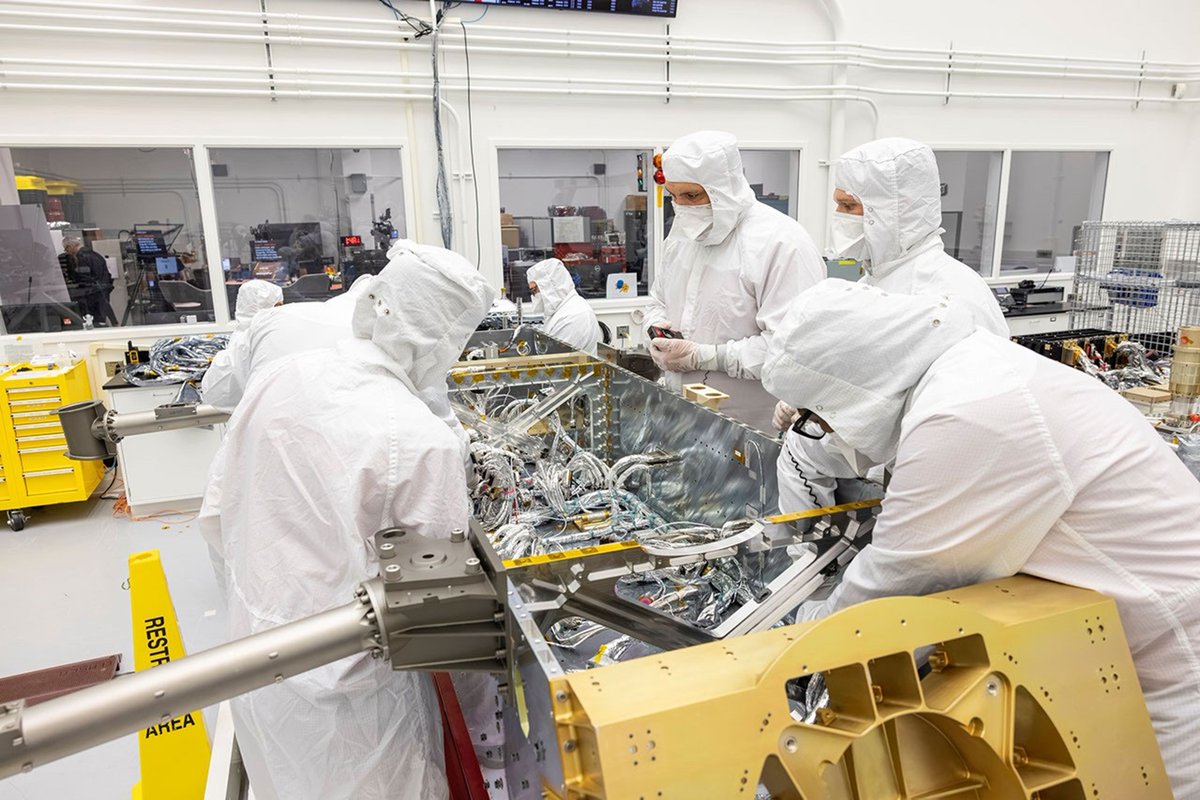
JPL shared details on the Dragonfly rotorcraft’s electrical harness, built by APL: over 17,000 feet of wire and 374 connectors will carry power and data throughout the spacecraft as it prepares to explore Saturn’s moon Titan, including its newly named landing region.
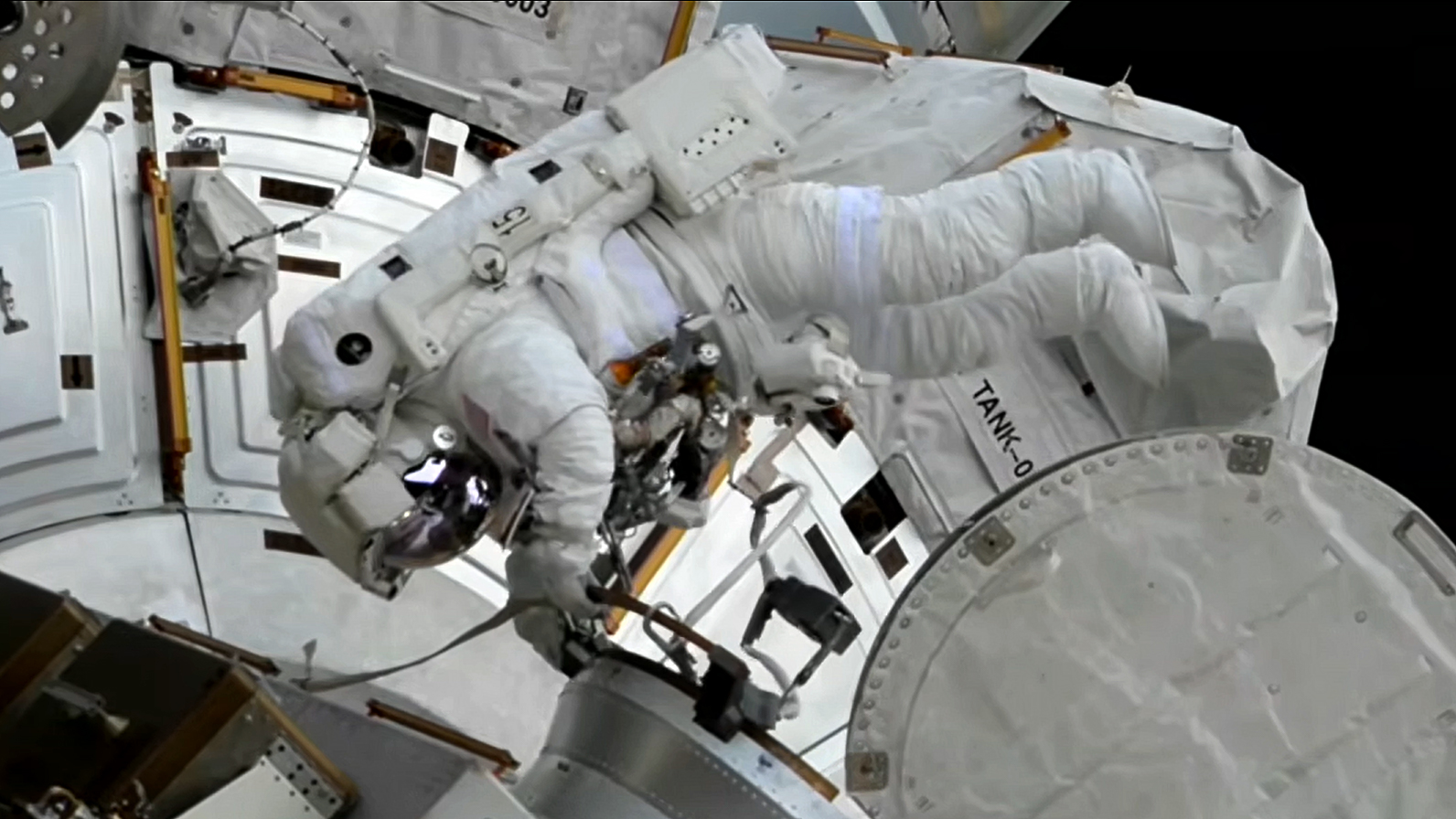
Meir and Adenot Complete Six-Hour Spacewalk Outside Station
NASA astronaut Jessica Meir and ESA astronaut Sophie Adenot completed a 6-hour, 49-minute spacewalk on Sept. 1, concluding at 3:29 p.m. EDT. The pair installed a new retroflector on the forward port of the station’s Harmony module to support spacecraft navigation during rendezvous and docking. They replaced a high-definition camera on the station’s truss and swabbed the exterior for microorganisms.
The crew partially completed jumper cable installation for electrical systems and began preparing for the future replacement of the Alpha Magnetic Spectrometer’s heat-rejecting radiator. Mission Control deferred installing remaining guide studs for the radiator so engineers can develop a plan to finish the work on a future spacewalk. As the crew fell behind the timeline, noncritical tasks were shifted to a later date.
During the spacewalk, Adenot experienced mobility issues with her left arm. Meir determined the glove heater harness was likely caught and causing limited movement in the left shoulder joint; unzipping the joint resolved the issue before the crew entered the airlock.
The spacewalk capped a monthlong period of four spacewalks for Expedition 75. Crew-13, which would have launched on Dragon Freedom — the same spacecraft that brought Meir and Adenot to the station in February — is now targeted no earlier than late September after an oxidizer leak was found on Dragon’s propulsion system. An uncrewed Progress cargo spacecraft is scheduled to launch on Wednesday, Sept. 9.
Artemis III Crew Training and September Skies
Artemis III Chief Training Officer Debbie O’Connell discussed how the crew is preparing for each phase of their mission, from launch to splashdown, on the most recent episode of Houston We Have a Podcast. NASA described the crew as “an all-star team.”
Looking up, September brings the Moon pointing out stellar sights, Venus at peak brilliance, the seasons shifting on Sept. 22, and the Harvest Moon meeting planetary neighbours.
Provider: National Aeronautics and Space Administration Date: June 30, 2027 Time: 12:00 AM UTC Vehicle: Space Launch System (SLS)
Artemis III is the second crew mission as part of the Artemis program. Artemis III will send a crew of 4 on a Low Earth Orbit mission, with the Orion rendezvous and dock with one or both commercial lunar landers in development by SpaceX and Blue Origin, performing in-space tests of the docked vehicles, integrated checkout of life support, communications, and propulsion systems, as well as tests of the new Extravehicular Activity (xEVA) suits.
Artemis IV
Provider: National Aeronautics and Space Administration Date: June 30, 2028 Time: 12:00 AM UTC Vehicle: Space Launch System (SLS)
Artemis IV is planned to be the first human lunar landing mission since the Apollo Program.
Artemis V
Provider: National Aeronautics and Space Administration Date: December 31, 2028 Time: 12:00 AM UTC Vehicle: Space Launch System (SLS)
Artemis V is planned to be the second human lunar landing mission since the Apollo Program.
SLS Block 1B | Artemis VI
Provider: National Aeronautics and Space Administration Date: September 30, 2030 Time: 12:00 AM UTC Vehicle: Space Launch System (SLS)
No description available
SLS Block 1B | Artemis VII
Provider: National Aeronautics and Space Administration Date: September 30, 2031 Time: 12:00 AM UTC Vehicle: Space Launch System (SLS)
No description available
Artemis III ×
Mission Details
TypeHuman Exploration
OrbitLow Earth Orbit
TargetEarth
Artemis III is the second crew mission as part of the Artemis program. Artemis III will send a crew of 4 on a Low Earth Orbit mission, with the Orion rendezvous and dock with one or both commercial lunar landers in development by SpaceX and Blue Origin, performing in-space tests of the docked vehicles, integrated checkout of life support, communications, and propulsion systems, as well as tests of the new Extravehicular Activity (xEVA) suits.
Agencies Involved
• National Aeronautics and Space Administration (Government)
Program: Artemis
The Artemis program is a US government-funded crewed spaceflight program that has the goal of landing “the first woman and the next man” on the Moon, specifically at the lunar south pole region.
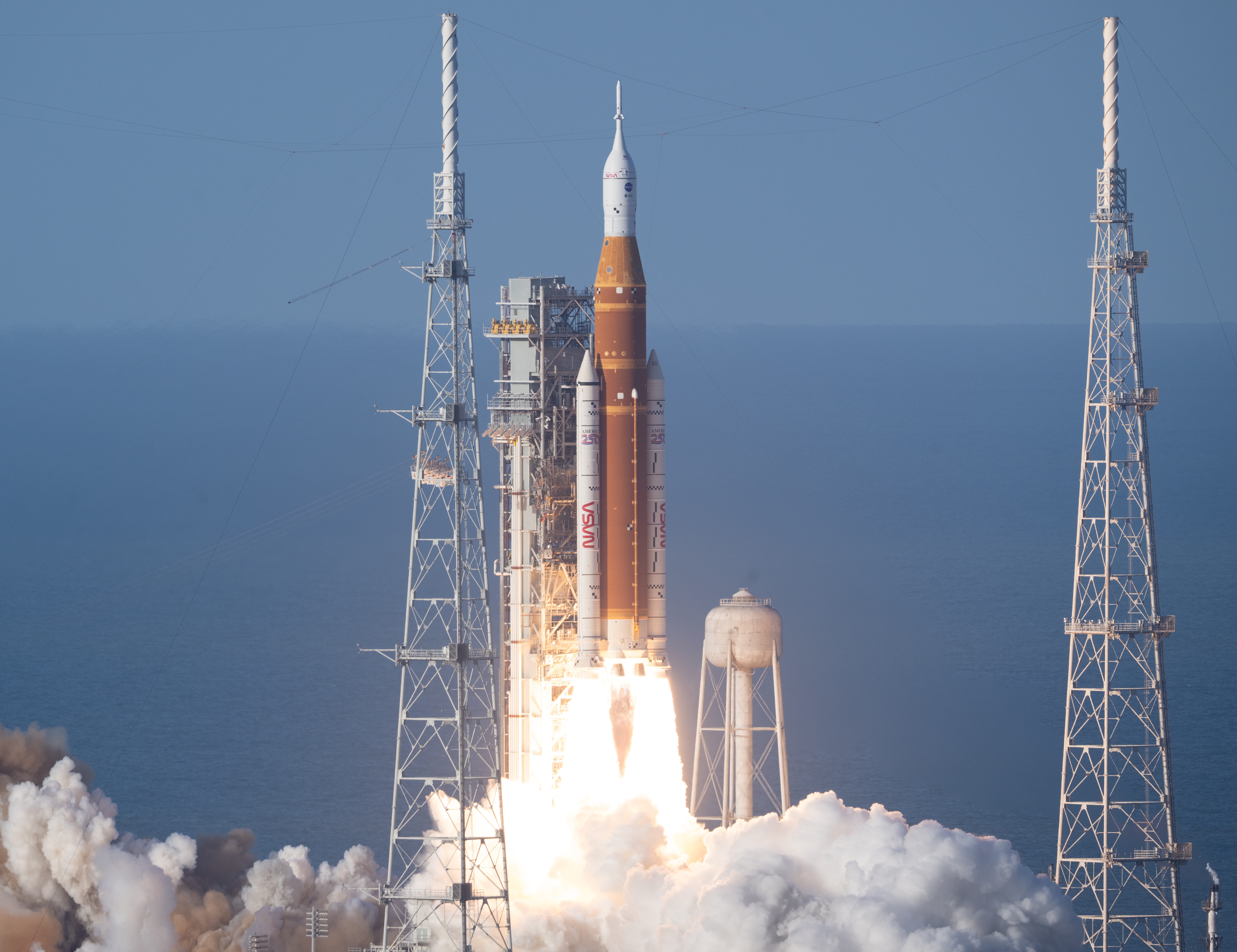
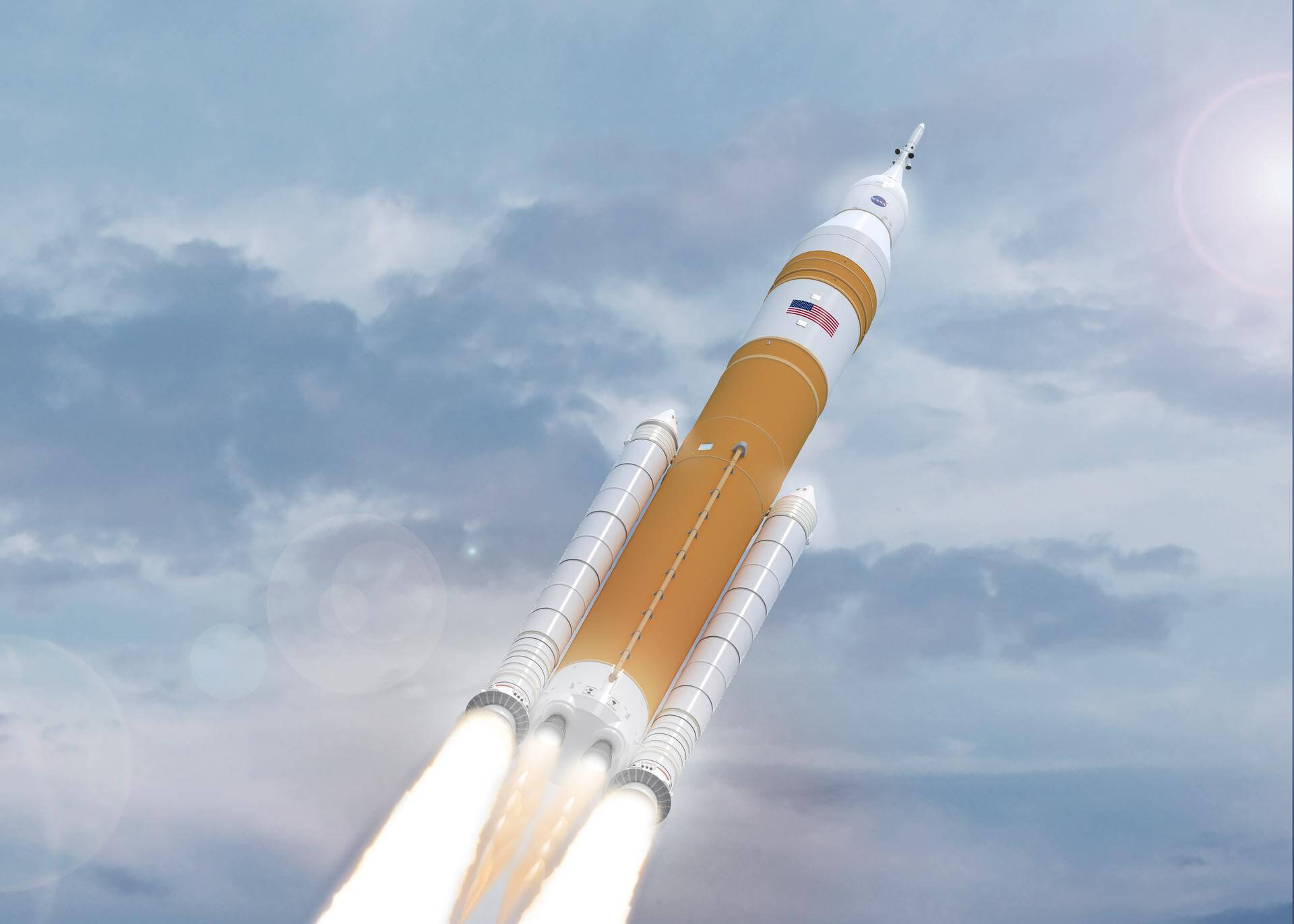
The Space Launch System (SLS) is an American Space Shuttle-derived heavy expendable launch vehicle. It is part of NASA’s deep space exploration plans including as the main launch vehicle of the Artemis program. SLS follows the cancellation of the Constellation program, and is to replace the retired…
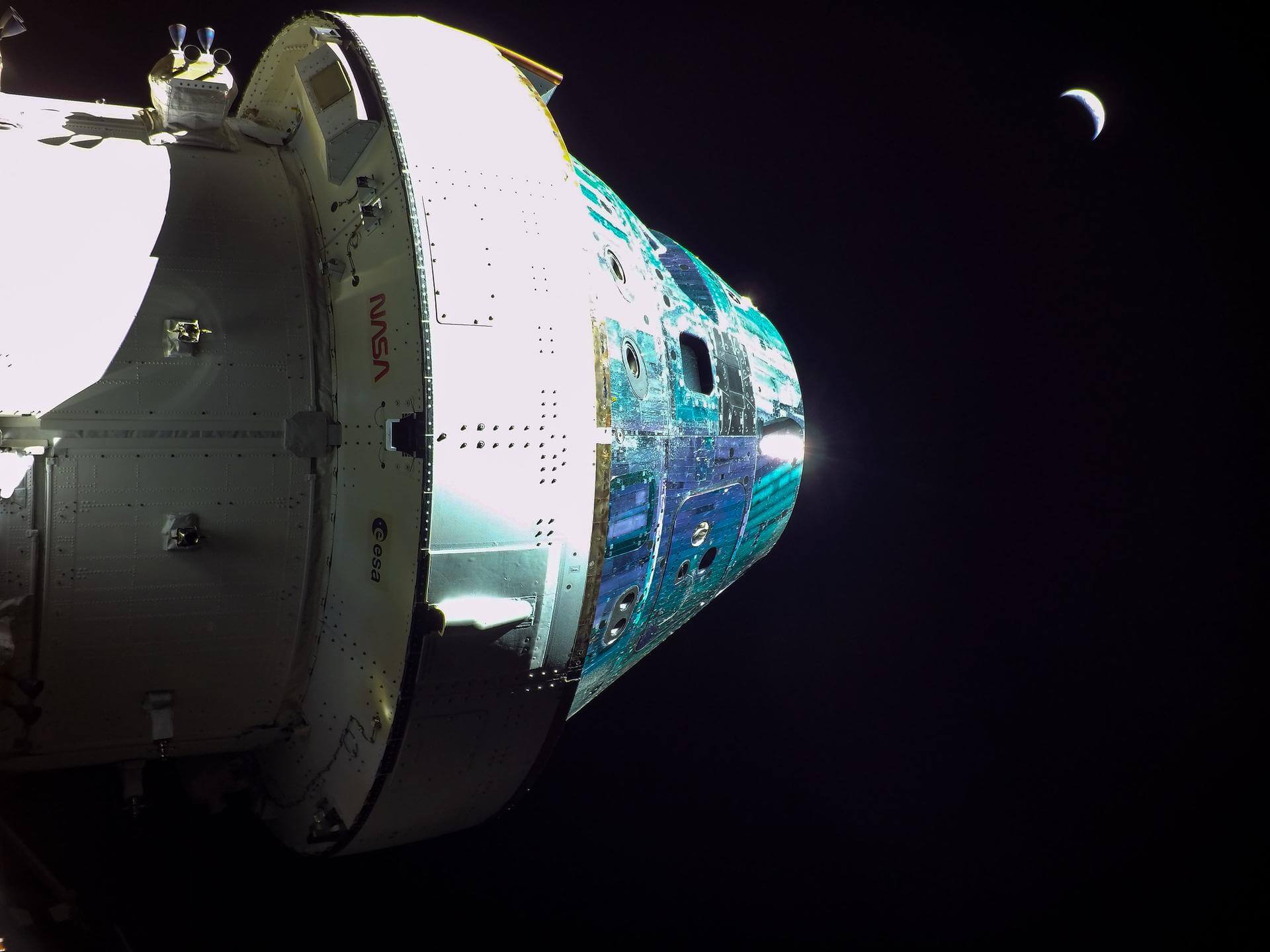
The Orion Multi-Purpose Crew Vehicle (Orion MPCV) is an American spacecraft intended to carry a crew of four astronauts to destinations at or beyond low Earth orbit (LEO). Currently under development by NASA for launch on the Space Launch System, Orion is intended to facilitate human exploration of asteroids and of Mars, as well as to provide a means of delivering or retrieving crew or supplies from the ISS if needed.
Capability
Lunar Missions.
Details
The Orion MPCV takes basic design elements from the Apollo Command Module that took astronauts to the moon, but its technology and capability are more advanced. It is designed to support long-duration deep space missions, with up to 21 days active crew time plus 6 months quiescent. During the quiescent period crew life support would be provided by another module such as a Deep Space Habitat. The…
Flight Life
21.1 days
Manufacturer: National Aeronautics and Space Administration (NASA)
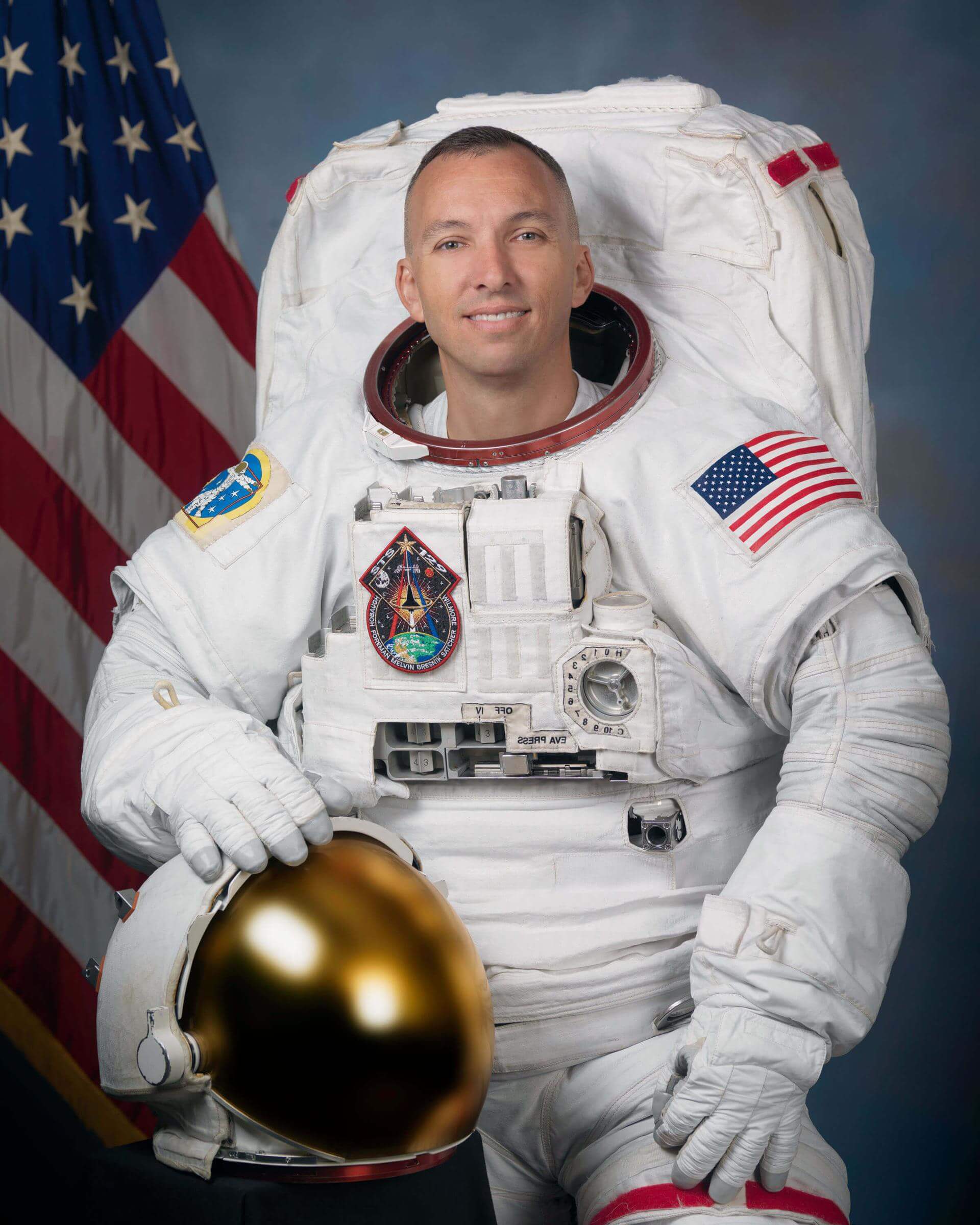
NASA • American • Age: 58 • Time in space: 149 Days, 12 Hours, 12 Minutes • EVA time: 1 Day, 8 Hours
Born: Sep 11, 1967 • First Flight: Nov 16, 2009 • Last Flight: Jul 28, 2017
Randolph James “Komrade” Bresnik is an officer in the United States Marine Corps and a NASA astronaut. A Marine Aviator by trade, Bresnik was selected as a member of NASA Astronaut Group 19 in May 2004.[5] First launched to space on STS-129.
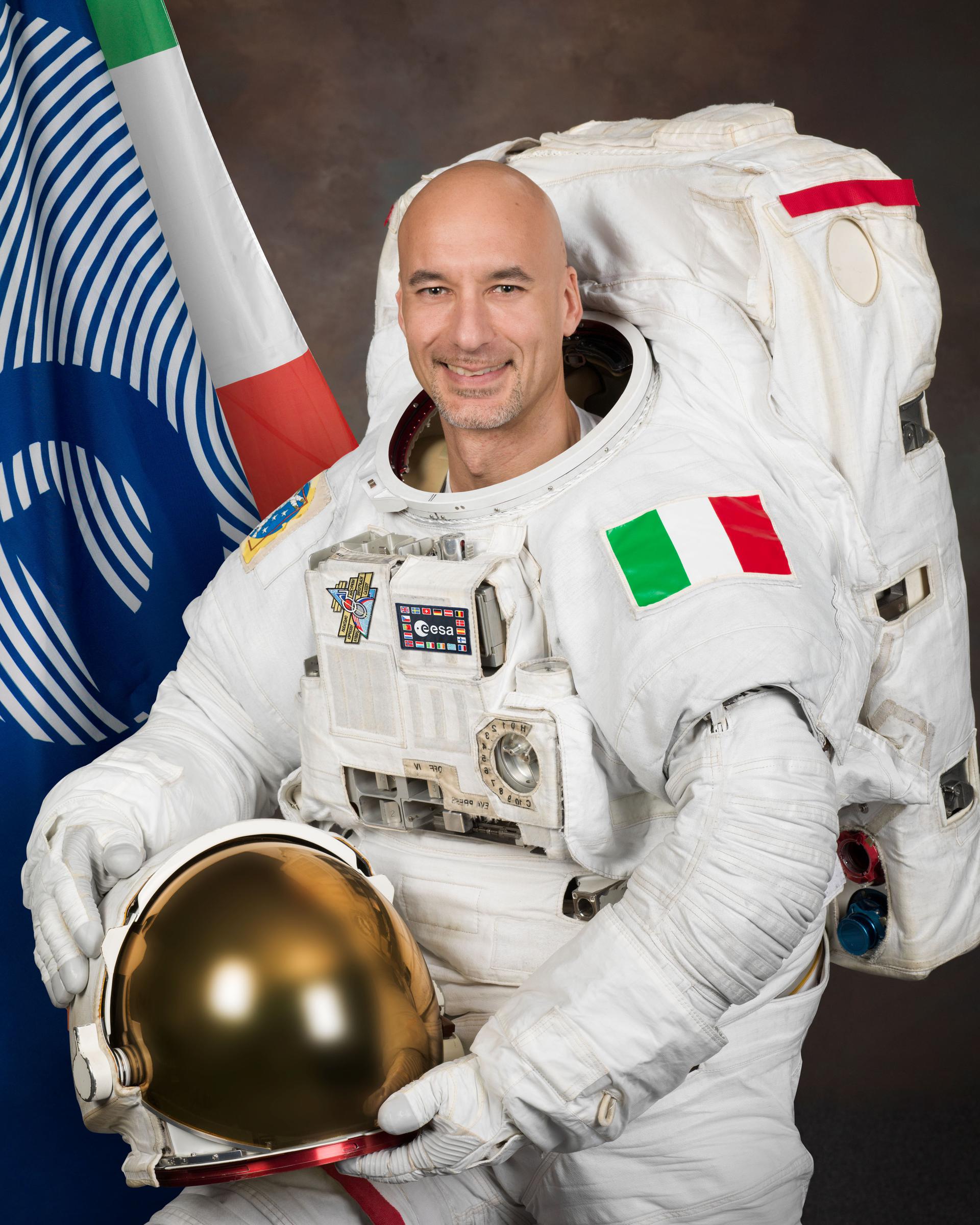
ESA • Italian • Age: 49 • Time in space: 366 Days, 23 Hours, 2 Minutes • EVA time: 1 Day, 9 Hours, 9 Minutes
Born: Sep 27, 1976 • First Flight: May 28, 2013 • Last Flight: Jul 20, 2019
Luca Parmitano (born 27 September 1976 in Paternò, Sicily) is an Italian engineer and astronaut in the European Astronaut Corps for the European Space Agency (ESA). The astronauts work on missions at the International Space Station. He was selected as an ESA astronaut in May 2009.
Artemis IV is planned to be the first human lunar landing mission since the Apollo Program.
Agencies Involved
• National Aeronautics and Space Administration (Government)
Program: Artemis
The Artemis program is a US government-funded crewed spaceflight program that has the goal of landing “the first woman and the next man” on the Moon, specifically at the lunar south pole region.
The Space Launch System (SLS) is an American Space Shuttle-derived heavy expendable launch vehicle. It is part of NASA’s deep space exploration plans including as the main launch vehicle of the Artemis program. SLS follows the cancellation of the Constellation program, and is to replace the retired…
Artemis V is planned to be the second human lunar landing mission since the Apollo Program.
Agencies Involved
• National Aeronautics and Space Administration (Government)
Program: Artemis
The Artemis program is a US government-funded crewed spaceflight program that has the goal of landing “the first woman and the next man” on the Moon, specifically at the lunar south pole region.
The Space Launch System (SLS) is an American Space Shuttle-derived heavy expendable launch vehicle. It is part of NASA’s deep space exploration plans including as the main launch vehicle of the Artemis program. SLS follows the cancellation of the Constellation program, and is to replace the retired…
The Artemis program is a US government-funded crewed spaceflight program that has the goal of landing “the first woman and the next man” on the Moon, specifically at the lunar south pole region.
The Space Launch System (SLS) is an American Space Shuttle-derived heavy expendable launch vehicle. It is part of NASA’s deep space exploration plans including as the main launch vehicle of the Artemis program. SLS follows the cancellation of the Constellation program, and is to replace the retired…
The Artemis program is a US government-funded crewed spaceflight program that has the goal of landing “the first woman and the next man” on the Moon, specifically at the lunar south pole region.
The Space Launch System (SLS) is an American Space Shuttle-derived heavy expendable launch vehicle. It is part of NASA’s deep space exploration plans including as the main launch vehicle of the Artemis program. SLS follows the cancellation of the Constellation program, and is to replace the retired…
Robo Chris is a collection of API calls, filters, and searches, bolted together with magic and love. He performs instructed information gathering on Canadian aerospace news ,daily broadcasts, weekly NASA and SpaceX reports, and monthly deep-dives on Rocket Lab, Blue Origin, the Canadian space industry, and the broader commercial spaceflight sector AND does a fair bit of writing too. Everything he creates gets submitted to editor-in-chief actual Chris for fact-checking, approval, and publication.





Leave a Reply