
The Daily Broadcast: Canada’s Defence Forum Launches; New Glenn Explodes; Amazon Leo Advances

Canadian Space Sector Secures Strategic Role in Defence Pivot
This week at CANSEC in Ottawa, the federal government formally detailed its new Defence Advisory Forum and, in doing so, gave Canada’s commercial space sector an explicit mandate: shape the country’s space-defence architecture. Space is now one of ten designated sovereign capability areas within the Defence Industrial Strategy, guaranteed a rotational seat on the Defence Advisory Forum when it opens for industry applications on June 1, 2026.
The timing reflects Ottawa’s strategic shift. With the country having met its 2% NATO spending target and projecting CAD $180 billion in direct defence procurement over the next decade, Prime Minister Mark Carney outlined how that capital will be deployed. “We will be establishing a new Defence Advisory Forum,” he told the CANSEC delegation. “They will advise government on how to best grow our defence industrial base, our investment needs, and they will identify barriers to that growth.”

Canadian companies are already positioning themselves to capitalize. Calian Group debuted ATHORA, an open-architecture system-of-systems orchestration layer designed to knit together disparate military networks—land, sea, air, space, cyber, and electromagnetic—while mitigating vendor lock-in. In parallel, Toronto-based enterprise AI firm Cohere announced a partnership to embed secure generative AI into military decision support and mission planning, processing sensitive data within closed military frameworks to protect classified intelligence.
MDA Space’s defence subsidiary, 49North, joined forces with Voyageur Aviation to offer end-to-end Intelligence, Surveillance, and Reconnaissance (ISR) solutions spanning both crewed and uncrewed platforms. The partnership pools Voyageur’s aviation infrastructure and flight operations with 49North’s digital architecture, C4ISR integration, and AI-enabled analytics—a textbook horizontal consolidation aimed squarely at Department of National Defence contracts.
These alliances reflect a broader strategic reorientation. As the DND accelerates its focus on “sovereign manoeuvre” and orbital-asset integration, the Defence Advisory Forum will serve as the sector’s premier feedback loop. It is designed to operate at macro-level capability planning—identifying systemic roadblocks and architecture gaps before procurement requirements are frozen.
New Glenn’s Catastrophic Test Failure Threatens Launch Timelines
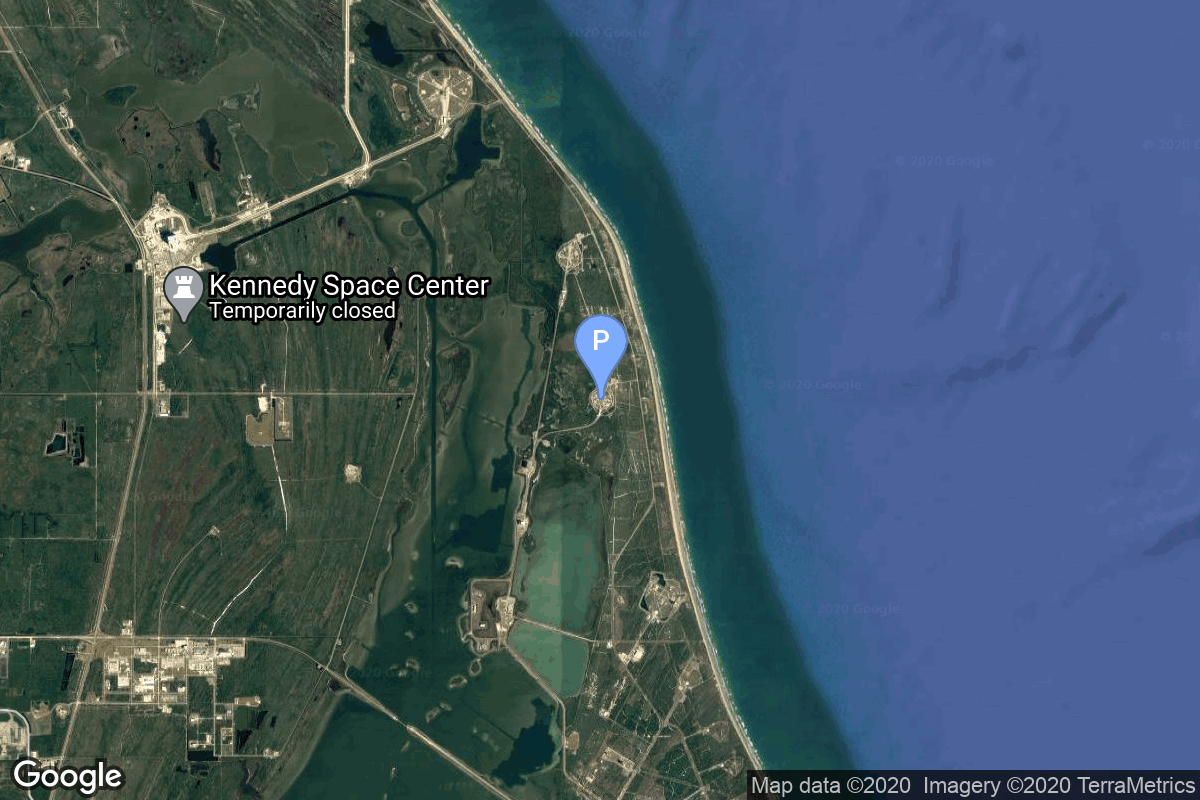
On May 28, Blue Origin’s New Glenn rocket exploded during a pre-launch hotfire test at Launch Complex 36, Cape Canaveral Space Force Station, inflicting what one observer described as “absolute carnage” on the pad. The 98-metre (322-foot) tall vehicle, capable of lifting 45 metric tons to low Earth orbit, was undergoing routine engine ignition testing when the anomaly occurred. No personnel were injured, but the structural damage to LC-36—Blue Origin’s only operational launch pad—may take months to assess and repair.

The rocket’s first-stage BE-4 engines, powered by liquid methane and liquid oxygen, are also used on the United Launch Alliance’s Vulcan. What impact the failure will have on Vulcan operations remains unclear, though Vulcan is already grounded from a February Solid Rocket Motor failure. If both New Glenn and Vulcan remain unavailable, SpaceX’s Falcon Heavy may become the de facto workhorse for heavy payloads.
NASA is counting on New Glenn to deliver Blue Origin’s Blue Moon Mark 1 robotic landers to the lunar South Pole beginning this year, and Mark 2 crewed landers for astronaut return landings in 2028. Launching Blue Moon MK1 in 2026 now “certainly seems unlikely,” according to industry analysis, and whether Blue Origin can ready both the rocket and crewed lander demonstrator for Artemis III next year will be “a herculean feat.” The U.S. Space Force awarded Blue Origin a USD $2.4 billion contract for national security launches through 2029, but has not yet certified New Glenn. A new task order for a National Reconnaissance Office mission between Q4 2027 and Q1 2028 was announced even as the explosion unfolded, signalling confidence in the company’s ability to recover.
ULA Advances Amazon Leo Despite Broader Launch Cadence Challenges
Within hours of New Glenn’s destruction, United Launch Alliance launched its seventh batch of Amazon Leo broadband satellites from Cape Canaveral. The Atlas V 551 rocket (designated AV-113, the 109th Atlas flight) lifted off at 7:53 p.m. EDT on May 29, overcoming a 30% weather forecast thick with afternoon thunderstorms and Cumulus cloud violations.
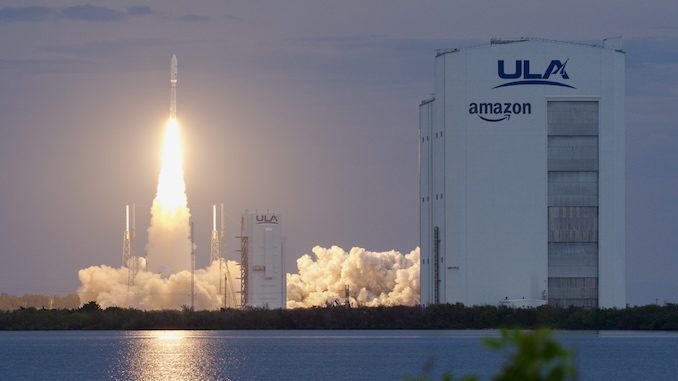
The mission deployed 29 operational satellites, bringing Amazon Leo’s constellation to 331 deployed across the mission to date. ULA has now launched 197 of those—the majority of all Amazon Leo satellites currently on orbit. After one final Atlas V mission scheduled for July 2026, the constellation will rely on ULA’s Vulcan rockets (currently grounded since February) and Blue Origin’s New Glenn (now grounded indefinitely).
Amazon faces a Federal Communications Commission deadline to have half its constellation—roughly 1,600 satellites—operational by the end of July 2026. As of Friday, the company had approximately 300 satellites in orbit and has filed a request to relax the requirement, which remains under review. The constellation will eventually comprise more than 3,200 satellites. The impact of New Glenn’s explosion is immediate: Amazon had scheduled its first New Glenn launch for June 4 and was relying heavily on the vehicle to accelerate deployment. With two of its three planned launch providers now grounded, the company’s ability to meet its operational goals depends on sustained Atlas V flights and the swift return of Vulcan.
Citations
- “Space sector guaranteed seat as Ottawa launches Defence Advisory Forum” — https://spaceq.ca/space-sector-guaranteed-seat-as-ottawa-launches-defence-advisory-forum/
- “Calian debuts ATHORA interoperability platform and Cohere AI partnership at CANSEC” — https://spaceq.ca/calian-debuts-athora-interoperability-platform-and-cohere-ai-partnership-at-cansec/
- “MDA’s 49North and Voyageur Aviation form strategic alliance to target domestic ISR contracts” — https://spaceq.ca/mdas-49north-and-voyageur-form-strategic-alliance-to-target-domestic-isr-contracts/
- “Repercussions of New Glenn’s Explosion Still Coming Into Focus” — https://spacepolicyonline.com/news/repercussions-of-new-glenns-explosion-still-coming-into-focus/
- “Live coverage: ULA to launch 29 Amazon Leo satellites on Atlas 5 rocket from Cape Canaveral” — https://spaceflightnow.com/2026/05/29/live-coverage-ula-to-launch-29-amazon-leo-satellites-on-atlas-5-rocket-from-cape-canaveral-2/
- “United Launch Alliance Precisely Delivers Seventh Amazon Leo Mission, Advancing Constellation Toward Commercial Service” — https://blog.ulalaunch.com/blog/united-launch-alliance-precisely-delivers-seventh-amazon-leo-mission-advancing-constellation-toward-commercial-service

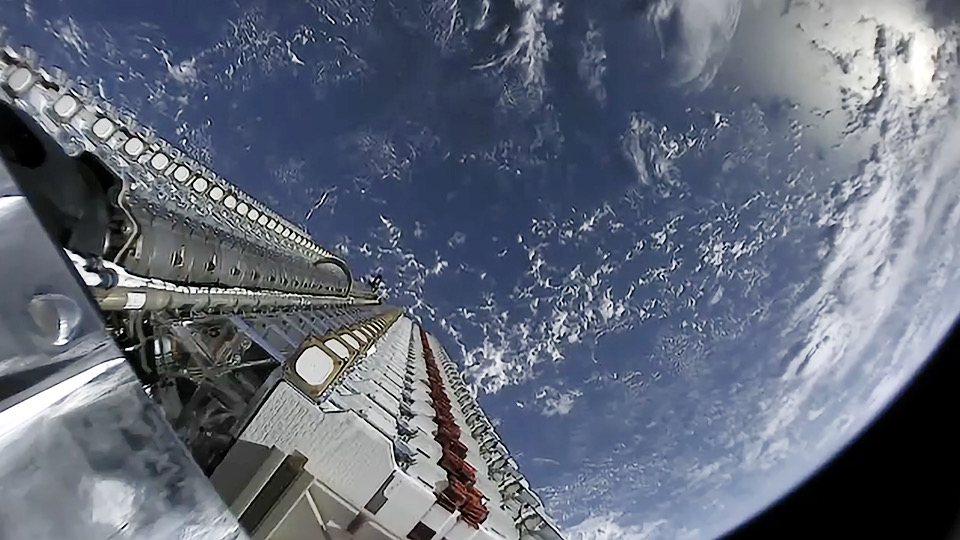
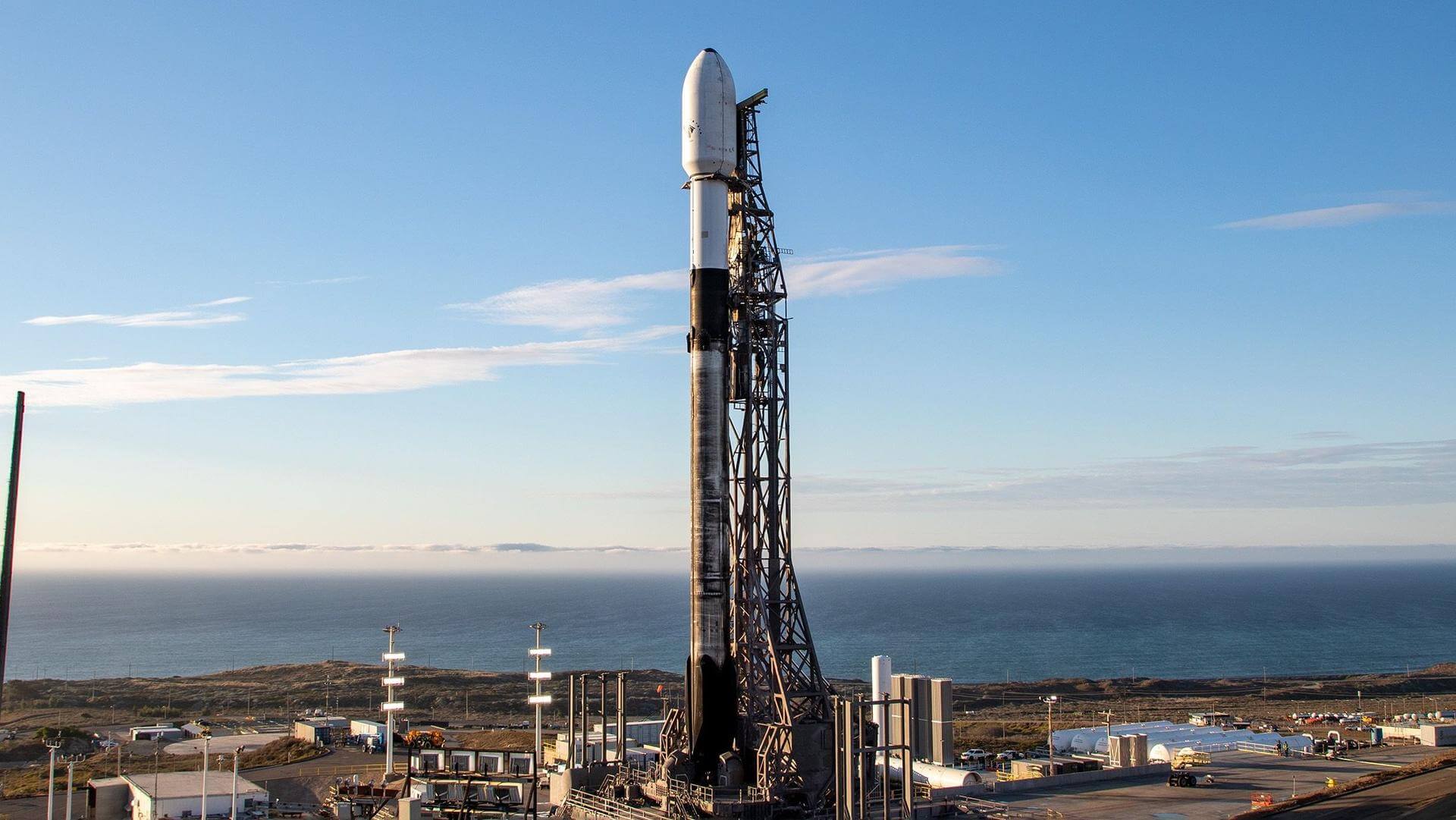
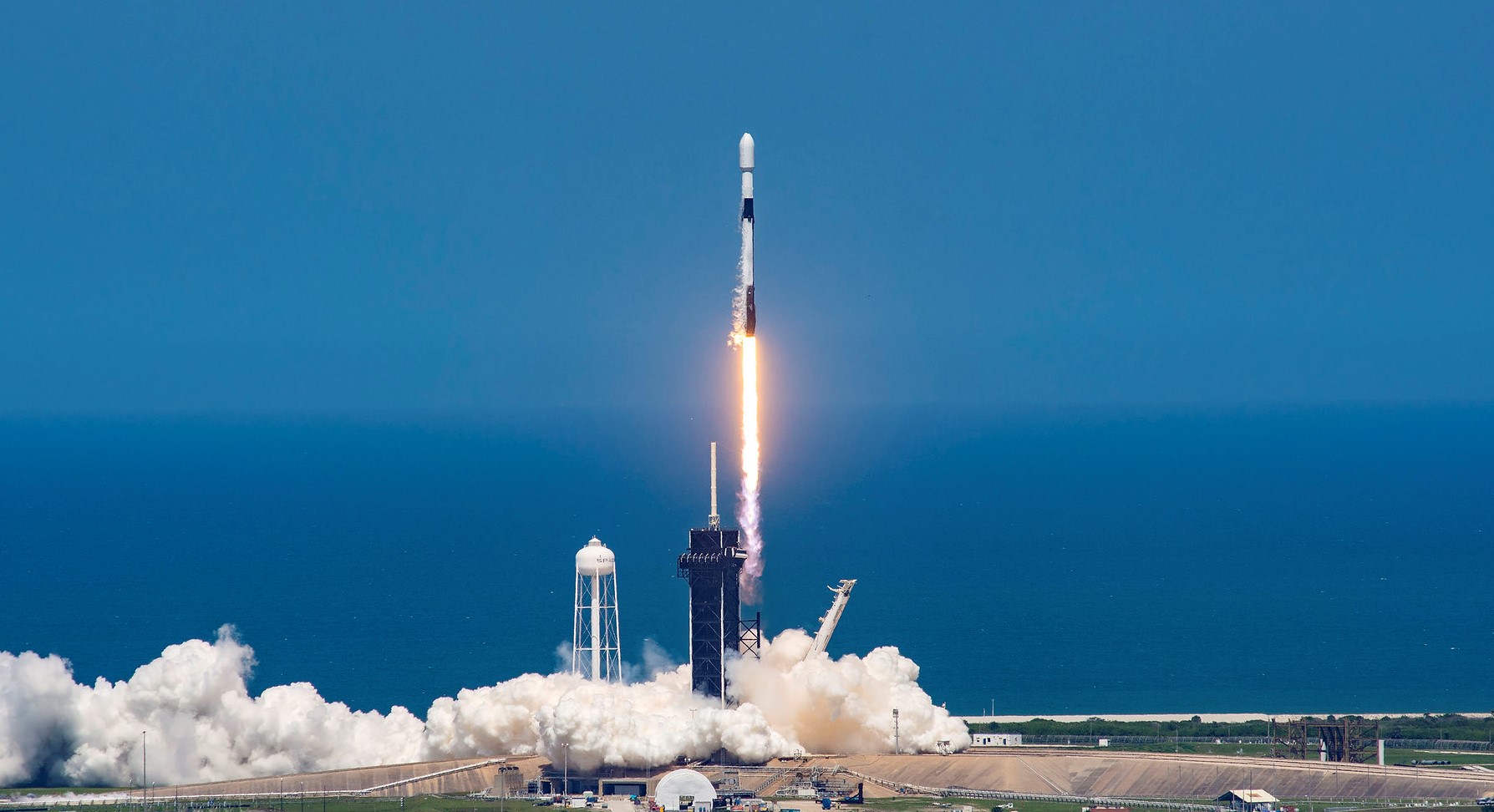
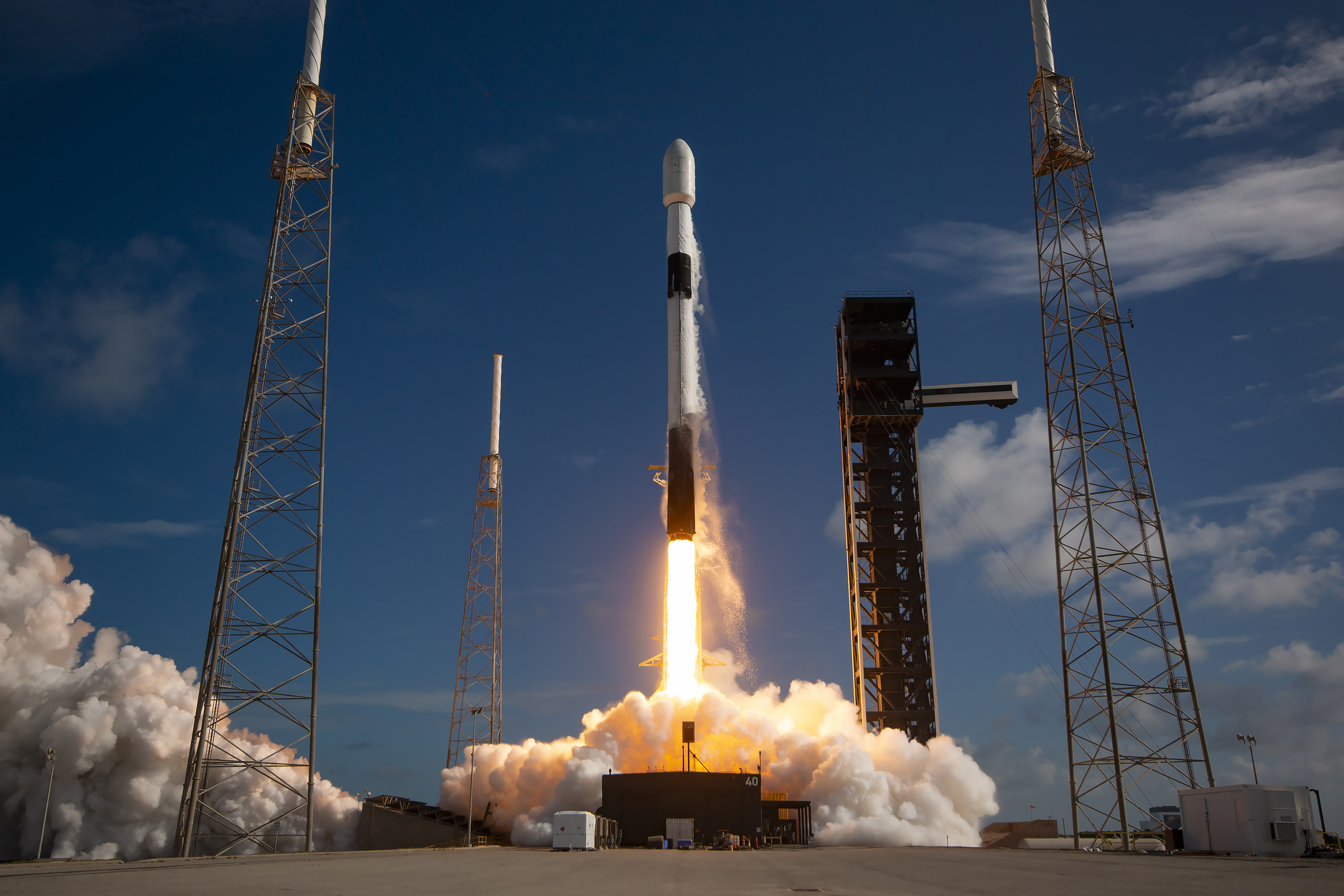
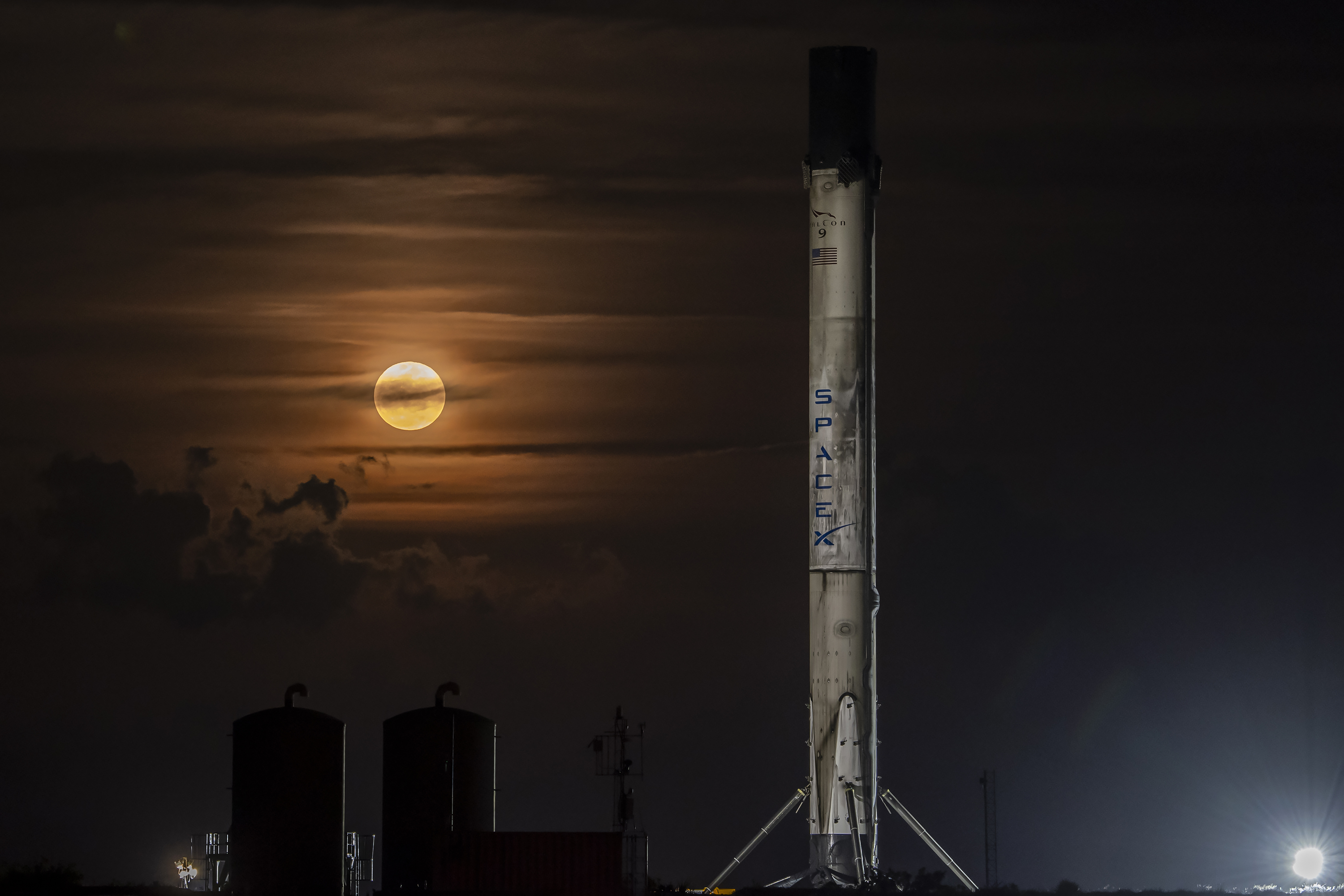
Starlink Group 17-41
Provider: SpaceX
Date: May 30, 2026
Time: 3:25 PM UTC
Vehicle: Falcon 9
A batch of 24 satellites for the Starlink mega-constellation – SpaceX’s project for space-based Internet communication system.
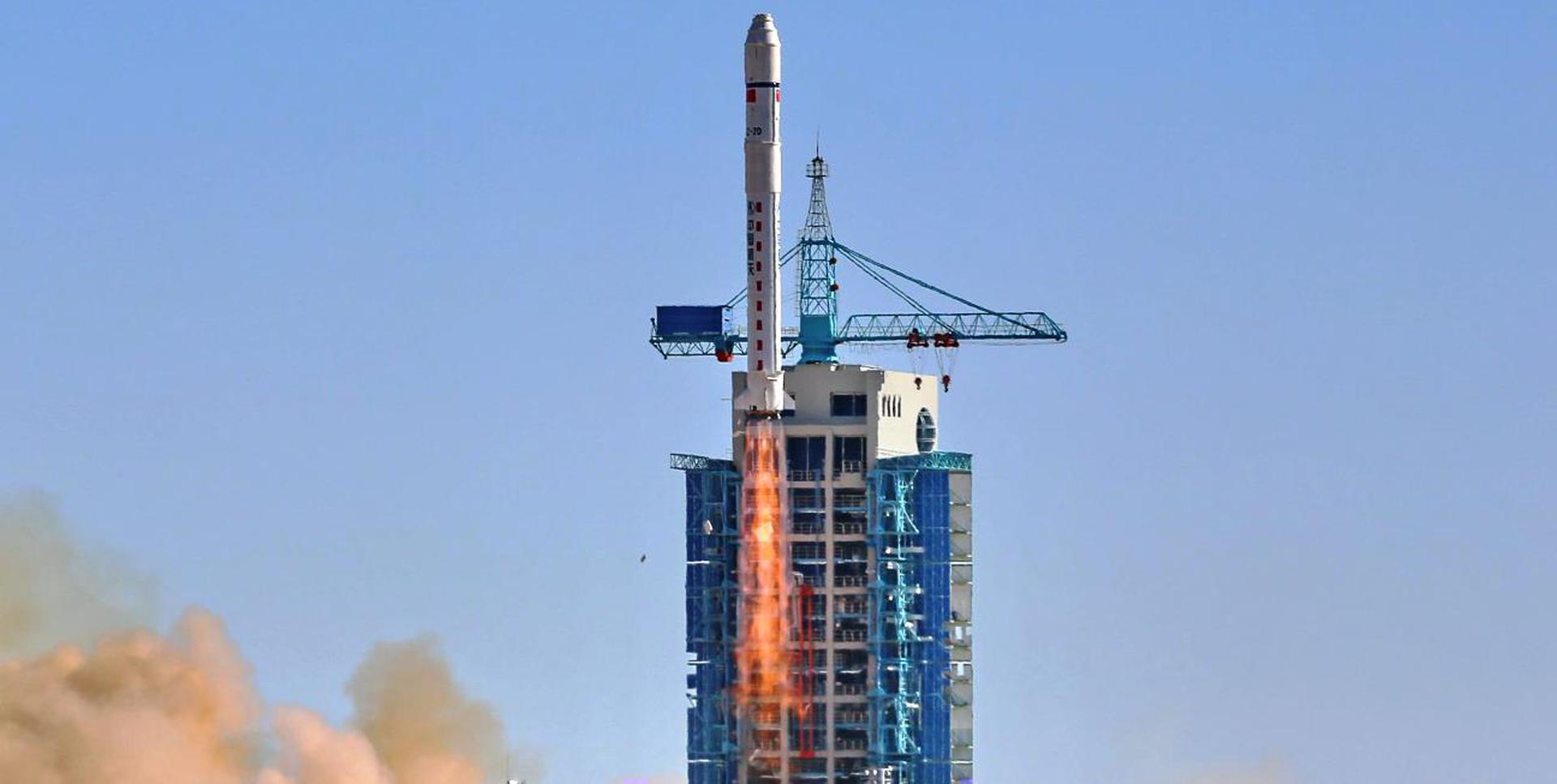
Unknown Payload
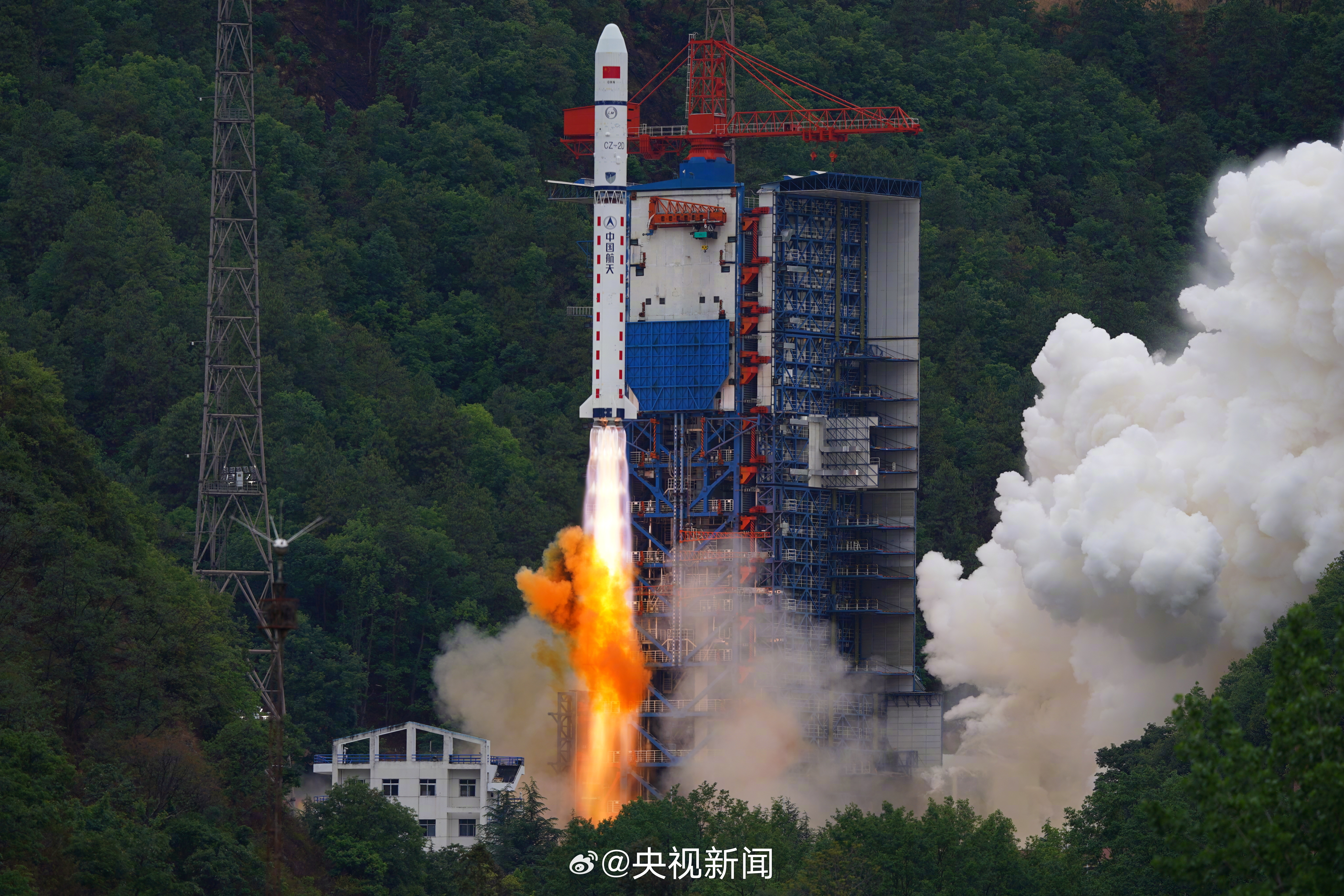
Provider: China Aerospace Science and Technology Corporation
Date: May 30, 2026
Time: 6:07 PM UTC
Vehicle: Long March 2D
Details TBD.
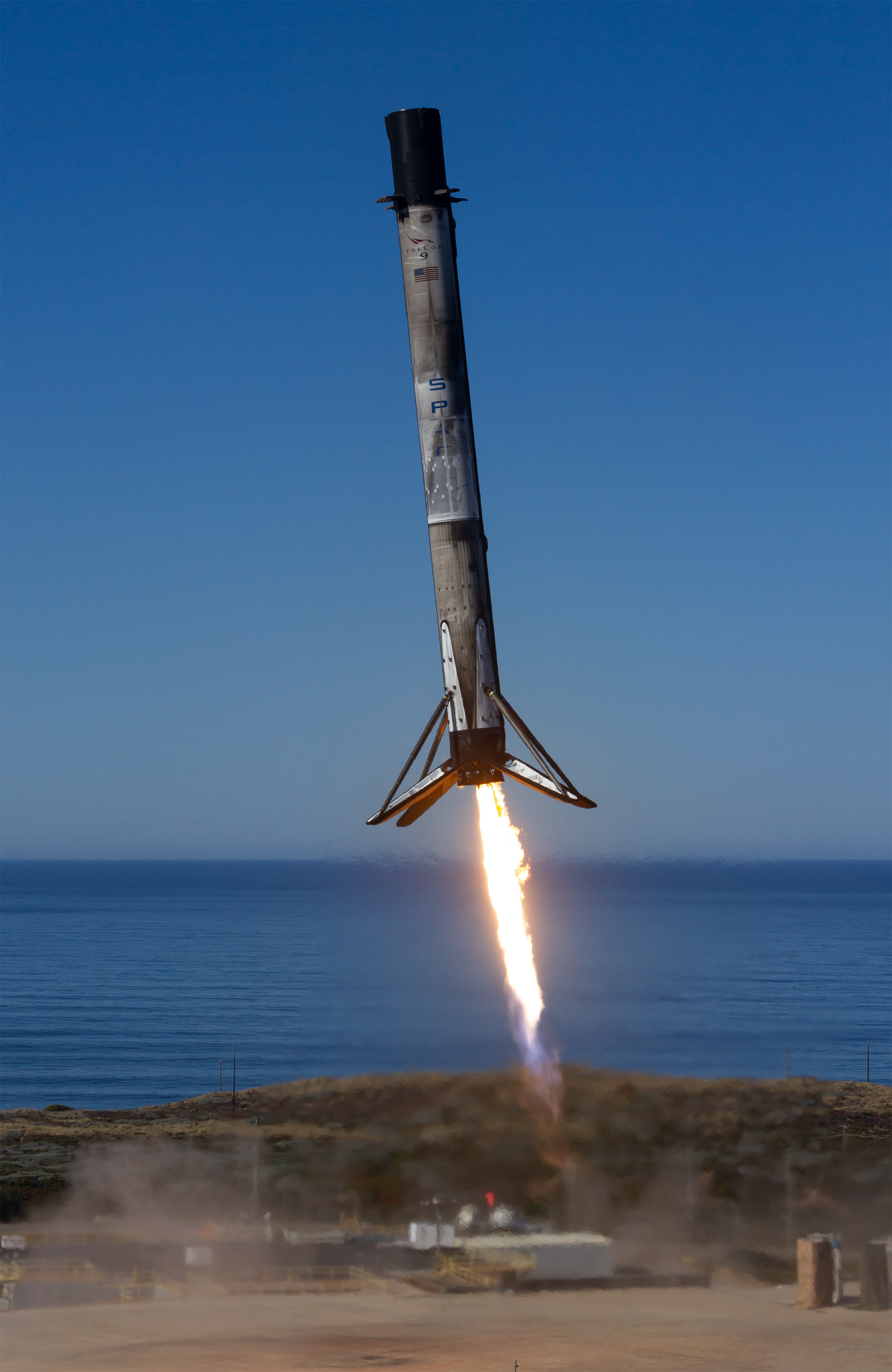
Starlink Group 10-43
Provider: SpaceX
Date: June 3, 2026
Time: 8:02 AM UTC
Vehicle: Falcon 9
A batch of 29 satellites for the Starlink mega-constellation – SpaceX’s project for space-based Internet communication system.
Starlink Group 17-47
Provider: SpaceX
Date: June 3, 2026
Time: 2:00 PM UTC
Vehicle: Falcon 9
A batch of 24 satellites for the Starlink mega-constellation – SpaceX’s project for space-based Internet communication system.
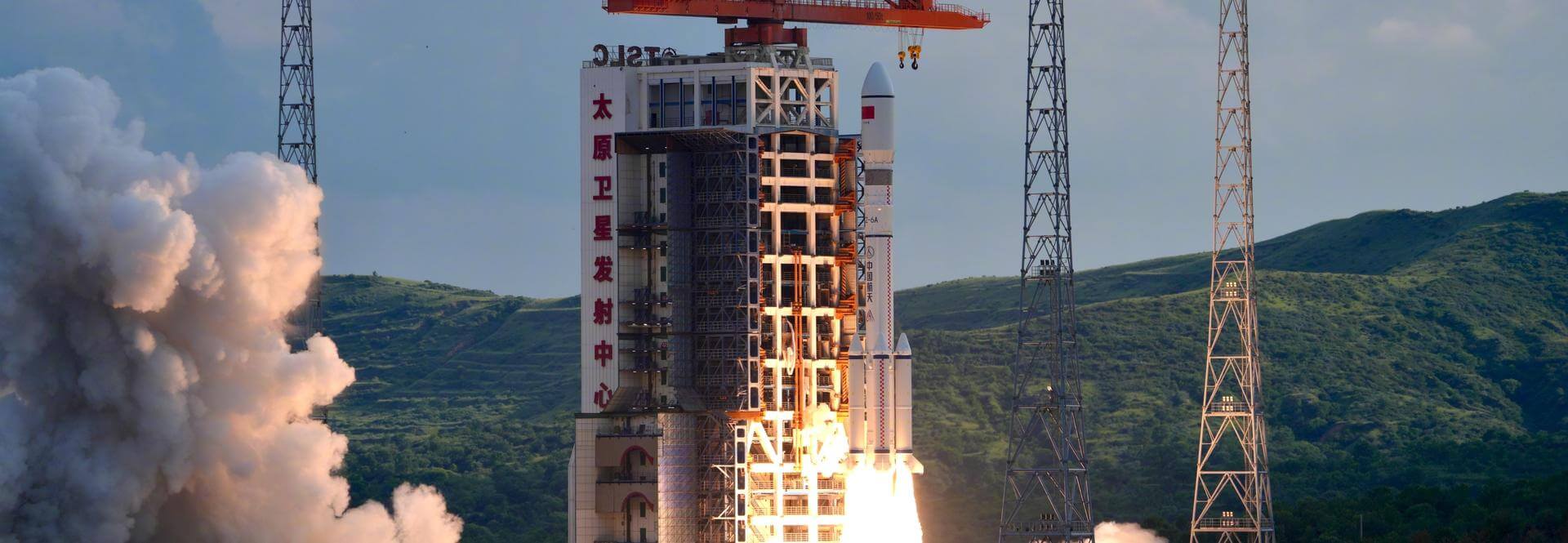
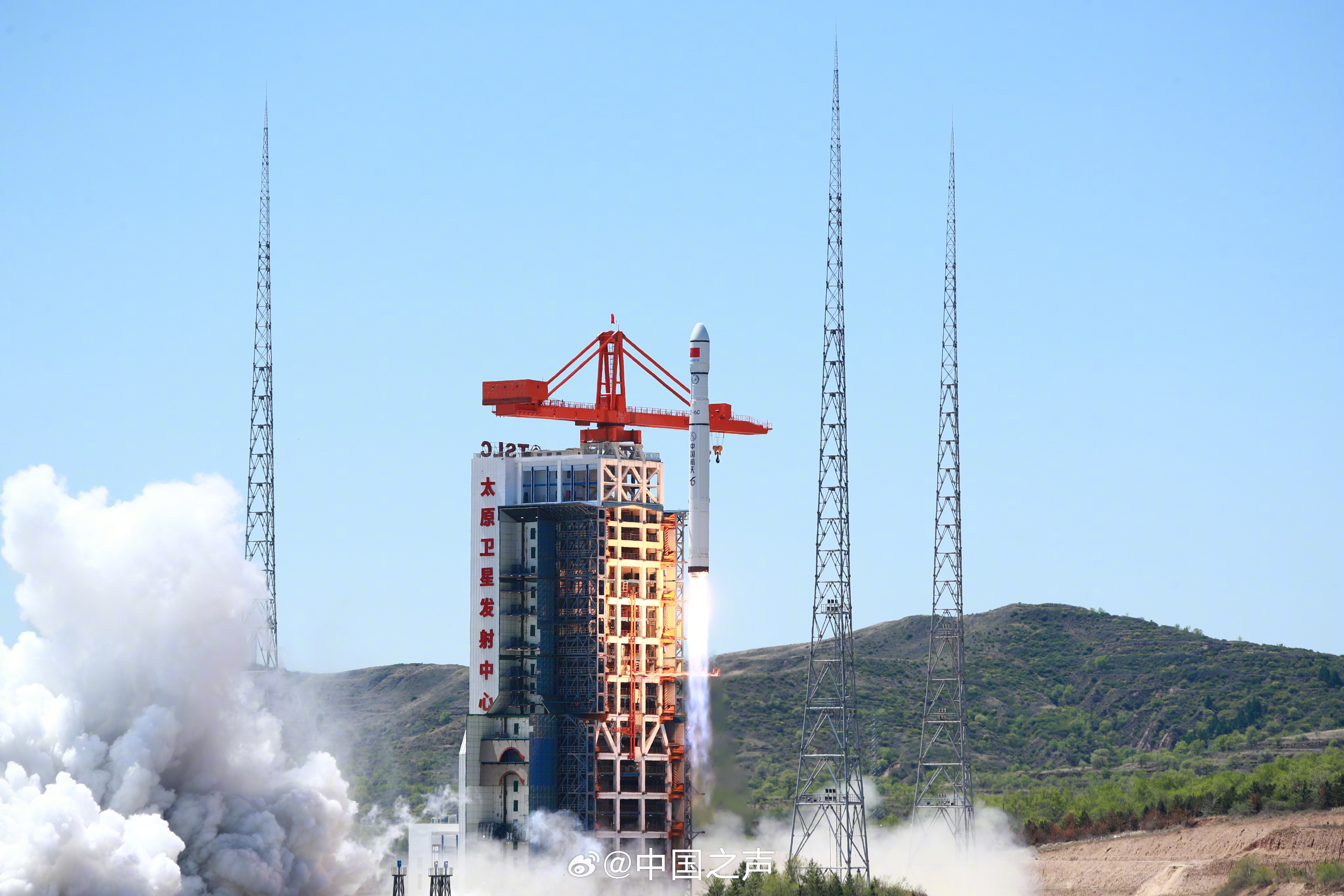
Unknown Payload
Provider: China Aerospace Science and Technology Corporation
Date: June 4, 2026
Time: 11:41 AM UTC
Vehicle: Long March 6A
Details TBD, probably SpaceSail Polar Orbit LEO communication satellites.


Enjoying the content? Stay up to date on everything happening behind the scenes by following our Patreon!

