
The Daily Broadcast: New Glenn Explodes During Static Fire Test at Cape Canaveral
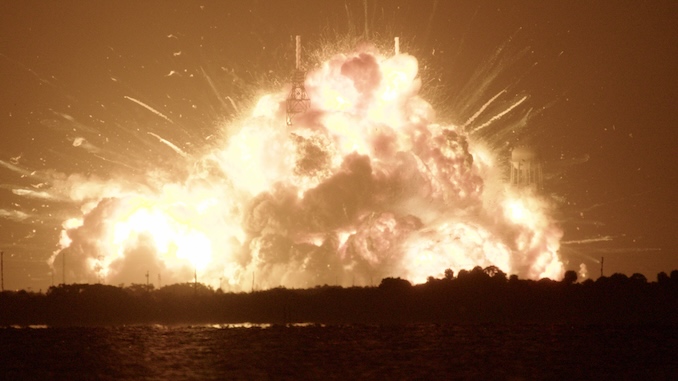
New Glenn Explodes on Cape Canaveral Pad
Blue Origin’s New Glenn rocket exploded during a static fire test on the evening of May 28 at Launch Complex 36 at Cape Canaveral Space Force Station, destroying at least one lightning protection tower and the transporter erector. The explosion occurred at 9 p.m. EDT as the rocket’s engines appeared to be igniting for the pre-launch test — the final major hurdle before a planned June 4 launch. All personnel were accounted for and safe.
The rocket was scheduled to lift off a batch of satellites for Amazon Leo, the Bezos-owned satellite constellation, marking the first of 24 planned New Glenn launches. Those payloads had not yet been transported from the payload processing facility, sparing them from the blast. In a post on social media, Bezos acknowledged the setback: “It’s too early to know the root cause but we’re already working to find it. Very rough day, but we’ll rebuild whatever needs rebuilding and get back to flying. It’s worth it.”
The timing is a significant blow. Blue Origin had received Federal Aviation Administration clearance to resume New Glenn operations only seven days earlier, on May 22, following an investigation into a previous in-flight failure. During the NG-3 mission, a cryogenic leak froze a hydraulic line and caused a thrust anomaly in the upper stage, preventing AST SpaceMobile’s BlueBird-7 satellite from reaching the correct orbit. The FAA identified nine corrective actions, which Blue Origin was implementing ahead of the static fire.
The FAA confirmed that the static fire explosion does not fall within the scope of licensed launch activities and will not trigger a new agency investigation. However, the damage to the pad and ground infrastructure means Blue Origin cannot immediately resume operations — Launch Complex 36 is the company’s only orbital launch facility. Recovery timelines remain unclear until damage assessments are complete.
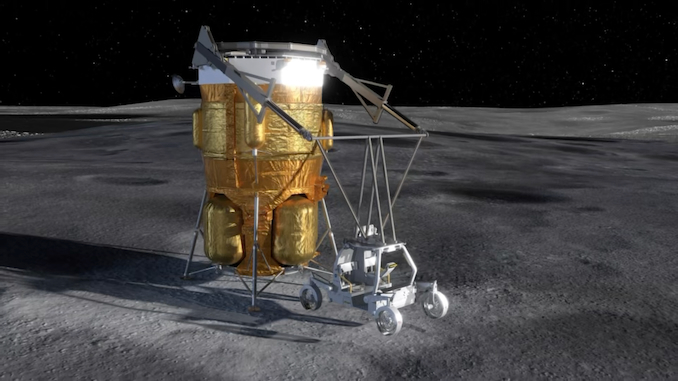
The accident carries implications far beyond Blue Origin. NASA is heavily reliant on New Glenn to support its Artemis Programme and Moon Base plans. On Tuesday, May 27, the agency announced contract awards naming Blue Origin to deliver lunar terrain vehicles to the Moon’s surface and to develop the Blue Moon Mark 2 crewed lander — one of two selected for NASA’s Human Landing System programme alongside SpaceX’s Starship. A Blue Moon variant is also slated for Artemis 3, an Apollo 9–style test in low Earth orbit scheduled for mid-2027. NASA Administrator Jared Isaacman said the agency is aware of the anomaly and will work with Blue Origin to assess near-term mission impacts, with details to follow.
If the root cause traces back to the main propulsion system and New Glenn’s methane-fuelled BE-4 engines, the implications would extend to United Launch Alliance’s Vulcan rocket, which shares the same engine architecture. Vulcan is currently grounded due to a separate solid rocket booster anomaly, adding pressure on both launch providers during a period when heavy-lift capacity is in high demand.
NordSpace Secures $3.2M to Build Domestic Propulsion Manufacturing
In brighter news from the Canadian space sector, Markham-based NordSpace Corp. is leading a consortium that has won $3.2 million in funding from Next Generation Manufacturing Canada (NGen) toward an $8 million project to establish Canada’s first AI-powered hybrid additive-subtractive manufacturing line for advanced space propulsion. The initiative directly addresses a critical bottleneck in launch vehicle production: reliable, domestic access to high-performance turbopumps for next-generation rocket engines.

The consortium includes Miltera Machining Research Corp., Pegmatis Inc., Prime Powders Inc., and Indigenous-owned Bear Paw Manufacturing. Their plan is to localize the entire manufacturing supply chain: Prime Powders and Bear Paw will produce aerospace-grade superalloy metal powders domestically, Pegmatis will deploy AI-driven in-situ quality control sensors during large-format metal 3D printing, and Miltera will handle final precision 5-axis CNC machining. This vertical integration reduces reliance on foreign suppliers and shields against export control delays — a persistent challenge for Canadian launch companies.
For NordSpace, the NGen award marks a transition from laboratory-scale research to industrial production. The company launched its Advanced Manufacturing for Aerospace (AMA) Lab in October 2025, followed by a $335,000 grant in January 2026 dedicated to additive manufacturing development. Now, with $3.2 million in federal backing, the consortium can scale toward commercial production in support of NordSpace’s planned operations at the Atlantic Spaceport Complex in Newfoundland and Labrador. The announcement aligns with the federal Defence Industrial Strategy’s “Build-Partner-Buy” framework, which emphasises keeping critical intellectual property and supply chains within Canadian small and medium-sized enterprises. Minister of Industry Mélanie Joly noted the project “helps advance the country’s sovereign space capabilities.”
Ontario Maps 10-Year Defence Strategy With Aerospace at Its Core
Ontario’s government unveiled a framework for its first-ever Ontario Defence Industrial Strategy (ODIS) at CANSEC 2026 in Ottawa on May 28. The 10-year plan aims to scale the province’s military manufacturing sector and capture a larger share of Canada’s projected $150 billion annual defence spending by 2035. For the aerospace sector, the strategy carries significant implications: Ontario explicitly identifies low Earth orbit satellites, space domain awareness, cybersecurity, and critical minerals supply as core defence advantages, and it plans targeted industrial support across each vertical.

The province notes that Ontario’s roughly 300 defence firms currently generate $5 billion in annual revenue and directly employ 13,000 workers—accounting for 35 per cent of Canada’s national defence employment. Under the new strategy, the province will transition these capabilities toward higher-value, high-tech contracts essential to space operations, with specific emphasis on artificial intelligence and quantum computing hubs in Waterloo, cybersecurity in Ottawa, and critical minerals processing leveraging Ontario’s $500 million Critical Minerals Processing Fund. Premier Doug Ford framed the strategy as a response to geopolitical shifts: “As Canada and our allies respond to increasing global uncertainty by making record investments in defence and security, Ontario has the world-class workers, manufacturers and critical resources to help protect ourselves and our allies.”
The province is also investing $50 million through Venture Ontario to support early-stage defence start-ups transitioning from R&D to commercial sales, and leveraging Ontario’s output of more than 94,000 STEM graduates in the 2024–25 academic year as a talent pipeline. The framework document released at CANSEC is preliminary; the Ministry of Economic Development, Job Creation and Trade, working with Ontario’s newly appointed Military Defence Representative, will spend the coming months consulting with industry, academia, and municipal space hubs before a formal launch by the end of 2026.
Citations
- “Blue Origin’s New Glenn rocket explodes during prelaunch testing at Cape Canaveral” — https://spaceflightnow.com/2026/05/29/blue-origins-new-glenn-rocket-explodes-during-prelaunch-testing-at-cape-canaveral/
- “Canadian consortium led by NordSpace awarded $3.2M from NGen for AI-powered space propulsion manufacturing” — https://spaceq.ca/canadian-consortium-led-by-nordspace-awarded-3-2m-from-ngen-for-ai-powered-space-propulsion-manufacturing/
- “Ontario unveils framework for 10-year defence strategy targeting aerospace and emerging tech” — https://spaceq.ca/ontario-unveils-framework-for-10-year-defence-strategy-targeting-aerospace-and-emerging-tech/

Starlink Group 10-53
Provider: SpaceX
Date: May 29, 2026
Time: 12:57 PM UTC
Vehicle: Falcon 9
A batch of 29 satellites for the Starlink mega-constellation – SpaceX’s project for space-based Internet communication system.
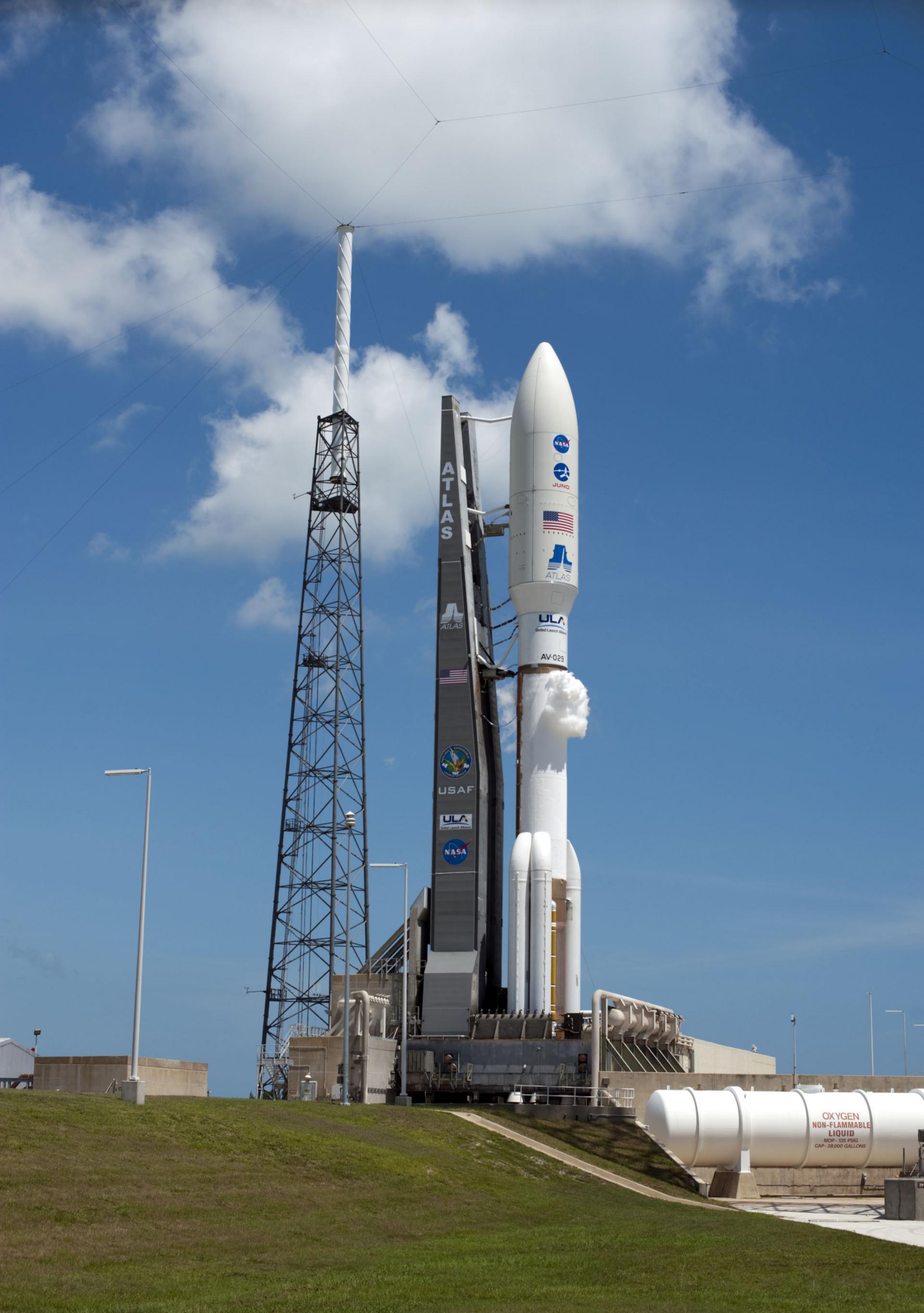
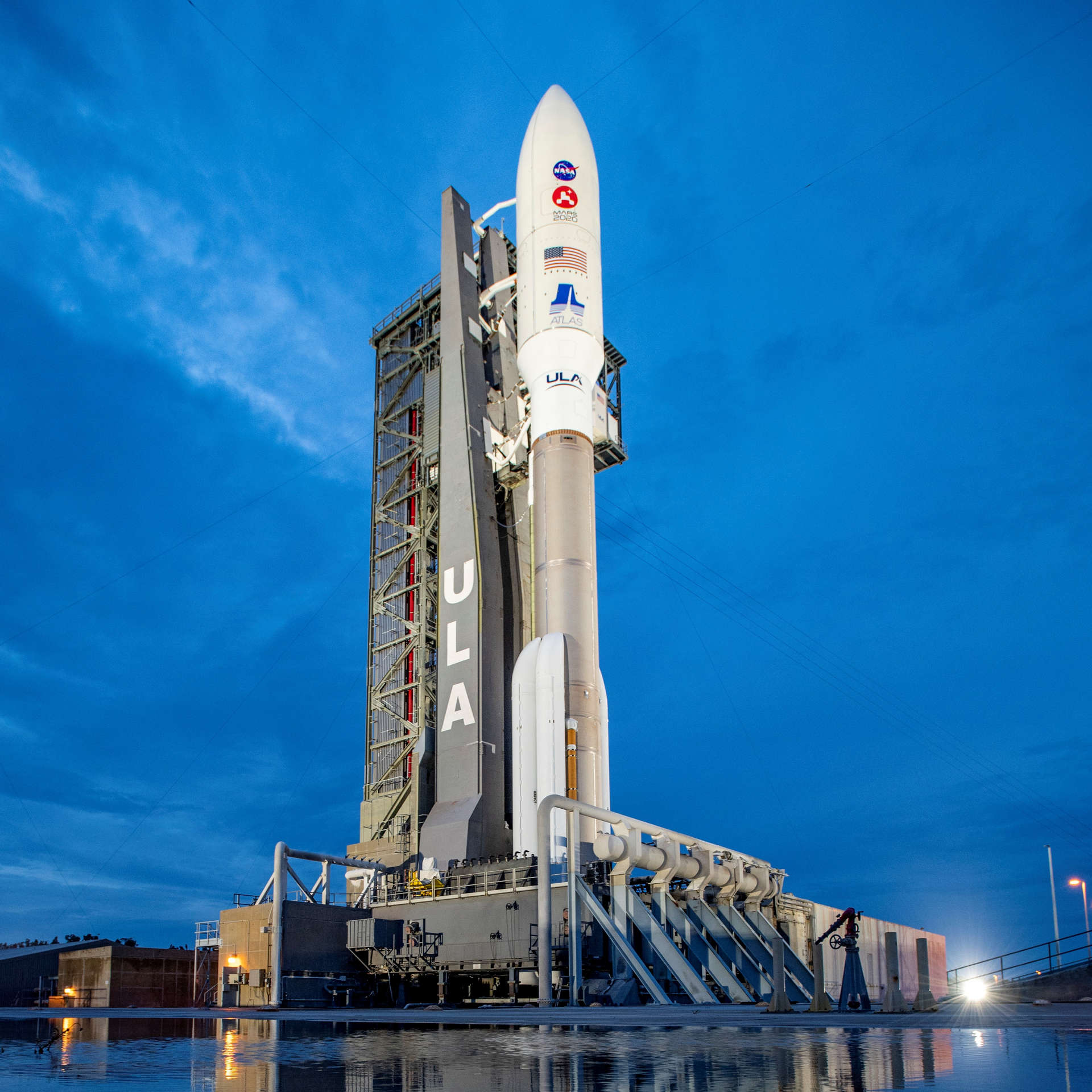
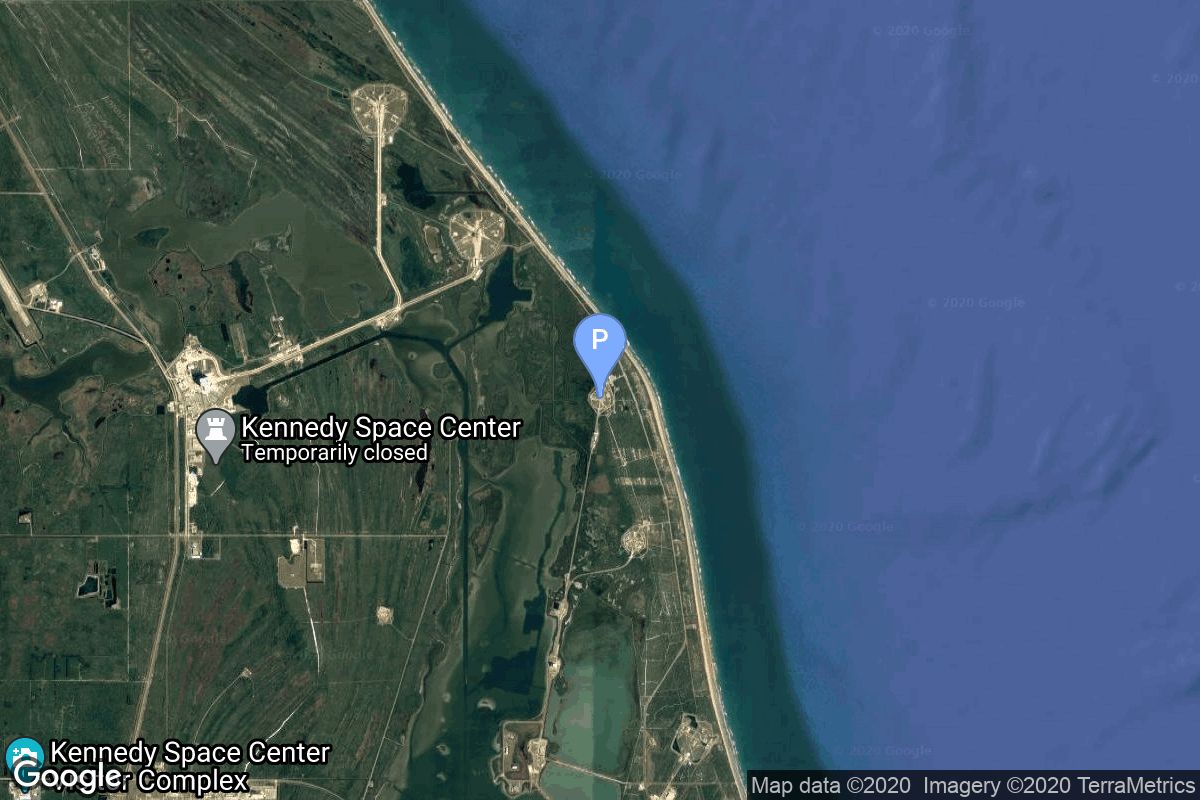
Amazon Leo (LA-07)
Provider: United Launch Alliance
Date: May 29, 2026
Time: 11:33 PM UTC
Vehicle: Atlas V 551
Amazon Leo, formerly known as Project Kuiper, is a mega constellation of satellites in Low Earth Orbit that will offer broadband internet access, this constellation will be managed by Kuiper Systems LLC, a subsidiary of Amazon. This constellation is planned to be composed of 3,276 satellites. The satellites are projected to be placed in 98 orbital planes in three orbital layers, one at 590 km, 610 km and 630 km altitude.
29 satellites are carried on this launch.
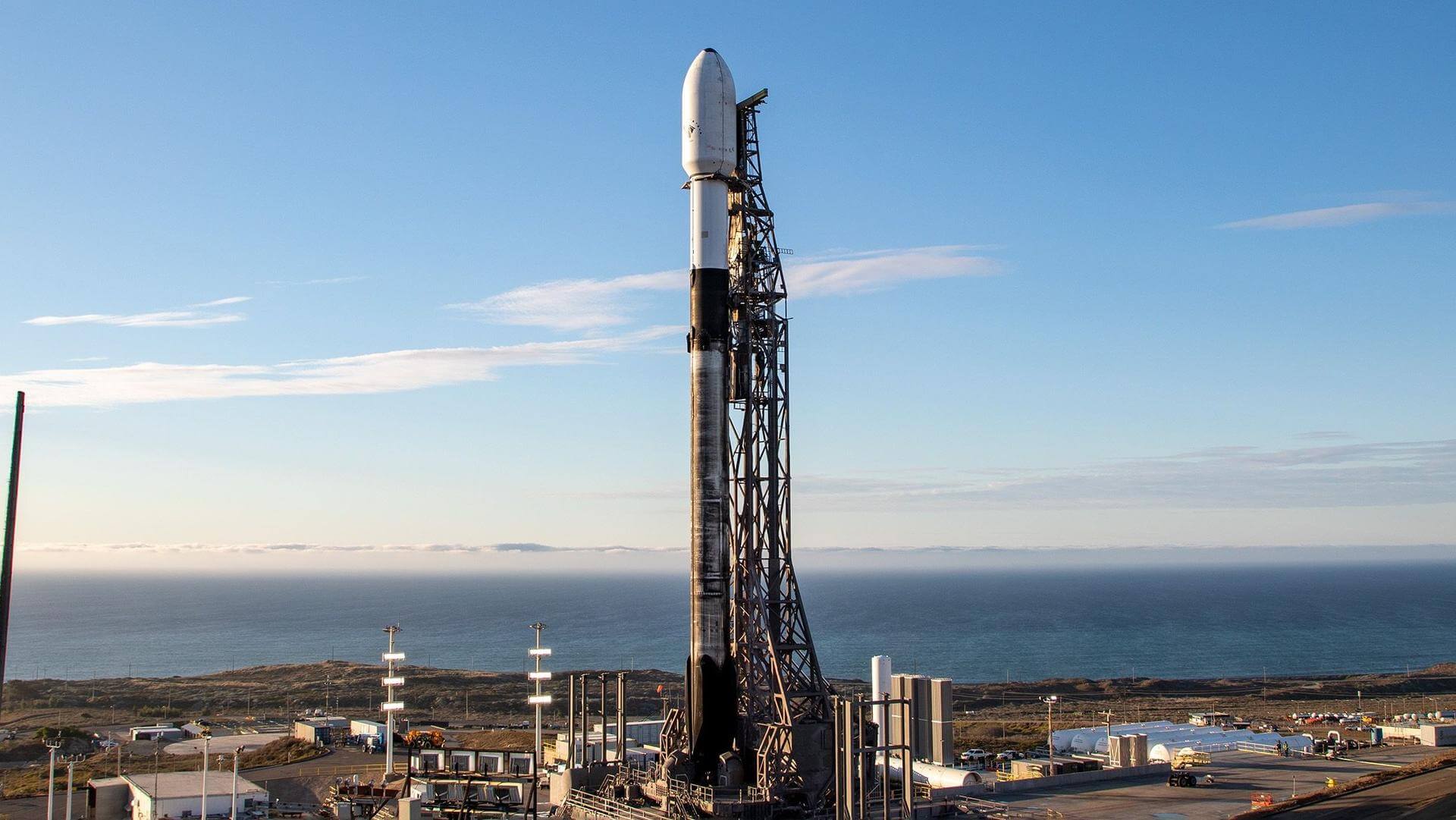
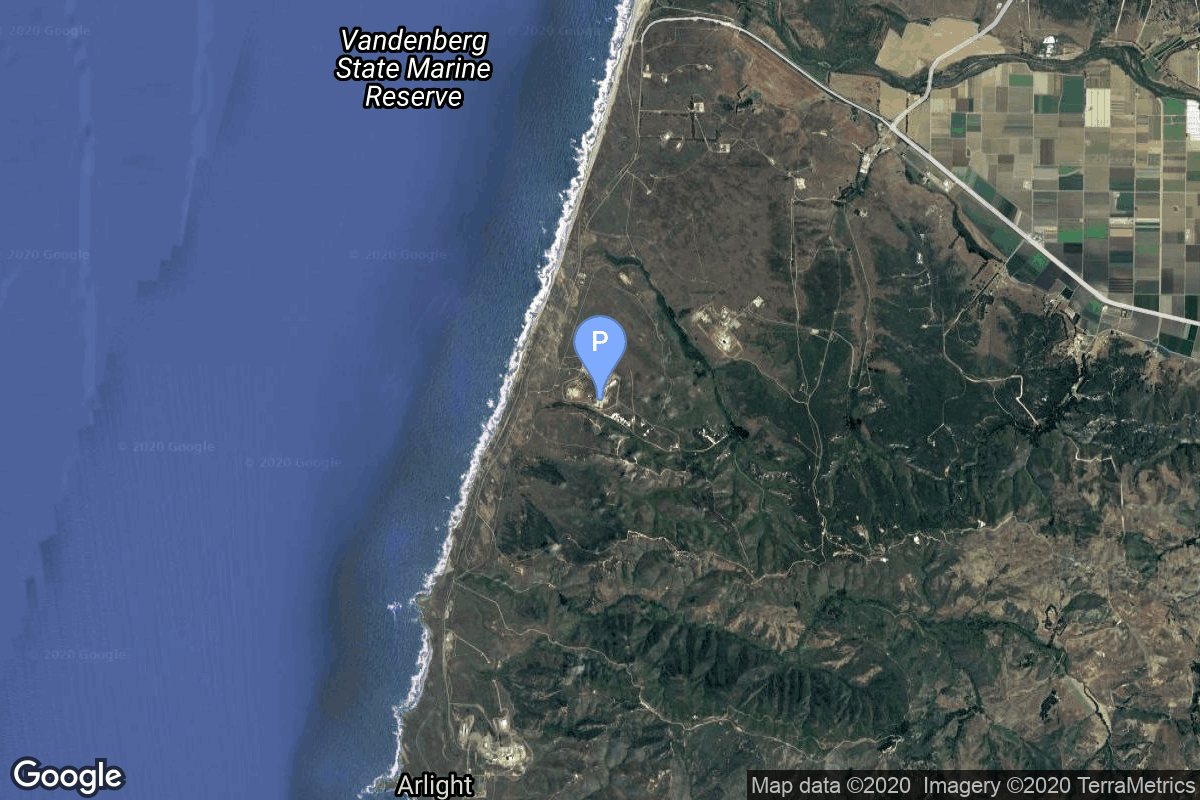
Starlink Group 17-41
Provider: SpaceX
Date: May 30, 2026
Time: 2:00 PM UTC
Vehicle: Falcon 9
A batch of 24 satellites for the Starlink mega-constellation – SpaceX’s project for space-based Internet communication system.
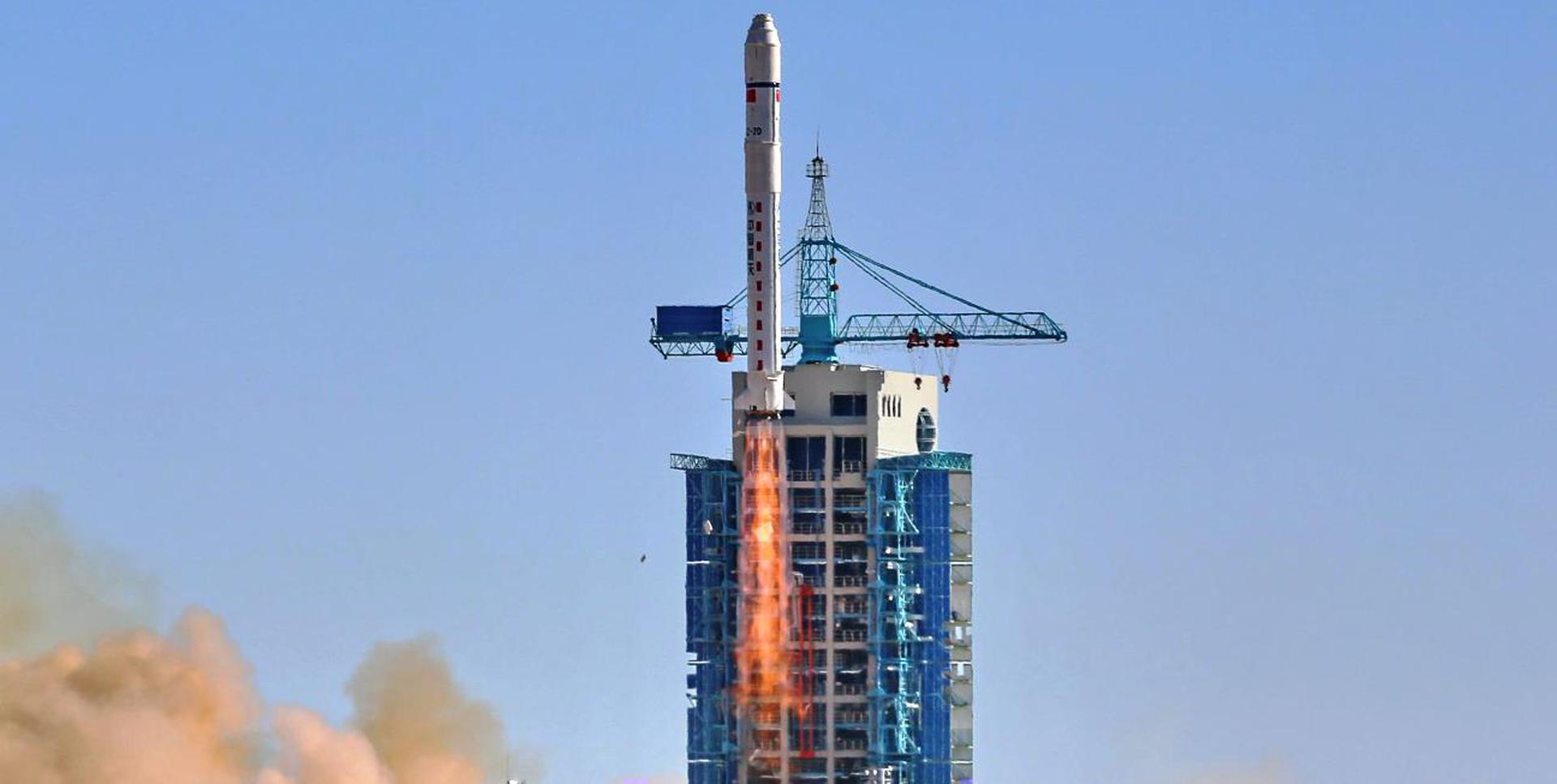
Unknown Payload
Provider: China Aerospace Science and Technology Corporation
Date: May 30, 2026
Time: 6:07 PM UTC
Vehicle: Long March 2D
Details TBD.
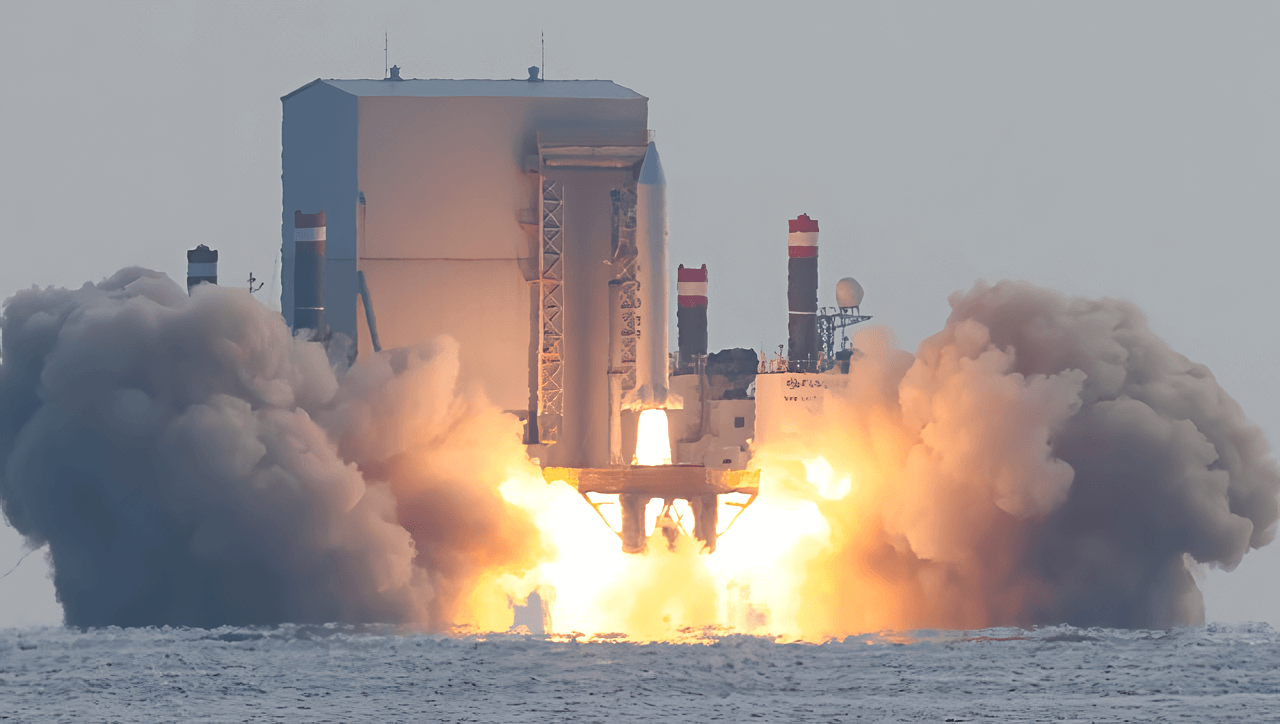
Demo Flight
Provider: Agency for Defense Development
Date: June 1, 2026
Time: 5:00 AM UTC
Vehicle: South Korean ADD Solid-Fuel SLV
Note: Launch vehicle name is provisional.
First orbital full version launch of the South Korean military small satellite launch vehicle, after 2 sub-orbital tests of individual stages on 30 March and 30 December 2022, and 1 orbital test flight without the 2nd stage on 4 December 2023. Details TBD.








Enjoying the content? Stay up to date on everything happening behind the scenes by following our Patreon!

