The Commercial Space: Canadian Skies Over Lunar Rovers, Rocket Tests, and a Space IPO
Stoked Space: Quiet but Testing Hard
While Stoked Space hasn’t made headlines with launches or contracts this month, the company has been anything but idle. Throughout May 2026, the Washington-based startup has been deep in hardware testing at its Moses Lake, WA site, putting its full-scale Stage 1 rocket structure through structural qualification and hot-fire trials of its Zenith engines.
On May 13, Stoked confirmed that its Stage 1 flight hardware had been shipped, delivered, and erected vertically in Moses Lake for “protoqualification testing.” Once this phase wraps up, the stage is expected to return to Kent, WA for final touches before its eventual journey to Cape Canaveral, Florida—though no launch date has been announced yet.
For now, Canadian observers won’t find direct national ties to Stoked’s efforts, but the company’s rapid iteration in reusable launch vehicle development is a signal of the competitive pressure heating up in the small-lift market—a sector where Canadian suppliers and future entrepreneurs may yet find niches.

Firefly’s Big Month: IPO, Moon Drones, and Texas Expansion
Firefly Aerospace has been burning bright this May. On May 26, the company announced a proposed public offering of 12 million shares of common stock (plus an underwriter option for 1.8 million more). While the IPO isn’t finalized yet—subject to market conditions and SEC approval—it signals Firefly’s confidence following its historic Blue Ghost Moon landing.
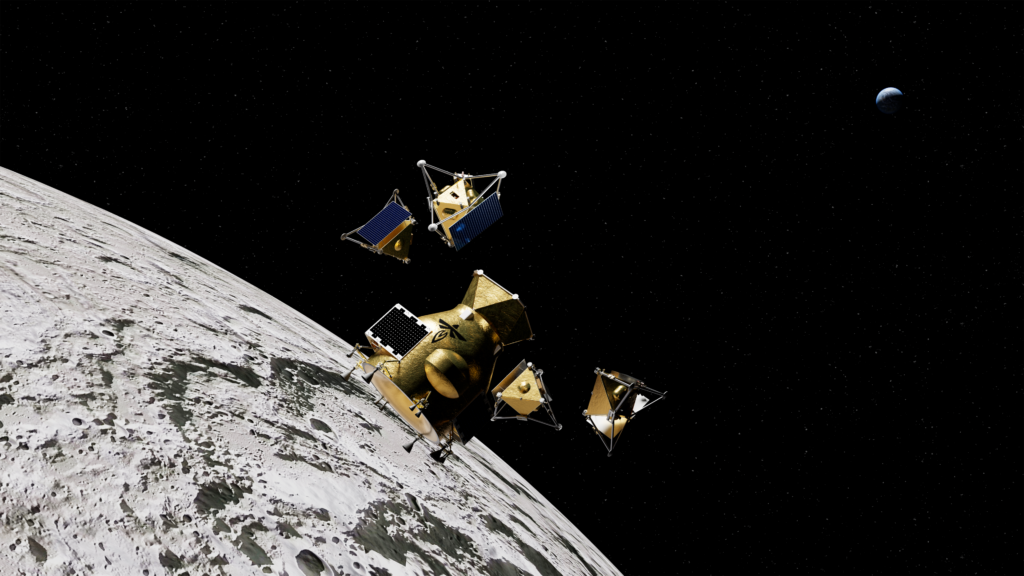
That same day, Firefly landed a $75 million NASA JPL subcontract to deliver four lunar drones to the Moon’s south pole via its Elytra orbiter as part of the MoonFall mission, targeted to launch no earlier than 2028. The drones, inspired by NASA’s Ingenuity Mars helicopter, will survey terrain and search for water ice to support future Artemis missions.
On the home front, Firefly doubled its Cedar Park, Texas campus with a new cleanroom and innovation lab to enable mass production of Blue Ghost landers and Elytra spacecraft. Manufacturing advances are already visible: in early May, the company showcased its ability to produce three Elytra structures simultaneously using automated fibre placement.
No Canadian payloads or partnerships were announced this month, but Firefly’s rapid scaling—coupled with Canada’s strength in robotics and AI—could open future collaboration avenues, especially as lunar logistics become a priority.
Terran R Gains Ground but Stays Earthbound
Relativity Space remains firmly in build-and-test mode as it pushes toward the first flight of its partially reusable Terran R rocket. According to its April 2026 update—released May 13—significant progress has been made on both stages.
All first-stage Aeon R engines for Flight 1 have been manufactured, assembled, and shipped. Stage One’s qualification article welding is complete, and the second stage has finished internal tank work and begun low-voltage avionics checkouts. At NASA’s Stennis Space Center, Aeon R acceptance testing continues, and the Aeon V upper-stage engine recently completed full-duration mission duty cycles.
Meanwhile, launch infrastructure at Cape Canaveral’s LC-16 is rising: the 275-foot water tower is complete, LOX farm activation has begun, and the first cryogenic “hot fill” of a 15,000-gallon liquid nitrogen tank was successfully performed. Still, Relativity has not announced a launch date for Terran R’s debut. For now, Canadians watching the commercial launch race can note that while Terran R isn’t flying yet, its progress underscores the industry’s shift toward larger, reusable vehicles—a trend that could eventually influence Canadian launch service decisions.

Axiom’s Global Leap: Lunar Rovers, University Ties, and a Tokyo Office
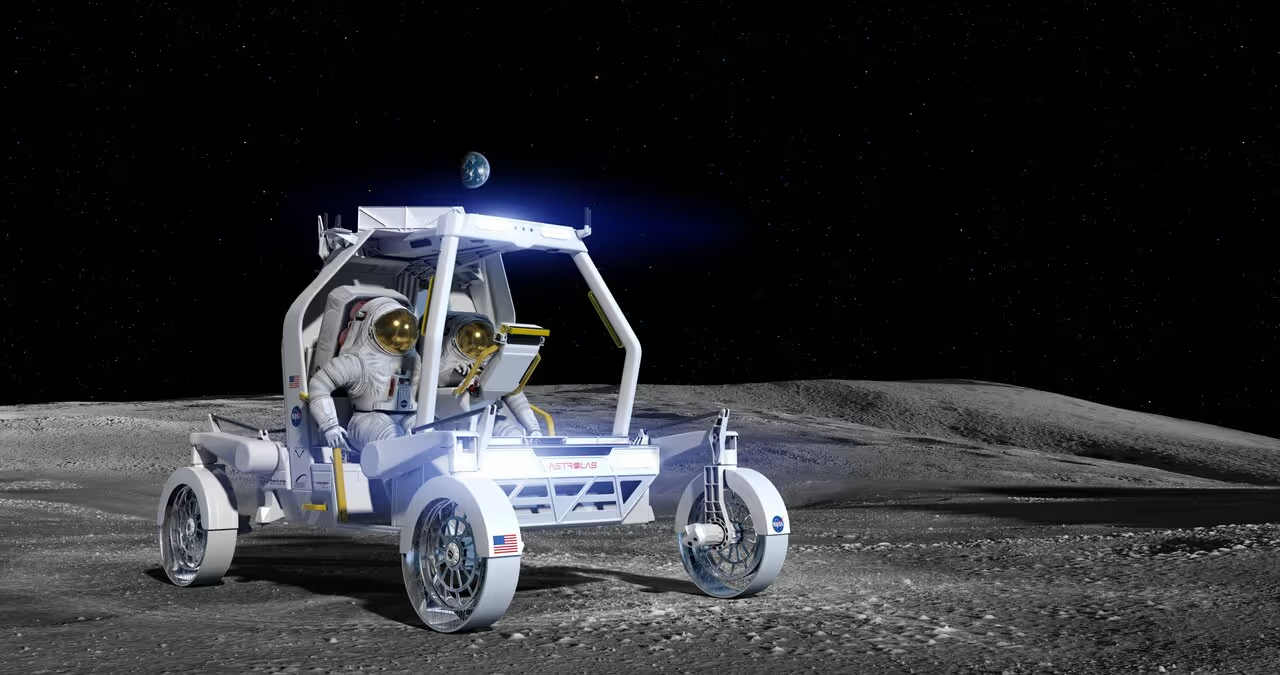
Axiom Space is thinking global—and lunar. On May 26, NASA selected Astrolab—with Axiom as a key teammate—to develop a crewed lunar rover for Artemis. Axiom’s role focuses on integrating its next-generation AxEMU spacesuit with the Crewed Lunar Vehicle (CLV-1), ensuring astronauts can operate controls, stow tools, and conduct science while suited up. Pressurized crewed tests have already taken place, blending Axiom’s human systems expertise with Astrolab’s mobility platform.
On the academic front, Axiom’s University Alliance expanded on May 19 to include 26 institutions across four continents, including Australia, India, South Korea, and the UK. While no Canadian universities are listed yet, the alliance is actively recruiting global partners to shape microgravity research priorities in the post-ISS era—a potential opportunity for Canadian researchers.
Perhaps most significant for international reach: Axiom will open a Japan subsidiary on July 1, 2026, led by veteran astronaut Dr. Koichi Wakata. The move deepens U.S.-Japan space cooperation and positions Axiom to serve the broader Asia-Pacific market in orbital research, astronaut training, and hardware development.
For Canada—a long-time ISS partner with its own ambitions in lunar exploration—Axiom’s dual focus on spacesuits, rovers, and commercial stations offers a reminder that the next chapter of human spaceflight is being built through global coalitions.
Citations
- “Firefly Aerospace Announces Launch of Proposed Public Offering of Common Stock” – https://fireflyspace.com/news/firefly-aerospace-announces-launch-of-proposed-public-offering-of-common-stock/
- “Firefly Aerospace Wins $75 Million NASA JPL MoonFall Subcontract to Deliver Drones to the Moon’s South Pole” – https://fireflyspace.com/news/firefly-aerospace-wins-75-million-nasa-jpl-moonfall-subcontract-to-deliver-drones-to-the-moons-south-pole/
- “April 2026 Company Update” – https://www.relativityspace.com/press-release/2026/5/8/april-2026-company-update
- “Astrolab Selected to Provide Lunar Rover Advancing Lunar Exploration” – https://www.axiomspace.com/release/astrolab-selected-to-provide-lunar-rover-advancing-lunar-exploration
- “Axiom Space’s University Alliance Expands, Connecting Researchers Across Four Continents” – https://www.axiomspace.com/release/axiom-space-university-alliance-expands-connecting-researchers-across-six-continents
- “Axiom Space to Establish Japan Subsidiary to Serve Growing Asia-Pacific Demand” – https://www.axiomspace.com/news/axiom-space-japan-subsidiary
- Stoked Space Tweets (May 7–21, 2026) – https://x.com/stoke_space
- Firefly Aerospace Tweets (May 4–26, 2026) – https://x.com/FireflySpace
- Relativity Space Tweets (May 13–18, 2026) – https://x.com/relativityspace
- Axiom Space Tweets (May 13–26, 2026) – https://x.com/Axiom_Space
QuickSounder
Provider: Firefly Aerospace
Date: September 30, 2026
Time: 12:00 AM UTC
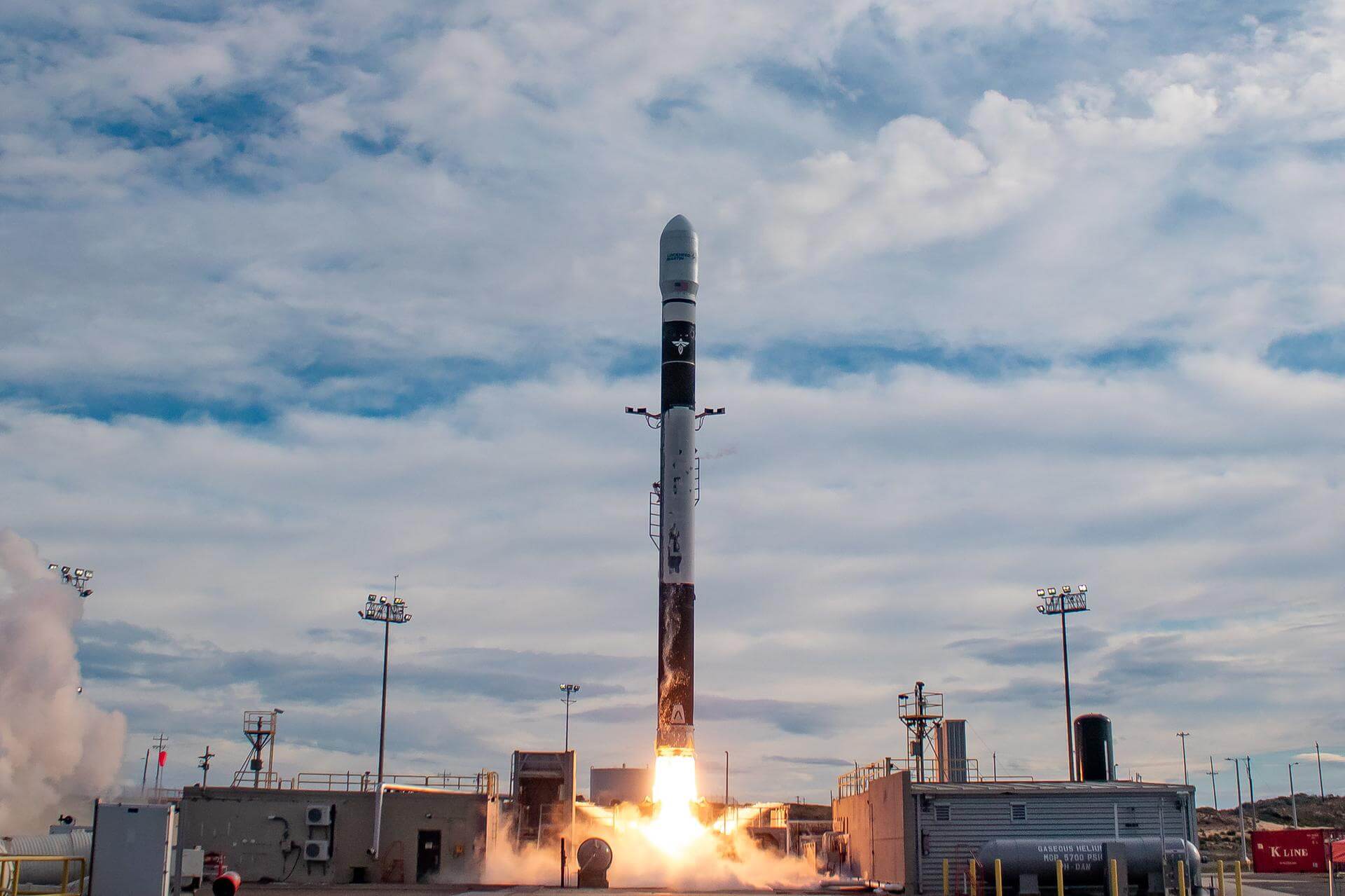
Vehicle: Firefly Alpha Block 2
QuickSounder is the first satellite mission of the Near Earth Orbit Network (NEON) program of the National Oceanic and Atmospheric Administration (NOAA), which aims to replace the current Joint Polar Satellite System (JPSS) series of polar orbit weather satellites. This pathfinder mission will demonstrate NOAA’s ability to launch a small satellite within 3 years, flying a refurbished Advanced Technology Microwave Sounder (ATMS) instrument to polar orbit.
VICTUS HAZE Jackal
Provider: Firefly Aerospace
Date: September 30, 2026
Time: 12:00 AM UTC
Vehicle: Firefly Alpha Block 2
True Anomaly’s Jackal Autonomous Orbital Vehicle (AOV) will support U.S. Space Force Space Systems Command’s VICTUS HAZE Tactically Responsive Space (TacRS) mission with operations in orbit proximity with another spacecraft built by Rocket Lab National Security.
The spacecraft, once completed, will remain on call until the U.S. Space Force provides the notice to launch. The Firefly team will then have 24 hours to transport the payload fairing to the pad, mate the fairing to the Alpha rocket, fuel the rocket, and launch within the first available window.
INCUS
Provider: Firefly Aerospace
Date: October 31, 2026
Time: 12:00 AM UTC
Vehicle: Firefly Alpha Block 2
The Investigation of Convective Updrafts (INCUS) is a NASA Earth science mission led by Colorado State University that will investigate the behavior of tropical storms in order to better represent these storms in weather and climate models. It consists of 3 SmallSats flying in tight coordination to study why convective storms, heavy precipitation, and clouds occur exactly when and where they form.
Each satellite will have a high frequency precipitation radar that observes rapid changes in convective cloud depth and intensities. 1 of the 3 satellites also will carry a microwave radiometer to provide the spatial content of the larger scale weather observed by the radars. By flying so closely together, the satellites will use the slight differences in when they make observations to apply a novel time-differencing approach to estimate the vertical transport of convective mass.
TacSat
Provider: Firefly Aerospace
Date: December 31, 2026
Time: 12:00 AM UTC
Vehicle: Firefly Alpha Block 2
First of up to 25 launches of Low Earth Orbit technology demonstration satellites to be built and operated by Lockheed Martin.
TacSat is an intelligence, surveillance and reconnaissance spacecraft with a mission to prove specialized sensing and communications capabilities on orbit. The satellite will participate in exercises that highlight cross-domain kill-web connectivity, enabling timely execution of tactical space missions.
TacSat will host a proven Lockheed Martin infrared sensor on board that brings previously developed technology to space for the first time. This sensor produces high quality imagery and it can interface with federated Battle Management Command & Control (BMC2) combat systems to provide joint forces with a comprehensive view of threats.
The satellite will also feature Lockheed Martin’s first 5G.MIL® payload on orbit. This provides cellular-like networking for military space assets, making satellite constellations more resilient. It also helps enable seamless connectivity with tools in the air, at sea and on land.
Launch operation will also again demonstrate responsive space pre-launch operation capabilities.