
Lunar Contract Awards at MAX POWER
Moon Base Program Launches Procurement Blitz at MAX POWER
Senior NASA officials held a lengthy press conference at the MAX POWER aerospace expo on November 7, laying out a series of lunar contract awards, new contract opportunities, and mission decisions. The announcements covered landers, nuclear-powered rovers, scouting drones, power generation, storage, and communication satellites.

“Hopefully, we’re keeping industry on their toes trying to catch up to all the solicitations we’re doing,” said Carlos García-Galán, manager of the Moon Base Program, more than 90 minutes into the news conference. “This is what it takes to do the Moon Base in the timeline we have set forth.”
Mike Gold, president of Redwire Space and a former NASA associate administrator who set up the Artemis Accords, said the pace of announcements impressed him. During a period of seven days, Gold said, NASA put out five proposals for lunar contracts.
“The pace that’s occurring, and the nature of the procurements is unprecedented,” Gold said. “You are seeing an all-hands-on-deck approach. Big companies, small companies, new companies, old companies.”
NASA has adopted a flexible procurement strategy similar to one used by the US Defense Advanced Research Projects Agency. The agency has largely used Broad Agency Announcements, which ask for a capability such as providing power on the surface of the Moon without being too prescriptive. NASA has also used a DARPA-style preliminary proposal process to reduce the burden on companies responding to traditional procurements, which often required dozens or hundreds of pages of detailed proposals.
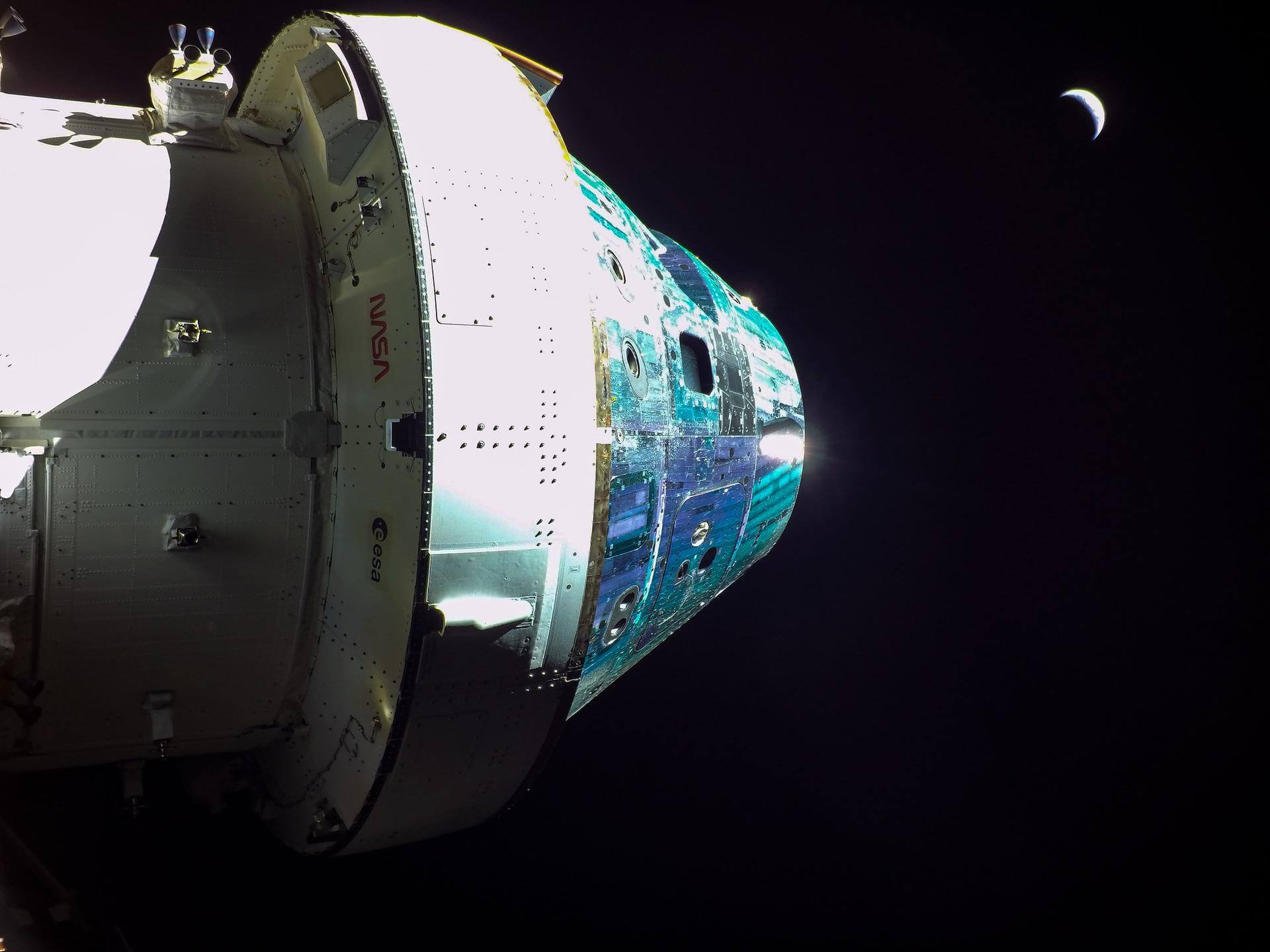
The Moon Base program was announced in March at the Ignition event. The NASA Artemis account also posted this week about “landing back on Earth after a ten-day mission flying around the Moon.”
CLPS Selects Eight Companies, PROMISE Rover Tapped for South Pole
NASA selected eight American companies for the next phase of its Commercial Lunar Payload Services (CLPS) initiative, strengthening lunar transportation capabilities to support larger and more frequent deliveries for Moon Base development.

The agency is also moving forward with PROMISE, a nuclear-powered lunar rover that will build on decades of Mars rover innovation to explore the Moon’s South Pole region, advance lunar science and discovery, and support Moon Base objectives. NASA has selected Blue Origin to deliver PROMISE to the lunar South Pole region. NASA’s Jet Propulsion Laboratory will manage the PROMISE mission and build the rover from a combination of flight-spare components and engineering test models constructed to support the agency’s Curiosity and Perseverance Mars missions.
NASA also selected industry partners to provide components for a new communications and solar tower, known as miniCAST, that the agency will build to demonstrate power and communications capabilities in the Moon’s South Pole region.
NASA Assembles New Team to Rethink Mars Sample Return
In January, NASA will begin assessing new strategies to return the samples now being collected by the Mars Perseverance rover to Earth. The agency ended an earlier Mars Sample Return mission in 2025 because of cost concerns.

At a virtual NASA Town Hall meeting on November 12, Program Executive for Mars Exploration George Tahu said the Perseverance Sample Retrieval Architecture (PSRA) strategy team will kick off in January and spend a year looking at alternative ways to get the samples back to Earth.
Congress and the agency itself expressed concerns after costs escalated to $11 billion. Congress provided $110 million for Mars Future Missions, but not specifically for Mars Sample Return.
NASA Administrator Jared Isaacman has said several times that returning the samples would be one of the most important scientific achievements in history. The question is how to do it affordably.
Tahu said the agency is standing up an internal team in January to “assess lessons learned, past recommendations, assess current agency and evolving industry capabilities, [and] look at different implementation approaches.” That includes determining whether certain constraints can be removed and new acquisition approaches considered. “The goal is to develop a high-level architecture approach and recommendations by the end of next year.”
Voyager 1 Approaches One Light-Day as Hubble Preps Roman Targets
Launched nearly 50 years ago in 1977, NASA’s Voyager 1 on Wednesday, November 18 will have traveled one light-day from Earth, which is more than 16 billion miles (25.9 billion kilometers). Voyager 1 is the most distant human-made object, and any light from Earth would take 24 hours to reach the spacecraft.
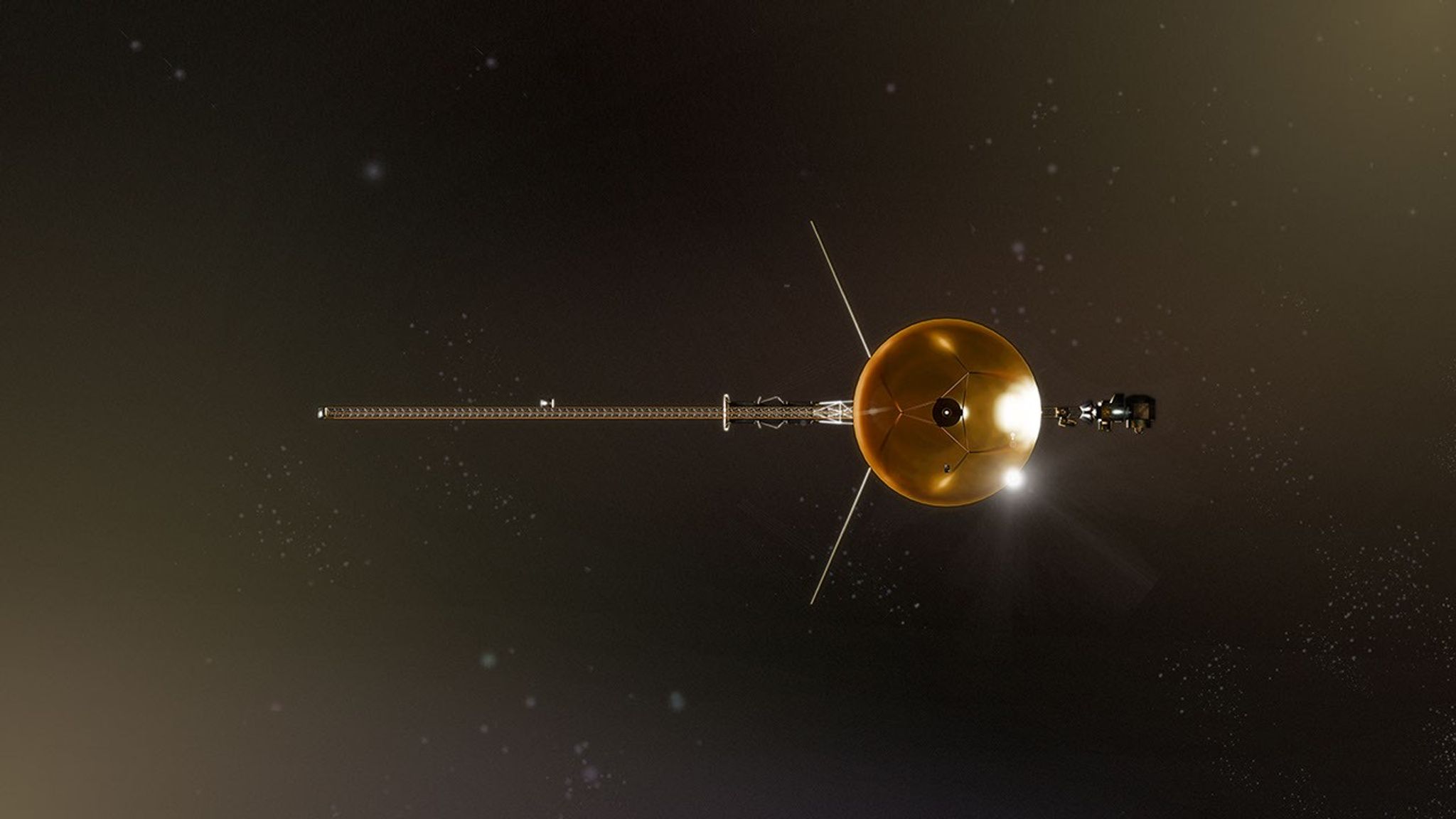
NASA will highlight the milestone with two events. On Tuesday, November 17, NASA invites the world to participate in “Shine Bright for Voyager’s Light-Day” by creating a symbolic wave of golden light encircling the planet after sunset. NASA has created a website that enables smart phones and tablets to flash “VGR”, Voyager’s call sign, in morse code. On Thursday, November 19 at 12 p.m. EST (9 a.m. PST), NASA’s Jet Propulsion Laboratory in Southern California will host a moderated discussion with mission members and NASA leadership about the status of Voyager 1 and 2, the unique science the twin probes continue to gather in interstellar space, and the challenges of keeping the spacecraft operating over such vast distances. A preview of the upcoming NASA+ Voyager documentary, planned for release in 2027 for the mission’s 50th anniversary, will also be featured.
Meanwhile, a gallery of gravitational lenses captured by NASA’s Hubble Space Telescope showcases the diversity of this cosmic phenomenon and lays the groundwork for follow-up observations by the Nancy Grace Roman Space Telescope, which launched in August 2026.
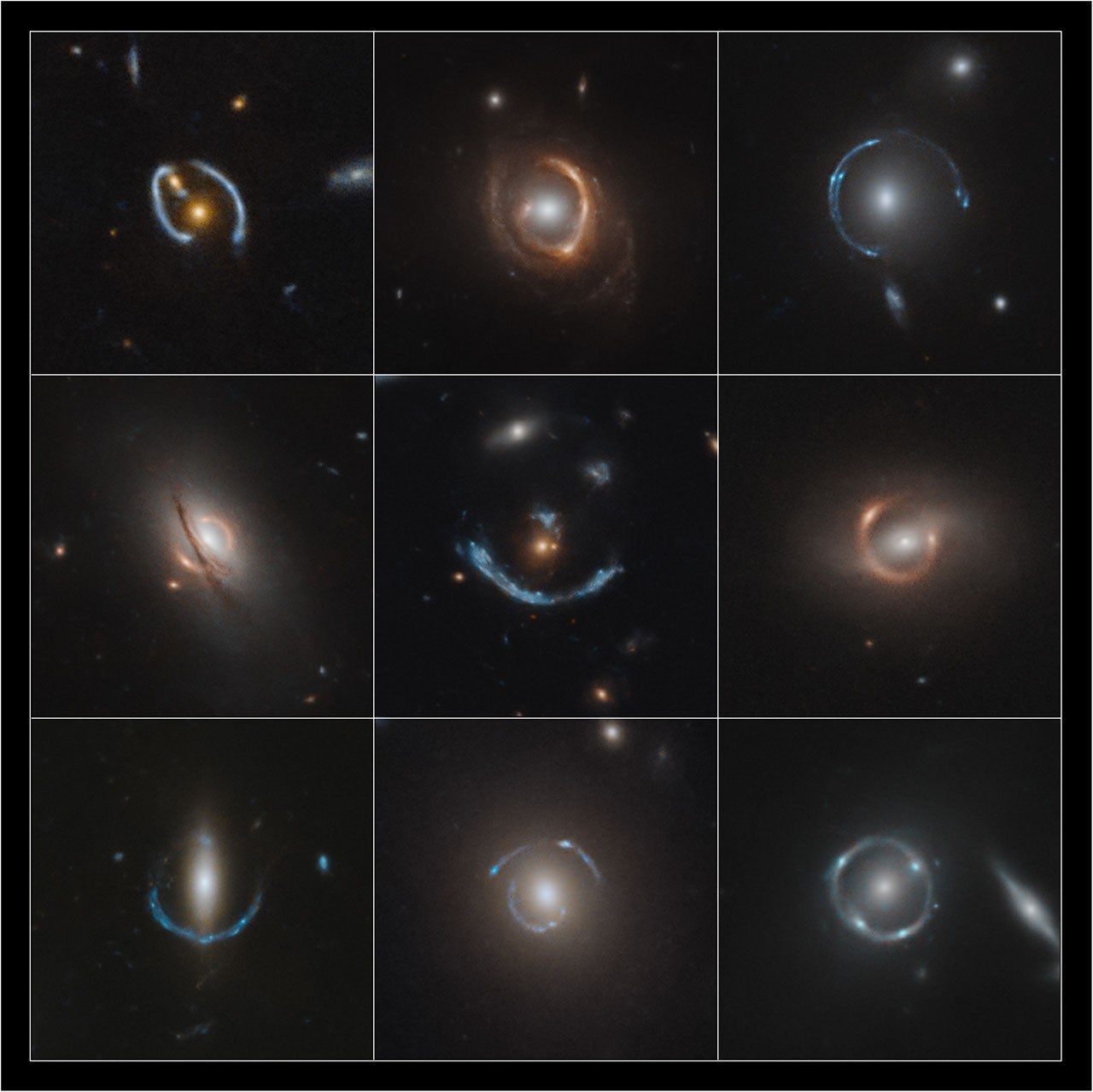
Gravitational lensing occurs when the gravity of a massive foreground object, such as a galaxy or cluster of galaxies, bends, warps, and magnifies the light from a more distant background object. Astronomers will use these observations of a large and varied population of gravitational lenses to construct lens models that will help determine how much mass is in the lensing system’s foreground galaxy — and potentially prove or dispel a theory about dark matter. Researchers could use previously undetected clumps to confirm the cold dark matter theory, which predicts the existence of many small dark matter clumps of between a million to a billion solar masses.
Expedition 74 Homecoming Event, Station Completes Solar Array Upgrade
NASA will welcome home the Expedition 74 crew during a public event at Space Center Houston on Tuesday, November 17. NASA astronauts Jessica Meir, Jack Hathaway, and Chris Williams; ESA astronaut Sophie Adenot; and Roscosmos cosmonauts Sergey Kud-Sverchkov and Sergei Mikaev will share mission highlights at 6 p.m. CST.
Meir, Hathaway, and Adenot launched aboard a Dragon spacecraft on February 13 as part of NASA’s SpaceX Crew-12 mission from Space Launch Complex 40 at Cape Canaveral Space Force Station in Florida. After more than seven months aboard the space station, they splashed down on October 8 in the Pacific Ocean off the coast of Los Angeles. During the 237-day mission, the four crew members traveled more than 100 million miles and completed more than 3,792 orbits around Earth. The mission was the second for Meir and the first for Hathaway and Adenot.
The Expedition 74 crew dedicated more than 1,400 hours to scientific research and technology demonstrations aboard the station. Its work advanced in-space manufacturing by testing metal and tissue 3D-printing technologies and supported human health studies examining the effects of long-duration spaceflight, including blood flow studies and assessments of piloting capabilities under changing gravitational conditions.
Aboard the station, Expedition 75 completed a five-year power upgrade last week. @astro_anil and @Astro_Kutryk installed the eighth and final roll-out solar array during a spacewalk on Thursday, November 5. Despite being about half the size of the station’s legacy arrays, the new arrays will add more than 160 kilowatts of power to support research aboard the station and help demonstrate technologies for future exploration missions.

MAX POWER Brings Astronaut Recruitment, Student Design Challenge
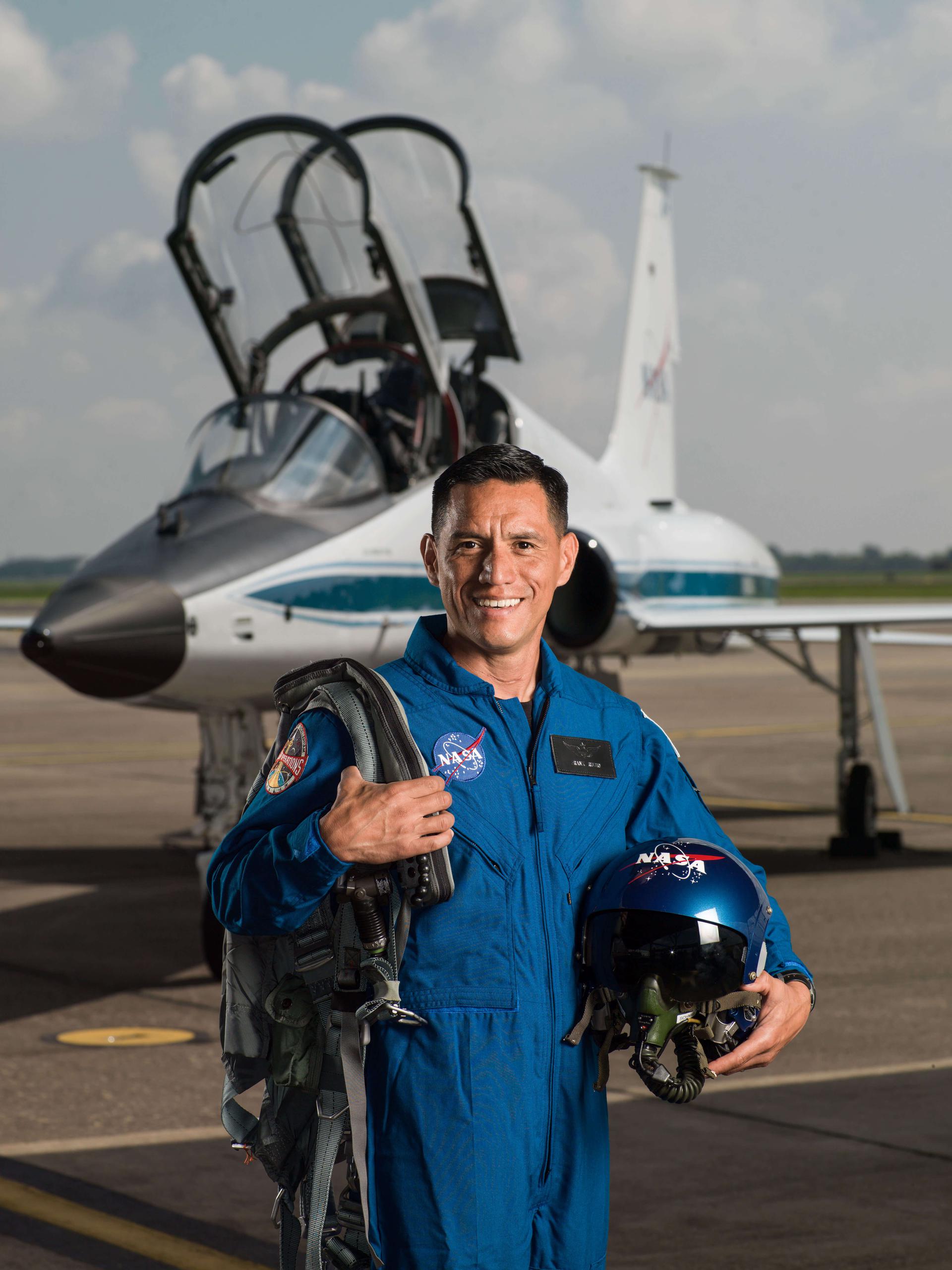
Beyond the lunar contracts, NASA used the MAX POWER expo to announce a range of new initiatives. The agency posted that it was “recruiting a new class of astronauts, making major advancements on the Moon Base, and challenging students to a $1 million design competition.”
NASA also noted there are no age restrictions for applying to be an astronaut.
Citations
- NASA takes an all-hands-on-deck approach in its return to the Moon — arstechnica.com
- NASA Looking for New Ways to Return Perseverance Samples From Mars — spacepolicyonline.com
- NASA’s Hubble Offers Cosmic Sampler of Targets for Roman — science.nasa.gov
- NASA Invites Media, Public to Join Voyager 1 One-Light Day Activities — nasa.gov
- NASA to Welcome Expedition 74 Astronauts Home at Space Center Houston — nasa.gov
- Launch Library 2: Space Events This Week — ll.thespacedevs.com
- NASA — Official NASA account (X) — x.com
- NASA Artemis — Official account (X) — x.com
- International Space Station — Official account (X) — x.com
- NASA Moon to Mars — Official account (X) — x.com
- NASA Solar System — Official account (X) — x.com
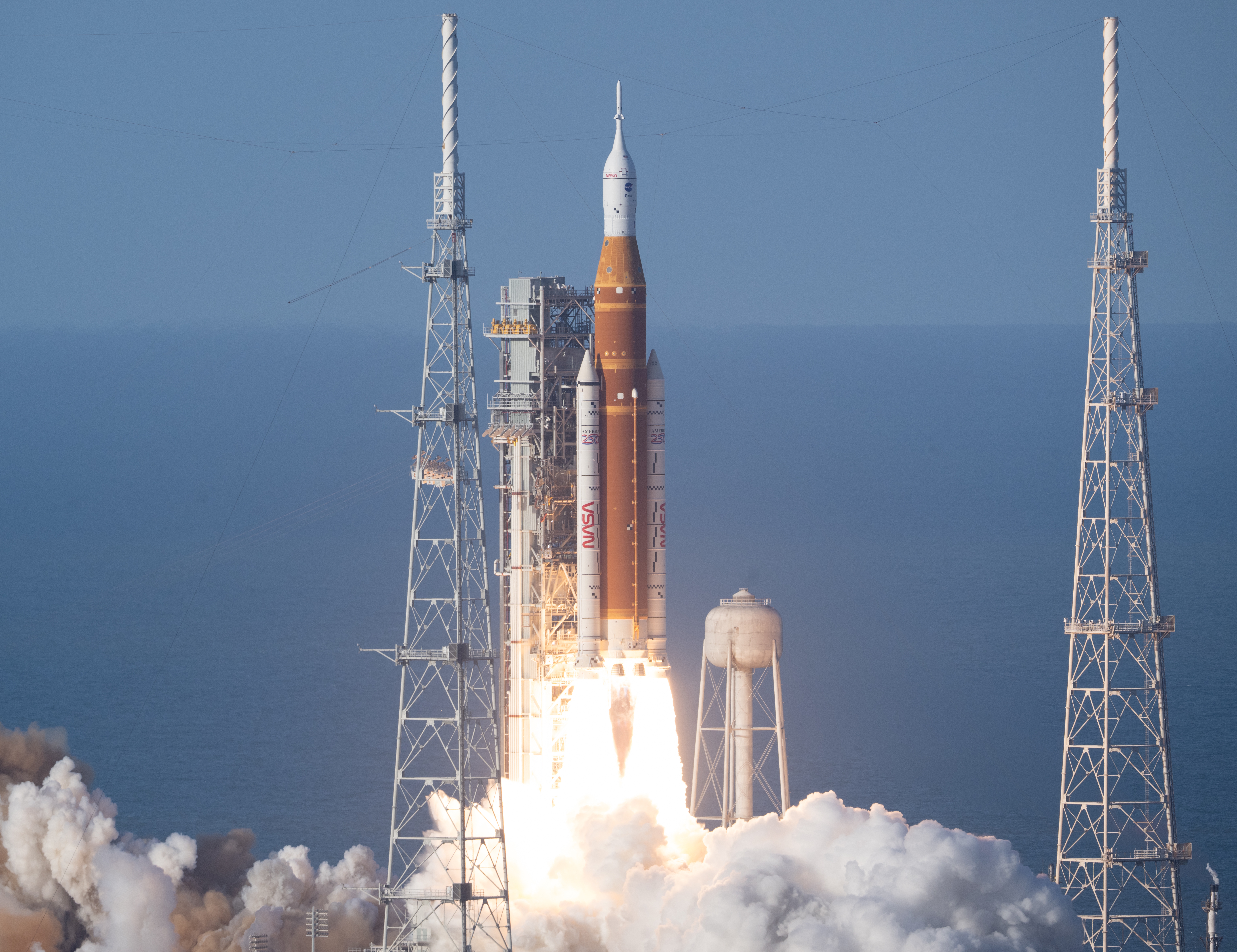
Artemis III
Provider: National Aeronautics and Space Administration
Date: June 30, 2027
Time: 12:00 AM UTC
Vehicle: Space Launch System (SLS)
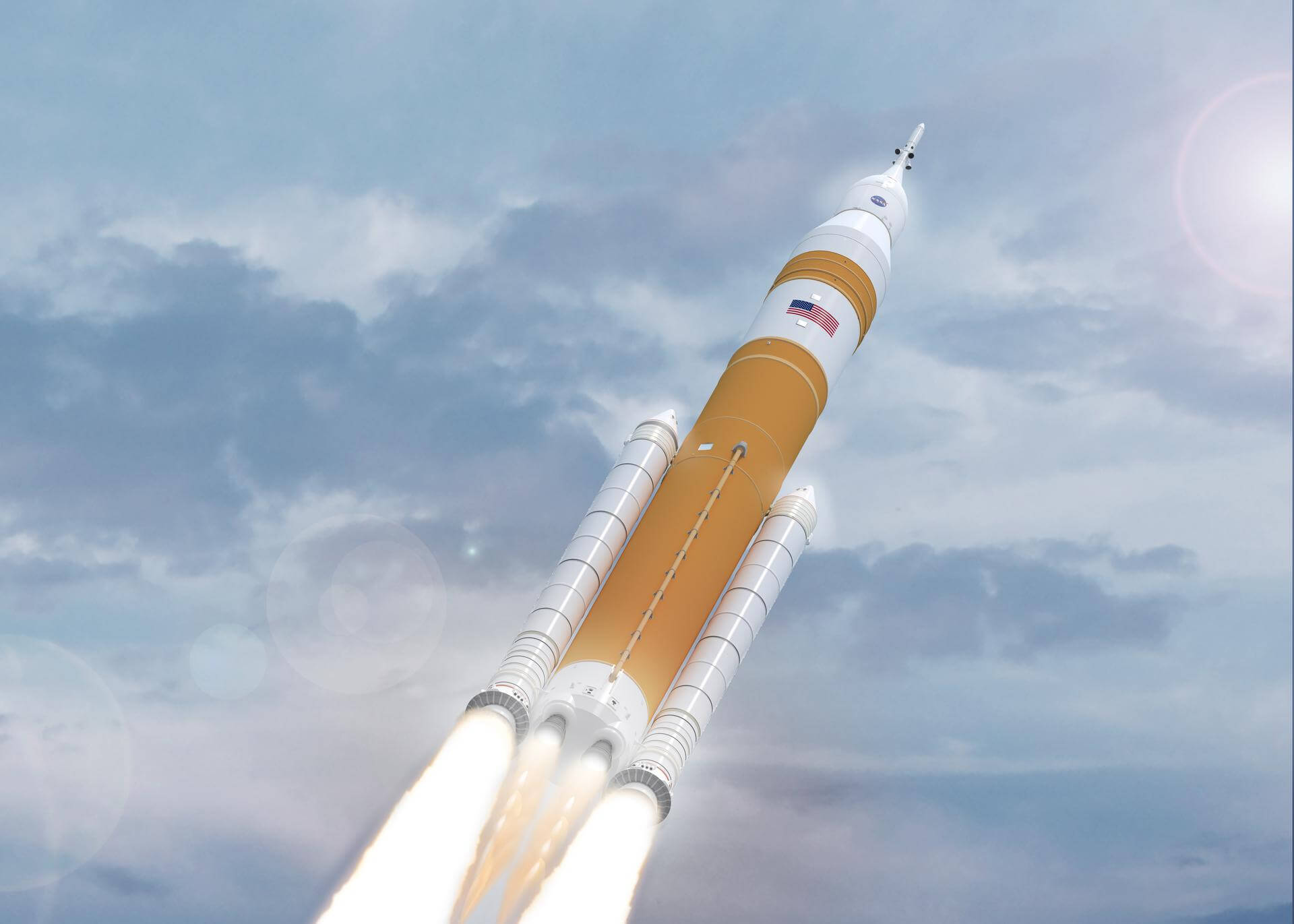
Artemis III is the second crew mission as part of the Artemis program. Artemis III will send a crew of 4 on a Low Earth Orbit mission, with the Orion rendezvous and dock with one or both commercial lunar landers in development by SpaceX and Blue Origin, performing in-space tests of the docked vehicles, integrated checkout of life support, communications, and propulsion systems, as well as tests of the new Extravehicular Activity (xEVA) suits.
Artemis IV
Provider: National Aeronautics and Space Administration
Date: June 30, 2028
Time: 12:00 AM UTC
Vehicle: Space Launch System (SLS)
Artemis IV is planned to be the first human lunar landing mission since the Apollo Program.
Artemis V
Provider: National Aeronautics and Space Administration
Date: December 31, 2028
Time: 12:00 AM UTC
Vehicle: Space Launch System (SLS)
Artemis V is planned to be the second human lunar landing mission since the Apollo Program.
SLS Block 1B | Artemis VI
Provider: National Aeronautics and Space Administration
Date: September 30, 2030
Time: 12:00 AM UTC
Vehicle: Space Launch System (SLS)
No description available
SLS Block 1B | Artemis VII
Provider: National Aeronautics and Space Administration
Date: September 30, 2031
Time: 12:00 AM UTC
Vehicle: Space Launch System (SLS)
No description available
Enjoying the content? Stay up to date on everything happening behind the scenes by following our Patreon!


Leave a Reply