
The NASA Overview: Artemis III Hardware Arrives, New Horizons Awakens, and Mars Mobility Contracts Awarded
Artemis III Progress and Lunar Challenges
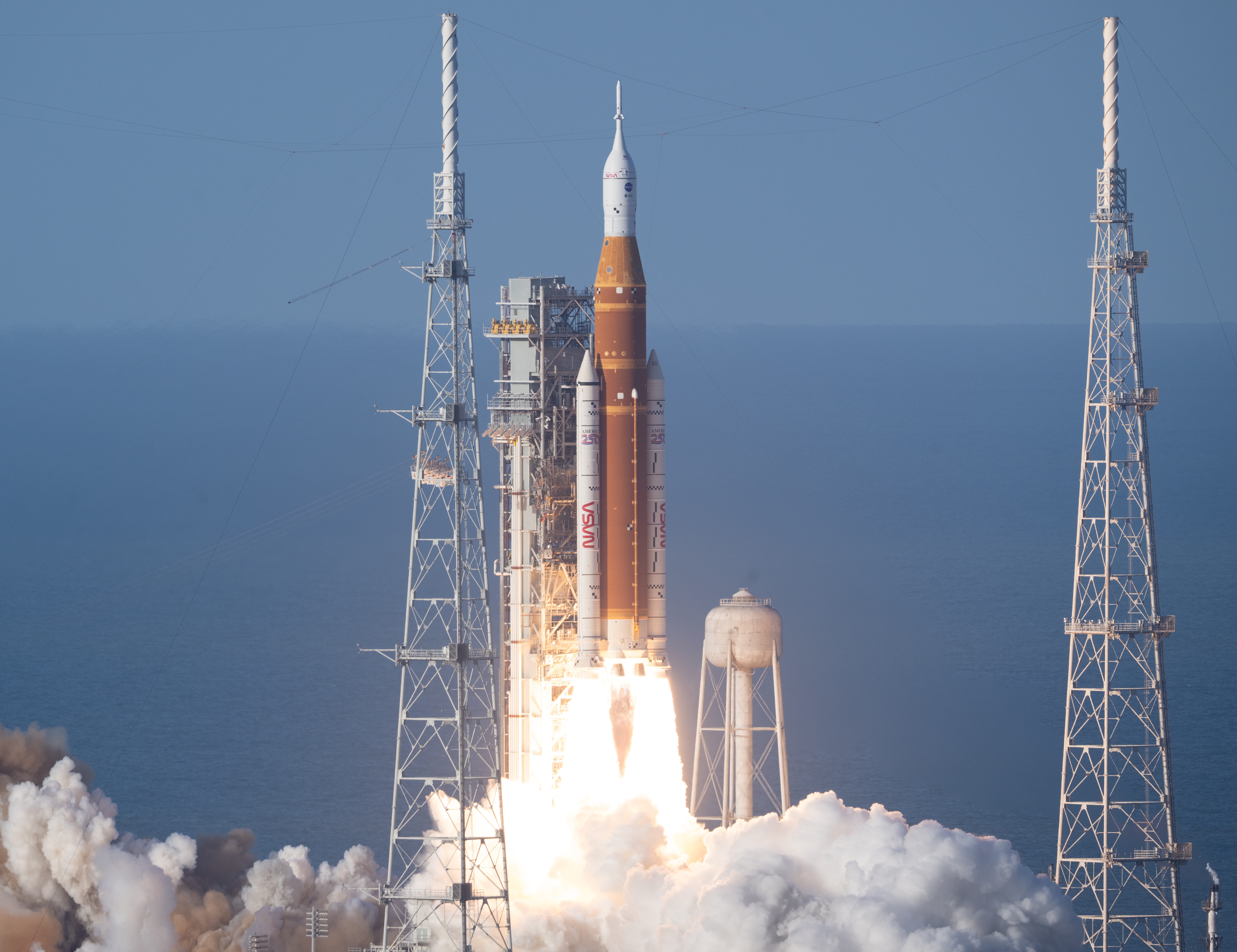
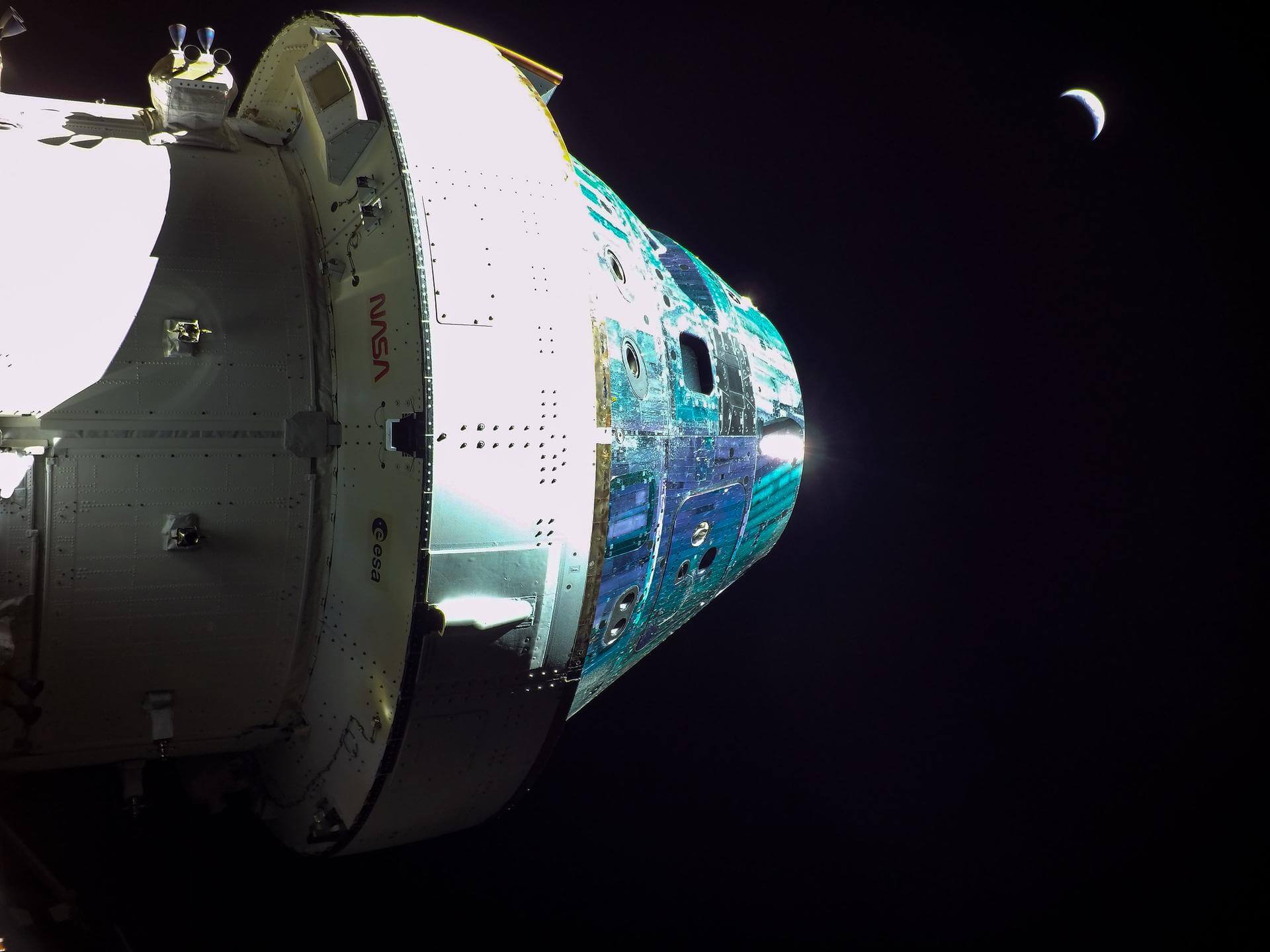
This week, NASA’s Artemis programme saw key hardware for the Artemis III mission arrive at Kennedy Space Centre, marking an important step forward. Progress is moving rapidly as preparations continue for the next human lunar landing.

On the non-Artemis lunar front, a unique challenge was issued by the NASA Administrator. Following the USA vs. Belgium World Cup match, the administrator challenged the Moon Base team to deliver the match ball to the Moon if Team USA wins the championship, setting a potential new record for the “highest-altitude assist in soccer history.” The public was invited to learn more about the Moon Base plans at the Houston FIFA Fan Festival.

Mars Exploration Advances with Mobility Contracts
NASA has a strong focus on future Mars exploration, and this week saw the award of several contracts aimed at advancing next-generation commercial robotic surface mobility. Under the Science Transport and Robotic Innovation for Deployment and Exploration (STRIDE) initiative, seven companies received contracts with a total potential value of approximately $17 million. This funding will support the development of innovative robotic systems designed to access more challenging terrain and investigate scientifically valuable regions on Mars that are currently difficult to reach.

The contract awardees include AeroVironment, Astrobotic, Venturi Astrolab (Astrolab), Ground Control Robotics, Honeybee Robotics, Intuitive Machines, and MEI Technologies. This initiative highlights NASA’s commitment to public-private partnerships to explore new approaches for Martian surface exploration.
Deep Space Science Unveils Pulsar Secrets and Probes Awaken
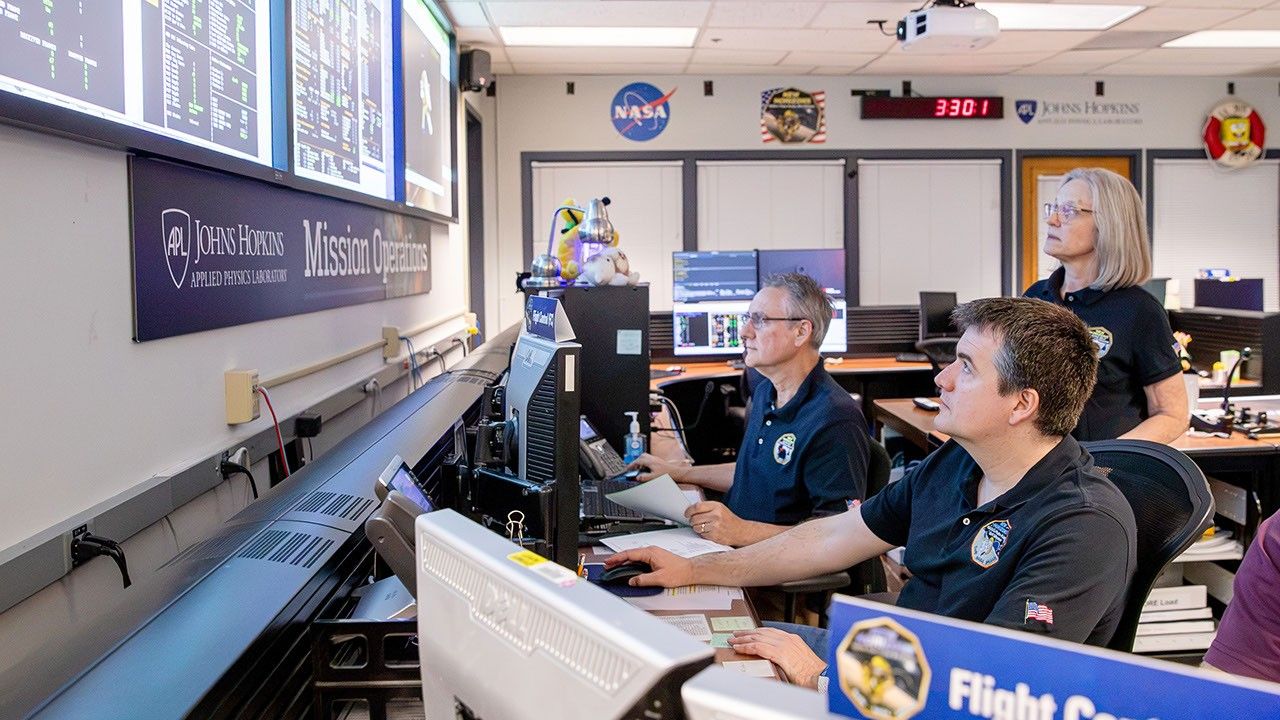
In deep space news, NASA’s New Horizons spacecraft successfully woke from its longest hibernation period ever, nearly a year in duration, and is in good health. The spacecraft, approximately 5.9 billion miles (9.5 billion kilometres) from Earth, confirmed its status after a 321-day hibernation that began on August 7. Radio signals carrying the confirmation took about 8 hours and 52 minutes to reach the Johns Hopkins Applied Physics Laboratory in Laurel, Maryland, via NASA’s Deep Space Network. New Horizons is now ready to begin transmitting science data gathered in the distant Kuiper Belt beyond Pluto.
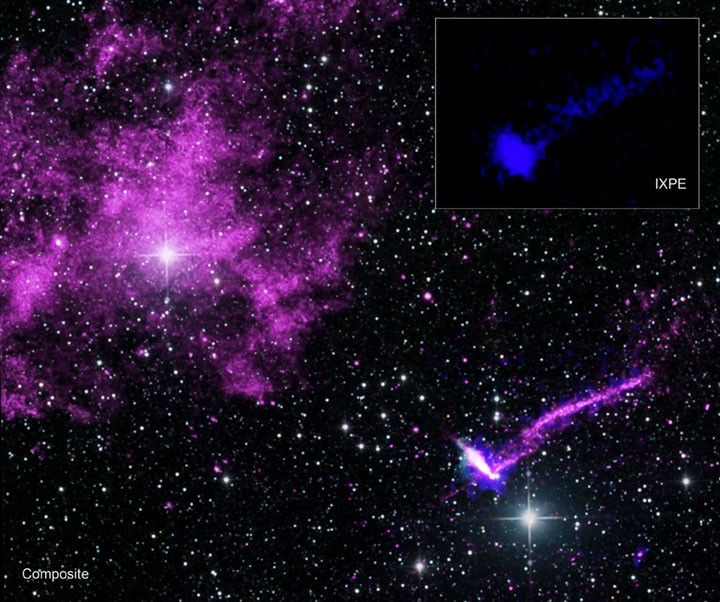
Additionally, scientists used NASA’s Imaging X-ray Polarimetry Explorer (IXPE) to directly measure the magnetic fields of PSR J1101−6101, a pulsar located within the Lighthouse Nebula. This marks a first for direct measurement of such fields, providing new insights into these extreme cosmic objects. The pulsar rotates 16 times per second and is a remnant of a massive star, condensed to the size of a city. The results, published in the Astrophysical Journal, confirm the theory that high-energy particles escape along the galaxy’s magnetic field lines.
The James Webb Space Telescope (JWST) will mark four years of science on July 12. To celebrate, Webb provided a clearer, more detailed view of the starry centre of Centaurus A. In other solar system news, NASA’s Dragonfly mission to Titan is progressing, with the rotorcraft starting to take shape after years of design and fabrication. The Psyche spacecraft has now been travelling for a thousand days, en route to the metal-rich asteroid 16 Psyche, with recent Mars flyby views expected soon.

International Space Station Prepares for New Crew, Continues Science
The International Space Station (ISS) had a busy week with Expedition 74 crew members focused on neurology studies, crew departure preparations, and scientific research. Activities included routine lab tests, health checks, CubeSat maintenance, and cargo transfers. Three Expedition 74 crewmates are preparing for their return to Earth.

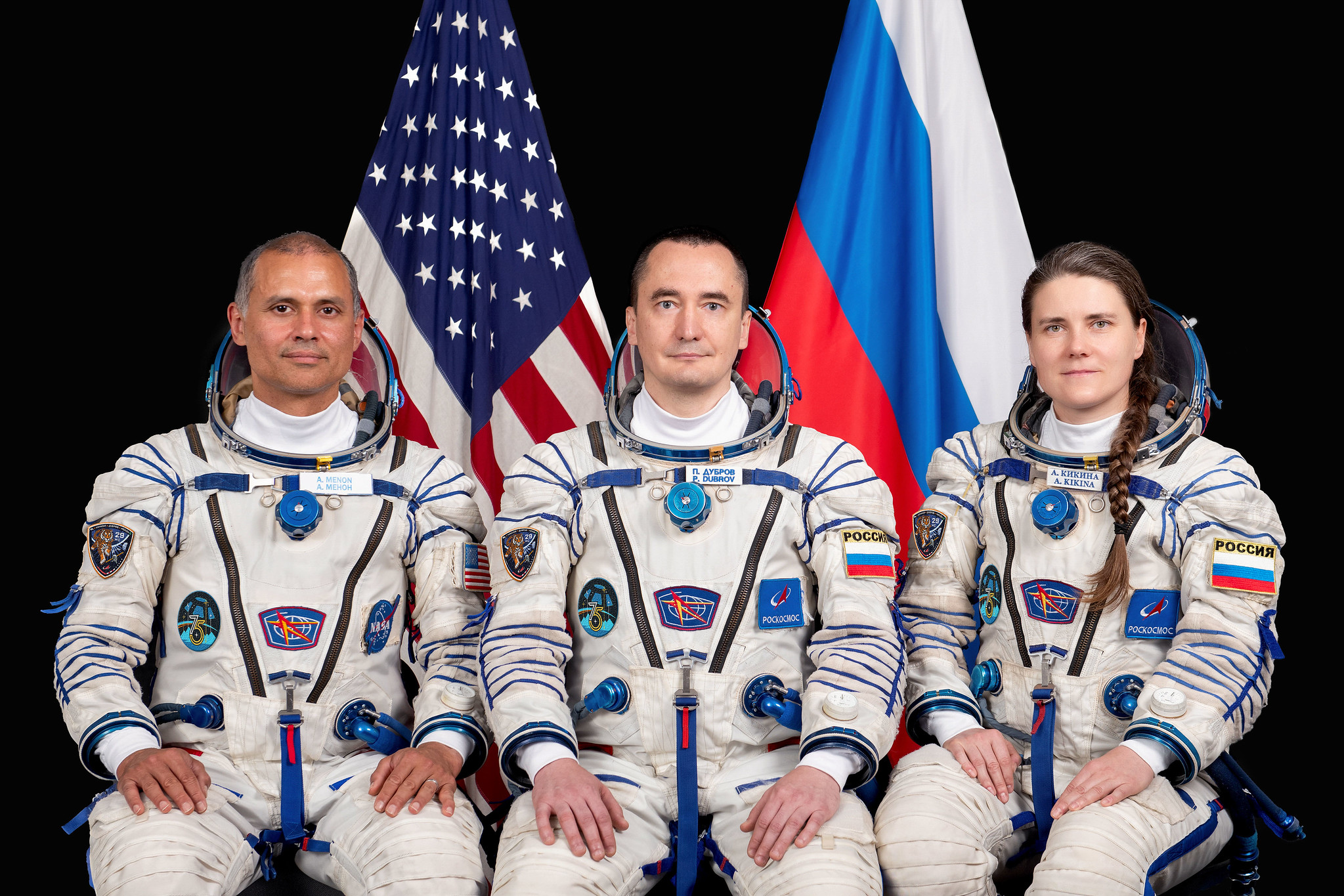
Looking ahead, NASA astronaut Anil Menon is scheduled to launch aboard the Roscosmos Soyuz MS-29 spacecraft to the ISS on Tuesday, July 14. He will be joined by cosmonauts Pyotr Dubrov and Anna Kikina. The trio will lift off at 10:47 a.m. EDT from the Baikonur Cosmodrome in Kazakhstan, with live coverage available on NASA+, Amazon Prime, and YouTube. After a three-hour trip, the spacecraft is expected to dock at 1:56 p.m. EDT to the Prichal module.
NASA Studies Arctic Sea Ice, Solicits Commercial Station Feedback
NASA scientists are actively studying Arctic sea ice, taking to both air and space to understand its rapid disappearance. Engineers at NASA’s Jet Propulsion Laboratory (JPL) in Southern California are testing a spacecraft sensor for future launch, while researchers recently completed a field campaign in the Canadian wilderness. During this April campaign, they used a World War II-era plane to fly above the Arctic Ocean, measuring sea ice and snow thickness. These flights were timed to coincide with satellite passes, allowing for the combination of airborne and orbital data to improve measurements and understanding of climate conditions in the Arctic.

In other agency news, NASA released a draft Request for Proposals (RFP) to American companies regarding the next phase of its commercial space stations strategy. This initiative aims to ensure a seamless transition of activities in low Earth orbit from the International Space Station. Industry feedback on the draft RFP is due by Monday, July 27. The NASA Administrator also attended the Great American State Fair, engaging with the public and discussing the agency’s future.

Additionally, the Sun put on a “fireworks show” this week, with a strong X1.3 solar flare erupting on July 4, peaking at 4:41 p.m. ET. NASA’s Solar Dynamics Observatory captured the event, with images showing the solar flare in red, white, and blue. While harmful radiation from a flare cannot pass through Earth’s atmosphere, intense flares can disturb GPS and communication signals.

Citations
- “NASA Awards Contracts for Mars Advanced Surface Mobility Technology” — https://science.nasa.gov/directorates/smd/planetary-science-division/mars-exploration-program/nasa-awards-contracts-for-mars-advanced-surface-mobility-technology/
- “NASA\’s New Horizons Spacecraft Wakes from Hibernation in Good Health” — https://science.nasa.gov/missions/new-horizons/nasas-new-horizons-spacecraft-wakes-from-hibernation-in-good-health/
- “NASA Space Telescope Maps Magnetic Fields of \’Lighthouse\’ Pulsar” — https://science.nasa.gov/missions/ixpe/nasa-space-telescope-maps-magnetic-fields-of-lighthouse-pulsar/
- “NASA Sets Coverage for Astronaut Anil Menon Launch to Space Station” — https://www.nasa.gov/news-release/nasa-sets-coverage-for-astronaut-anil-menon-launch-to-space-station/
- “NASA Scientists Take to Air and Space to Study Arctic Sea Ice” — https://www.nasa.gov/missions/airborne-science/nasa-scientists-take-to-air-and-space-to-study-arctic-sea-ice/
- “X — NASA (Official NASA account)” — https://x.com/NASA
- “X — NASA Administrator (NASA Administrator (personal account))” — https://x.com/NASAAdmin
- “X — International Space Station (Official ISS account)” — https://x.com/Space_Station
- “X — NASA Artemis (NASA Artemis program account)” — https://x.com/NASAArtemis
- “X — NASA Moon to Mars (NASA lunar surface program account)” — https://x.com/NASAMoonBase
- “X — NASA Jet Propulsion Laboratory (NASA Jet Propulsion Laboratory)” — https://x.com/NASAJPL
- “X — NASA Solar System (NASA Solar System Exploration)” — https://x.com/NASASolarSystem
- “X — NASA Space Alerts (NASA space weather and orbital alerts)” — https://x.com/NASASpaceAlerts
- “X — NASA Space Operations (NASA Space Operations Mission Directorate)” — https://x.com/NASASpaceOps
Artemis III
Provider: National Aeronautics and Space Administration
Date: June 30, 2027
Time: 12:00 AM UTC
Vehicle: Space Launch System (SLS)
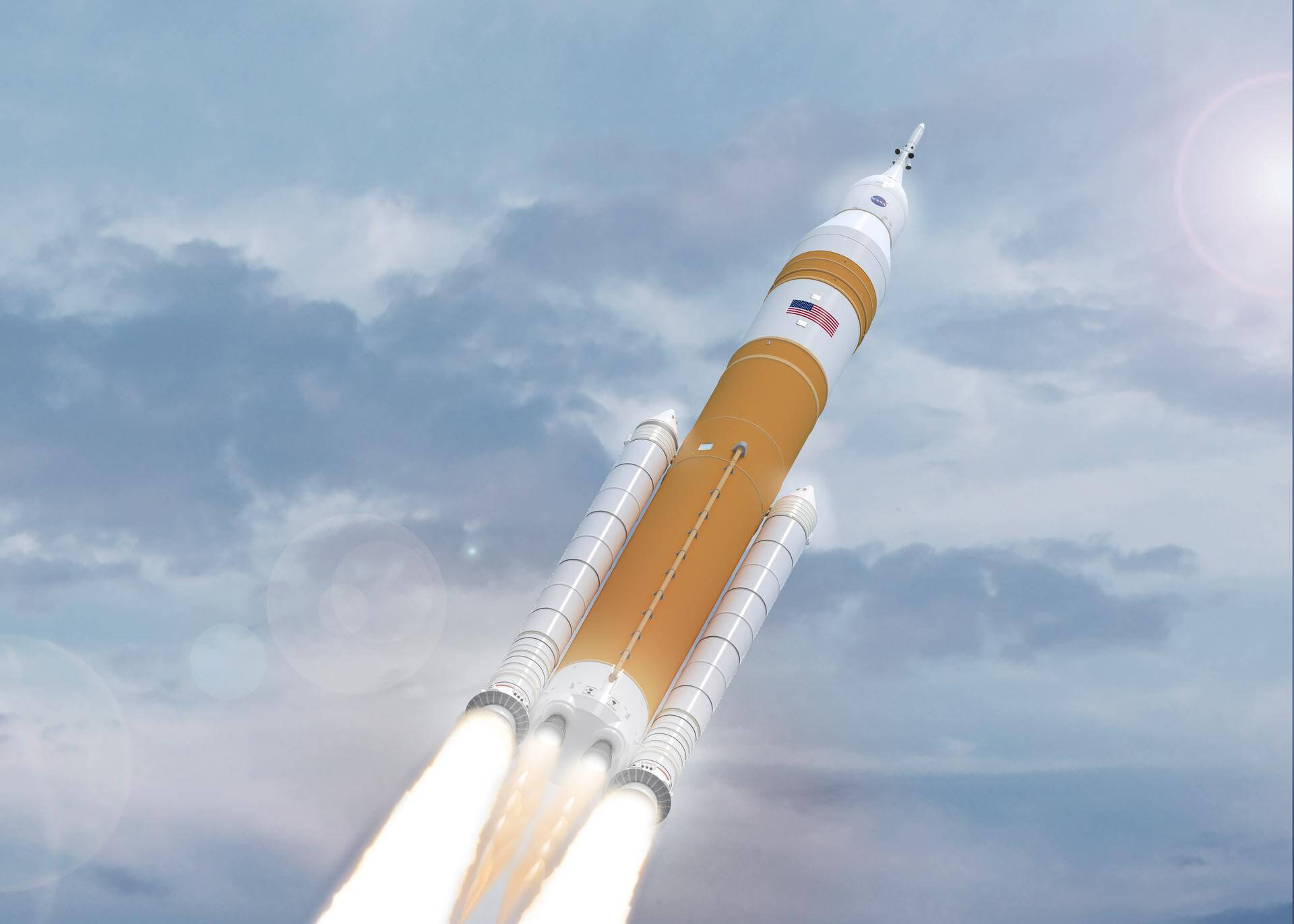
Artemis III is the second crew mission as part of the Artemis program. Artemis III will send a crew of 4 on a Low Earth Orbit mission, with the Orion rendezvous and dock with one or both commercial lunar landers in development by SpaceX and Blue Origin, performing in-space tests of the docked vehicles, integrated checkout of life support, communications, and propulsion systems, as well as tests of the new Extravehicular Activity (xEVA) suits.
Artemis IV
Provider: National Aeronautics and Space Administration
Date: June 30, 2028
Time: 12:00 AM UTC
Vehicle: Space Launch System (SLS)
Artemis IV is planned to be the first human lunar landing mission since the Apollo Program.
Artemis V
Provider: National Aeronautics and Space Administration
Date: December 31, 2028
Time: 12:00 AM UTC
Vehicle: Space Launch System (SLS)
Artemis V is planned to be the second human lunar landing mission since the Apollo Program.
SLS Block 1B | Artemis VI
Provider: National Aeronautics and Space Administration
Date: September 30, 2030
Time: 12:00 AM UTC
Vehicle: Space Launch System (SLS)
No description available
SLS Block 1B | Artemis VII
Provider: National Aeronautics and Space Administration
Date: September 30, 2031
Time: 12:00 AM UTC
Vehicle: Space Launch System (SLS)
No description available
Enjoying the content? Stay up to date on everything happening behind the scenes by following our Patreon!

