
Rocket Lab Roundup: Rocket Lab Acquires Iridium in $8 Billion Deal
Vertical Integration: Rocket Lab to Acquire Iridium
Rocket Lab and Iridium Communications entered a definitive agreement on June 29, 2026, under which Rocket Lab will acquire all outstanding shares of Iridium common stock for $54 per share in a cash-and-stock transaction. The enterprise value totals approximately $8 billion, representing a 24% premium over Iridium’s pre-announcement closing price. The deal is expected to close mid-2027 pending regulatory approvals.

The acquisition unites Rocket Lab’s launch capabilities and satellite manufacturing with Iridium’s constellation of 66 operational satellites, L-band spectrum, and 500-plus partner ecosystem. Iridium operates global voice, data, positioning, navigation, and timing (PNT) services, and recently acquired Aireon’s aviation-tracking platform. The combined company will design, build, launch, and operate satellite constellations as a fully vertically integrated entity.
Peter Beck, Rocket Lab founder and chief executive, called the acquisition “the logical next step” for the company’s ambitions in space services. He noted that building a proprietary satellite constellation and generating recurring revenue could take a decade. “We thought that an entrance into applications would likely be through an acquisition,” Beck said in a statement to SpaceNews. By acquiring Iridium’s established network and global spectrum, Rocket Lab avoids lengthy regulator coordination while gaining immediate revenue scale and positive cash flow.
Beck signalled that vertical integration—owning launch, manufacturing, and operations—will unlock new applications beyond Iridium’s current offerings. “If you have your own rocket and you have your ability to build spacecraft at scale, then those things combined mean that you can go after business models that you would never have been able to go after before,” he said.

Record-Setting Responsive Launch for the Space Force
On June 19, Rocket Lab executed a landmark responsive space mission for the U.S. Space Force’s VICTUS HAZE program, launching and conducting complex on-orbit operations in record time. Rocket Lab received the Notice To Launch on June 19 and lifted off just 16 hours and 42 minutes later—the fastest response time ever recorded for a Tactically Responsive Space (TacRS) mission.

The Electron rocket deployed Rocket Lab’s Pioneer spacecraft, which the company designed, built, and tested specifically for this mission. After launch, Rocket Lab’s operations team commissioned Pioneer within 38 hours—32 hours ahead of the Space Force’s 72-hour deadline. The spacecraft then completed rendezvous and proximity operations (RPO) with a target satellite in less than 59 hours, 25 hours faster than the prescribed 84-hour window. Pioneer performed a series of orbital maneuvers to approach, track, and photograph the target satellite, demonstrating precision navigation and control essential for space domain awareness.
VICTUS HAZE marked the first time a single prime contractor delivered the entire mission package—rocket, spacecraft, and operations—for a TacRS programme. Rocket Lab announced in July that Pioneer would extend operations for several months to demonstrate additional RPO tactics for the Space Force.
NASA Contracts for Sun and Earth Sciences Missions
Rocket Lab secured three Electron launch contracts from NASA under the agency’s Venture-Class Acquisition of Dedicated and Rideshare (VADR) programme on June 25. The company will fly two back-to-back missions for NASA’s PolSIR (Polarized Submillimeter Ice-cloud Radiometer) mission and one for TSIS-2 (Total and Spectral Solar Irradiance Sensor-2).

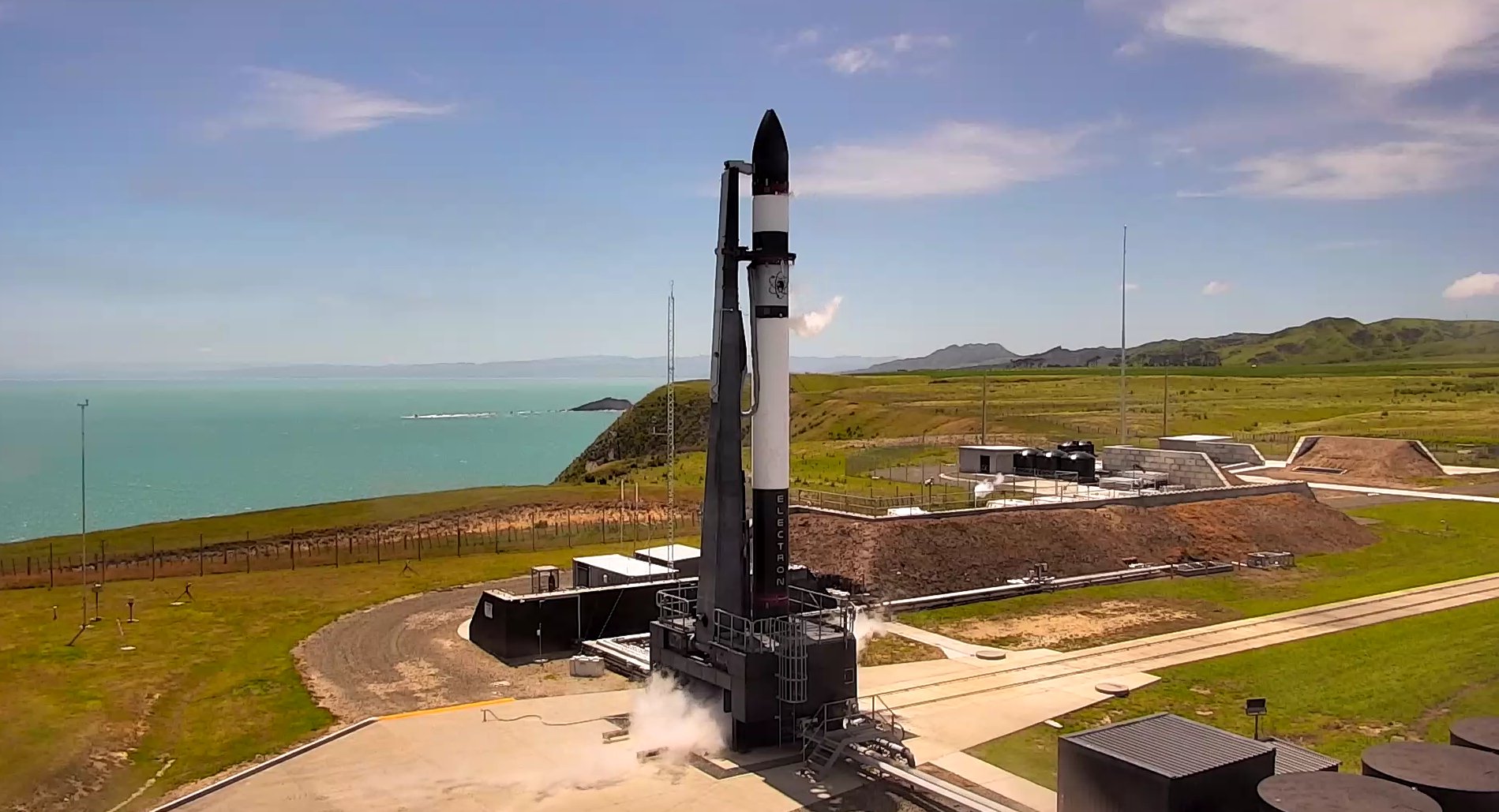
PolSIR will deploy two identical 16U CubeSats to study ice clouds at tropical and subtropical altitudes, measuring cloud formation, daily variation, and ice content to improve Earth weather prediction models. Each satellite requires precise orbital insertion—Electron’s deployment accuracy to within metres, not kilometres, was a deciding factor for NASA. Rocket Lab will launch both PolSIR satellites from Launch Complex 1 in New Zealand no earlier than June 2027.
TSIS-2, managed by NASA’s Goddard Space Flight Centre, will measure the Sun’s total and spectral irradiance to Earth, providing data for ocean circulation, climate, and weather forecasting. The spacecraft carries instruments similar to those on TSIS-1 (aboard the International Space Station), covering 96% of the solar spectrum. Rocket Lab will launch TSIS-2 in early 2027 from the same New Zealand facility.
Electron Momentum: Ten Synspective Missions, 91 Total Launches
Rocket Lab completed its 10th consecutive Electron launch for Japanese Earth observation company Synspective on June 26, flying a StriX synthetic aperture radar (SAR) satellite to a 552-kilometre, 42-degree-inclination orbit. The mission, dubbed “10 Owl of 10,” marked Rocket Lab’s 12th Electron flight of 2026 and its 91st orbital mission overall, cementing Electron as the world’s most frequently launched small-lift orbital rocket.

Synspective now operates ten StriX satellites in orbit, all deployed by Electron, and has 17 additional missions contracted for completion by the end of the decade. The partnership exemplifies Rocket Lab’s customer-centric flexibility—the company designed a custom fairing for this mission to accommodate StriX’s specific dimensions, contributing to the 100% mission success rate across all StriX deployments.
Rocket Lab’s operational momentum extends across its customer base. In the first quarter of 2026, the company signed 36 new launch contracts, including 31 Electron and HASTE agreements, surpassing the total number of missions flown in all of 2025. Q1 revenue reached $200.3 million, a 63.5% year-over-year increase and the first time Rocket Lab exceeded $200 million in a single quarter. The company’s backlog exceeded 70 missions and $2.2 billion in total contracted value.
While Electron continues its cadence, Neutron—Rocket Lab’s medium-lift vehicle—remains in development with a delayed timeline to debut. The company has been conducting full-duration burns of the Archimedes vacuum engine at its Mississippi test site, preparing for Neutron’s first flight as the programme advances toward its next phase.
Citations
- “Rocket Lab to Acquire Iridium in Historic Deal, Creating A Fully Vertically Integrated Space Powerhouse Primed for Growth” — https://rocketlabcorp.com/updates/rocket-lab-to-acquire-iridium-in-historic-deal-creating-a-fully-vertically-integrated-space-powerhouse-primed-for-growth/
- “Beck: Iridium acquisition the ‘logical next step’ for Rocket Lab” — https://spacenews.com/beck-iridium-acquisition-the-logical-next-step-for-rocket-lab/
- “Rocket Lab to acquire Iridium” — https://spacenews.com/rocket-lab-to-acquire-iridium/
- “Rocket Lab Delivers Mission Success for Space Force: Completes Historic Launch and On-Orbit Satellite Tracking Mission in Record Time” — https://rocketlabcorp.com/updates/rocket-lab-delivers-mission-success-for-space-force-completes-historic-launch-and-on-orbit-satellite-tracking-mission-in-record-time/
- “NASA Selects Rocket Lab to Launch Sun, Earth Sciences Missions” — https://rocketlabcorp.com/updates/nasa-selects-rocket-lab-to-launch-sun-earth-sciences-missions/
- “NASA Selects Rocket Lab to Launch Sun, Earth Science Missions” — https://www.nasa.gov/missions/tsis-2/nasa-selects-rocket-lab-to-launch-sun-earth-science-missions/
- “Rocket Lab launches 10th Synspective satellite” — https://spacenews.com/rocket-lab-launches-10th-synspective-satellite/
- “Rocket Lab Completes 10th Consecutive Launch with 100% Mission Success for Synspective” — https://rocketlabcorp.com/updates/rocket-lab-completes-10th-consecutive-launch-with-100-mission-success-for-synspective/
- “Rocket Lab sees Electron gains, Neutron delays in first half of 2026” — https://www.nasaspaceflight.com/2026/07/rocket-lab-update-072026/
- X — Rocket Lab Official Account — https://x.com/RocketLab
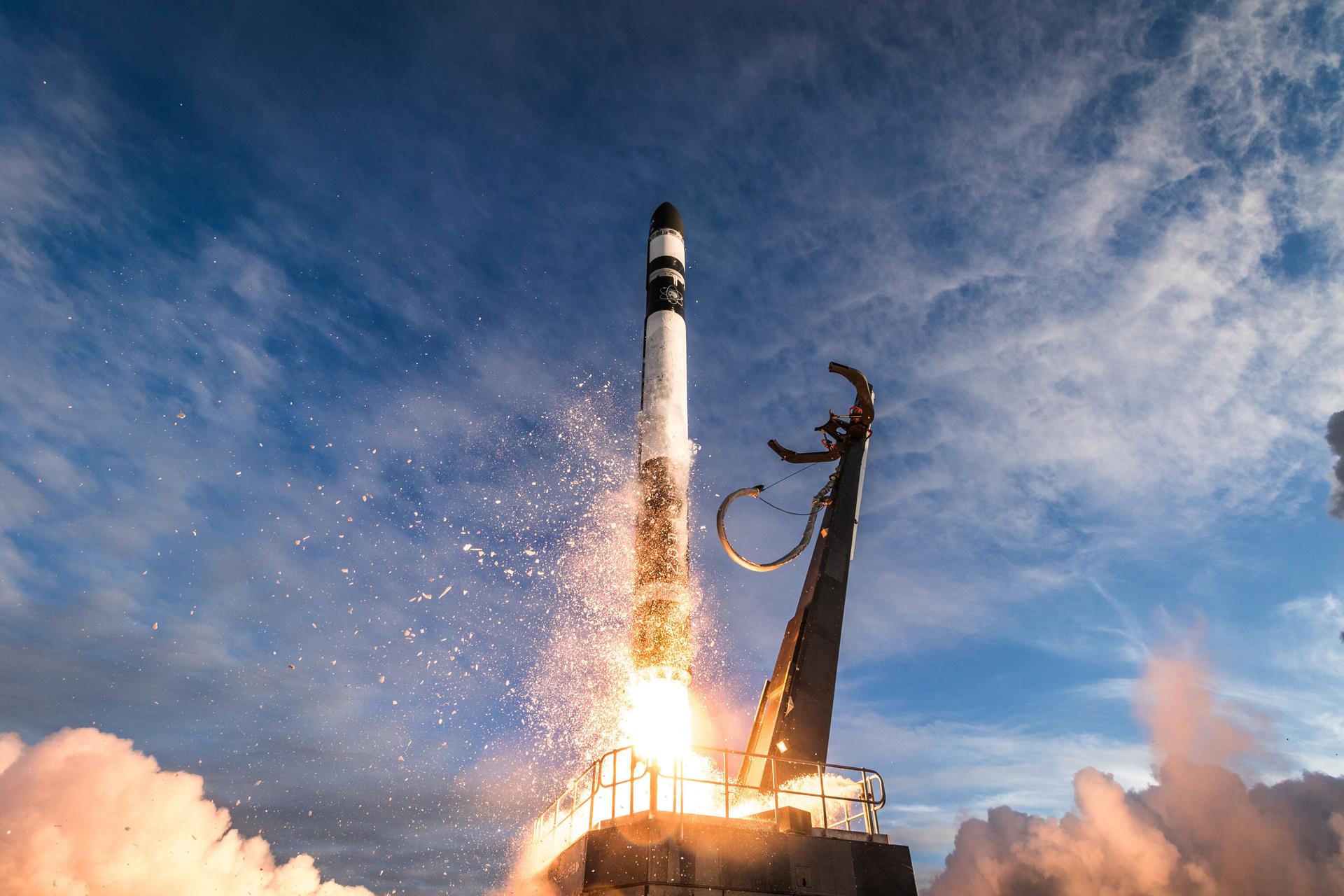
LOXSAT 1
Provider: Rocket Lab
Date: July 31, 2026
Time: 12:00 AM UTC
Vehicle: Electron
LOXSAT 1 is a demonstration satellite of a complete cryogenic oxygen fluid management system in orbit, developed by Eta Space and sponsored by NASA’s Tipping Point program.
The system will be integrated on a Rocket Lab Photon-LEO satellite bus and collect critical cryogenic fluid management data in orbit for 9 months, demonstrating capabilities of in-space cryogenic storage and transferal. Eta Space plans to use technology developed for this mission to develop a truly commercial depot intended to serve multiple customers in the future.
StriX Launch 11
Provider: Rocket Lab
Date: July 31, 2026
Time: 12:00 AM UTC
Vehicle: Electron
Synthetic aperture radar satellite for Japanese Earth imaging company Synspective.
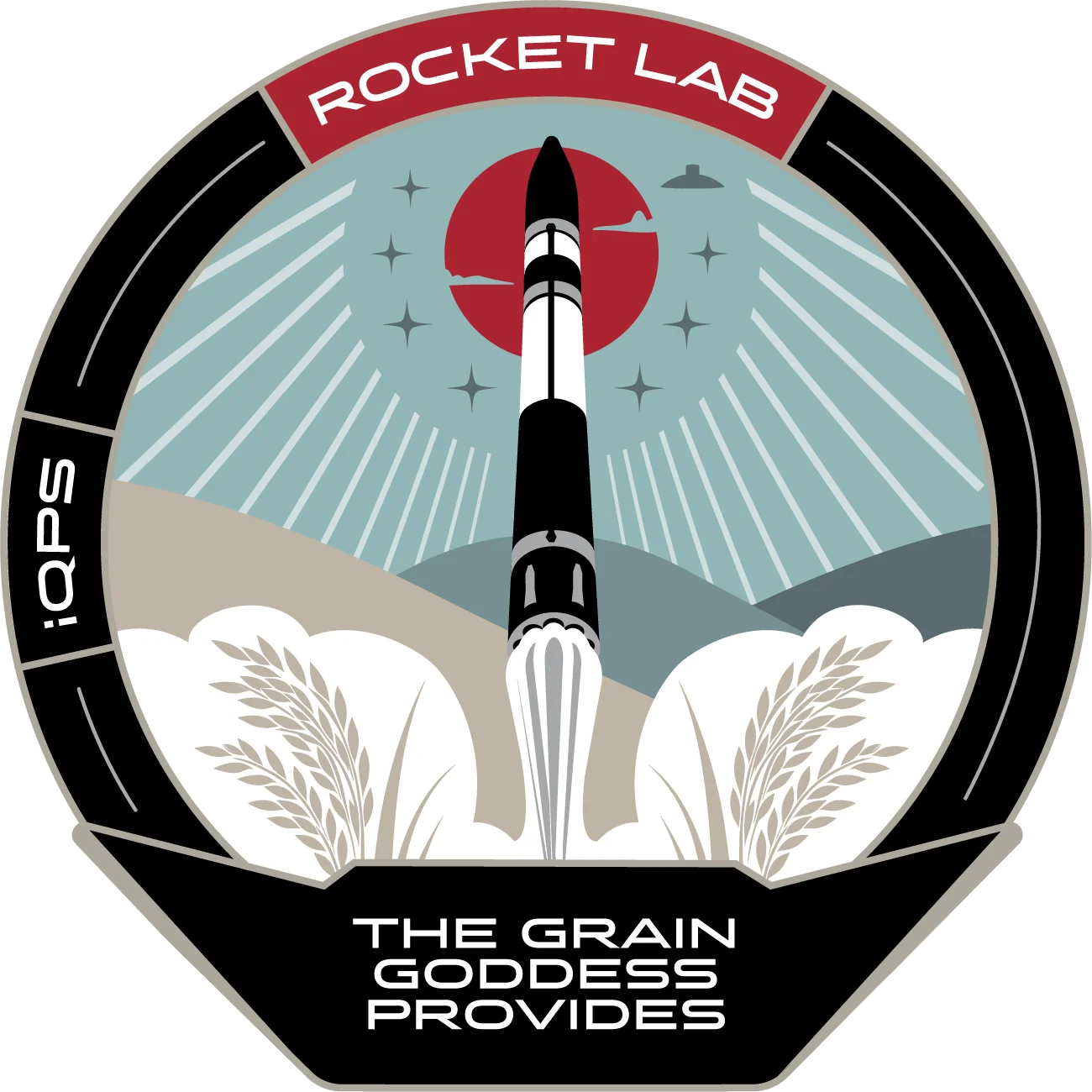
The Grain Goddess Provides (iQPS Launch 7)
Provider: Rocket Lab
Date: July 31, 2026
Time: 12:00 AM UTC
Vehicle: Electron
Synthetic aperture radar Earth observation satellite for Japanese Earth imaging company iQPS.
StriX Launch 12
Provider: Rocket Lab
Date: October 31, 2026
Time: 12:00 AM UTC
Vehicle: Electron
Synthetic aperture radar satellite for Japanese Earth imaging company Synspective.
StriX Launch 13
Provider: Rocket Lab
Date: December 31, 2026
Time: 12:00 AM UTC
Vehicle: Electron
Synthetic aperture radar satellite for Japanese Earth imaging company Synspective.
Enjoying the content? Stay up to date on everything happening behind the scenes by following our Patreon!

