
Firefly Aerospace, CLPS 2, Stoke and Relativity
Firefly Joins NASA CLPS 2 as Vendor and Signs Engine Deal Worth More Than $1.3B
On November 7, Firefly was onboarded as a vendor under NASA’s $10 billion Commercial Lunar Payload Services (CLPS) 2 Indefinite Delivery/Indefinite Quantity (IDIQ) contract. The win positions Firefly to compete for and deliver task orders advancing NASA’s scientific, exploration, and infrastructure objectives on the lunar surface over a 10-year ordering period.

Firefly CEO Jason Kim said in a statement: “Blue Ghost Mission 1 proved Firefly can deliver on the Moon, and now CLPS 2 gives us the opportunity to do it again and again at greater scale.” The company’s Blue Ghost lander successfully completed its first lunar mission and all mission objectives in March 2025, establishing credibility with NASA. Firefly has since won four additional missions under CLPS 1 and a contract to deliver NASA’s MoonFall mission. The company is ramping up production of Blue Ghost landers and Elytra orbiters in an expanded cleanroom facility that can accommodate up to 12 spacecraft.
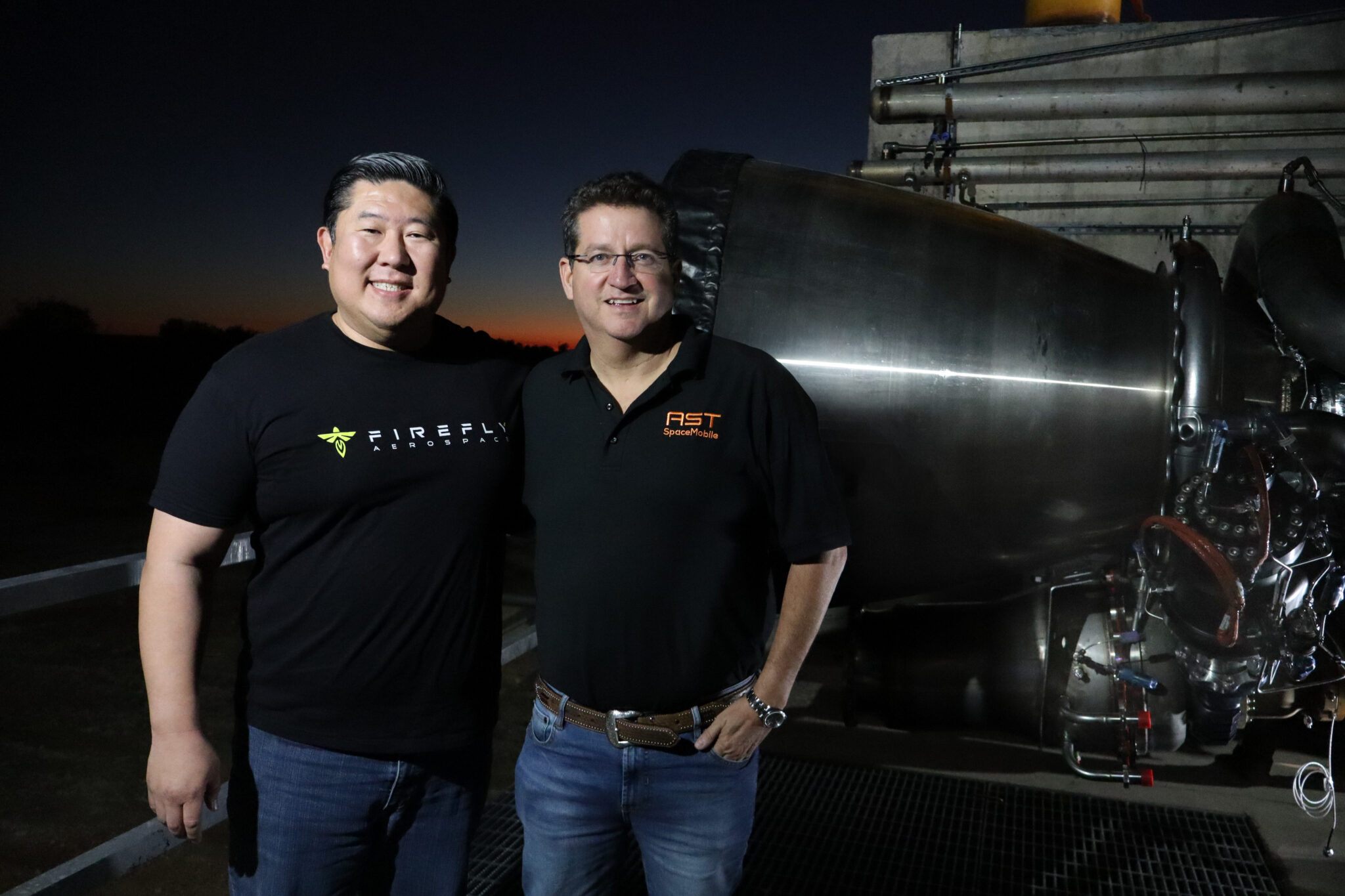
Days earlier, on November 6, Firefly announced an agreement worth more than $1.3 billion with AST SpaceMobile to deliver 36 rocket engines — 27 Miranda and nine Vira engines — over three years. The deal includes a license for AST SpaceMobile to manufacture the engines and covers the first three rockets for the company’s new heavy-lift Blacklift vehicle. Firefly’s Miranda engine has completed over 175 hot-fire tests and demonstrated performance at 110% of its 230,000 lbf thrust rating. The engine uses flight-proven technology scaled from Firefly’s Reaver and Lightning rocket engines.
On November 17, the company announced a new payload agreement with QASCOM to operate the Cislunar Orbiting L‑band and LunaNet Integrated Navigation System (COLLINS) on Firefly’s Elytra vehicle in lunar orbit. The mission, targeted for no earlier than 2028, will fly to the Moon’s Gruithuisen Domes and will carry eight total payloads, including six through NASA’s CLPS initiative.
Stoke Pathfinder Stage Arrives at Cape, Expansion Underway
Stoke Space moved Nova Pathfinder closer to its early 2027 orbital debut as the first Nova stage arrived at Space Launch Complex 14 (SLC-14) at Cape Canaveral on November 22. The arrival marked the first Nova stage to arrive at the pad and the first rocket to reach SLC-14 in 60 years — the complex hosted John Glenn’s Friendship 7 mission on February 20, 1962.

Throughout 2026, Stoke invested in structural and fluids qualification of Pathfinder at its Moses Lake Test Site in Washington state. The company’s qualification campaign included two “Tiny Tank” ground test articles and testing on the flight vehicle itself. Tiny Tank 2 qualified the Stage 1 aft barrels for broader operational limits than previous testing permitted. The 17-day, 10-hour, 52-minute journey from factory to SLC-14 by all accounts appears to have gone smoothly.
Stoke also moved forward on launch infrastructure. On November 6, the company received Right of Entry (RoE) from Space Launch Delta 45 to property north of its existing SLC-14 site at Cape Canaveral Space Force Station. The expansion will enable development of a second launch site to support high-cadence operations for both Pathfinder and Nova Block 2. The RoE authorizes engineering studies, environmental assessments, and site surveys necessary for the expansion — the first step in opening more of the Eastern Range to fully reusable launch.
Earlier in the month, Stoke announced a multi-launch agreement with Planet Labs PBC, the Earth-imaging satellite operator. Under the agreement, Planet’s satellites will fly aboard Nova from SLC-14 on a schedule driven by Planet’s mission needs. Stoke emphasised that full reuse cuts launch infrastructure footprint; nothing is left in orbit or ocean, and each vehicle flown again reduces material and energy demands compared to building new hardware for every mission.
Relativity Terran R Advances Through Testing and Integration
Relativity Space advanced Terran R’s flight one hardware and ground infrastructure this month. The company’s second stage completed a 10-second hot-fire test on the A2 test stand at NASA’s Stennis Space Centre in October — the stand’s first stage-level test since 1970 — before teams reconfigured it for extended testing. The stage then successfully completed a full Mission Duty Cycle hot-fire burn lasting over 400 seconds, matching the full upper-stage burn required during vacuum flight.

Built in the 1960s to test the Saturn V’s S-II second stage for Apollo, the A2 stand was later reconfigured to test individual Space Shuttle main engines.
At Relativity’s Long Beach facility, the first stage’s thrust structure completed breakover — a rotation from vertical to horizontal — with all 13 Aeon R engines, fluid lines, and avionics installed. Teams then began mating the thrust structure to the first stage tankage. The interstage, meanwhile, completed structural qualification testing on Relativity’s in-house test stand, the “Tender Loving Crusher,” enduring millions of pounds of compressive load and separation latch preloads above flight levels. This closed out structural qualification for all primary flight one structures.
At Cape Canaveral Space Force Station, Launch Complex 16 renovations are nearing completion. Steel framing on the launch table is complete; down conductor towers for the lightning protection system are finished. The next phase involves stringing catenary wires between the 161-metre towers to form a protective canopy over the pad, then tensioning cables and running electrical resistance tests to verify grounding ahead of range safety sign-off.
Axiom Advances AxEMU Design, Expands In-Space Manufacturing
Axiom Space closed the Critical Design Review (CDR) for its Axiom Extravehicular Mobility Unit (AxEMU) spacesuit on November 13, a major step toward NASA certification for flight. The CDR, which began in summer 2025, provided increased assurance that design and fabrication plans are ready to move into production and qualification testing.
Tammy Radford, Axiom’s Extravehicular Activity Services Program Manager, said: “With the closure of CDR, we’ve delivered the large body of work that provides Axiom Space confidence going into production. This is the kind of milestone that only comes together when everyone brings their best work to the table, and I couldn’t be prouder of this team.”
With CDR complete, the programme moves into qualification testing, which includes performance testing, environmental testing such as thermal vacuum and vibration, and life-cycle testing. Following CDR, Axiom plans production activities including completion of the pressure garment and Portable Life Support System assembly by early 2027. The AxEMU supports a parallel effort: the AxEMU-S1, a tailored configuration for short-duration lunar surface excursions on early Artemis missions. Because the Sortie suit builds on certified AxEMU components, progress on the full AxEMU directly supports delivery of both configurations.
Also in November, Axiom Space and Nitride Global, Inc. signed a Memorandum of Understanding to accelerate in-space manufacturing of ultrawide bandgap (UWBG) semiconductor materials. Under the MOU, the two companies will design and build manufacturing hardware for in-space production of Aluminium Nitride (AlN) and advanced packaging materials; conduct proof-of-concept studies aboard the International Space Station and future Axiom Missions; and work toward commercial-scale manufacturing on Axiom Station.
Dr. Lucie Low, Chief Science Officer at Axiom Space, noted: “Signing this MOU with Nitride Global reflects the growing commercial interest in producing advanced semiconductor materials in space. Their leadership in aluminium nitride (AlN) crystal growth and advanced packaging technologies, combined with Axiom Space’s capabilities in orbital infrastructure and mission integration, position us to demonstrate real commercial value in low-Earth orbit (LEO).” The collaboration builds on ongoing joint research activities and a recent multiscale modelling project sponsored through NASA’s 2025–2026 Announcement of Collaboration Opportunity (ACO) award.
Citations
- Firefly Aerospace Selected as a Vendor for NASA’s $10 Billion CLPS 2 Initiative — fireflyspace.com
- Firefly Aerospace Signs Rocket Engine Deal Valued at More Than $1.3 Billion with AST SpaceMobile — fireflyspace.com
- Firefly Aerospace Adds QASCOM as Commercial Customer on Elytra for Lunar Orbit Operations — fireflyspace.com
- Stoke and Planet Announce Multi-Launch Agreement — stokespace.com
- PATHFINDER ARRIVES AT LAUNCH SITE — stokespace.com
- Stoke Space Expanding Cape Canaveral Launch Complex to Support High-Cadence, Fully Reusable Launch — stokespace.com
- Relativity tests Terran R second stage, completes structural qualifications ahead of inaugural launch — nasaspaceflight.com
- October 2026 Company Update — relativityspace.com
- Axiom Space Completes NASA’s Critical Design Review for Next-Generation Spacesuit — axiomspace.com
- Axiom Space, Nitride Global Sign MOU to Accelerate Semiconductor Innovation in Space — axiomspace.com
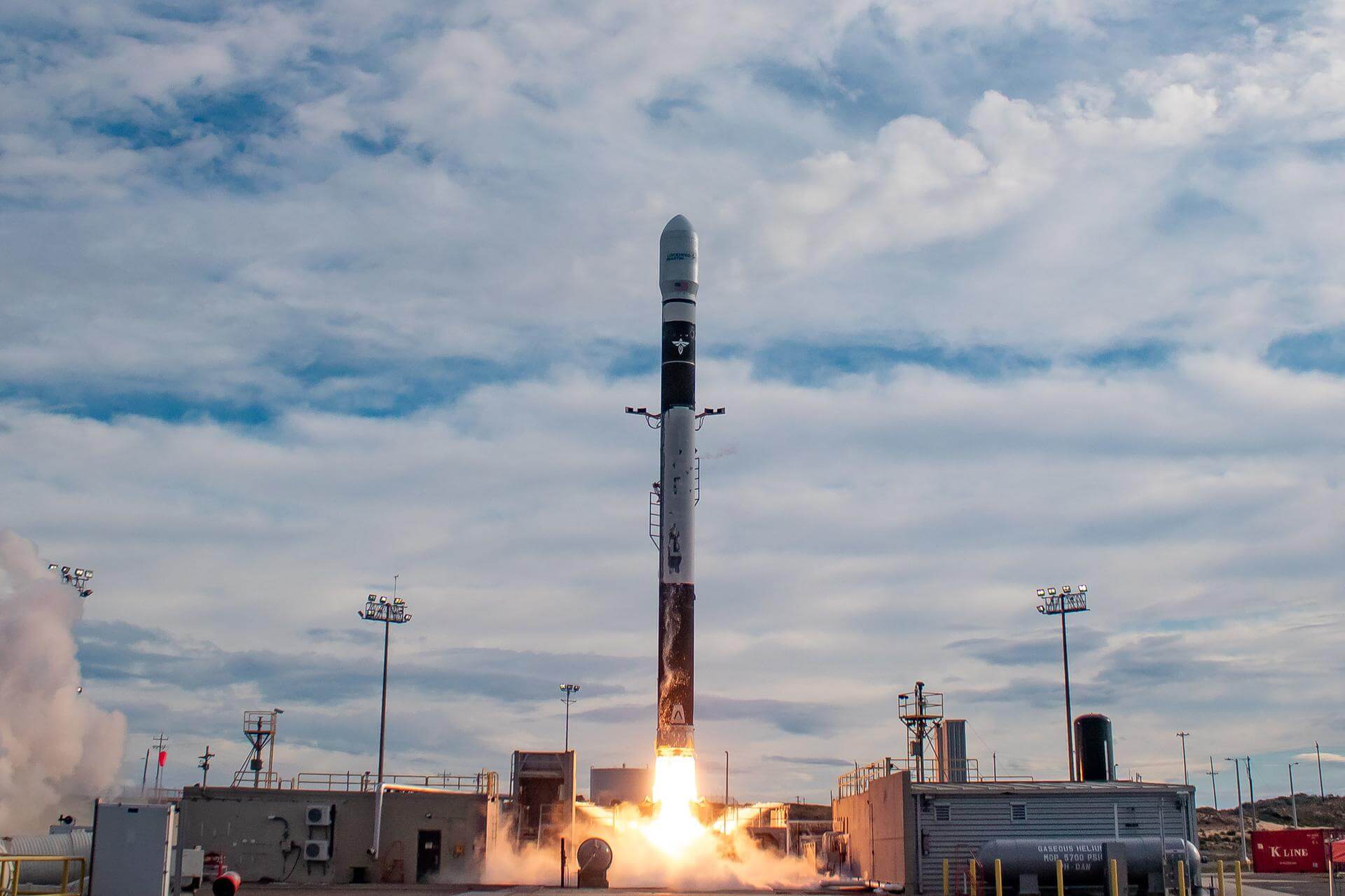
QuickSounder
Provider: Firefly Aerospace
Date: February 15, 2027
Time: 12:00 AM UTC
Vehicle: Firefly Alpha Block 2
QuickSounder is the first satellite mission of the Near Earth Orbit Network (NEON) program of the National Oceanic and Atmospheric Administration (NOAA), which aims to replace the current Joint Polar Satellite System (JPSS) series of polar orbit weather satellites. This pathfinder mission will demonstrate NOAA’s ability to launch a small satellite within 3 years, flying a refurbished Advanced Technology Microwave Sounder (ATMS) instrument to polar orbit.
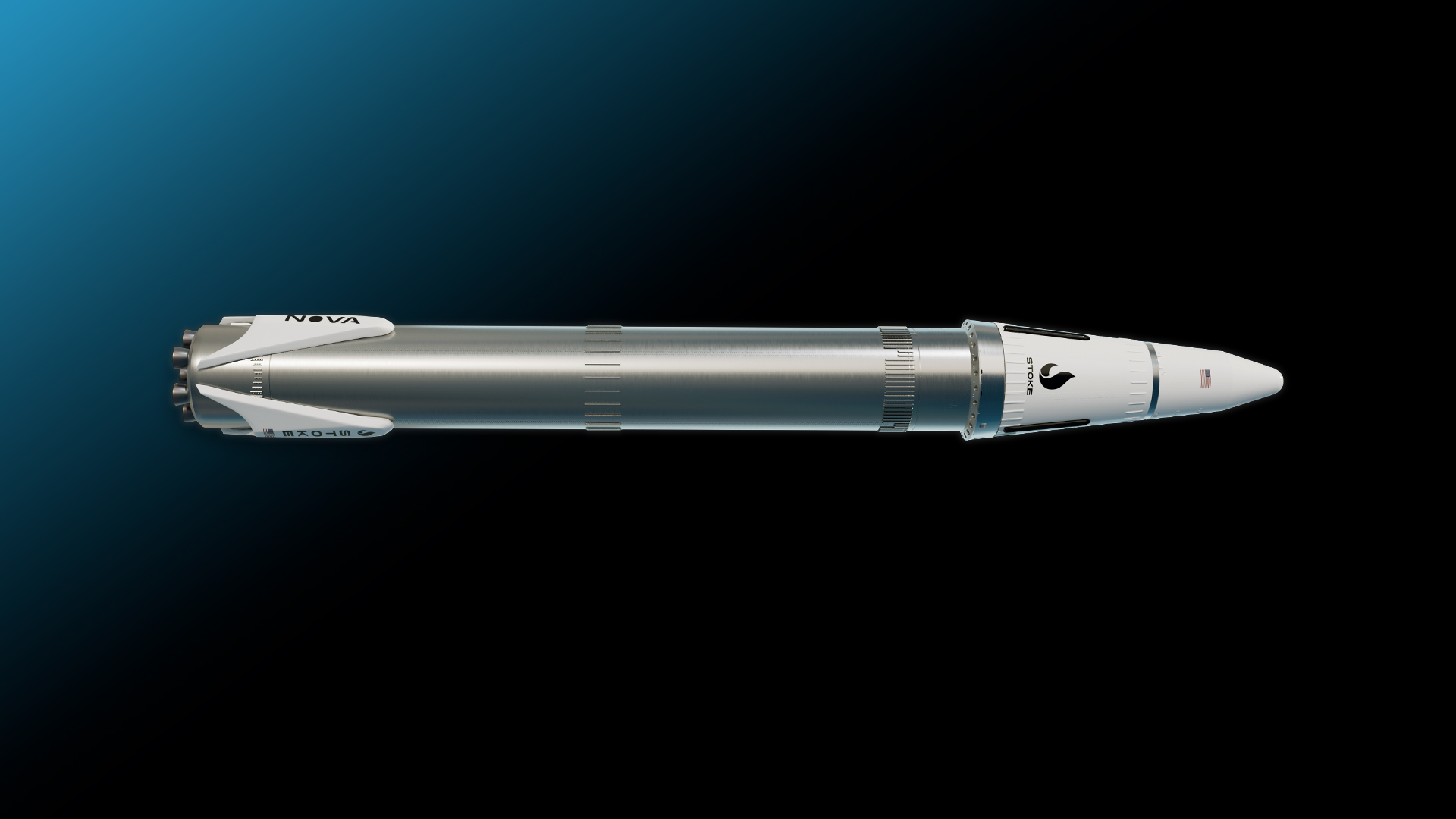
AstroForge Autonomy-1 (Demo Flight)
Provider: Stoke Space
Date: March 31, 2027
Time: 12:00 AM UTC
Vehicle: Nova
First launch of Stoke Space’s Nova launch vehicle.
Asteroid mining technologies company AstroForge’s Autonomy-1 will fly on this launch. Autonomy-1 will be the first full-scale flight demonstration of AstroForge’s own spacecraft artificial intelligence model, Solo.
The spacecraft will be tested for functionality in orbit without being commanded from the ground, and will transmit telemetry and science data back to Earth without human interference, including from COMPASS, a heliophysics science payload from NASA Goddard.
ConnectedCosmos Launch 1
Provider: Firefly Aerospace
Date: December 31, 2027
Time: 12:00 AM UTC
Vehicle: Firefly Alpha Block 2
First of at least four missions carrying 6 satellites for Open Cosmos’ secure LEO broadband constellation, designed to provide independent and resilient connectivity infrastructure for Europe and the world using high-priority Ka-band spectrum filings by the Principality of Liechtenstein.
ConnectedCosmos Launch 2
Provider: Firefly Aerospace
Date: December 31, 2027
Time: 12:00 AM UTC
Vehicle: Firefly Alpha Block 2
Second of at least four missions carrying 6 satellites for Open Cosmos’ secure LEO broadband constellation, designed to provide independent and resilient connectivity infrastructure for Europe and the world using high-priority Ka-band spectrum filings by the Principality of Liechtenstein.
ConnectedCosmos Launch 3
Provider: Firefly Aerospace
Date: December 31, 2027
Time: 12:00 AM UTC
Vehicle: Firefly Alpha Block 2
Third of at least four missions carrying 6 satellites for Open Cosmos’ secure LEO broadband constellation, designed to provide independent and resilient connectivity infrastructure for Europe and the world using high-priority Ka-band spectrum filings by the Principality of Liechtenstein.

Enjoying the content? Stay up to date on everything happening behind the scenes by following our Patreon!


Leave a Reply