Booster 22 and Ship 42 Clear Static Fires Ahead of Flight 15
SpaceX wrapped an intensive week of Starship testing at Starbase, completing engine campaigns for both Starship Flight 15 vehicles and advancing catch rehearsals for Flight 16. A latest FAA planning slide posted Oct. 29 now targets Thursday, Nov. 12 for Flight 15 — a slight slip that NASASpaceFlight said was likely related to regulatory approval for the catches.
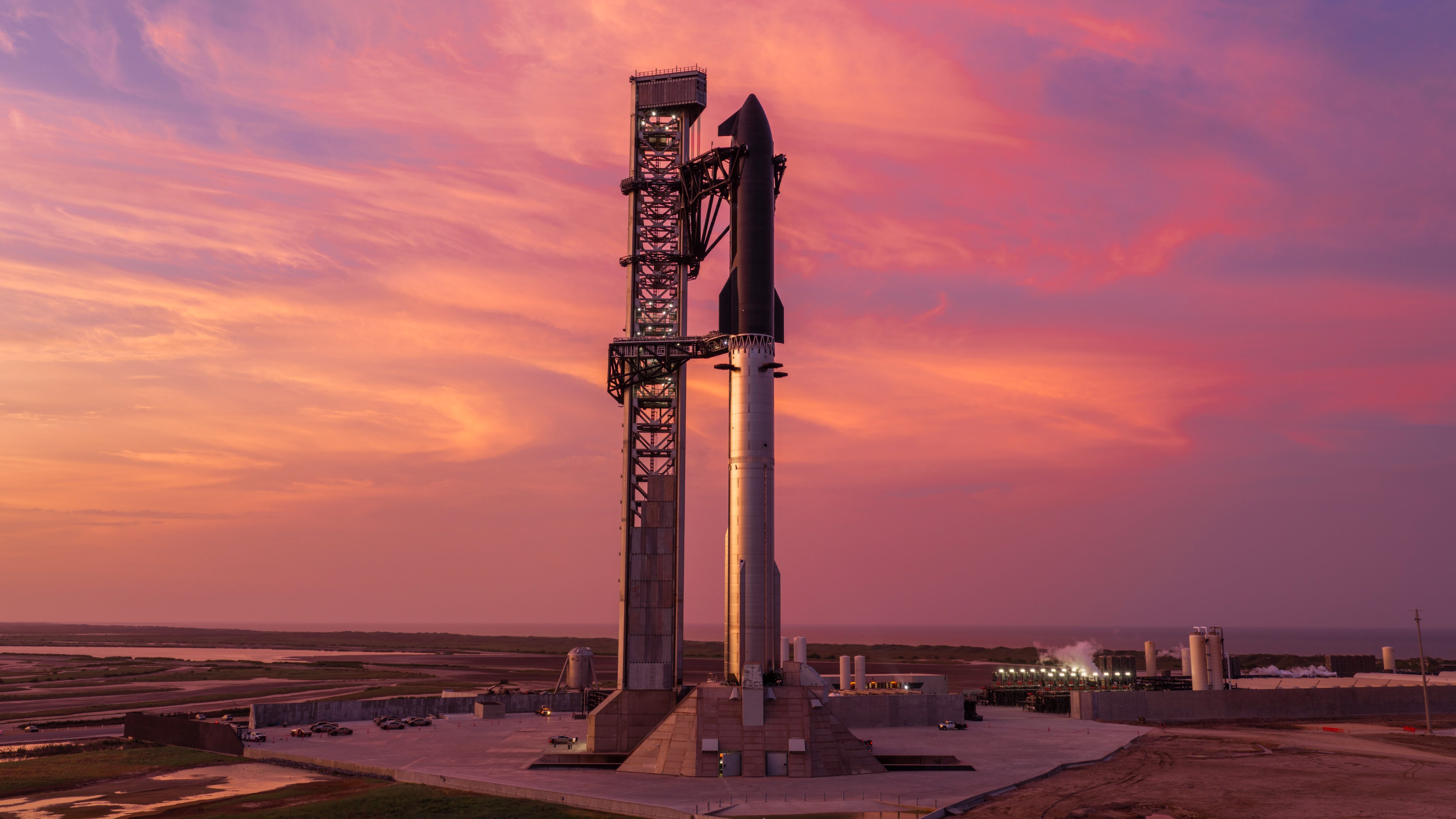
Booster 22 rolled out to Pad 2 on Oct. 24 and, on the early morning of Oct. 25, ignited all 33 Raptor engines for a full-duration 15-second static fire. The booster was rolled back to Mega Bay 1 early on Oct. 26 for final flight preparations.
Ship 42 followed with its own campaign. During the late-night hours of Oct. 26, the vehicle rolled out to Massey’s and fired a single Raptor engine to simulate an in-space deorbit burn — a test that requires loading the ship with propellant, letting it warm to the desired temperature, then igniting. It completed a full-duration, six-engine static fire on Oct. 27. SpaceX confirmed both static fires on Oct. 28.
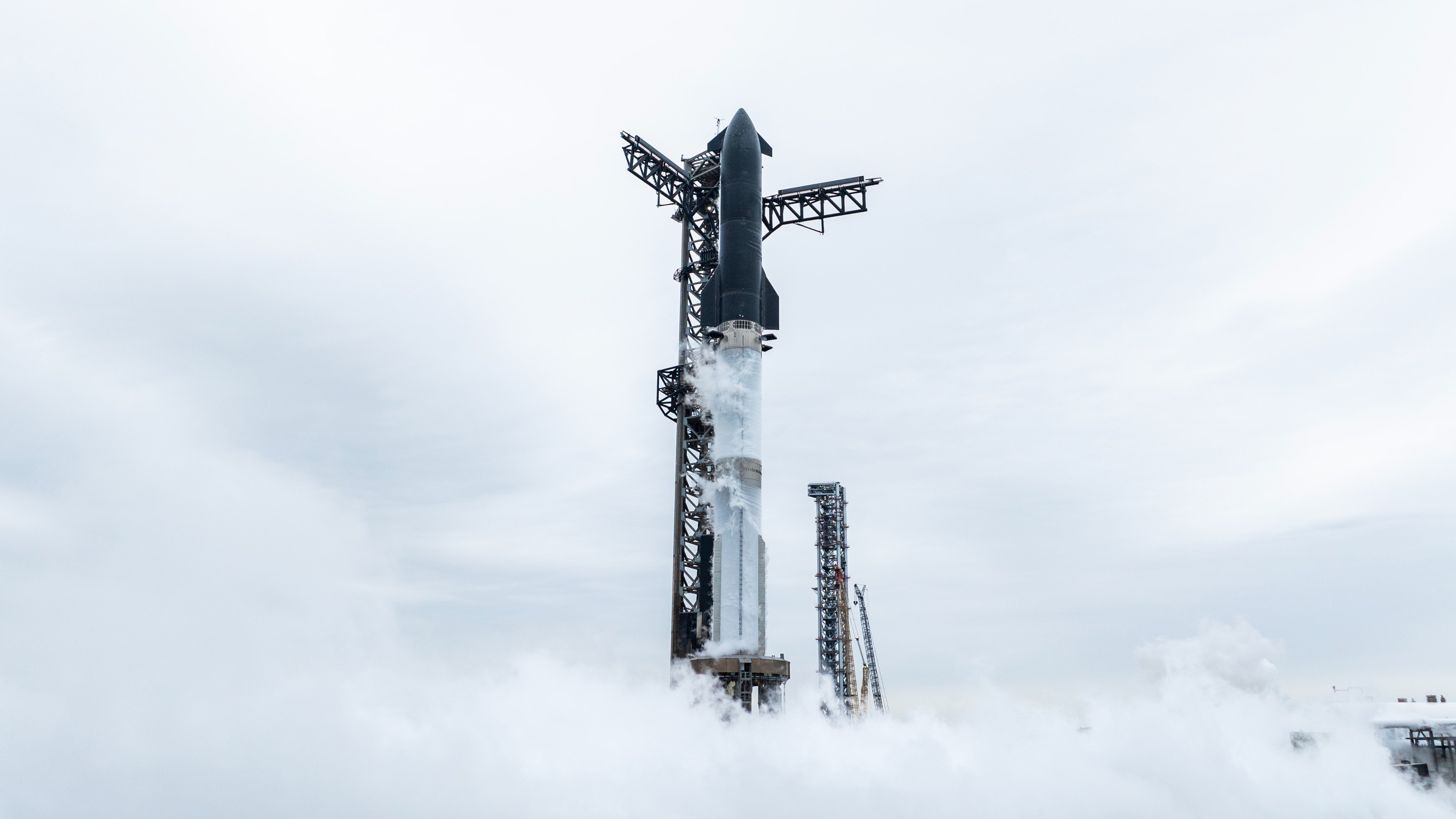
Flight 16 preparations also moved forward. Ship 43 rolled out to Massey’s on Oct. 22, completed both cryo-proof tests on Oct. 23, and rolled out to Pad 2 on Oct. 26 for ship catch testing. Controllers lifted Ship 43 to catch height, hooked up the Ship Quick Disconnect to test safing procedures, then moved the ship to the middle of the chopsticks and practised lining it up with the stabilizers — the same sequence used to catch Boosters 12, 14 and 15. Ship 43 was returned to Mega Bay 2 on Oct. 27 to receive its engines ahead of its own static fire campaign.
Booster 23 rolled out to Massey’s on Oct. 27 but spent more than two days at the cryo station without visible testing before returning to Mega Bay 1 on Oct. 30.
Pad 1 Gets Deluge Plates as Louisiana Timelines Take Shape
At Starbase’s Pad 1, teams lifted the top deck deluge plates onto the Launch Mount. NASASpaceFlight noted the past week was among the busiest in Starship program history, with work spanning Flight 15, Flight 16 and Pad 1 upgrades in parallel.
A companion analysis compared construction timelines across U.S. spaceports to contextualize SpaceX’s recently announced Starbase, Louisiana site. NASA’s Kennedy Space Center was built in about five and a half years; Cape Canaveral Space Force Station took 14 months; Starbase, Texas has taken about four and a half years so far. SpaceX has said the Louisiana site is planned to support its first launch in approximately three years.
Falcon 9 Logs Its 700th Launch With West Coast Starlink Missions
SpaceX closed out October with two Starlink deployments from Vandenberg Space Force Base, passing a major Falcon 9 milestone. The Starlink 15-18 mission on Oct. 30 marked the 700th launch of a Falcon 9 rocket to date; Elon Musk congratulated the SpaceX team on the tally.
The Starlink 15-16 mission lifted off from Space Launch Complex 4E at 12:25 a.m. PDT (3:25 a.m. EDT / 0825 UTC) on Oct. 27, deploying 27 satellites. Booster B1093 flew on the 15-18 mission three nights later, deploying another 27 satellites; SpaceX landed the first stage after each flight.
SpaceX Signals Shift Away From NASA Contracts
An Ars Technica analysis laid out a series of data points suggesting SpaceX may be pulling back from its relationship with NASA. SpaceX has told NASA it will stop flying Crew Dragon by or before 2030; President Gwynne Shotwell said in September that NASA should rely on Boeing for astronaut transportation. The report also noted SpaceX has stopped selling commercial Falcon 9 launches for missions after 2028 and told the U.S. Space Force it would not bid on three new launch contracts in the late 2020s.
“I guess I am still in denial that there is a divorce pending,” said Lori Garver, a deputy NASA administrator during the Obama administration. During a late-October meeting of NASA’s Safety Advisory Panel, Kent Rominger said if the U.S. Deorbit Vehicle launches to the station after 2030, “it may require” a rocket other than the Falcon 9.
In Starlink service news, Starlink Mobile went live in Brazil with vivo, covering the entire country and reaching 7 million phones already connected. Starlink also activated free mobile connectivity for Orange and Telefonica customers affected by a train collision in Spain.
Provider: SpaceX Date: November 30, 2026 Time: 12:00 AM UTC Vehicle: Starship
15th test flight of the two-stage Starship launch vehicle and 4th flight of Starship V3.
USSF-75
Provider: SpaceX Date: December 31, 2026 Time: 12:00 AM UTC Vehicle: Falcon Heavy
Classified payload for the United States Space Force
Griffin Mission One
Provider: SpaceX Date: January 31, 2027 Time: 12:00 AM UTC Vehicle: Falcon Heavy
Demonstration flight of the Astrobotic Griffin lander and its engines, initially contracted for the NASA VIPER (Volatiles Investigating Polar Exploration Rover) mission. The vacated payload spot will now host the FLIP (FLEX Lunar Innovation Platform) lunar rover from Astrolab.
SpaceX HLS LEO Demo
Provider: SpaceX Date: June 30, 2027 Time: 12:00 AM UTC Vehicle: Starship
The Starship HLS pathfinder spacecraft in support of NASA’s Artemis III mission in Low Earth Orbit will be a Version 3 vehicle equipped with a docking mechanism, but with no crew cabin or environmental control systems on board. This Starship HLS will launch after the Artemis III Orion has launched into LEO aboard SLS, and has completed its demonstrations with Blue Origin’s Blue Moon lander. Once docked, Orion and Starship will spend about a day connected for checkouts and testing.
NROL-86
Provider: SpaceX Date: June 30, 2027 Time: 12:00 AM UTC Vehicle: Falcon Heavy
Classified payload for the US National Reconnaissance Office
Flight 15 ×
Mission Details
TypeTest Flight
OrbitLow Earth Orbit
TargetEarth
15th test flight of the two-stage Starship launch vehicle and 4th flight of Starship V3.
Agencies Involved
• SpaceX (Commercial)
Program: SpaceX Starship
The SpaceX Starship is a fully reusable super heavy-lift launch vehicle under development by SpaceX since 2012, as a self-funded private spaceflight project. The second stage of the Starship — is designed as a long-duration cargo and passenger-carrying spacecraft. It is expected to be initially used without any booster stage at all, as part of an extensive development program to prove out launch-and-landing and iterate on a variety of design details, particularly with respect to the vehicle’s atmospheric reentry.
The second launch and landing pad of the full version of the combined SpaceX Starship and Superheavy booster. To be first used for launch in 2025 with version 3 of Starship and the Superheavy…
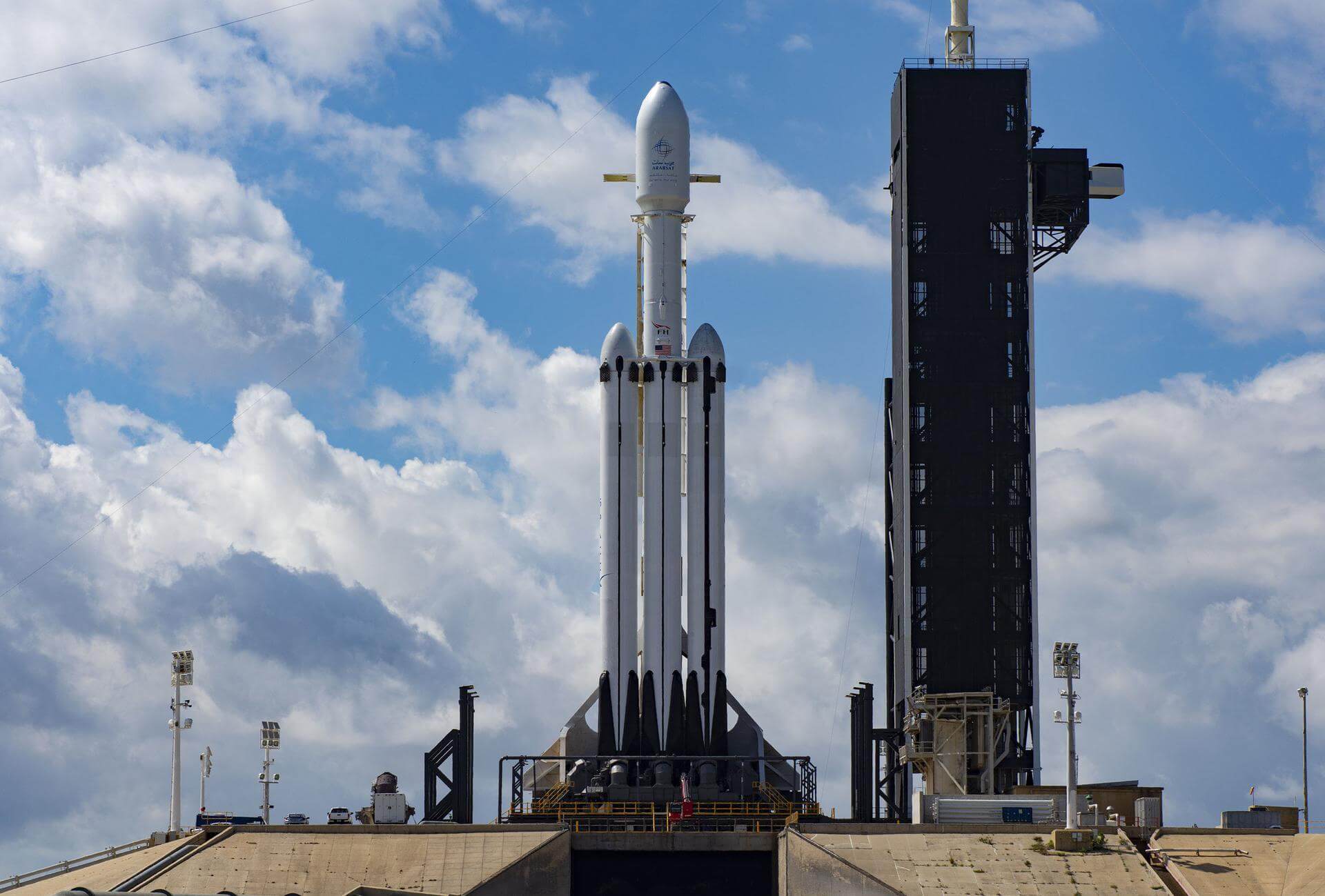
The Falcon Heavy is a variant of the Falcon 9 full thrust launch vehicle and consists of a standard Falcon 9 rocket core, with two additional boosters derived from the Falcon 9 first stage.
Demonstration flight of the Astrobotic Griffin lander and its engines, initially contracted for the NASA VIPER (Volatiles Investigating Polar Exploration Rover) mission. The vacated payload spot will now host the FLIP (FLEX Lunar Innovation Platform) lunar rover from Astrolab.
Agencies Involved
• Voyager Technologies (Private)
Launch Provider: SpaceX
Commercial • United States of America • Founded 2002
The Falcon Heavy is a variant of the Falcon 9 full thrust launch vehicle and consists of a standard Falcon 9 rocket core, with two additional boosters derived from the Falcon 9 first stage.
The center core will attempt to land on an ASDS after launch.
Strap-On Booster (TBD)
LandingPlanned
Landing MethodRTLS
Landing SiteUnknown
the sidebooster will attempt to land at the launch site after launch.
Strap-On Booster (TBD)
LandingPlanned
Landing MethodRTLS
Landing SiteUnknown
the sidebooster will attempt to land at the launch site after launch.
SpaceX HLS LEO Demo ×
Mission Details
TypeHuman Exploration
OrbitLow Earth Orbit
TargetEarth
The Starship HLS pathfinder spacecraft in support of NASA’s Artemis III mission in Low Earth Orbit will be a Version 3 vehicle equipped with a docking mechanism, but with no crew cabin or environmental control systems on board. This Starship HLS will launch after the Artemis III Orion has launched into LEO aboard SLS, and has completed its demonstrations with Blue Origin’s Blue Moon lander. Once docked, Orion and Starship will spend about a day connected for checkouts and testing.
Agencies Involved
• SpaceX (Commercial)
Launch Provider: SpaceX
Commercial • United States of America • Founded 2002
The Falcon Heavy is a variant of the Falcon 9 full thrust launch vehicle and consists of a standard Falcon 9 rocket core, with two additional boosters derived from the Falcon 9 first stage.
Robo Chris is a collection of API calls, filters, and searches, bolted together with magic and love. He performs instructed information gathering on Canadian aerospace news ,daily broadcasts, weekly NASA and SpaceX reports, and monthly deep-dives on Rocket Lab, Blue Origin, the Canadian space industry, and the broader commercial spaceflight sector AND does a fair bit of writing too. Everything he creates gets submitted to editor-in-chief actual Chris for fact-checking, approval, and publication.








Leave a Reply