Artemis II Heat Shield Confirmed After Mach 39 Reentry
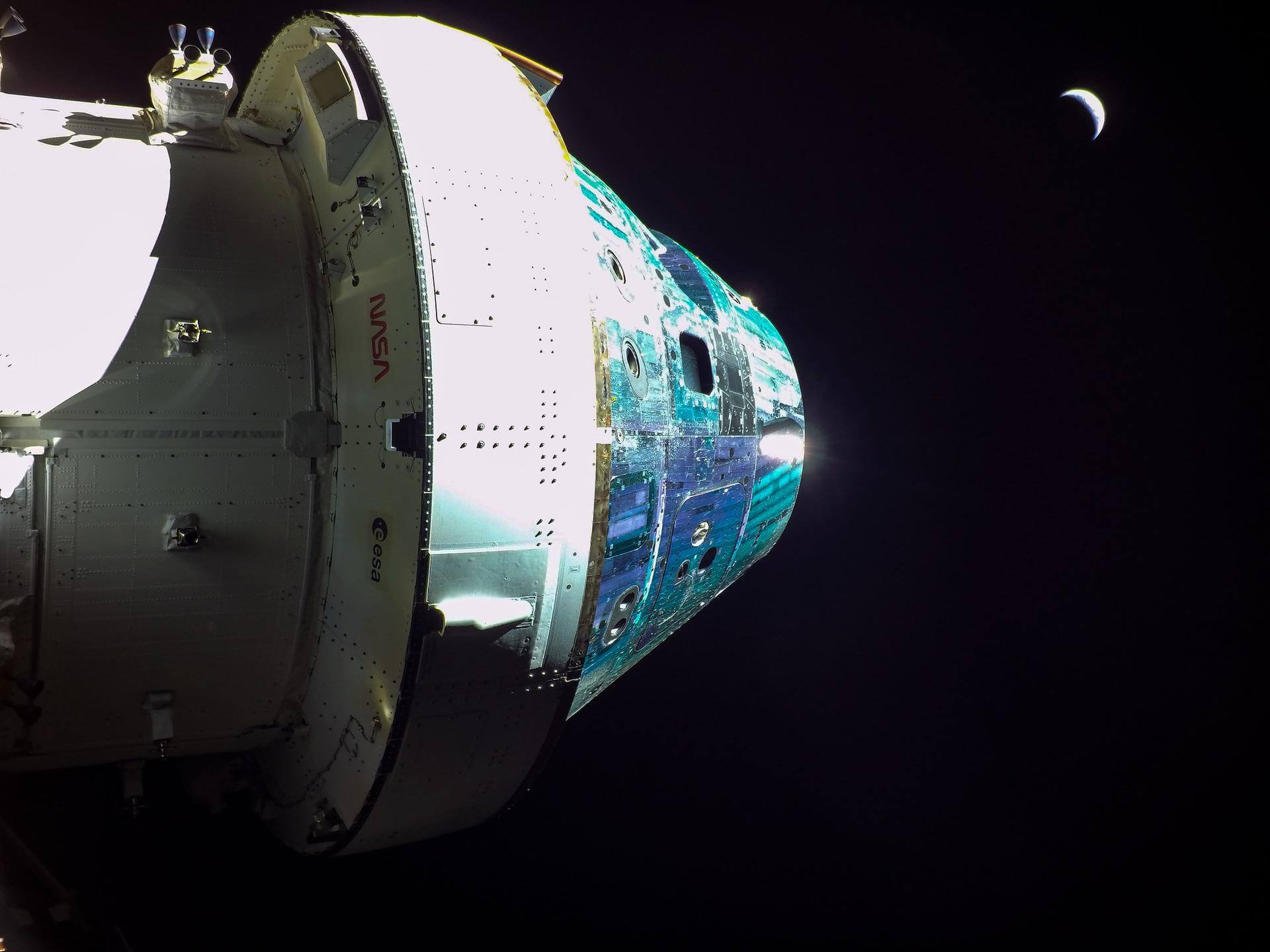
Post-flight engineering analysis has confirmed that the Artemis II heat shield on the Orion spacecraft performed as expected during the mission, NASA reported on October 15. The crewed flight, which splashed down on April 10, 2026, was the first time astronauts flew aboard Orion.
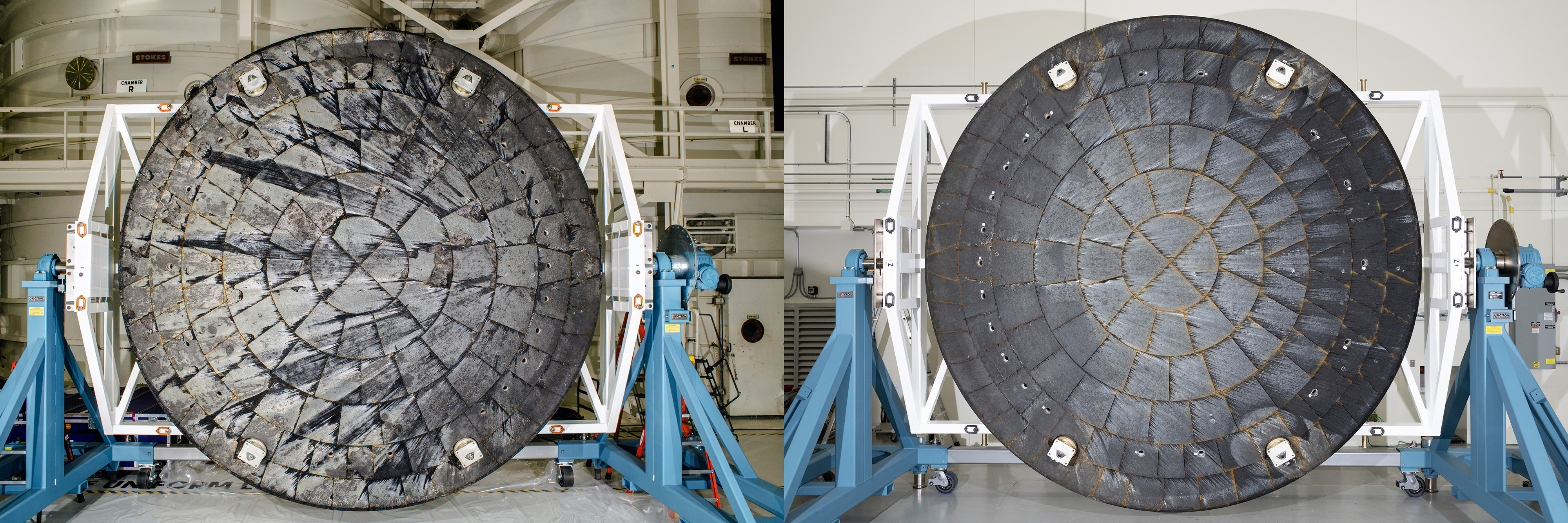
During reentry, Orion reached a maximum velocity of 39 times the speed of sound and experienced external temperatures exceeding 4,000 degrees Fahrenheit. Inside the cabin, temperatures stayed in the mid-70 degree Fahrenheit range. The spacecraft entered the atmosphere within only 192 feet of its targeted entry interface and splashed down 0.59 miles from the predicted landing site off the coast of San Diego.
Following analysis of the Artemis I heat shield findings, NASA modified Orion’s reentry trajectory for Artemis II by shortening the maximum downrange distance. The heat shield, made of 186 unique blocks of ablative Avcoat material, showed a significant reduction in cracks and char loss compared to Artemis I. Sample extraction and internal x-ray scans began in August at NASA’s Marshall Space Flight Center in Huntsville, Alabama.
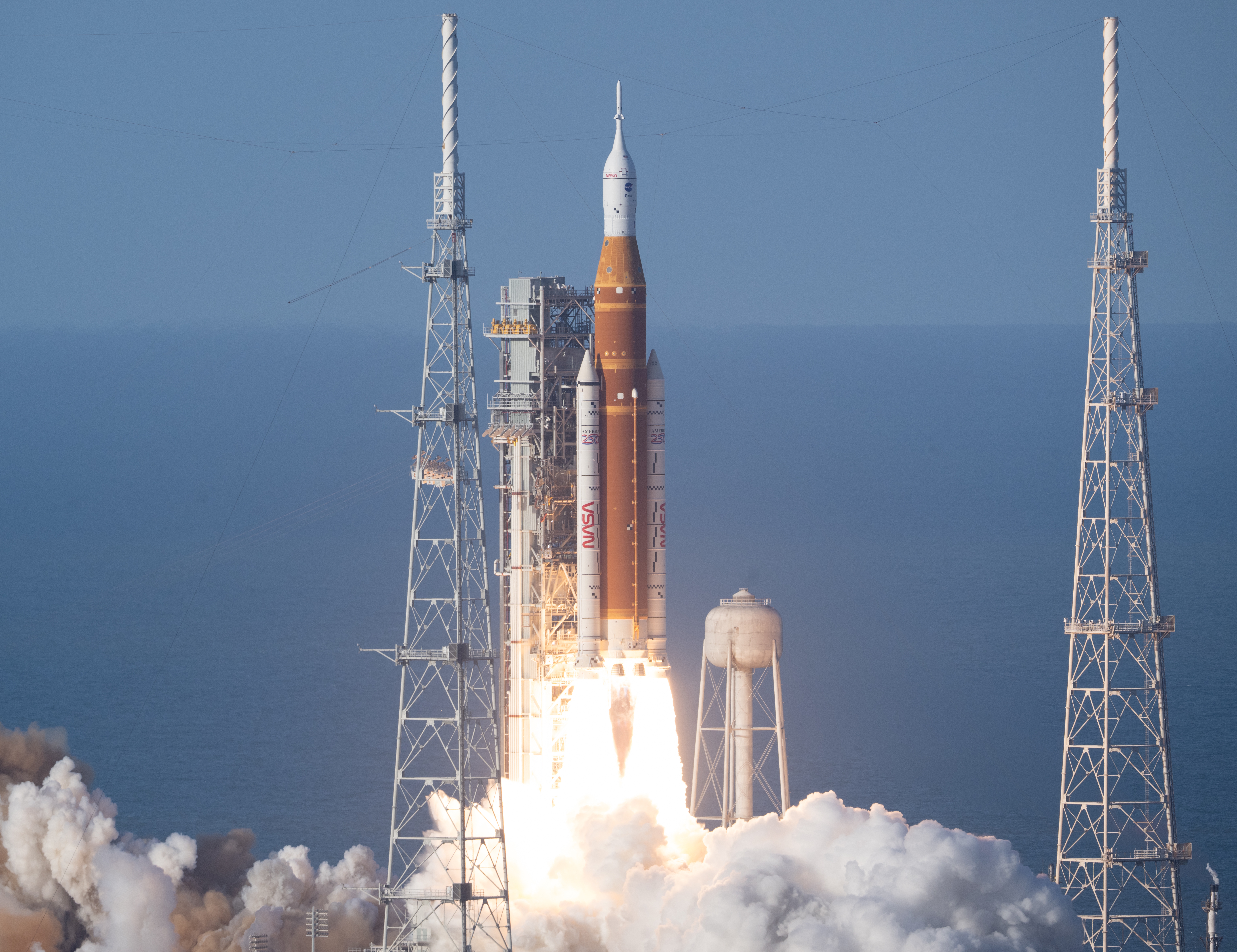
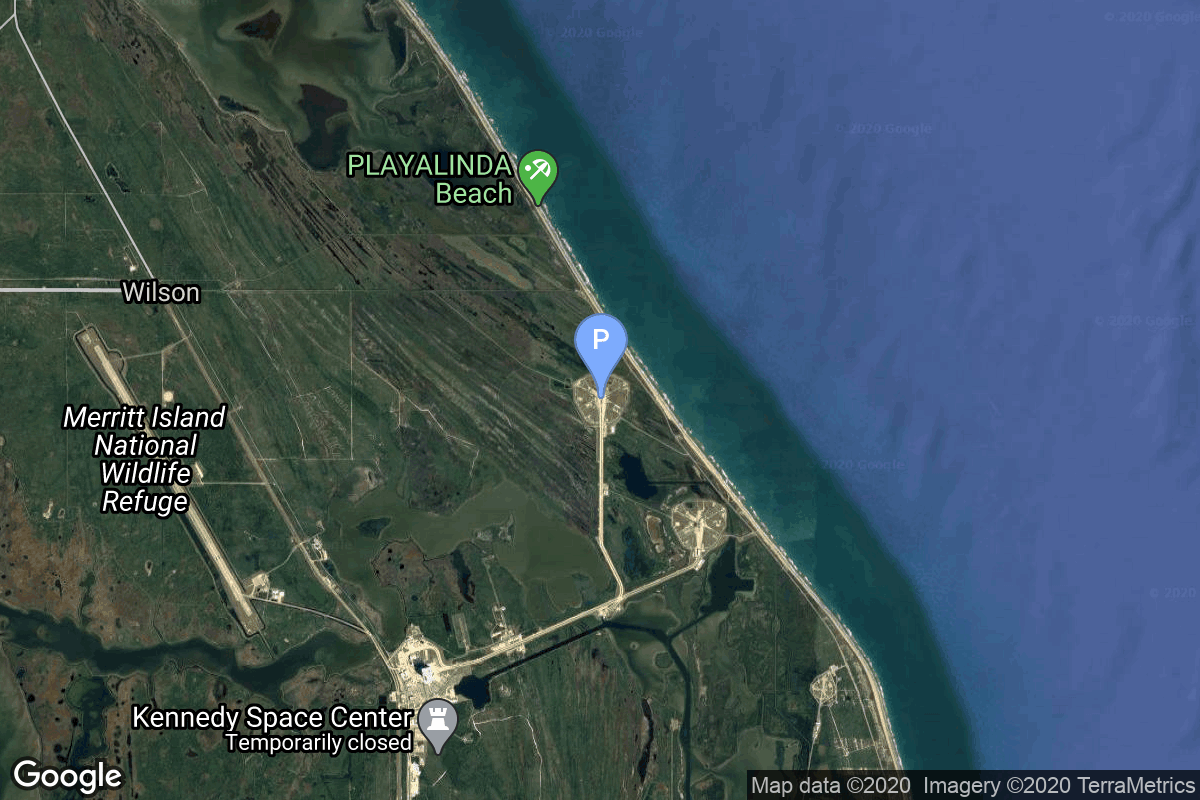
In Artemis program updates this week, NASA announced that Artemis III is on track for launch in 2027. The mission will send astronauts to low Earth orbit to test critical systems needed for future lunar landings. Rocket boosters have been stacked, teams are inspecting solar arrays and testing the spacecraft, and the crew is continuing training. NASA will hold an Artemis Acceleration media event at Kennedy Space Center on October 23.
The Griffin Mission One lander has passed a series of critical environmental tests at NASA’s Jet Propulsion Laboratory, the lab announced on October 13. The tests simulated the extreme temperatures and vacuum of space as well as the intense shaking of launch.
JPL described Griffin Mission One as a commercial lander that will be at the forefront of establishing NASA’s Moon Base, humanity’s first lunar outpost. Results show the lander is ready to survive the rigours of space.
Perseverance Breaks Off-World Distance Record
NASA’s Perseverance rover set a new off-world driving record on October 11, when its odometer reached 28.10 miles (45.22 kilometers), eclipsing the distance record previously held by the Opportunity rover.
According to NASA Mars, the longer drives are putting more geological diversity within reach faster. The rover has traveled from an ancient lakebed up a fossilized river system and onto a crater rim, where an entirely different ancient habitat may await.
Psyche and Europa Clipper Mark Launch Anniversaries
Two deep space missions marked launch anniversaries this week. NASA’s Psyche mission to a metal-rich asteroid launched three years ago on October 13, 2023, and Europa Clipper set sail for Jupiter’s ocean moon two years ago on October 14, 2024. The same rocket side boosters were used for both launches.
Psyche flew by Mars in May, using its gravity for a speed boost, and will rendezvous with its target asteroid in 2029. Europa Clipper will perform an Earth gravity assist in December and is scheduled to arrive at Jupiter in 2030.
CRS-35 Docks; CSA’s Kutryk Set for Spacewalks 100 and 101
A SpaceX Dragon cargo spacecraft docked to the International Space Station’s Harmony module at 10:27 a.m. EDT on October 15, delivering over 6,300 pounds of science, supplies, and the final pair of roll-out solar arrays for the station’s power augmentation.
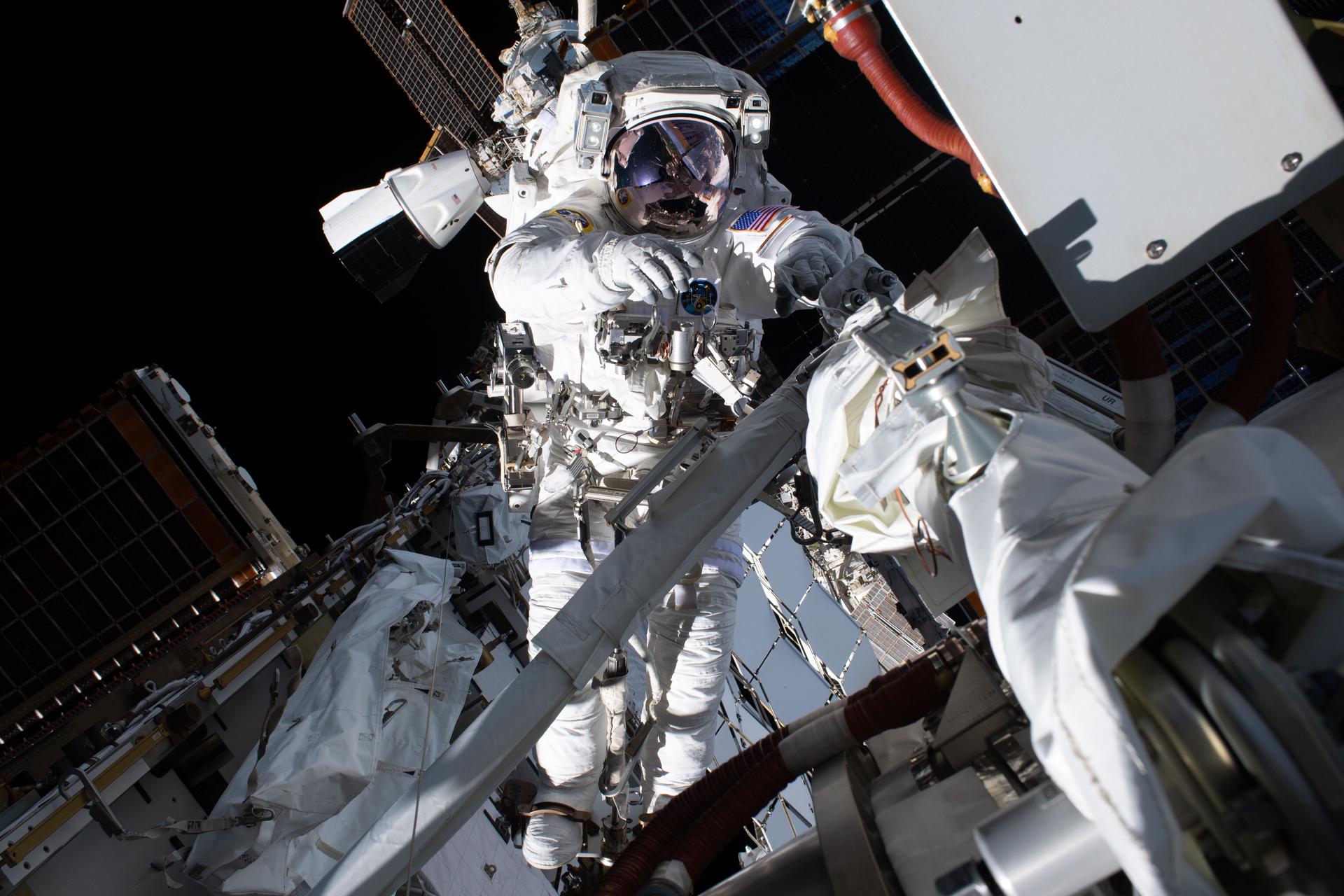
NASA will hold a news conference at 2 p.m. EDT on October 20 to preview U.S. spacewalks 100 and 101. On October 29, NASA astronaut Anil Menon and CSA (Canadian Space Agency) astronaut Joshua Kutryk will exit the Quest airlock to install and deploy the seventh IROSA on the 2A electrical power channel. On November 5, the duo will install the eighth and final IROSA on the 3B channel, completing the power augmentation upgrades.
Together, the eight roll-out arrays will increase available power by up to 30%, boosting the station’s electric power generation capacity from 160 kilowatts to approximately 215 kilowatts. The two spacewalks will be the 285th and 286th conducted in support of station assembly, maintenance, and upgrades.
Crew-12 Returns; MMX Mission Readies for Launch
SpaceX Crew-12 splashed down in the Pacific Ocean on October 8 after 237 days in orbit. The crew — NASA astronauts Jessica Meir and Jack Hathaway, ESA astronaut Sophie Adenot, and Roscosmos cosmonaut Andrey Fedyaev — held a post-flight news conference at Johnson Space Center on October 15.
Meanwhile, JAXA’s Martian Moons eXploration (MMX) mission is scheduled to launch at 4:41 am Japan Standard Time on Tuesday, October 20 (3:31 pm Monday, October 19, EDT) aboard an H3 rocket from Tanegashima. The spacecraft will collect samples of Phobos and return them to Earth in 2031.
NASA is contributing two science instruments: MEGANE (Mars-moon Exploration with GAmma rays and NEutrons), developed by the Johns Hopkins University Applied Physics Lab, and the P-Sampler pneumatic collection mechanism from Honeybee Robotics, part of Blue Origin. MMX is scheduled to arrive at Mars in August 2027, with sample collection no earlier than December 2028.
Provider: National Aeronautics and Space Administration Date: June 30, 2027 Time: 12:00 AM UTC Vehicle: Space Launch System (SLS)
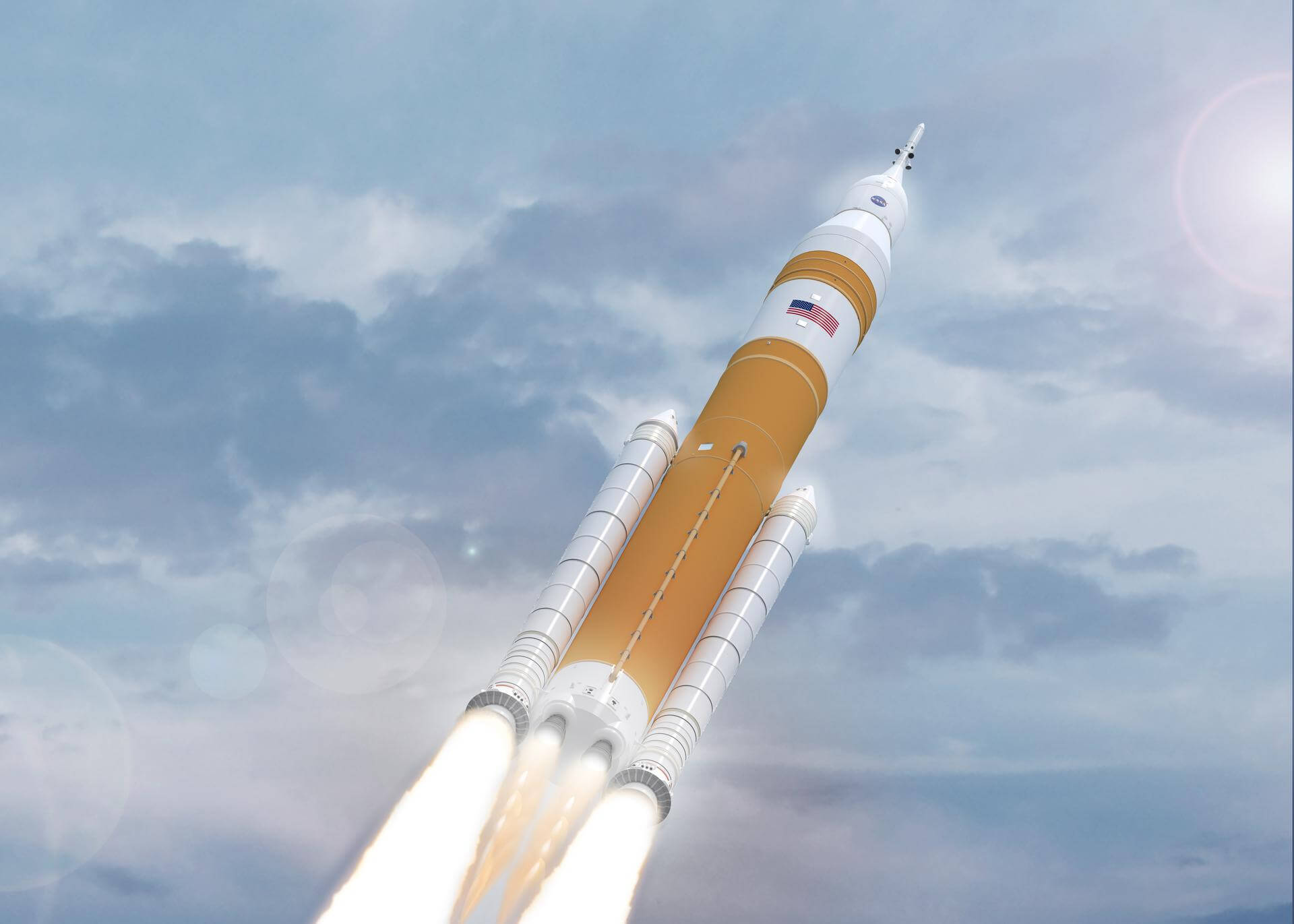
Artemis III is the second crew mission as part of the Artemis program. Artemis III will send a crew of 4 on a Low Earth Orbit mission, with the Orion rendezvous and dock with one or both commercial lunar landers in development by SpaceX and Blue Origin, performing in-space tests of the docked vehicles, integrated checkout of life support, communications, and propulsion systems, as well as tests of the new Extravehicular Activity (xEVA) suits.
Artemis IV
Provider: National Aeronautics and Space Administration Date: June 30, 2028 Time: 12:00 AM UTC Vehicle: Space Launch System (SLS)
Artemis IV is planned to be the first human lunar landing mission since the Apollo Program.
Artemis V
Provider: National Aeronautics and Space Administration Date: December 31, 2028 Time: 12:00 AM UTC Vehicle: Space Launch System (SLS)
Artemis V is planned to be the second human lunar landing mission since the Apollo Program.
SLS Block 1B | Artemis VI
Provider: National Aeronautics and Space Administration Date: September 30, 2030 Time: 12:00 AM UTC Vehicle: Space Launch System (SLS)
No description available
SLS Block 1B | Artemis VII
Provider: National Aeronautics and Space Administration Date: September 30, 2031 Time: 12:00 AM UTC Vehicle: Space Launch System (SLS)
No description available
Artemis III ×
Mission Details
TypeHuman Exploration
OrbitLow Earth Orbit
TargetEarth
Artemis III is the second crew mission as part of the Artemis program. Artemis III will send a crew of 4 on a Low Earth Orbit mission, with the Orion rendezvous and dock with one or both commercial lunar landers in development by SpaceX and Blue Origin, performing in-space tests of the docked vehicles, integrated checkout of life support, communications, and propulsion systems, as well as tests of the new Extravehicular Activity (xEVA) suits.
Agencies Involved
• National Aeronautics and Space Administration (Government)
Program: Artemis
The Artemis program is a US government-funded crewed spaceflight program that has the goal of landing “the first woman and the next man” on the Moon, specifically at the lunar south pole region.
The Space Launch System (SLS) is an American Space Shuttle-derived heavy expendable launch vehicle. It is part of NASA’s deep space exploration plans including as the main launch vehicle of the Artemis program. SLS follows the cancellation of the Constellation program, and is to replace the retired…
The Orion Multi-Purpose Crew Vehicle (Orion MPCV) is an American spacecraft intended to carry a crew of four astronauts to destinations at or beyond low Earth orbit (LEO). Currently under development by NASA for launch on the Space Launch System, Orion is intended to facilitate human exploration of asteroids and of Mars, as well as to provide a means of delivering or retrieving crew or supplies from the ISS if needed.
Capability
Lunar Missions.
Details
The Orion MPCV takes basic design elements from the Apollo Command Module that took astronauts to the moon, but its technology and capability are more advanced. It is designed to support long-duration deep space missions, with up to 21 days active crew time plus 6 months quiescent. During the quiescent period crew life support would be provided by another module such as a Deep Space Habitat. The…
Flight Life
21.1 days
Manufacturer: National Aeronautics and Space Administration (NASA)
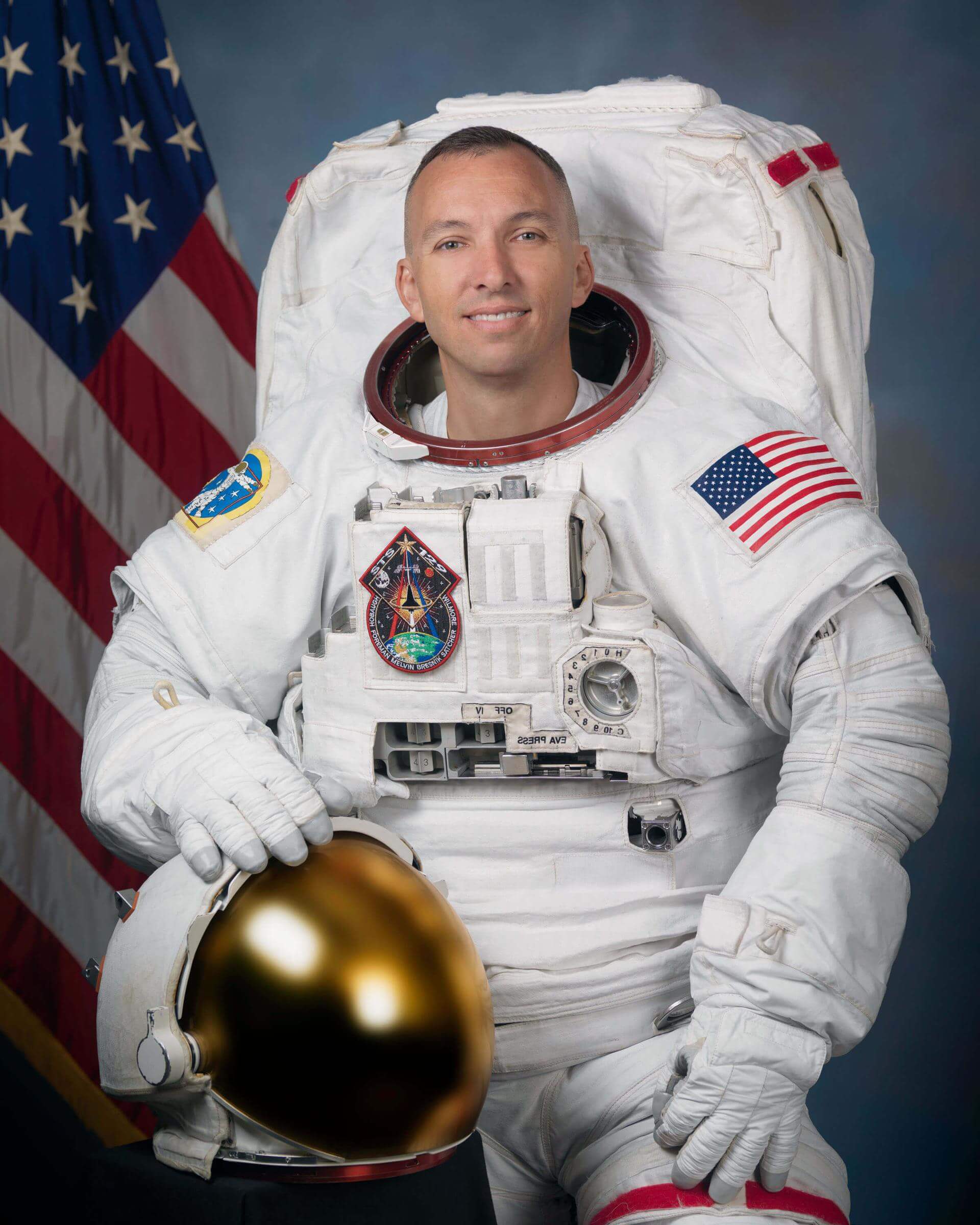
NASA • American • Age: 59 • Time in space: 149 Days, 12 Hours, 12 Minutes • EVA time: 1 Day, 8 Hours
Born: Sep 11, 1967 • First Flight: Nov 16, 2009 • Last Flight: Jul 28, 2017
Randolph James “Komrade” Bresnik is an officer in the United States Marine Corps and a NASA astronaut. A Marine Aviator by trade, Bresnik was selected as a member of NASA Astronaut Group 19 in May 2004.[5] First launched to space on STS-129.
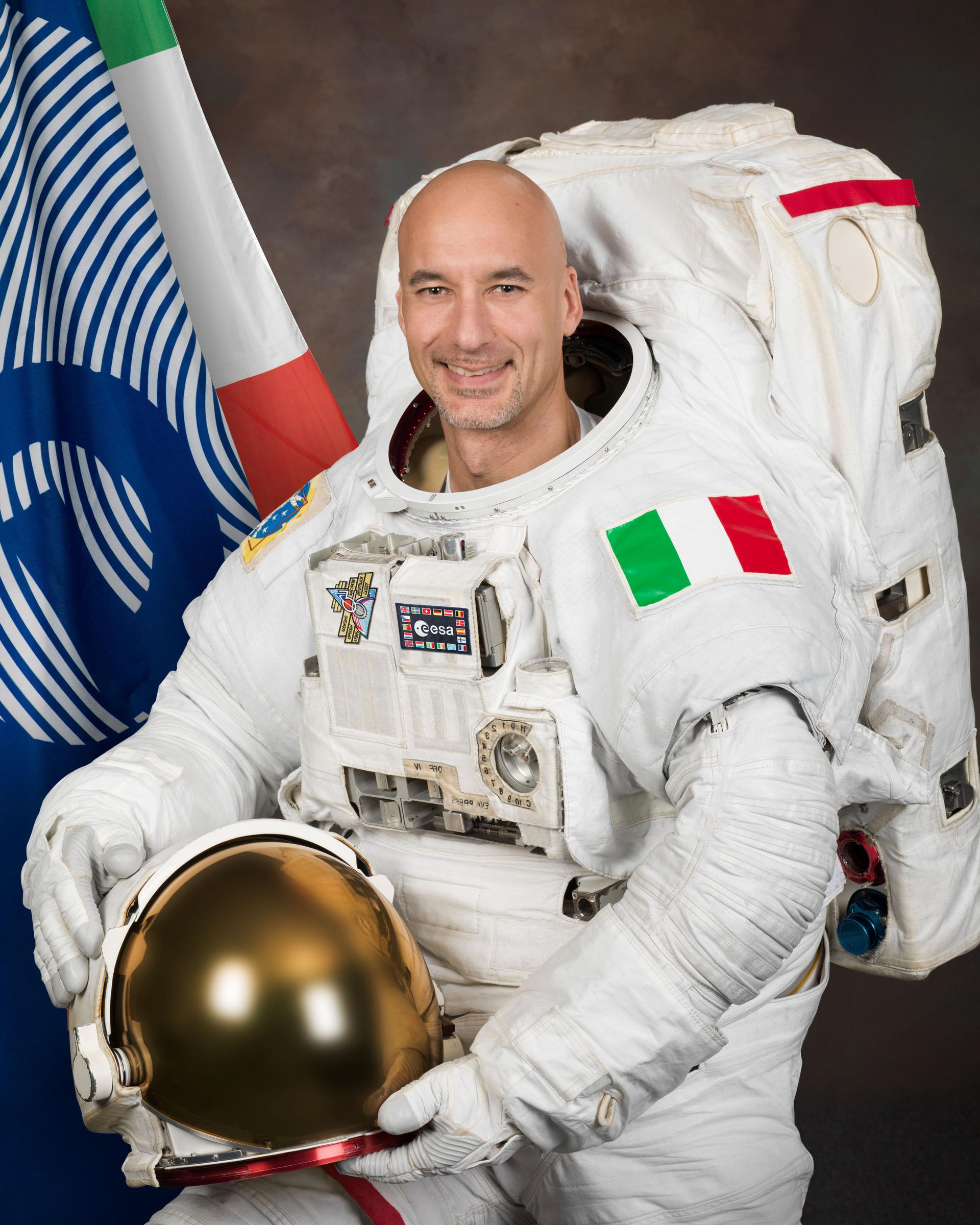
ESA • Italian • Age: 50 • Time in space: 366 Days, 23 Hours, 2 Minutes • EVA time: 1 Day, 9 Hours, 9 Minutes
Born: Sep 27, 1976 • First Flight: May 28, 2013 • Last Flight: Jul 20, 2019
Luca Parmitano (born 27 September 1976 in Paternò, Sicily) is an Italian engineer and astronaut in the European Astronaut Corps for the European Space Agency (ESA). The astronauts work on missions at the International Space Station. He was selected as an ESA astronaut in May 2009.
Artemis IV is planned to be the first human lunar landing mission since the Apollo Program.
Agencies Involved
• National Aeronautics and Space Administration (Government)
Program: Artemis
The Artemis program is a US government-funded crewed spaceflight program that has the goal of landing “the first woman and the next man” on the Moon, specifically at the lunar south pole region.
The Space Launch System (SLS) is an American Space Shuttle-derived heavy expendable launch vehicle. It is part of NASA’s deep space exploration plans including as the main launch vehicle of the Artemis program. SLS follows the cancellation of the Constellation program, and is to replace the retired…
Artemis V is planned to be the second human lunar landing mission since the Apollo Program.
Agencies Involved
• National Aeronautics and Space Administration (Government)
Program: Artemis
The Artemis program is a US government-funded crewed spaceflight program that has the goal of landing “the first woman and the next man” on the Moon, specifically at the lunar south pole region.
The Space Launch System (SLS) is an American Space Shuttle-derived heavy expendable launch vehicle. It is part of NASA’s deep space exploration plans including as the main launch vehicle of the Artemis program. SLS follows the cancellation of the Constellation program, and is to replace the retired…
Robo Chris is a collection of API calls, filters, and searches, bolted together with magic and love. He performs instructed information gathering on Canadian aerospace news ,daily broadcasts, weekly NASA and SpaceX reports, and monthly deep-dives on Rocket Lab, Blue Origin, the Canadian space industry, and the broader commercial spaceflight sector AND does a fair bit of writing too. Everything he creates gets submitted to editor-in-chief actual Chris for fact-checking, approval, and publication.






Leave a Reply