Kutryk Targets Oct. 1 Launch After Years of Delays
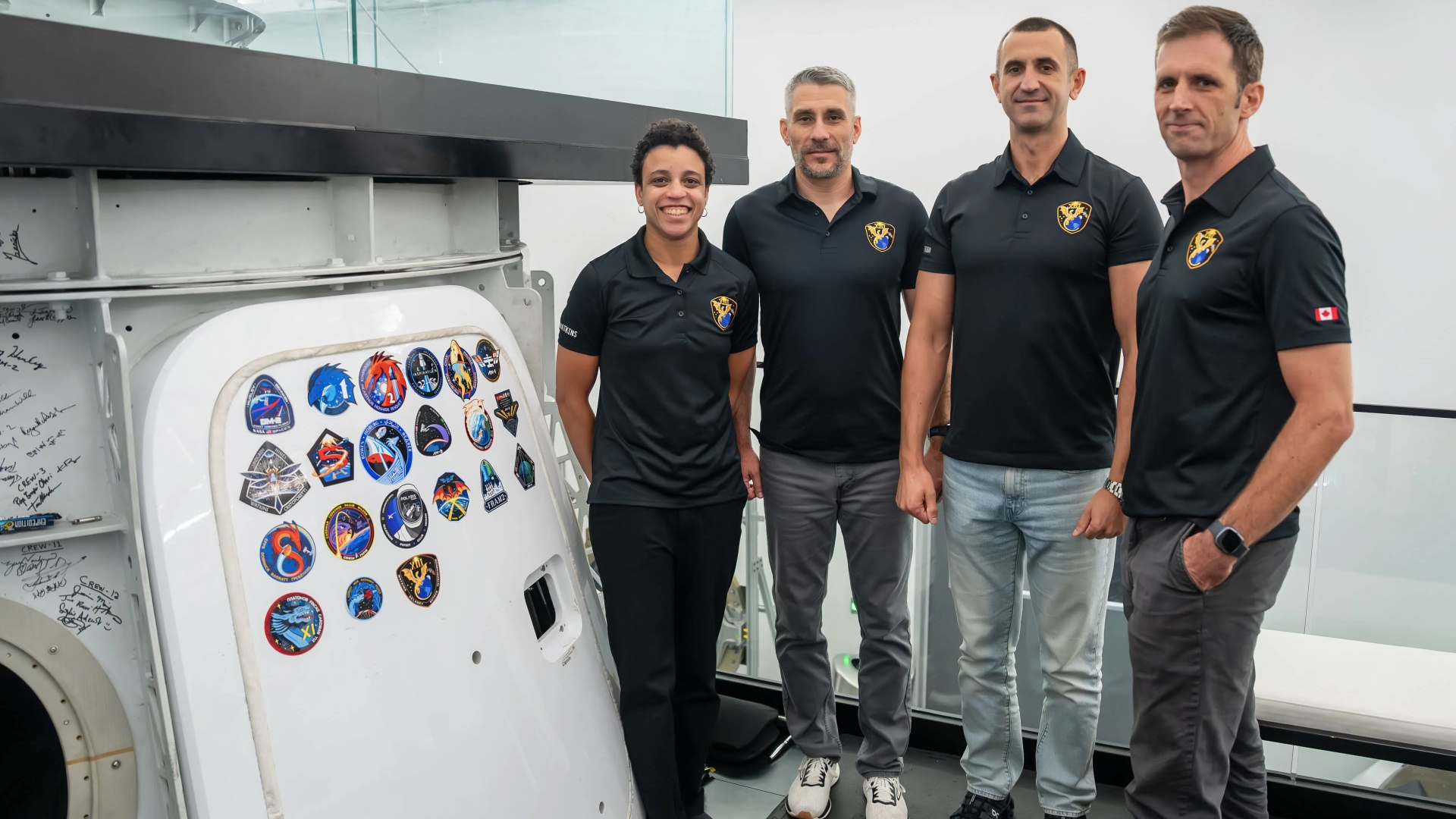
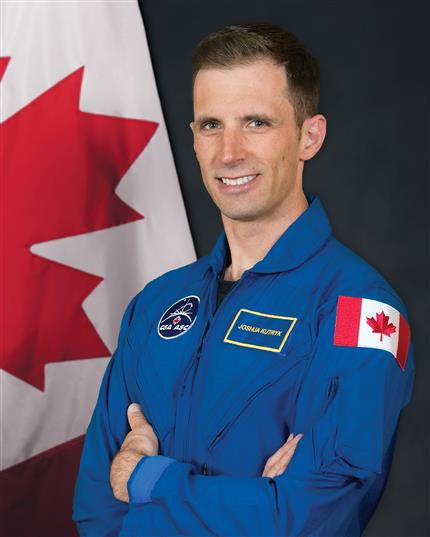
CSA astronaut Josh Kutryk is set to fly to the International Space Station as soon as next week, after nearly 20 years of waiting through selection rounds, vehicle swaps and a last-minute technical delay. His SpaceX Crew-13 mission is now targeted for no earlier than Oct. 1 at 11:10 a.m. EDT.
Speaking from quarantine in Houston on Sept. 24, the 44-year-old RCAF test pilot reflected on the constant schedule changes that have defined his path to space. “I’ve come to see that as one of the most important skills to work on, actually … is being able to deal with constant change,” Kutryk said. He was scheduled to fly to Kennedy Space Center on Sept. 26 to continue quarantine near the launch area.
Kutryk first reached the final-four round of a CSA astronaut selection in 2009 but was not selected. Eight years and several academic degrees later, he applied again and was named one of two astronaut candidates in 2017. Because CSA’s ISS contribution sits at just over 2%, with flight opportunities tied to seating, he expected a long wait.
That wait was compounded when his original assignment on Boeing Starliner for 2024 was indefinitely delayed by spacecraft issues. The ISS consortium reassigned him to a SpaceX Dragon earlier this year. The mission was initially set for NET Sept. 12 but slipped again due to an oxidizer leak in Dragon’s propulsion system — what Kutryk described as a “very small, minor signature.” SpaceX used the extra time to swap out components, he said, adding that it “makes us all feel that much more confident in the ride that we have to space.”
MDA Space Signs First U.S. Sports Partnership With Broncos
MDA Space became the Denver Broncos’ first official space partner, the organizations announced on Sept. 23. The deal marks the Brampton, Ontario-based company’s second major professional sports sponsorship, following a similar arrangement with the Ottawa Senators signed in September 2025.
Under the agreement, MDA Space receives brand visibility at Empower Field at Mile High and across the Broncos’ digital platforms, including digital signage in the player tunnel and presenting sponsorship of player introductions. Neither side disclosed financial terms. The companies noted that Empower Field sits at the highest elevation of any NFL stadium, placing the Broncos closer to space than any other team in the league.
The Senators deal targeted a domestic Canadian audience with STEM programming for students. The Broncos partnership looks south. Mike Greenley, MDA Space’s chief executive, said the deal “gives us a meaningful way to build our brand and connect with new audiences” as the company grows in the U.S. market.
Colorado is already central to MDA’s U.S. expansion. In June, the company agreed to pay US$620 million for Blue Canyon Technologies, a Lafayette, Colorado, satellite and spacecraft-component maker with roughly 400 employees — a deal still awaiting regulatory clearance. MDA also issued a US$600-million note offering to help fund the purchase, part of approximately US$2 billion in U.S. acquisitions the company has made this year alongside a majority stake in French Earth-observation firm CLS.
Callisto Demonstrator Nears 2027 Hop Test
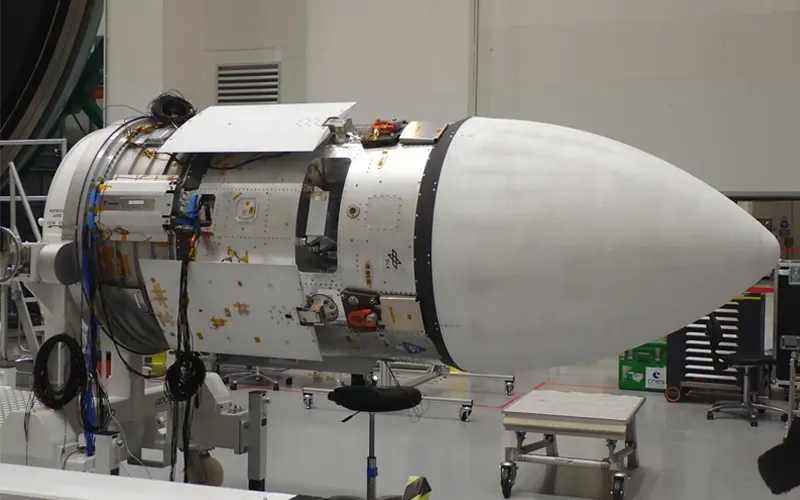
Europe’s Callisto reusable rocket demonstrator is taking shape ahead of its initial hop test, now scheduled for 2027. The German Aerospace Center (DLR) confirmed on Sept. 11 that the vehicle’s carbon-fibre nose cone had successfully completed acceptance testing and will be delivered to CNES and APCO Technologies for integration into Callisto’s top block before shipment to the Guiana Space Centre.
The hop test delay to 2027 was first hinted at in a CNES procurement notice published in September 2025. DLR also confirmed that Callisto’s aerodynamic fins are complete and that its landing legs are currently being manufactured, with an expected shipment to the launch site in 2027.
Callisto is a joint effort among DLR, CNES and JAXA. Recent procurement records and supplier updates show work continuing on contributions from all three agencies, including propulsion, control and integration hardware. The demonstrator is intended to validate technologies for reusable launch vehicles in Europe.
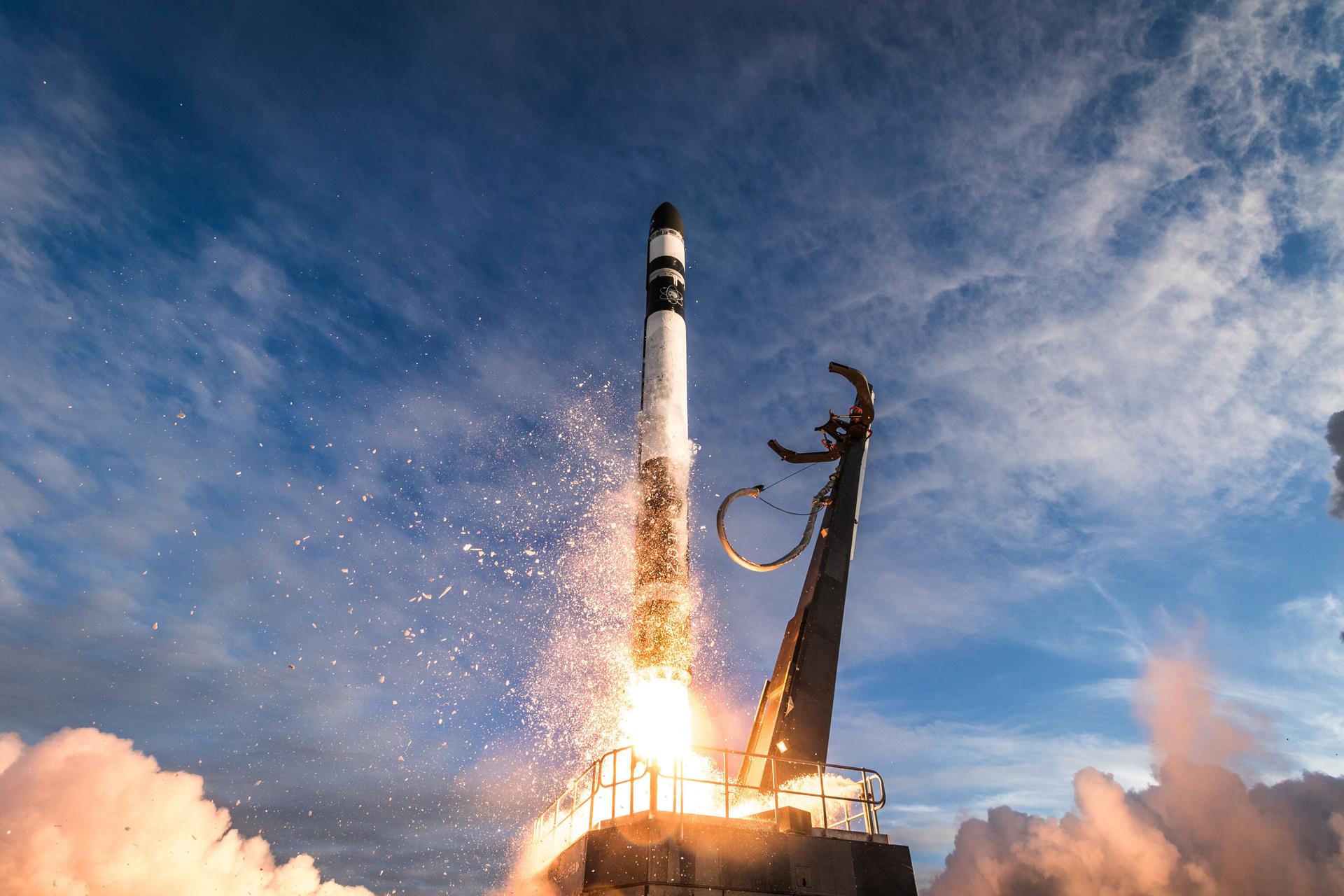
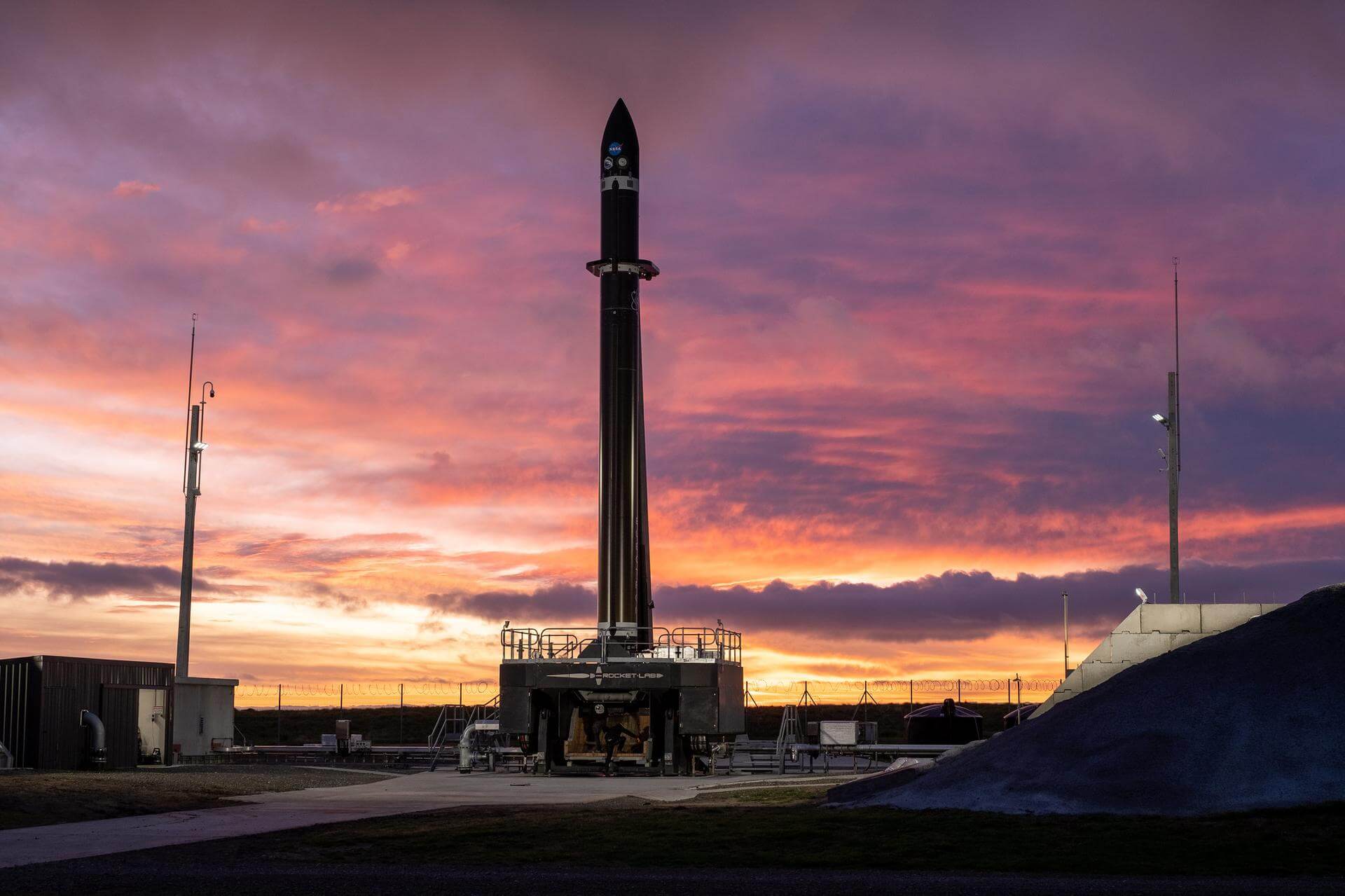
Provider: Rocket Lab Date: September 26, 2026 Time: 12:26 AM UTC Vehicle: Electron
Synthetic aperture radar satellite for Japanese Earth imaging company Synspective.
USSF-385
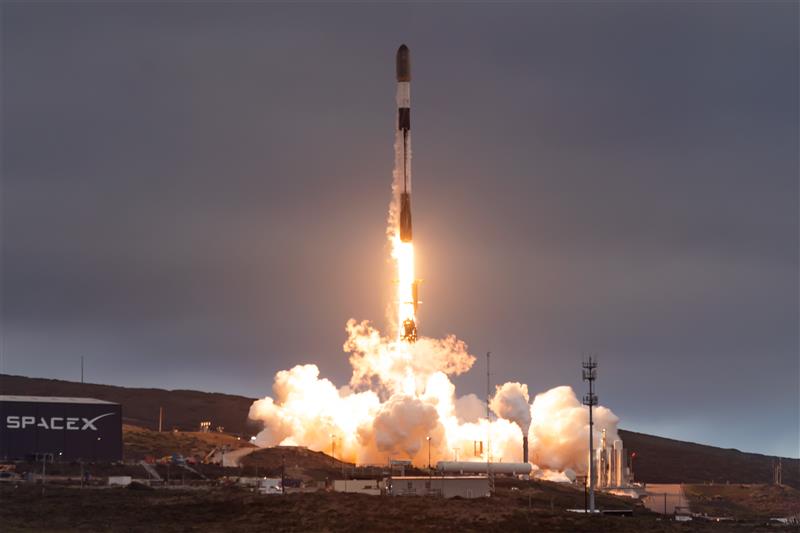
Provider: SpaceX Date: September 26, 2026 Time: 11:56 AM UTC Vehicle: Falcon 9
A classified mission for the United States Space Force. It is possibly a batch of classified LEO satellites based on SpaceX’s Starshield satellite bus, based on locations of rocket stage drop zones being exact fits with previous Starlink Group 15 launches.
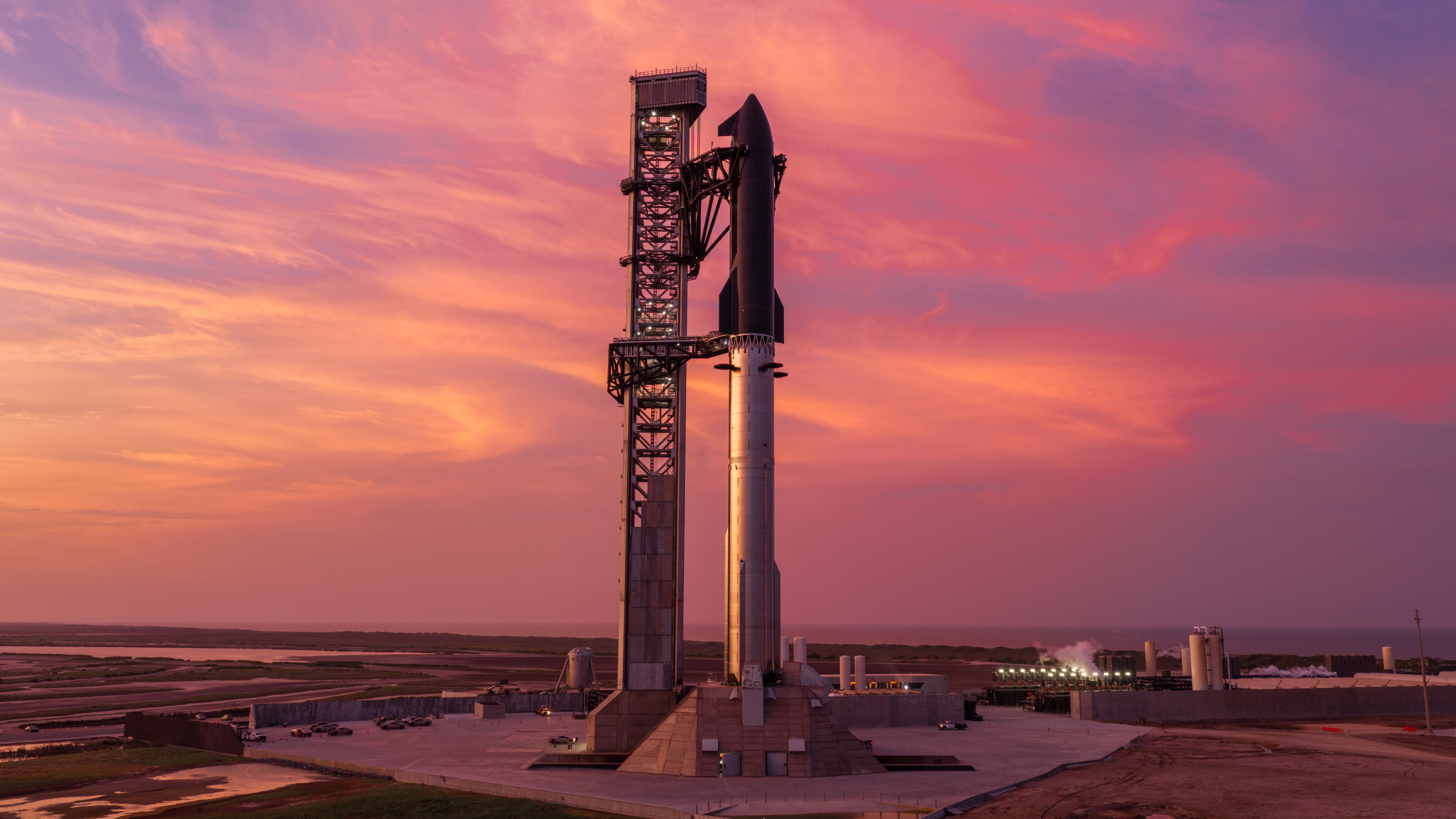
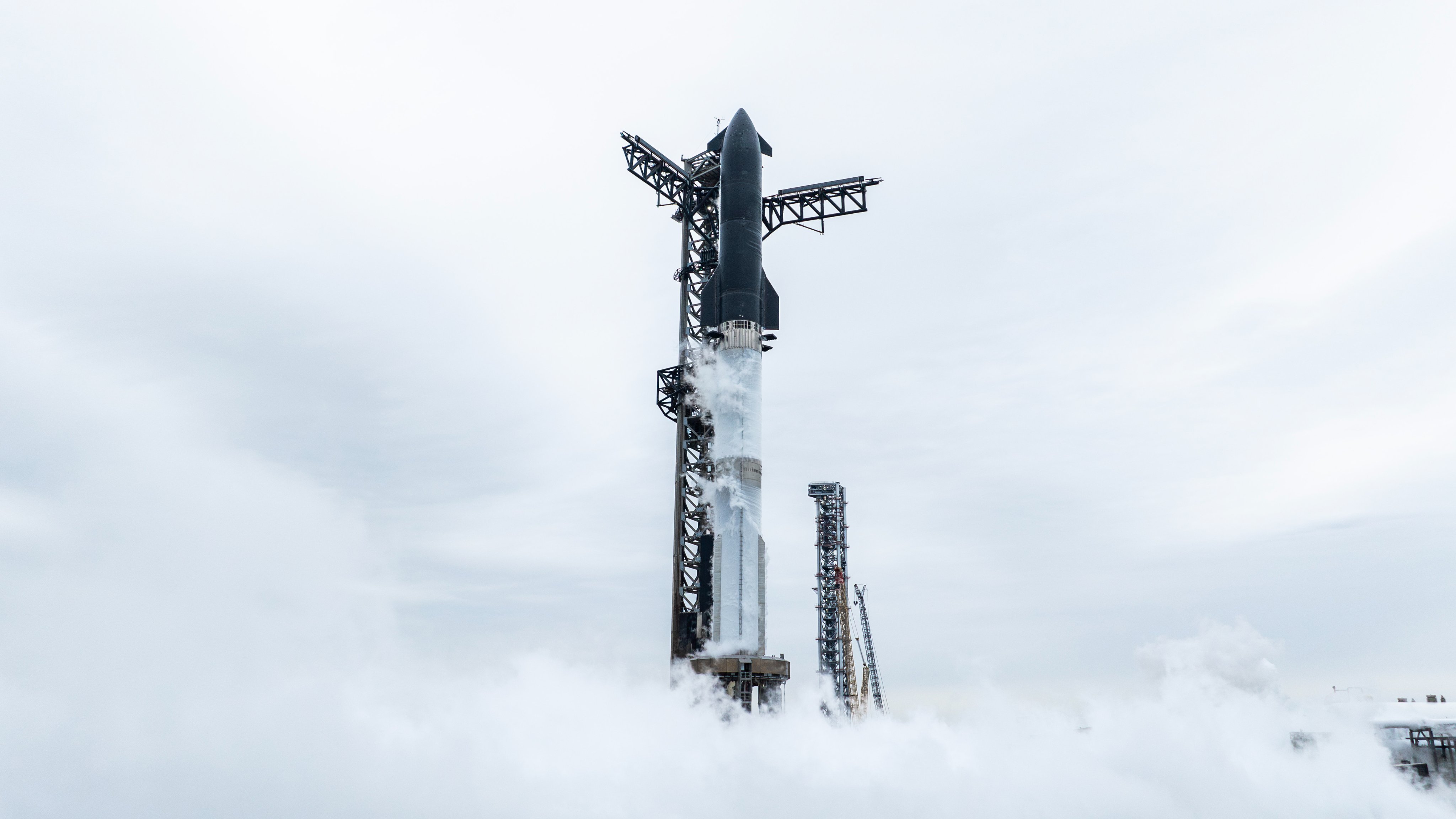
Starlink Group 31-1 (Starship Flight 14)
Provider: SpaceX Date: September 28, 2026 Time: 12:15 PM UTC Vehicle: Starship
14th test flight of the two-stage Starship launch vehicle. 3rd flight of Starship V3 and the first Starship flight to deploy satellites (a group of Starlink satellites known as Starlink Group 31-1) into stable Low Earth Orbit.
The ship is expected to fly at an altitude approximately 275 km above Earth and complete approximately 6 orbits around the planet for nearly 10 hours, with splashdown targeted in the Pacific Ocean west of Chile.
The booster’s primary test objective on Flight 14 will be executing a successful launch, ascent, stage separation, boostback burn, and landing burn at an offshore landing point in the Gulf.
Starship will deliver 26 Starlink V3 satellites to orbit for the first time, which aim to greatly expand the network’s capacity and user speeds. Each Starlink V3 satellite will add 1 Tbps of capacity to the constellation.
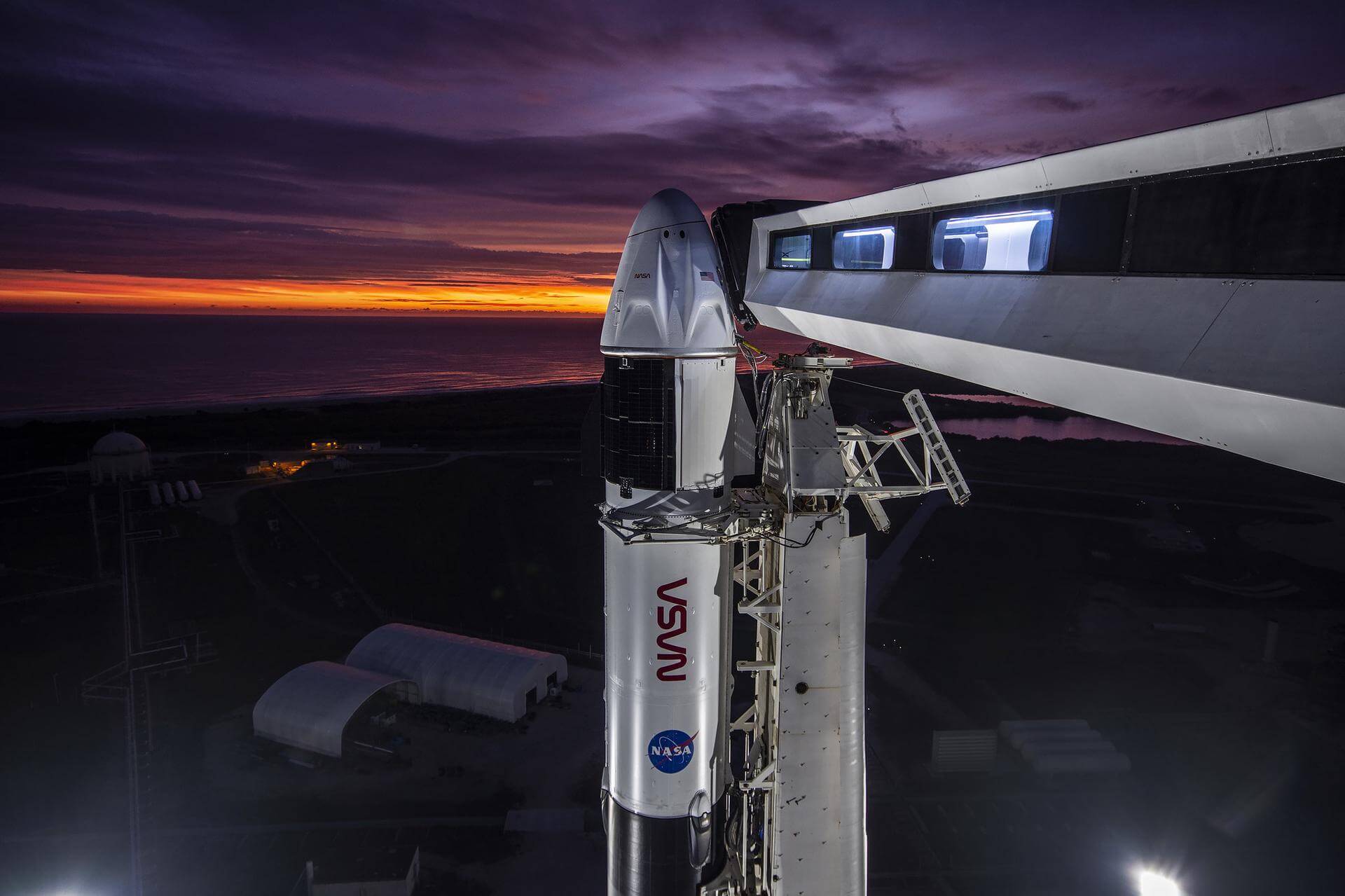
Crew-13
Provider: SpaceX Date: October 1, 2026 Time: 3:10 PM UTC Vehicle: Falcon 9
SpaceX Crew-13 is the thirteenth crewed operational flight of a Crew Dragon spacecraft to the International Space Station as part of NASA’s Commercial Crew Program.
Transporter 18 (Dedicated SSO Rideshare)
Provider: SpaceX Date: October 1, 2026 Time: 6:18 PM UTC Vehicle: Falcon 9
Dedicated rideshare flight to a sun-synchronous orbit with dozens of small microsatellites and nanosatellites for commercial and government customers.
Owlright, Owlright, Owlright (StriX Launch 13) ×
Mission Details
TypeEarth Science
OrbitLow Earth Orbit
TargetEarth
Synthetic aperture radar satellite for Japanese Earth imaging company Synspective.
Electron is a two-stage orbital expendable launch vehicle (with an optional third stage) developed by the American aerospace company Rocket Lab. Electron is a small-lift launch vehicle designed to launch small satellites and cubesats to sun-synchronous orbit and low earth orbit. The Electron is the…
A classified mission for the United States Space Force. It is possibly a batch of classified LEO satellites based on SpaceX’s Starshield satellite bus, based on locations of rocket stage drop zones being exact fits with previous Starlink Group 15 launches.
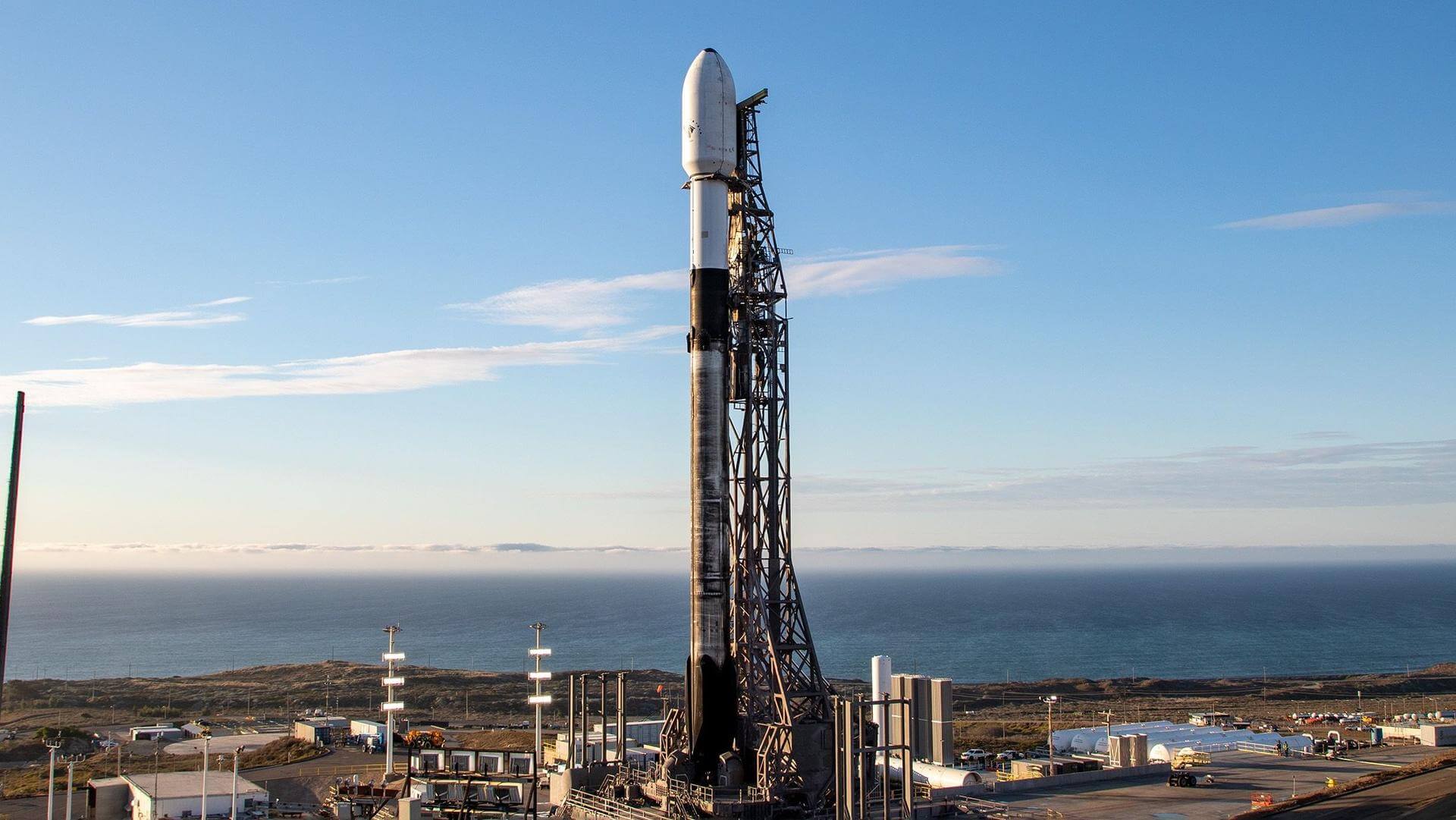
Falcon 9 is a two-stage rocket designed and manufactured by SpaceX for the reliable and safe transport of satellites and the Dragon spacecraft into orbit. The Block 5 variant is the fifth major interval aimed at improving upon the ability for rapid reusability.
The Falcon 9 first stage B1100 will land on ASDS OCISLY after its 10th flight.
Starlink Group 31-1 (Starship Flight 14) ×
Mission Details
TypeCommunications
OrbitLow Earth Orbit
TargetEarth
14th test flight of the two-stage Starship launch vehicle. 3rd flight of Starship V3 and the first Starship flight to deploy satellites (a group of Starlink satellites known as Starlink Group 31-1) into stable Low Earth Orbit.
The ship is expected to fly at an altitude approximately 275 km above Earth and complete approximately 6 orbits around the planet for nearly 10 hours, with splashdown targeted in the Pacific Ocean west of Chile.
The booster’s primary test objective on Flight 14 will be executing a successful launch, ascent, stage separation, boostback burn, and landing burn at an offshore landing point in the Gulf.
Starship will deliver 26 Starlink V3 satellites to orbit for the first time, which aim to greatly expand the network’s capacity and user speeds. Each Starlink V3 satellite will add 1 Tbps of capacity to the constellation.
The SpaceX Starship is a fully reusable super heavy-lift launch vehicle under development by SpaceX since 2012, as a self-funded private spaceflight project. The second stage of the Starship — is designed as a long-duration cargo and passenger-carrying spacecraft. It is expected to be initially used without any booster stage at all, as part of an extensive development program to prove out launch-and-landing and iterate on a variety of design details, particularly with respect to the vehicle’s atmospheric reentry.
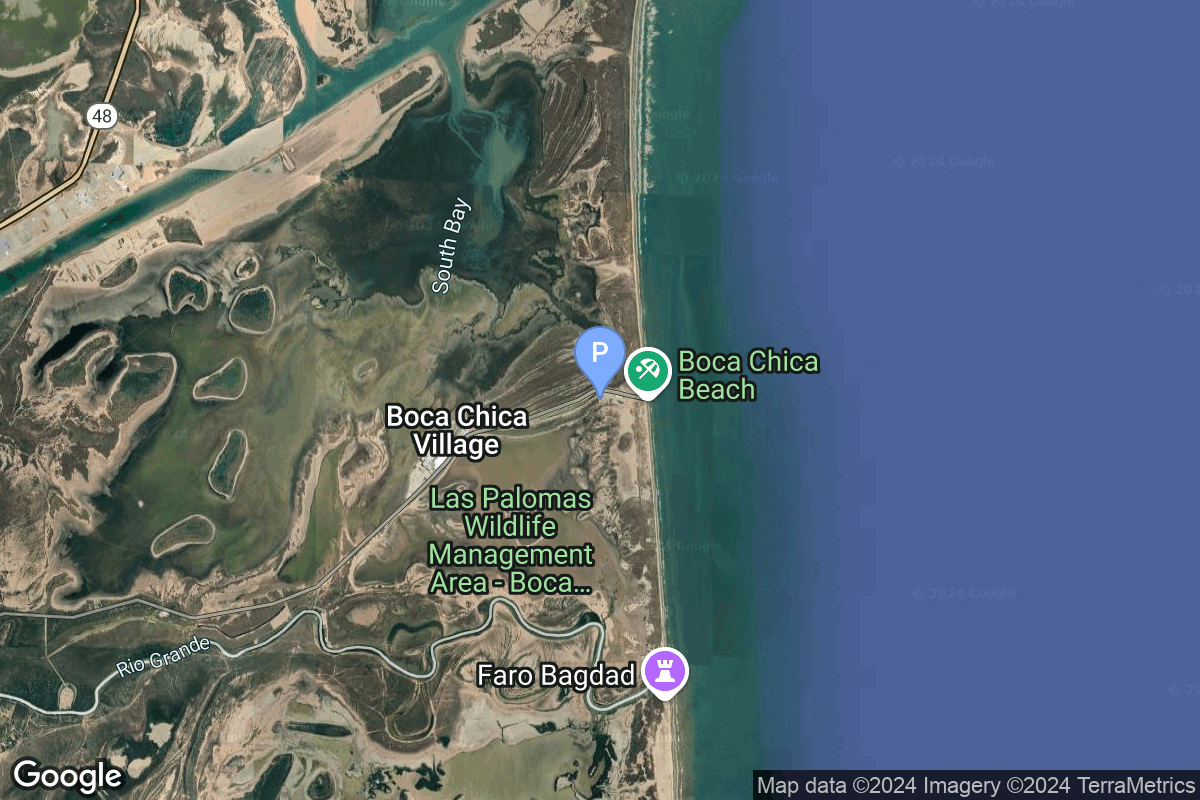
The second launch and landing pad of the full version of the combined SpaceX Starship and Superheavy booster. To be first used for launch in 2025 with version 3 of Starship and the Superheavy…
The Super Heavy Booster 21 will attempt to perform a soft splashdown in the Gulf of Mexico.
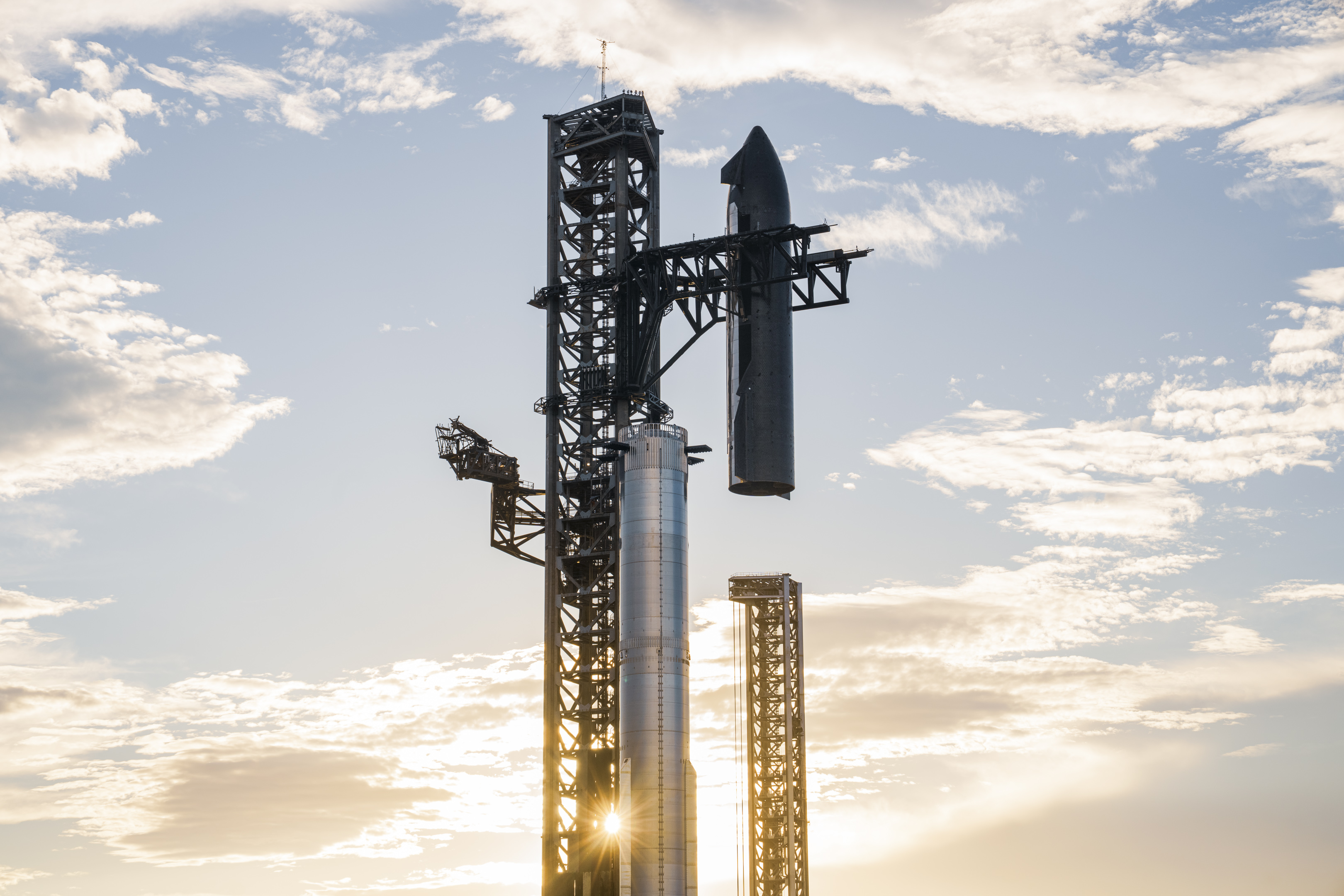
Spacecraft: Ship 41
Third V3 Starship to fly with various enhancements, to be used on the 14th Starship test flight, the first Starship flight to deploy satellites into stable Low Earth Orbit.
Specifications
SerialS41
TypeReuseable Upper Stage
StatusActive
DestinationLow Earth Orbit
Height52.1 m
Diameter9 m
Maiden Flight2026-05-22
History
The third-generation Starship upper stage will be introduced on flight 12.
Capability
More than 100 tons to Earth orbit
Details
Third-generation second stage of the two-stage Starship super heavy-lift launch vehicle.
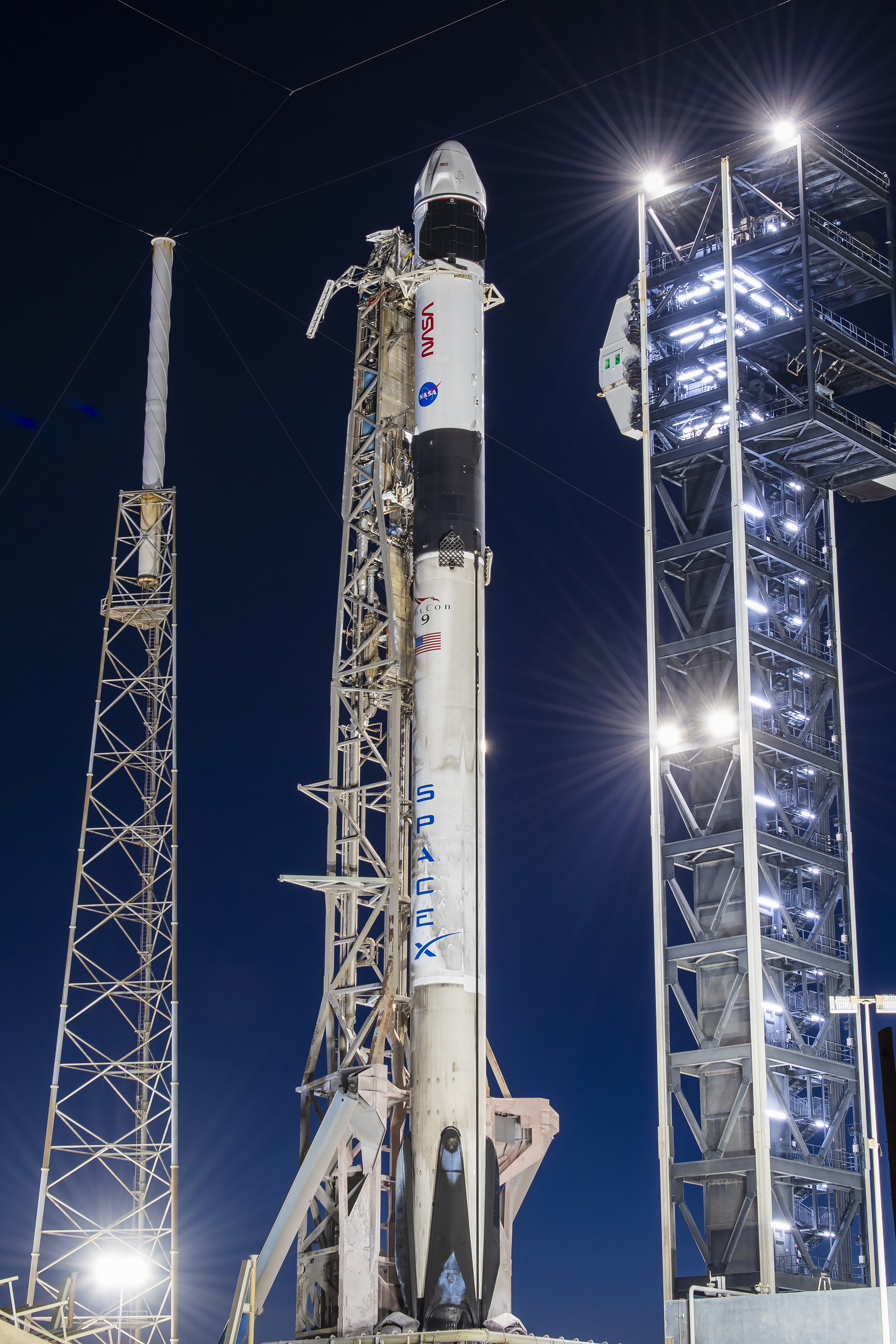
SpaceX Crew-13 is the thirteenth crewed operational flight of a Crew Dragon spacecraft to the International Space Station as part of NASA’s Commercial Crew Program.
• National Aeronautics and Space Administration (Government)
• Russian Federal Space Agency (ROSCOSMOS) (Government)
Program: Commercial Crew Program
The Commercial Crew Program (CCP) is a human spaceflight program operated by NASA, in association with American aerospace manufacturers Boeing and SpaceX. The program conducts rotations between the expeditions of the International Space Station program, transporting crews to and from the International Space Station (ISS) aboard Boeing Starliner and SpaceX Crew Dragon capsules, in the first crewed orbital spaceflights operated by private companies.
The International Space Station programme is tied together by a complex set of legal, political and financial agreements between the sixteen nations involved in the project, governing ownership of the various components, rights to crewing and utilization, and responsibilities for crew rotation and resupply of the International Space Station. It was conceived in 1984 by President Ronald Reagan, during the Space Station Freedom project as it was originally called.
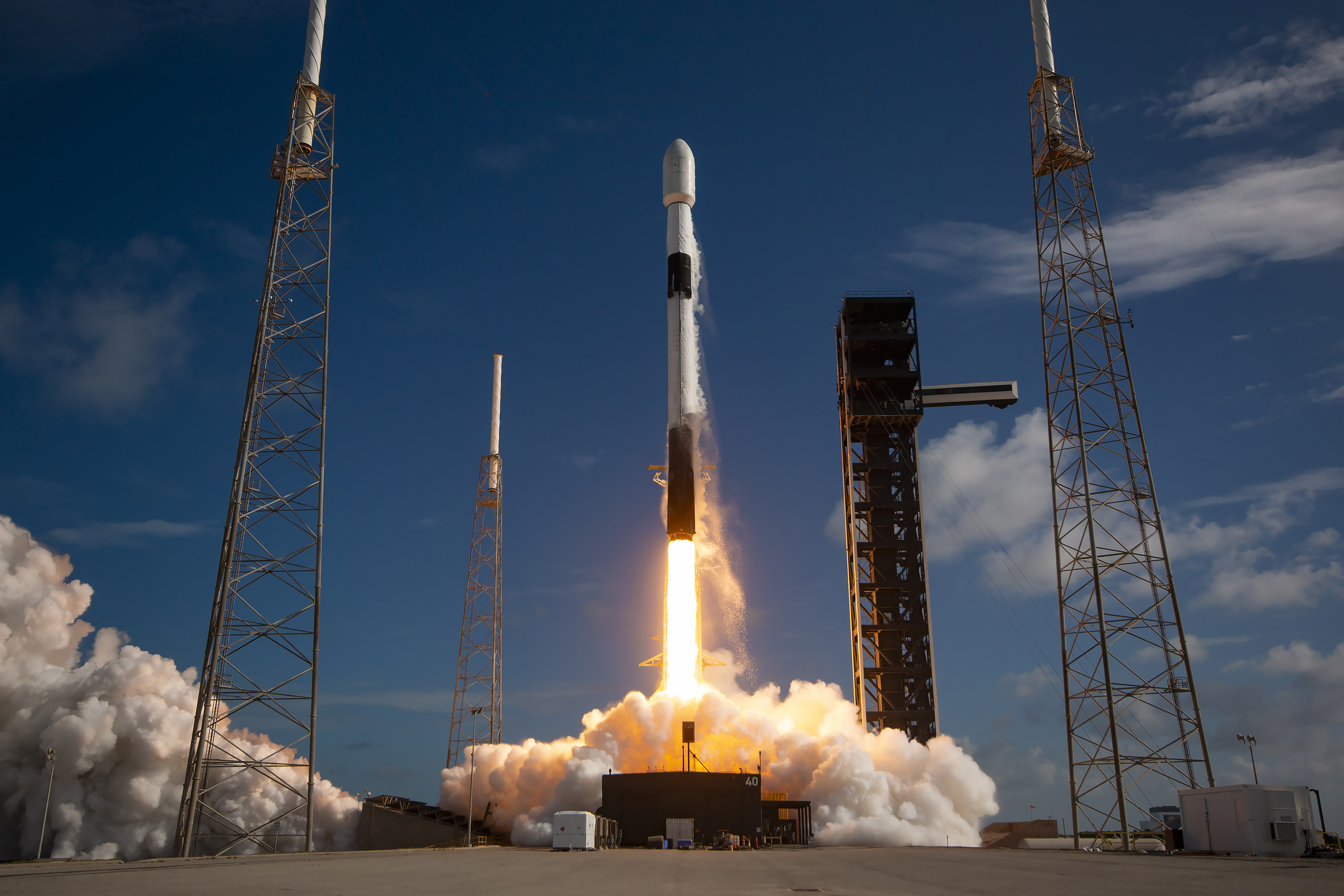
Falcon 9 is a two-stage rocket designed and manufactured by SpaceX for the reliable and safe transport of satellites and the Dragon spacecraft into orbit. The Block 5 variant is the fifth major interval aimed at improving upon the ability for rapid reusability.
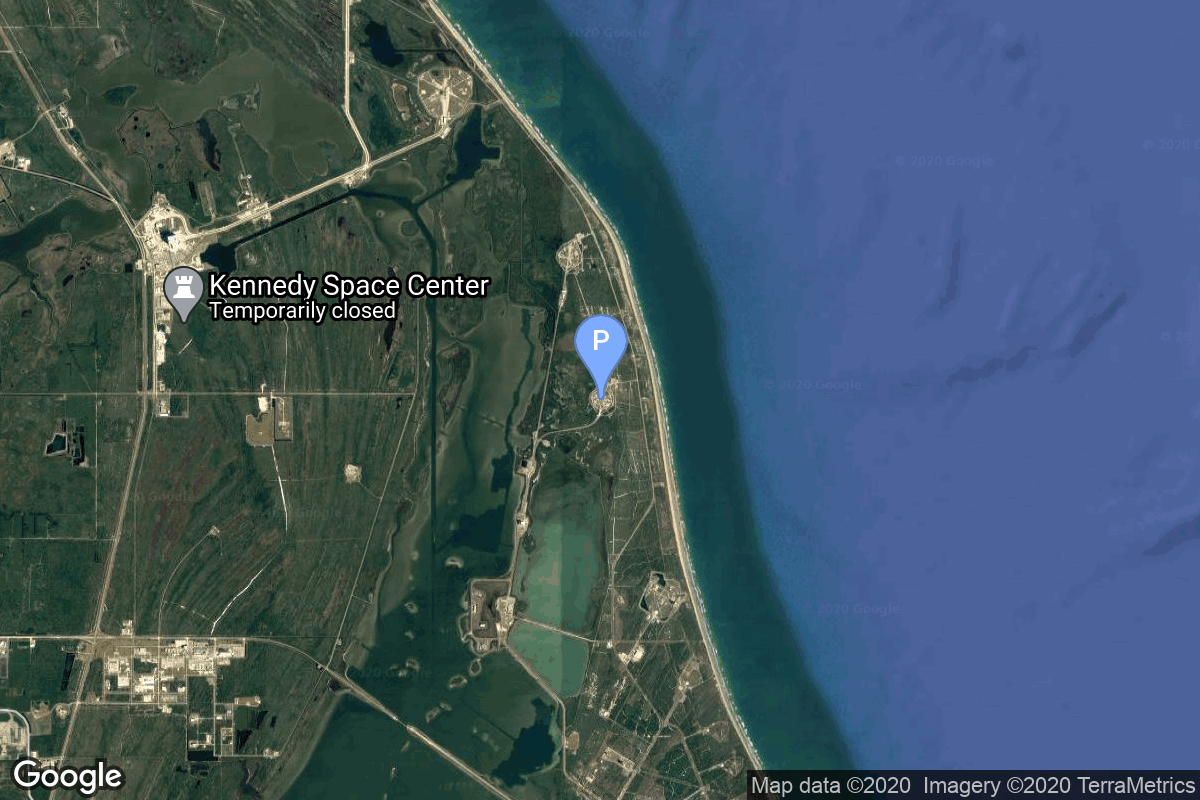
The Falcon 9 first stage B1101 will land back at the launch site at Landing Zone 40 after its 3rd flight.
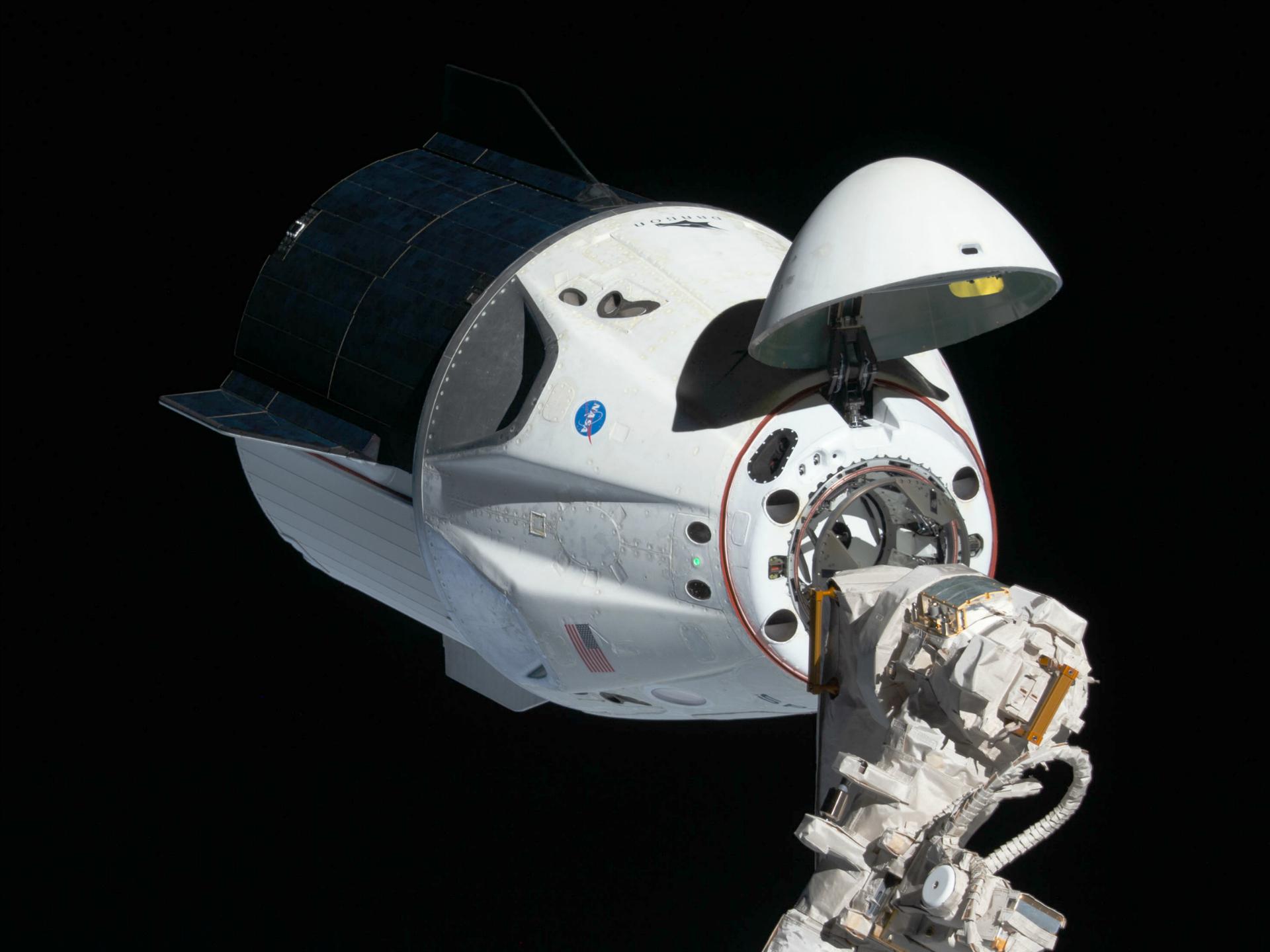
Spacecraft: Crew Dragon Grace
Crew Dragon spacecraft first used for Axiom-4.
Specifications
SerialC213
TypeCapsule
StatusActive
DestinationInternational Space Station
Crew Capacity4
Height7.2 m
Diameter3.7 m
Maiden Flight2019-03-02
Payload Capacity6,000 kg
Time in Space20 Days, 2 Hours, 58 Minutes
Missions Flown1
Turnaround443 Days, 5 Hours, 40 Minutes
History
Crew Dragon 2 is a spacecraft developed by SpaceX, an American private space transportation company based in Hawthorne, California. Dragon is launched into space by the SpaceX Falcon 9 two-stage-to-orbit launch vehicle. It is one of two American Spacecraft being develeoped capable of lifting American Astronauts to the International Space Station.
The first crewed flight, launched on 30 May 2020 on a Falcon 9 rocket, and carried NASA astronauts Douglas Hurley and Robert Behnken to the…
Capability
Crew Flights to ISS or Low Earth Orbit
Details
Crew Dragon 2 is capable of lifting four astronauts, or a combination of crew and cargo to and from low Earth orbit. Its heat shield is designed to withstand Earth re-entry velocities from Lunar and Martian spaceflights.
Flight Life
Able to fly for up to one week of free flight or two years docked.
Joshua Kutryk, a Royal Canadian Air Force lieutenant colonel, is from Beauvallon, Alberta. He has a bachelor’s degree in mechanical engineering, as well as master’s degrees in space studies, flight test engineering, and defense studies.
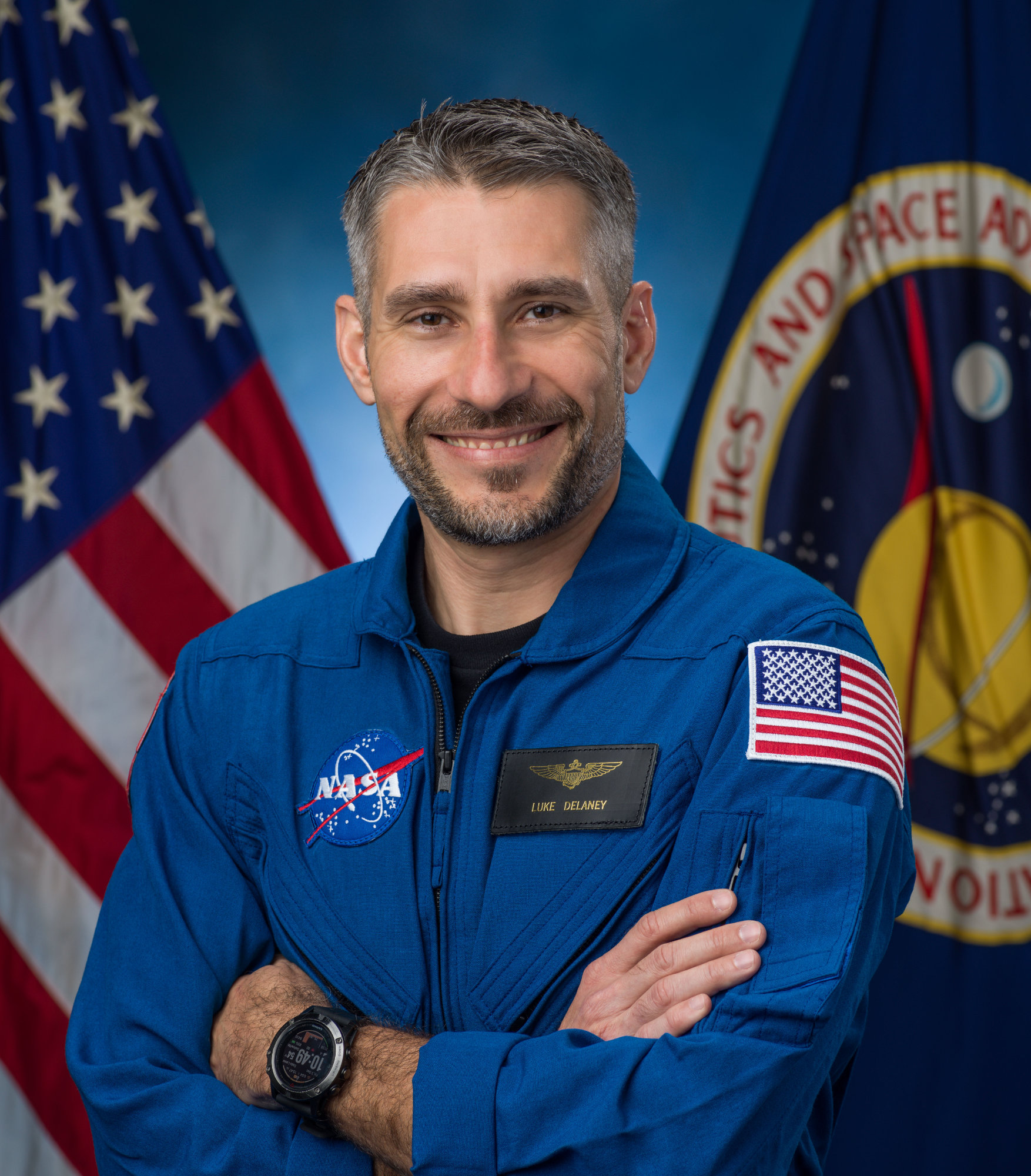
Luke Delaney is a retired US Marine Corps major who grew up in Debary, Florida. He holds a degree in mechanical engineering from University of North Florida and a master’s degree in aerospace engineering from the Naval Postgraduate School.
Falcon 9 is a two-stage rocket designed and manufactured by SpaceX for the reliable and safe transport of satellites and the Dragon spacecraft into orbit. The Block 5 variant is the fifth major interval aimed at improving upon the ability for rapid reusability.
Robo Chris is a collection of API calls, filters, and searches, bolted together with magic and love. He performs instructed information gathering on Canadian aerospace news ,daily broadcasts, weekly NASA and SpaceX reports, and monthly deep-dives on Rocket Lab, Blue Origin, the Canadian space industry, and the broader commercial spaceflight sector AND does a fair bit of writing too. Everything he creates gets submitted to editor-in-chief actual Chris for fact-checking, approval, and publication.











Leave a Reply