Carney Touts Space in Push for Deeper EU Partnership
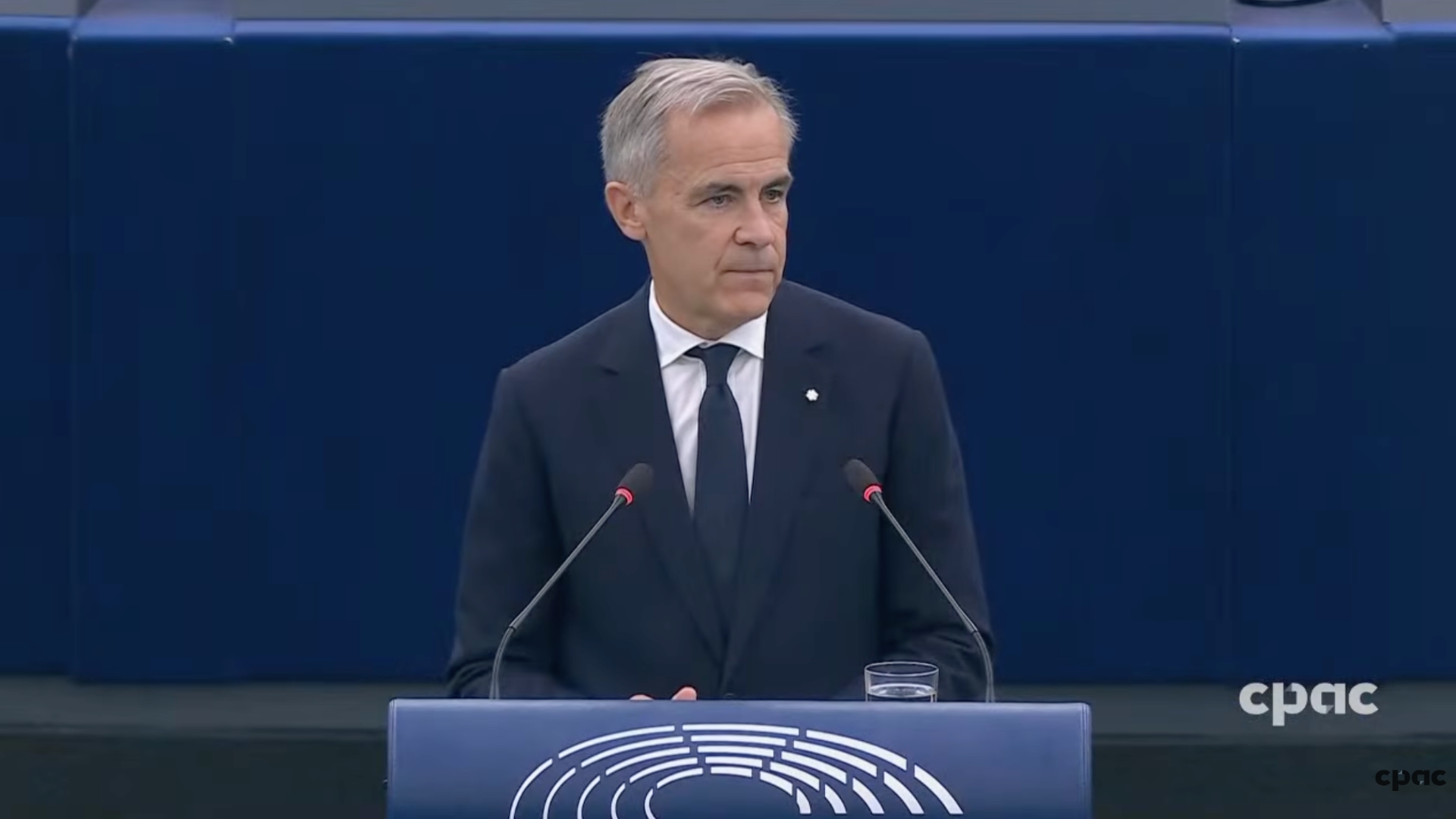
Prime Minister Mark Carney listed space alongside artificial intelligence, quantum computing and critical minerals among the strengths Canada brings to a proposed deeper partnership with the European Union, in an address to the European Parliament during a two-day visit to Strasbourg, France, that concluded Thursday.
“Canada brings abundant energy, critical minerals, world-class capabilities in space, artificial intelligence (AI) and quantum, and one of the world’s strongest banking systems,” reads the Prime Minister’s Office’s news release. The pitch builds on the Canada-EU partnership announced in June 2025.
“Canada will work with speed and ambition to make this possible, to create greater certainty, security, and prosperity for our peoples for generations to come,” Carney said in the release.
The exact shape of a deeper space relationship with the EU remains unclear, nor is it known what the proposed “associate member” status would entail. Canada is already a Cooperating State with the European Space Agency through an agreement dating back to 1979, most recently renewed in 2019 and extending through 2030. Last year, the Canadian government committed $664.6 million to ESA, a significant ramp-up of its contribution.
The EU and ESA are distinct organizations with partially overlapping but non-identical memberships and different mandates — the EU is a political and economic union; ESA is an intergovernmental organization for peaceful space exploration. The EU provides upwards of 24 per cent of ESA’s total budget.
Canada also joined the EU’s Security Action for Europe (SAFE) defence-procurement program in February 2026, the first non-European country admitted, after negotiating a Canadian-content exemption that opens European defence contracts to Canadian space companies such as MDA Space, Telesat and NorthStar Earth & Space. Two months later, Canada and ESA signed a security agreement letting Canadian firms bid on sensitive contracts previously off-limits under Canada’s decades-old status as ESA’s only non-European member.
MDA Leads Canadian Space Stocks on CHORUS Unveiling
MDA Space shares rose 4.8 per cent to $42.05 on the week ended September 18, the largest gain among Canada’s publicly traded space companies and one of only three that beat the S&P/TSX Composite’s 0.3 per cent advance. The move followed Wednesday’s unveiling of CHORUS, a three-tier software portfolio that lets customers search MDA’s Earth observation archive, schedule new imagery, install a regional ground station for direct downlink and local processing, or buy finished intelligence products such as vessel detection and ground-deformation monitoring.
MDA, which reported second-quarter revenue of $498.6 million on Aug. 7, is up 57.8 per cent year to date and sits 45 per cent into its 52-week range. The CHORUS announcement came ahead of the constellation’s launch later this year.
Magellan Aerospace rose 2.9 per cent to $33.52, also beating the TSX. Calian Group added 1.5 per cent to $80.63; the company, which reported third-quarter revenue of $230.4 million on Aug. 13, signed a strategic agreement Wednesday with Ukraine’s SkyFall to advance unmanned systems training for Canada, the U.K., NATO and allied forces. Calian is up 46.8 per cent year to date and sits 76 per cent into its 52-week range, the closest to a 52-week high on the board.
Telesat fell 0.7 per cent to $68.51 in a week it signed a global framework agreement with SatPort Infrastructure that lets it commission landing stations for its Lightspeed broadband network anywhere in the world, announced Tuesday. The deal gives Telesat a capital-efficient path to scale its ground segment without building every gateway itself.
China Advances Mars Sample Return and Lunar Plans
China is advancing plans to return the first samples ever collected from Mars while integrating crewed and robotic missions to further its lunar exploration program, according to a roundup published Thursday by NASASpaceFlight.
The Tianwen-3 mission architecture, as depicted in state media, includes a lander that will drill up to two metres below the martian surface. China’s lunar programme also continues to build momentum: Chang’e-6 lunar samples have been presented to the United Nations, and a Chang Zheng 5 rocket is being prepared to launch the Chang’e-7 mission, though that mission has been delayed. A render of the planned Chang’e-8 mission has also been released.
Beyond its flagship programmes, China’s commercial launch sector continues to expand. Landspace’s ZhuQue-3 completed its maiden launch in August 2026. On September 15, the Yinli-1 (Gravity-1) vehicle launched from the Yellow Sea. Infrastructure is also growing, with plans for future pads at the Wenchang Space Launch Center. A student-led project and a test article for Space Epochs’ Yuanxingzhe-1 vehicle were also highlighted as part of China’s broadening launch portfolio.
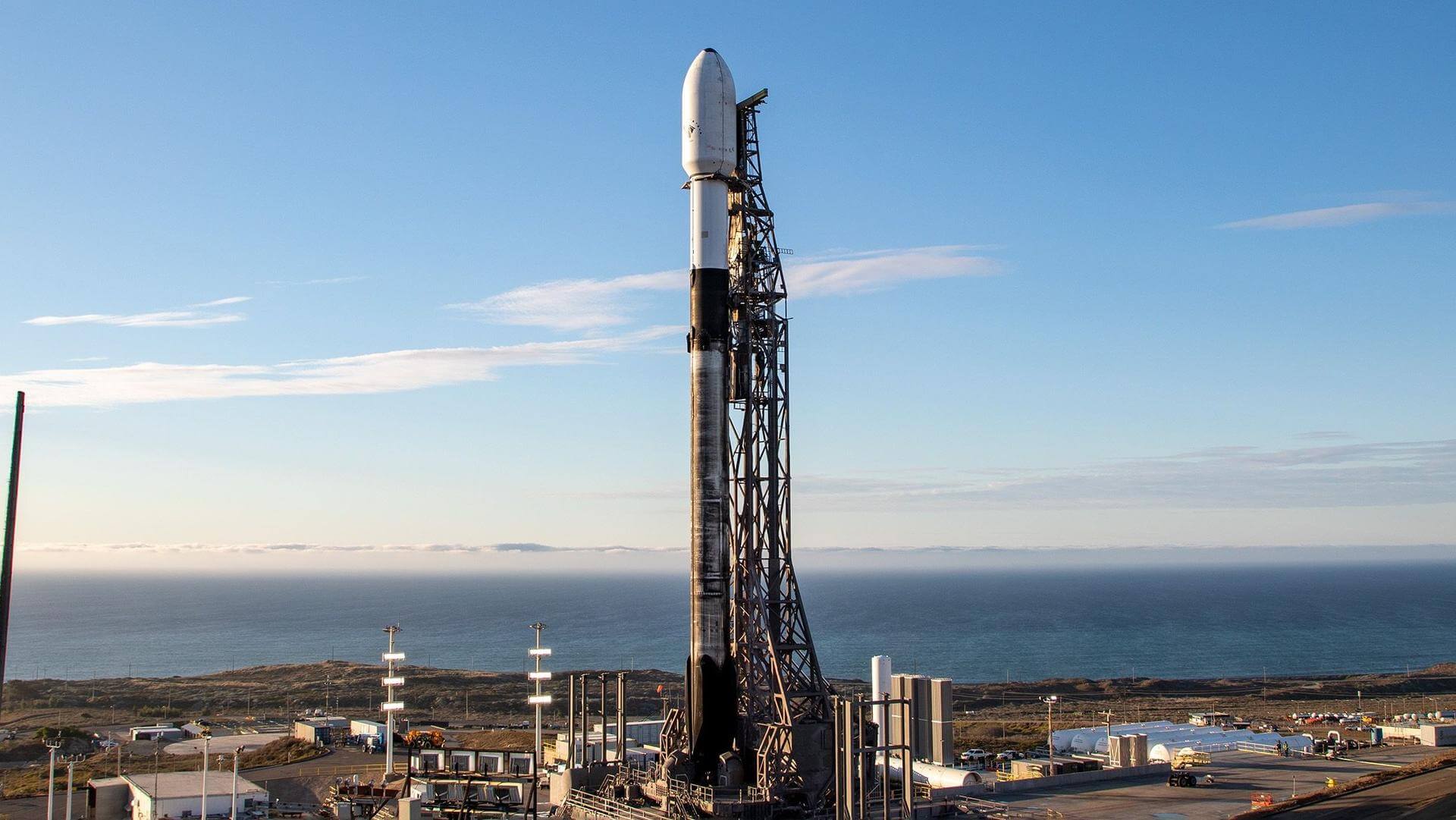
Falcon 9 is a two-stage rocket designed and manufactured by SpaceX for the reliable and safe transport of satellites and the Dragon spacecraft into orbit. The Block 5 variant is the fifth major interval aimed at improving upon the ability for rapid reusability.
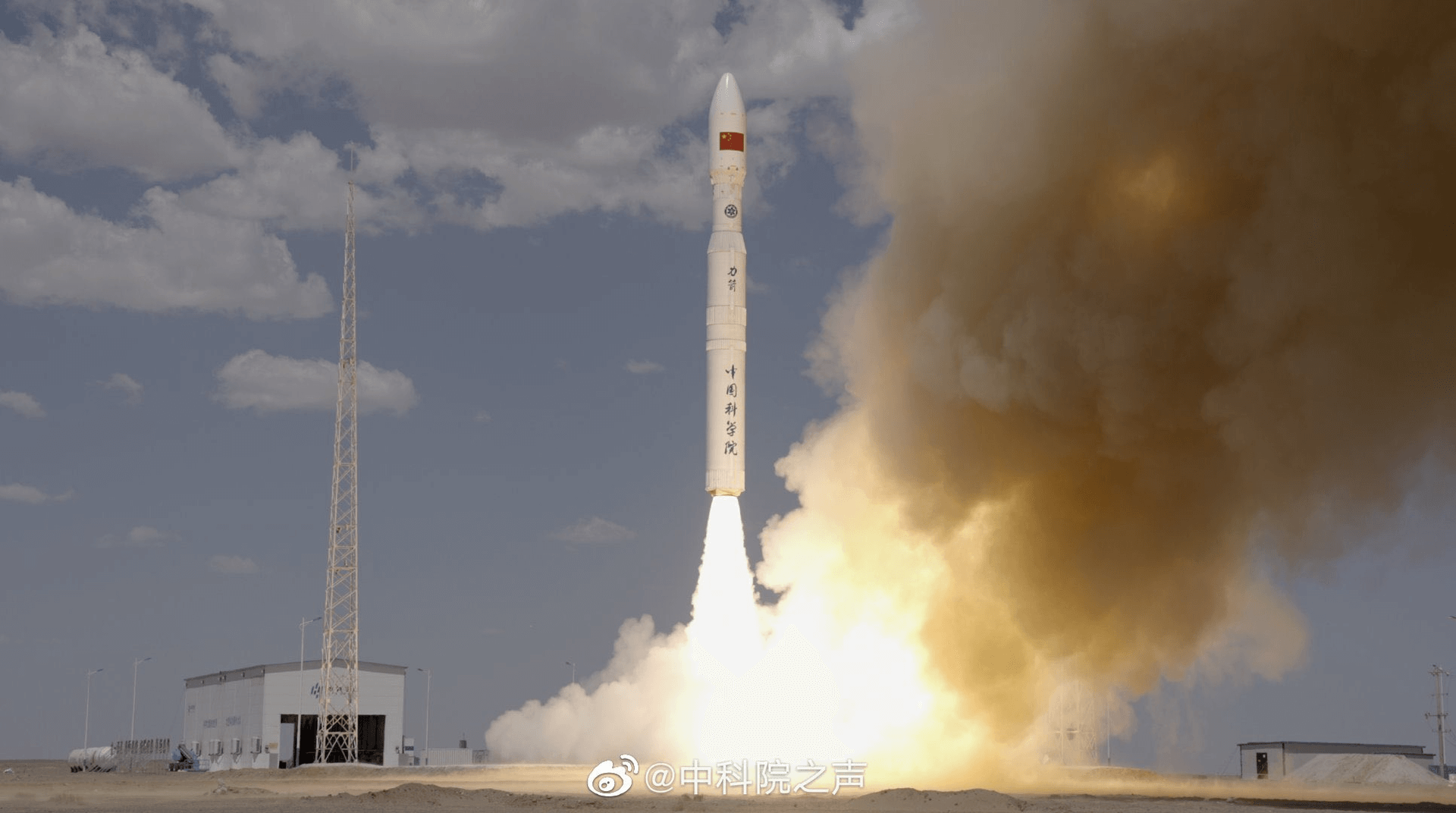
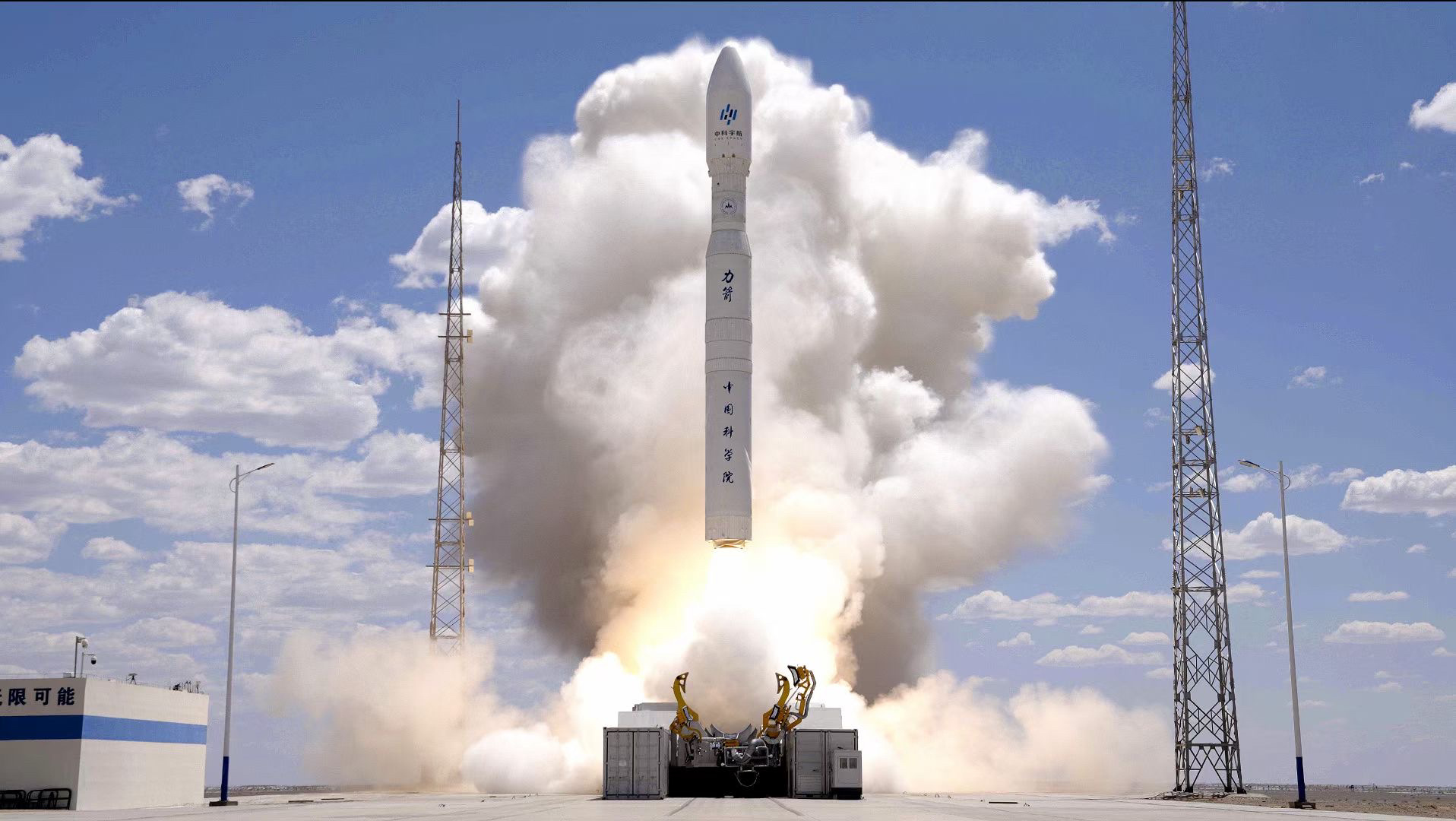
Kinetica 1 (also known as Lijian-1, Chinese: 力箭一号) is a Chinese solid-propellant light launch vehicle. It is capable of placing about 2 tons into low earth orbit and 1.5 tons into sun-synchronous orbit. It is developed by CAS Space, a subsidiary of the Chinese Academy of Sciences. Kinetica 1 is a…
Specifications
Length30 m
Diameter2.65 m
Launch Mass135 t
Liftoff Thrust1,961 kN
LEO Capacity2,000 kg
SSO Capacity1,500 kg
ReusableNo
Maiden Flight2022-07-27
Launch Record
14 successful / 15 total launches
Current streak: 9 successful
Unknown Payload ×
Mission Details
TypeUnknown
OrbitUnknown
TargetEarth
Details TBD.
Launch Provider: China Aerospace Science and Technology Corporation
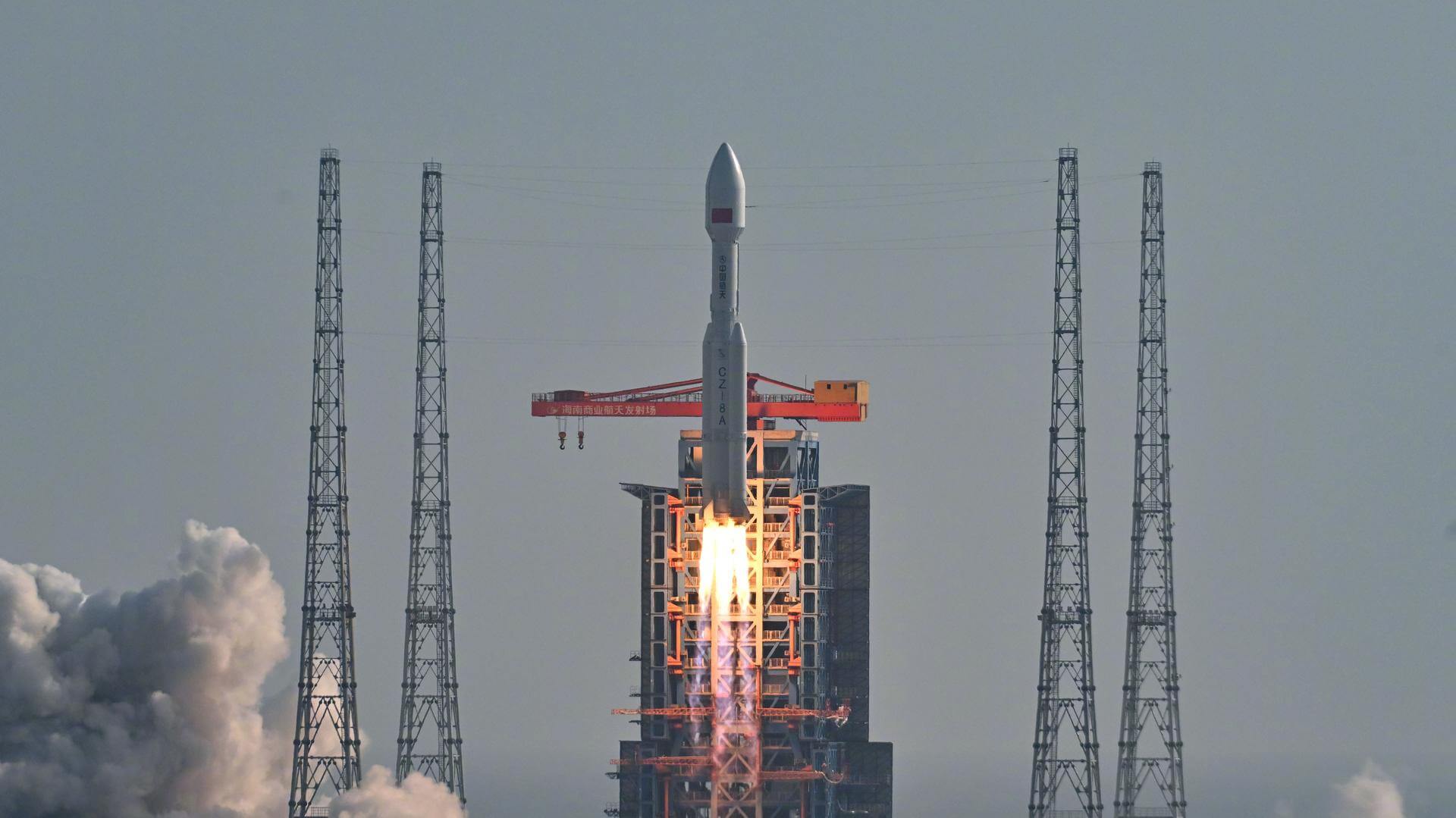
The Long March 8A is an orbital launch vehicle developed by the China Academy of Launch Vehicle Technology based on the Long March 8. It has an increased capability of up to 7 tonnes to a 700 km altitude sun-synchronous orbit. It implements a larger 3.35 meters diameter liquid hydrogen/liquid…
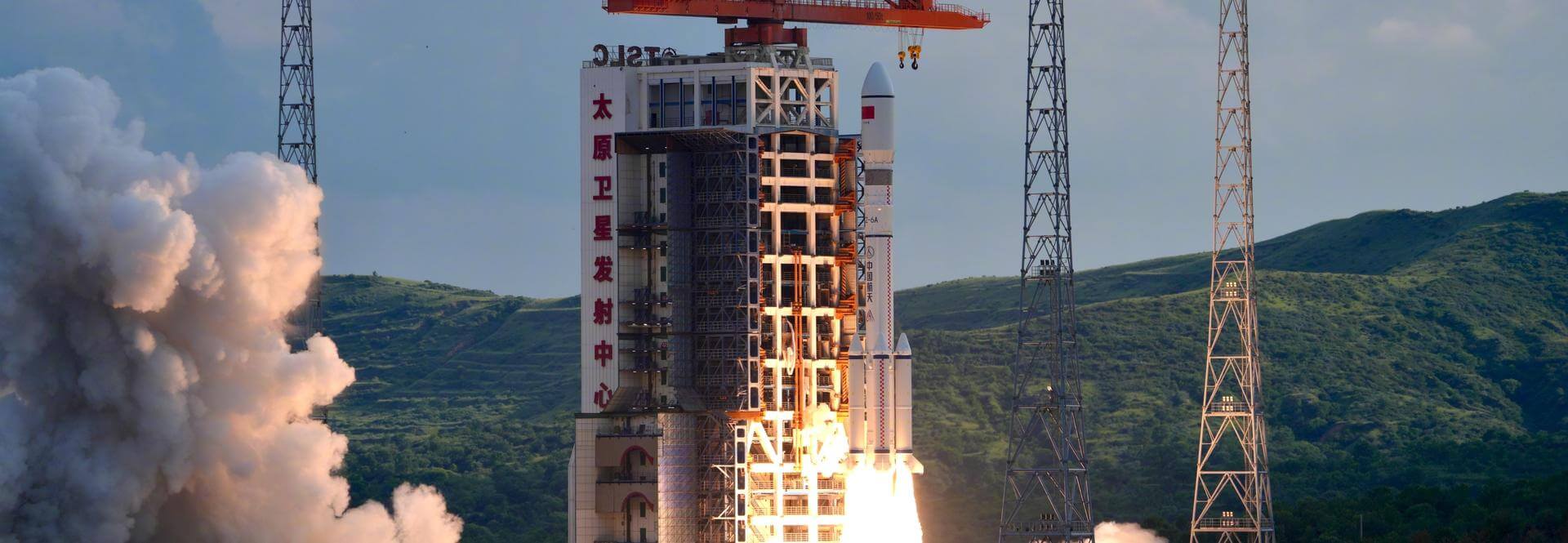
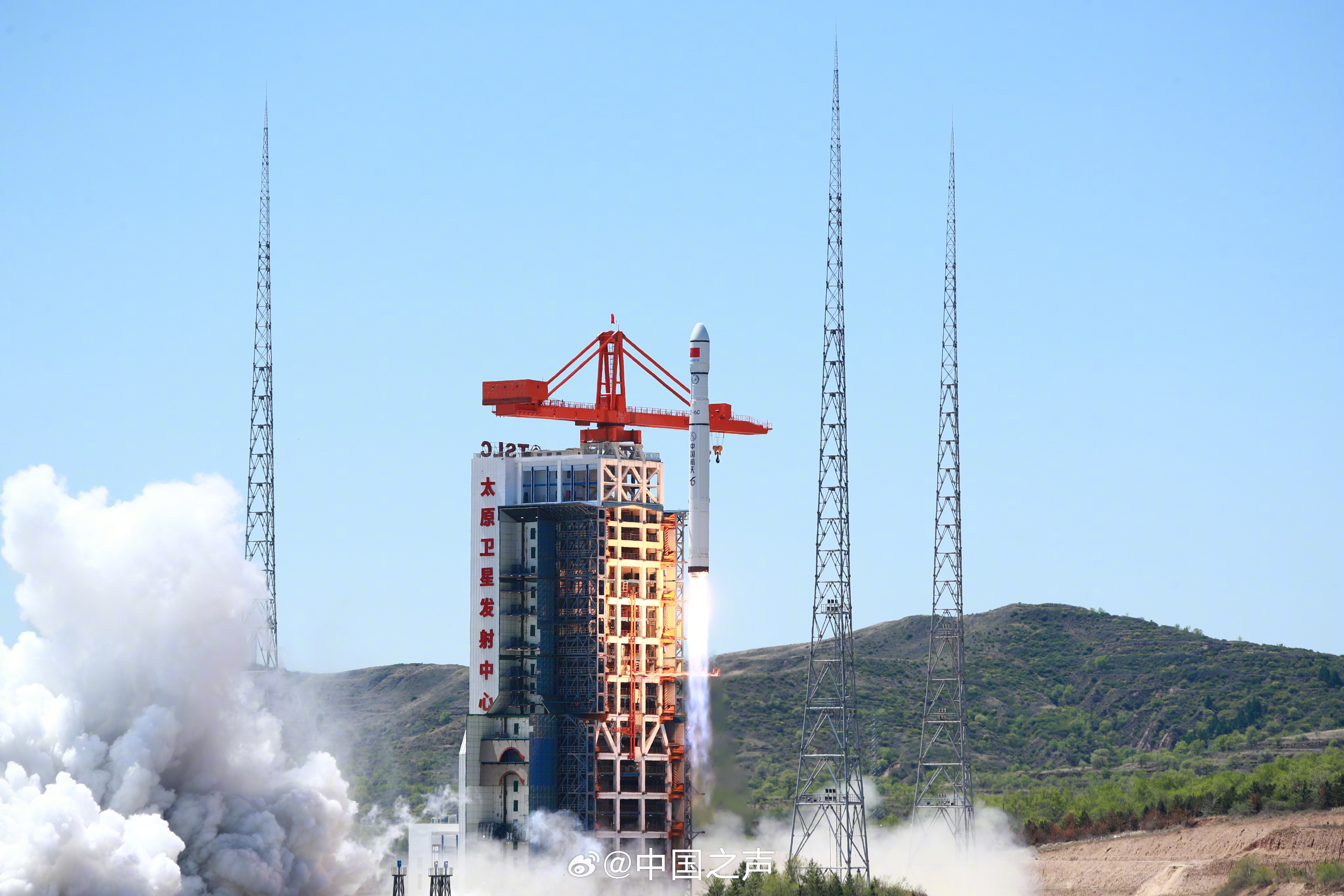
The Long March 6A is a Chinese launch vehicle of the Long March family, which was developed by the China Aerospace Science and Technology Corporation (CASC) and the Shanghai Academy of Spaceflight Technology (SAST). The vehicle is a further development of the Long March 6, with 2 YF-100 engines on…
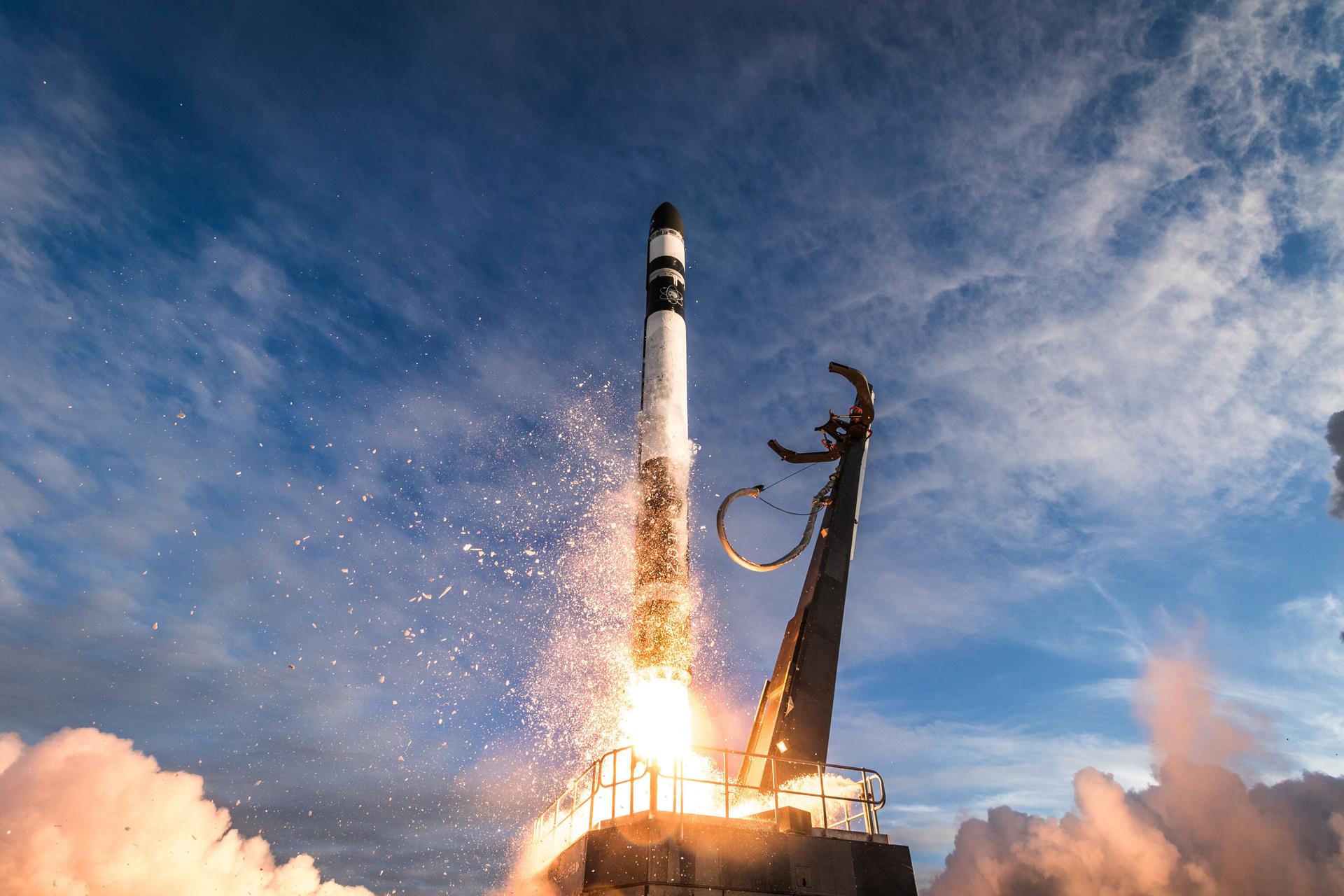
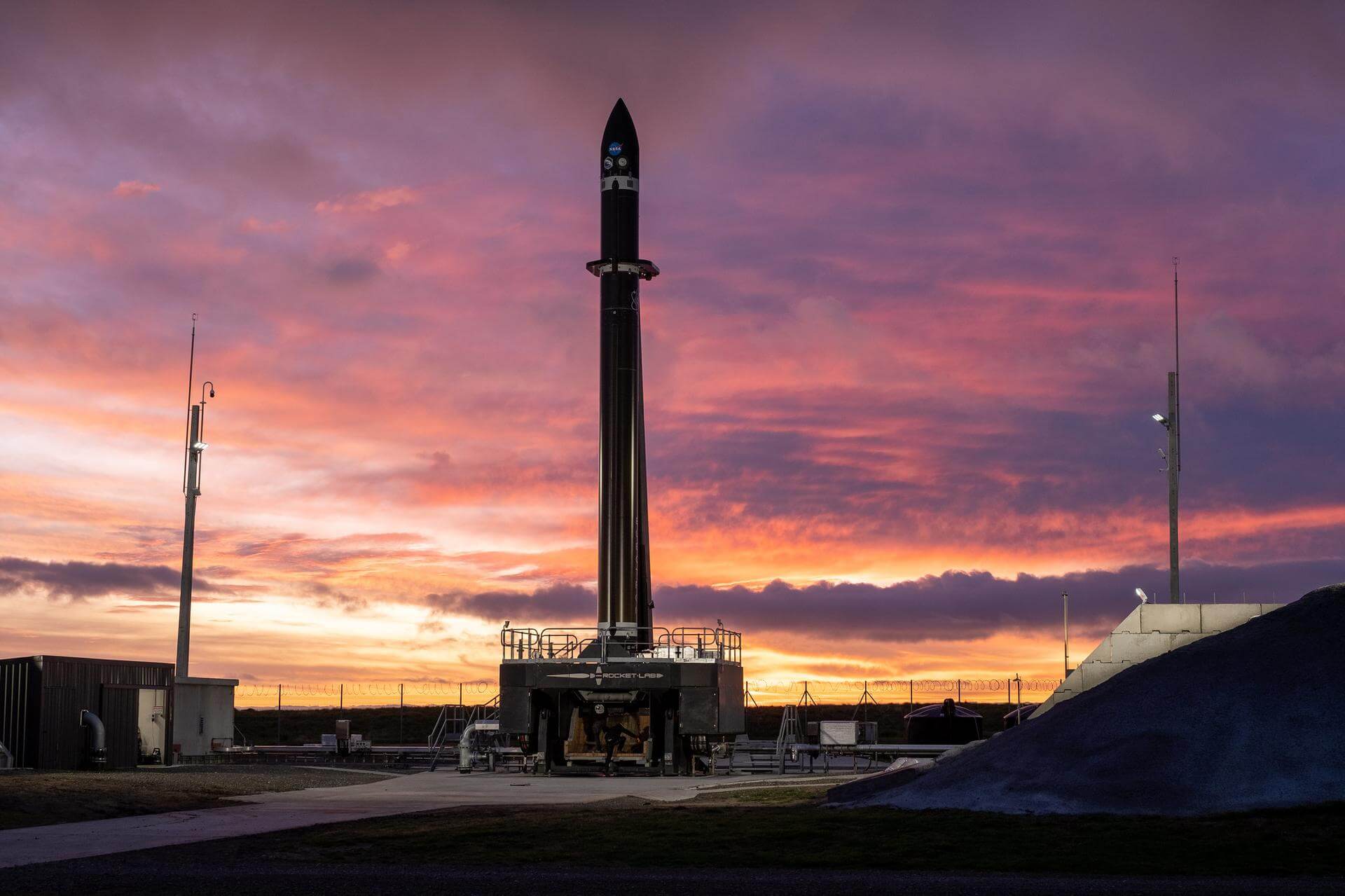
Electron is a two-stage orbital expendable launch vehicle (with an optional third stage) developed by the American aerospace company Rocket Lab. Electron is a small-lift launch vehicle designed to launch small satellites and cubesats to sun-synchronous orbit and low earth orbit. The Electron is the…
Robo Chris is a collection of API calls, filters, and searches, bolted together with magic and love. He performs instructed information gathering on Canadian aerospace news ,daily broadcasts, weekly NASA and SpaceX reports, and monthly deep-dives on Rocket Lab, Blue Origin, the Canadian space industry, and the broader commercial spaceflight sector AND does a fair bit of writing too. Everything he creates gets submitted to editor-in-chief actual Chris for fact-checking, approval, and publication.










Leave a Reply