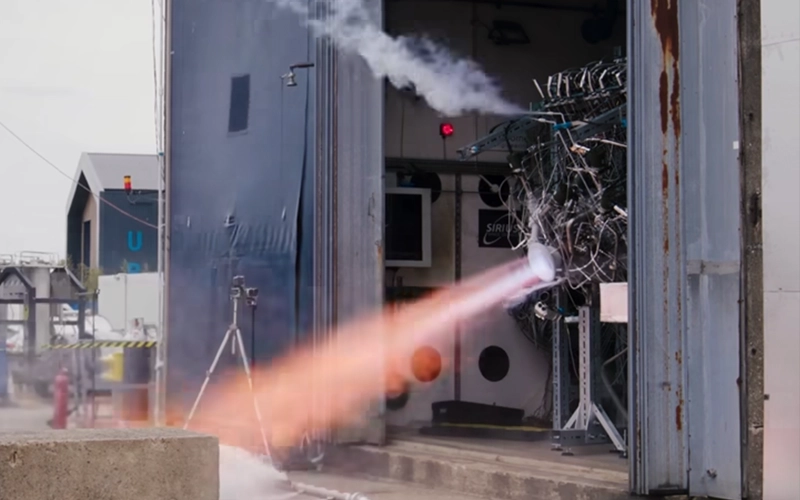
French launch startup Sirius Space Services has successfully test-fired a complete prototype of its STAR-1 rocket engine, marking a key milestone on the company’s path toward its first orbital demonstration flight.
The company announced the result on 12 September, confirming that the first hot-fire tests of the fully integrated STAR-1 engine were conducted at Airborne Engineering’s propulsion test facility in southern England. The testing campaign took place over the summer, though Sirius Space did not provide specific dates for the firings.
According to the company, the campaign included multiple successful ignitions. These tests marked the first time all of the engine’s critical subsystems operated together, including the turbopumps, combustion chamber, injector plate, avionics and software.
The liquid oxygen and methane-fuelled STAR-1 is designed to produce 55 kN of thrust. The engine will form the backbone of the company’s planned family of launch vehicles, which will use a common core stage featuring a cluster of nine STAR-1 engines.
The September announcement suggests the testing timeline may have slipped slightly from the schedule Sirius Space outlined in March, when the company said full-scale engine tests were expected during the first half of 2026. The campaign nonetheless delivers the integrated engine data needed to move toward the company’s 2027 demonstration flight target.
Sirius Space has been building out its industrial base in parallel with the engine programme. The company acquired manufacturing firm AMM-42 earlier this year to bolster in-house production capability as it prepares for the launch of its Sirius 1B demonstrator. The company has also been selected by CNES to fill a vacancy at the Guiana Space Centre’s future multi-user commercial launch facility, positioning Sirius Space within France’s national launch infrastructure.
Beyond its primary vehicle, Sirius Space is participating in European Union studies for mobile responsive launch systems. The EU awarded parallel contracts to consortia led by PwC, GMV, and Sirius Space Services to explore flexible launch concepts, reflecting growing European interest in responsive access to space.
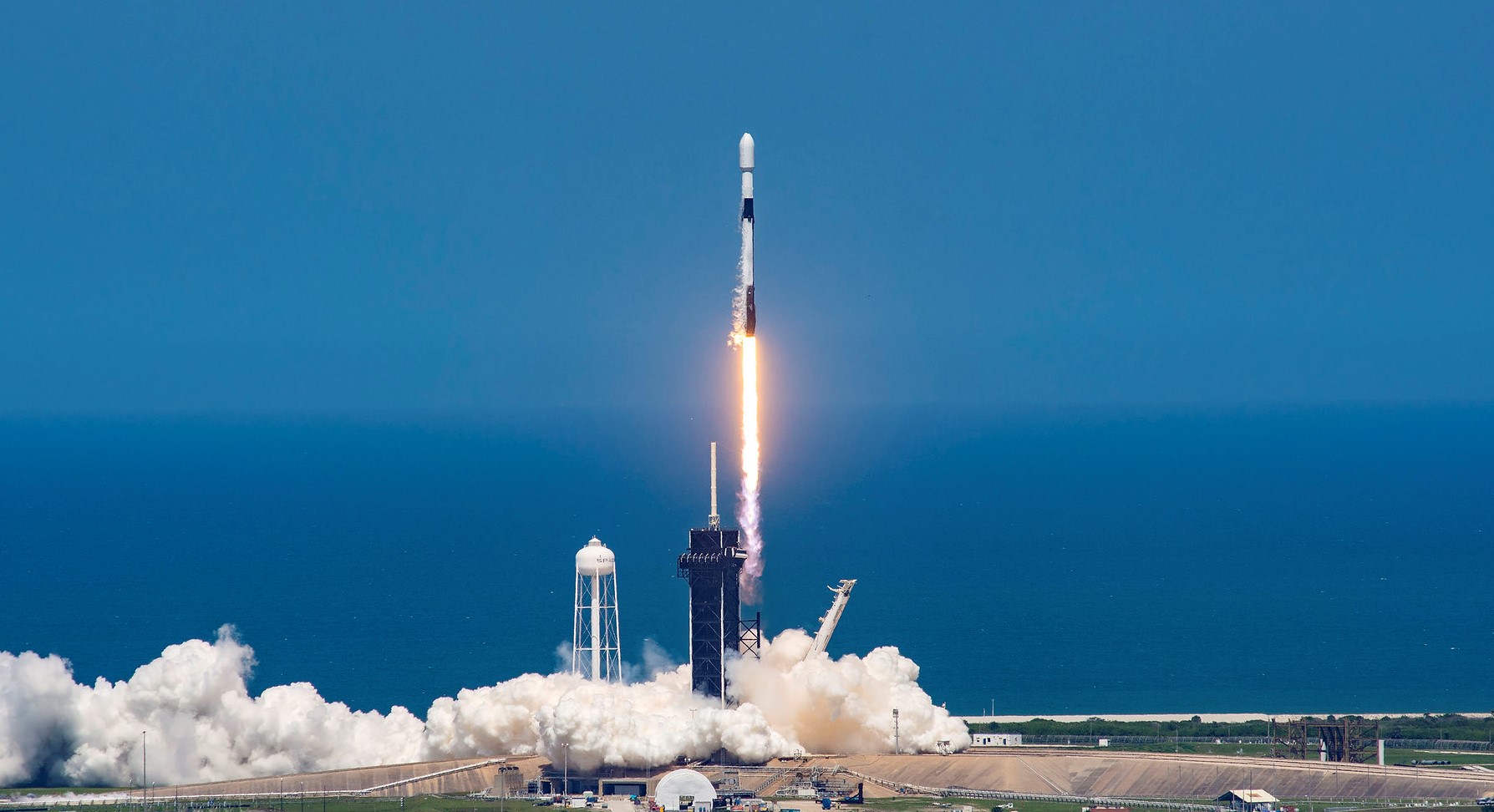
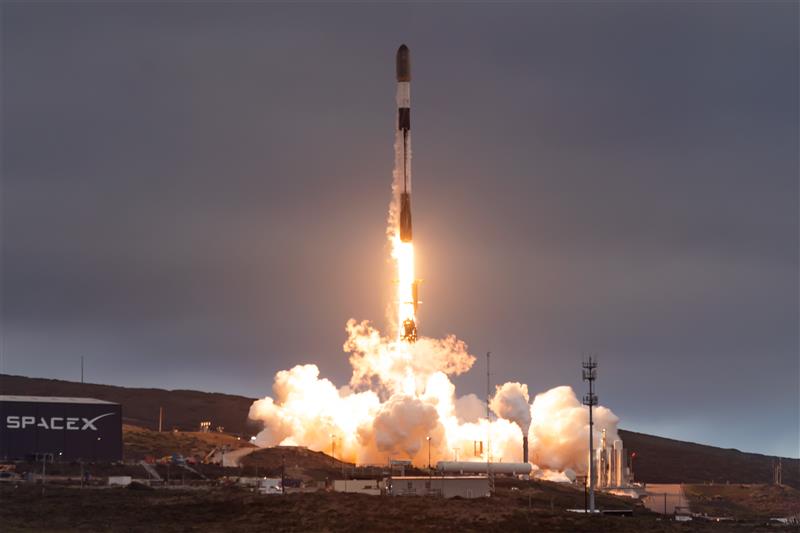
Provider: SpaceX Date: September 13, 2026 Time: 6:49 PM UTC Vehicle: Falcon 9
3 high-throughput communications satellites in Medium Earth Orbit (MEO) built by Boeing and operated by SES.
Sentinel-3C & FLEX
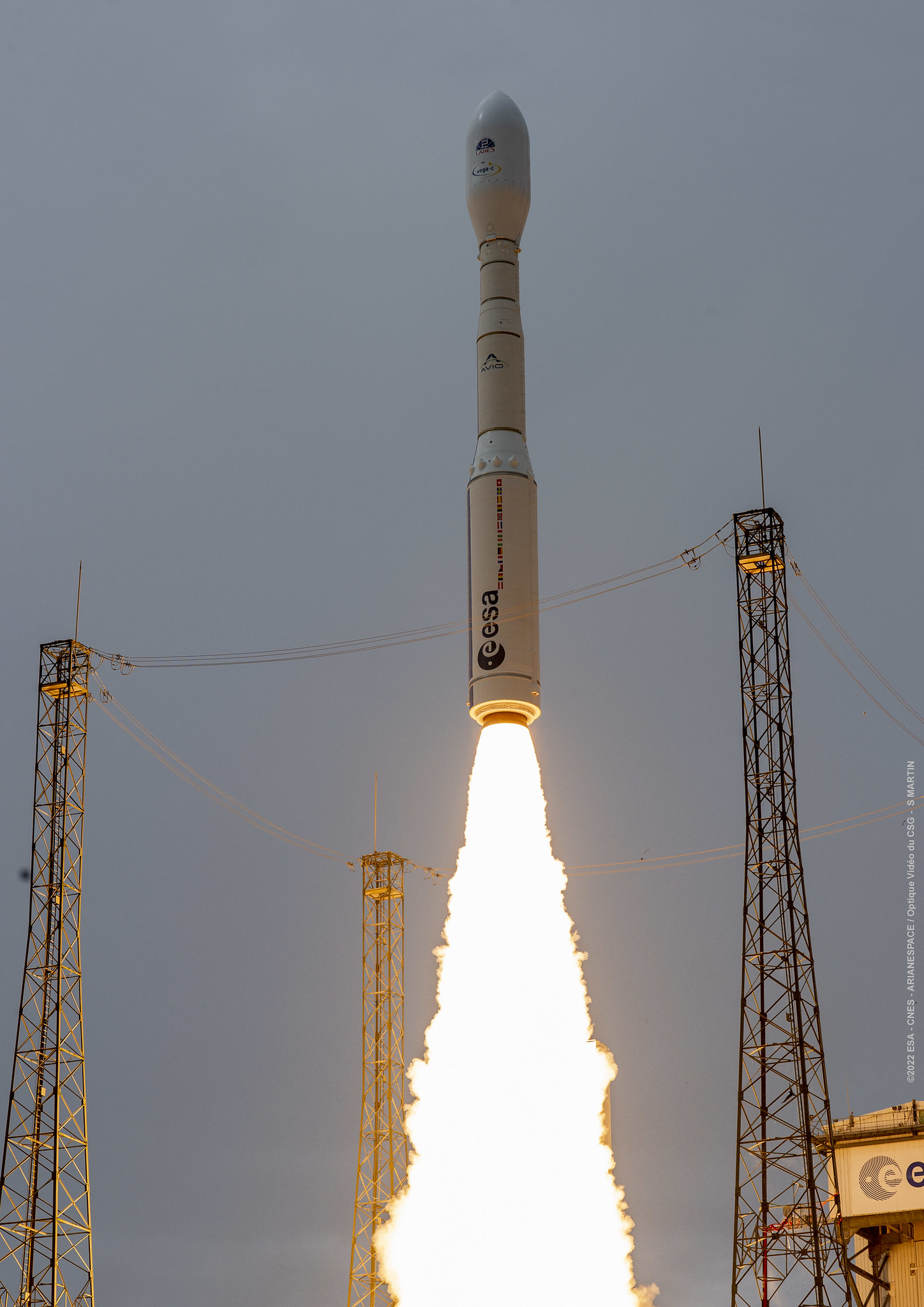
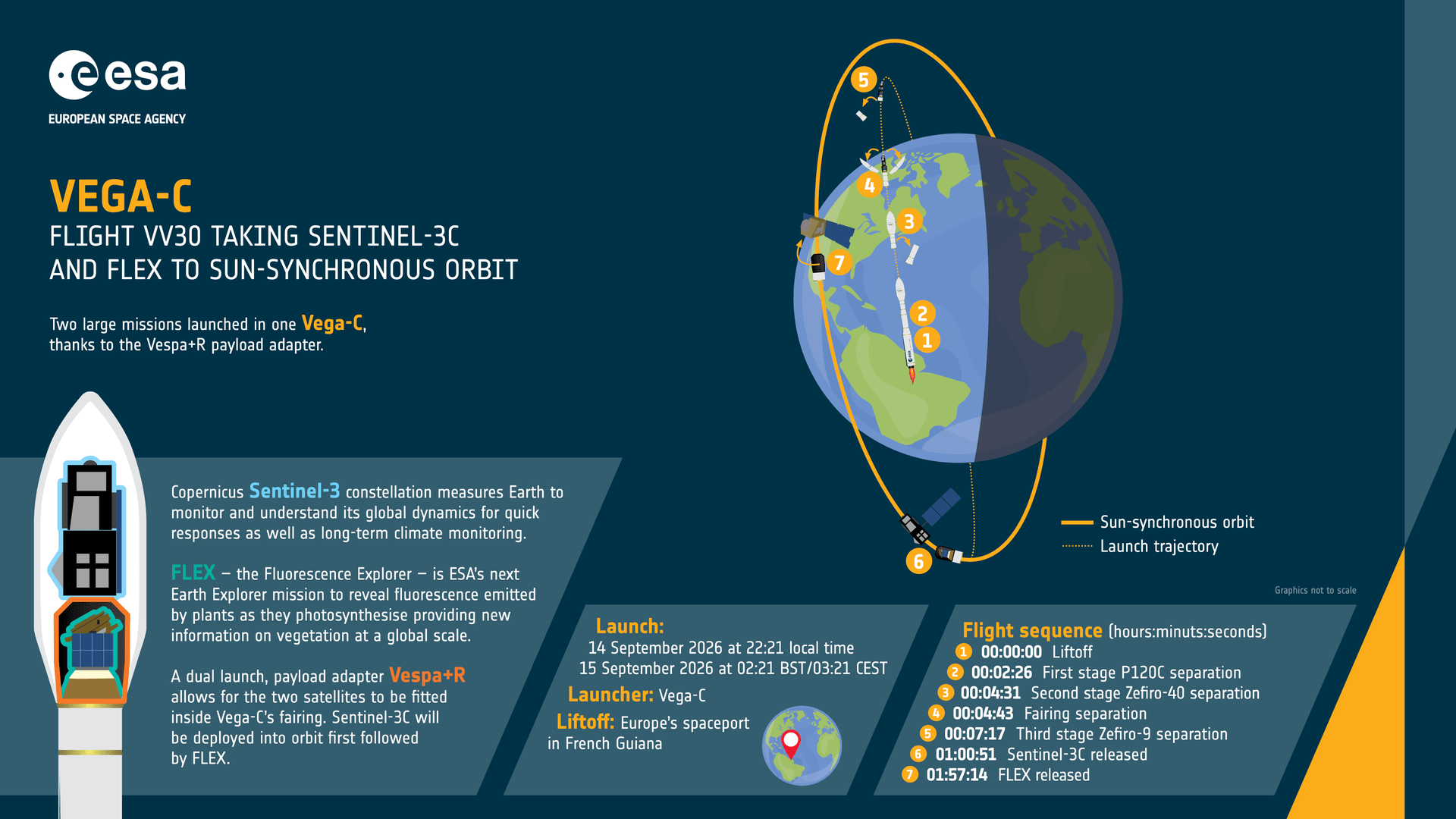
Provider: Avio S.p.A Date: September 15, 2026 Time: 1:21 AM UTC Vehicle: Vega-C
Sentinel-3C is the third satellite in the Sentinel-3 constellation, which provides high-accuracy optical, radar and altimetry data for marine and land services.
The Fluorescence Explorer (FLEX) satellite is a part of ESA’s Earth Explorer program. The satellite will map vegetation fluorescence to quantify photosynthetic activity.
Unknown Payload
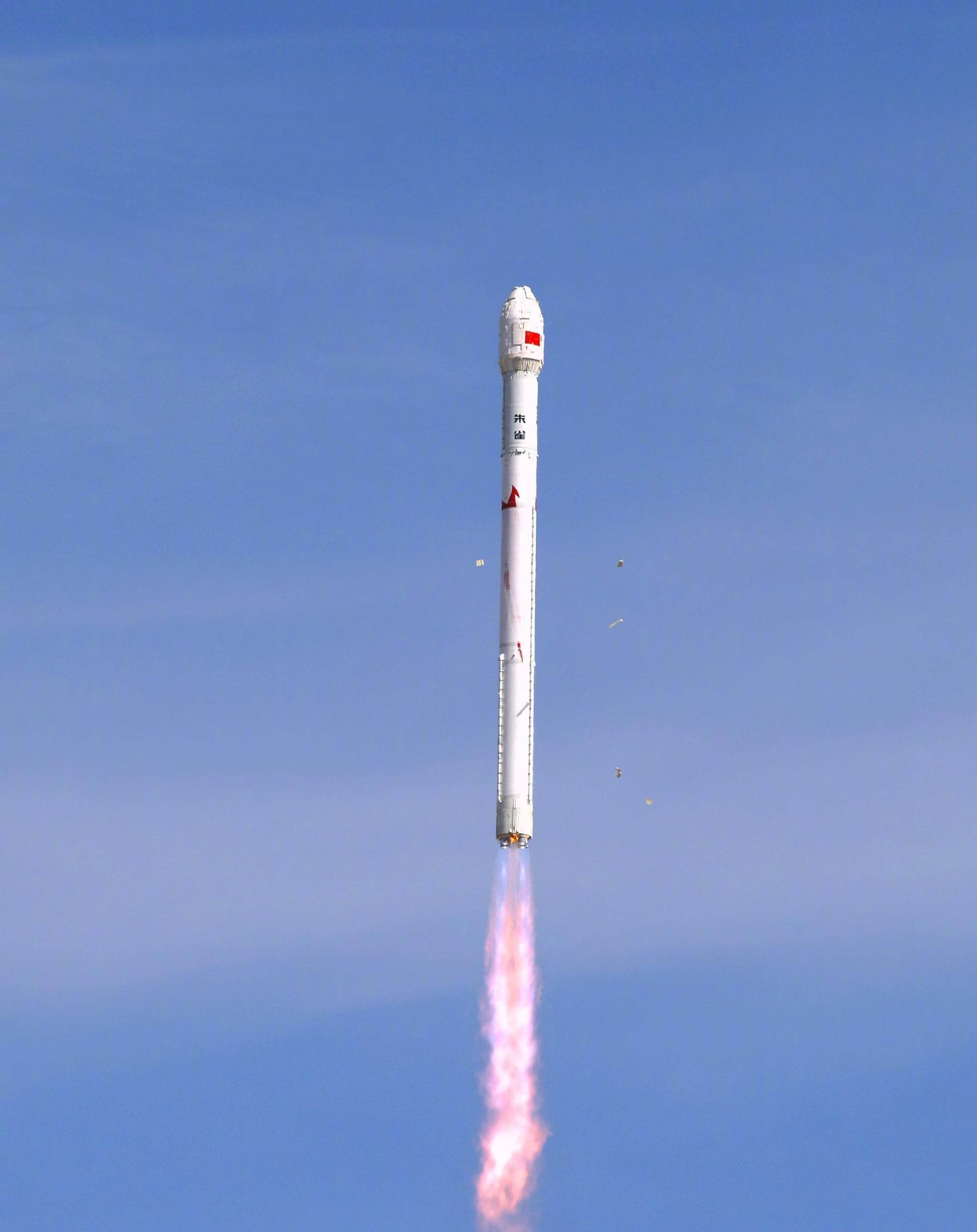
Provider: LandSpace Date: September 15, 2026 Time: 6:25 AM UTC Vehicle: Zhuque-2E Block 2
Possibly launch of a batch of SpaceSail LEO communication satellites. Details TBD.
Unknown Payload
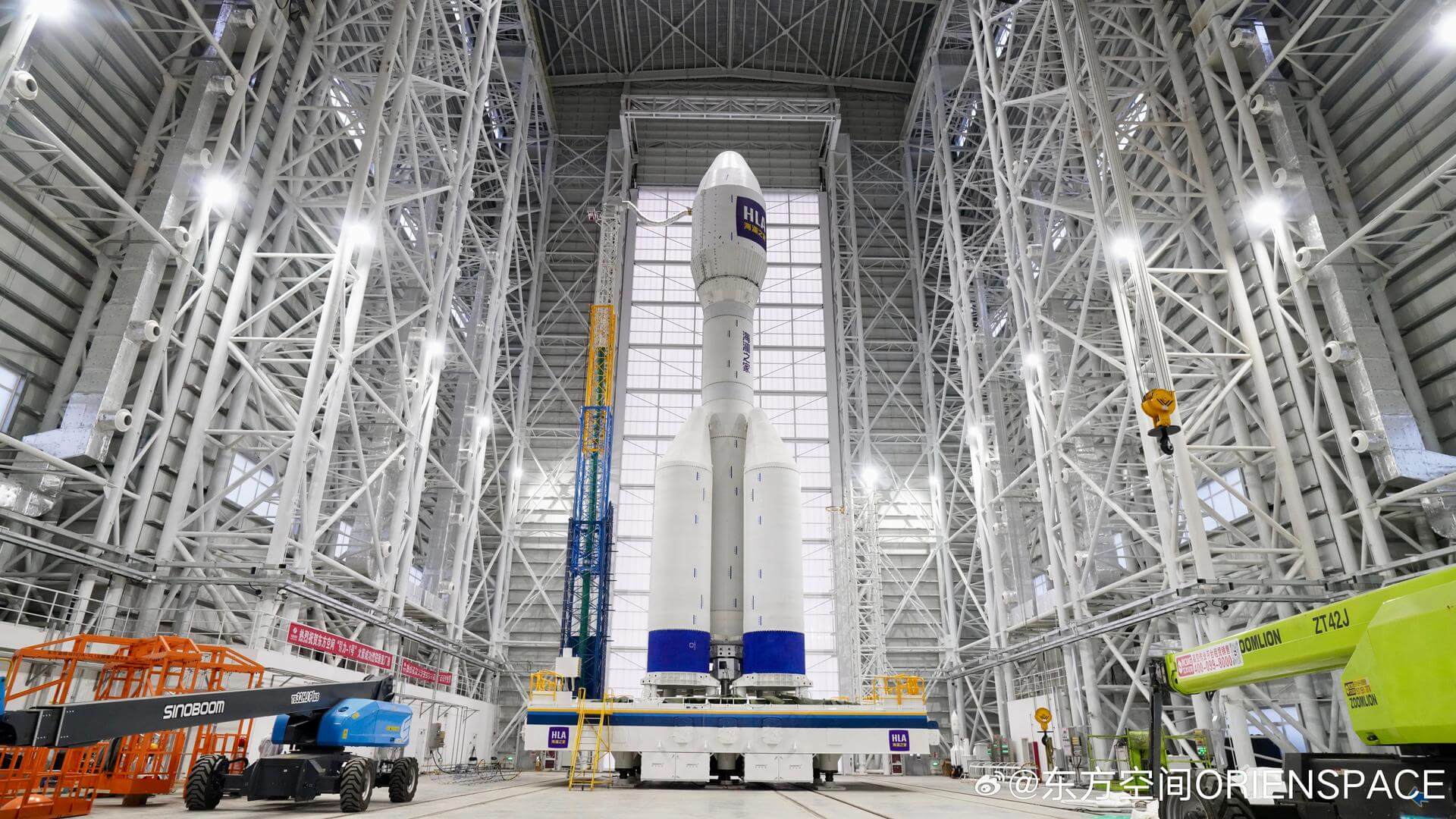
Provider: Orienspace Technology Date: September 15, 2026 Time: 9:55 PM UTC Vehicle: Gravity-1
Possibly launch of a batch of SpaceSail LEO communication satellites. Details TBD.
USSF-259
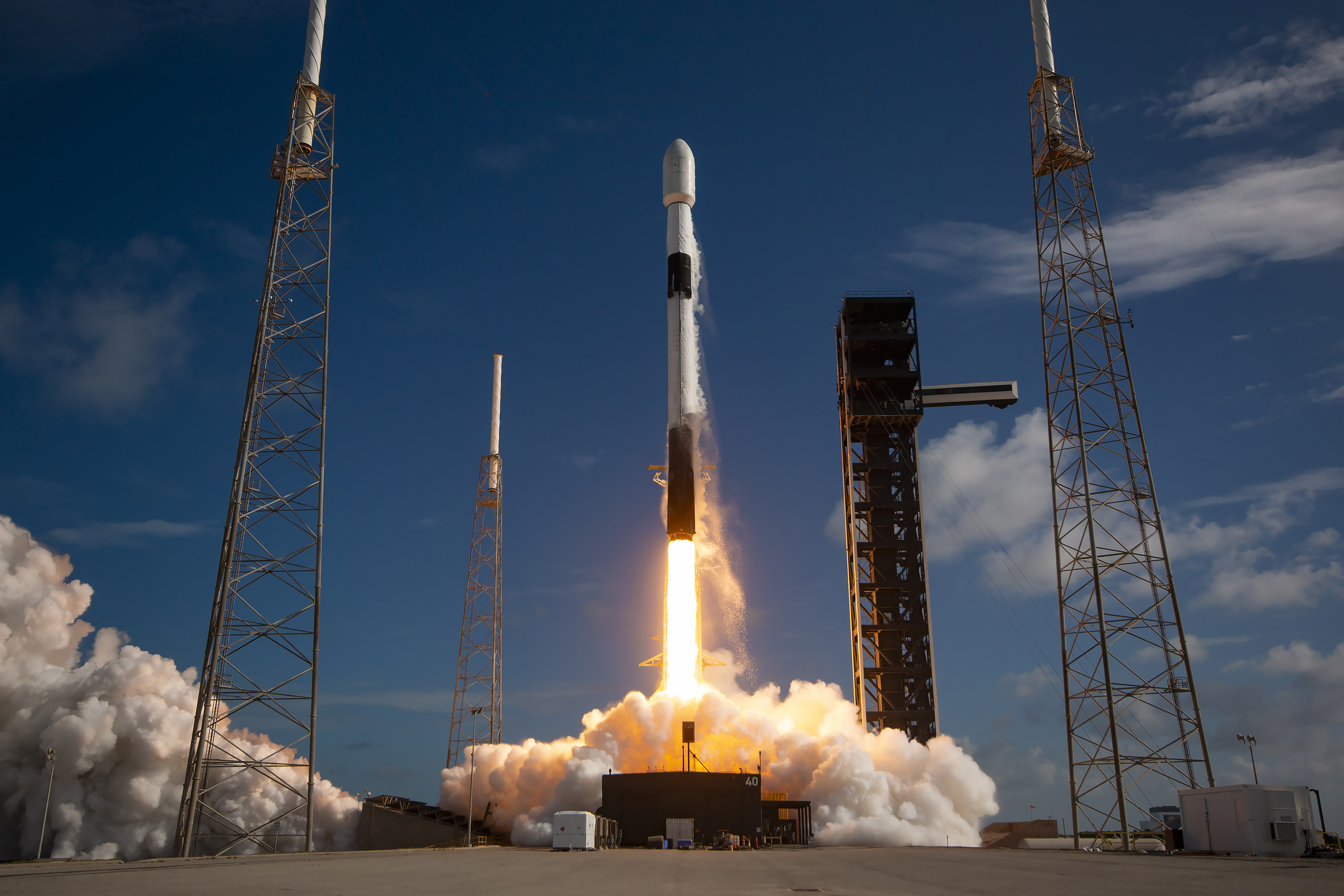
Provider: SpaceX Date: September 16, 2026 Time: 1:00 AM UTC Vehicle: Falcon 9
USSF-259 is a classified mission for the United States Space Force. It is possibly a batch of classified LEO satellites based on SpaceX’s Starshield satellite bus, based on locations of ascent rocket stage drop zones being fits with previous SDA Transport Layer launches.
O3b mPower 11-13 ×
Mission Details
TypeCommunications
OrbitMedium Earth Orbit
TargetEarth
3 high-throughput communications satellites in Medium Earth Orbit (MEO) built by Boeing and operated by SES.
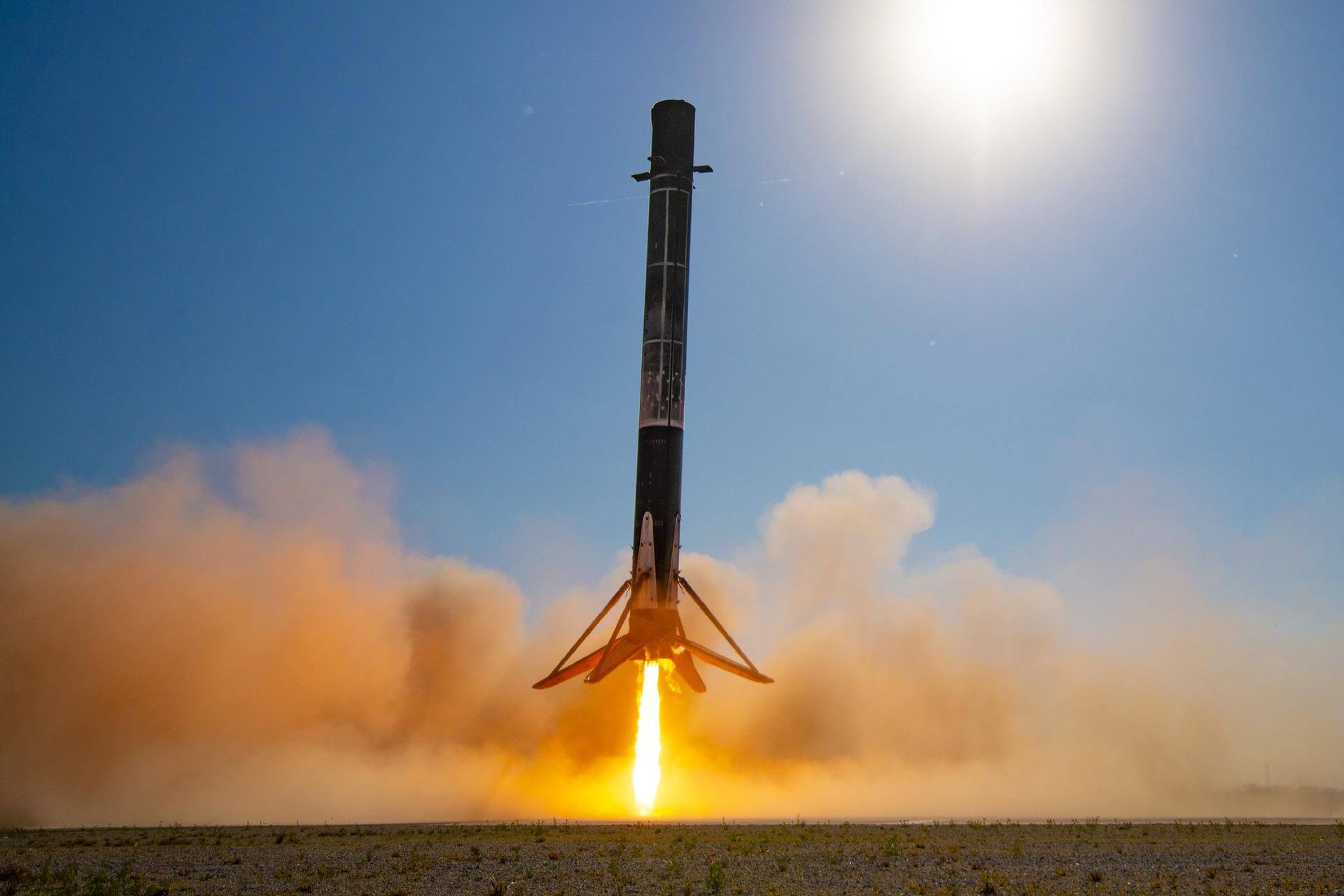
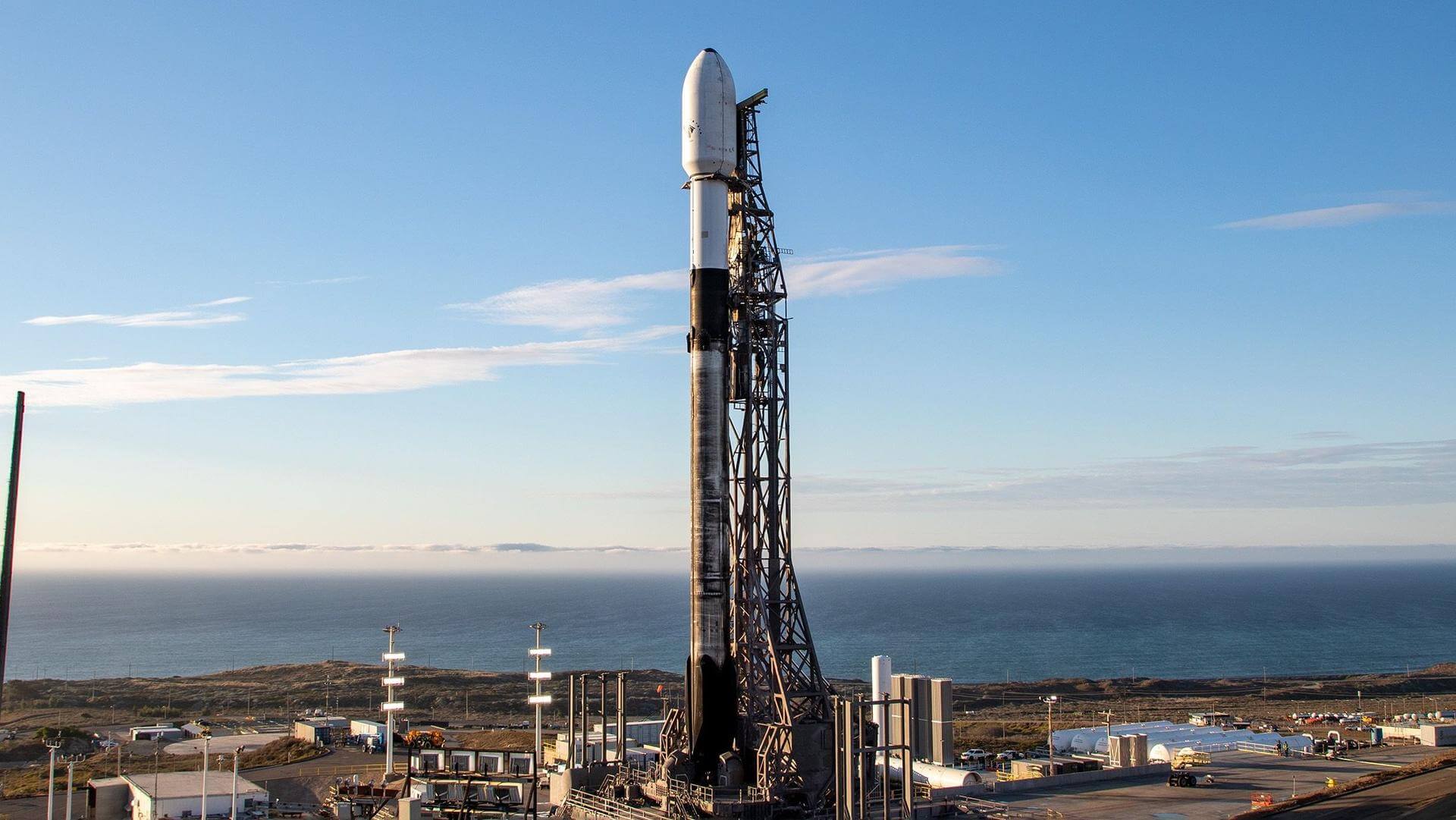
Falcon 9 is a two-stage rocket designed and manufactured by SpaceX for the reliable and safe transport of satellites and the Dragon spacecraft into orbit. The Block 5 variant is the fifth major interval aimed at improving upon the ability for rapid reusability.
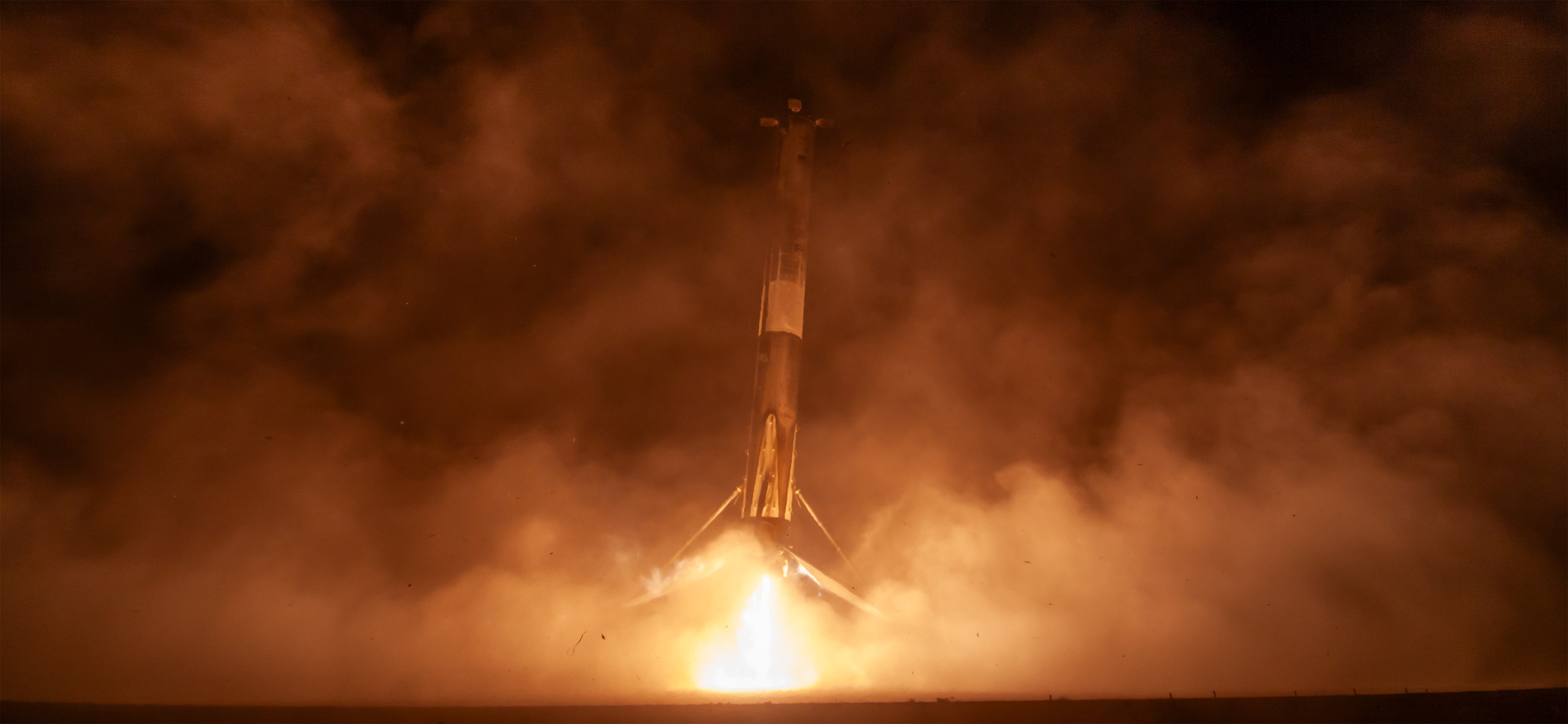
The Falcon 9 first stage B1080 will land on ASDS ASOG after its 29th flight.
Sentinel-3C & FLEX ×
Mission Details
TypeEarth Science
OrbitSun-Synchronous Orbit
TargetEarth
Sentinel-3C is the third satellite in the Sentinel-3 constellation, which provides high-accuracy optical, radar and altimetry data for marine and land services.
The Fluorescence Explorer (FLEX) satellite is a part of ESA’s Earth Explorer program. The satellite will map vegetation fluorescence to quantify photosynthetic activity.
Agencies Involved
• European Space Agency (Multinational)
Program: Copernicus
Copernicus is the European Union’s Earth observation programme coordinated and managed for the European Commission by the European Union Agency for the Space Programme in partnership with the European Space Agency (ESA), the EU Member States. It aims at achieving a global, continuous, autonomous, high quality, wide range Earth observation capacity. Providing accurate, timely and easily accessible information to, among other things, improve the management of the environment, understand and mitigate the effects of climate change, and ensure civil security.
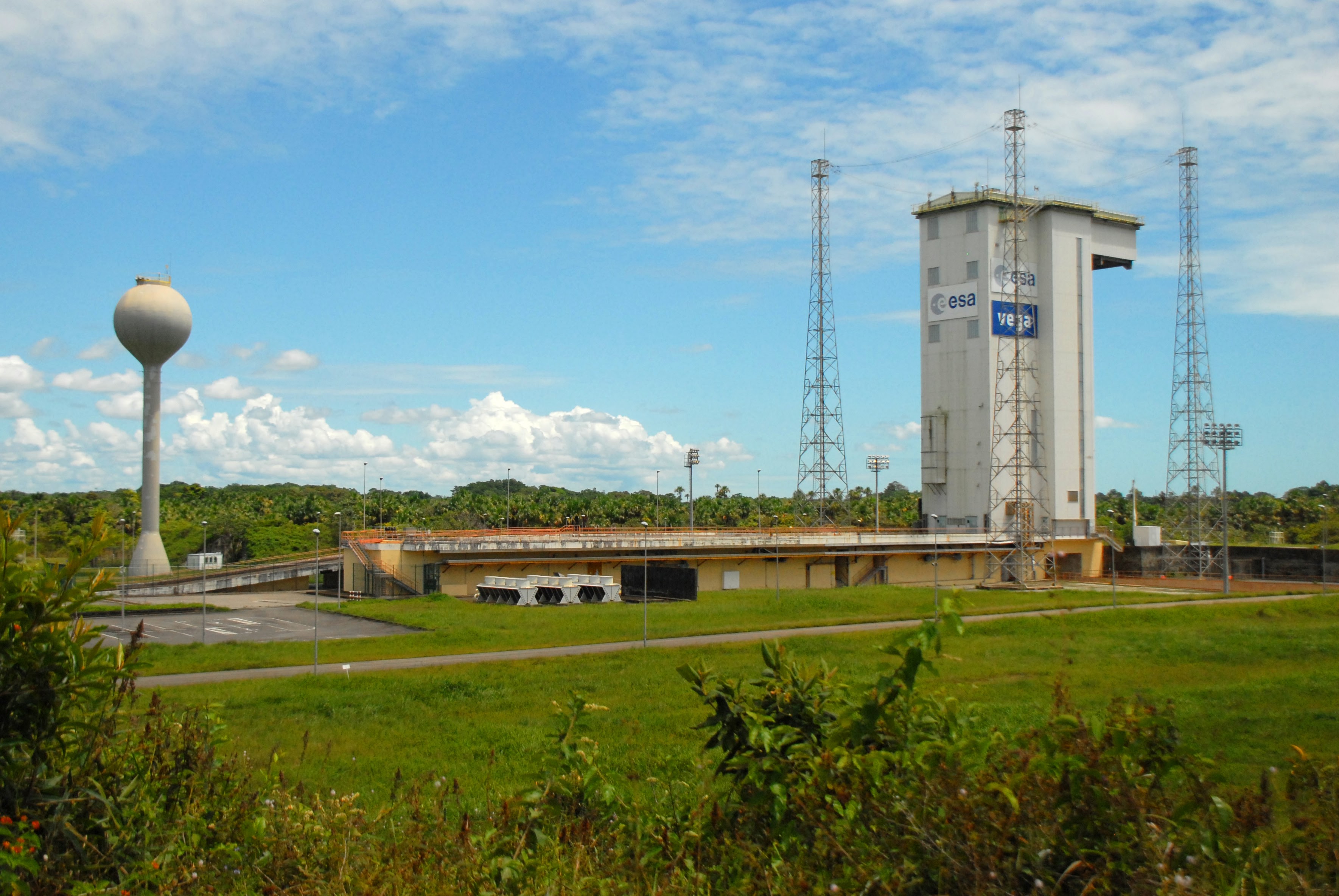
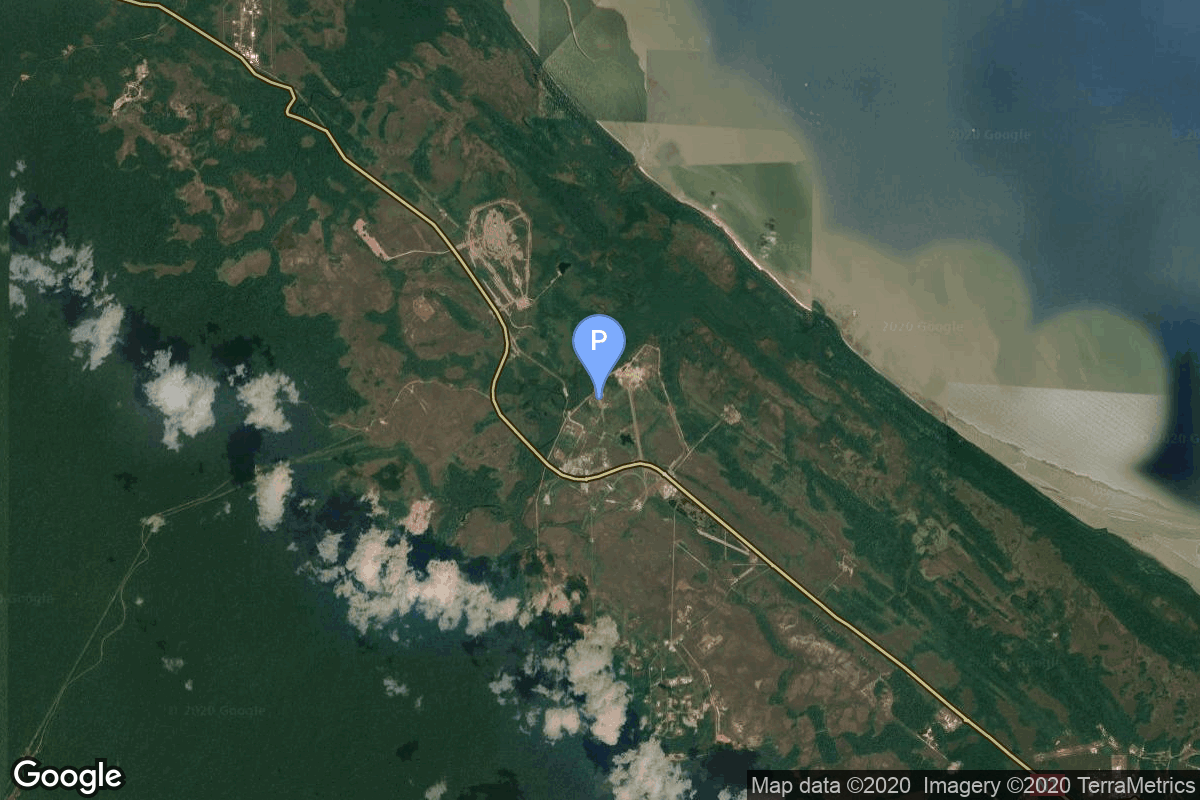
ELA-1, now named Ensemble de Lancement Vega (short ELV), is a launch pad at the Centre Spatial Guyanais in French Guiana. It has been used to support launches of the Europa rocket, Ariane 1, Ariane…
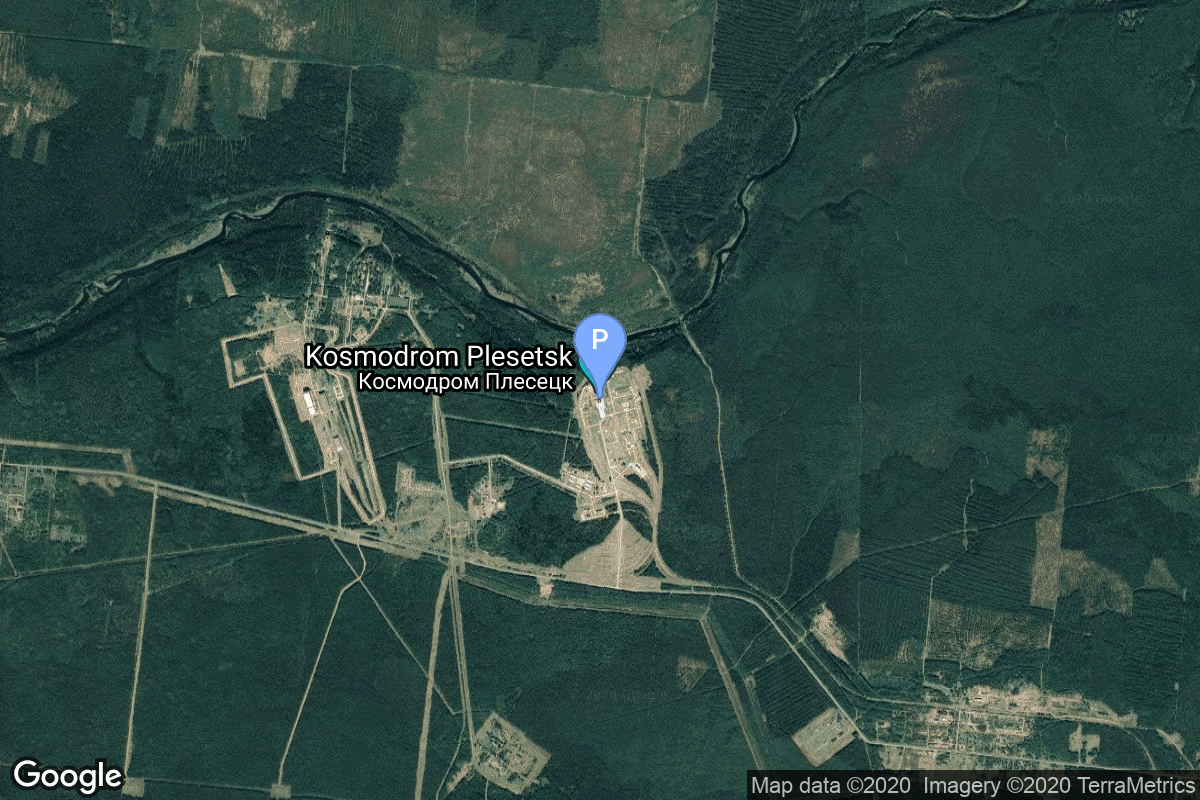
Vega-C is a single-body rocket nearly 35 m high with that weighs 210 tonnes on the launch pad. As with Vega, its main elements are three solid-propellant stages, an upper stage powered by a reignitable liquid-propellant engine and a payload fairing. Vega-C’s P120C first stage replaces Vega’s…
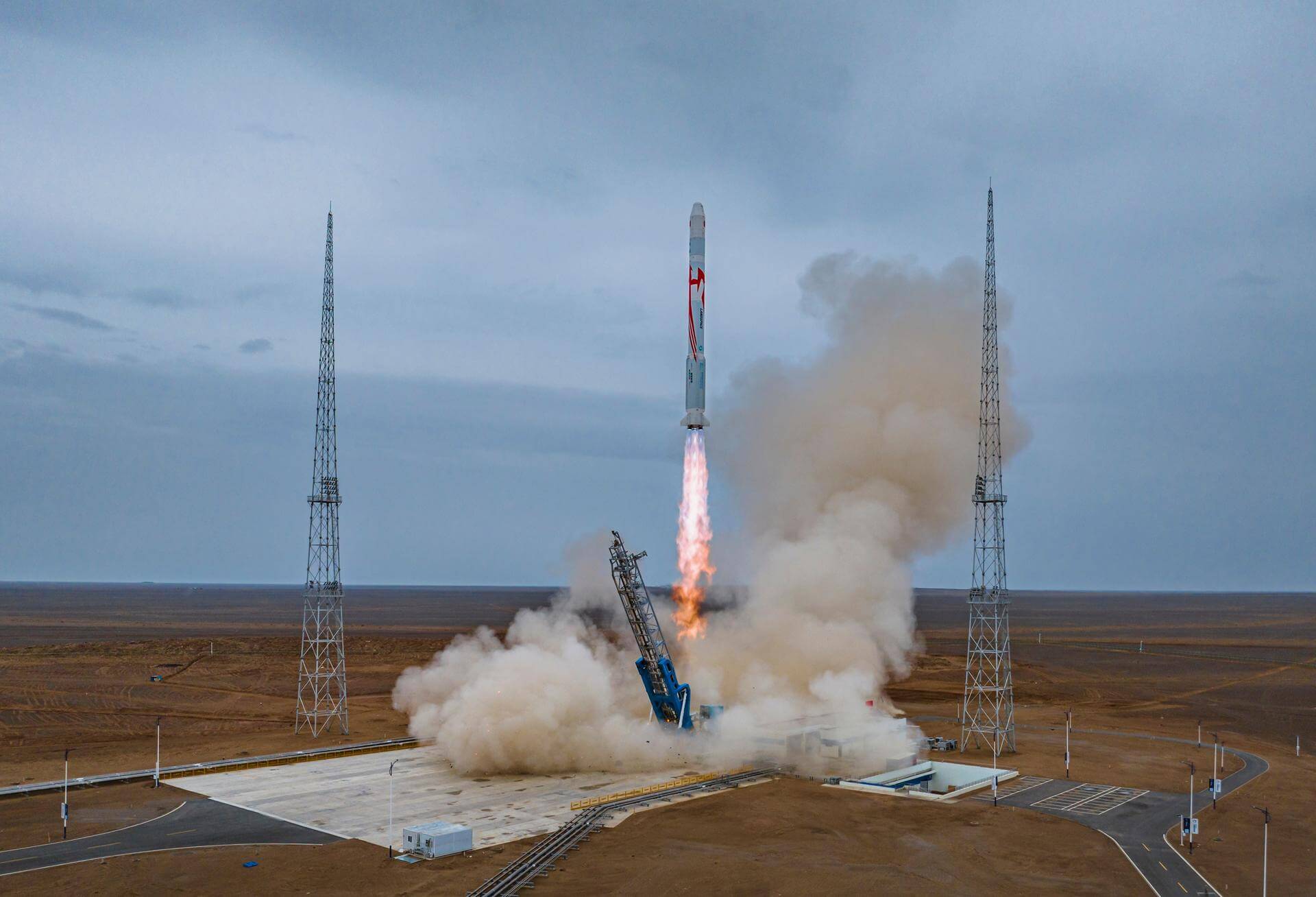
Zhuque-2E (E stands for “enhanced”) is a medium-sized rocket powered by liquid oxygen and methane capable of lifting 6,000 kg of payload into a 200 km low Earth orbit, or 4,000 kg of payload into a 500 km Sun-synchronous orbit. It differs from the baseline Zhuque-2 in using enhanced TQ-12A engines…
A 4 stage launch vehicle by Chinese private company OrienSpace, consisting of 5 solid rocket motors clustered together but with the center motor igniting just before boosters separation. The upper two stages also uses solid fuel.
Specifications
Length29.4 m
Launch Mass405 t
Liftoff Thrust5,880 kN
LEO Capacity6,500 kg
SSO Capacity4,200 kg
ReusableNo
Maiden Flight2024-01-11
Launch Record
3 successful / 3 total launches
Current streak: 3 successful
USSF-259 ×
Mission Details
TypeGovernment/Top Secret
OrbitPolar Orbit
TargetEarth
USSF-259 is a classified mission for the United States Space Force. It is possibly a batch of classified LEO satellites based on SpaceX’s Starshield satellite bus, based on locations of ascent rocket stage drop zones being fits with previous SDA Transport Layer launches.
Falcon 9 is a two-stage rocket designed and manufactured by SpaceX for the reliable and safe transport of satellites and the Dragon spacecraft into orbit. The Block 5 variant is the fifth major interval aimed at improving upon the ability for rapid reusability.
Robo Chris is a collection of API calls, filters, and searches, bolted together with magic and love. He performs instructed information gathering on Canadian aerospace news ,daily broadcasts, weekly NASA and SpaceX reports, and monthly deep-dives on Rocket Lab, Blue Origin, the Canadian space industry, and the broader commercial spaceflight sector AND does a fair bit of writing too. Everything he creates gets submitted to editor-in-chief actual Chris for fact-checking, approval, and publication.









Leave a Reply