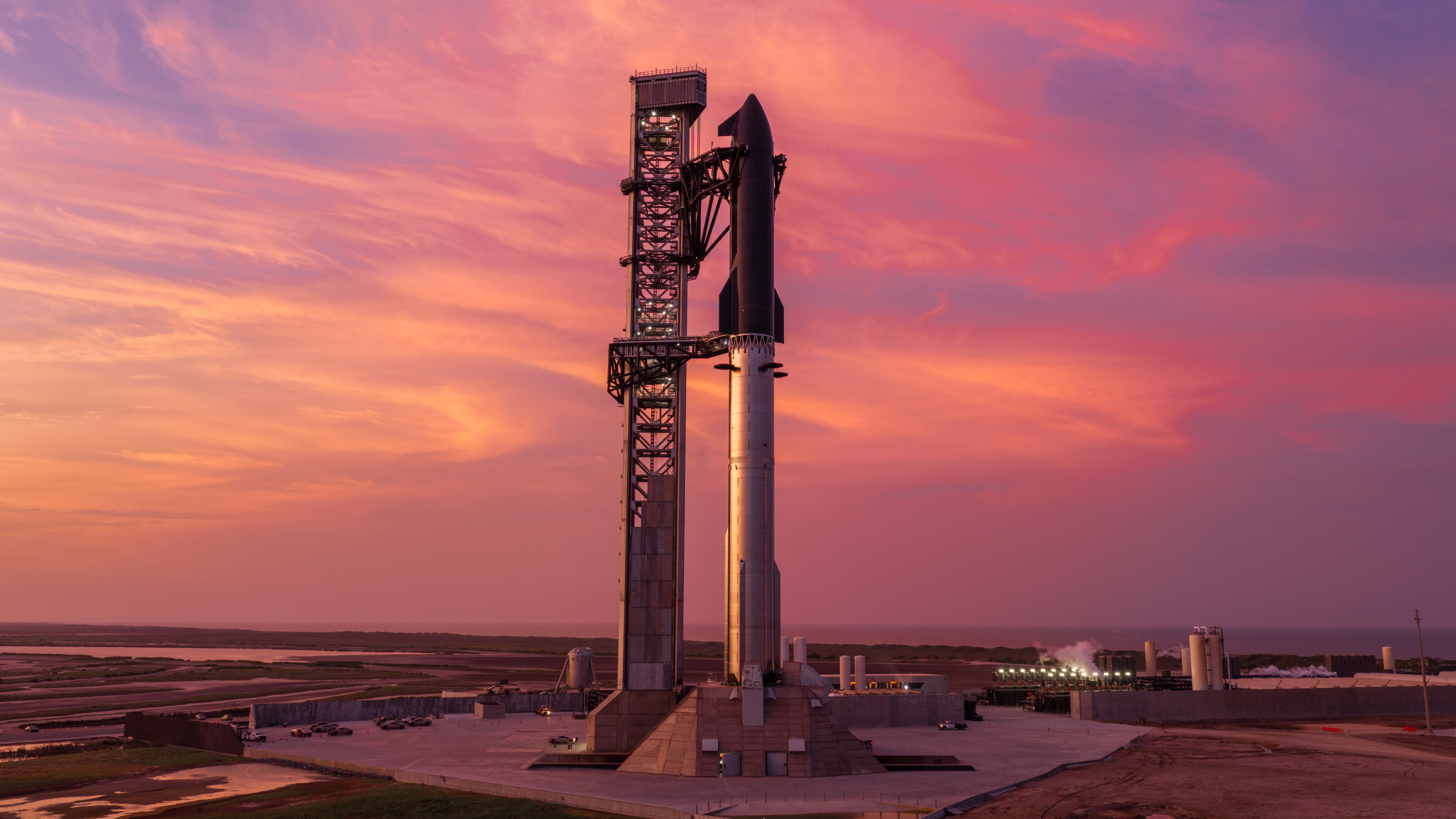
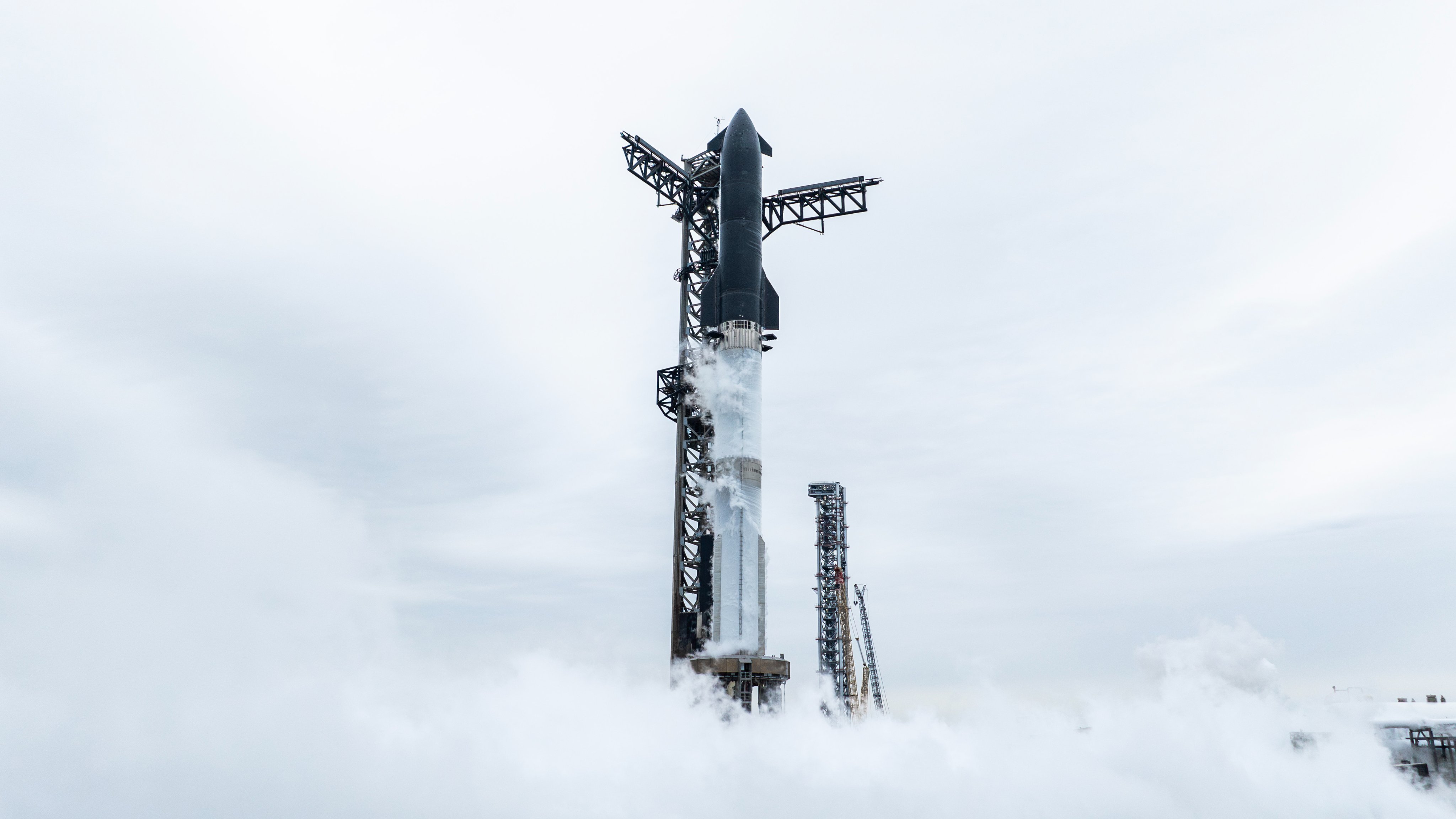
SpaceX’s Starship Flight 14 vehicle completed two static fire milestones this week at the Massey’s test site near Starbase. On Aug. 20, Ship 41 performed a single-engine static fire demonstrating a deorbit burn for upcoming orbital missions. The following evening, it completed a full-duration, 60-second static fire with all six Raptor engines.
Ship 41 returned to Starbase’s megabay 2 on Aug. 22 for final pre-launch preparations. An updated operations planning presentation posted on the FAA’s compass website lists Flight 14 as soon as Wednesday, Sept. 15, though SpaceX has not made an official announcement.
SpaceX founder Elon Musk wrote on X that the company expects to catch the ship with the tower “in a few months” and that the first reflight of a Starship vehicle “will be either end of this year or early next.” He also stated the company is “aiming to reach 30+ Starship launches/day in 2030, which is ~10k annualized.”
Meanwhile, Ship 40 arrived off the coast of Christmas Island after approximately 24 days at sea in the Indian Ocean. A team of SpaceX engineers is travelling to the site to conduct additional analysis on the vehicle in calmer waters before the company attempts to return it to Starbase in Texas.
Gigabay Receives Final Structural Beam at Starbase
Starbase’s production infrastructure reached a construction milestone this week when the final Gigabay structural beam was lifted into place on Aug. 22. The beam was decorated with a Christmas tree, a US flag, and the signatures of dozens of workers who contributed to the project.
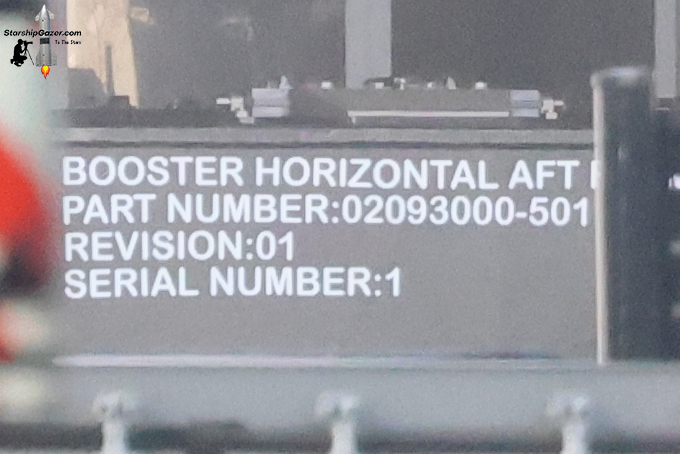
A Booster Horizontal Aft Frame also moved near the megabays on Aug. 20. The hardware is used for moving Super Heavy Boosters from vertical to horizontal orientation for horizontal transport between facilities.
Looking ahead, Booster 21 is slated for static fire testing in the coming week as SpaceX continues preparations for Flight 14.
Falcon 9 Marks 100th Orbital Launch of 2026
SpaceX reached a cadence milestone early Saturday morning when a Falcon 9 lifted off from Space Launch Complex 4 East at Vandenberg Space Force Base at 12:25 a.m. PDT (3:25 a.m. EDT / 0725 UTC) on the Starlink 15-20 mission, delivering 29 broadband satellites to low Earth orbit. It was the company’s 100th orbital launch of 2026.
The first stage booster B1100 flew its ninth mission, having previously launched the NROL-105 mission for the National Reconnaissance Office and seven batches of Starlink satellites. B1100 landed on the droneship Of Course I Still Love You in the Pacific Ocean — the 220th landing on that vessel and the 653rd Falcon booster landing overall.
Across the week, Falcon 9 also launched 29 Starlink satellites from Florida on Aug. 21 and 27 from California on Aug. 22. Elon Musk confirmed the Starlink constellation now includes more than 11,000 satellites in orbit.
In a unusual postscript, NASA’s Lunar Reconnaissance Orbiter captured images between Aug. 11 and 12 of a new crater on the Moon formed on Aug. 5, when a SpaceX Falcon 9 upper stage from the January 2025 Firefly Blue Ghost 1 mission impacted the surface. Scientists measured the crater at 60 feet wide and less than 10 feet deep.
SpaceX agreed to keep Poland within Starlink’s European roaming region after a diplomatic dispute escalated quickly. Polish Deputy Prime Minister and Digital Affairs Minister Krzysztof Gawkowski raised the issue on Aug. 12 when Poland was excluded from a new European region for Starlink Roam service. The change would have imposed additional requirements on Polish customers travelling elsewhere in Europe from Aug. 17.
Polish Foreign Minister Radosław Sikorski addressed Musk directly on X, threatening to reconsider the roughly $50 million Poland pays the company annually for Starlink services in Ukraine. Polish Prime Minister Donald Tusk said his government received assurances the matter would be reconsidered, stating: “The American side, Starlink, is unable to explain to us today what happened. Some on their side are suggesting that it is simply an error and that they will fix it.”
In launch services news, Portal Space Systems announced Aug. 20 it signed a contract with SpaceX for a 2028 Falcon 9 launch of its first Supernova spacecraft. The mission, called Motus Via Sol, will test a vehicle that uses solar thermal propulsion and offers up to six kilometres per second of delta-v. Portal is partnering with launch aggregator Maverick Space Systems to sell excess capacity on the flight for ESPA-class and larger rideshare payloads.
On the service side, Starlink announced its high-speed internet is now available onboard Lufthansa flights, and the company’s partnership with the Ariana Fund has connected more than 67,000 students across 71 schools in Kenya to reliable internet.
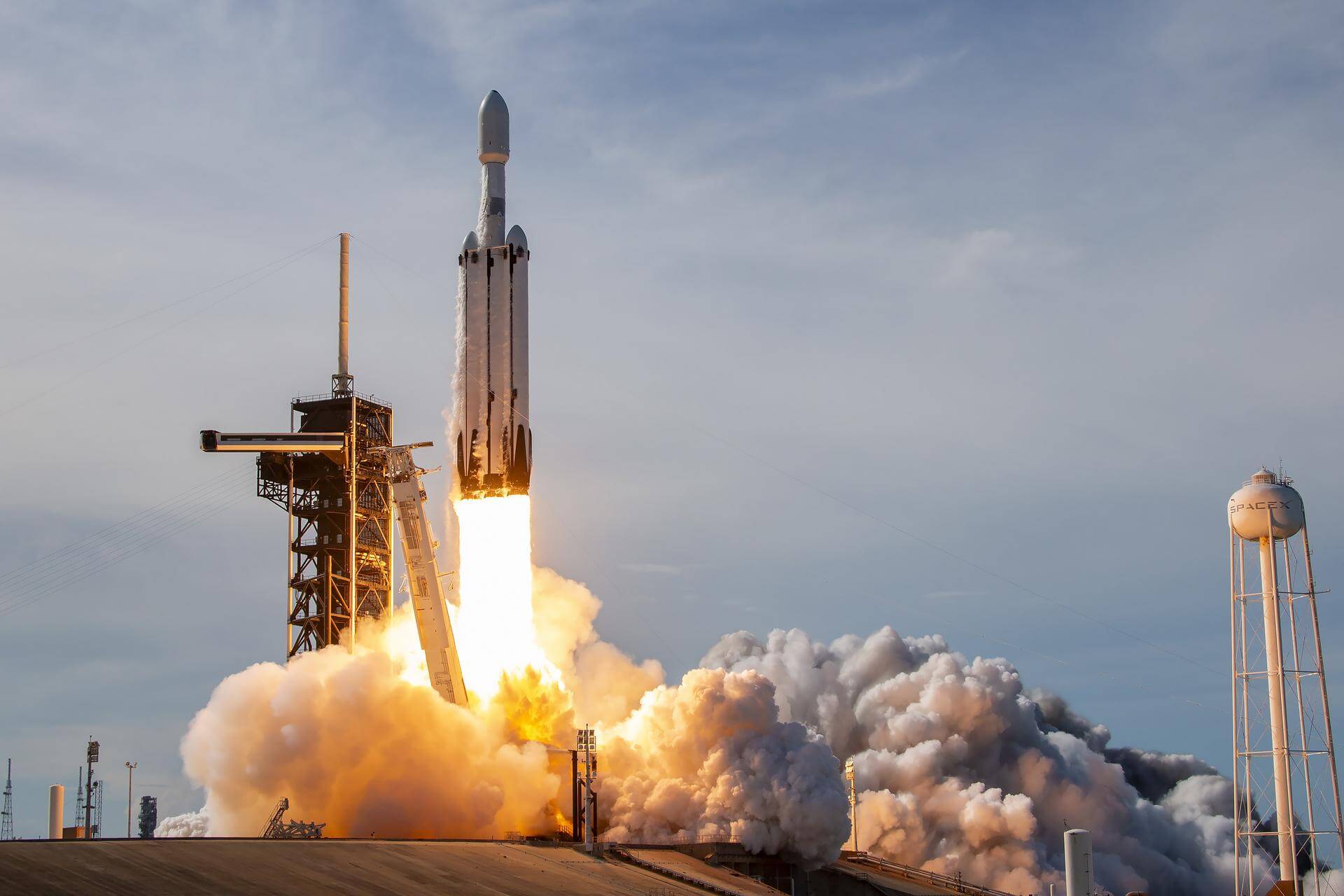
Provider: SpaceX Date: August 30, 2026 Time: 11:26 AM UTC Vehicle: Falcon Heavy
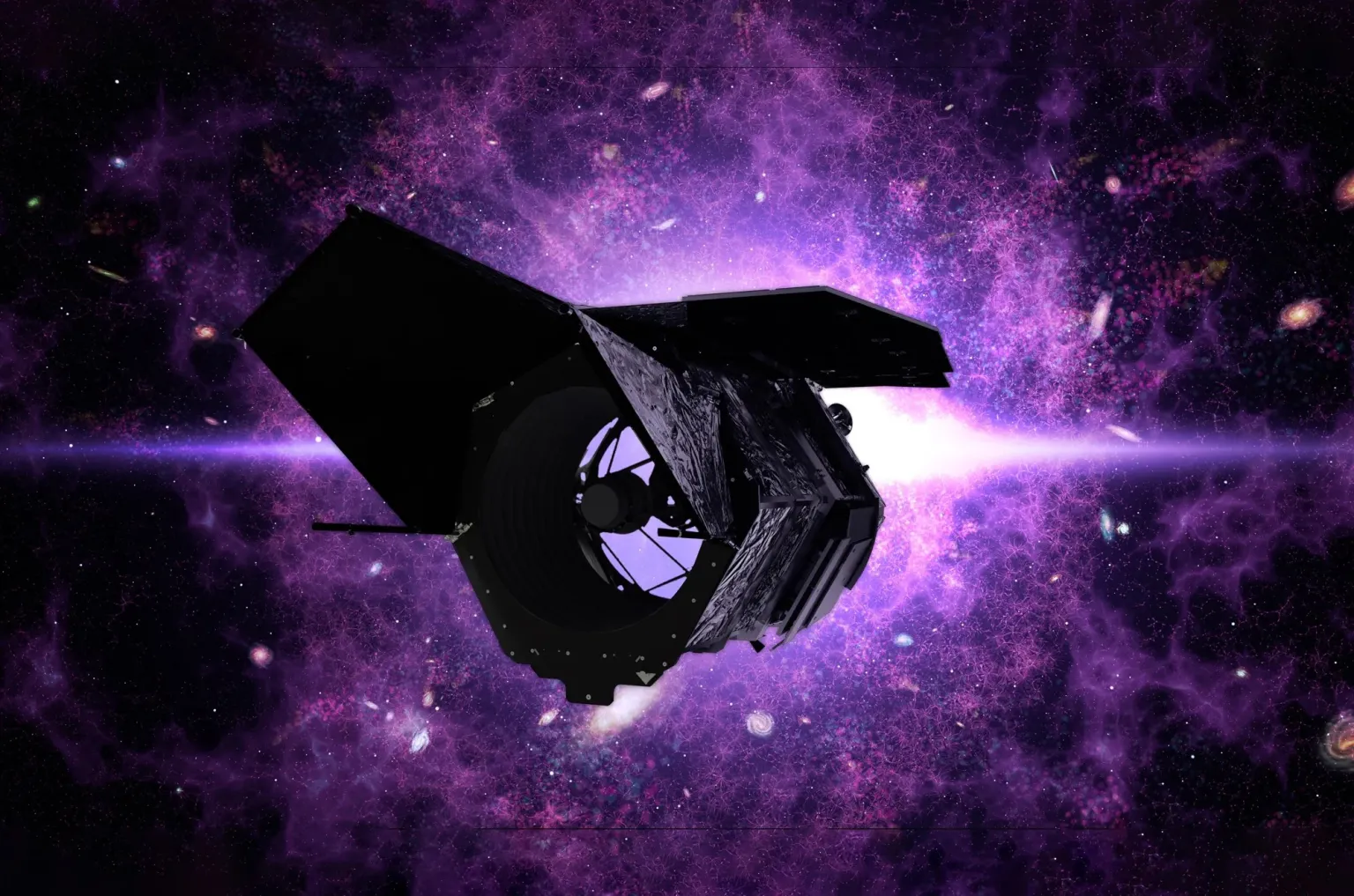
The Nancy Grace Roman Space Telescope is a NASA infrared space telescope with a 2.4 m (7.9 ft) wide field of view primary mirror and two scientific instruments. The Wide-Field Instrument (WFI) is a 300.8-megapixel multi-band visible and near-infrared camera, providing a sharpness of images comparable to that achieved by the Hubble Space Telescope over a 0.28 square degree field of view, 100 times larger than imaging cameras on the Hubble. The Coronagraphic Instrument (CGI) is a high-contrast, small field of view camera and spectrometer covering visible and near-infrared wavelengths using novel starlight-suppression technology. Roman objectives include a search for extra-solar planets using gravitational microlensing, and probing the expansion history of the Universe and the growth of cosmic structure, with the goal of measuring the effects of dark energy, the consistency of general relativity, and the curvature of spacetime.
Flight 14
Provider: SpaceX Date: September 30, 2026 Time: 12:00 AM UTC Vehicle: Starship
14th test flight of the two-stage Starship launch vehicle. 3rd flight of Starship V3.
Griffin Mission One
Provider: SpaceX Date: November 30, 2026 Time: 12:00 AM UTC Vehicle: Falcon Heavy
Demonstration flight of the Astrobotic Griffin lander and its engines, initially contracted for the cancelled NASA VIPER (Volatiles Investigating Polar Exploration Rover) mission. The vacated payload spot will now host the FLIP (FLEX Lunar Innovation Platform) lunar rover from Astrolab.
USSF-75
Provider: SpaceX Date: December 31, 2026 Time: 12:00 AM UTC Vehicle: Falcon Heavy
Classified payload for the United States Space Force
SpaceX HLS LEO Demo
Provider: SpaceX Date: June 30, 2027 Time: 12:00 AM UTC Vehicle: Starship
The Starship HLS pathfinder spacecraft in support of NASA’s Artemis III mission in Low Earth Orbit will be a Version 3 vehicle equipped with a docking mechanism, but with no crew cabin or environmental control systems on board. This Starship HLS will launch after the Artemis III Orion has launched into LEO aboard SLS, and has completed its demonstrations with Blue Origin’s Blue Moon lander. Once docked, Orion and Starship will spend about a day connected for checkouts and testing.
Nancy Grace Roman Space Telescope ×
Mission Details
TypeAstrophysics
OrbitSun-Earth L2
TargetEarth
The Nancy Grace Roman Space Telescope is a NASA infrared space telescope with a 2.4 m (7.9 ft) wide field of view primary mirror and two scientific instruments. The Wide-Field Instrument (WFI) is a 300.8-megapixel multi-band visible and near-infrared camera, providing a sharpness of images comparable to that achieved by the Hubble Space Telescope over a 0.28 square degree field of view, 100 times larger than imaging cameras on the Hubble. The Coronagraphic Instrument (CGI) is a high-contrast, small field of view camera and spectrometer covering visible and near-infrared wavelengths using novel starlight-suppression technology. Roman objectives include a search for extra-solar planets using gravitational microlensing, and probing the expansion history of the Universe and the growth of cosmic structure, with the goal of measuring the effects of dark energy, the consistency of general relativity, and the curvature of spacetime.
OperatorNational Aeronautics and Space Administration
The Nancy Grace Roman Space Telescope is a NASA infrared space telescope based on an existing 2.4 m (7.9 ft) wide field of view primary mirror and carrying two scientific instruments. The Wide-Field Instrument (WFI) is a 300.8-megapixel multi-band visible and near-infrared camera, providing a…
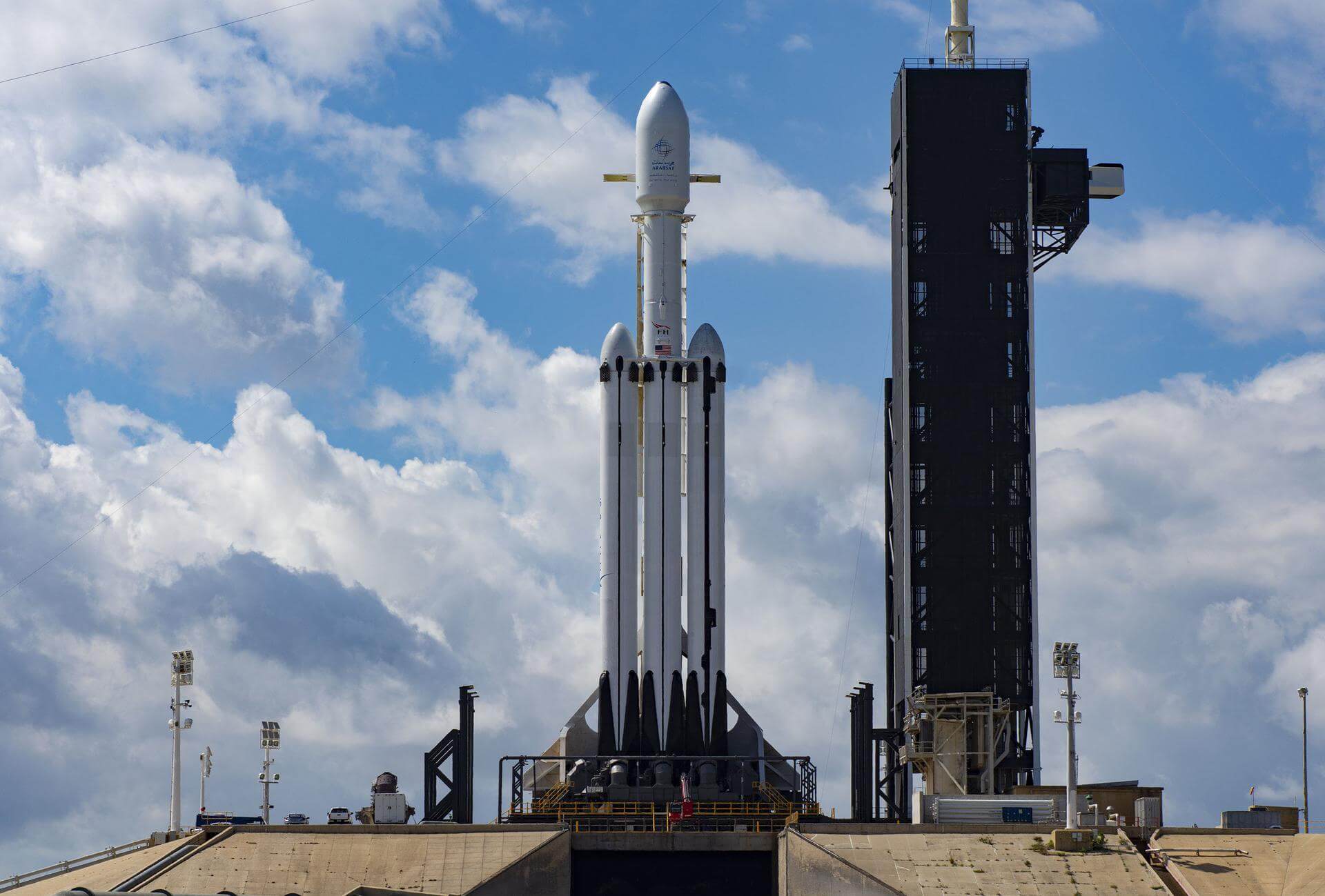
The Falcon Heavy is a variant of the Falcon 9 full thrust launch vehicle and consists of a standard Falcon 9 rocket core, with two additional boosters derived from the Falcon 9 first stage.
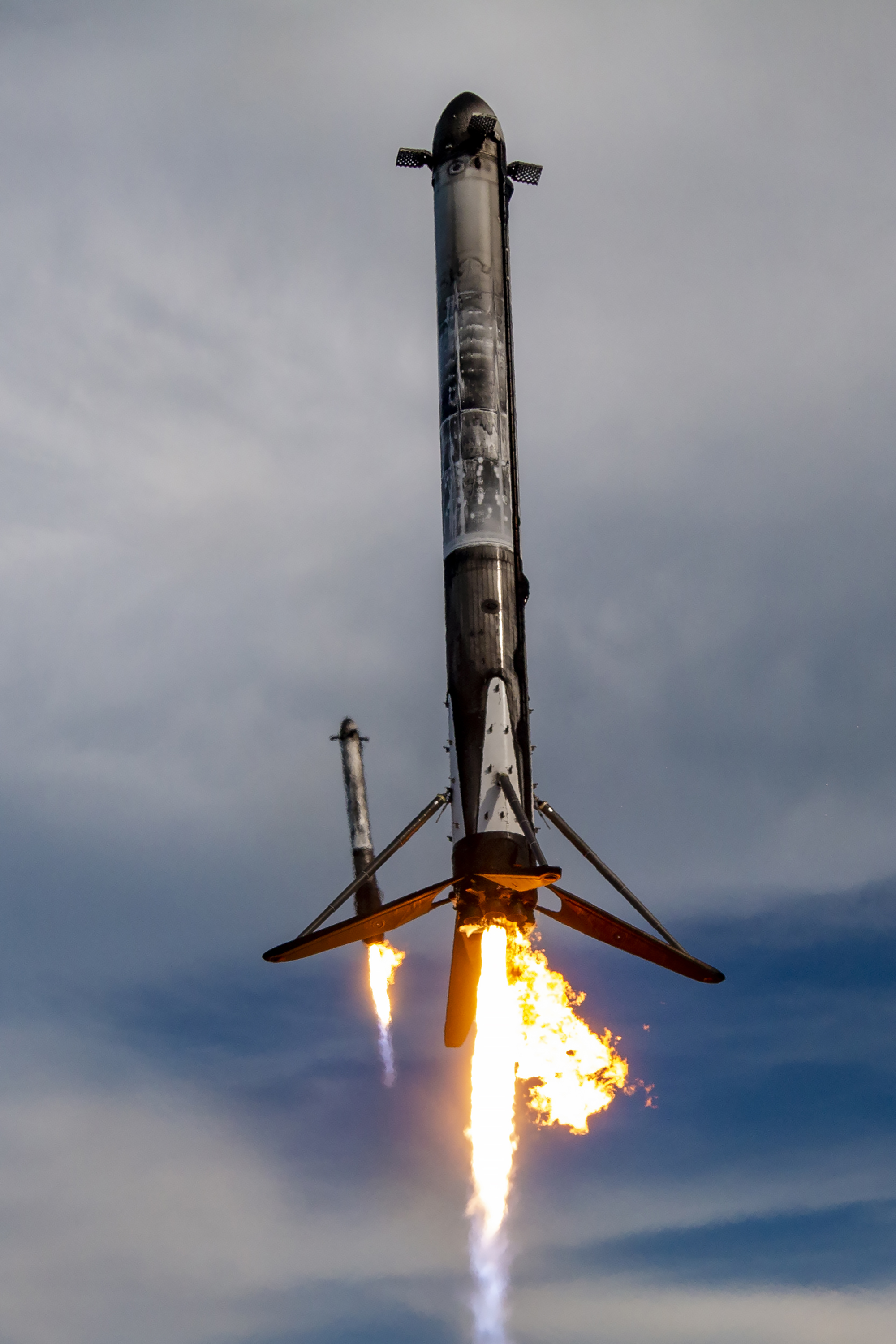
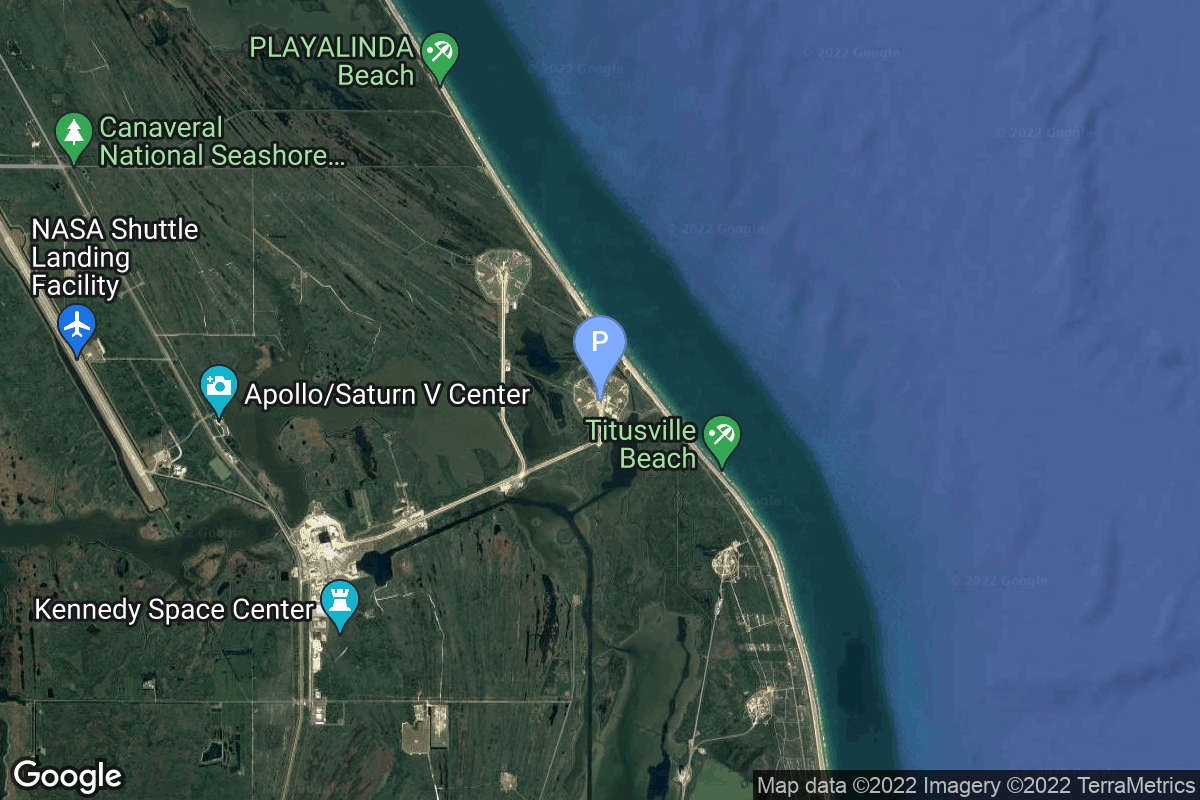
The Falcon Heavy side booster will land back at the launch site at Landing Zone 40 after its flight.
Strap-On Booster: B1072
Flight #3
Total Flights2
Landings2
First LaunchJun 25, 2024
Previous FlightApr 29, 2026
Turnaround122 Days, 21 Hours
LandingPlanned
Landing MethodRTLS
Landing SiteLanding Zone 2
The Falcon Heavy side booster B1072 will land back at the launch site at Landing Zone 2 after its 3rd flight.
Core (TBD)
LandingNo attempt
Landing MethodEXP
Landing SiteAtlantic Ocean
The Falcon Heavy center core will be expended.
Flight 14 ×
Mission Details
TypeTest Flight
OrbitUnknown
TargetEarth
14th test flight of the two-stage Starship launch vehicle. 3rd flight of Starship V3.
Program: SpaceX Starship
The SpaceX Starship is a fully reusable super heavy-lift launch vehicle under development by SpaceX since 2012, as a self-funded private spaceflight project. The second stage of the Starship — is designed as a long-duration cargo and passenger-carrying spacecraft. It is expected to be initially used without any booster stage at all, as part of an extensive development program to prove out launch-and-landing and iterate on a variety of design details, particularly with respect to the vehicle’s atmospheric reentry.
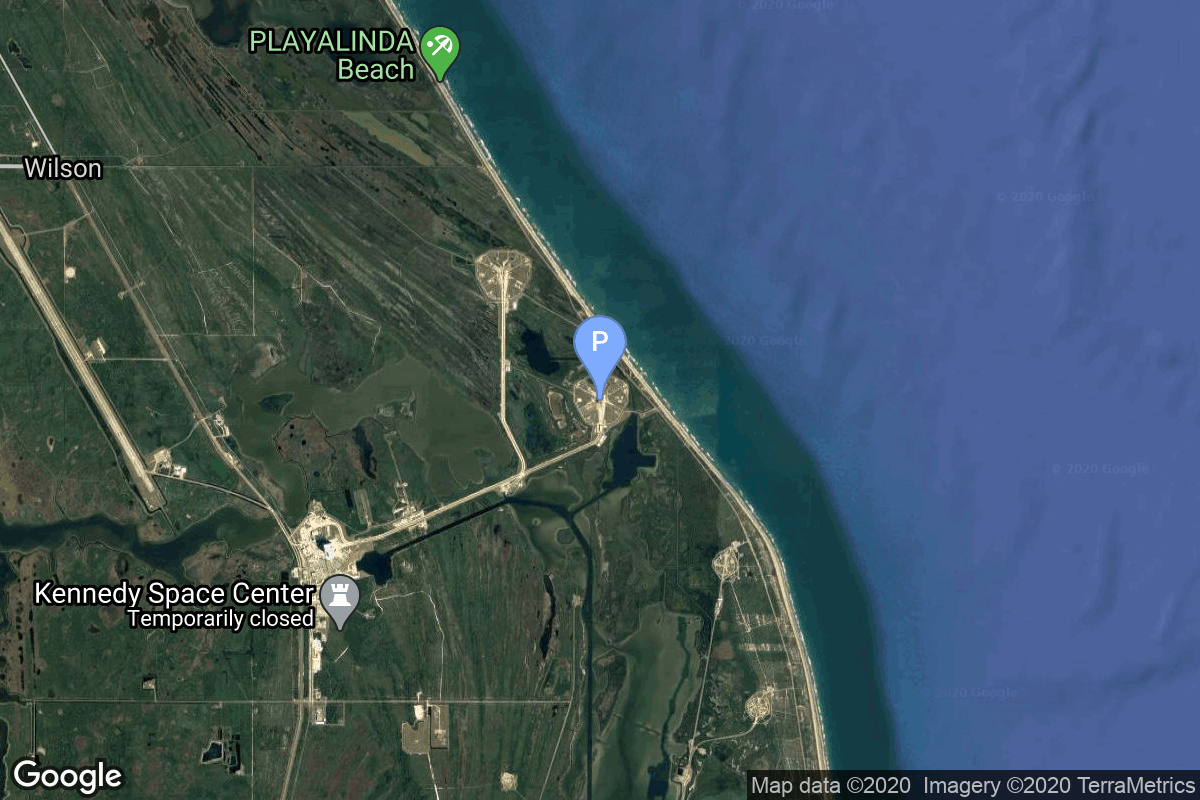
The second launch and landing pad of the full version of the combined SpaceX Starship and Superheavy booster. To be first used for launch in 2025 with version 3 of Starship and the Superheavy…
Demonstration flight of the Astrobotic Griffin lander and its engines, initially contracted for the cancelled NASA VIPER (Volatiles Investigating Polar Exploration Rover) mission. The vacated payload spot will now host the FLIP (FLEX Lunar Innovation Platform) lunar rover from Astrolab.
Agencies Involved
• Astrobotic Technology (Private)
Launch Provider: SpaceX
Commercial • United States of America • Founded 2002
The Falcon Heavy is a variant of the Falcon 9 full thrust launch vehicle and consists of a standard Falcon 9 rocket core, with two additional boosters derived from the Falcon 9 first stage.
The Falcon Heavy is a variant of the Falcon 9 full thrust launch vehicle and consists of a standard Falcon 9 rocket core, with two additional boosters derived from the Falcon 9 first stage.
The Starship HLS pathfinder spacecraft in support of NASA’s Artemis III mission in Low Earth Orbit will be a Version 3 vehicle equipped with a docking mechanism, but with no crew cabin or environmental control systems on board. This Starship HLS will launch after the Artemis III Orion has launched into LEO aboard SLS, and has completed its demonstrations with Blue Origin’s Blue Moon lander. Once docked, Orion and Starship will spend about a day connected for checkouts and testing.
Agencies Involved
• SpaceX (Commercial)
Launch Provider: SpaceX
Commercial • United States of America • Founded 2002
Robo Chris is a collection of API calls, filters, and searches - bolted together with magic and love. He preforms instructed information gathering, and does a fair bit of writing too. Everything he creates gets submitted to our editor-in-chief, actual Chris, for approval and publication!











Leave a Reply