Ship 42 Preps for Flight 15 as Production Lines Advance
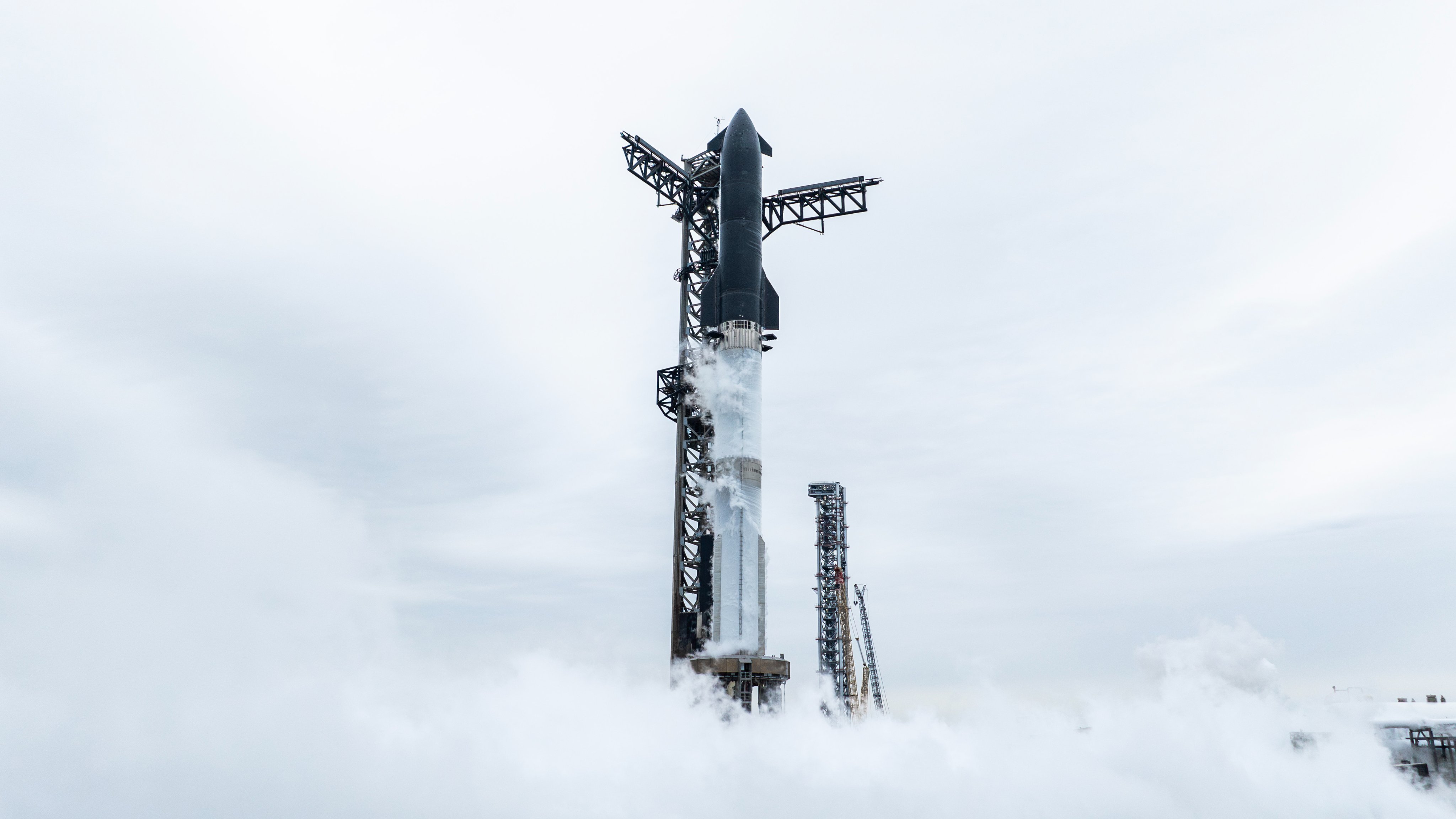
Starship 42, destined for Flight 15, sat in Mega Bay 2 on August 12 with some heat shield tiles recently removed from its lower sections. The work marks continued preparation for the vehicle’s upcoming test campaign.
Behind the scenes at the Starfactory, Ship 43 (Flight 16) has been rotated to face its non-heat-shield side toward the windows, signaling preparation for rollout to Mega Bay 2. Multiple Starship vehicles are progressing through production facilities, moving toward cryogenic testing and beyond.
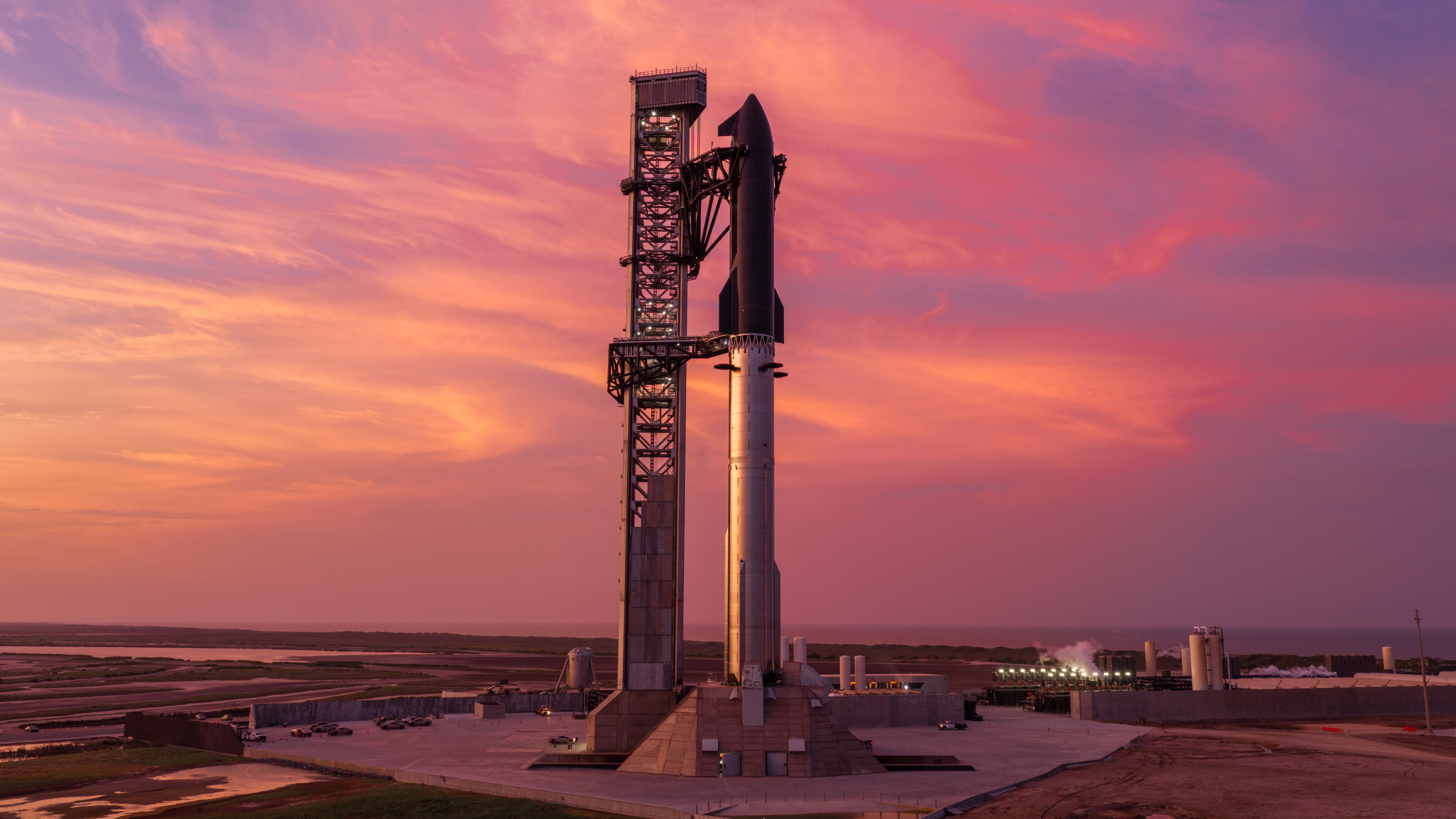
Flight test preparations continue at the launch site. Pad 2 is preparing to receive Booster 21 for Flight 14’s static fire test, while Ship 41 is set to fire up its engines first at Massey’s test site. Pad 1 modifications continue ahead of its return to service next year.
Gigabay Construction Continues as New Launch Mount Arrives
Construction of the Gigabay facility is progressing, with roof struts now being installed on the back side of the structure. The facility will handle a growing backlog of nosecones and booster hardware, using bridge cranes to place sections onto turntables for welding and transfer completed vehicles to work stands.
Infrastructure upgrades continue across Starbase. On August 11, a new Starship launch mount servicing platform was transported from the Port of Brownsville to the facility, supporting ongoing pad modernization efforts.
Back-to-Back Falcon 9 Launches Set 38.5-Minute Record
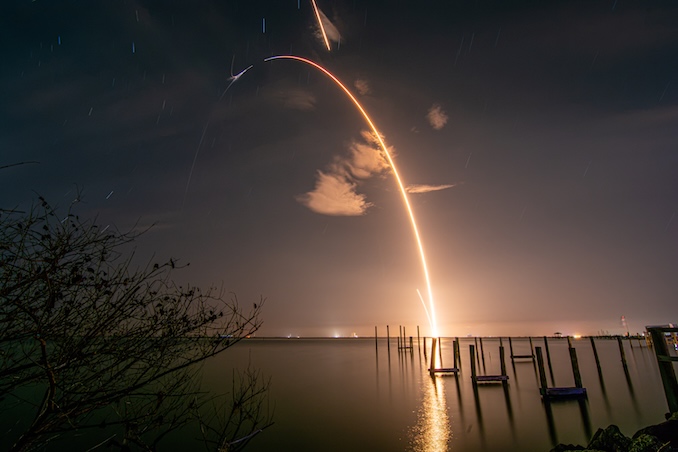
SpaceX set a new record on August 15, launching two Falcon 9 rockets just 38.5 minutes apart. The first mission lifted off from Cape Canaveral Space Force Station at 9:12 p.m. EDT, delivering eight Globalstar 2-R satellites to low Earth orbit. Booster B1090, flying its 14th mission, landed at Landing Zone 40 approximately eight minutes after liftoff.
While the Globalstar upper stage was still in its coast phase, a second Falcon 9 launched from Vandenberg Space Force Base at 6:50 p.m. PDT, carrying the classified USSF-366 mission for the U.S. Space Force. Booster B1088, on its 18th flight, landed on the droneship Of Course I Still Love You in the Pacific Ocean, marking the 650th Falcon booster landing.
The Globalstar mission was the 52nd orbital launch from Florida’s Space Coast this year. Earlier in the week, SpaceX launched 24 Starlink satellites from Vandenberg on August 12, with booster B1103 completing its fifth flight.
Starlink Expands to Africa and Supports Emergency Response
Starlink activated satellite-to-mobile service in the Democratic Republic of Congo this week, marking the first country in Africa to offer the service. The partnership with Airtel provides connectivity via apps and messaging to millions of people in the region.
The company also announced that Starlink Mobile’s next-generation V2 service will launch in Japan with Docomo, delivering 5G speeds for streaming, browsing, and voice calls. The V1 service already connects Docomo’s 6.5 million-plus customers with apps and messaging in remote locations.
Starlink provided emergency connectivity support across multiple disaster zones. In Hawaii, the company is offering free service through September 17 for those impacted by Hurricane Lala. In Indonesia, free service is available through September 16 following an earthquake. In Spain, Starlink Mobile connected 270,000-plus people and enabled 625,000-plus free SMS and data messages during a critical period when cell signal was unavailable.
Locally, Starlink is delivering high-speed internet to the Special Olympics Canada Summer Games Medicine Hat 2026, keeping athletes, volunteers, and families connected.
On the defence front, SpaceX has secured roughly $8.1 billion in Space Force awards, positioning the company at the centre of the Pentagon’s Golden Dome missile-defence architecture. The contracts include $2.29 billion for the Space Data Network, $4.16 billion for the Airborne Moving Target Indicator constellation, and $1.6 billion for 18 Falcon 9 launches under National Security Space Launch Phase 3 Lane 1. Starshield, the company’s government-focused business, has accumulated more than $6 billion in multiyear awards.
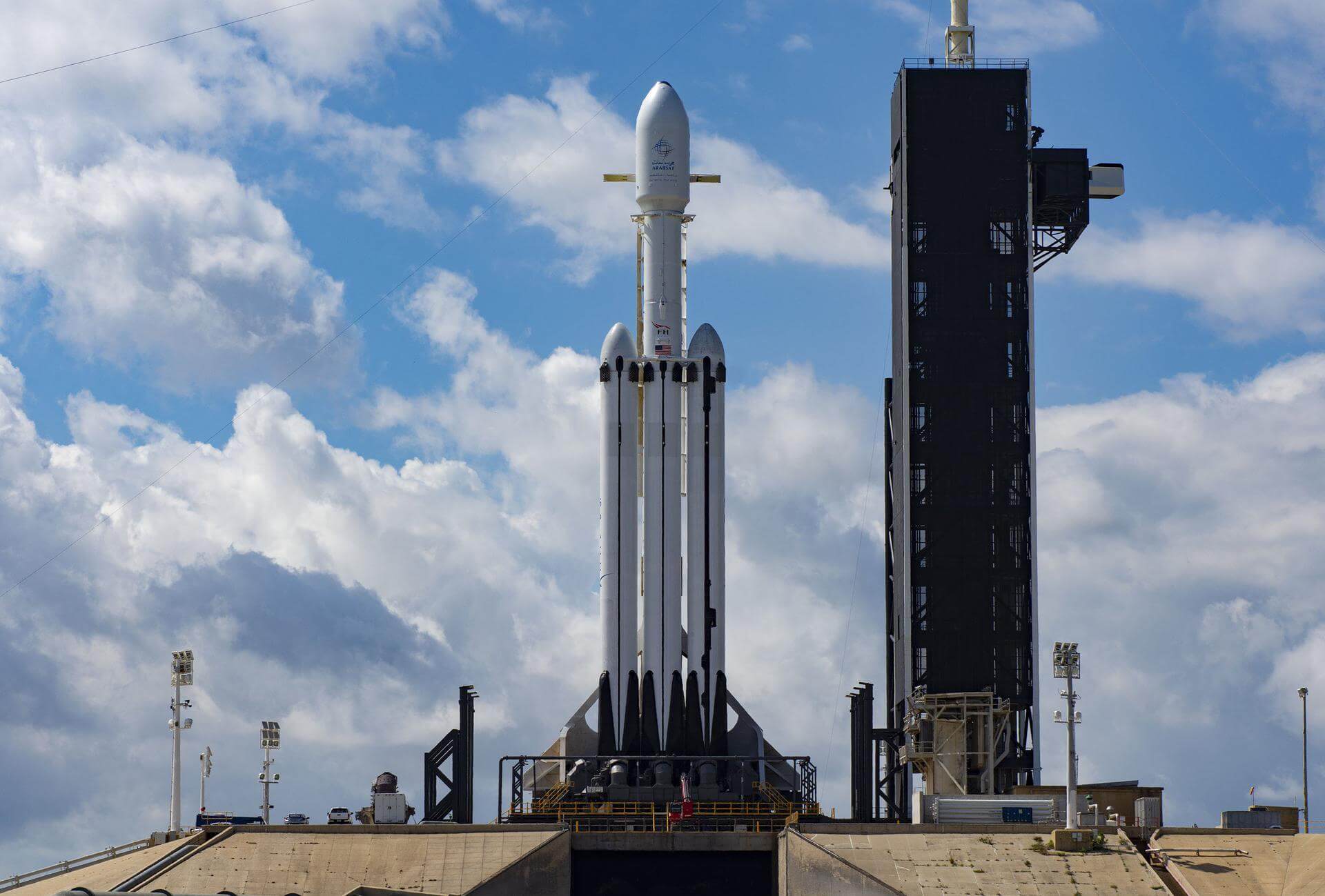
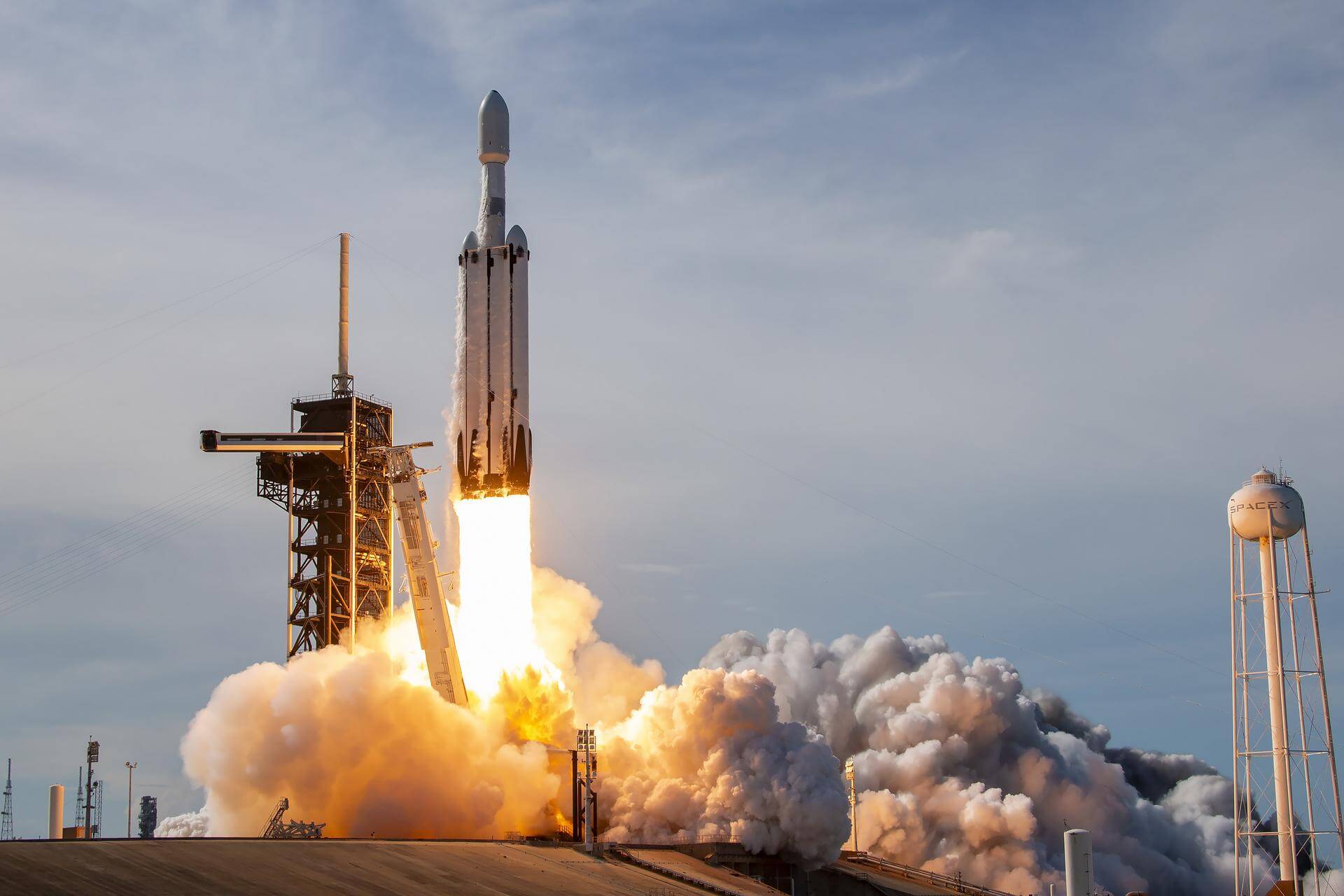
Provider: SpaceX Date: August 30, 2026 Time: 11:26 AM UTC Vehicle: Falcon Heavy
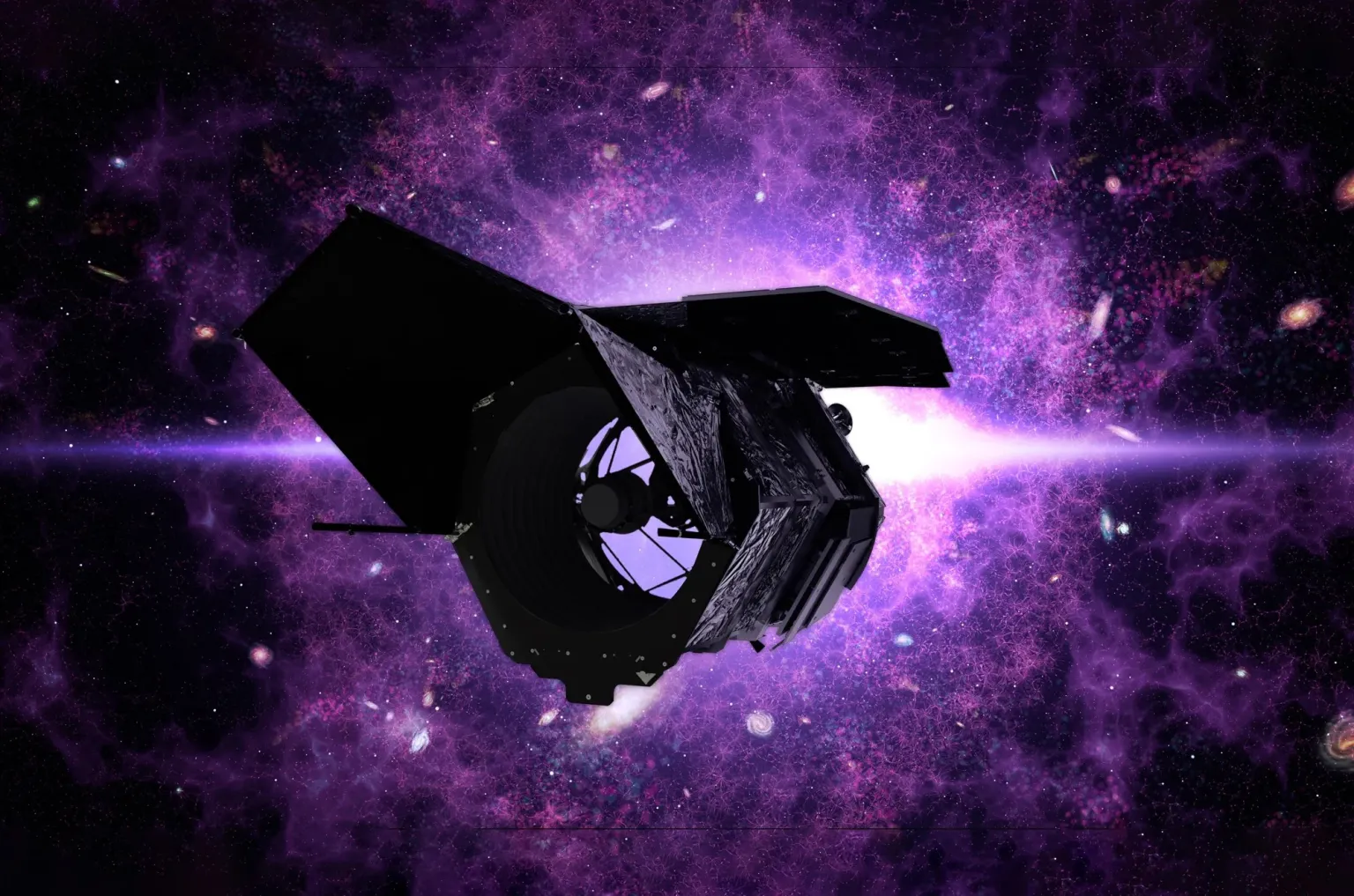
The Nancy Grace Roman Space Telescope is a NASA infrared space telescope with a 2.4 m (7.9 ft) wide field of view primary mirror and two scientific instruments. The Wide-Field Instrument (WFI) is a 300.8-megapixel multi-band visible and near-infrared camera, providing a sharpness of images comparable to that achieved by the Hubble Space Telescope over a 0.28 square degree field of view, 100 times larger than imaging cameras on the Hubble. The Coronagraphic Instrument (CGI) is a high-contrast, small field of view camera and spectrometer covering visible and near-infrared wavelengths using novel starlight-suppression technology. Roman objectives include a search for extra-solar planets using gravitational microlensing, and probing the expansion history of the Universe and the growth of cosmic structure, with the goal of measuring the effects of dark energy, the consistency of general relativity, and the curvature of spacetime.
Flight 14
Provider: SpaceX Date: September 30, 2026 Time: 12:00 AM UTC Vehicle: Starship
14th test flight of the two-stage Starship launch vehicle. 3rd flight of Starship V3.
Griffin Mission One
Provider: SpaceX Date: November 30, 2026 Time: 12:00 AM UTC Vehicle: Falcon Heavy
Demonstration flight of the Astrobotic Griffin lander and its engines, initially contracted for the cancelled NASA VIPER (Volatiles Investigating Polar Exploration Rover) mission. The vacated payload spot will now host the FLIP (FLEX Lunar Innovation Platform) lunar rover from Astrolab.
USSF-75
Provider: SpaceX Date: December 31, 2026 Time: 12:00 AM UTC Vehicle: Falcon Heavy
Classified payload for the United States Space Force
NROL-86
Provider: SpaceX Date: June 30, 2027 Time: 12:00 AM UTC Vehicle: Falcon Heavy
Classified payload for the US National Reconnaissance Office
Nancy Grace Roman Space Telescope ×
Mission Details
TypeAstrophysics
OrbitSun-Earth L2
TargetEarth
The Nancy Grace Roman Space Telescope is a NASA infrared space telescope with a 2.4 m (7.9 ft) wide field of view primary mirror and two scientific instruments. The Wide-Field Instrument (WFI) is a 300.8-megapixel multi-band visible and near-infrared camera, providing a sharpness of images comparable to that achieved by the Hubble Space Telescope over a 0.28 square degree field of view, 100 times larger than imaging cameras on the Hubble. The Coronagraphic Instrument (CGI) is a high-contrast, small field of view camera and spectrometer covering visible and near-infrared wavelengths using novel starlight-suppression technology. Roman objectives include a search for extra-solar planets using gravitational microlensing, and probing the expansion history of the Universe and the growth of cosmic structure, with the goal of measuring the effects of dark energy, the consistency of general relativity, and the curvature of spacetime.
Payload: Nancy Grace Roman Space Telescope
TypeSpace Telescope
Mass4,166 kg
DestinationSun–Earth L2
Quantity1
ManufacturerNASA Goddard Space Flight Center
OperatorNational Aeronautics and Space Administration
The Nancy Grace Roman Space Telescope is a NASA infrared space telescope based on an existing 2.4 m (7.9 ft) wide field of view primary mirror and carrying two scientific instruments. The Wide-Field Instrument (WFI) is a 300.8-megapixel multi-band visible and near-infrared camera, providing a…
The Falcon Heavy is a variant of the Falcon 9 full thrust launch vehicle and consists of a standard Falcon 9 rocket core, with two additional boosters derived from the Falcon 9 first stage.
14th test flight of the two-stage Starship launch vehicle. 3rd flight of Starship V3.
Program: SpaceX Starship
The SpaceX Starship is a fully reusable super heavy-lift launch vehicle under development by SpaceX since 2012, as a self-funded private spaceflight project. The second stage of the Starship — is designed as a long-duration cargo and passenger-carrying spacecraft. It is expected to be initially used without any booster stage at all, as part of an extensive development program to prove out launch-and-landing and iterate on a variety of design details, particularly with respect to the vehicle’s atmospheric reentry.
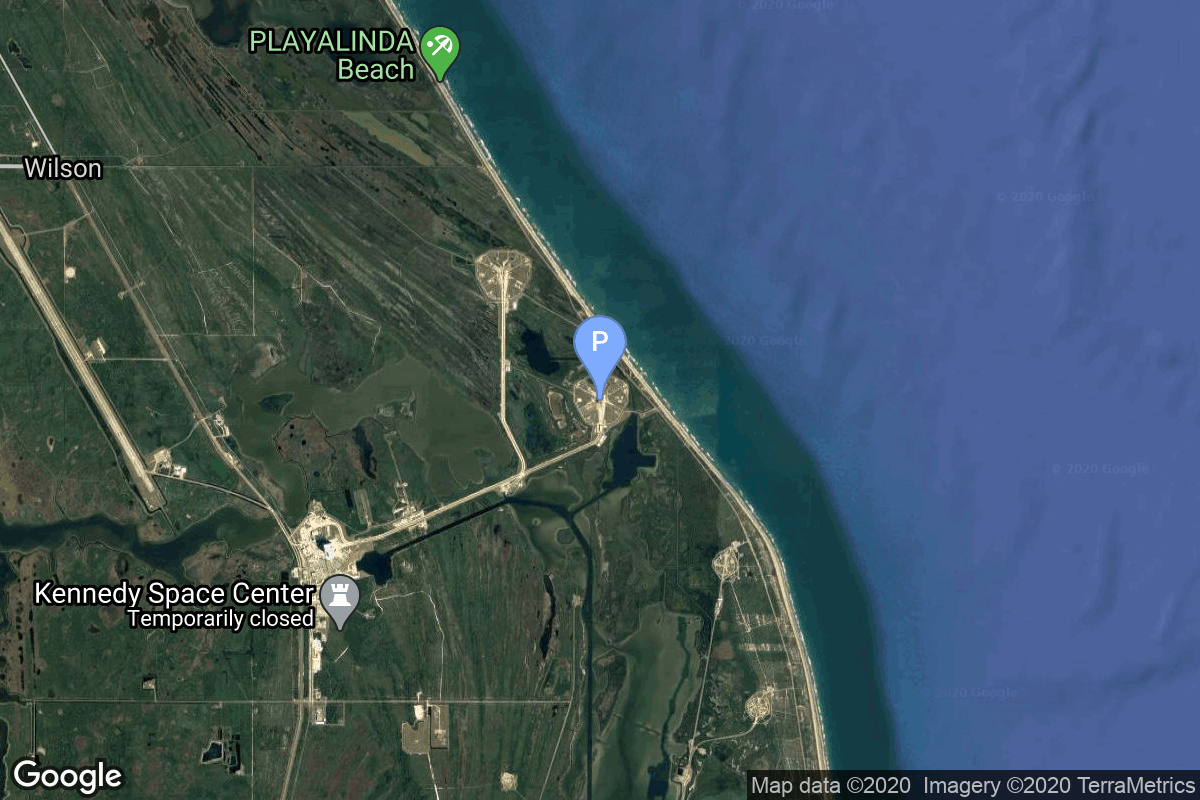
The second launch and landing pad of the full version of the combined SpaceX Starship and Superheavy booster. To be first used for launch in 2025 with version 3 of Starship and the Superheavy…
Demonstration flight of the Astrobotic Griffin lander and its engines, initially contracted for the cancelled NASA VIPER (Volatiles Investigating Polar Exploration Rover) mission. The vacated payload spot will now host the FLIP (FLEX Lunar Innovation Platform) lunar rover from Astrolab.
Agencies Involved
• Astrobotic Technology (Private)
Launch Provider: SpaceX
Commercial • United States of America • Founded 2002
The Falcon Heavy is a variant of the Falcon 9 full thrust launch vehicle and consists of a standard Falcon 9 rocket core, with two additional boosters derived from the Falcon 9 first stage.
The Falcon Heavy is a variant of the Falcon 9 full thrust launch vehicle and consists of a standard Falcon 9 rocket core, with two additional boosters derived from the Falcon 9 first stage.
The Falcon Heavy is a variant of the Falcon 9 full thrust launch vehicle and consists of a standard Falcon 9 rocket core, with two additional boosters derived from the Falcon 9 first stage.
Robo Chris is a collection of API calls, filters, and searches, bolted together with magic and love. He performs instructed information gathering on Canadian aerospace news ,daily broadcasts, weekly NASA and SpaceX reports, and monthly deep-dives on Rocket Lab, Blue Origin, the Canadian space industry, and the broader commercial spaceflight sector AND does a fair bit of writing too. Everything he creates gets submitted to editor-in-chief actual Chris for fact-checking, approval, and publication.