A Long March 6A rocket lifted off at 9:00 p.m. Eastern July 29 (0100 UTC, July 30) from Taiyuan Satellite Launch Center, delivering the communication technology test satellites 27A and 27B — TJS-27A and TJS-27B — into orbit. The China Aerospace Science and Technology Corporation (CASC) announced launch success, stating the satellites would be used for satellite communication, broadcasting and television, data transmission and related technology experiments.
CASC’s China Academy of Space Technology (CAST) developed TJS-27A, while the Shanghai Academy of Spaceflight Technology (SAST) developed TJS-27B. The pair was placed into a programmatically new orbit, according to CASC.
The U.S. Space Force tracked the pair in 1,153-kilometer altitude orbits with an inclination of 64.8 degrees. Former astrophysicist and space activity tracker Jonathan McDowell noted on X that the orbits are characteristic of time-delay-of-arrival (TDOA) electronic intelligence satellites — the same class as the classified U.S. Naval Ocean Surveillance System (NOSS) network.
“China’s earlier missions in this orbit were given a Yaogan rather than TJS cover name,” McDowell wrote. Yaogan and NOSS satellites are typically launched as triplets in triangular formations. It remains unclear whether TJS-27A and 27B will operate as a pair or form the beginning of a partial constellation.
Blue Origin Wins $11.7 Million REGAL Contract Expansion
The Air Force Research Laboratory added $11.7 million to a Blue Origin contract on July 31, expanding the agreement to about $13 million. The modification builds on a roughly $1.3 million contract awarded to the company last year, with work expected to be completed by October 2027.
Under the agreement, Blue Origin will define technical and mission requirements for adapting its systems to support point-to-point cargo transport — launching supplies aboard a rocket from one location and delivering them to a designated destination, potentially cutting journeys that now take hours or days to less than an hour. The contract remains focused on studies and systems analysis rather than an operational launch.
Blue Origin is one of several companies receiving funding through AFRL’s Rocket Experimentation for Global Agile Logistics (REGAL) programme. Anduril Industries, Sierra Space and Rocket Lab have also received awards through the programme.
The contract arrives as Blue Origin’s reusable heavy-lift rocket, New Glenn, remains grounded after a May 28, 2026, hot-fire test anomaly damaged launch-pad equipment in Florida. New Glenn has completed three orbital flights since its January 2025 debut, and Blue Origin has said it plans to return the rocket to flight by the end of the year.
K2 Space Secures $22.9 Million for Laser Communications Demo
The U.S. Space Force awarded K2 Space a $22.9 million contract on July 31 to test laser terminals designed to transmit data directly between satellites in orbit. K2 Space will procure, integrate, launch and operate two Enterprise Space Terminals, each carried as a hosted payload on a separate K2 satellite. The demonstration is scheduled to be completed by 2028.
K2, based in Torrance, California, will integrate the terminals with its satellite buses and operate the spacecraft during the test. A hosted payload relies on the host spacecraft for power, thermal control, pointing, communications and other support. The award does not identify which companies will supply the two terminals.
Space Systems Command previously selected CACI International, General Atomics and Viasat as Phase 3 suppliers under the Enterprise Space Terminal programme, a roughly $100 million effort launched in 2024 to develop and evaluate optical communications hardware from multiple vendors. The three companies are developing terminals designed to use common technical standards.
The flight experiment is funded by the Space-Based Sensing and Targeting portfolio, which oversees programmes like the Space-Based Airborne Moving Target Indicator and key elements of the Space Data Network — a planned optically connected communications architecture for transporting military information through space. K2 was selected through the FreeSol Broad Agency Announcement, a Space Force contracting vehicle for commercial technologies outside traditional acquisition programmes.
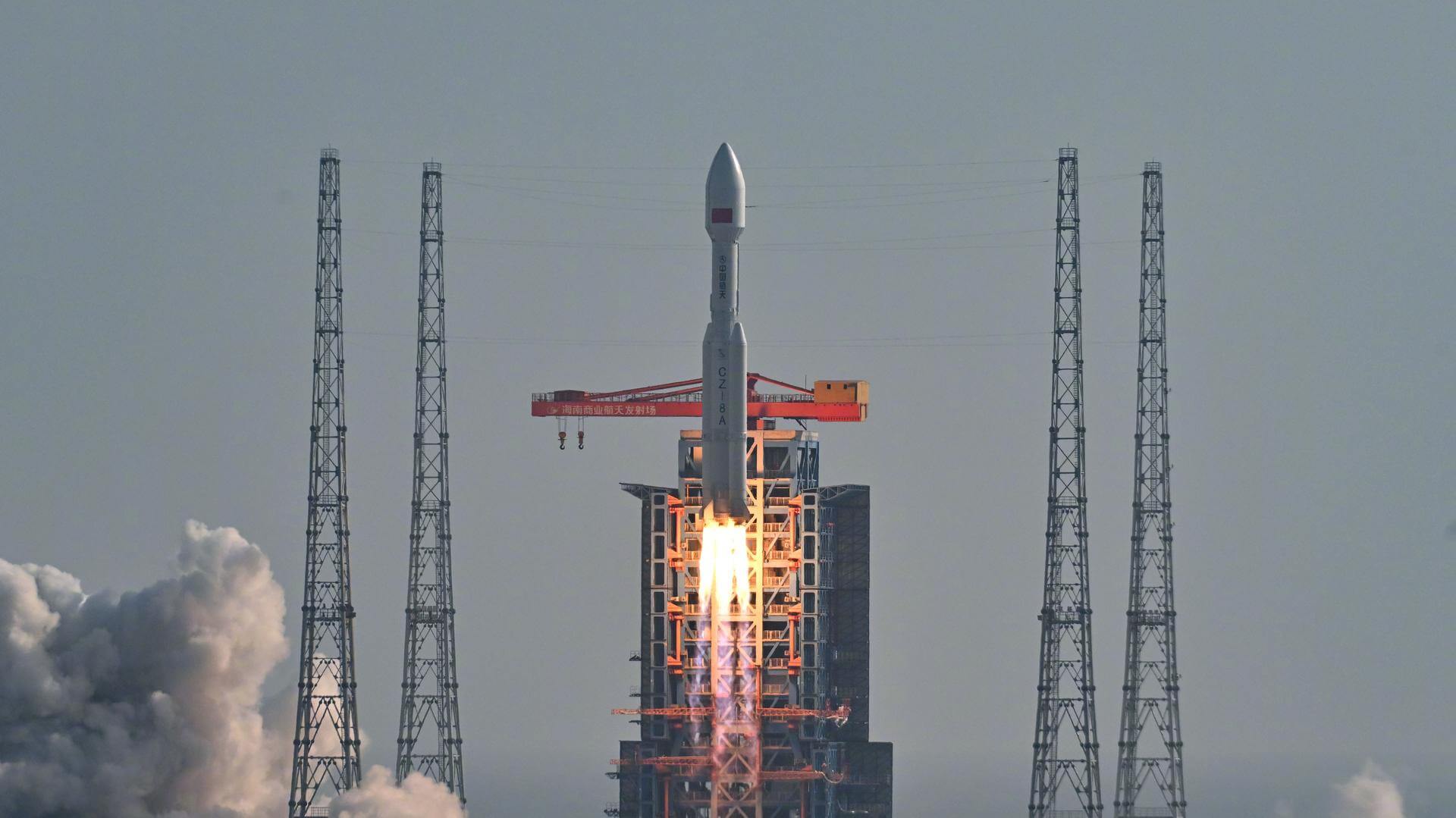
Provider: China Aerospace Science and Technology Corporation Date: August 4, 2026 Time: 8:50 AM UTC Vehicle: Long March 8A
Details TBD.
Starlink Group 17-53
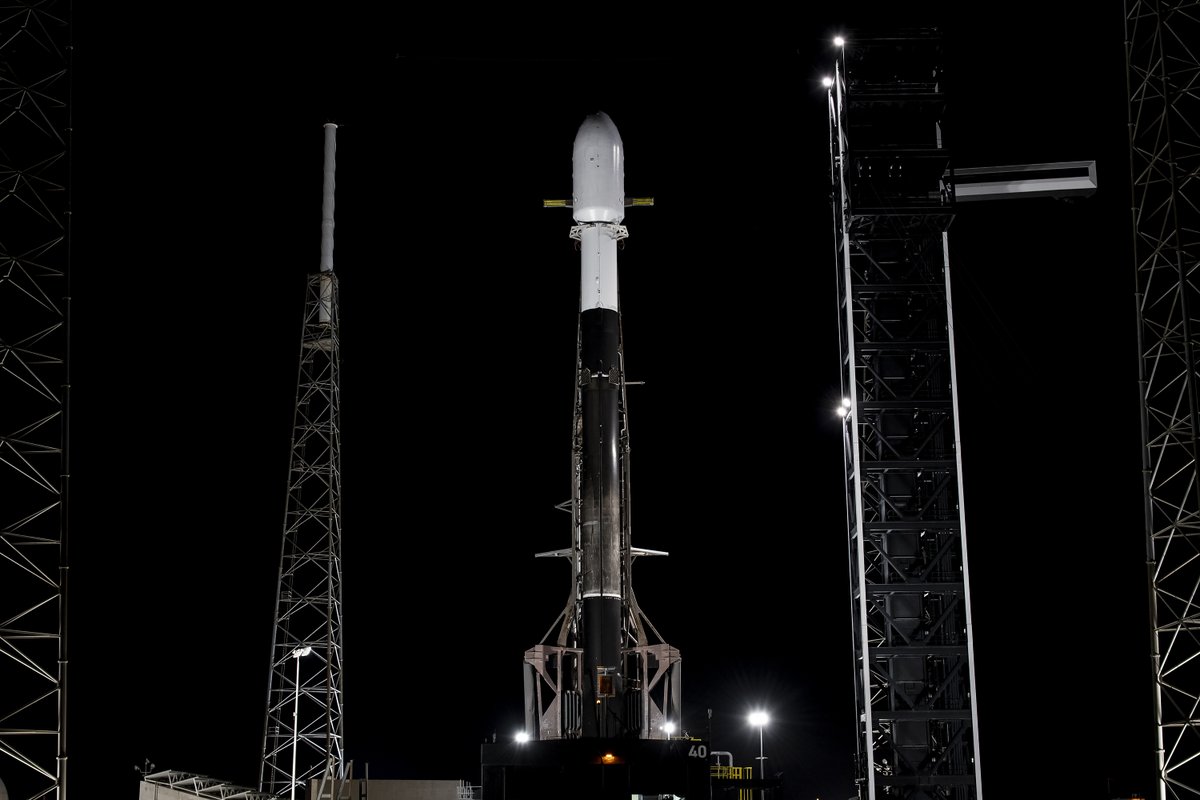
Provider: SpaceX Date: August 4, 2026 Time: 2:00 PM UTC Vehicle: Falcon 9
A batch of 24 satellites for the Starlink mega-constellation – SpaceX’s project for space-based Internet communication system.
Unknown Payload
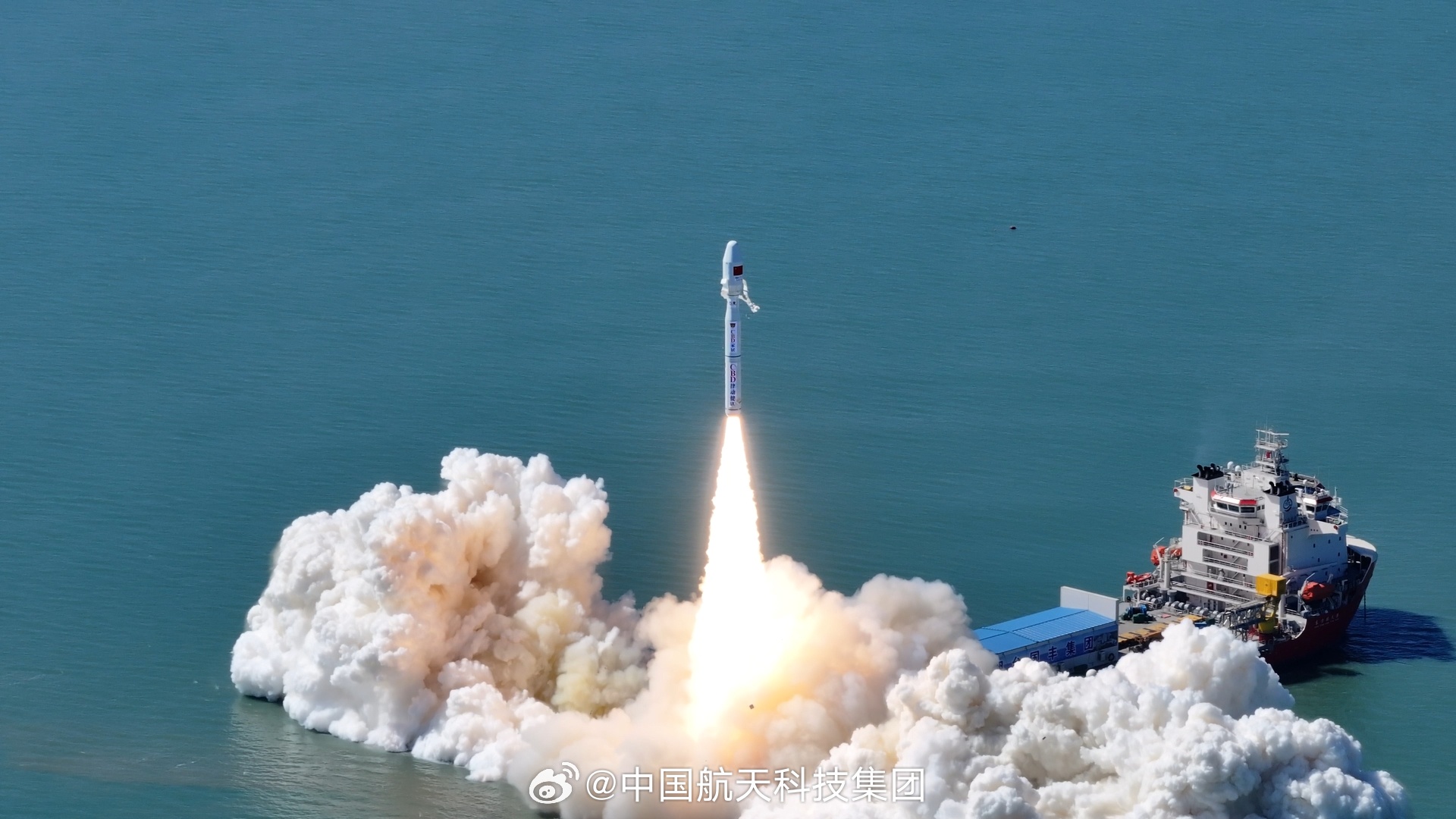
Provider: China Rocket Co. Ltd. Date: August 5, 2026 Time: 2:35 AM UTC Vehicle: Smart Dragon 3
Details TBD.
BlueBird 11-13 (Block 2 #6-8)
Provider: SpaceX Date: August 5, 2026 Time: 7:42 AM UTC Vehicle: Falcon 9
AST SpaceMobile’s Block 2 BlueBird satellites are designed to deliver up to 10 times the bandwidth capacity of the BlueBird Block 1 satellites, required to achieve 24/7 continuous cellular broadband service coverage in the United States, with beams designed to support a capacity of up to 40 MHz, enabling peak data transmission speeds up to 120 Mbps, supporting voice, full data and video applications. The Block 2 BlueBirds, featuring as large as 2400 square foot communications arrays, will be the largest satellites ever commercially deployed in Low Earth orbit once launched.
This launch will feature 3 satellites.
Michibiki 7 (QZS-7)
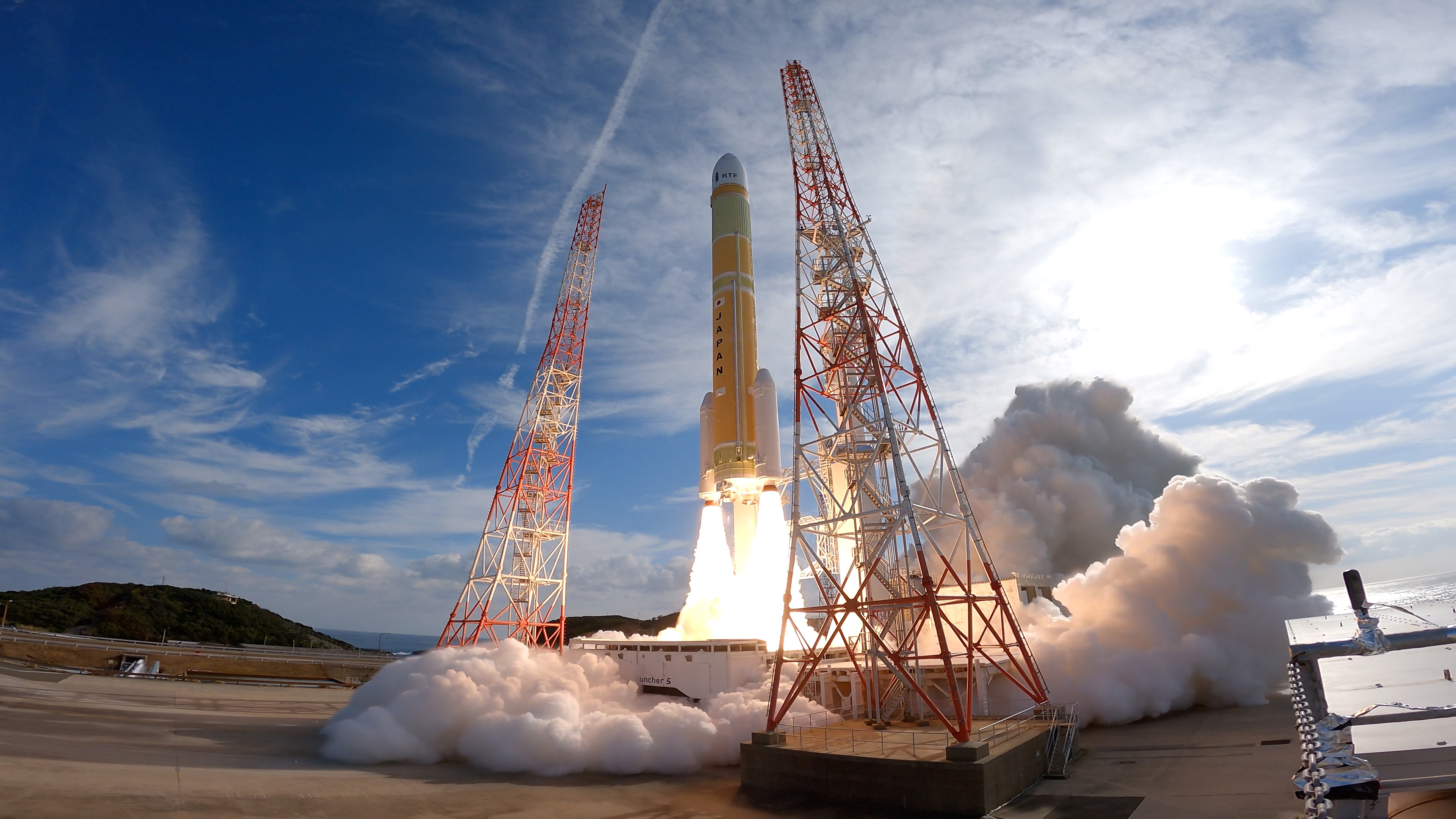
Provider: Mitsubishi Heavy Industries Date: August 6, 2026 Time: 7:30 PM UTC Vehicle: H3-22
QZSS (Quasi Zenith Satellite System) is a Japanese satellite navigation system operating from inclined, elliptical geosynchronous orbits to achieve optimal high-elevation visibility in urban canyons and mountainous areas. The navigation system objective is to broadcast GPS-interoperable and augmentation signals as well as original Japanese (QZSS) signals from a three-spacecraft constellation.
The navigation system objective is to broadcast GPS-interoperable and augmentation signals as well as original Japanese (QZSS) signals from a three-spacecraft constellation in inclined, elliptical geosynchronous orbits.
Unknown Payload ×
Mission Details
TypeUnknown
OrbitUnknown
TargetEarth
Details TBD.
Launch Provider: China Aerospace Science and Technology Corporation
The Long March 8A is an orbital launch vehicle developed by the China Academy of Launch Vehicle Technology based on the Long March 8. It has an increased capability of up to 7 tonnes to a 700 km altitude sun-synchronous orbit. It implements a larger 3.35 meters diameter liquid hydrogen/liquid…
Falcon 9 is a two-stage rocket designed and manufactured by SpaceX for the reliable and safe transport of satellites and the Dragon spacecraft into orbit. The Block 5 variant is the fifth major interval aimed at improving upon the ability for rapid reusability.
Smart Dragon-3 is a solid fuel orbital rocket designed by a subsidiary of the state-owned CASC group built for the commercial market.
Specifications
Length32 m
Diameter2.64 m
Launch Mass140 t
SSO Capacity1,500 kg
ReusableNo
Maiden Flight2022-12-09
Launch Record
11 successful / 11 total launches
Current streak: 11 successful
BlueBird 11-13 (Block 2 #6-8) ×
Mission Details
TypeCommunications
OrbitLow Earth Orbit
TargetEarth
AST SpaceMobile’s Block 2 BlueBird satellites are designed to deliver up to 10 times the bandwidth capacity of the BlueBird Block 1 satellites, required to achieve 24/7 continuous cellular broadband service coverage in the United States, with beams designed to support a capacity of up to 40 MHz, enabling peak data transmission speeds up to 120 Mbps, supporting voice, full data and video applications. The Block 2 BlueBirds, featuring as large as 2400 square foot communications arrays, will be the largest satellites ever commercially deployed in Low Earth orbit once launched.
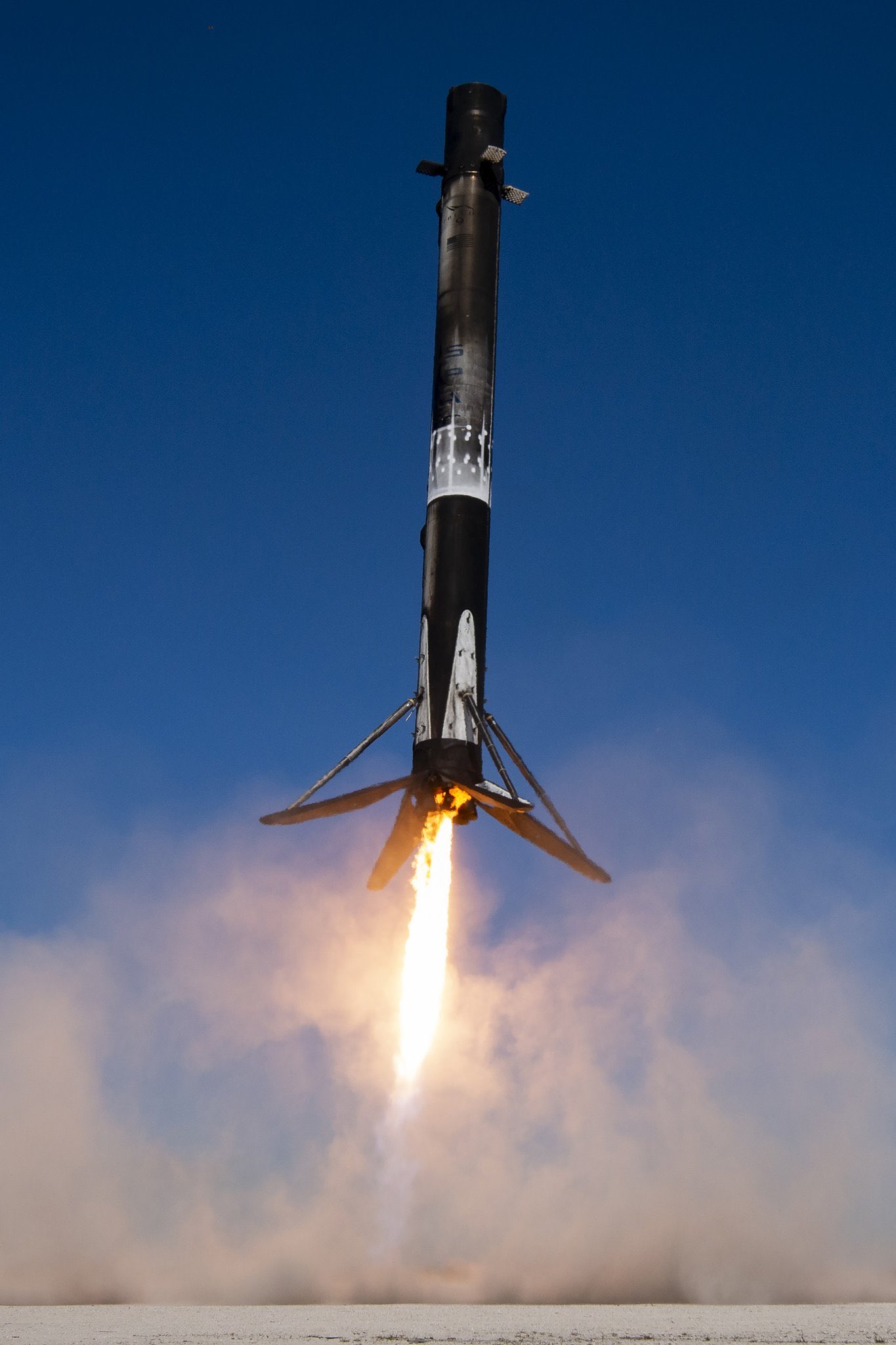
Falcon 9 is a two-stage rocket designed and manufactured by SpaceX for the reliable and safe transport of satellites and the Dragon spacecraft into orbit. The Block 5 variant is the fifth major interval aimed at improving upon the ability for rapid reusability.
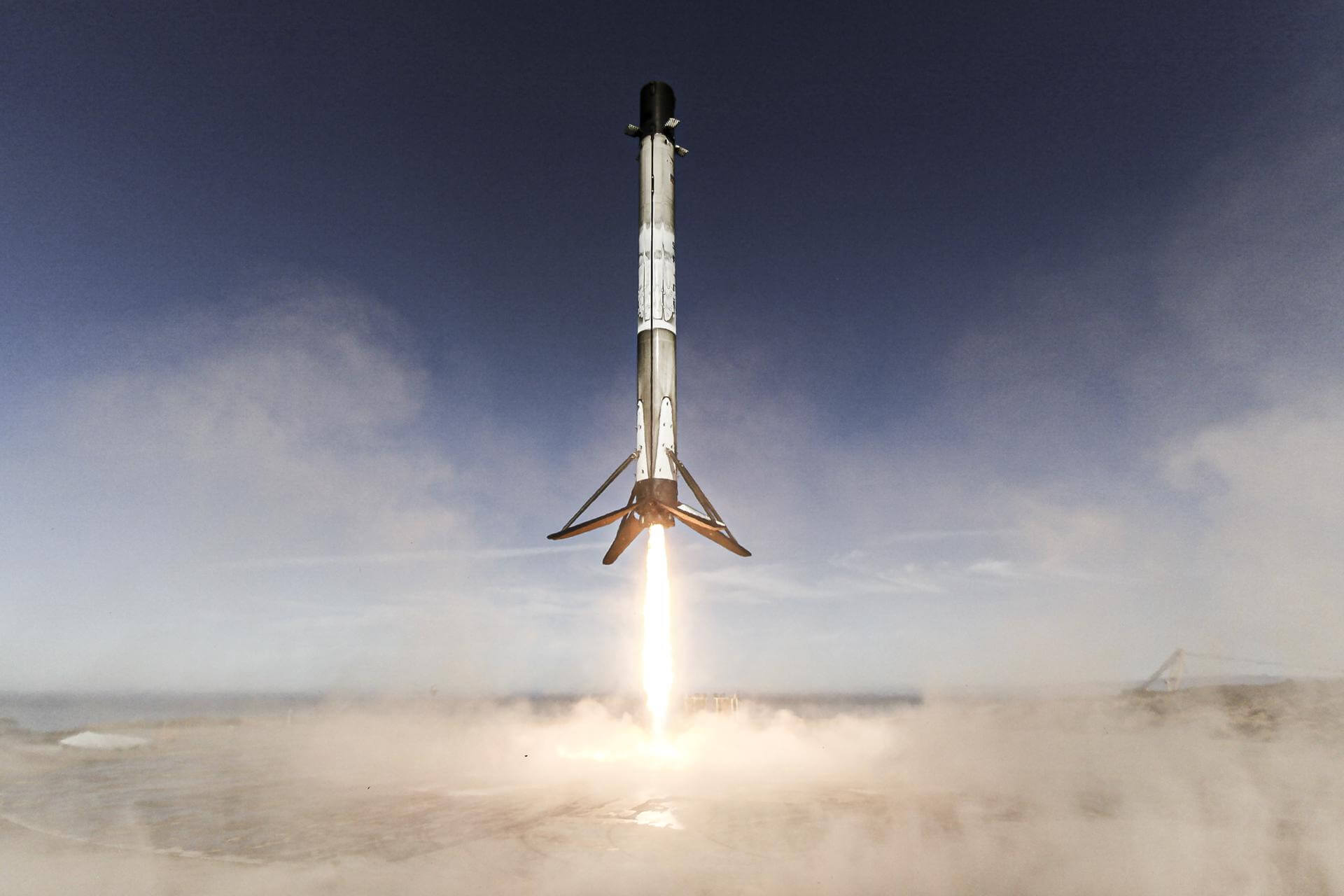
The Falcon 9 first stage B1077 will land on ASDS ASOG after its 30th flight.
Michibiki 7 (QZS-7) ×
Mission Details
TypeNavigation
OrbitGeostationary Transfer Orbit
TargetEarth
QZSS (Quasi Zenith Satellite System) is a Japanese satellite navigation system operating from inclined, elliptical geosynchronous orbits to achieve optimal high-elevation visibility in urban canyons and mountainous areas. The navigation system objective is to broadcast GPS-interoperable and augmentation signals as well as original Japanese (QZSS) signals from a three-spacecraft constellation.
The navigation system objective is to broadcast GPS-interoperable and augmentation signals as well as original Japanese (QZSS) signals from a three-spacecraft constellation in inclined, elliptical geosynchronous orbits.
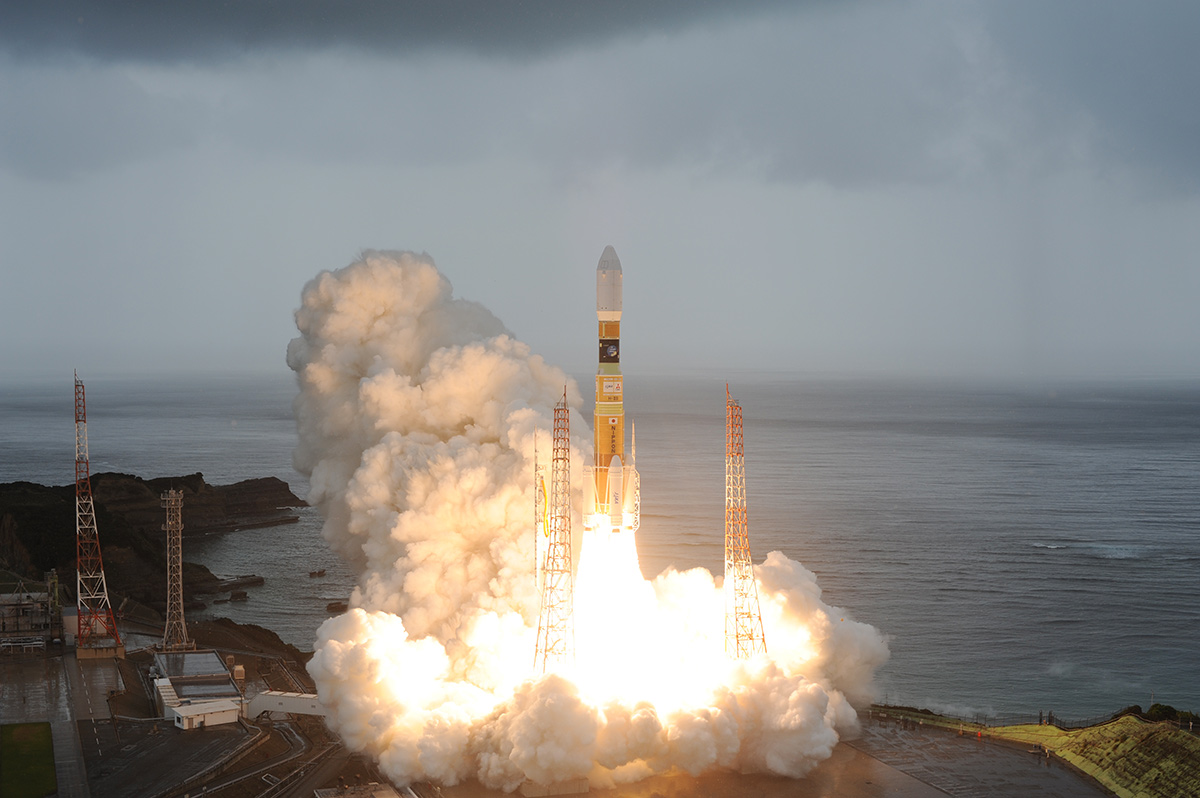
The H3 Launch Vehicle is a Japanese expendable launch system.
Each H3 booster configuration has a two-digit and a letter designation that indicates the features of that configuration. The first digit represents the number of LE-9 engines on the main stage, either “2” or “3”. The second digit…
Robo Chris is a collection of API calls, filters, and searches, bolted together with magic and love. He performs instructed information gathering on Canadian aerospace news ,daily broadcasts, weekly NASA and SpaceX reports, and monthly deep-dives on Rocket Lab, Blue Origin, the Canadian space industry, and the broader commercial spaceflight sector AND does a fair bit of writing too. Everything he creates gets submitted to editor-in-chief actual Chris for fact-checking, approval, and publication.