
The Daily Broadcast: Intermap Acquires PCI Geomatics, PROMISE Price Surfaces

Intermap Acquires Remaining PCI Geomatics Shares for $11 Million
Intermap Technologies has signed a definitive agreement to acquire the remaining shares of Canadian software developer PCI Geomatics Group for $11 million in cash. The deal consolidates Intermap’s existing ownership stake in PCI, which operates commercially as CATALYST.
The transaction merges PCI’s proprietary remote sensing algorithms with Intermap’s high-resolution 3D digital elevation models. Earlier this year, PCI launched UrbanSAR, a product designed to track shifting buildings in cities from space using synthetic aperture radar data.
The timing corresponds with exponential growth in Earth observation data volumes as more sensors are added in low Earth orbit. The geospatial market is shifting away from raw image collection toward automated processing and analytics. Intermap can now offer a fully integrated platform that handles raw data collection, corrects image distortions, extracts specific features and delivers artificial intelligence analytics.
PCI Geomatics maintains thousands of active workflows worldwide. The combined product suite provides data-as-a-service solutions for commercial underwriting, infrastructure monitoring and multi-domain situational awareness. Approximately 60 per cent of the pro forma revenue will come from recurring commercial subscriptions and repeat contracted licenses.
“As demand shifts toward automated and autonomous geospatial intelligence and AI-powered decision support, Intermap is positioned to create lasting value for customers and shareholders,” said Patrick A. Blott, chairman and chief executive officer of Intermap.
PCI President and CEO June McAlarey will retain her current position while taking on the additional role of Intermap executive vice-president, managing the commercial business portfolio for the combined entity. “Together, we reduce the time from sensor collection to produce actionable intelligence across land, air, sea and space for decision-makers,” McAlarey noted.
Planetary Society Estimates PROMISE Lunar Rover at Up to $1.33 Billion
Converting an engineering model of a Mars rover into an actual lunar vehicle could cost NASA more than $1 billion, according to an analysis that the agency’s administrator has strongly rejected.
NASA announced on June 30 it was considering sending a rover called PROMISE — Polar Rover for Observation, Mapping and In-Situ Exploration — to the moon. PROMISE would be based on engineering models of the Curiosity and Perseverance Mars rovers. Administrator Jared Isaacman said at the announcement that the agency was looking to “raid the pantry at every one of our centers for payloads” to support lunar base efforts.

An analysis by The Planetary Society published July 30 offered a different assessment. Based on historical cost data and requirements, it concluded PROMISE would cost between $723 million and $1.33 billion to develop and launch, including one year of operations. The rover likely would not be ready for launch until the early 2030s.
Casey Dreier, chief of space policy for The Planetary Society, looked at what it would take to convert OPTIMISM, an engineering model of the Perseverance rover at the Jet Propulsion Laboratory, into PROMISE. Dreier noted that OPTIMISM lacks many of the space-rated components needed for a lunar mission, including a communications system, and has no flight-ready instruments.
Dreier concluded that “it’s clear that this mission is far from a ‘freebie,’ and will consume significant resources that might otherwise be available to pursue established scientific priorities in NASA’s scientific portfolio.”
NASA Opens First Major Wind Tunnel in 40 Years at Langley
NASA opened the Flight Dynamics Research Facility on Friday, July 31, marking the agency’s first major new wind tunnel in more than 40 years. Located at NASA’s Langley Research Center in Hampton, Virginia, the facility will support advances in aircraft safety, X-plane development, drone research and spacecraft technology.
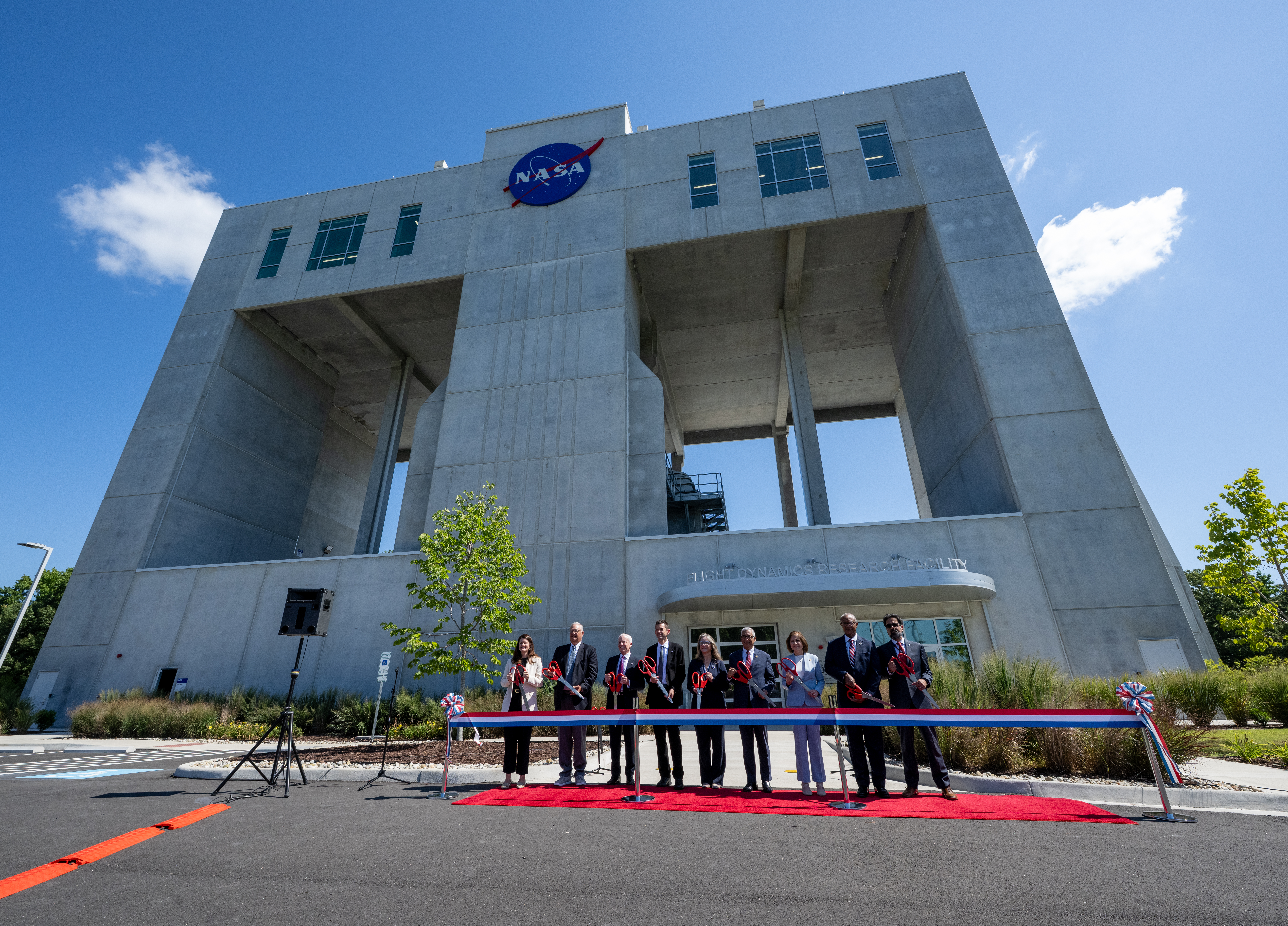
The facility enables both free-flight and mounted testing of scale-model vehicles designed to travel through an atmosphere, from airplanes to space capsules returning to Earth. It will also support establishing a sustained human presence on the lunar surface through the Artemis program and the development of a Moon Base.
“The Flight Dynamics Research Facility is NASA’s first major new wind tunnel in more than 40 years and gives us a powerful new platform to test the ideas and technologies that will shape the future of aviation and exploration,” said Isaacman. “America has led in air and space because we were willing to take on hard problems, challenge assumptions, and build what didn’t exist before.”
Dr. Trina Dyal, NASA Langley center director, called the opening “a significant advancement for NASA and for the nation.” “By bringing modernized testing capabilities under one roof, we are enabling transformative research that will ensure the United States remains at the forefront of aeronautics and exploration,” Dyal said.
Citations
- “Intermap signs $11 million deal to acquire remaining PCI Geomatics shares” — https://spaceq.ca/intermap-signs-11-million-deal-to-acquire-remaining-pci-geomatics-shares/
- “Sending repurposed Mars rover to the moon could cost more than $1 billion” — https://spacenews.com/sending-repurposed-mars-rover-to-the-moon-could-cost-more-than-1-billion/
- “NASA Opens New Flight Dynamics Research Facility in Virginia” — https://www.nasa.gov/news-release/nasa-opens-new-flight-dynamics-research-facility-in-virginia/
- “NASA’s Newest Wind Tunnel Opens at NASA Langley” — https://www.nasa.gov/image-article/nasas-newest-wind-tunnel-opens-at-nasa-langley/
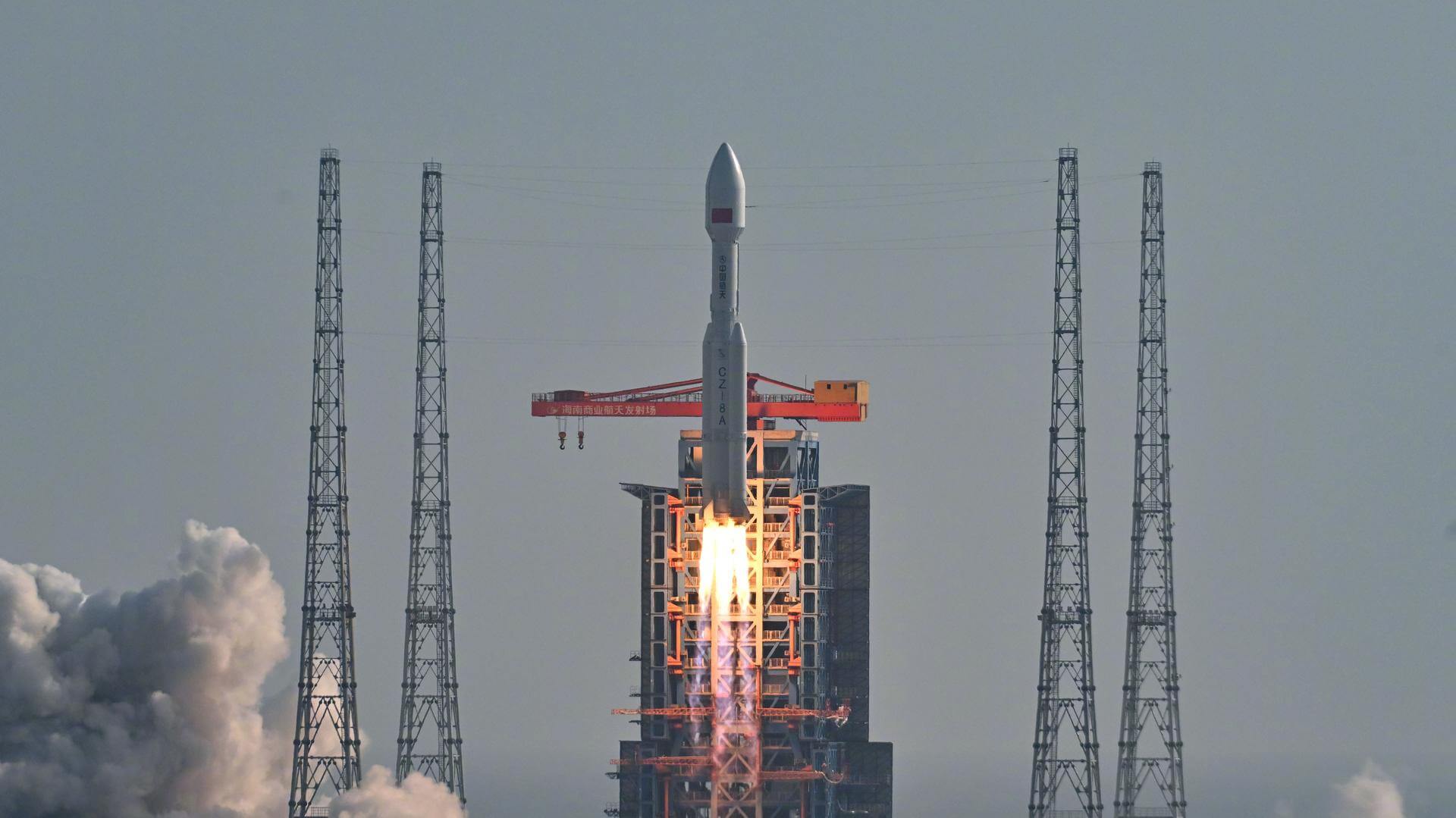
Unknown Payload
Provider: China Aerospace Science and Technology Corporation
Date: August 4, 2026
Time: 8:50 AM UTC
Vehicle: Long March 8A
Details TBD.

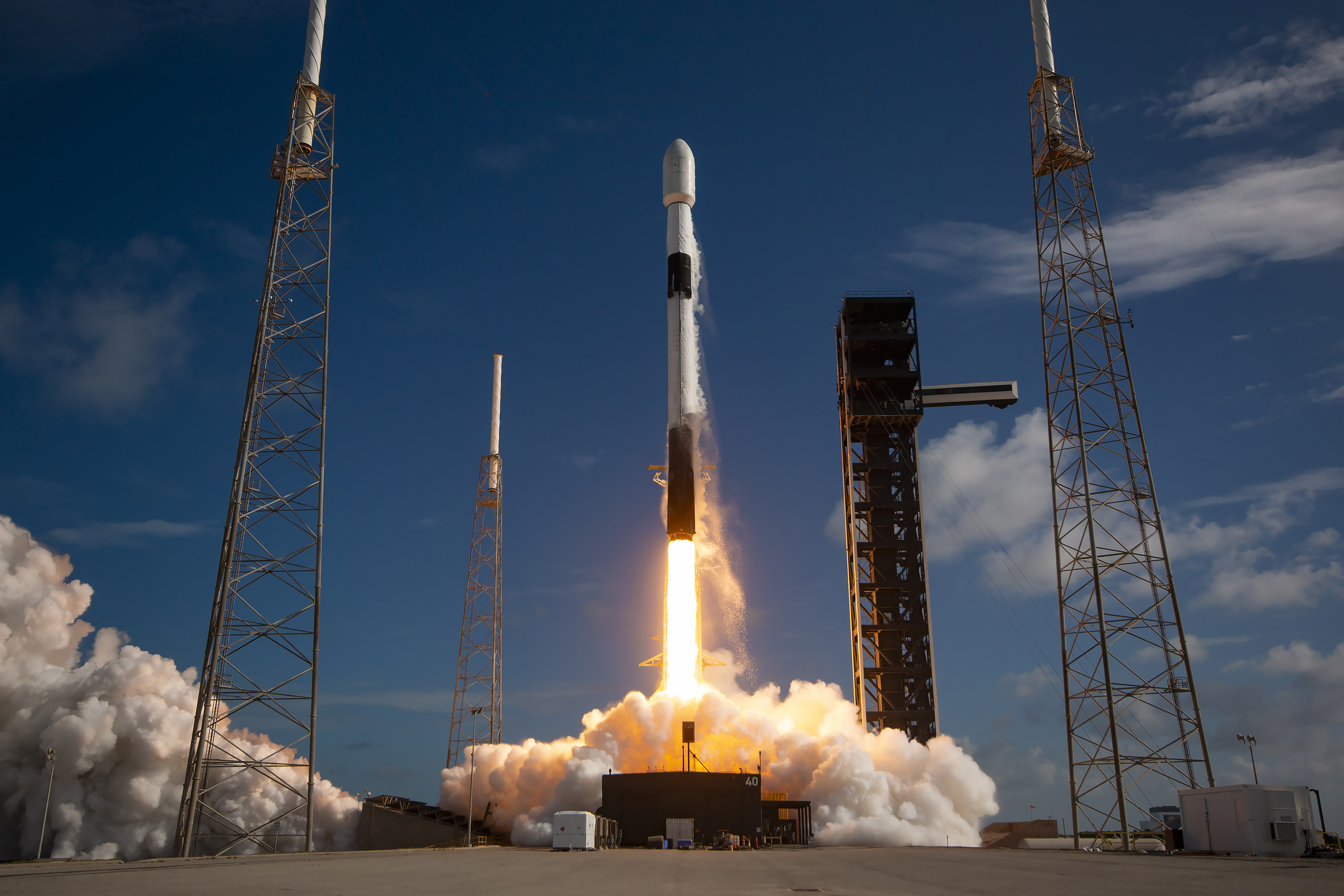
Starlink Group 17-53
Provider: SpaceX
Date: August 4, 2026
Time: 2:00 PM UTC
Vehicle: Falcon 9
A batch of 24 satellites for the Starlink mega-constellation – SpaceX’s project for space-based Internet communication system.
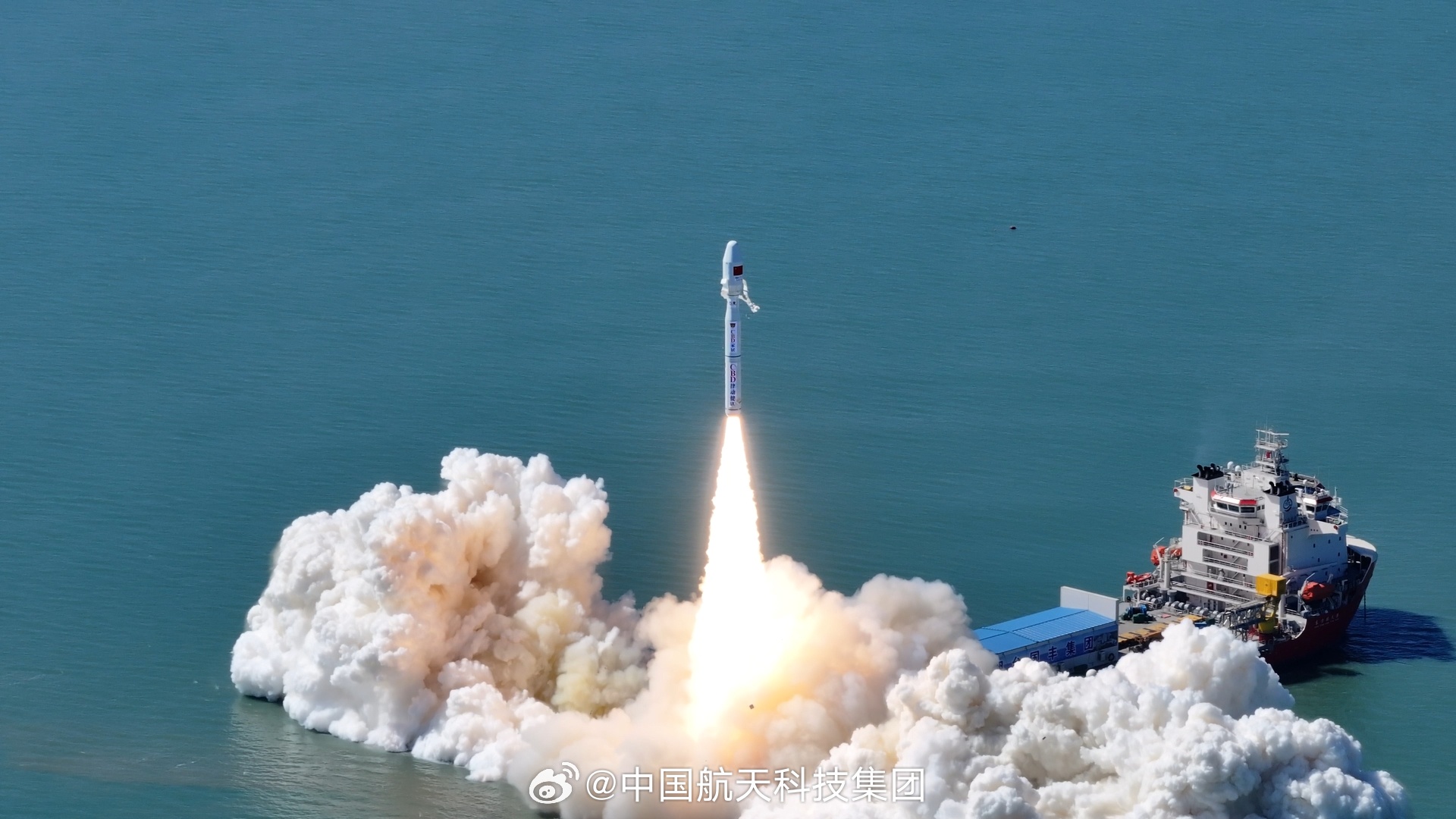
Unknown Payload
Provider: China Rocket Co. Ltd.
Date: August 5, 2026
Time: 2:35 AM UTC
Vehicle: Smart Dragon 3
Details TBD.
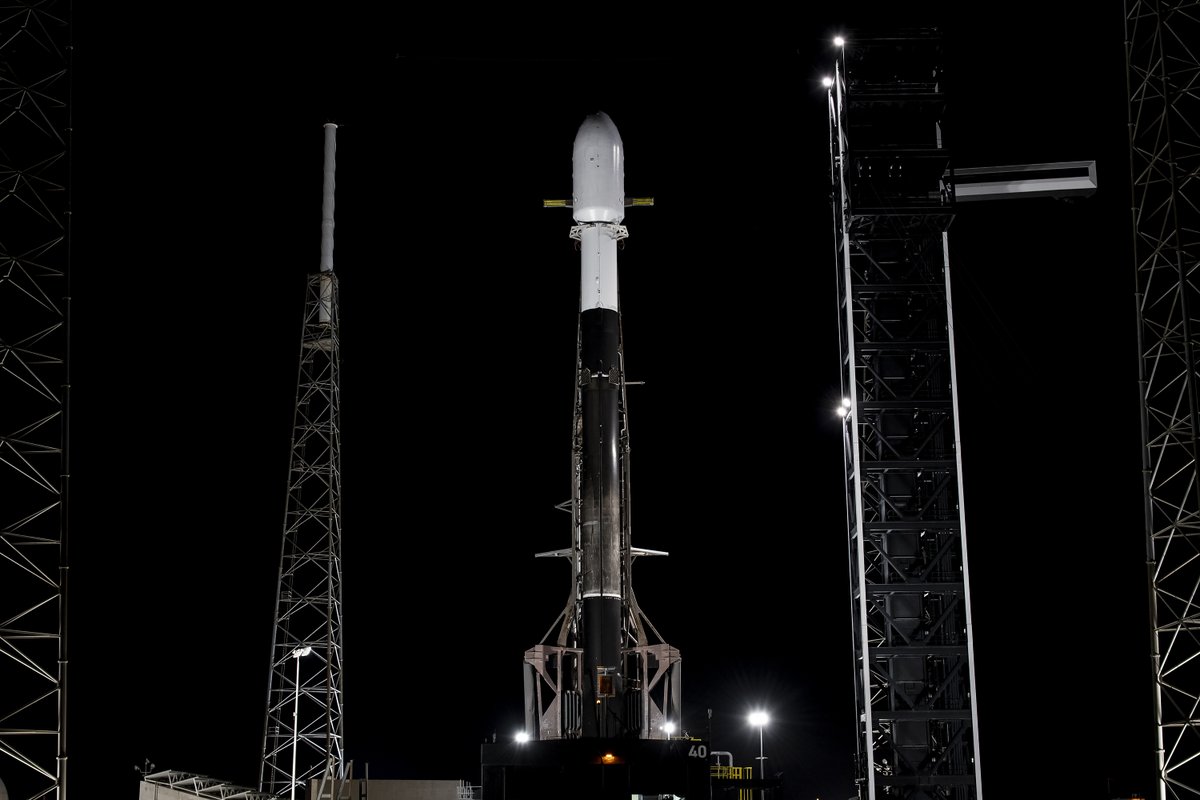
BlueBird 11-13 (Block 2 #6-8)
Provider: SpaceX
Date: August 5, 2026
Time: 7:42 AM UTC
Vehicle: Falcon 9
AST SpaceMobile’s Block 2 BlueBird satellites are designed to deliver up to 10 times the bandwidth capacity of the BlueBird Block 1 satellites, required to achieve 24/7 continuous cellular broadband service coverage in the United States, with beams designed to support a capacity of up to 40 MHz, enabling peak data transmission speeds up to 120 Mbps, supporting voice, full data and video applications. The Block 2 BlueBirds, featuring as large as 2400 square foot communications arrays, will be the largest satellites ever commercially deployed in Low Earth orbit once launched.
This launch will feature 3 satellites.
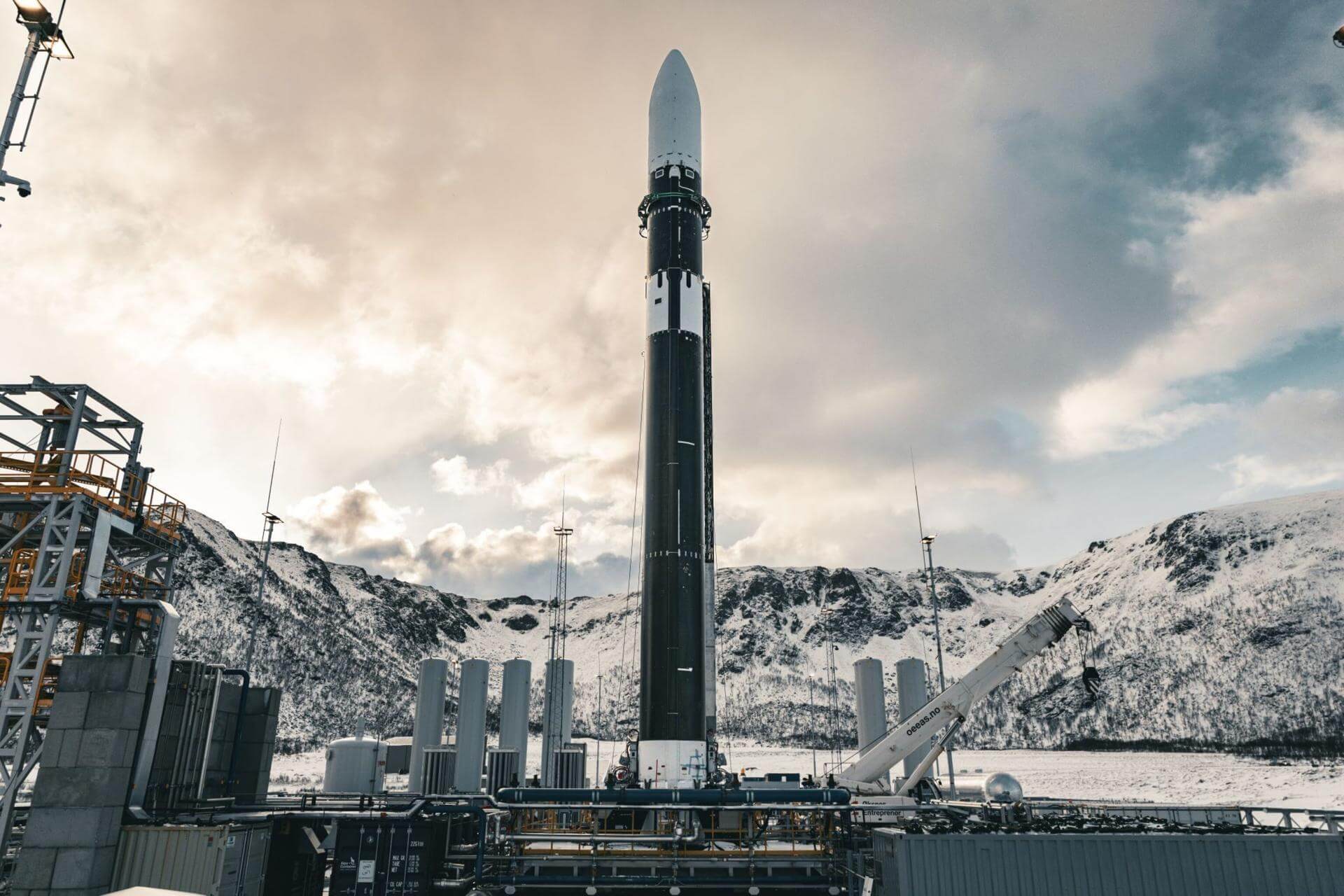
Onward and Upward
Provider: Isar Aerospace
Date: August 6, 2026
Time: 12:00 AM UTC
Vehicle: Spectrum
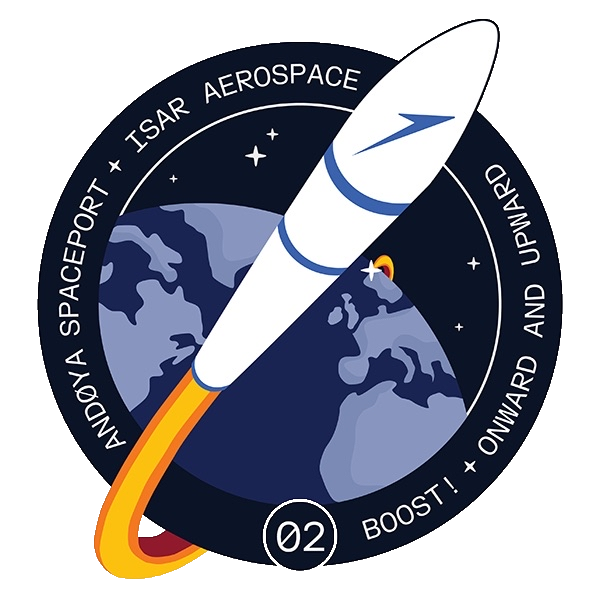
Second test flight of the Isar Spectrum launch vehicle. This launch will carry 5 cubesats and 1 non-separable experiment as part of European Space Agency (ESA)’s “Boost!” program:
* CyBEEsat (TU Berlin)
* TriSat-S (University of Maribor)
* Platform 6 (EnduroSat)
* FramSat-1 (NTNU)
* SpaceTeamSat1 (TU Wien Space Team)
* Let It Go (Dcubed, non-separable experiment)






Enjoying the content? Stay up to date on everything happening behind the scenes by following our Patreon!

