
The SpaceX Report: Starship Launches 13th Flight, Splashes Down Intact
Starship IFT-13 Completes Suborbital Flight with Intact Splashdown
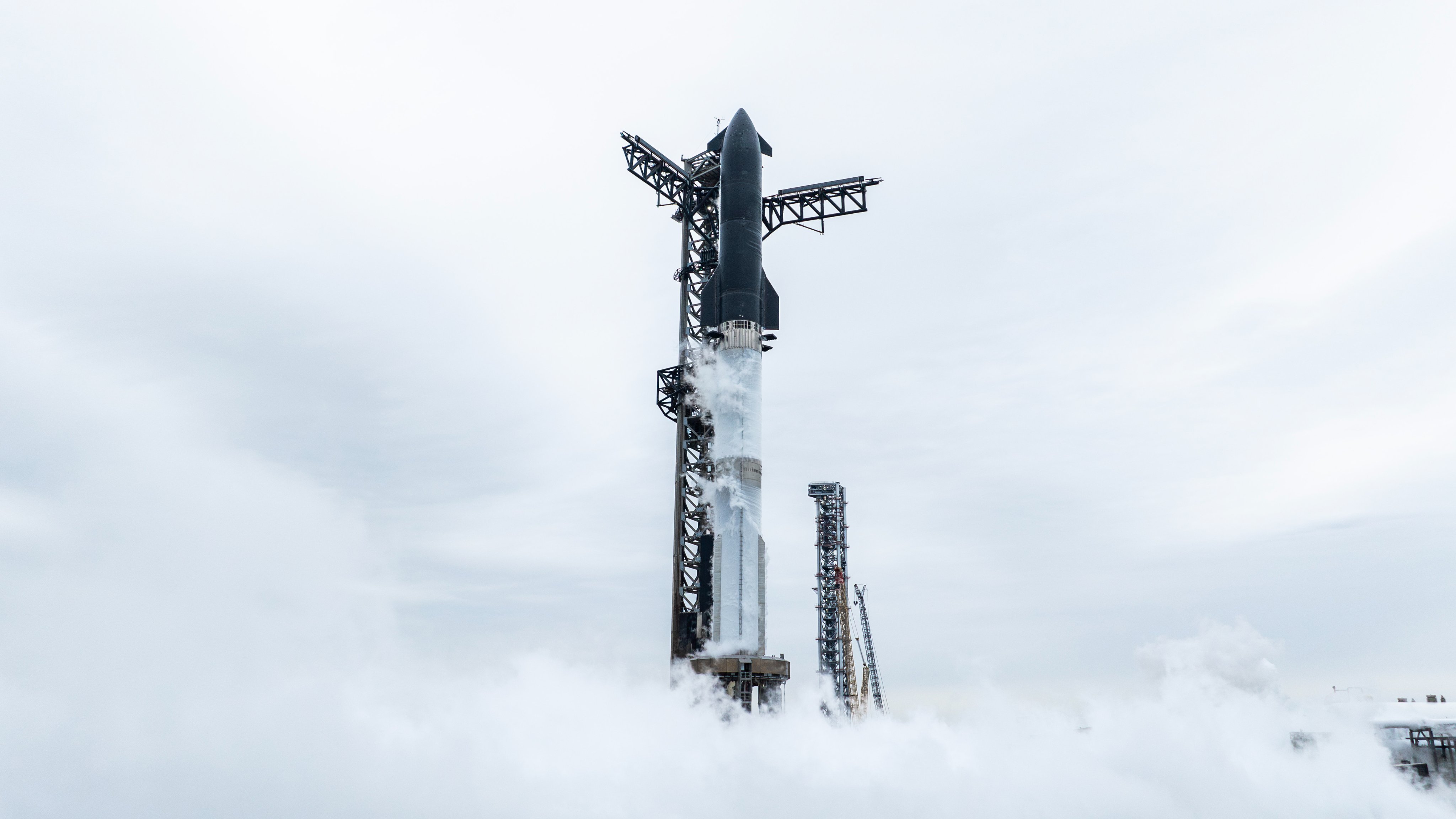
SpaceX’s Starship lifted off at 6:51 pm ET on July 24 from Pad 2 at Starbase for the 13th Integrated Flight Test, with all 33 Raptor 3 engines on the Super Heavy first stage firing cleanly. The flight — originally scrubbed a week earlier at the last moment due to engine failures, and delayed again the day before by weather — ran smoothly from Texas to the Indian Ocean.
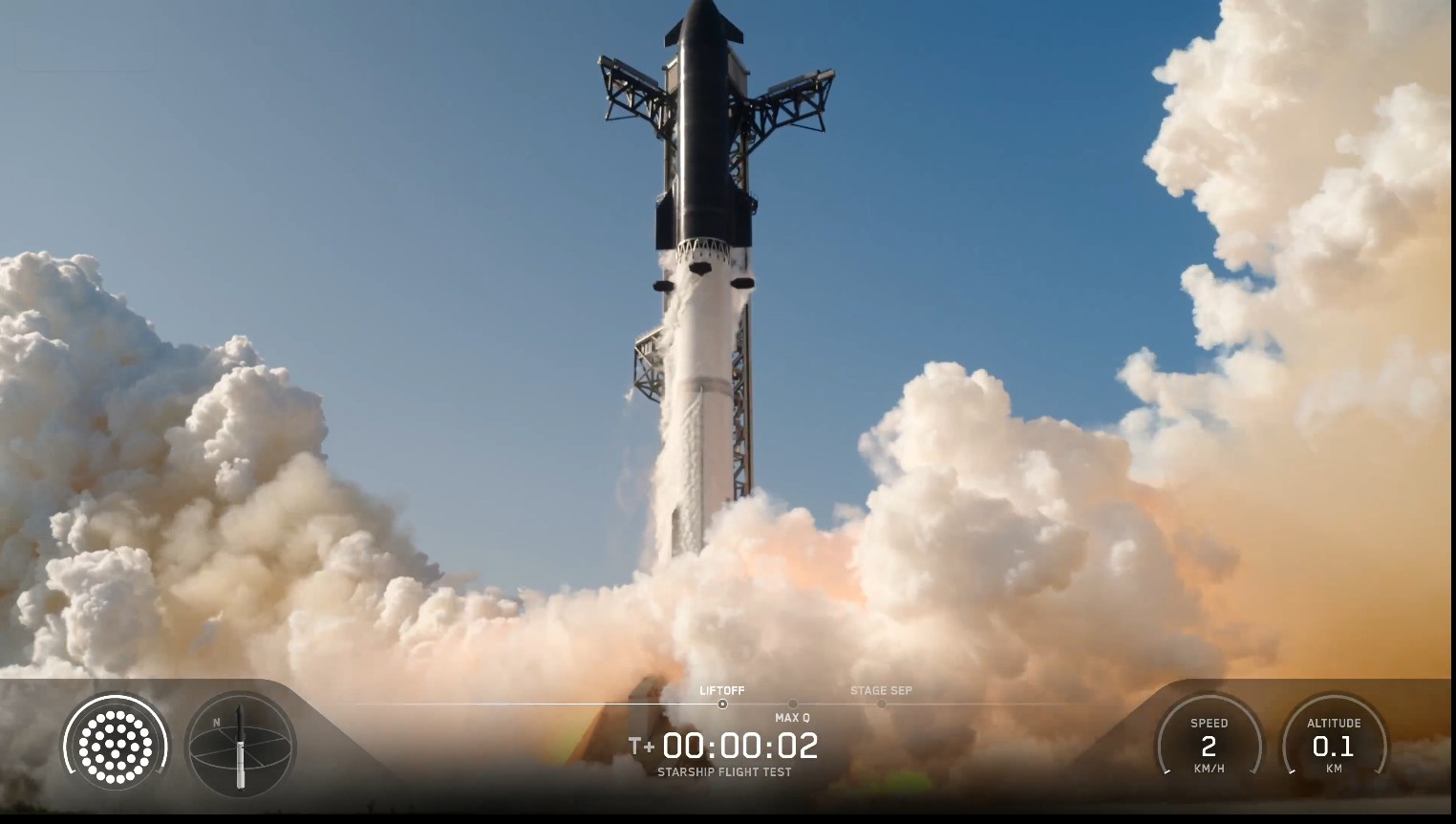
The test was suborbital: Starship flew through space but did not attain orbit, splashing down roughly an hour after liftoff near Australia. The notable outcome came after splashdown. Starship did not explode, but remained intact floating on the ocean’s surface; on prior flights, residual fuel had caused the vehicle to burst into flames after tipping over. SpaceX said the softer, unburned landing meant the team could get “critical views of an intact heat shield for the first time.”
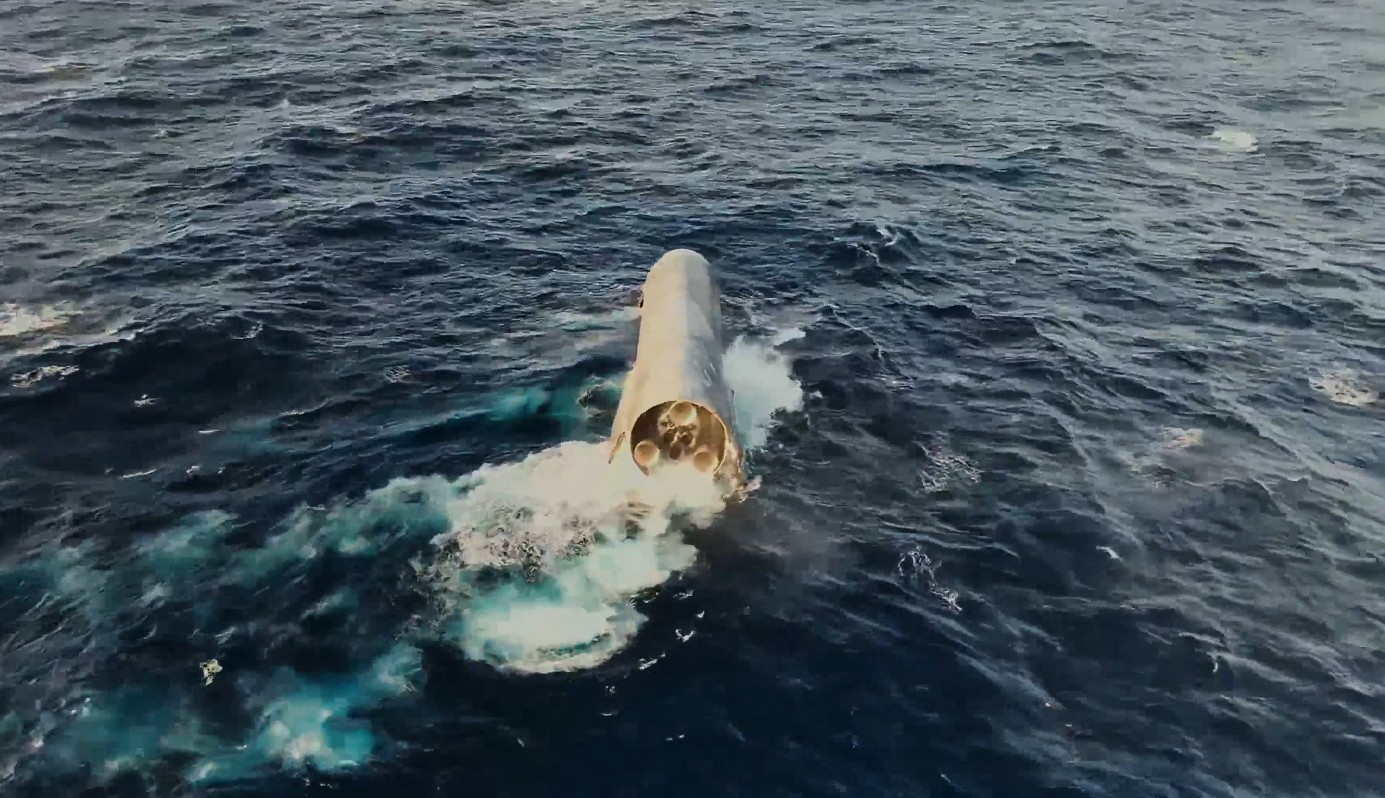
The Super Heavy first stage fared less cleanly. Booster 20 made what SpaceX called a “hand landing” in the Gulf of Mexico after several engines failed to fire during the landing burn, missing the planned catch attempt back up at the launch tower.
Elon Musk wrote on X on July 25 that, “Unless we discover problems after mission data review, SpaceX will attempt to catch the ship with the tower on next flight,” signalling the ship catch — not the booster catch — could become the next Starship milestone.
Starship 40 Stacked as Pad 1 Modifications Begin
Preparations for IFT-13 saw Ship 40 stacked onto Booster 20 on July 22, roughly 23 hours before liftoff. In the run-up to the flight, Booster 20 required engine swaps that delayed preparations.

Attention at Starbase is now shifting to the neighbouring pad. Workers on Pad 1 have begun preparing to remove the SQD Arm, with the pad being modified to match Pad 2’s configuration, according to observers on site.
Meanwhile at Cape Canaveral, the final module of SLC-37A’s Starship tower was stacked on July 25, moving the East Coast site closer to operational readiness.
Falcon 9 Deploys Robotic Servicing Craft and 24 Starlink Satellites
SpaceX flew two Falcon 9 missions this week. On July 21, a Falcon 9 lifted off from Space Launch Complex 40 at Cape Canaveral carrying Northrop Grumman’s Mission Robotic Vehicle (MRV) and three Mission Extension Pods (MEPs) on the MRV-1 mission for the U.S. Naval Research Laboratory, with financial backing from DARPA. Equipped with a pair of robotic arms developed at the Naval Research Laboratory, the MRV will spend a year travelling out to geosynchronous orbit, where it will begin installing MEPs onto client satellites operated by Australia-based Optus and Luxembourg-based SES. Each MEP carries fresh maneuvering fuel and is designed to provide up to eight additional years of satellite life.
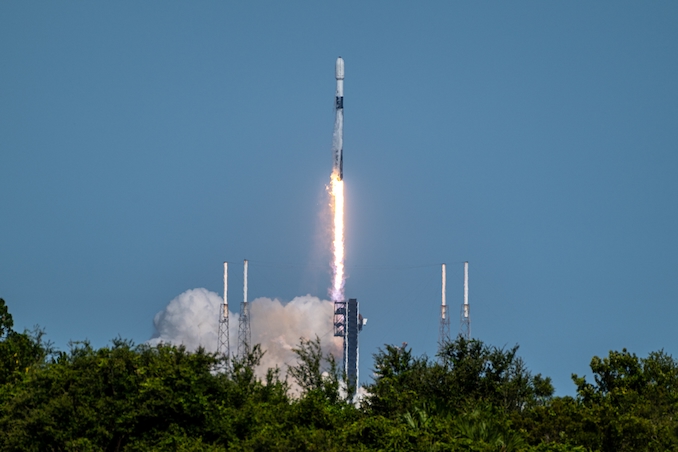
On July 25, a Falcon 9 launched the Starlink 17-51 mission from Space Launch Complex 4E at Vandenberg Space Force Base at 8:51 a.m. PDT, delivering 24 Starlink V2 Mini satellites to a 168 × 160-mile orbit at 97-degree inclination. Booster B1100 flew for an eighth time — having previously launched the NROL-105 mission and six prior Starlink flights — before landing on the droneship Of Course I Still Love You. The mission was the seventh of eight Falcon 9 launches scheduled for July from Vandenberg, which has become SpaceX’s workhorse pad as Starship preparation work concentrates in Florida.
Starlink Reaches Ascension Island; Crew-13 Press Briefing Set
Starlink announced on July 25 that its high-speed, low-latency internet is now available on Ascension Island, extending coverage to one of the world’s most remote locations. Separately, Starlink Mobile began providing free connectivity to MAS Orange España and Movistar customers in regions near Madrid affected by wildfires, allowing compatible LTE smartphones to stay connected through SMS even when terrestrial networks are unavailable.

Looking ahead, NASA has scheduled a Crew-13 mission overview press conference for August 3 at Johnson Space Center. The briefing roster includes the Canadian Space Agency’s Mathieu Caron, director of Astronauts, Life Sciences, and Space Medicine — reflecting CSA’s continued involvement in SpaceX’s crew rotation programme to the International Space Station.
Citations
- “Successful Flight for Starship IFT-13” — https://spacepolicyonline.com/news/successful-flight-for-starship-ift-13/
- “Live coverage: SpaceX to launch novel geosynchronous robotic servicing satellite on decade-long mission” — https://spaceflightnow.com/2026/07/21/live-coverage-spacex-to-launch-novel-geosynchronous-robotic-servicing-satellite-on-decade-long-mission/
- “Live Coverage: SpaceX Falcon 9 to launch Starlink satellites from West Coast” — https://spaceflightnow.com/2026/07/25/live-coverage-spacex-falcon-9-to-launch-starlink-satellites-from-west-coast/
- “Path to Starship Flight 13 requires additional Booster 20 test” — https://www.nasaspaceflight.com/2026/07/path-flight-13-attempt-2-test/
- “Space Events This Week” — Launch Library 2
- @SpaceX X feed — https://x.com/SpaceX
- @Starlink X feed — https://x.com/Starlink
- @elonmusk X feed — https://x.com/elonmusk
- @NASASpaceflight X feed — https://x.com/NASASpaceflight
- @StarshipGazer X feed — https://x.com/StarshipGazer
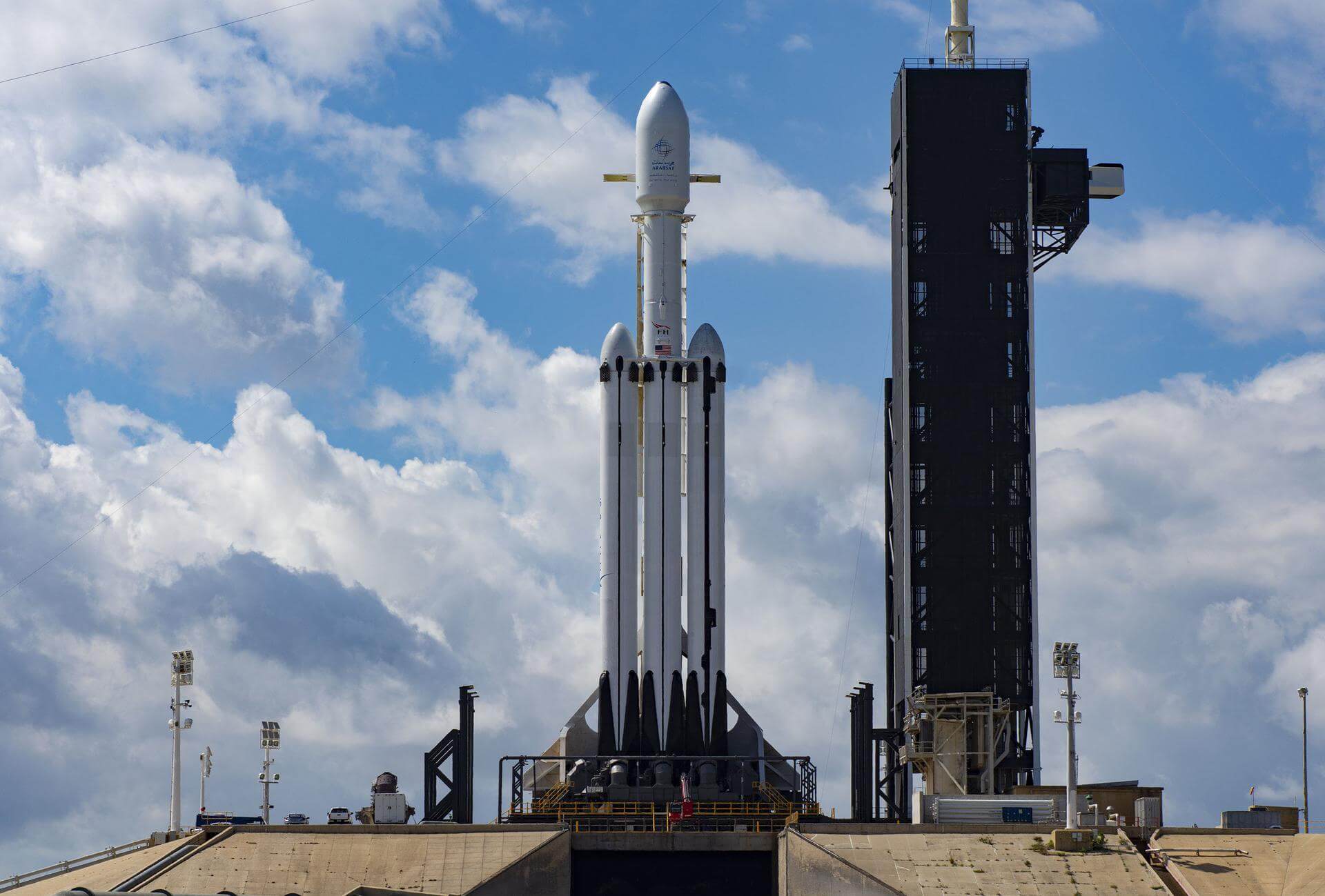
Nancy Grace Roman Space Telescope
Provider: SpaceX
Date: August 30, 2026
Time: 11:20 AM UTC
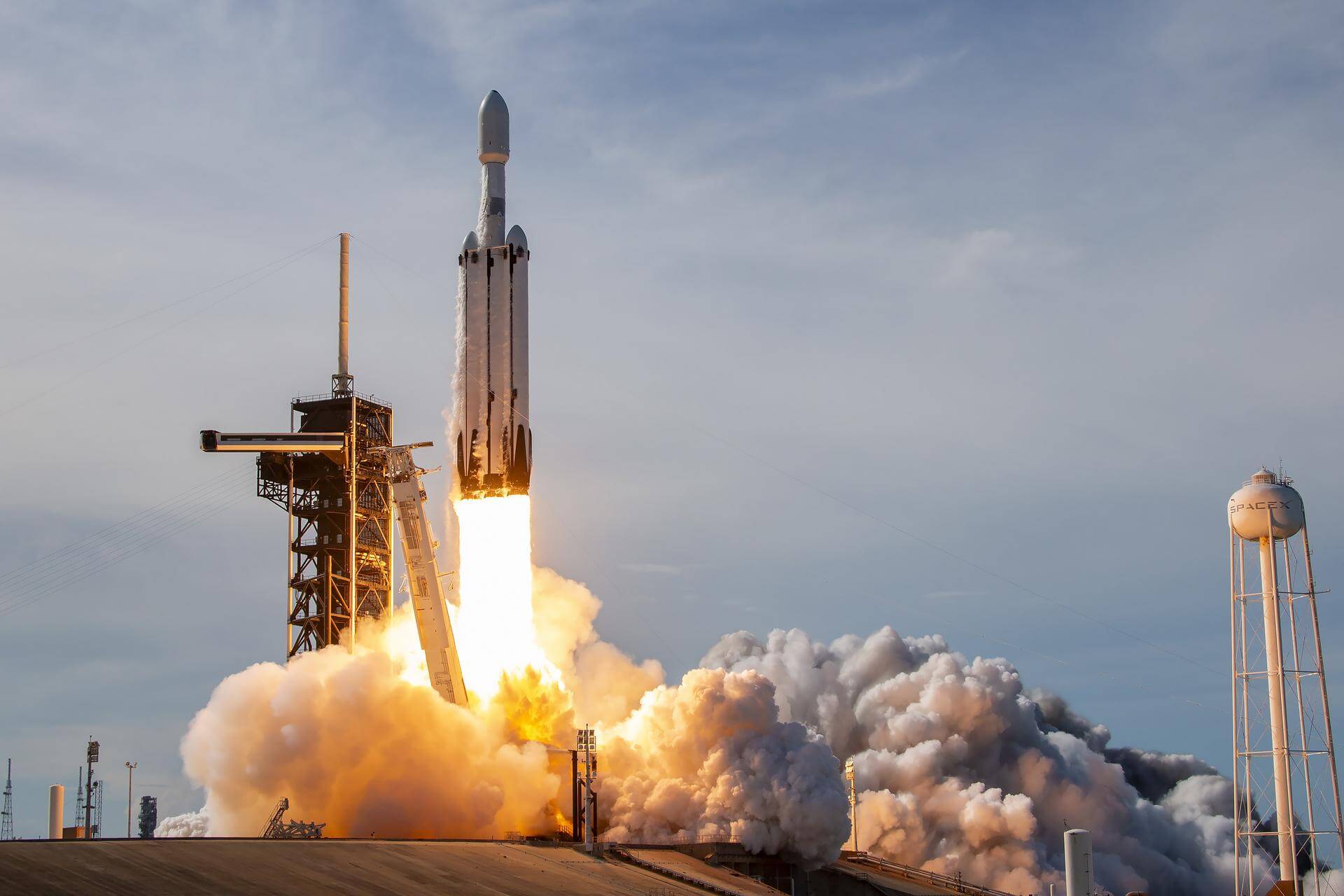
Vehicle: Falcon Heavy
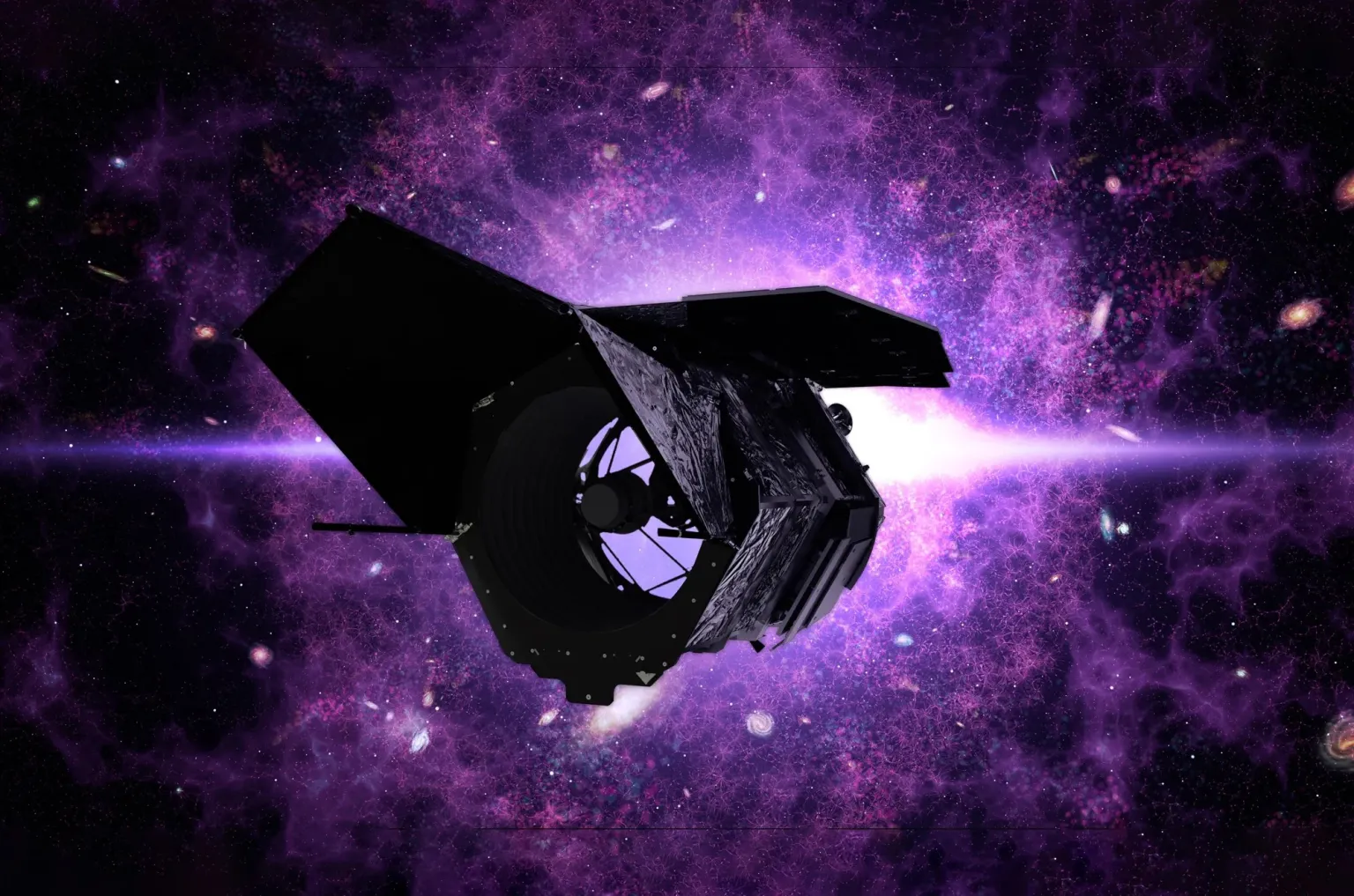
The Nancy Grace Roman Space Telescope is a NASA infrared space telescope with a 2.4 m (7.9 ft) wide field of view primary mirror and two scientific instruments. The Wide-Field Instrument (WFI) is a 300.8-megapixel multi-band visible and near-infrared camera, providing a sharpness of images comparable to that achieved by the Hubble Space Telescope over a 0.28 square degree field of view, 100 times larger than imaging cameras on the Hubble. The Coronagraphic Instrument (CGI) is a high-contrast, small field of view camera and spectrometer covering visible and near-infrared wavelengths using novel starlight-suppression technology. Roman objectives include a search for extra-solar planets using gravitational microlensing, and probing the expansion history of the Universe and the growth of cosmic structure, with the goal of measuring the effects of dark energy, the consistency of general relativity, and the curvature of spacetime.
Griffin Mission One
Provider: SpaceX
Date: November 30, 2026
Time: 12:00 AM UTC
Vehicle: Falcon Heavy
Demonstration flight of the Astrobotic Griffin lander and its engines, initially contracted for the cancelled NASA VIPER (Volatiles Investigating Polar Exploration Rover) mission. The vacated payload spot will now host the FLIP (FLEX Lunar Innovation Platform) lunar rover from Astrolab.
USSF-75
Provider: SpaceX
Date: December 31, 2026
Time: 12:00 AM UTC
Vehicle: Falcon Heavy
Classified payload for the United States Space Force
Superbird-9
Provider: SpaceX
Date: June 30, 2027
Time: 12:00 AM UTC
Vehicle: Starship
Superbird-9 is a high throughput communication satellite. It is designed to deliver broadcast and broadband missions in Ku band primarily over Japan and Eastern Asia, in response to mobility and broadband demands.
NROL-86
Provider: SpaceX
Date: June 30, 2027
Time: 12:00 AM UTC
Vehicle: Falcon Heavy
Classified payload for the US National Reconnaissance Office


Enjoying the content? Stay up to date on everything happening behind the scenes by following our Patreon!

