
The Bright Blue Origin: New Glenn Charts Year-End Return; Blue Moon Testing Continues
New Glenn Returns with Hybrid Pad Approach
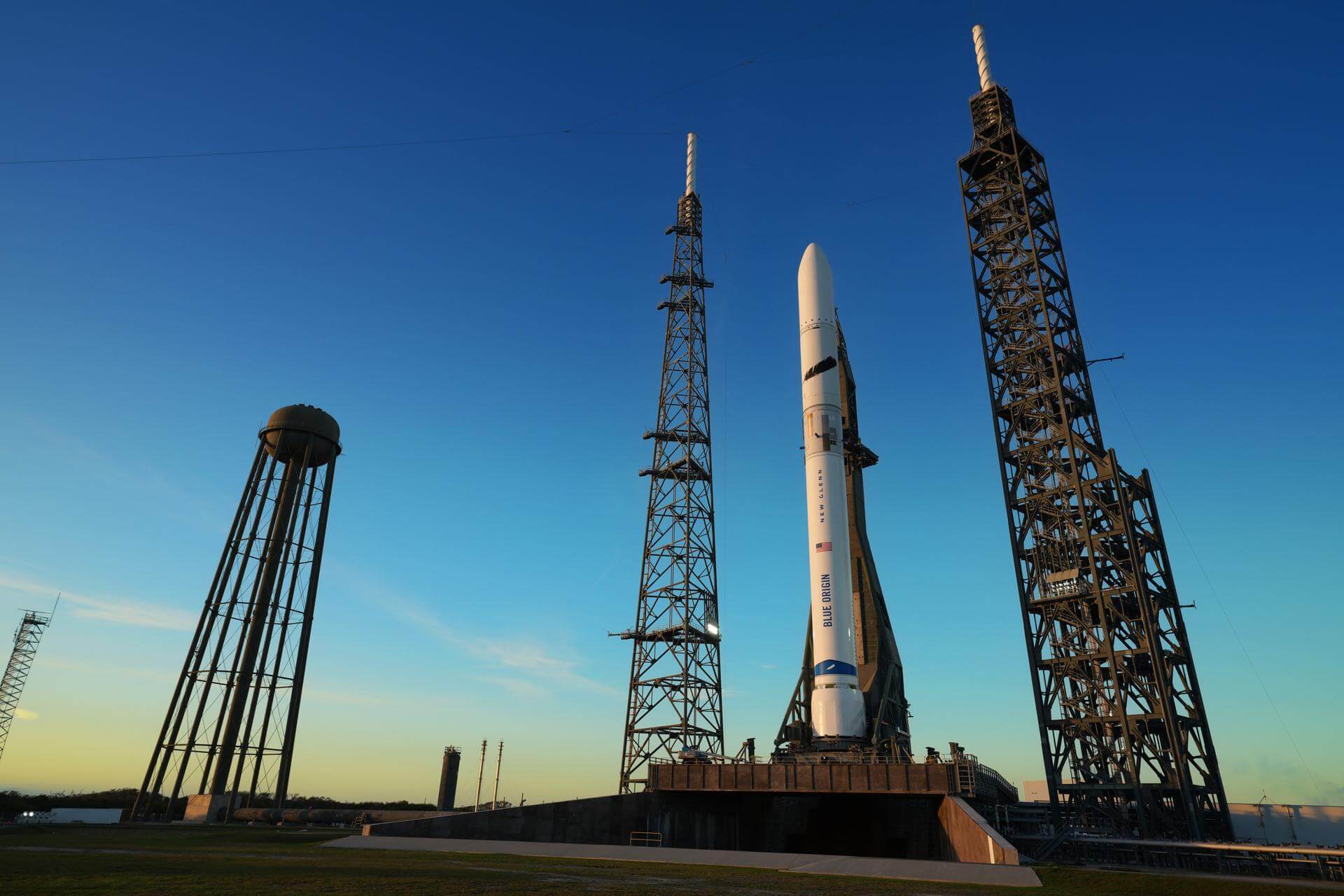
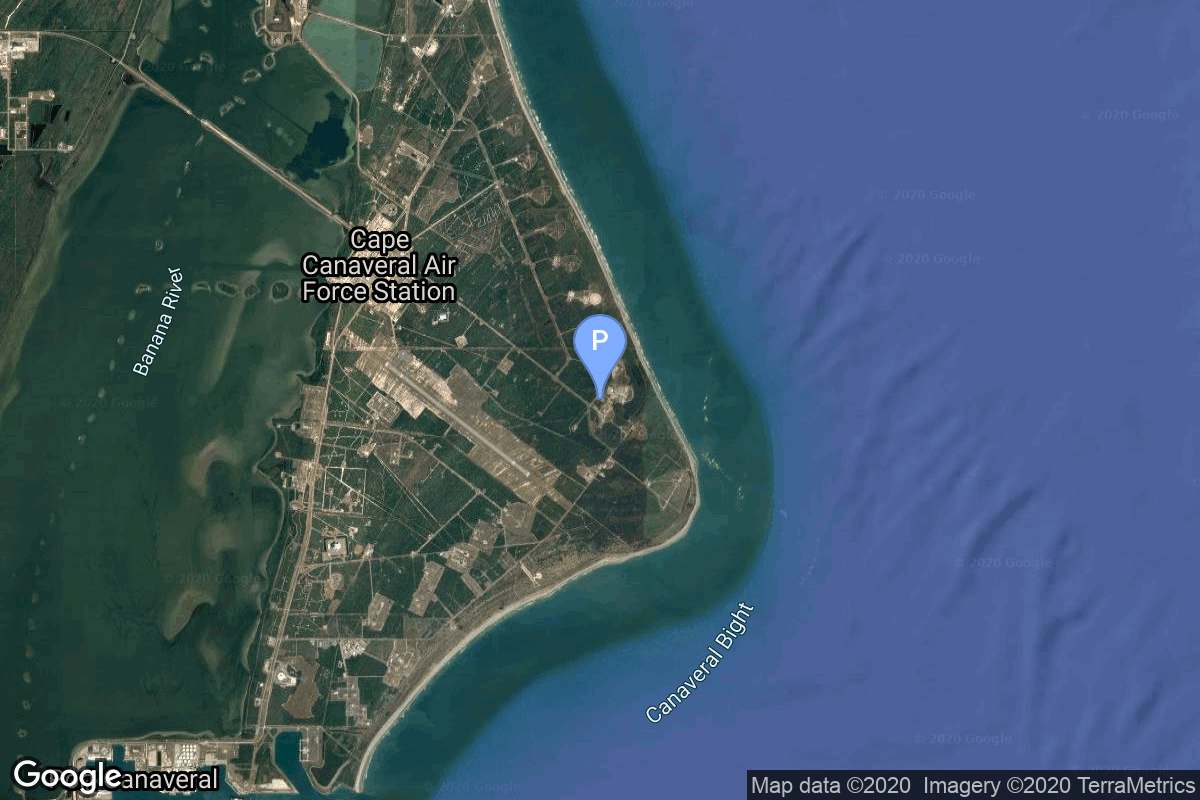
A month after the May 28 explosion at Launch Complex 36 in Cape Canaveral, Blue Origin is taking a fresh approach to get New Glenn flying again. Instead of rebuilding the original transporter/erector system that rolled the integrated rocket horizontally to the pad and raised it vertical for launch, the company is shifting to a hybrid configuration it had been developing for its larger 9×4 variant.
The new concept of operations (CONOPS) keeps the vehicle horizontal through assembly, transports it without the payload attached from the integration facility to the pad, uses a crane to raise the rocket vertical, then rolls out and attaches the payload using the same crane. CEO Dave Limp confirmed in a June 30 update that this strategy will let the company “return to flight by the end of this year.”

“To return to flight this year, we’re not rebuilding the same pad,” Limp wrote. “We’re going straight to a horizontal/vertical hybrid CONOPS we had already been developing for our 9×4 New Glenn launch vehicle, using existing infrastructure, skipping a new transporter-erector and creating a common CONOPS across two pads.”
The company has not yet disclosed what caused the anomaly. “Early analysis points to the aft section of the first stage,” Limp noted, but the investigation remains ongoing. The payload attachment change also provides an operational advantage: it enables the same procedure across both Launch Complex 36 and the planned second pad at Launch Complex 36B, potentially increasing launch cadence once the company resumes operations.
Blue Moon Lunar Landers Advance Through Testing
Despite the upheaval at Cape Canaveral, Blue Origin’s lunar programme is maintaining momentum. At the Spacetide conference in Tokyo on July 6, John Couluris, senior vice president for lunar permanence, outlined the status of seven Blue Moon vehicles now in production—four Mark 1 uncrewed landers and three Mark 2 crewed landers.
The company’s first Mark 1 lander, called Endurance, has completed most testing and entered “quiescent operations” while awaiting a launch now targeted for the first quarter of 2027—a shift from the original plan to fly later this year. A second Mark 1 will carry NASA’s VIPER rover to the lunar surface in 2027. Two additional Mark 1 vehicles are under construction to deliver Astrolab and Lunar Outpost lunar terrain vehicles under NASA’s Moon base awards, with launches scheduled for 2028.

On the crewed side, the company is building a prototype Mark 2 lander for the revised Artemis 3 mission, which will launch to low Earth orbit in 2027 and dock with NASA’s Orion spacecraft. Couluris noted that the team has also started work on two Mark 2 Alpha vehicles optimised for crewed lunar landings. One will perform an uncrewed landing demonstration in 2028, followed by crewed missions.
“We leaned forward and started building this vehicle as soon as the NASA administrator offered that the pivot of this mission would happen,” Couluris said, referring to NASA’s decision to decouple Artemis 3 from the lunar Gateway and instead use a direct lunar orbit. The shift led to design refinements in the Mark 2 Alpha to optimise performance for the new trajectory.
NASA Signals Confidence in Recovery
Blue Origin’s rapid progress in clearing the pad and planning its return to flight has earned public recognition from NASA. Administrator Jared Isaacman said on July 1 that the company’s response to the explosion is “almost beyond impressive” and noted that the US Space Force has been deeply involved in recovery planning.
NASA has significant stakes in Blue Origin’s timeline: the Endurance Mark 1 will carry two NASA science payloads to the Moon, and the Mark 2 will eventually ferry astronauts to the lunar surface. Both depend on New Glenn for launch.
“Plan A is very much still to launch the Mk. 1 on New Glenn,” Isaacman said. “They are very committed to getting back in the business of launching New Glenn before the end of the year. And Plan A is looking a lot better today than it was weeks ago, just based on the progress that the Blue Origin team is making.”
Amazon Leo Marks Atlas Era Finale; Vulcan Transition Ahead
In related news, ULA’s Atlas 5 completed its final operational mission for Amazon’s Leo satellite broadband constellation on July 2, launching 29 satellites from Cape Canaveral Space Force Station at 12:30 a.m. Eastern.
The mission marked the end of an eight-launch contract signed in 2021. Across those eight flights, ULA delivered 224 Leo satellites to orbit with a 100% success rate. Amazon Leo now has more than 390 satellites in service, with additional launches set to add coverage and capacity.

The company is now transitioning to ULA’s Vulcan Centaur rocket, which can carry 40-plus satellites per flight and will increase launch cadence. Amazon has contracted 38 Vulcan missions as part of its broader multi-billion-dollar launch strategy that also includes flights on Ariane 6 and SpaceX’s Falcon 9.
Vulcan has not launched a commercial mission since February due to an unrelated solid-rocket-booster anomaly, but Amazon is preparing for the transition. “Atlas 5 has played a critical role in the early deployment phase for Amazon Leo,” noted Melissa Wuerl, Amazon Leo director of launch systems. “We’re excited to build on that foundation with ULA as we transition to Vulcan.”
Citations
- “Blue Origin outlines new launch pad approach as it pushes to return New Glenn to flight” — https://spacenews.com/blue-origin-outlines-new-launch-pad-approach-as-it-pushes-to-return-new-glenn-to-flight/
- “Blue Origin continues work on lunar landers during recovery from New Glenn explosion” — https://spacenews.com/blue-origin-continues-work-on-lunar-landers-during-recovery-from-new-glenn-explosion/
- “NASA chief praises progress Blue Origin is making after launch failure” — https://arstechnica.com/space/2026/07/nasa-chief-praises-progress-blue-origin-is-making-after-launch-failure/
- “Final Atlas 5 Amazon Leo mission launches” — https://spacenews.com/final-atlas-5-amazon-leo-mission-launches/
Amazon Leo (LN-01)
Provider: Blue Origin
Date: December 31, 2026
Time: 12:00 AM UTC
Vehicle: New Glenn
Amazon Leo, formerly known as Project Kuiper, is a mega constellation of satellites in Low Earth Orbit that will offer broadband internet access, this constellation will be managed by Kuiper Systems LLC, a subsidiary of Amazon. This constellation is planned to be composed of 3,276 satellites. The satellites are projected to be placed in 98 orbital planes in three orbital layers, one at 590 km, 610 km and 630 km altitude.
48 satellites will be carried on this New Glenn launch.
BlueBird Block 2
Provider: Blue Origin
Date: December 31, 2026
Time: 12:00 AM UTC
Vehicle: New Glenn
AST SpaceMobile’s Block 2 BlueBird satellites are designed to deliver up to 10 times the bandwidth capacity of the BlueBird Block 1 satellites, required to achieve 24/7 continuous cellular broadband service coverage in the United States, with beams designed to support a capacity of up to 40 MHz, enabling peak data transmission speeds up to 120 Mbps, supporting voice, full data and video applications. The Block 2 BlueBirds, featuring as large as 2400 square foot communications arrays, will be the largest satellites ever commercially deployed in Low Earth orbit once launched.
This launch will feature 8 satellites.
Blue Moon Pathfinder
Provider: Blue Origin
Date: March 31, 2027
Time: 12:00 AM UTC
Vehicle: New Glenn
First flight of Blue Origin’s Blue Moon MK1 lunar lander, MK1-SN001 “Endurance”.
Blue Moon Pathfinder Mission 2 & VIPER
Provider: Blue Origin
Date: December 31, 2027
Time: 12:00 AM UTC
Vehicle: New Glenn
2nd of the National Team’s Blue Moon MK1 lunar lander test missions to validate the necessary technologies for its HLS lunar module. Some of the life support hardware will travel on this mission in preparation for the first crew Blue Moon flight.
This mission will also carry NASA’s VIPER (Volatiles Investigating Polar Exploration Rover) lunar rover. VIPER is designed to explore the relatively nearby but extreme environment of the Moon in search of ice and other potential resources. This mobile robot will land at the South Pole of the Moon on a 100-day mission, in order to teach us about the origin and distribution of water on the Moon and help determine how we can harvest the Moon’s resources for future human space exploration.
VIPER is designed to roam the Moon using its three instruments and a 1 meter long drill to detect and analyze various lunar soil environments at a range of depths and temperatures. The rover can venture into permanently shadowed craters, some of the coldest spots in the solar system, where ice reserves have endured for billions of years.
The rover was originally slated to launch on Astrobotic’s Griffin Mission One lunar lander (with the Falcon Heavy rocket), but the VIPER mission was cancelled in July 2024 due to budget cuts. After consulting with the industry to find alternative ways to deliver the rover to the lunar surface, NASA ultimately chose to launch it with Blue Origin’s 2nd Blue Moon MK1 lander mission.


Enjoying the content? Stay up to date on everything happening behind the scenes by following our Patreon!

